The price a shopper sees in an Instagram Reel, a marketplace listing or a text from a salesperson now has one clear federal expectation behind it: it has to be a price any buyer can actually pay.
On September 15, 2026, staff at the Federal Trade Commission published new FTC dealer pricing guidance, Automobile Industry Pricing Transparency: FAQs, covering advertised vehicle prices, mandatory fees, discounts, online listings, third-party advertising and cars that are not physically on a dealer’s lot. The core principle fits in a sentence. The advertised price must be the actual price any consumer can walk in and pay. The only amounts a dealer may leave out are charges a government agency requires the buyer to pay directly, such as taxes, title and registration.
For an industry now built on inventory feeds, paid social and marketplace syndication, the most important part of the guidance may be where that principle applies. The answer is everywhere.
Not a new rule, and that is the point
Some coverage will describe this as a new social-media rule for dealerships. It isn’t. The FTC did not write a regulation aimed at Facebook, Instagram or TikTok. Staff explained how the FTC Act, which has prohibited unfair and deceptive practices for decades, applies to modern car retail.
That distinction matters because of recent history. The FTC’s CARS Rule, a binding auto-retail regulation finalized in January 2024, was vacated by the Fifth Circuit in January 2025 on procedural grounds, and some dealers read that as the pressure easing. The FAQs show the agency working from its existing Section 5 authority instead. They are formally staff views, not binding on the public or the Commission, but they are explicit that there is no grace period: the law behind them has been in force for decades.
A year of steady signals
The FTC dealer pricing FAQs are the latest step in a sequence that has run through 2026. In March, the FTC sent warning letters to 97 dealer groups nationwide saying advertised prices must reflect the total price buyers will pay, including every mandatory fee. The letters named the practices the agency considers illegal: prices that leave out required fees, prices built on rebates or discounts not available to everyone, prices that ignore an additional required down payment, prices conditioned on dealer financing, requiring buyers to purchase add-ons not reflected in the price, and advertising cars that are unavailable or don’t exist. In May, the list of recipients became public, and it included some of the largest groups in the country.
In August came money. The FTC and the State of Connecticut announced a $4 million settlement with Manchester City Nissan and its owners and managers, resolving allegations that the dealer double-charged for “certified pre-owned” vehicles and slipped products such as total loss protection into financing without customers’ consent. The order reads like a template for everyone else: the dealer must display the maximum total price a consumer must pay, excluding only government charges, as the most prominent item in its advertising. Then, in September, the FAQs arrived.
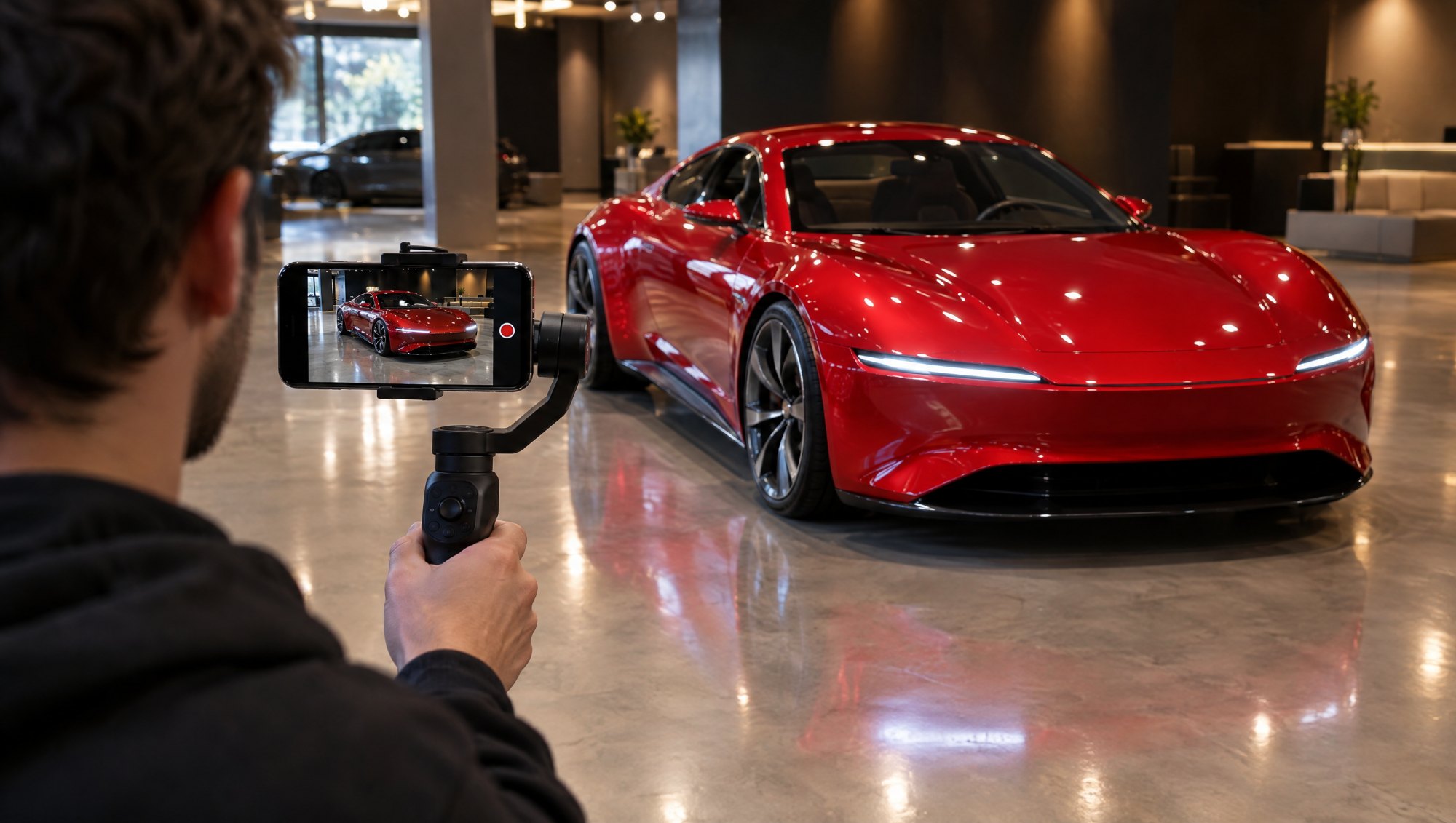
The number in the ad should match the number on the paperwork. Illustration: Exotic Motors.
What has to be in the number
The guidance is specific about fees. Everything a dealer requires must be in the advertised price, including dealer fees a government authorizes but does not mandate, and fees the government charges the dealer that the dealer passes on to the buyer.
Document fees get a worked example. If a dealer advertising a $40,000 car would charge any buyer an $85 doc fee, the advertised price must be $40,085. The FTC also closes the obvious workaround: if some buyers would be quoted a higher mandatory doc fee than others, the higher fee is the one that belongs in the advertised price.
Negotiation doesn’t change the rule either. Buyers can always pay less than the advertised figure. But a shopper who sees a car advertised at $24,999 and is quoted $26,499 on arrival, because the lower number was only ever offered to a handful of earlier customers, has been misled.
“Most prominent” is the real test
Incentives aren’t going anywhere. Loyalty offers, finance incentives, first-responder discounts and conquest cash can all still appear in ads. What changes is the order in which a shopper meets the numbers. MSRP, discounts and rebates are allowed as long as the price anyone can pay is the most prominent amount and the buyer knows what they would need to pay to get the car. Prominence is not a font-size loophole: a smaller MSRP placed where it draws more attention still fails the test.
The FTC’s own finance example maps neatly onto a luxury store’s template. A dealer advertising a $39,999 vehicle can promote a $2,000 discount for using dealer financing, as long as $39,999, the price available with any financing, is the number shown most prominently.
Now picture the version many shoppers still see. A luxury SUV is promoted at $79,995. The buyer calls and learns the number assumed $2,000 for dealer financing, $1,500 for a trade-in, $1,000 in loyalty cash and a $750 military discount, with a mandatory dealer fee still to come. The price that generated the lead was never available to a typical buyer. That gap is exactly what the March letters described. The fix is simple: the price anyone can pay goes first and biggest, and incentives follow as clearly labeled extras.
On social, the first frame is the advertisement. Illustration: Exotic Motors.
Social media’s first-frame problem
A dealer website has room for detail. A Reel, a Story or a sponsored post gives a shopper a thumbnail, a few seconds of video, a text overlay and perhaps the first line of a caption. That first frame is the advertisement.
The FTC’s standard is that an ad’s overall net impression must not mislead a reasonable consumer. A huge “$89,995” over the car, with the qualifications buried ten lines into the caption, deserves a hard second look. The question for a marketing team isn’t whether the disclaimer is in there somewhere. It is what an ordinary shopper thinks the car costs after three seconds with the post.
The scope is broad. The FAQs list dealer and third-party websites, social media, print, roadside signs, phone calls and text messages with dealership staff. That matters in the exotic world, where many listings say “price on request.” A listing without a number doesn’t escape the principle; the figure a salesperson quotes by phone or text is a price representation too.
“See dealer for details” is not a pricing strategy
Price after all available incentives. Must finance through dealer. Not all customers will qualify. Those lines still carry useful information, but they cannot rescue a headline number that implies everyone qualifies. The durable approach is the one the FAQs describe: make the real price clear first, then explain the incentives.
Marketplaces, feeds and shared responsibility
Few shoppers meet a car in just one place. A price entered once in a dealer management system travels through an inventory feed to the dealer’s site, one or more marketplaces, Google, Facebook, Instagram and paid campaigns. If one system updates and another doesn’t, the same VIN is advertised at two prices, and that is no longer just an inventory annoyance.
The FTC dealer pricing FAQs speak to both the pages and the people behind them. On any webpage that states an amount a consumer may pay, including inventory-search pages and individual vehicle listings, the actual price must be the most prominent figure. Responsibility is shared by everyone with control over the advertising. Dealers should give third parties the actual price and do what is within their control to see it displayed prominently. Third-party advertisers should make sure that price leads, and manufacturers should make sure none of their own policies push the other way. For marketplaces, feed providers and website vendors, accurate synchronization is now part of the job.
Why exotic and luxury dealers should pay closer attention
A volume franchise store may have fifteen examples of the same crossover. An exotic dealer often has exactly one 812 Competizione, one GT3 RS, one Revuelto or one Black Series, and that car’s mileage, options, condition, history and price are its own. Three parts of the FAQs land especially hard in this segment.
Photos. Representative images are allowed when the picture truly matches the car in make, model, condition and every other material characteristic, and a reasonable shopper would understand it is illustrative. But because used and collector cars are rarely identical, the FTC says buyers can reasonably expect the photo to show the exact car for sale. For pre-owned exotics, that means real photos of the real car.
Cars that aren’t on the lot. High-end inventory often lives somewhere other than the showroom floor, whether in climate-controlled storage, in transport or at another location. Advertising those cars is not deceptive in itself, but if a car is in transit or elsewhere, the ad must say so plainly. A car advertised as in transit must also be genuinely available when it arrives, not already allocated to another buyer’s paid order.
Sold cars. A permanent page for a sold exotic can be valuable, showing historical pricing, specification detail and market comparables. It just can’t look available. The FTC says it depends on when the car sold and what the ad says, but advertising a car that is no longer available to draw buyers in is deceptive. Clear Available, Pending and Sold statuses, reflected on every channel, are the practical answer.
An FTC dealer pricing checklist: 7 questions before a car goes live
Is the car actually available, and if it is in transit or offsite, does the ad say so?
Can an ordinary customer buy it for the displayed price?
Are all dealer-required fees in that number, including the highest doc fee any buyer could face?
Is the price free of assumptions about financing, trade-ins or incentives only some buyers get?
Is the price anyone can pay the most prominent number, including in the first frame of a video?
Does every photo of a used car show that exact car?
If the price changes or the car sells, will every channel advertising it know?
If those questions are hard to answer, the problem is probably bigger than one post. It likely sits in the dealership’s inventory data.
The bigger story: one VIN, one truth
Dealerships have become data companies whether they planned to or not. A car enters one system and fans out across websites, marketplaces, CRMs, ad platforms, search engines and social feeds, and one wrong field travels with it. The next challenge isn’t writing compliant ads one at a time. It’s building systems where one VIN carries one accurate price, one accurate status and one reliable set of data wherever a shopper finds it.
That is good for honest dealers, too. The FTC frames transparency partly as a competition issue: stores advertising truthful, all-in prices are put at a disadvantage by rivals advertising numbers no customer can get. In a market where a buyer may wire six figures to a dealer they have never visited, a price that holds from the first frame to the final paperwork is the foundation of the sale.
The takeaway
None of this is a reason to retreat from social media. Instagram, YouTube, TikTok and marketplaces remain the most powerful way to put a specialized car in front of a qualified buyer. But a post is no longer just a post. It may be the first step in a $250,000 transaction, and under the FTC’s dealer pricing guidance, the truth about that transaction starts with the first price the buyer sees. For the wider market picture behind those numbers, see our Exotic Car Market 2026 report.
This article is provided for general informational purposes only and does not constitute legal advice. Dealerships and automotive businesses should consult qualified counsel about their specific advertising practices and applicable federal, state and local requirements.
Owning an exotic car is not about speed or luxury- It’s about embracing an experience, where the road becomes your canvas and the car, your masterpiece.
Monterey 2026 did a record ~$756 million while the retail exotic market cooled. Here is what the split means for anyone buying or selling a supercar right now.
You are not searching badly. The car you want probably exists in single digits nationally at any given moment — here is how serious buyers actually get one, and what each route costs.
The Aurelio was the first Filipino-built supercar — two hand-made prototypes from San Pedro, Laguna. What was real, what was only claimed, and the arithmetic that actually killed it.