McLaren 720S vs. 750S: Is the Newer Car Worth the Used-Market Premium?
McLaren 720S vs 750S compared: what changed, October 2026 U.S. asking prices, warranty and inspection priorities, and which one to buy.
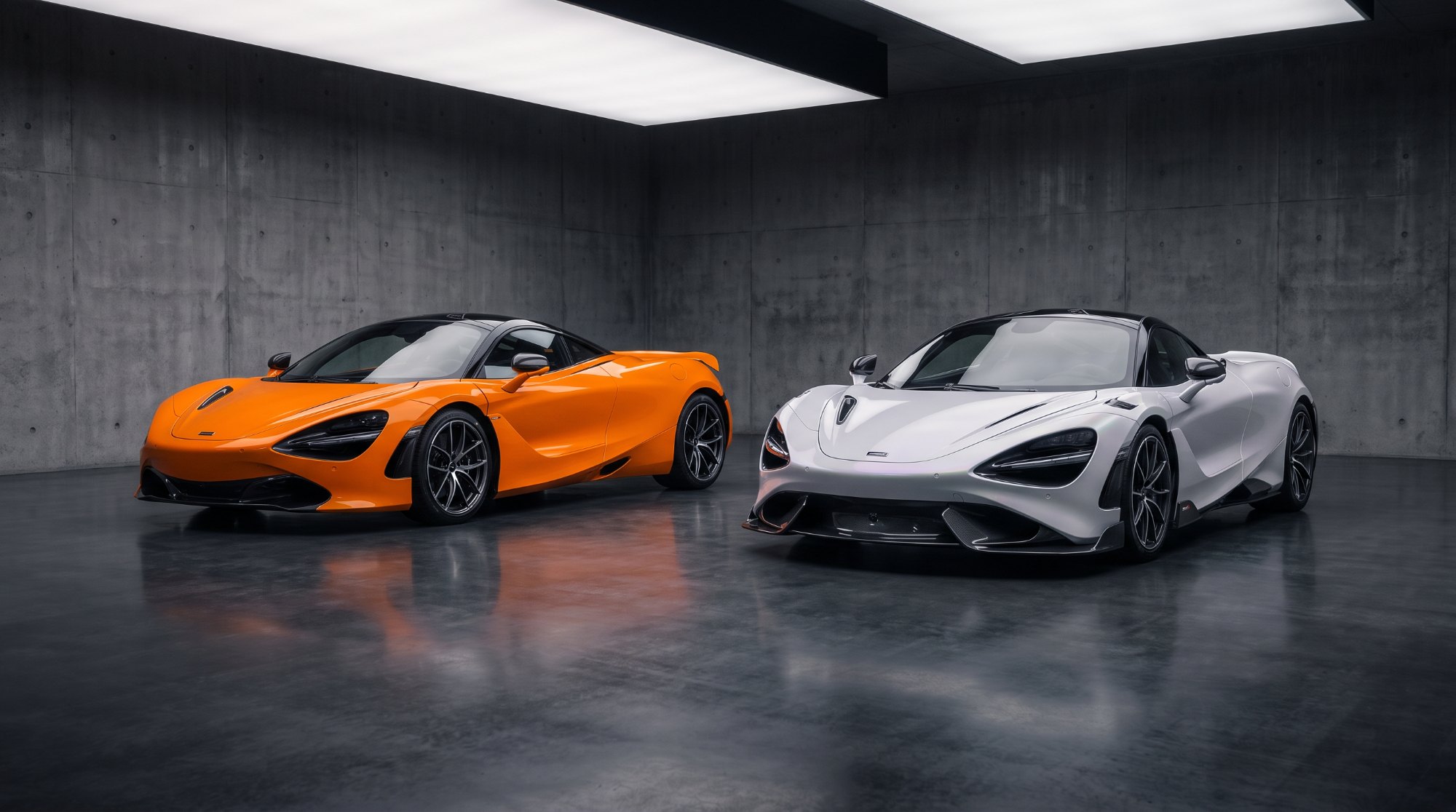
The McLaren 750S is the better car. That much is not really in dispute: it is lighter, a little more powerful, sharper on turn-in and much nicer to live with inside. The harder question for a used buyer is whether those gains are worth what the market currently charges for them. In our October 2026 snapshot of U.S. asking prices, a typical used 750S was listed for about $77,000 to $86,000 more than a typical 720S of the same body style.
Our short answer to the McLaren 720S vs 750S question: for most buyers who want the experience of McLaren’s twin-turbo V8 super series car, a well-documented 720S is the smarter purchase. The 750S earns its premium for three kinds of buyer: those who want remaining factory warranty, those who will genuinely use the car on track, and those who will notice the cabin and infotainment every time they drive. Here is how we got there.
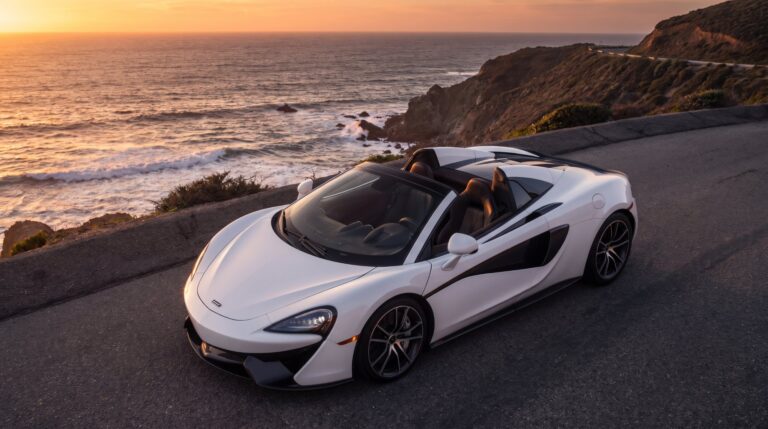
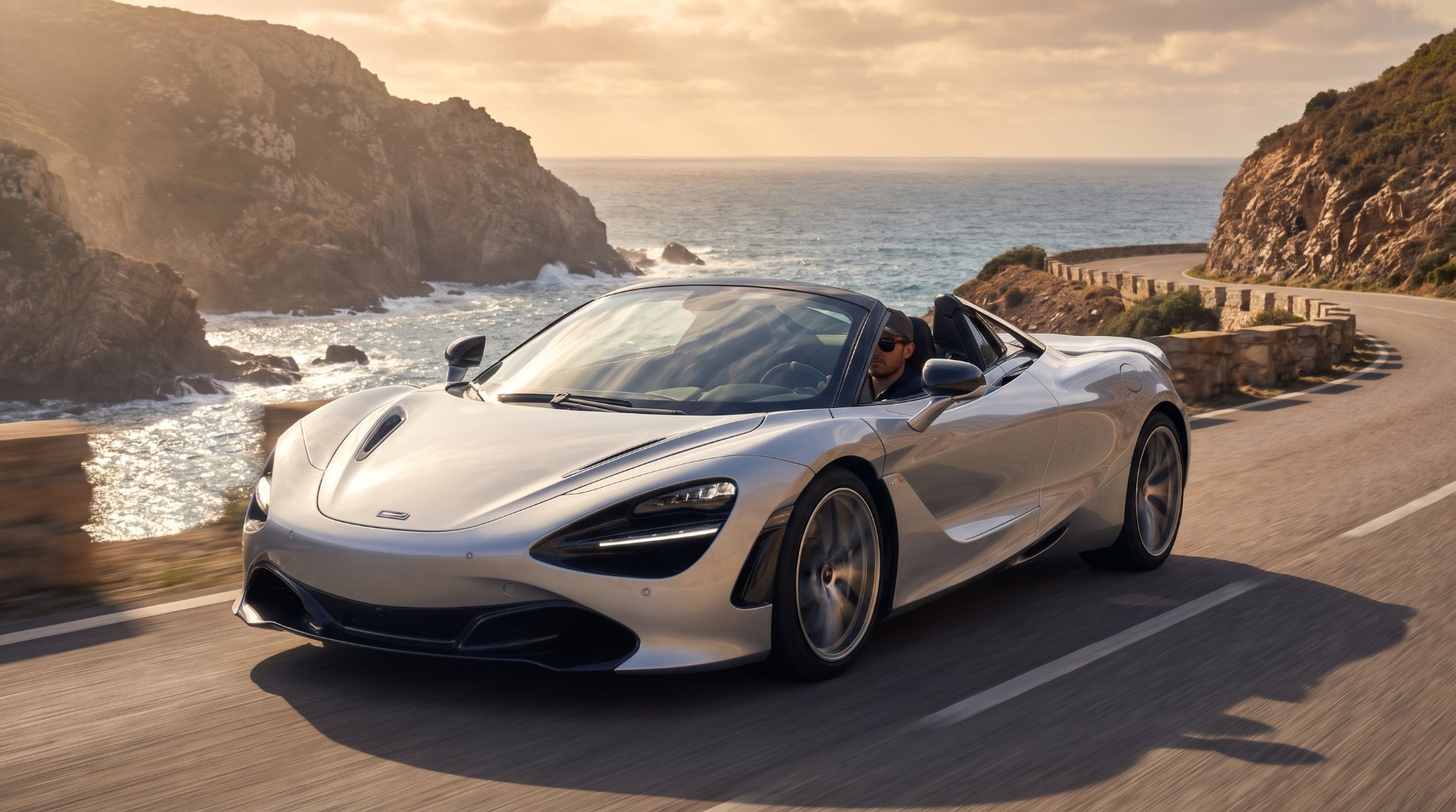
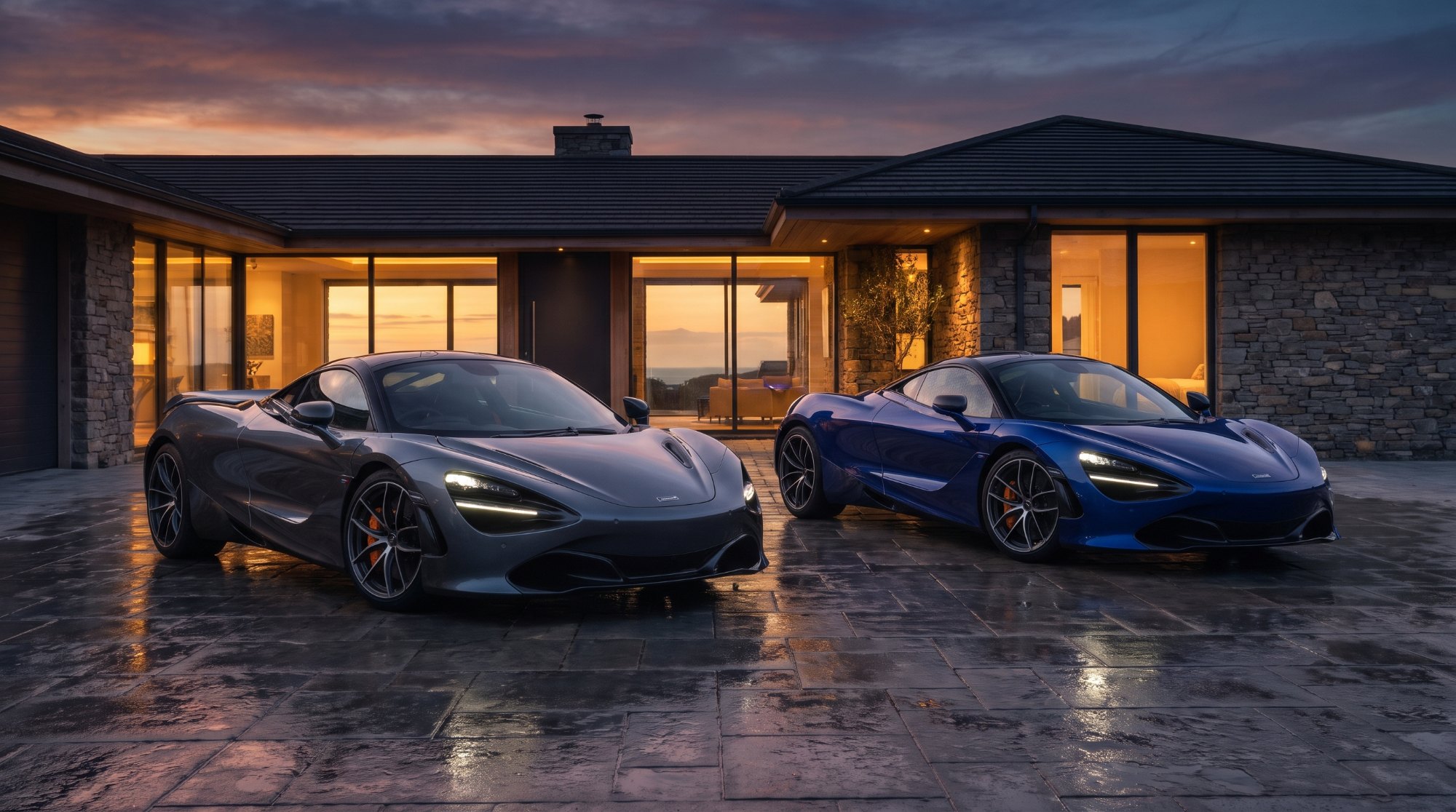
Imagery note: images captioned “Editorial illustration” in this article are illustrations created for Exotic Motors, not photographs of specific cars. They do not document factory equipment; the design and equipment differences described below come from McLaren’s published specifications.
What changed from the 720S to the 750S?
The 720S launched for the 2018 model year in the U.S. (the Spider followed for 2019) and was sold through 2023. The 750S replaced it for the 2024 model year. McLaren says roughly 30 percent of the car’s components were changed or replaced, which tells you the right way to think about it: the 750S is a thorough evolution of the 720S, not a new car. Both use a carbon-fibre Monocage II tub, a 4.0-liter twin-turbocharged V8 behind the cabin, a seven-speed dual-clutch gearbox and rear-wheel drive. Both come as a coupe or a Spider with a power-retractable hardtop.
The meaningful changes, according to McLaren’s launch specifications:
- More power, shorter gearing. Output rises from 710 hp and 568 lb-ft to 740 hp and 590 lb-ft, helped by pistons from the 765LT, and the gearbox gets a shorter final drive. McLaren claims the 750S is about 10 percent quicker in acceleration, at the cost of top speed (206 mph versus 212 mph).
- Less weight. McLaren quotes the 750S coupe at 3,062 lb at the curb (DIN, with fluids), 66 lb lighter than the 720S. Lighter carbon-shelled seats and lighter wheels account for part of it.
- Proactive Chassis Control III. The hydraulically linked suspension moves to its third generation, with retuned accumulators, front springs about 3 percent softer and rear springs about 4 percent stiffer, and revised geometry.
- A sharper front end. The front track is 6 mm wider, the electro-hydraulic steering has a quicker ratio and a new power-assist pump, and a new brake booster aims to improve pedal feel.
- A faster nose lift. The front-axle lift raises the nose in about four seconds, versus roughly ten in the 720S. On a car this low, owners will use it constantly.
- A revised cockpit. The driver display now moves with the steering column, chassis and powertrain modes moved from center-console knobs to rocker switches on the binnacle, a new McLaren Control Launcher button recalls a favorite setup, and the new infotainment system includes Apple CarPlay as standard.
- Exterior details. A longer front splitter, revised headlight surrounds and intakes, a new rear bumper and a single center-exit exhaust distinguish the 750S on sight.
McLaren 720S vs 750S: factory specifications
| Specification | 720S | 750S |
|---|---|---|
| U.S. model years | 2018–2023 (Spider 2019–2023) | 2024–2027 (production ending 2027) |
| Engine | 4.0L twin-turbo V8 | 4.0L twin-turbo V8 |
| Power | 710 hp (720 PS) | 740 hp (750 PS) |
| Torque | 568 lb-ft | 590 lb-ft |
| Transmission | 7-speed dual-clutch | 7-speed dual-clutch, shorter final drive |
| Curb weight, coupe (DIN) | 3,128 lb | 3,062 lb |
| 0–60 mph | 2.8 sec | 2.7 sec |
| 0–124 mph | 7.8 sec | 7.2 sec |
| Quarter mile | 10.3 sec | 10.1 sec |
| Top speed | 212 mph | 206 mph |
| Suspension | Proactive Chassis Control II | Proactive Chassis Control III |
| Nose lift (approx.) | 10 sec | 4 sec |
| Apple CarPlay | Not offered | Standard |
Performance and everyday driving: how much difference will you feel?
On paper, the gap is small. A tenth of a second to 60 mph is not something you will feel on a public road, and the 720S was already one of the fastest cars of its era; 710 hp in a car that weighs barely 3,100 lb is more performance than almost anyone can use on the street. If straight-line pace is what you are buying, the 720S gives up very little.
Where the 750S pulls ahead is in how it delivers that pace. McLaren’s stated aim was to keep the 720S’s remarkable ride comfort while improving circuit performance, and the chassis changes all point that way: more front-end grip from the wider track and new geometry, quicker steering, firmer rear springs to help the car rotate, and retuned hydraulics to manage roll. The shorter gearing also makes the 750S feel more urgent in the lower gears, where most real-world driving happens. McLaren also offers an optional track brake package for the 750S, derived from the Senna’s ceramic discs and calipers.
For everyday use, the most practical upgrade is arguably the least glamorous: the faster nose lift. Driveways, speed bumps and parking-garage ramps are where these cars actually live, and waiting ten seconds for the 720S’s nose to rise gets old. The Spider question is the same on both cars: the folding hardtop costs a little weight and a fraction of a second, and most buyers will never notice the difference in normal driving.
Our read: if you drive mostly on the road, you will enjoy a 720S just as much day to day. If you plan regular track days, the 750S’s chassis, gearing and brake options are real reasons to stretch.
Interior, equipment and technology
This is where the 750S feels most like a newer car. The 720S’s cabin is airy, with excellent visibility, but its infotainment was one of the most common criticisms of the car and it did not offer Apple CarPlay. The 750S adds a new, faster infotainment screen with CarPlay as standard, moves the drive-mode controls onto the instrument binnacle so they sit at your fingertips, and adds the McLaren Control Launcher for a one-press favorite setup. McLaren also lists an electrically adjustable steering column and lighter carbon-shelled seats among its changes.
Equipment matters more than model year when you are shopping either car. Both were sold with option packs (720S cars are often advertised as “Performance” or “Luxury” specification), and individual cars can vary widely in carbon-fibre content, seat type, lift system, camera and audio options. Use the original window sticker or a McLaren build sheet to confirm what a specific car actually has, rather than relying on a listing headline. Two cars at the same price can be very differently equipped.
Used-market prices: what the 750S premium looks like
To measure the gap, we reviewed U.S. fixed-price listings tracked by CLASSIC.COM that were active or updated between early September and October 31, 2026. We excluded cars without a published price, listings outside the U.S., auction lots and one 750S coupe listed far below every comparable car that we could not explain. These are advertised asking prices, generally before taxes and dealer fees, not completed sales.
| Segment | Asking range | Median ask (approx.) |
|---|---|---|
| 720S Coupe 2018–2022 · 5,000–37,000 mi · 9 listings | $226,000–$300,000 | $255,000 |
| 720S Spider 2020–2022 · 1,000–23,000 mi · 12 listings | $248,000–$310,000 | $280,000 |
| 750S Coupe, used 2024–2025 · 2,000–15,000 mi · 4 listings | $313,000–$355,000 | $332,000 |
| 750S Spider, used 2024–2025 · 1,000–8,000 mi · 10 listings | $353,000–$400,000 | $366,000 |
| 750S, 2027 model year Retailer stock · under 700 mi · 6 listings | $381,000–$432,000 | — |
Completed sales are thinner. CLASSIC.COM’s trailing-twelve-month data shows nine recorded 750S sales averaging about $363,000, between $326,000 and roughly $461,000. Its 720S sales for the same period include a race car and other non-comparable results, so we do not treat that average as a meaningful benchmark. In practice, the asking-price comparison above is the more useful guide, and individual cars should be valued against close comparables, not averages.
What the numbers say:
- The premium is about $77,000 for coupes and $86,000 for Spiders at the median, comparing used coupes to coupes and Spiders to Spiders. It is not a like-for-like gap: the 750S examples are younger and generally have far fewer miles, and part of what you pay for is remaining warranty.
- Spiders hold a premium over coupes in both models, by around $25,000 to $35,000 at the median in this sample.
- Nearly new 750S stock is close to new-car money. The 2027 model-year cars we found were listed from about $381,000, in line with McLaren’s current U.S. pricing; the 750S coupe launched at about $324,000 for 2024. For reference, the 720S coupe started at roughly $285,000 when new.
- Older, higher-mileage 720S coupes are the value floor. Several 2018–2019 cars were listed in the $226,000 to $242,000 range. Those deserve the most careful inspection.
One more factor is the end of production. McLaren confirmed on October 8, 2026 that the 750S will end production in 2027 and is taking final orders, closing out the V8 line that began with the 720S. That may support values for the last pure-combustion cars of this generation, but nobody can promise it, and we would not buy either car on an appreciation thesis. Buy the one that suits how you will drive it.
Warranty, maintenance and inspection priorities
Warranty is the biggest practical difference between the two today. A new McLaren comes with a three-year, unlimited-mileage factory warranty, so many 2024 and later 750S cars still have factory coverage remaining; confirm the exact in-service date. Most 720S cars are now outside their original warranty. In North America, McLaren offers an Extended Service Contract through its retailers, and the company says extended coverage is available for cars up to 15 years old with fewer than 75,000 miles. Eligibility, inspections, price and terms are set by the retailer and the contract, so get the details in writing for the specific car, and budget for coverage on a 720S.
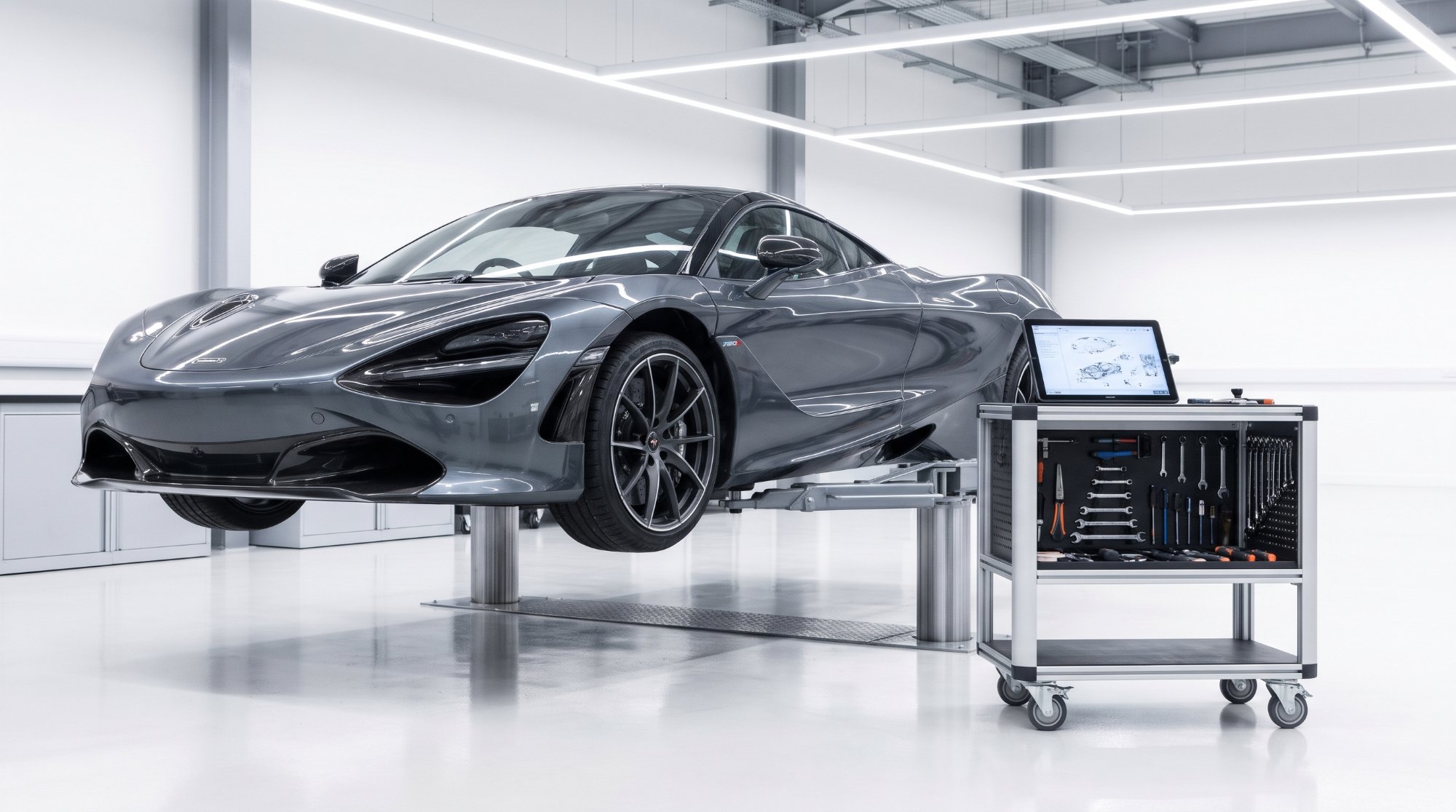
Before you buy either car, a pre-purchase inspection by a McLaren retailer or an experienced independent specialist is essential. Our guide to what an exotic car PPI should include covers the general process; for these cars, we would put particular attention on:
- Service records from a McLaren retailer or recognized specialist, matched to the car’s age and mileage, and any software updates applied.
- Open recalls. Run the VIN at NHTSA.gov. Some early 720S cars were covered by a 2020 recall (campaign 20V-231) involving a foam pad beneath the fuel tank, and a small number of 2019–2020 cars by a 2021 brake-hose recall (21V-561). Confirm remedies were completed. Our article on how recalls affect exotic car value explains what to look for.
- The hydraulic suspension. Proactive Chassis Control is central to how both cars ride and handle. Ask the inspector to check for leaks, warning messages and correct ride height, and to test the nose lift.
- Front-end and underbody damage. Low noses, splitters and underbody panels take hits. Look for repairs, paint work and evidence of damage to the carbon structure or crash structures.
- Brakes and tires. Carbon-ceramic brake replacement is expensive; have rotor condition measured. Check tire age as well as tread, especially on low-mileage cars.
- Doors, roof and electronics. Test both dihedral doors, every infotainment and camera function and, on a Spider, the roof through several full cycles.
- Track history. Track use is not disqualifying, but it should be disclosed and reflected in brakes, tires and service history.
We have not published routine maintenance figures here because costs vary with mileage, retailer, region and what a car needs. Ask the selling dealer or your preferred McLaren retailer for a quote on the next scheduled service before you agree a price, and use our guide to reading a PPI report to turn findings into negotiation.
Which McLaren makes more sense for you?
Buy a 720S if you mostly drive on the road, you are comfortable buying an out-of-warranty supercar with an extended service contract and a strong inspection, and you would rather keep $75,000 or more in reserve. A later 720S (2020 and newer) with clear records is the sweet spot in our sample.
Buy a 750S if you want factory warranty in hand, you will do regular track days, or you value the updated cabin, CarPlay and faster nose lift enough to pay for them. A younger, lower-mileage car with factory history may also be easier to sell on later.
Consider a Spider of either model if you will drive with the roof down often. The weight and performance penalty is small; the price premium is not.
If track performance is the priority, the 720S-based 765LT is the more focused, and much more expensive, relative. Exotic Motors currently lists a 2021 McLaren 765LT (as of October 31, 2026; inventory changes daily and the car may have sold).
Verdict: is the 750S worth the premium?
For most buyers, no. The 750S is the better car on nearly every measure (top speed is the exception), but the improvements are refinements to a car that was already extraordinary, and the market is asking roughly 30 percent more for them. A carefully chosen 720S, inspected properly and backed by an extended service contract, delivers most of the experience for considerably less money.
The 750S is worth it when its specific advantages matter to you: remaining warranty, a sharper track car, and a cabin that feels current. If those are on your list, pay the premium for a low-mileage, well-specified car and do not look back.
Browse current McLaren listings on Exotic Motors, where new 720S and 750S inventory appears as it arrives. For the newest and final chapter of this V8 line, Exotic Car News has covered the limited-run McLaren 788HS, and if you are shopping a step down, see our used McLaren 570S buyer’s guide.
Sources and method
Specifications: McLaren Automotive launch specifications for the 720S (2017) and 750S (2023), and McLaren’s owner publication “750S Under the Microscope.” Production end: McLaren Automotive press release, October 8, 2026. Warranty: McLaren Extended Warranty / Extended Service Contract information at mclaren.com. Recalls: NHTSA campaigns 20V-231 and 21V-561. Market data: U.S. listings and sales data from CLASSIC.COM, observed October 31, 2026; medians calculated by Exotic Motors from priced U.S. fixed-price listings. Asking prices change daily and exclude taxes and fees.
Buying guides, market analysis and news for people shopping exotic, luxury and collector cars. Written by the Exotic Motors team; prices and availability are checked at publication.