When an Exotic Car Gets Recalled, What Happens to Its Value?
Porsche has added 548 more 2024 cars to a do-not-drive wheel recall. The repair is free. The questions it raises about downtime, paperwork and resale are not.
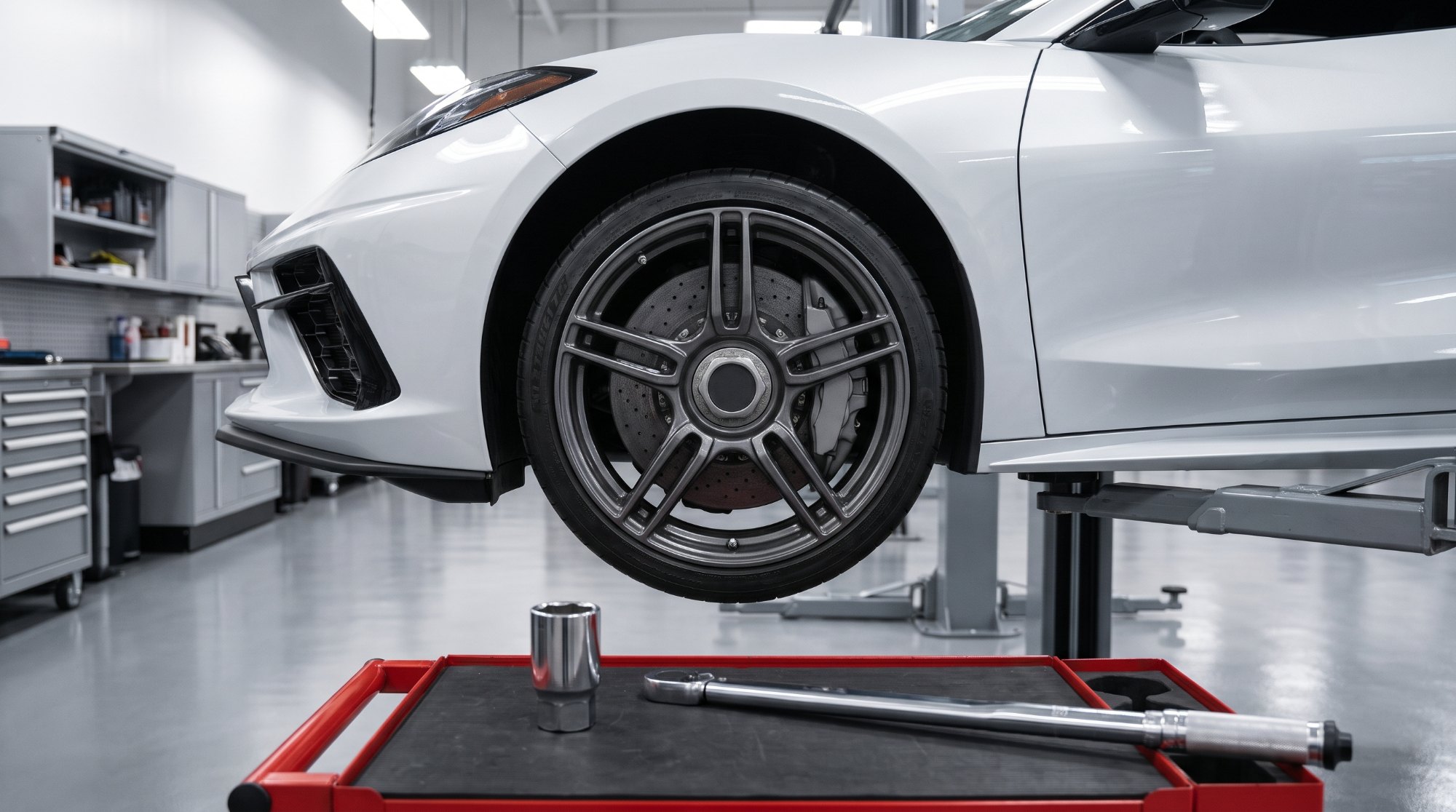
A recall does not, by itself, set the value of an exotic car. An unresolved recall, restrictions on driving, or damage from a failed component can complicate a sale and may affect what a buyer will pay. A completed remedy backed by matching paperwork usually closes the question. An open one, or a seller who cannot say either way, keeps it open.
Porsche’s newest wheel recall is a clean example of how exotic car recalls actually play out, and of why a single VIN check is not the end of due diligence on a rare car.
A small part, a big interruption
On October 16, 2026, Porsche Cars North America filed safety recall 26V682 with the National Highway Traffic Safety Administration (Porsche’s own code is ATA1). It adds 548 model-year 2024 cars to an earlier campaign, 24V809, which Porsche opened in October 2024. According to Porsche’s filing, the cause is a center-lock wheel component made from a supplier material batch whose lead and bismuth content fell outside specification. If the part fractures, the filing says, a wheel could come off or steering control could be reduced, raising the risk of a crash.
A center lock replaces the usual ring of lug bolts with one large central nut, a racing-derived design used on several of Porsche’s high-performance models. This recall is not a verdict on center-lock wheels in general. Porsche traces it to one batch of parts from one supplier.
The expansion followed two more fractures in the field, in May and August 2026, and the filing says no injuries were reported. A review with the supplier then found that the original traceability work had missed some parts, so Porsche added more cars. The new population, by model:
| 2024 model added by 26V682 | Cars |
|---|---|
| 911 Carrera GTS | 168 |
| 911 Turbo S | 94 |
| 718 Cayman GT4 RS | 73 |
| 718 Spyder RS | 70 |
| 911 GT3 | 50 |
| 911 GT3 RS | 41 |
| 911 S/T | 39 |
| 911 Turbo | 13 |
| Total | 548 |
Two details in the filing matter most to owners and buyers. First, Porsche describes it as a stop-drive order: affected cars should not be driven until the center locks have been checked and, where necessary, replaced. Second, Porsche itself estimates that about 1.4 percent of the 548 cars actually have the defect. The remedy is an inspection of the center-lock fastening system, with out-of-specification parts replaced only if needed. Being in a recall population is not the same as being defective, but until a dealer has looked, nobody can say which group a given car is in.
First, find out exactly what the recall asks
Not every notice from a manufacturer carries the same weight. A safety recall is issued when a manufacturer or NHTSA decides a vehicle creates an unreasonable safety risk or fails a minimum safety standard, and NHTSA monitors it to make sure owners get a free remedy. Technical service bulletins, customer-satisfaction campaigns and ordinary warranty repairs are different tools with different obligations, and NHTSA’s VIN search does not show non-safety campaigns at all.
Interim instructions vary just as much. “Do not drive” means the car should not travel to the dealer under its own power. Other campaigns ask owners to park outside because of a fire risk, or simply to book a repair once parts arrive. These are not interchangeable, so read the instruction attached to the specific campaign and the specific VIN.
The repair is free. Everything around it may not be
For most owners, the real cost of a recall is not a repair bill. It is the time and logistics around the repair. A car under a do-not-drive instruction has to reach the dealer on a truck. Parts may take time. A track day, a rally or a long-planned tour may have to go ahead without it.
What a manufacturer covers beyond the remedy depends on the campaign, and it should be confirmed in writing rather than assumed. Ferrari’s owner letter for recall 22V536 is a useful contrast. That letter, which covers certain 2009–2017 California models with a brake-fluid reservoir cap that may not vent properly, describes a new cap plus a software update, estimated at about an hour. It also spells out the interim plan: if a specific low-brake-fluid warning appears, pull over and call Ferrari Roadside Assistance, which will take the car to the nearest authorized dealer for a free inspection.
Porsche’s Part 573 filing for 26V682 does not describe transport, loaner cars or compensation. Those may be covered in owner communications; Porsche says it will reach owners by phone, email and the MyPorsche app, with letters to follow. Until an owner has the answers in writing, these questions are worth putting to the dealer directly:
- How will the car get to you, and who arranges and pays for the transport?
- Are inspection capacity and replacement parts available now?
- How long will you need the car?
- What will the repair order show when the work is finished?
Does a recall lower an exotic car’s value?
There is no reliable blanket figure, and a standard percentage would be a guess. It helps to separate three situations that often get blurred together.
An open campaign
This is where the friction is. A buyer cannot drive home a car under a do-not-drive instruction, a seller may not be able to deliver on schedule, and an unresolved question invites a harder negotiation. Whether that changes the price, and by how much, depends on how quickly the remedy is available and how far the buyer trusts the seller to see it through. Rules on selling or delivering a used car with an open recall also vary by seller and by state, so check them for your own transaction.
A completed remedy
Once the work is done and documented, the recall becomes part of the car’s service history. In our view, a closed campaign with a clean repair order should carry little weight with an informed buyer, and it can read as evidence of an owner who kept up with the car.
Actual damage
If a part did fail and the car was damaged, that is a different matter: a repair, and possibly an accident-history question, with its own effect on value. A recall entry on its own is not evidence of damage, and it does not by itself create a diminished-value claim. Our guide to diminished value after a repair covers that territory.
Why one VIN search is not enough for a rare car
NHTSA’s free lookup is the right first step, and Porsche told the agency the 26V682 VINs would be searchable from October 20. But NHTSA is explicit about what its VIN and license-plate search will not show:
- recalls that have already been repaired
- some recently announced recalls whose VINs are not all loaded yet
- recalls more than 15 years old, unless the manufacturer offers more coverage
- recalls by small manufacturers, including some ultra-luxury brands and specialty applications
- manufacturer customer-service and other non-safety campaigns
- recalls involving an international vehicle
Several of those gaps bite hardest at the top of the market. When we checked on October 23, 2026, NHTSA’s list of manufacturers covered by its VIN search included Ferrari, Porsche, Bentley and Maserati, but not Lamborghini, McLaren, Aston Martin or Rolls-Royce. For manufacturers outside NHTSA’s listed coverage, confirm recall status with the manufacturer or an authorized dealer. NHTSA’s year, make and model search still lists campaigns more generally, but the reliable answer for a specific car comes from the manufacturer or an authorized dealer.
Timing matters too. A clean search last year does not cover a campaign filed this month. Every car added by 26V682 would have looked clear of this campaign before October 20.
The paperwork that matters at sale time
For a buyer, the goal is to turn “the recall was done” into a record you can check. Ask for:
- The campaign numbers, both NHTSA’s and the manufacturer’s. In this case that means 26V682 (ATA1) for the expansion, or 24V809 (ARC4) for the original campaign.
- A dealer repair order showing the same 17-character VIN as the car in front of you.
- The completion date and mileage recorded at the time of the work.
- A current status check from an authorized dealer, ideally close to delivery.
Two cautions. Porsche’s remedy is to inspect and replace only if necessary, so a properly completed repair order may show an inspection rather than new parts. And work performed under an earlier campaign does not automatically settle a later expansion; confirm the car’s status against every campaign that applies to it today.
A pre-purchase inspection is the other half of the picture. A good PPI tells you about condition; it does not close a recall, and a closed recall does not replace a PPI. Our guides to what an exotic-car PPI should include and how to read the report explain how the two fit together.
A recall checklist for owners and buyers
- Check the exact VIN with NHTSA and with the manufacturer or an authorized dealer.
- Read the current interim instruction. If it says not to drive, arrange dealer-approved transport rather than driving to the appointment.
- Confirm that a remedy is available and which costs the manufacturer will cover, in writing.
- Keep the completed repair order, and confirm the campaign shows as closed before delivery or use.
- Recheck close to purchase or delivery, because new campaigns and expanded VIN populations can appear at any time.
- For a rare model or an import the U.S. lookup does not cover, get confirmation directly from the manufacturer.
The bottom line
At this end of the market, buyers pay for certainty as much as for horsepower. A recall does not have to dent that certainty. An unanswered one does. If you are buying, put recall status on the same list as service history and the PPI, and ask early. If you are selling, have the paperwork ready before anyone asks.
Shopping for a 911 or 718? Browse Porsche inventory on ExoticMotors.com. Listings come from dealers and private sellers, so confirm each car’s recall status with the seller and an authorized dealer before you commit. If you are still weighing generations, our 991.2 vs 992 buyer’s guide is a good place to start.
Images in this article are Exotic Motors editorial illustrations. They do not depict a recalled vehicle, an actual repair or a specific listing.
Sources
- Porsche Cars North America, Part 573 Safety Recall Report 26V682, submitted October 16, 2026.
- Porsche Cars North America, Part 573 Safety Recall Report 24V-809, October 2024.
- NHTSA, Check for Recalls, including VIN-search coverage and limitations, viewed October 23, 2026.
- Ferrari North America, owner notice for recall 22V536 (RC 80).
Buying guides, market analysis and news for people shopping exotic, luxury and collector cars. Written by the Exotic Motors team; prices and availability are checked at publication.