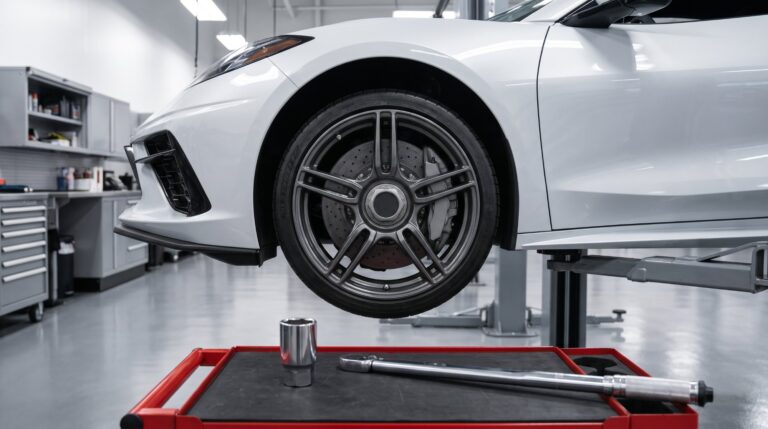
Exotic-Car Winter Storage: How to Protect Your Ferrari, Lamborghini or Porsche
Parking an exotic car for the winter involves more than a cover and a closed garage door. From batteries and tires to fuel and moisture, the right preparation prevents expensive surprises when driving season returns.

A Ferrari 458 can spend an entire winter without turning a wheel. So can a Lamborghini Huracán, a McLaren 720S or a Porsche 911 GT3. But that doesn’t mean nothing is happening beneath the cover.
Images in this article are editorial illustrations.
Batteries slowly discharge. Tires sit loaded in the same position for months. Moisture finds its way into places it shouldn’t, and fuel ages in the tank. None of it is inevitable. Good exotic car winter storage comes down to a few hours of preparation in the fall.
Whether your supercar is going away for three months or six, the objective is the same: keep it protected, keep it maintained, and have it ready to drive the first warm weekend of spring.
1. Prepare the Car Before Parking It
Start with a thorough wash, including the wheels, wheel wells and lower body panels. Road salt, brake dust and grime should not sit on paint, carbon or exposed metal for an entire season. Dry the car carefully afterward, paying attention to seals, vents, trim and anywhere water can pool.
The cabin deserves the same care. Remove food, wrappers and anything that might attract rodents, vacuum the carpets, and clean leather, Alcantara and other materials only with products approved for them.
Before the car goes into storage, check:
- Engine oil and other fluid levels, against the manufacturer’s maintenance schedule.
- Tires for damage, unusual wear or embedded objects.
- The garage floor and undertray for any sign of a fluid leak.
- Battery condition and any warning messages already on the dash.
- The fuel level and storage recommendations for your specific model.
If a service is due, do it before storage rather than leaving a known problem for spring. A car should go into hibernation in good mechanical health, not with a list of open issues.
2. Protect the Battery — Especially on Modern Supercars
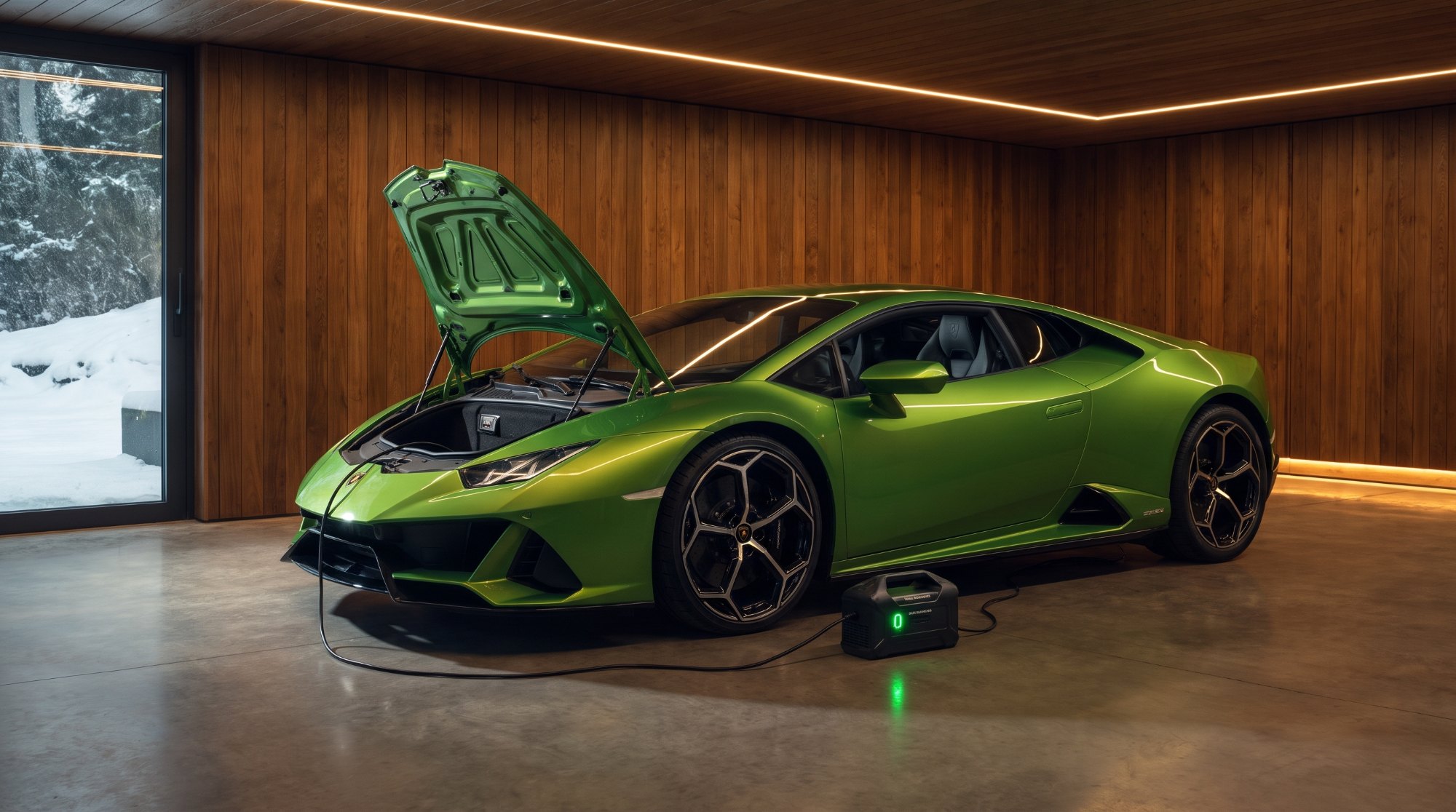
A dead battery is the single most common frustration when a stored car comes back into service.
Modern exotics carry a surprising number of electronic systems — security modules, control units, tracking devices, keyless-entry receivers — and some of them keep drawing a small current even when the car is locked and parked. Over several months, that quiet demand can flatten a 12-volt battery.
For most gasoline-powered supercars, an approved battery maintainer is the practical answer. Unlike a basic charger, a proper maintainer monitors the battery and manages its charge rather than simply pushing current into it.
Compatibility matters, though. A maintainer designed for a conventional lead-acid battery may not be appropriate for a car fitted with a lithium-ion 12-volt battery, which many lightweight performance models use. Always match the equipment to the battery chemistry and the vehicle.
Hybrid and electric supercars need different precautions
A Ferrari SF90 Stradale, a Ferrari 296 GTB or a Porsche Taycan adds a second consideration: the high-voltage traction battery. These cars run separate low-voltage and high-voltage systems, each with its own storage requirements, and manufacturers may specify a particular state of charge, a charging-connection procedure or a storage temperature range for long layups.
Don’t assume that leaving a plug-in hybrid or electric performance car at 100 percent for months is the right move. Follow the exact storage procedure in the owner’s manual for your model and model year, and ask the dealer if anything is unclear.
3. Prevent Tire Flat Spots and Pressure Problems
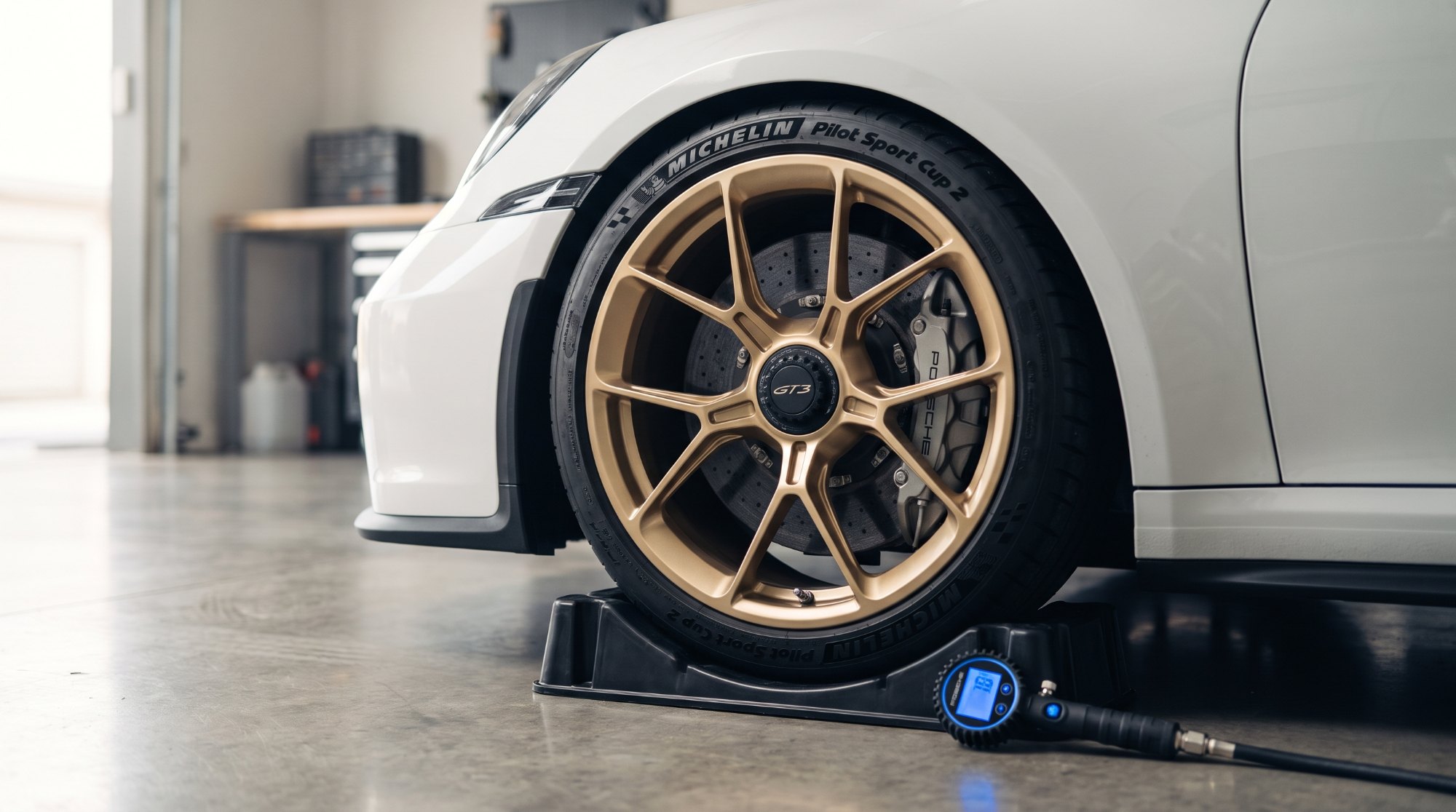
High-performance tires are engineered to cope with enormous acceleration, braking and cornering loads. What they are not designed for is sitting motionless under the same load for months.
When a car stands for a long time, the section of each tire touching the floor stays compressed and can take a “set.” Most of these flat spots are temporary and work themselves out as the tires warm up on the first drive. Long standing periods — particularly combined with heat or incorrect pressure — can produce flat spots that take much more driving to fade, or that require a specialist’s attention.
Tire makers don’t fully agree on pressure
Here is where conventional wisdom gets muddy. Michelin’s guidance is to keep tires at the placard pressure shown on the door jamb and not to inflate beyond it, noting that over-inflation can make matters worse. Continental, by contrast, suggests adding a small amount — about 3 psi (0.2 bar) — before parking a car for a long period, while never exceeding the tire’s maximum cold inflation pressure.
The common ground is clear: never store a car on under-inflated tires, never arbitrarily pump them up to the sidewall maximum, and when in doubt follow the vehicle manufacturer’s storage guidance and the advice of the company that made the tires on your car. Write down the pressures you set so you can restore the correct running pressures in spring.
Tire cradles, lifts and moving the car
Purpose-made tire cradles are popular with collectors, and the theory is sound: a curved support spreads the load across more of the tread. The evidence is thinner. Michelin says it has no data verifying that cradles reduce flat spotting, and points out that the cradle’s curve would need to match the tire’s to be effective.
Rolling the car a short distance can change the tire’s contact patch, but it should never mean unnecessary engine starts or maneuvering in a cramped garage. If the car will be stored on a lift or stands, have a qualified technician confirm the correct lifting points and any suspension considerations. Lifting a modern exotic by an arbitrary chassis point can damage undertrays, carbon structures or suspension components.
4. Choose the Right Storage Environment
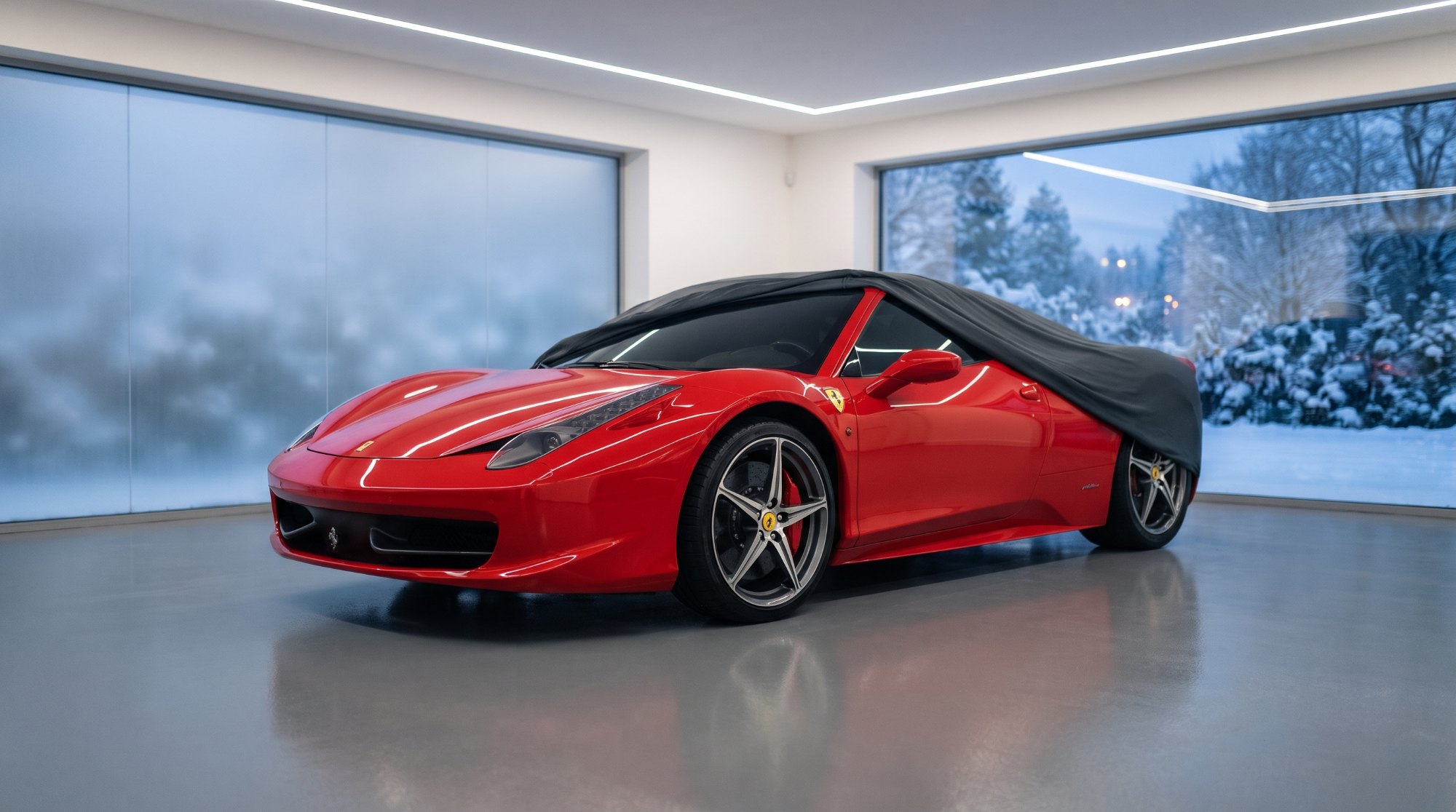
A clean, enclosed garage beats leaving an exotic exposed to winter weather, but not every indoor space offers the same protection. Large temperature swings, high humidity, water intrusion and poor ventilation can all cause trouble behind a closed door.
The ideal space is secure, dry, reasonably temperature-stable and free of roof leaks or standing water. Climate-controlled storage earns its cost for cars with delicate interior materials, significant collector value or long storage periods.
A breathable indoor cover keeps dust off the finish. It should be clean, properly fitted and designed for indoor use — a cheap or non-breathable cover can trap moisture against the paint, which defeats the purpose.
Don’t overlook rodents
Mice and rats chew insulation, wiring and upholstery, and the repair bill on a modern supercar’s wiring loom can be eye-watering. Remove food sources, seal obvious entry points in the garage, and use pest-control measures that don’t put people, pets or the car at risk.
For long layups, schedule occasional visual inspections. A garage door that stays shut for months doesn’t guarantee nothing has changed inside.
5. Fuel, Fluids and Mechanical Components
Gasoline degrades over long periods of storage, especially in poor conditions. The right preparation depends on the car, the storage duration, the fuel itself and the manufacturer’s recommendations.
Many owners use a fuel stabilizer; if you do, make sure it is compatible with your vehicle and consistent with its storage instructions. The correct tank level also varies by manufacturer, so don’t assume every exotic should be stored brimmed or nearly empty — check the manual.
Brakes deserve a thought too. Rotors can develop a film of surface rust in damp conditions. Light surface rust usually disappears after a few gentle stops, but heavy corrosion, unusual noise or uneven braking calls for an inspection — particularly on cast-iron discs. Some manufacturers also advise against leaving the parking brake applied for an extended layup. If you release it, secure the car using the method the manufacturer approves.
6. Should You Start the Engine During Winter Storage?
It’s one of the most common questions seasonal owners ask. Firing up the car every few weeks feels like it should keep it healthy. In practice, a brief idle accomplishes very little.
A few minutes of idling won’t bring the oil, exhaust and other components up to full operating temperature, so condensation can build up in the exhaust and engine rather than burning off. It also won’t put back the charge the starter just took out of the battery.
For a car that has been properly prepared, a good battery maintainer and the manufacturer’s storage procedure are worth more than periodic starts. If you do want to drive it mid-winter, wait for dry, salt-free roads and drive long enough for everything to reach proper operating temperature.
Never idle a car in an enclosed garage. Carbon monoxide can build to dangerous levels quickly, even with the garage door open.
7. Bringing Your Supercar Out of Winter Storage
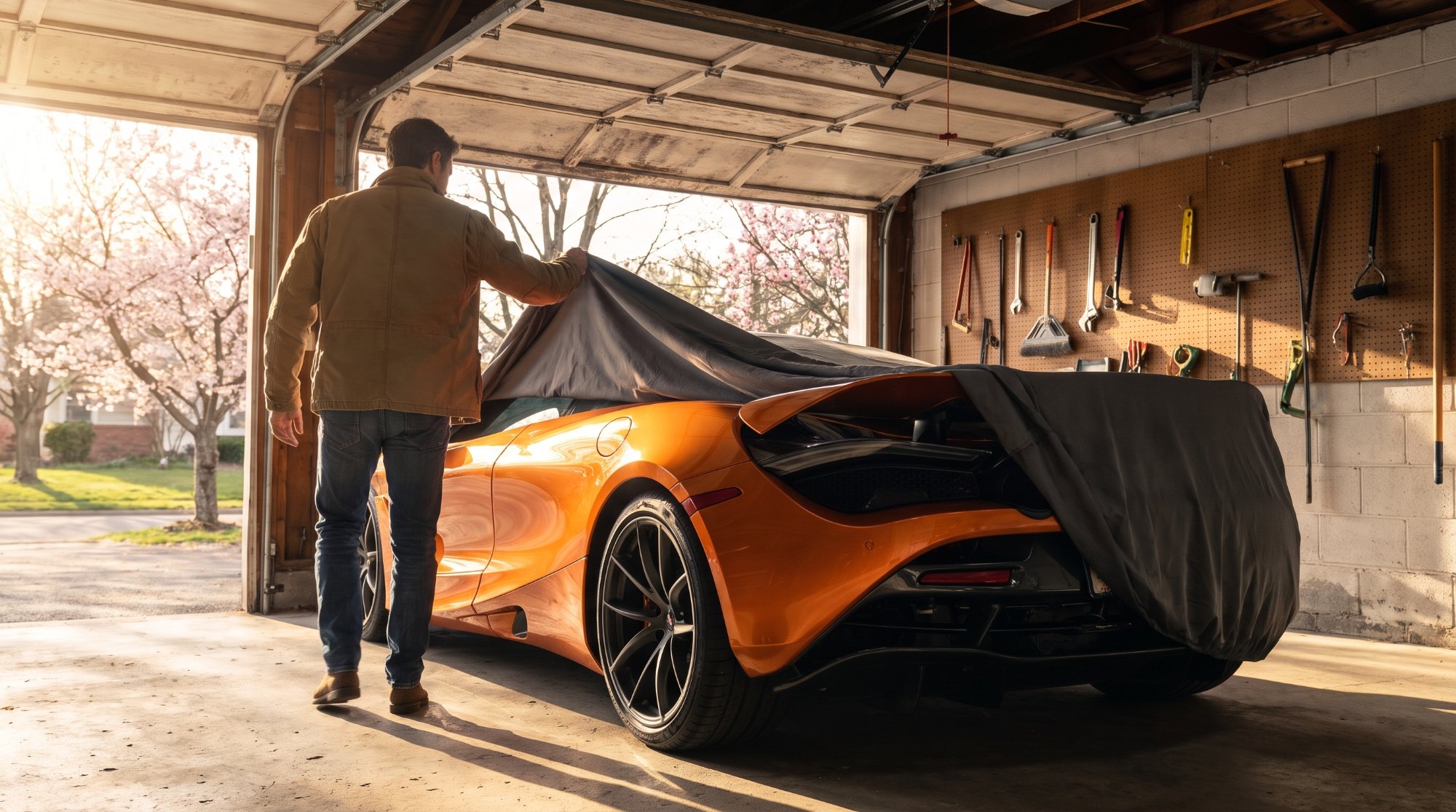
When spring arrives, resist the urge to pull off the cover, start the engine and head straight for your favorite road. A car that has sat for months deserves a basic once-over first.
Check the battery, tire pressures, fluid levels and visible hoses. Look under the car for leaks and around the engine bay for signs of rodent activity — nesting material, droppings or chewed insulation. Inspect the brakes, and confirm that the lights and key electronic systems work. If you stored the car with altered tire pressures, a disconnected battery or on stands, reverse those steps according to the manufacturer’s instructions.
On the first drive, let the car warm up normally and listen for unusual noises, vibrations or warning messages. A slight vibration that fades as the tires warm is typical of temporary flat spotting; one that persists needs a closer look.
Treat summer tires with respect in early-season cold. Performance summer compounds lose grip as temperatures fall, and Pirelli, for example, excludes compound cracking caused by use below 45°F (7°C) from its summer-tire warranty. Some track-focused tires carry even stricter guidance on handling and storage in near-freezing conditions. Check the tire maker’s recommendations, and don’t roll a car on cold-sensitive track tires in an unheated garage on a freezing morning.
A stored supercar should return to service gradually — not be asked for its maximum performance in the first mile.
Exotic Car Winter Storage Checklist
Run through this list before leaving a car parked for several months.
- Wash and thoroughly dry the exterior, including wheel wells and lower panels.
- Clean the cabin and remove food or debris.
- Check fluids, look for leaks and complete any service that is due.
- Confirm the correct fuel-storage procedure for your model.
- Inspect the tires and set (and record) the recommended storage pressures.
- Connect a compatible, approved battery maintainer if required.
- Follow the hybrid or EV high-voltage battery storage instructions.
- Check the storage space for moisture, ventilation and security.
- Use a clean, breathable indoor cover if appropriate.
- Confirm your insurance coverage remains appropriate during storage.
- Arrange periodic visual inspections.
- Note the storage date, mileage and battery condition.
Frequently Asked Questions
How long can a supercar sit without being driven?
A properly prepared car can usually be stored for several months, but the acceptable duration and the precautions required depend on the model, its battery systems, its fluids and the storage conditions. The manufacturer’s storage guidance is the final word.
Should I disconnect the battery?
Not automatically. Disconnecting the battery on a modern exotic can affect electronic systems and may require specific reconnection procedures. Where the manufacturer recommends it, an approved maintainer is often the better choice.
Do tire cradles prevent flat spots?
They may help spread the load, but their effectiveness depends on design and fit, and Michelin says it has no data verifying that they reduce flat spotting. Correct inflation and good storage conditions matter more.
Is a climate-controlled garage necessary?
Not for every car. A clean, secure, dry garage may be enough. Climate control adds protection for valuable collector cars and for long storage periods.
Should I cancel my insurance while the car is stored?
Not without reviewing your policy and any financing requirements. Theft, fire, weather damage and other risks remain even when a car isn’t being driven. Ask your insurer about seasonal or storage coverage options rather than dropping coverage — and if your summer plans include track days, our guide to track-day insurance for exotic cars covers the gaps many owners don’t know about.
The Best Winter Storage Is the Kind You Don’t Notice in Spring
An exotic car doesn’t need to be driven every week to stay healthy. It does need to be stored correctly.
For some owners, that means a clean home garage, an approved battery maintainer and an afternoon of preparation. For others — especially those with larger collections or limited space — professional vehicle storage may be worth the cost.
Either way, the goal is the same: protect the car while it sleeps, so the next driving season starts with the joy of ownership rather than an unexpected repair bill. And if you’re already planning what comes next in the garage, you can browse exotic cars for sale on Exotic Motors — and read our checklist for an exotic car pre-purchase inspection (PPI) before you buy.
Buying guides, market analysis and news for people shopping exotic, luxury and collector cars. Written by the Exotic Motors team; prices and availability are checked at publication.