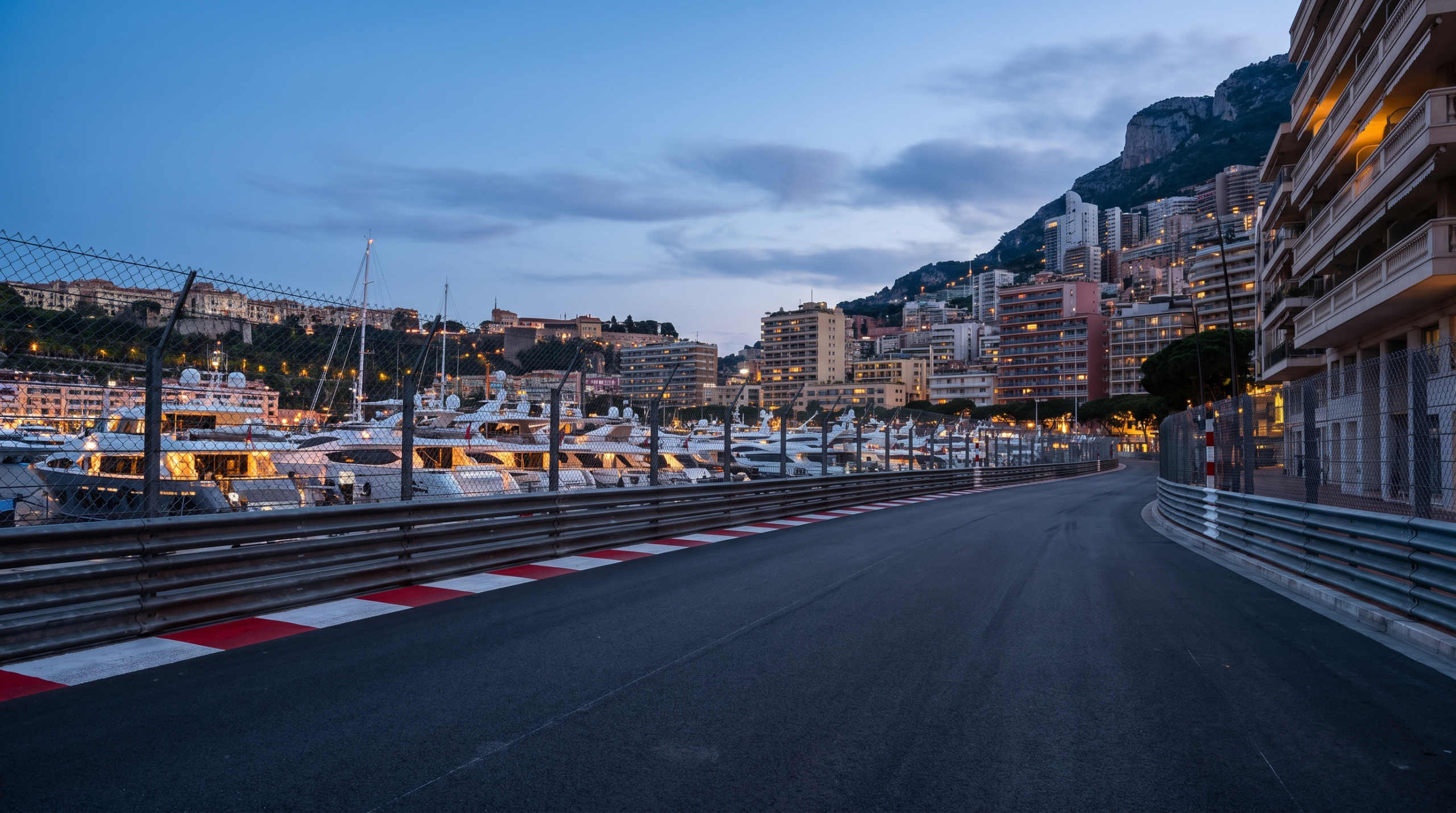
On 4 June 2026, days before the Monaco Grand Prix, Audi put its first supercar onto the circuit where its brand-new Formula 1 team was about to race, and sent it out for two laps. The Audi Nuvolari is the first supercar in the company’s history — not the fastest Audi, not the most expensive Audi, the first one that was designed from the outset to be a supercar and nothing else. It makes 1,001 PS, there will be 499 of them, and Audi’s own chief technology officer would like everyone to stop calling it the new R8.
Quick Answer: What Is the Audi Nuvolari?
The Audi Nuvolari is Audi’s first halo supercar, revealed 4 June 2026 at Monaco. A 4.0-litre twin-turbo V8 revving to 10,000 rpm works with three electric motors — two of them axial-flux units on the front axle — for a maximum system output of 736 kW (1,001 PS). Audi will build 499 cars. European order books open in the fourth quarter of 2026 and deliveries start in the first half of 2027. Audi has not published a price, and US availability has not been confirmed.
Table of Contents
The car itself, in motion at the reveal. Footage via The Wheel Network on YouTube.
What Is Inside the Audi Nuvolari
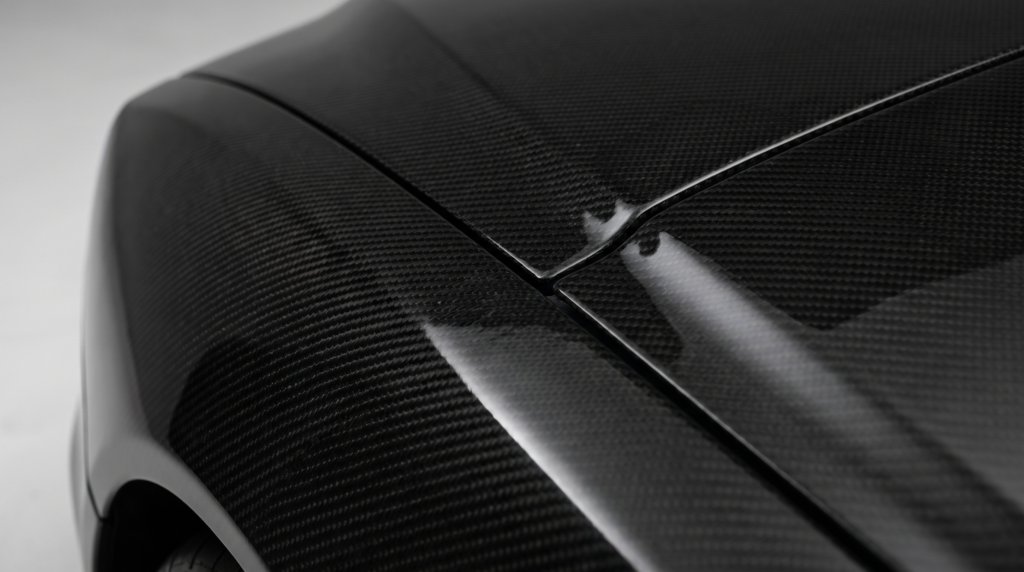
Carbon fiber up close: the weave, the lacquer, and a tight shut line. Illustrative image.
The Audi Nuvolari engine is a 4.0-litre V8 biturbo producing 588 kW and 730 Nm, and it spins to 10,000 rpm — a figure that belongs to naturally aspirated racing engines rather than turbocharged road cars. Three electric motors join it, each rated at 110 kW. One sits between the engine and the transmission. The other two live on the front axle, are oil-cooled, and are axial-flux rather than the conventional radial type. Between them the front pair can deliver up to 2,150 Nm. A 7.3 kWh lithium-ion pack feeds the system.
Maximum system output is 736 kW, which Audi states as 1,001 PS. Nought to 100 km/h takes 2.6 seconds and the top speed is over 350 km/h. The body is almost entirely carbon fibre reinforced polymer over an Audi Space Frame — Audi calls the combination of its aluminium spaceframe with a carbon exterior a first for the company.
The Audi Nuvolari went from first sketch to drivable prototype in 405 days, by Audi’s own account. Development ran at the Nürburgring and at Nardò, with Audi’s two Formula 1 drivers taking part.
The Audi Nuvolari Is Not an R8 Successor, and Audi Keeps Saying So
Most of the coverage filed the Audi Nuvolari as the R8’s replacement. Audi’s chief technology officer and head of R&D, Rouven Mohr, has been unusually direct about it:
We really always try to underline that it was never planned as a successor of the R8. It’s a different animal because it’s more a halo brand vision related to the Formula One entry.
That distinction is worth taking seriously, because the numbers make his point for him. The R8 ran from 2006 to March 2024 and Audi built 45,949 of them — a supercar in shape and sound, but a series-production car in volume, largely hand-assembled at Böllinger Höfe. The last one, in Vegas Yellow, went to the Audi Museum in Ingolstadt.
The Nuvolari is 499 cars. Chief executive Gernot Döllner has framed the difference the same way, noting that the R8 “had some volume ambitions” while this car is a showcase. Mohr is blunter about why it cannot be an R8 on price: “To make the car cheaper is simply not possible with the material cost.” He also argues the exclusivity is deliberate rather than a constraint — build ten thousand and “you lose the exclusivity.”
So: not a replacement, a statement. The distinction matters if you are thinking about what happens to values, because 499 cars and 45,949 cars behave very differently over a decade.
The 1,001 Problem
Here is a detail that will trip up anyone comparing the Audi Nuvolari to its rivals on a spreadsheet, and it is worth understanding because it recurs across the whole segment.
Audi quotes 1,001 PS. Lamborghini quotes the Revuelto at 1,015 CV, which converts to 1,001 hp. Two different cars, the same number printed on the page, and they do not mean the same thing. A PS — metric horsepower — is about 0.986 of an hp. Audi’s 1,001 PS is roughly 987 hp. Lamborghini’s 1,001 hp is 1,015 CV. Set the two side by side in the same column and the Revuelto is comfortably the more powerful car, which is not the impression the headline figures give.
Audi is not immune to the confusion either. Its own English-language press release describes the V8 as “588 kW (800 hp)”. 588 kW is 800 PS; in horsepower it is about 789. Audi of America, meanwhile, lists the system output as 986 HP — a correct conversion of the 1,001 PS figure. The same company, two documents, two different conventions.
None of this makes anyone’s figures wrong. It makes cross-brand comparison harder than it looks, and it is the single most common reason a spec table on the internet is misleading. Where a manufacturer publishes a metric figure below, we have given both.
Car
Maker’s figure
In hp
Production
Audi Nuvolari
1,001 PS
~987 hp
499
Lamborghini Revuelto
1,015 CV
1,001 hp
Series production
Ferrari 849 Testarossa
1,050 cv
1,036 hp
Series production
Chevrolet Corvette ZR1X
1,250 hp
1,250 hp
Series production
Porsche 911 Turbo S
701 hp (US)
701 hp
Series production
Manufacturers’ own published figures. Note that GM and Porsche’s US arm publish in hp while Audi, Lamborghini and Ferrari homologate in PS or cv.
Why the Audi Nuvolari Has Two Motors on the Front Axle
An axial-flux motor is shaped like a pancake rather than a tin can. In a conventional radial motor the magnetic flux runs outward from the shaft to a stator wrapped around the rotor. In an axial motor it runs parallel to the shaft, between flat discs. Because torque scales with radius, putting the active material out near the rim of a disc buys a great deal of torque for very little mass and, crucially, very little length.
That shape is what lets the Audi Nuvolari fit two separate motors into a front axle that also has to accommodate steering and crash structure. One motor per front wheel means the torque going to each wheel can be commanded independently, rather than approximated by braking the inside wheel. It also gives Audi a quattro without a propshaft: there is no mechanical connection between the engine and the front wheels at all.
Audi has not named the motor supplier, and we are not going to guess at one.
The Name, and the Race He Did Not Win for Auto Union
A leather helmet and goggles from Tazio Nuvolari’s era — the pre-war racer Audi named the car for. Illustrative image.
Tazio Nuvolari (1892–1953) was the pre-war driver other pre-war drivers were frightened of. Il Mantovano Volante — the Flying Mantuan — European Champion in 1932 with Alfa Romeo, and a man whose reputation rests on winning races in cars that had no business winning them.
The Audi connection is real but narrower than most retellings suggest. Nuvolari joined Auto Union — one of the four companies whose rings became Audi’s badge — in 1938, at the age of 45, and drove for them until war stopped everything. He won the 1938 Italian Grand Prix at Monza and the 1938 Donington Grand Prix in the Type D, and took the 1939 Belgrade Grand Prix, the last Grand Prix held before the war.
Here is the part that gets garbled. His most famous drive — the 1935 German Grand Prix at the Nürburgring, where he beat the entire German works effort in front of an establishment crowd expecting a home victory — was in an Alfa Romeo, and the teams he beat were Auto Union and Mercedes. It is the single greatest result of his career and it was scored against the company whose successor has now named a car after him. Audi, to its credit, does not claim otherwise; its press release says only that he was “one of the most prominent figures in motorsport history.”
There is also a colour. Nuvolari raced in a yellow sweater, to the point that yellow became his signature — a detail Audi has picked up in the livery of its Formula 1 team. And the name has been used once before: the Audi Nuvolari quattro concept at Geneva in 2003, a 5.0-litre twin-turbo V10 making 441 kW (600 PS), and one of the first cars shown with LED headlights.
The Formula 1 Connection Is Real — Up to a Point
Audi entered Formula 1 in 2026, and the company ties the two programmes together deliberately. Mohr’s description of the car as “a halo brand vision related to the Formula One entry” is the clearest statement of intent anyone at Audi has made about it. The reveal was staged at Monaco. Audi’s race drivers did development laps. Döllner talks about embedding an F1 mindset in the road-car business.
What it is not is a Formula 1 car for the road, and it is worth being precise about that because the marketing invites the confusion. Audi’s F1 power unit is a 1.6-litre V6 turbo hybrid. This is a 4.0-litre V8. What crosses over is philosophy — energy deployment and recuperation strategy, active aerodynamics, obsessive attention to how power is delivered rather than how much of it there is — not hardware.
What the Audi Nuvolari Shares With Lamborghini
Audi and Lamborghini sit under the same corporate roof, and Döllner has acknowledged the obvious: “Of course there are components from the Lamborghini cosmos, but there are also things that are being shown here for the very first time.”
Audi has not named the donor model. Several outlets have identified it as the Temerario, and the architecture certainly lines up — a 4.0 V8 biturbo to 10,000 rpm, three motors with two axial-flux units at the front axle. Mohr’s position is that the calibration is the differentiator, and that the two cars have “completely different” characters. We will find out when people have driven both back to back; for now, treat the shared-platform detail as well-reported rather than confirmed.
What the Audi Nuvolari Costs: Nobody Official Has Said
Audi has published no price. Not in the press releases, not on the model page, not on Audi of America’s site. No Audi executive is on record with a figure.
That has not stopped numbers circulating, and they are worth separating because they are measuring different things. European list price has been reported at roughly €590,000 to €599,000. UK coverage has run figures around £500,000 to £533,000. And a widely-shared “$1 million” headline turns out, on reading the article beneath it, to be a journalist’s estimate of a Canadian-dollar price after options and taxes — not a list price at all.
You will also find “$700,000” attributed to Audi’s chief executive. It is not in any quote of his that we could find; it appears in a headline above an interview about why the car still has a V8. That is how an estimate becomes a fact, and it is worth knowing before you repeat it at a dinner table.
What Audi has said is that European order books open in the fourth quarter of 2026, with deliveries in the first half of 2027.
Can You Buy an Audi Nuvolari in America?
Not yet, and Audi is careful about it. Audi of America’s own page states: “The arrival of the Audi Nuvolari to the U.S. is subject to a future announcement and will vary from what is detailed in global materials.” The car shown on that page is labelled a European pre-production prototype. US pricing and EPA figures are, in Audi’s words, subject to a future announcement as well.
That is not the same as a no. Audi gave the car its North American debut on 25 August 2026 at The Quail and on the Concept Lawn at Pebble Beach, and ran it on the roads around Carmel — which is not what a company does with a car it has no intention of selling here. Vito Paladino, president of Audi of America, called Monterey “the pinnacle premium automotive stage for Audi to showcase the brand’s first halo supercar.” Read that as groundwork.
If you want one, the practical advice is unglamorous: talk to your Audi dealer now rather than in 2027. With only 499 Audi Nuvolari being built and no confirmed US allocation, the list forms before the announcement does.
What It Means If You Already Own an Audi
Halo cars do a job beyond the 499 people who get an Audi Nuvolari. They set the reference point the rest of the range is measured against, and they tend to pull attention onto the cars people can actually buy. The R8 did exactly that for a generation of RS models; a decade on, the RS cars it legitimised are among the most sought-after used Audis on the market.
The more interesting question for an existing owner is what the Audi Nuvolari signals about direction. Audi has just spent enormous money proving it will still build a 10,000 rpm V8 in 2026, and put it in the most visible car it has ever made. That is a statement about what the brand thinks its performance customers want, and it is not the statement most of the industry has been making.
Audi has not published a price and no Audi executive is on record with a figure. European list price has been reported at roughly €590,000 to €599,000. A widely shared $1 million headline is a journalist estimate of a Canadian price after options and taxes, not a list price.
How many Audi Nuvolari will be built?
Audi will build 499. European order books open in the fourth quarter of 2026 with deliveries in the first half of 2027.
Is the Audi Nuvolari the R8 successor?
Audi says no. Chief technology officer Rouven Mohr has stated it was never planned as a successor to the R8, describing it instead as a halo brand vision related to the Formula One entry. The R8 ran to 45,949 cars; the Nuvolari is 499.
How much power does the Audi Nuvolari have?
Maximum system output is 736 kW, which Audi states as 1,001 PS — about 987 hp. Audi of America lists 986 HP. The 4.0-litre V8 alone makes 588 kW and revs to 10,000 rpm, with three 110 kW electric motors alongside it.
Will the Audi Nuvolari be sold in the United States?
Not confirmed. Audi of America states that the arrival of the Nuvolari to the U.S. is subject to a future announcement. The car made its North American debut at The Quail and Pebble Beach in August 2026, but no US pricing or allocation has been announced.
Who was Tazio Nuvolari?
An Italian racing driver, 1892 to 1953, European Champion in 1932 with Alfa Romeo. He drove for Auto Union — one of the four marques behind the Audi rings — from 1938, winning that year at Monza and Donington and taking the 1939 Belgrade Grand Prix. His most famous victory, the 1935 German Grand Prix, was scored in an Alfa Romeo against Auto Union.
Owning an exotic car is not about speed or luxury- It’s about embracing an experience, where the road becomes your canvas and the car, your masterpiece.
What owning a Lamborghini actually involves: how allocation really works, the five-year maintenance programme, real clutch and service bills, insurance, values and Polo Storico.
How buyers can verify window stickers, build sheets, owner’s manuals and factory records before purchasing a rare, exotic or classic car — including Ferrari Classiche, Porsche CoA and marque archive programs.
Monterey Car Week explained: every event in the ten days, which are free and which are not, the confirmed 2027 dates, and what the 2026 edition actually produced.
Bugatti’s one-off Destrier debuts during Monterey Car Week 2026 with a 1,578-hp quad-turbo W16, Bolide bones, and a $20M+ price tag. Full story, specs, and FAQ.