Owning an exotic is one of life’s great automotive joys — but the road to the driver’s seat is littered with expensive lessons. After more than a century of watching deals go right (and occasionally very wrong), we’ve seen every mistake a buyer can make when purchasing an exotic car. The good news: every one of them is avoidable. A few cost real money to avoid — a proper inspection is not free — but each one costs a fraction of the problem it catches. Here are the ten that matter, and exactly how to sidestep each, whether this is your first exotic or number twelve in the collection.
Table of Contents
Quick Answer: The Biggest Mistakes When Purchasing an Exotic Car
The costliest mistakes when purchasing an exotic car are skipping the pre-purchase inspection, ignoring the car’s documented history, and budgeting only for the sticker price while forgetting maintenance, insurance, storage, and depreciation. Add emotional buying, murky financing terms, and unverified sellers, and you have the complete top-ten list. The antidote is simple: buy documented cars from verified dealers, inspect before you pay, and budget for the ownership, not just the purchase.
The 10 Mistakes at a Glance
Mistake
Typical cost of getting it wrong
The fix
1. Skipping history research
Hidden accidents, mileage discrepancies
VIN check, records, provenance file
2. Underestimating running costs
$10k+/year surprises
Budget from real ownership data
3. Ignoring depreciation
Five figures in year one on the wrong car
Study sold comps and model cycles
4. No pre-purchase inspection
The most expensive mistake on this list
Independent marque-specialist PPI
5. Overlooking insurance
Quotes that arrive after the deposit
Bind agreed-value coverage first
6. Murky financing
Punitive rates and balloon surprises
Specialty lenders, terms in writing
7. Pure emotion
Overpaying for the wrong spec
Sleep on it; buy the spec, not the color
8. No storage plan
Paint, tires, and batteries suffer
Climate-controlled space before delivery
9. Skipping the test drive
Discovering “character” after purchase
Drive it — or hire someone who can
10. Unverified sellers
Scams and title nightmares
Verified dealers on curated platforms
1. Failing to Research the Car’s History
Every exotic worth buying has a paper trail: ownership chain, service stamps, accident record, mileage continuity. Skipping it is how buyers end up with a repainted “accident-free” car or a clock that doesn’t match the story. Before purchasing an exotic car, run the VIN through a history service and the NICB’s free VINCheck — but know what that free check actually does. VINCheck searches two registries: cars reported stolen and not recovered, and cars declared salvage by participating insurers. NICB says so plainly on its own page — it “is not a comprehensive vehicle history report and should not be relied upon when purchasing a vehicle.”
The tool that catches title washing is NMVTIS, the Justice Department’s national title database, which pulls brands from every reporting state — so a salvage or flood brand issued in one state doesn’t quietly vanish when the car is retitled in another. Reports run a few dollars through the approved providers listed there, and in our experience it’s the most under-used tool available to anyone purchasing an exotic car.
Then go deeper than any report: call the servicing dealer, verify the records match the seller’s story, and read our collector car documentation guide for the full provenance checklist. On limited-production cars, the history isn’t background — it’s a third of the value.
Pay special attention to mileage continuity across records — gaps invite stories, and stories cost money at resale.
Federal law helps here more than most buyers realise: the seller has to certify the odometer reading at transfer, and that duty now runs twenty years on model-year 2011 and newer cars.
So a 2012 arrives with a certified reading in its title paperwork; a 2009 doesn’t, because the older ten-year exemption ran out on it years ago. On the older car the service file is the only mileage evidence there is — which is precisely why the paperwork matters more the further back you shop. Ask who owned the car, where it lived (coastal salt and desert sun age cars differently), and whether it ever sat unused for years. Long dormancy is its own history: seals dry, fuel systems gum, and “low miles” quietly becomes a liability instead of a selling point.
Illustrative rendering: budget the ownership, not just the purchase.
2. Underestimating Maintenance and Repair Costs
The purchase price is the entry fee, not the cost. Annual services on exotics run four figures; major services, clutches, and carbon-ceramic brakes run five. Tires alone can exceed $2,000 a set, and exotic bodywork makes minor dings expensive. None of this should scare you off — it should shape your budget. Before purchasing an exotic car, read our real-numbers breakdown of the cost to own a Lamborghini Huracán — then apply the same math to whatever you’re shopping. Informed owners enjoy their cars; surprised owners sell them within a year.
3. Ignoring Depreciation and Resale Value
Some exotics appreciate; most don’t, and the difference is knowable in advance. Limited production, manual gearboxes, iconic specs, and clean documentation hold value. First-year-of-a-generation cars, aging tech-heavy interiors, and oddball specs shed it. When purchasing an exotic car, study sold comps — not asking prices — and mind model cycles: the day a successor is unveiled, the outgoing car reprices. Think about the exit before the entrance; our guide on how to sell your exotic car fast is worth reading before you buy, not after.
One more depreciation subtlety: options behave differently at resale. Carbon packages, factory liveries, and desirable paint-to-sample colors often return their cost; gimmick options rarely do. We’ve watched two otherwise identical cars trade a five-figure sum apart on options alone — which is why buying the right configuration matters as much as buying the right model when purchasing an exotic car.
4. Not Getting a Pre-Purchase Inspection (PPI)
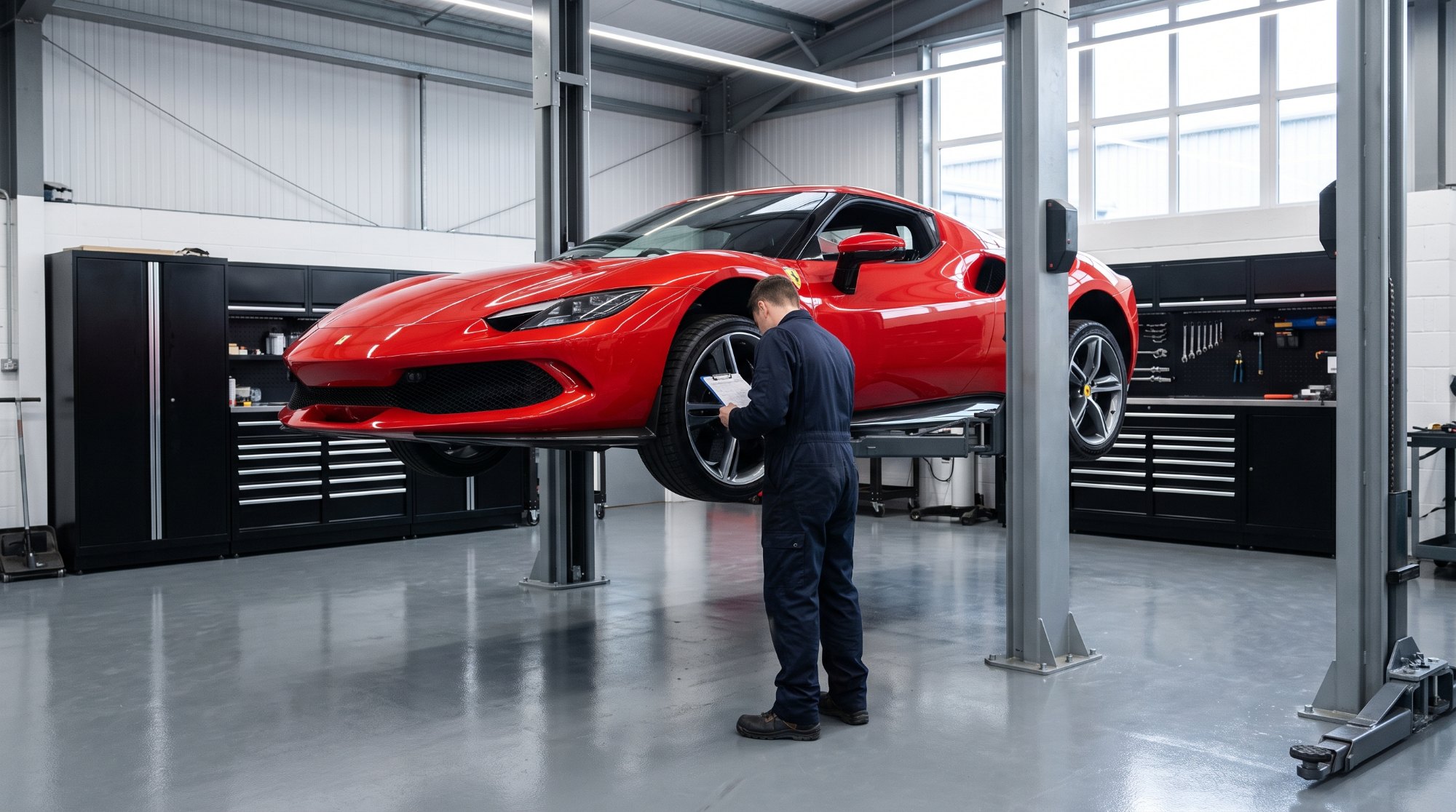
If this list had only one item, this would be it. An independent PPI by a marque specialist — compression, leak-down where appropriate, paint-depth readings, suspension scan, fault-code history — costs a few hundred dollars and can save five figures on a single finding. “The dealer already inspected it” is not a PPI; independence is the point. A seller who resists an inspection has answered your question for you. And even on nearly new cars, purchasing an exotic car without a PPI means buying the previous owner’s habits sight unseen.
Book the PPI with a specialist for that marque, not a general shop — a Ferrari specialist knows exactly which gaskets weep and which gearbox codes matter, and that pattern knowledge is what you’re paying for. Get the report in writing with photos. If the deal dies on the findings, the inspection just earned its fee many times over; if the car passes, the report becomes part of the provenance folder and helps you at resale.
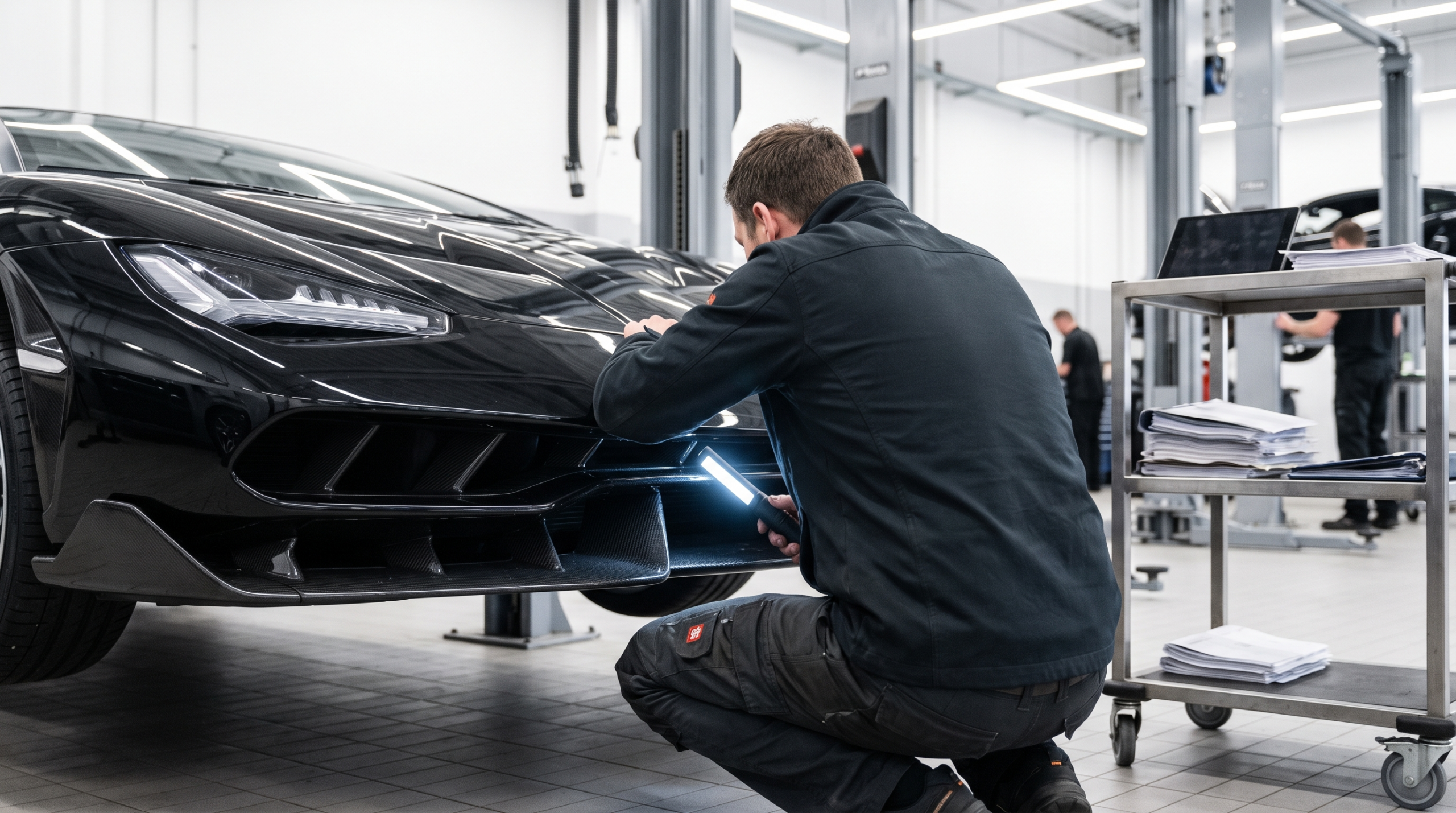
Illustrative rendering: the PPI — a few hundred dollars against five-figure surprises.
5. Overlooking Insurance Costs
Too many buyers get their first insurance quote after the deposit clears — then discover their daily-driver carrier either declines the car or prices it like a fighter jet. Get quotes before purchasing an exotic car, from insurers who specialize in them. Agreed-value collector policies are the standard: you and the insurer fix the car’s worth up front, so there’s no arguing after a loss.
They aren’t open to everyone, though. Most collector carriers write on the assumption that the car is a weekend vehicle rather than a daily driver, want it garaged, and expect every licensed driver in the household to have a regular-use car of their own. If the exotic is going to be your only vehicle, the collector rate you saw quoted won’t apply to you — price a standard high-value policy instead and budget the difference before you sign anything. Ask specifically about track-day exclusions, transport coverage, storage requirements, and mileage caps — the fine print is where exotic policies differ.
Premiums also swing on things first-timers never expect: your ZIP code and storage situation (a locked private garage quotes differently than street parking), your driving record on ordinary cars, and even how many vehicles share the policy. Collectors often pay less than newcomers expect precisely because agreed-value carriers understand limited-use patterns. Two or three quotes take an afternoon and can differ by thousands per year — cheap diligence when purchasing an exotic car.
6. Financing Without Understanding the Terms
Exotic financing is a specialty product. Mainstream banks often misprice low-production cars or decline them outright, while specialty lenders understand extended terms, balloon structures, and real residual values. Know the difference between a balloon payment and a lease-like structure, get every term in writing, and understand what happens if you want out early. Getting pre-approved before purchasing an exotic car also makes you a cash-equivalent buyer — and in negotiations, speed is leverage. As always: not financial advice, just the questions that protect you.
One more habit worth stealing from experienced collectors: finance conservatively even when you could stretch, because running costs arrive on their own schedule — and the happiest owners are the ones whose exotic never has to earn its keep.
7. Buying on Emotion Rather Than Logic
Passion belongs in the decision — it just shouldn’t drive alone. Emotional buyers overpay for the first example they see, excuse missing records because the color is right, and skip inspections because the car “feels perfect.” The discipline of purchasing an exotic car well is simple: decide the model, spec, and maximum price before you start shopping, then sleep on any deal for 48 hours. The right car survives two nights of reflection. If you’re new to this world, our first-time exotic car buyer guide builds the full decision framework.
8. Not Factoring In Storage and Usage
Exotics are sensitive machines: paint, rubber, batteries, and fluids all suffer from poor storage. If your garage situation involves sun, salt air, or a shared apartment deck, solve storage before delivery day, not after. Battery tenders and climate control are the minimum; for serious collections, deeded garage condos and motor suites have become the collector’s answer — browse what’s available on MotorStables.com, our family’s marketplace for automotive real estate, or read our full guide to luxury car condos.
And be honest about usage: a car that never gets driven develops its own problems. Flat-spotted tires, varnished fuel, weeping seals, and dead batteries are all symptoms of the same disease — good intentions without a storage plan. Decide before purchasing an exotic car whether it will be a weekly driver, an events car, or a long-hold collectible, because each answer implies a different storage setup, insurance structure, and maintenance rhythm.
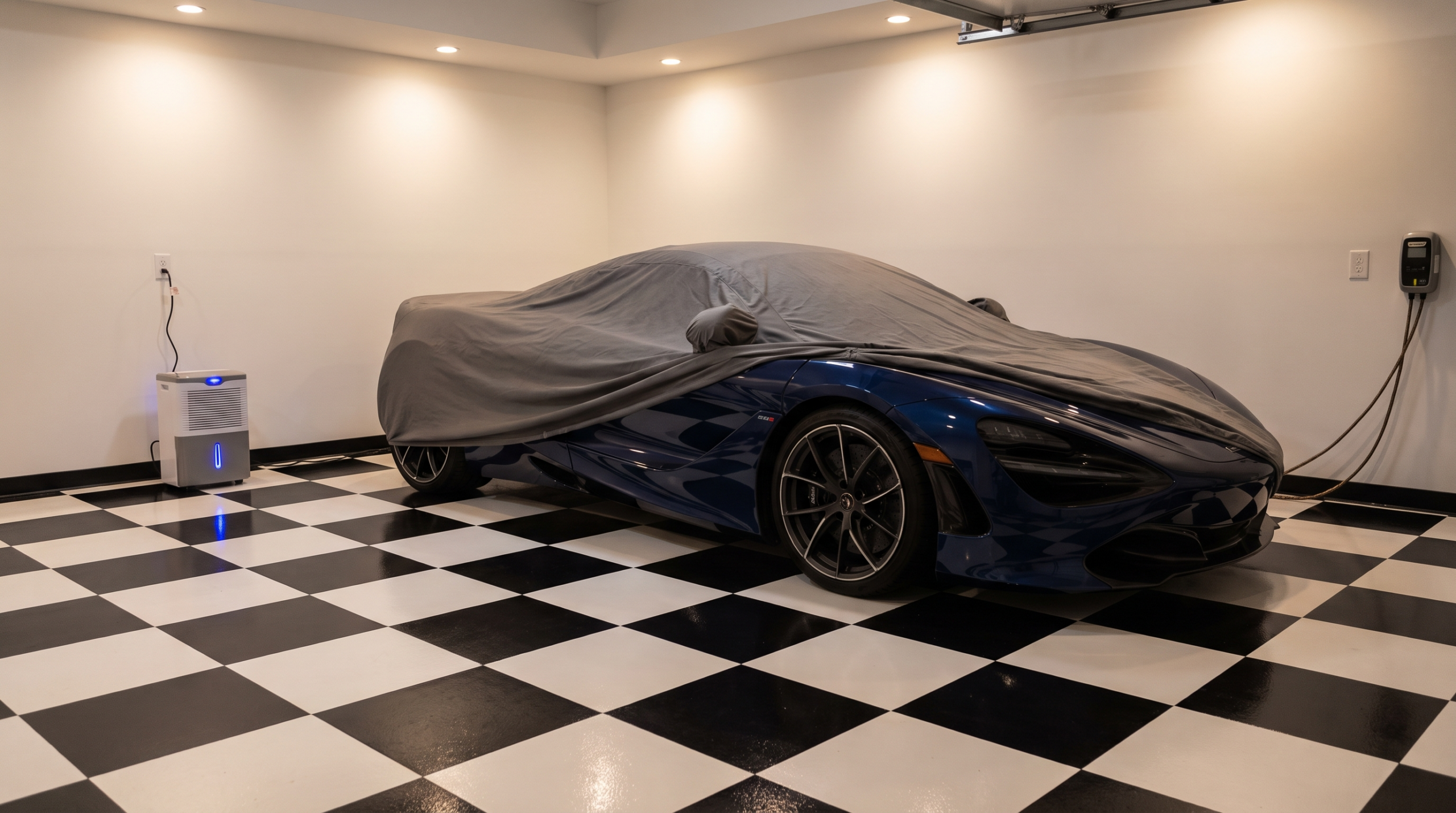
Illustrative rendering: solve storage before delivery day — tenders, climate, cover.
9. Skipping the Test Drive
Photos can’t tell you how a clutch takes up, whether the carbon brakes squeal cold, or that the previous owner’s “minor rattle” is a dashboard symphony. Drive the car — cold start to warm — or, if you’re buying remotely, have your PPI specialist drive it and video the experience. Remote buying is mature now (here’s how buying exotic cars online works in 2026), but “remote” should never mean “undriven by anyone you trust.”
On the drive itself, work a checklist rather than vibes: cold-start behavior and smoke, gearbox engagement in every mode, brake feel and pull, steering centering, suspension noise over broken pavement, and every electronic system including the annoying ones — windows, sensors, lifts, infotainment. Ten deliberate minutes tells you more than an hour of joyriding, and it keeps the emotion of the moment from writing checks your inspection should approve first.
Illustrative rendering: ten deliberate minutes behind the wheel beats an hour of joyriding.
10. Purchasing From an Unverified Seller
The exotic market attracts sophisticated fraud precisely because the sums are large: cloned listings, fake escrow sites, cars sold with washed titles. The FTC’s used-car guidance is worth ten minutes of your time, because it spells out the one federal protection a dealer owes you and a private seller doesn’t. The Used Car Rule requires a dealer to post a Buyers Guide on the window before the car is offered for sale or handed over for inspection, stating whether it’s sold with a warranty or “as is — no dealer warranty.”
That guide becomes part of your contract, and its terms override anything contrary in the paperwork you sign. Read the window form before the test drive rather than after the deposit — and take the corollary seriously: a warranty term you negotiated but that isn’t written on the form doesn’t exist.
Then buy from people with something to lose. Established dealers on curated platforms leave a trail; anonymous classifieds don’t. Every listing on ExoticMotors.com is verified before it publishes, which removes one category of risk — the seller who was never really there — and none of the others. Do the inspection and run the title check anyway.
If you do go private-party, raise the safeguards to match: meet at a bank or a dealership, verify the title against the seller’s ID, never pay against promises of “the title is coming,” and treat any resistance to escrow-style closing as a full stop. The overwhelming majority of private sellers are honest enthusiasts — but the structure of the deal, not the vibe of the seller, is what protects you.
Illustrative rendering: verified sellers and written answers — the structure protects you.
New vs. Pre-Owned: Where the Mistakes Differ
Purchasing an exotic car new shifts the risks rather than removing them. New buyers overpay dealer markups on hot allocations, order emotional specs that hurt resale, and forget that the first owner absorbs the steepest depreciation. Pre-owned buyers dodge the depreciation cliff but inherit the history risks — which is why the PPI and provenance work matter most on used cars.
The disciplines are mirror images: new buyers need spec restraint and patience with allocations; used buyers need inspection rigor and documentation obsession. Both need the same all-in budget honesty. And both benefit from the same secret weapon: a relationship with a specialist dealer who tells you what a car is, not what you hope it is.
Questions to Ask Before Purchasing an Exotic Car
Print this list and work through it on every candidate: How many owners, and is the chain documented? When was the last major service, and what’s due next — priced in writing? Any paintwork, and will the seller state paint history in writing? Are both keys, books, tools, and the window sticker present? What does the fault-code history show? Is the title in hand and lien-free? Can my inspector see the car this week? A seller comfortable with all seven is a seller you can do business with. Hesitation anywhere is data — and at these prices, data beats charm every single time.
The Smart Buyer’s Playbook: Putting It All Together
Run the ten in order and they collapse into a simple sequence. Before shopping: set the all-in budget (purchase plus first-year running costs), get insurance quotes and financing pre-approval, and solve storage. While shopping: verify the seller, research the specific car’s history, and hold the spec discipline. Before wiring: independent PPI, test drive, and every agreement in writing. That’s the whole game — patience at three checkpoints, purchased for the price of a PPI and a couple of phone calls.
And a note from a century of experience: the buyers who avoid every mistake on this list aren’t the most cautious people in the market — they’re the ones enjoying their cars most. Confidence isn’t the enemy of passion when purchasing an exotic car; it’s what makes the passion sustainable.
One habit for the first thirty days of ownership: drive the car properly, then re-inspect. Fresh fluids settle, stored cars wake up, and small issues reveal themselves early while any dealer goodwill is still warm. File every receipt from day one — the provenance folder you wished the seller had kept is the one you should start building the moment purchasing an exotic car becomes owning one.
Final Thoughts
Purchasing an exotic car should be one of the best days of your life — and with the right process, it is. Do the research, insist on the inspection, budget for the ownership, and buy from people who’ve earned trust. When you’re ready, browse verified exotic inventory on ExoticMotors.com, and keep up with the market daily at our sister site Exotic Car News. The right car is out there. Buy it the right way.
Purchasing an Exotic Car: FAQ
What is the biggest mistake when purchasing an exotic car?
Skipping the independent pre-purchase inspection. A marque-specialist PPI costs a few hundred dollars and can save five figures by catching hidden accident repairs, deferred maintenance, and mechanical issues before money moves.
How much should I budget beyond the purchase price?
Plan for insurance, storage, tires, and scheduled maintenance from day one — annual running costs on most exotics land comfortably in the five figures. Our Lamborghini Huracán cost-of-ownership guide shows the real line items.
Is purchasing an exotic car online safe?
Yes, when you buy from verified dealers on curated platforms, run VIN and title checks, commission a PPI, and use secure payment. Remote exotic buying is now mainstream — the safeguards, not the distance, determine the risk.
Do exotic cars depreciate?
Most do, especially tech-heavy models early in their cycle. Limited-production cars with iconic specs and complete documentation hold value best, and a few appreciate. Study sold auction comps for the specific model before you buy.
Should I get insurance before buying the car?
Get quotes before you commit, and bind coverage before delivery. Agreed-value collector policies are the standard, but most carriers require the car to be a weekend vehicle rather than a daily driver and expect every licensed driver in the household to have a regular-use car of their own — if the exotic is your only vehicle, price a high-value standard policy instead. Exotic insurance varies enormously by carrier, and discovering the real premium after the deposit is one of the most common budgeting mistakes.
Where should I store an exotic car?
Climate-controlled space with a battery tender is the minimum. For collectors without garage room, deeded garage condos and motor suites — like the listings on MotorStables.com — provide secure, owned storage built for exotic cars.
What should I check first when purchasing an exotic car?
Verify the seller, then the story: title in hand, documented ownership chain, and service records that match the mileage. Only after those pass should you spend money on the PPI — purchasing an exotic car in that order keeps every dollar of diligence efficient.
Owning an exotic car is not about speed or luxury- It’s about embracing an experience, where the road becomes your canvas and the car, your masterpiece.
991.2 or 992? A buyer's guide to the used Porsche 911 Carrera decision: transmissions, body styles, options, inspection, warranty, running costs and the real price gap.
What a real exotic car pre-purchase inspection (PPI) should include: choosing an independent marque specialist, lift checks, paint readings, factory diagnostics, service records, the road test, and how to use the findings before you pay a deposit.
The FTC’s September 2026 pricing FAQs say a car’s advertised price must be one any buyer can pay, on Instagram, marketplaces and dealer sites alike. Here is what that means for exotic and luxury dealers.