Used McLaren 570S Buyer’s Guide: What to Check Before You Buy
Thinking about a used McLaren 570S? What to check before you buy — service history, battery health, dampers, glass, paint, recalls, warranty eligibility and a McLaren-specialist PPI.

The McLaren 570S is one of the most tempting ways into modern supercar ownership.
It has the carbon-fiber structure, dihedral doors, twin-turbo V8, mid-engine layout and dramatic styling buyers expect from McLaren — but a used McLaren 570S now sits in a very different price bracket from the newest cars coming out of Woking.
That combination is exactly what makes the 570S attractive. It is also why buying the wrong one can become expensive.
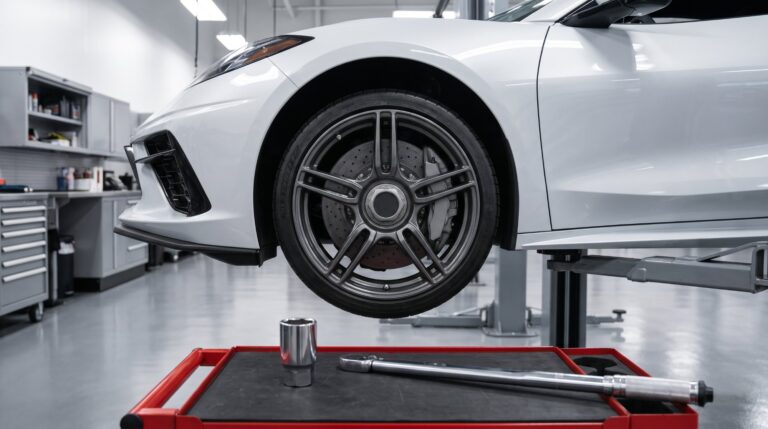
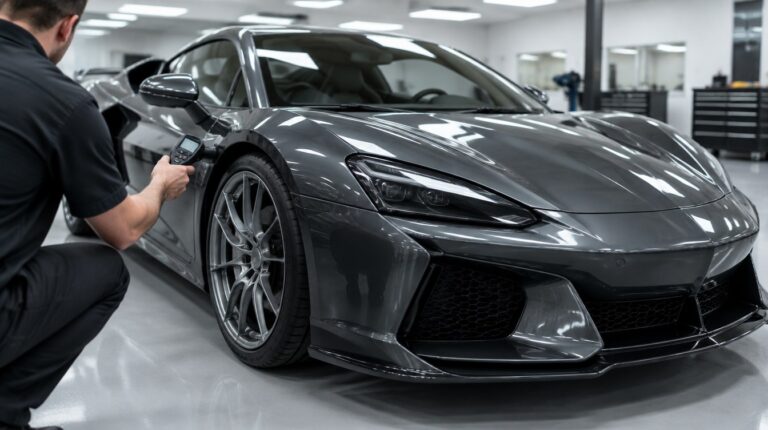
Images in this guide are editorial illustrations, not photographs of specific cars for sale.
A well-maintained 570S can deliver extraordinary performance without being constantly troublesome. Many owners report relatively uneventful ownership when the cars are driven regularly and maintained properly. Others describe electrical quirks, suspension issues, glass problems, deferred maintenance and repair bills large enough to change the economics of what first looked like a bargain.
The lesson is not that the McLaren 570S should be avoided. It is that the condition and history of the individual car matter far more than finding the lowest advertised price.
Why the 570S Is Still So Appealing
The 570S was McLaren’s more approachable Sports Series model. Its 3.8-liter twin-turbocharged V8 produces 562 horsepower and 443 lb-ft of torque and drives the rear wheels through a seven-speed dual-clutch transmission. McLaren quotes 0–60 mph in 3.1 seconds and a top speed of 204 mph.
McLaren 570S at a glance
- Engine: 3.8-liter twin-turbocharged V8, mid-mounted
- Output: 562 hp (570 PS) and 443 lb-ft
- Transmission: seven-speed Seamless Shift Gearbox (dual-clutch), rear-wheel drive
- Performance: 0–60 mph in 3.1 seconds; 204 mph top speed
- Structure: carbon-fiber MonoCell II tub with aluminum body panels
- Body styles: Coupe and Spider (retractable hardtop)
Those numbers remain serious today. But the appeal goes deeper than straight-line performance.
The 570S is built around McLaren’s carbon-fiber MonoCell II structure and pairs relatively compact dimensions with hydraulically assisted steering, good visibility for a supercar, useful luggage space and a driving experience many owners find more approachable than the company’s higher-output models.
That creates an interesting used-car proposition: genuine carbon-tub McLaren engineering without moving into the purchase-price territory of a 750S or a similarly current supercar.
But depreciation can disguise maintenance exposure. A car that once cost well into six figures does not become inexpensive to repair because its resale value has fallen.
Start With History, Not Mileage
The first instinct with any exotic car is to find the lowest-mileage example. That is not always the smartest strategy.
A 570S that has been driven regularly, serviced on schedule and kept on a battery maintainer may be a stronger ownership proposition than a very low-mileage example that has spent long stretches sitting. McLaren owners consistently put documented service history and recent use ahead of the lowest odometer reading.
Mileage still matters — it just needs context. Ask:
- How many miles has the car covered recently?
- Was it serviced annually even when it was barely driven?
- Has it spent months or years parked?
- Were major scheduled maintenance items completed?
- Was the battery maintained properly?
A 15,000-mile car with excellent documentation may be a more reassuring purchase than a 4,000-mile car with unexplained gaps in its history.
Get a McLaren-Specific PPI
This should be non-negotiable. A generic inspection is better than none, but the 570S deserves someone familiar with McLaren’s Sports Series platform, its diagnostic equipment and its known weak points — even when the car is being sold by an established dealer. (Our guide to what an exotic car pre-purchase inspection should include covers the process in more depth.)
A proper pre-purchase inspection goes well beyond a visual walkaround. Ask for:
- A full diagnostic scan
- Suspension inspection
- Checks for fluid leaks
- Transmission operation
- Cooling-system inspection
- Battery condition
- Body and paint assessment
- Glass inspection
- Brake and tire condition
- Recall status
- Service-history review
- Underbody inspection
- Verification of any modifications
- A test drive from cold where practical
The PPI should also separate findings that are urgent from routine maintenance items and cosmetic issues. That distinction matters on a car where a relatively small repair can carry a large labor bill.
Battery Condition Matters More Than You Might Expect
One theme appears again and again in 570S ownership: voltage matters. McLarens are electronically complex, and a weak battery can trigger warning messages or odd behavior that looks far more serious than it is. Owners routinely recommend a battery maintainer for any car that is not driven regularly.
So don’t stop at asking whether the car starts. Ask:
- How old is the battery?
- Has the car been kept on a maintainer?
- Are there stored low-voltage fault codes?
- Has it had repeated dead-battery events?
- Does every electrical function work correctly after a cold start?
A battery is inexpensive next to most McLaren repairs. But repeated electrical problems deserve proper diagnosis, not a shrug and the label “McLaren quirks.”
Check the IRIS Infotainment System
The 570S’s IRIS infotainment was a step forward from McLaren’s earlier systems, but it can still be temperamental. Specialists have documented Bluetooth connection problems, navigation faults, occasional reboots and display issues.
During the inspection, test:
- Bluetooth pairing
- Navigation
- Audio
- Backup camera
- Climate controls
- Touchscreen responsiveness
- USB and media inputs
- Any vehicle settings controlled through the screen
An infotainment fault is not necessarily a reason to walk away, but understand it before you buy — electronic diagnosis and replacement parts add up quickly.
Inspect the Dampers and Suspension Carefully
Suspension condition deserves particular attention. Leaking front dampers and suspension noises are among the items owners and specialists mention most often on used 570S examples.
During the PPI and test drive, listen and look for:
- Clunks or knocks
- Unusual noises while steering at low speed
- Uneven ride behavior
- Visible damper leakage
- Warning messages
A suspension issue may be straightforward, or it may become a much larger repair depending on the component and the labor involved. Don’t diagnose it from a test drive alone — have a specialist identify the actual source.
Test the Transmission From Cold
The 570S uses a seven-speed Seamless Shift Gearbox. A healthy example shifts cleanly and predictably. Evaluate it cold as well as fully warmed up, and watch for:
- Hesitation selecting Drive or Reverse
- Unexpected warning messages
- Abnormally harsh shifts
- Slipping
- Gear-selection problems
- Unusual noises
One poor shift doesn’t prove a failing transmission. Persistent abnormal behavior needs diagnosis before purchase.
Inspect the Glass
McLaren chased weight savings throughout the 570S, and the glass is worth a close look. Owners and specialists have documented stress cracks in windshields and rear glass on some Sports Series cars.
Check carefully around the edges — small cracks are easy to miss in listing photos. Replacement glass isn’t catastrophic, but it’s another cost to understand before you sign.
Check for Paint Bubbling and Corrosion
The 570S uses aluminum body panels over its carbon structure. Aluminum doesn’t rust like steel, but it can still corrode. Specialist guides have reported paint bubbling around:
- Door edges and seams
- Wheel arches
- The engine cover
- Lower body sections
Not every paint defect means serious damage underneath, but bubbling deserves investigation. Ask whether the panel has been repaired or refinished, and whether the issue is cosmetic or active corrosion under the paint.
Inspect the Doors and Hinges
The dihedral doors are one of the 570S’s defining features, and they deserve inspection too. Hinge and bracket issues come up periodically. Open and close both doors several times and check for:
- Unusual movement
- Difficulty latching
- Misalignment
- Noises
- Unexpected resistance
- Signs of previous adjustment or repair
Inspect the surrounding paint and bodywork as well. A door problem may be a contained repair, but it shouldn’t be a surprise after delivery.
Look Underneath the Car
A used McLaren can look spectacular in listing photographs while hiding expensive damage underneath. The 570S sits low, so inspect:
- The front splitter
- Undertrays and floor panels
- Jacking points
- Suspension components
- Evidence of impact damage
- Leaks
- Damage from improper lifting
Cars with nose lift can still scrape; cars without it may have had even more contact with steep driveways and parking ramps. Some cosmetic underside wear is normal on a used supercar. Structural or poorly repaired damage is not.
Front Lift Is an Option Worth Having
The nose-lift system was optional on many 570S examples, and owners and buying guides consistently rate it as one of the most useful options given the car’s low front clearance.
If the car has it, test it repeatedly. Confirm that it raises correctly, both sides respond consistently, it lowers correctly, no warning messages appear, and it still works after the car has been driven. A desirable option is only desirable if it works.

Verify the Service History
A used McLaren with incomplete maintenance records should be priced accordingly. The 570S has annual service requirements and several age-based items that are easy to miss on cars driven very little.
Ask for documentation rather than verbal assurances. Look for:
- Annual oil services
- Brake-fluid changes
- Air filters
- Coolant service
- Fuel-system service where scheduled
- Battery replacement
- Prior warranty work
- Major repair invoices
- Recall completion
A stamped book is useful. Detailed invoices are better, because they show what was actually done.
Check for Open Recalls
Use the VIN. NHTSA’s recall lookup shows whether a specific vehicle has an unrepaired safety recall, though NHTSA notes that very recent campaigns and some older vehicles may not always appear.
The 570S has been part of specific safety actions. Under NHTSA campaign 21V-561, for example, McLaren recalled 19 cars built in 2019 — just one of them a 2020 570S, alongside 600LT, 720S and GT examples — because a brake banjo bolt might have been made without the holes that feed fluid to the caliper. That is a VIN-specific issue, not a general 570S defect, and it illustrates why a model-wide list is less useful than a lookup on the actual car. (We explain how recalls can affect an exotic car’s value separately.)
The right approach is not to memorize a list. Run the VIN, then confirm completion with a McLaren retailer if anything remains unclear.

Coupe or Spider?
The choice is largely personal. The Coupe is the cleanest expression of the original 570S formula. The Spider adds open-air driving without fundamentally changing the car’s character.
A Spider buyer should add the roof to the inspection: cycle it several times, check alignment, look for water intrusion, listen for abnormal noises and inspect the seals. Make sure the battery is healthy before assuming a slow or interrupted roof cycle is a mechanical failure.
Should You Avoid Early Cars?
Some owners prefer later production years, and 2017-and-newer cars are a common recommendation. That doesn’t mean every early 570S should be rejected — a properly maintained early example with documented updates can be preferable to a neglected later car.
A better hierarchy is:
- Condition
- History
- Inspection
- Specification
- Then model year
Buying purely by year can create false confidence.
Modifications Need Extra Scrutiny
A modified McLaren isn’t automatically a bad purchase, but every modification raises another question. Common changes include aftermarket exhausts, downpipes, ECU tuning, wheels, suspension changes, lowering and cosmetic carbon parts.
Ask:
- Who installed it, and is there documentation?
- Are the original parts included?
- Does the modification affect warranty or service-contract eligibility?
- Has the car been returned to factory calibration?
- Was the work done by a McLaren-experienced specialist?
A heavily modified car may be exactly what one buyer wants; another may prefer an original example that is easier to warranty and resell. Neither is universally right — but the price should reflect the difference.
Was It Tracked?
The 570S was built to be driven hard, and track use alone doesn’t make a car bad. The question is whether it was maintained for that use. Look at brake and tire wear and history, heat damage, underbody damage, paint protection, service and fluid-change frequency, suspension wear and any aftermarket track equipment.
A properly maintained track-used car can be preferable to a neglected street car. Again, context matters.
Warranty Coverage Can Change the Ownership Equation
McLaren sells extended coverage after the factory warranty ends. In North America it is called the Extended Service Contract; most other markets call it the Extended Warranty. McLaren says it covers most factory-fitted components against mechanical and electrical failure, including parts and labor, and is available until the car is 15 years old with fewer than 75,000 miles. Owners whose earlier coverage has lapsed may be able to buy new coverage, subject to an inspection, eligibility and the applicable terms.
McLaren also offers separate Extended Service Plans that cover scheduled maintenance on qualifying cars. These are different products:
- Service plan = scheduled maintenance.
- Extended warranty/service contract = covered mechanical or electrical failures.
Don’t confuse them. Before buying, ask an authorized McLaren retailer whether the specific VIN is covered now or eligible for coverage, and get the actual terms and price. Don’t rely on an advertisement that simply says “warranty available.”
Certified Pre-Owned Can Be Valuable, but Still Inspect the Car
McLaren continues to list 570S examples through its official pre-owned program, which can bring factory-defined inspection and coverage advantages depending on the car and market.
Certification shouldn’t replace understanding the car, though. An independent PPI still documents its condition and gives you a baseline for ownership. The combination many McLaren owners recommend is a strong PPI *and* appropriate warranty coverage — not one in place of the other.
Don’t Buy on Price Alone
This may be the most important 570S buying rule. Imagine two cars:
Car A
- $128,000
- 18,000 miles
- Complete service records
- Recent tires
- Fresh annual service
- No meaningful diagnostic faults
- Clean PPI
- Warranty eligible
Car B
- $118,000
- 9,000 miles
- Four-year service gap
- Old tires
- Weak battery
- Paint bubbling
- Suspension leak
- Several unexplained stored faults
- Warranty eligibility not confirmed
Car B looks $10,000 cheaper. It may not be. Two 570S examples can be advertised within a few thousand dollars of each other while one needs almost nothing and the other needs tens of thousands of dollars of mechanical and cosmetic work.
The listing price tells you what the seller wants. It does not tell you what the car will cost to own.
Build a First-Year Ownership Budget
Before buying, set aside a reserve separate from the purchase price. Include insurance, registration and taxes, transport if needed, annual maintenance, tires, battery, the inspection itself, warranty or service-contract cost, immediate PPI findings and unexpected repairs.
The right reserve depends on the car and your risk tolerance — there is no responsible universal number. But spending every available dollar on the purchase and having nothing left for ownership is particularly risky with an exotic car.
What Should You Prioritize in the Specification?
Personal preference matters, but a few items deserve attention:
- Front lift: highly useful in real-world driving.
- Backup camera: makes parking far easier on a car with limited rear visibility.
- Carbon-ceramic brakes: common and very capable, but check their condition carefully.
- Sports or racing seats: excellent for some drivers, uncomfortable for others — sit in them before you buy if you can.
- Carbon-fiber options: often desirable, but they shouldn’t outweigh condition.
- Exterior color: buy the car you actually like. A theoretically desirable spec does little for you if you never enjoy looking at it.
Options can affect resale appeal. They shouldn’t distract from the fundamentals.
Questions to Ask Before Sending a Deposit
Before committing to a 570S, ask the seller:
- Can you provide the complete service history?
- When was the most recent annual service?
- Has the car ever been tracked?
- Has it been modified or tuned, and are the original parts included?
- Has any bodywork been repainted or repaired?
- Has it had paint bubbling or corrosion repair?
- Have the dampers been replaced?
- Has the battery been replaced?
- Are there any warning lights or stored diagnostic faults right now?
- Does the front lift work?
- Are there any cracks in the windshield or rear glass?
- Are all recalls complete?
- Is the car covered by a McLaren warranty or service contract — or eligible for one now?
- Will you allow an independent McLaren-specialist PPI?
The answers should be backed by documentation wherever possible.
When Should You Walk Away?
A used 570S doesn’t need to be perfect, but some combinations of problems should make you reconsider:
- Poor or missing service history
- Significant undisclosed accident damage
- Major diagnostic faults without explanation
- Transmission problems
- Multiple fluid leaks
- Evidence of improper repairs
- Serious corrosion
- Questionable modifications
- Seller resistance to an independent inspection
- VIN or title inconsistencies
- A very low price combined with several unresolved issues
None of these automatically means the car is beyond saving. But you are buying an exotic car — not a restoration project, unless that’s what you want.
What About the Internet’s McLaren Horror Stories?
They should neither be ignored nor treated as universal truth. Public owner discussion is unusually mixed: some 570S owners report years of trouble-free use, while others describe electrical faults, suspension repairs or long, expensive stays in the shop.
That’s why sweeping statements such as “McLarens are unreliable” or “the 570S is bulletproof” aren’t much use. Neither tells you anything about the 570S in front of you. Its history, condition, maintenance and inspection do.
The ExoticMotors.com 570S Buying Checklist
Before buying a used McLaren 570S, verify:
History
- Full service records
- Vehicle-history report
- Number of owners
- Accident and paint history
- Recent mileage accumulation
Mechanical
- McLaren-specialist PPI
- Full diagnostic scan
- Transmission operation
- Suspension and damper condition
- Cooling system
- Engine leaks
- Brakes
- Tires
Electrical
- Battery condition
- Charging/maintainer history
- Warning messages
- IRIS infotainment
- Backup camera
- Front lift
- Climate control
- Door operation
Body
- Paint bubbling
- Door alignment
- Windshield
- Rear glass
- Front splitter
- Underbody damage
Documentation
- Recall status
- Original equipment
- Spare keys
- Manuals
- Service invoices
- Modification records
Ownership protection
- Current warranty status
- Extended coverage eligibility
- Service-plan status
- Insurance quote obtained before purchase
The Bottom Line
The McLaren 570S can be one of the most compelling used supercars available. It delivers 562 horsepower, carbon-fiber construction, exotic styling and genuine McLaren driving character without the purchase price of the company’s newest models.
But a lower purchase price shouldn’t create the illusion of economy-car running costs. The right 570S isn’t necessarily the lowest-mileage car, or the newest, and almost certainly not simply the cheapest one advertised. It’s the example with the best combination of condition, history, specification, documentation, inspection results and ownership protection for the price.
Buy the history. Inspect the car. Verify the recalls. Understand the warranty. Budget for ownership.
And if two 570S examples look identical online but one has exceptional records and the other has unanswered questions, remember: the cheaper McLaren can become the more expensive McLaren very quickly.
Ready to start looking? Browse McLaren listings on Exotic Motors, and if this is your first exotic, our first-time exotic buyer’s guide walks through the full purchase process.
Buying guides, market analysis and news for people shopping exotic, luxury and collector cars. Written by the Exotic Motors team; prices and availability are checked at publication.