First-Generation Audi R8 Buyer’s Guide: V8 or V10, Manual or S tronic, and Which Years to Target
Two engines, three gearboxes, two bodies and one facelift that changed the car: how to read a first-generation Audi R8 listing like someone who has owned one.
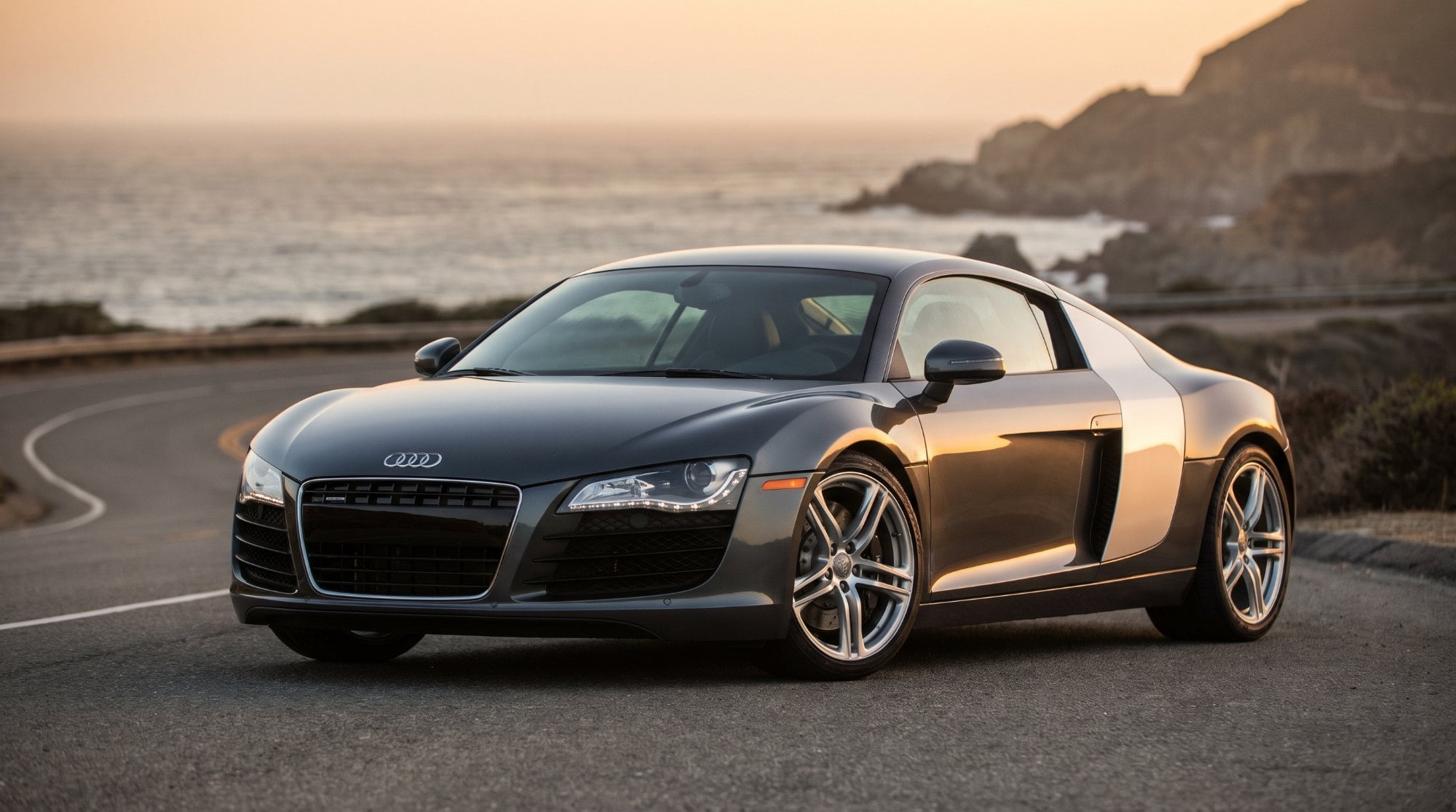
The short version: a first-generation Audi R8 (Type 42, sold in the U.S. as a 2008–2015 model) is one of the most usable mid-engine cars of its era, and the buying decision comes down to three choices made in order. Pick the engine (the 4.2-liter V8 is lighter, cheaper and plenty fast; the 5.2-liter V10 is the one most buyers remember).
Pick the gearbox (the gated six-speed manual is the enthusiast’s choice, the seven-speed S tronic dual-clutch on 2014–2015 cars is the modern one, and the single-clutch R tronic on 2008–2013 automatics is the one to price carefully). Then pick the body and year, because the 2014 facelift brought the S tronic, the 550-hp V10 plus and full-LED lighting to the U.S. in one step.
Everything below is there to make those three choices easier, and to tell you what to check once you have found the car.
Imagery note: the images in this guide are Exotic Motors editorial illustrations of the first-generation R8, not photographs of any vehicle listed for sale.
The first-generation R8 lineup at a glance
Audi built roughly 28,600 Type 42 R8s at Neckarsulm between 2006 and 2015. The U.S. range grew in layers: V8 coupe first, V10 coupe for 2010, V10 Spyder for 2011, V8 Spyder and the limited GT for 2012, then the facelift for 2014. The table uses U.S. model years and U.S. factory ratings.
| Variant | U.S. model years | Engine and output | Gearboxes | Body |
|---|---|---|---|---|
| R8 V8 | 2008–2015 | 4.2L FSI V8, 420 hp (430 hp from 2014), 317 lb-ft | 6-speed manual; R tronic (2008–2013); S tronic (2014–2015) | Coupe; Spyder from 2012 |
| R8 V10 | 2010–2015 | 5.2L FSI V10, 525 hp, 391 lb-ft | 6-speed manual; R tronic (2010–2013); S tronic (2014–2015) | Coupe; Spyder from 2011 |
| R8 GT / GT Spyder | 2012 | 5.2L V10, 560 hp, lightweight body and fixed wing | R tronic only | 333 coupes worldwide (90 U.S.); 333 Spyders worldwide (50 U.S.) |
| R8 V10 plus | 2014–2015 | 5.2L V10, 550 hp, 398 lb-ft; carbon-ceramic brakes; about 130 lb lighter than V10 | 6-speed manual; S tronic | Coupe only |
| R8 competition | 2015 | 5.2L V10, 570 hp; 0–60 mph 3.2 s, 199 mph | S tronic only | Coupe, 60 U.S. cars |
Why the model years matter more than usual: the U.S. received the facelifted car as a 2014 model (it went on sale in April 2013), while Europe had it as a 2013 model. A “2013 R8” in a U.S. listing is therefore the last of the pre-facelift, R tronic-era cars, not the first of the S tronic cars. Check the gearbox, the headlights and the grille, not just the title year.
V8 or V10: the real difference is smaller than the price gap
The 4.2-liter V8 is a dry-sump, direct-injection unit shared in spirit with the B7 RS 4, rated at 420 hp in the U.S. until the facelift raised it to 430 hp. It revs to the far side of 8,000 rpm, and in a car weighing around 3,400–3,600 lb depending on body and gearbox it is quick: Audi’s own figures put the S tronic V8 coupe at 4.3 seconds to 62 mph, with the manual a few tenths behind. It is also the lighter car, the cheaper car to buy and the engine with the longer parts-sharing history across the Audi range.
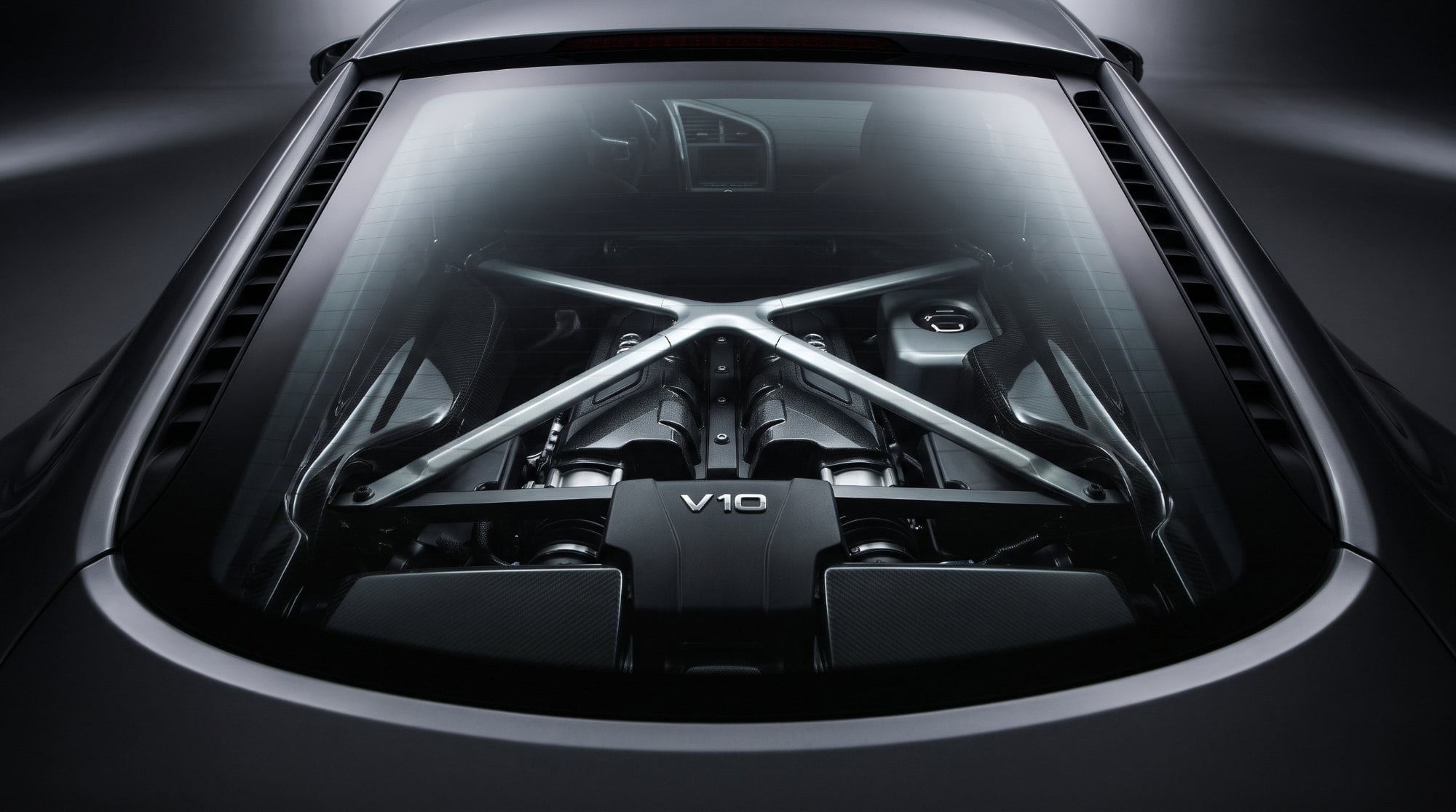
The 5.2-liter V10 arrived for 2010 with 525 hp and 391 lb-ft and is closely related to the Lamborghini Gallardo LP560-4 engine. It adds roughly 100 hp, a soundtrack that defines the car for many buyers, and, on Audi’s own figures, a little over half a second to 62 mph over a comparable V8. It also added weight, a higher purchase price and, on the used market, a wider spread between the best and worst examples because more V10s were bought as weekend cars and then left to sit.
Our view: if the budget is the deciding factor, a well-kept V8 manual gives up very little of what makes the R8 special, and it is the version most owners describe as the better-balanced car. If the sound and the sense of occasion matter, the V10 is worth its premium, but only when its service history is as complete as its spec sheet.
Manual, R tronic or S tronic
This is the choice that moves the money most, and it deserves its own detail.
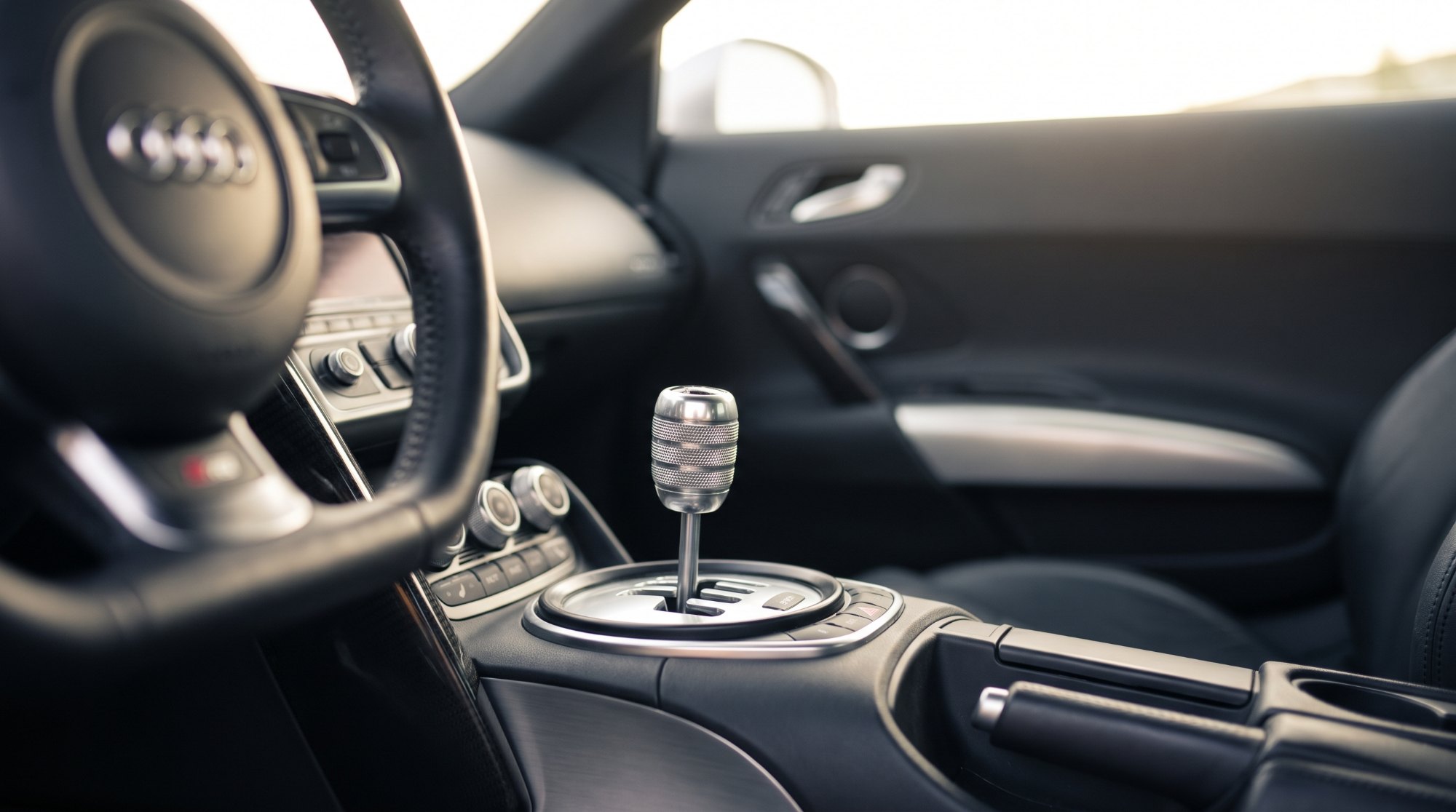
- Six-speed gated manual (2008–2015, V8 and V10, coupe and Spyder). An open metal gate, a knurled aluminum knob and a clutch that lasts a normal service life. It is the scarcer gearbox on the used market and commands a premium that has grown since the second-generation car dropped the manual altogether. We have written separately about whether the gated-manual R8 is worth that premium; the short answer is that factory manual cars hold their value best, and a conversion is not a factory manual.
- R tronic (2008–2013 U.S. automatics, plus every GT and GT Spyder). A six-speed single-clutch automated manual with paddles. It shifts quickly at full throttle and is awkward in traffic, and its clutch is a wear item that owners and specialists generally expect to last roughly half as long as the manual’s, with replacement a labor-heavy job because much of the rear of the car has to come apart. None of this makes an R tronic car a bad buy, but it does make the clutch wear reading (a specialist can pull it with diagnostic software) and a recent clutch invoice worth real money in the negotiation.
- S tronic (2014–2015 U.S. cars). The seven-speed dual-clutch that replaced the R tronic at the facelift. It is faster, far smoother in town and is the gearbox that makes a first-generation R8 feel like a modern car. It was a $9,100 option on the facelifted range when new, and the used market still prices S tronic cars above comparable R tronic cars.
A practical rule: if you want an automatic, stretch to a 2014 or 2015 car. If you want a manual, the gearbox is identical across the whole run, so let condition and engine decide the year.
Model-year guide for U.S. cars
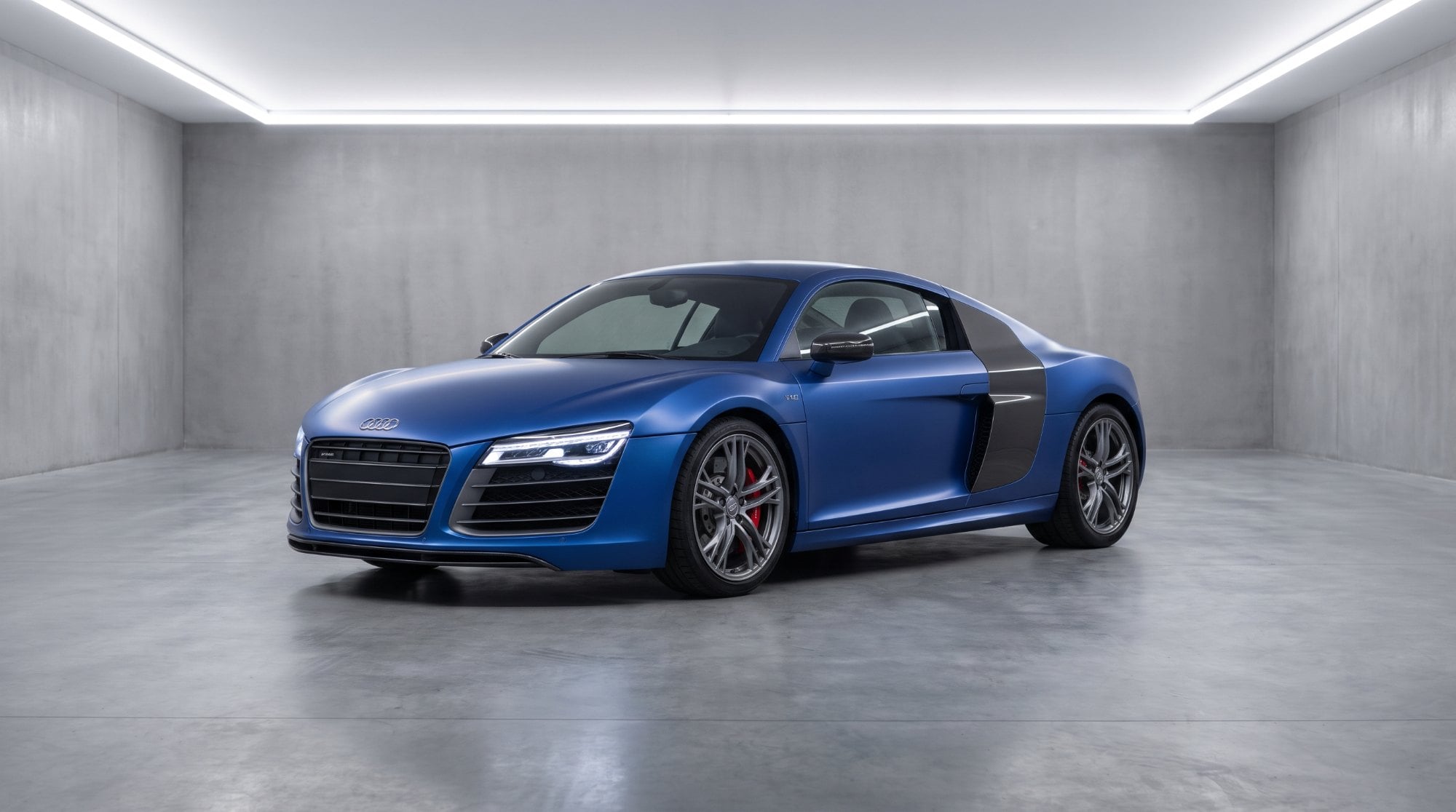
- 2008–2009: V8 coupe only, manual or R tronic. Xenon headlamps with an LED daytime-running strip were standard; full-LED headlamps were a cost option. Magnetic Ride adaptive damping was optional. These are the cheapest R8s and often the highest-mileage ones.
- 2010: The V10 coupe arrives with full-LED headlamps and Magnetic Ride as standard, larger brakes and its own front and rear detailing (the larger oval exhaust outlets are the quickest tell).
- 2011: V10 Spyder joins with a fabric roof that stows in about 19 seconds at up to around 30 mph. Spyders do without the coupe’s side blades and carry roughly 200 lb or more over the equivalent coupe.
- 2012: V8 Spyder added. The 560-hp R8 GT (90 U.S. cars) and GT Spyder (50 U.S. cars) are sold as 2012 models, all R tronic.
- 2013: Carry-over year in the U.S., still pre-facelift and still R tronic for automatics. Often the best value in the pre-facelift range because the car is newer but the styling and gearbox are the old ones.
- 2014: The facelift. Revised grille and bumpers, full-LED headlamps across the range, “wave” brake discs, S tronic in place of R tronic, V8 output up to 430 hp, and the new V10 plus coupe (550 hp, carbon-ceramic brakes, carbon side blades and splitter, firmer dampers). U.S. base prices at launch ran from $114,900 for a V8 coupe manual to $179,645 for a V10 plus S tronic before destination and gas-guzzler tax.
- 2015: Final year. The 570-hp R8 competition (60 U.S. cars, S tronic only) is the send-off. Production ended in August 2015 and the V10-only, dual-clutch-only second generation followed as a 2017 U.S. model.
What the market looks like (updated November 2026)
Values for the Type 42 have been broadly flat for several years after a long depreciation curve, with manuals, low-mileage V10s and the limited editions pulling away from the rest. The figures below are CLASSIC.COM’s market benchmark (CMB) for each sub-model as observed on November 5, 2026. The CMB is a blended estimate drawn from recent sales and listings, not a transaction price for any particular car, and listing counts there cover the whole market, not Exotic Motors inventory.
| Type 42 sub-model | CLASSIC.COM CMB (Nov 5, 2026) | Listings tracked |
|---|---|---|
| V8 coupe (2008–2015) | $68,004 | 29 |
| V8 Spyder (2012–2015) | $74,755 | 14 |
| V10 Spyder (2011–2015) | $105,027 | 28 |
| V10 coupe (2010–2015) | $110,560 | 21 |
| V10 plus (2014–2015) | $113,544 | 1 |
| R8 competition (2015) | $118,636 | 0 |
| R8 GT coupe (2012) | $131,288 | 0 |
Two cautions when you read those numbers against live listings. First, asking prices for exceptional cars sit well above the benchmark: sub-10,000-mile gated-manual V10 coupes were being advertised in the high $100,000s and beyond in 2026, and the benchmark does not tell you whether they sold. Second, the gap between a tired R tronic V8 and a documented manual V10 is now wide enough that “an R8” is no longer one price bracket. Decide the spec first, then compare like with like.
Ownership: what goes wrong and what to check
The R8 is one of the more robust mid-engine cars of its period, but it is still a hand-assembled exotic with Lamborghini-adjacent parts pricing. Budget for an annual service regardless of mileage, premium fuel only, and a specialist who has had the rear clamshell apart before. These are the items that come up most in owner forums, specialist buying guides and inspection reports:
- R tronic clutch and hydraulics. Ask for the clutch wear value from a diagnostic scan and for the last clutch invoice. Hydraulic pump and accumulator faults also appear on higher-mileage cars. Price any unknown clutch as if it needs doing.
- Magnetic Ride dampers. Standard on V10s, optional on V8s. They can weep fluid and are expensive per corner; check for dampness around each unit and for a ride that feels harsh or uneven between corners. Some cars have been converted to conventional dampers, which is fine if disclosed and priced accordingly.
- Intake-valve carbon buildup. Both engines are direct-injection and both accumulate carbon on the intake valves, especially on cars that have lived on short trips. Rough idle, misfire codes or a soft top end are the symptoms; a walnut-blast cleaning is the cure, and a receipt for one is a plus.
- Ignition coils. Coil-on-plug failures causing misfires are a recurring, inexpensive-per-item fault on both engines; ten of them on a V10 adds up.
- Oil consumption and leaks. V8s in particular can use a quart or so every 1,000 miles without anything being wrong. Look for valve-cover gasket seepage (white smoke from the bay when warm) and check radiator and oil-cooler pipework for corrosion.
- Body and chassis. The aluminum spaceframe is light and stiff but costly to repair properly, so a history report and a careful look at panel gaps, paint depth and the rear edges of the long doors (parking-lot chips are common) matter more than on a steel-bodied car. Lower rear wishbones and their hub carriers are a known wear point.
- Brakes. Carbon-ceramic discs (standard on V10 plus, optional elsewhere) last a long time but are very expensive when they do wear out; confirm what is fitted and its condition. Steel-brake cars are cheaper to run.
- Recalls. Check the VIN with NHTSA. Known campaigns include a fuel-line chafing issue on 2009–2011 Spyders and a 2017 coolant expansion tank campaign covering both V8 and V10 cars.
None of this should put you off; it should shape the inspection. Our guide to what an exotic-car pre-purchase inspection should include applies in full here, with the clutch reading and the damper check added to the list.
Which first-generation R8 should you buy?
- Best value: a 2010–2013 V8 manual coupe with Magnetic Ride and a full service file. It is the purest version of the car and the cheapest to keep.
- Best all-rounder: a 2014–2015 V10 S tronic coupe or Spyder. Modern gearbox, full-LED lights, the sound, and the fewest compromises as a car you will actually drive.
- Best to hold: a factory gated-manual V10 coupe, or one of the limited GT, V10 plus or competition cars with documented provenance. Scarcity is already in the price; buy on condition.
- Approach with the most care: any R tronic car with no clutch history, and any V10 that has sat for long periods without being driven.
Find one
Current first-generation and second-generation R8s listed by Exotic Motors dealers and private sellers are on our Audi R8 model page, with the full Audi range on the Audi listings page. Inventory changes daily, so use the listing’s engine, transmission and model-year fields to confirm the spec against the table above, and ask the seller for the service file before you travel. If you are selling one, a complete history and a recent clutch or damper invoice will do more for your price than any amount of polish.
Frequently asked questions
What years are the first-generation Audi R8?
Audi built the Type 42 from 2006 to 2015. In the U.S. it was sold as a 2008 through 2015 model, with the V10 added for 2010 and the facelift (S tronic gearbox, V10 plus) arriving as a 2014 model.
Is the R tronic transmission a deal-breaker?
No, but it is a cost center. The single-clutch automated manual is jerky at low speed and its clutch wears faster than the manual’s. Get the clutch wear reading, ask for the last clutch invoice, and price the car accordingly. If you want an automatic that behaves like a modern one, buy a 2014 or 2015 car with the S tronic dual-clutch.
Is the V8 R8 reliable?
Generally, yes. The 4.2-liter V8 is a well-understood engine; its recurring issues are intake-valve carbon buildup, ignition-coil failures and modest oil consumption, all of which are manageable with regular use and annual servicing.
How much does a first-generation Audi R8 cost?
As of November 2026, CLASSIC.COM’s market benchmark runs from about $68,000 for a V8 coupe to about $110,000 for a V10 coupe, with the V10 plus, competition and GT above that. Factory manual cars and very low-mileage examples are advertised well above those figures, and asking prices are not sale prices.
Sources
- Audi of America, “The new 2014 Audi R8 is officially on sale” press release, April 11, 2013 (model-year 2014 lineup, S tronic, V10 plus, U.S. pricing).
- Audi of America, “Limited-edition Audi R8 competition to debut at Los Angeles Auto Show” press release, October 28, 2014.
- Audi R8 (Type 42) technical and production data, Audi AG model documentation as compiled on Wikipedia (production run, GT and GT Spyder allocations).
- PistonHeads, Audi R8 (Type 42) used buying guide (R tronic clutch life, Magnetic Ride, service items, recalls).
- CLASSIC.COM, Audi R8 Type 42 market data, observed November 5, 2026.
- Owner-reported issue patterns from the AudiWorld and Audi R8 owner communities, used for prioritizing the inspection list, not for specific figures.
Buying guides, market analysis and news for people shopping exotic, luxury and collector cars. Written by the Exotic Motors team; prices and availability are checked at publication.