Why Two Seemingly Identical Exotic Cars Can Carry Very Different Prices
Same year, same color, same drivetrain, and a very different asking price. How to tell whether a premium is earned, and when the cheaper car is the smarter buy.

On October 31, Broad Arrow sold a 1997 Ferrari F50 showing 106 miles for $18,705,000, buyer’s premium included, at its Las Vegas auction. The auction house says no F50 has ever brought more at auction, and the car arrived with its original factory accessories, from fitted luggage to driving shoes. The odometer was only part of the story. And the result landed below the house’s pre-sale estimate of more than $20 million: an estimate, like an asking price, is not a sale.
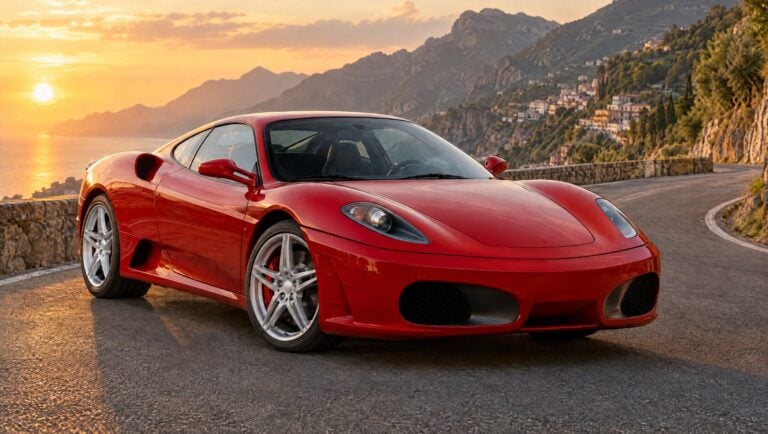
The images in this article are editorial illustrations created for Exotic Motors. They do not depict specific vehicles for sale.
Few of us are shopping for an F50, but the same logic plays out every day in ordinary marketplace searches. Two seemingly identical exotic cars can share a model year, color and drivetrain and still be very different purchases. The one worth paying more for is the car whose condition, specification, history and paperwork support its price, and that suits the way you actually plan to use it.
Same model doesn’t mean the same car
A listing headline tells you what a car is: year, model, trim, mileage and color. It doesn’t tell you how that particular car has lived. Two coupes in the same paint can differ in how they were maintained, whether they’ve been repaired, which options left the factory and how much of their history can be proved. None of that fits in a search-results tile, which is why identical exotic cars can sit side by side at prices that look arbitrary when they aren’t, and occasionally why a high price is simply optimistic.
What separates two identical exotic cars
- Mileage and use. Fewer miles usually command more money, but low mileage is not the same as mechanical health. Cars that sit can age in ways the odometer doesn’t show: old tires, hardened seals, fluids past their intervals. Ask how the miles were added and how the car was stored. Our look at buying an exotic with 30,000 miles goes deeper.
- Maintenance done, and maintenance due. A car that has just had its major service is worth more than one approaching it. Price in what the next owner will pay soon, not only what has already been done: a timing-belt service on a Ferrari 360, whose belts age whether or not the car is driven, or simply a clutch, brakes and tires on almost anything.
- Accident and repair history. A well-repaired car can be a sound buy, but repairs often affect value, and the quality of the work matters as much as the fact of it. See how repairs can affect an exotic’s value.
- Originality and modifications. Aftermarket wheels, exhausts or tunes may delight one buyer and narrow the field for many others. Original parts that come with the car help.
- Factory specification. Desirable options, colors and special-order details can add value, but rare is not automatically desirable. A specification earns a premium only when buyers actually want it.
- Ownership history. A short, well-documented chain of owners is easier to follow. Many brief ownerships aren’t necessarily a problem, but they deserve a question.
- Records and accessories. Invoices, the window sticker or build sheet, books, both keys, tool kit, car cover and any removable factory parts. The F50’s accessory set was something the auction house chose to highlight; on an everyday exotic, a complete file is often what lets a seller hold a price. Our documentation guide explains what to ask for.
When the cheaper car may be the better purchase
Consider two hypothetical examples of the same model, year and color. Neither is a real listing, and we haven’t attached prices, because the point is the evidence, not the number.
| Hypothetical example | Car A | Car B |
|---|---|---|
| Mileage | 6,800 | 19,500 |
| Service records | A few invoices, with multi-year gaps | Continuous, dated records from a marque specialist |
| Last major service | Unknown | Completed and invoiced last year |
| History report | Clean; no inspection on file | Clean; recent inspection and paint readings provided |
| Keys, books, accessories | One key; manuals missing | Both keys, books, tool kit and car cover |
| Recent use | Long periods in storage | Driven regularly, stored indoors |
| First question to ask | When was it last serviced, and what is due now? | Do the records line up with the miles? |
| Best suited to | A preservation buyer ready to fund catch-up work | A buyer who intends to drive the car |
On a results page, Car A looks like the prize: about a third of the miles, and probably the higher asking price. But its owner can’t show what has been done to it, and a car with long storage spells and an unknown service date may need work before it can be enjoyed. Car B has more miles and a file that explains every one of them.
For someone who plans to drive, Car B may be both the better car and the better value. For a collector who prizes low mileage above all, Car A may still be the right one, provided a specialist inspection supports its condition and the price leaves room for overdue maintenance. Judge suitability and condition together, never one without the other.
Price the gap, not the car
When one of two identical exotic cars is listed well above the other, turn the difference into a shopping list. Add up what it would cost to bring the cheaper car up to the dearer one’s standard: the overdue service, the missing second key, tires that are old even if they’re barely worn, and a specialist inspection to find out what else is waiting. If that total comes close to the price gap, the premium is earning its keep.
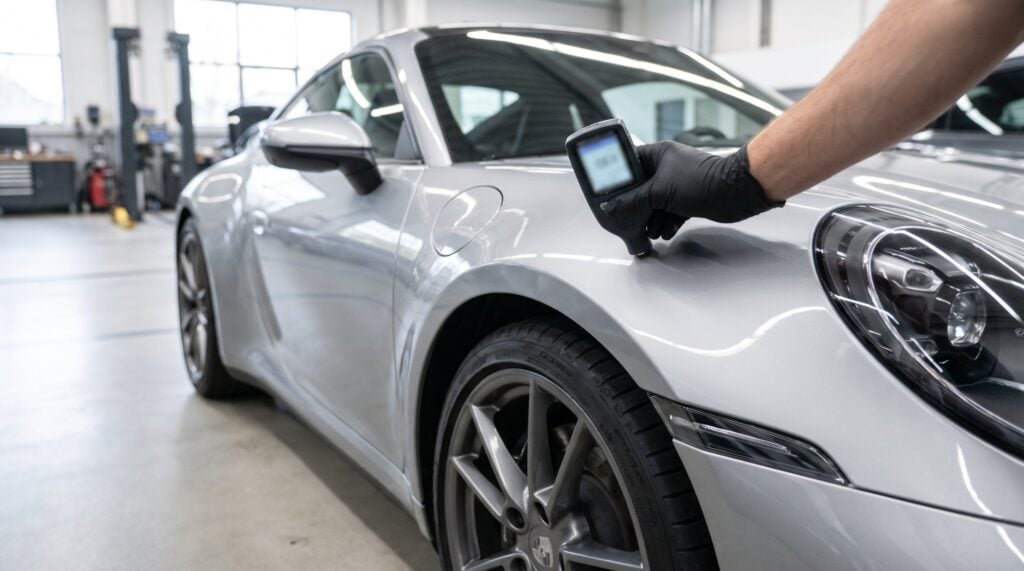
If the gap is far larger, the seller is asking you to pay for something the paperwork doesn’t show. Sometimes that’s legitimate, because some qualities can’t be bought back later: originality, a short ownership chain, a car that has never been damaged, a sought-after factory option. Ask the seller to document whichever one they’re charging for. If they can’t, the higher price is an aspiration, not a valuation.
What sellers can do to support an asking price
Buyers pay premiums for evidence, not adjectives. If yours is the better of two identical exotic cars, prove it before anyone asks:
- Put the invoices in date order, so the service story reads at a glance.
- Photograph everything in good light: wheels, interior wear and the flaws as well as the highlights.
- List options from the window sticker or build sheet, not from memory.
- Disclose known issues, past repairs and modifications up front.
A candid listing gives a serious buyer a reason to accept the price rather than negotiate against the unknown. Our guide to pricing and presenting an exotic car listing covers this in detail, and when you’re ready, you can list your car on Exotic Motors.

Compare the evidence before you compare the price
Use this checklist whenever identical exotic cars show up at very different prices:
- Specification: confirm the year, trim and factory options against a window sticker or build sheet.
- Service file: ask for records and check that their dates and mileages line up.
- What’s due: find out which maintenance comes next and roughly what it will cost.
- History report: read it as a starting point. As the Federal Trade Commission notes, it is not a substitute for an independent inspection.
- Originality: ask about paint, prior repairs and modifications, and whether original parts come with the car.
- Completeness: count the keys, books and accessories.
- Inspection: book an independent pre-purchase inspection with a specialist in the make.
- The gap: price what it would take to make the cheaper car match the dearer one, and remember you are comparing asking prices, not sale prices.
Among identical exotic cars, the best buy is the one whose condition, history and specification support its price, and that matches how you intend to use it. When you’re ready, browse current Exotic Motors inventory, and before you commit, ask the seller for service records and specification details and arrange an independent inspection.
Buying guides, market analysis and news for people shopping exotic, luxury and collector cars. Written by the Exotic Motors team; prices and availability are checked at publication.