In December 2024 we published a list of ten upcoming exotic cars worth waiting for. Enough time has now passed to check the homework, and the results are more interesting than the original list was. Four have been delivered. Two were cancelled outright. Three remain unresolved, and one was never actually announced.
More striking than any individual outcome is the pattern across these upcoming exotic cars. Every cancellation on the list was an electric car, and every model that reached customers had a combustion engine at its heart. This is what actually happened to the upcoming exotic cars of that moment, and what it says about where the market went.
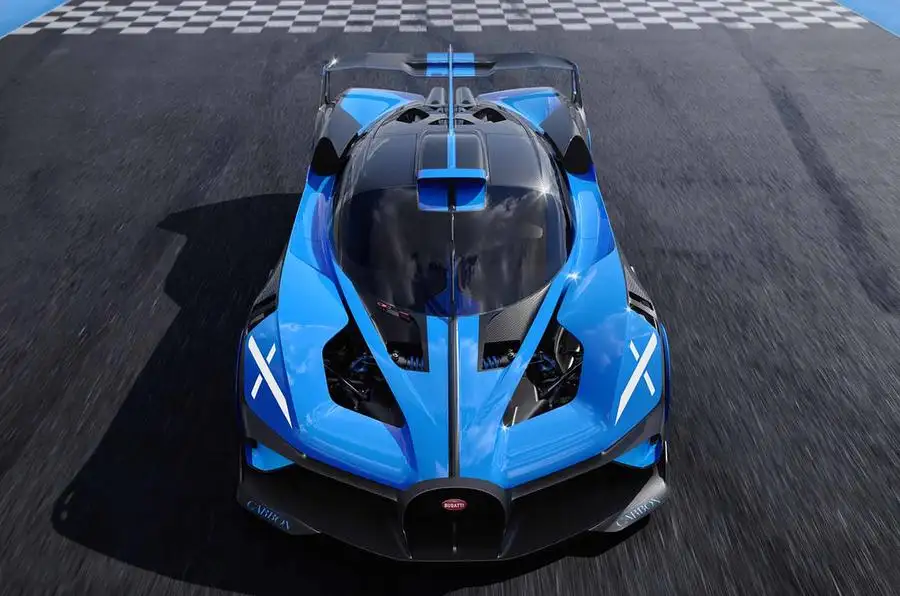
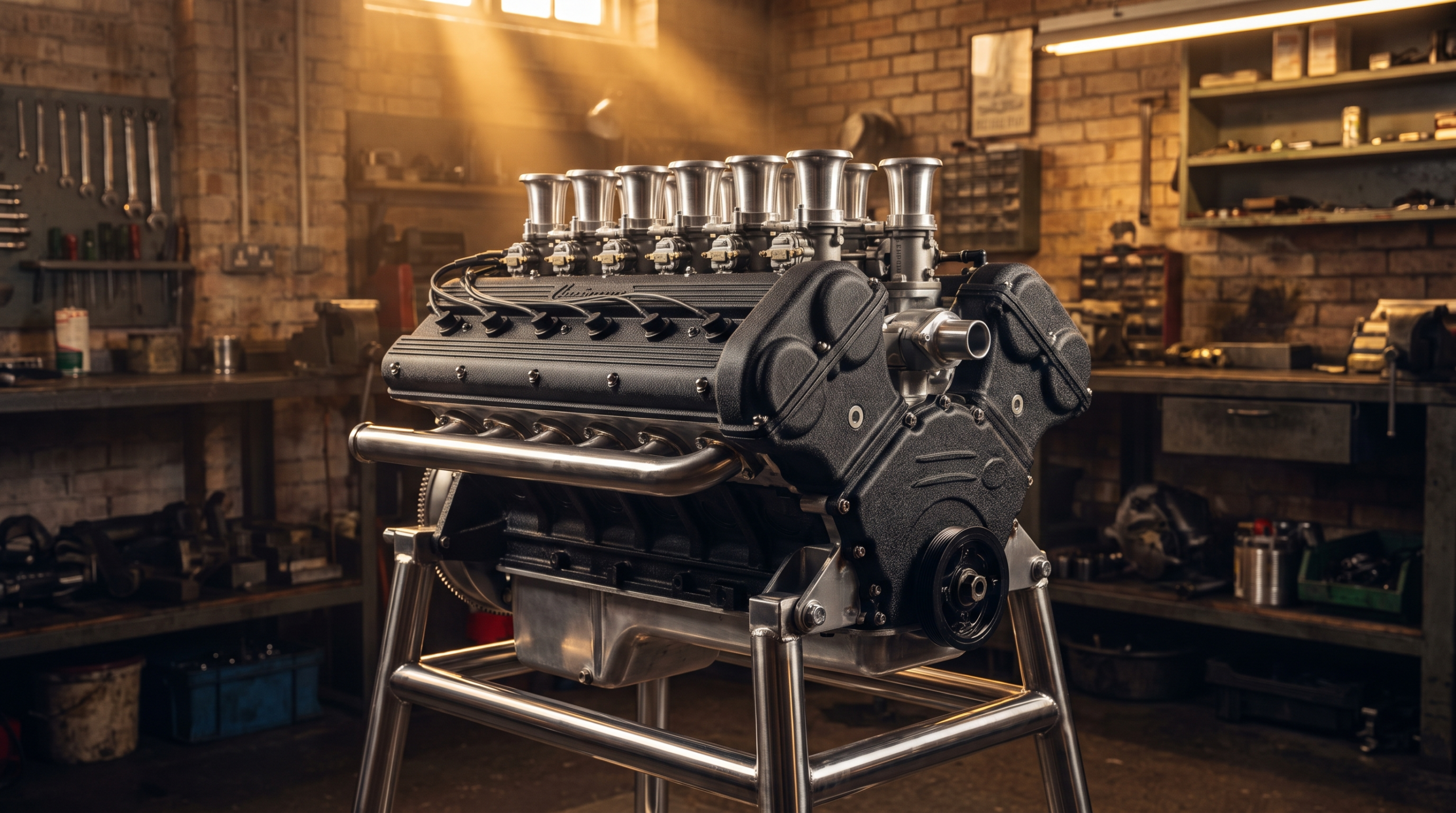
Ten cars were promised. Four arrived. Illustrative rendering.
Quick Answer: What Happened to Them?
Table of Contents
Of the ten upcoming exotic cars on the original list, four reached customers: the Aston Martin Valhalla, Rimac Nevera R, Koenigsegg Gemera and Pagani Utopia Roadster, with the Bugatti Bolide entering customer hands as a track-only car. Two were cancelled: Lamborghini’s all-electric Lanzador, now redirected to a plug-in hybrid, and the Maserati MC20 Folgore EV, dropped over weak demand while the MC20 itself was renamed MCPura. Three remain unresolved: the Porsche Mission X is still unconfirmed for production, the Tesla Roadster has never been unveiled, and the Ferrari Purosangue hybrid was never announced. Every cancelled or stalled project was electric.
The Scoreboard
Car
What was promised
What actually happened
Status
Aston Martin Valhalla
V8 hybrid hypercar
Delivered from April 2026, 1,064 hp, after delays
Shipped
Rimac Nevera R
Hardcore electric hypercar
2,107 hp, capped at 40 cars, delivered
Shipped
Koenigsegg Gemera
Four-seat hypercar
First customer car delivered
Shipped
Pagani Utopia Roadster
Open-top V12
Revealed August 2024 as a 2025 model
Shipped
Bugatti Bolide
Track-only extremist
Customer cars track-tested, deliveries under way, 40 units
Shipping
Lamborghini Lanzador
First Lamborghini EV
EV cancelled, redirected to plug-in hybrid
Cancelled as promised
Maserati MC20 EV
Electric MC20 Folgore
Cancelled; MC20 renamed MCPura for 2026
Cancelled
Porsche Mission X
Electric 918 successor
Production still unconfirmed; powertrain under review
Unresolved
Tesla Roadster
Sub-2-second EV
Never unveiled; production now indicated for 2027
Unresolved
Ferrari Purosangue Hybrid
Hybrid Purosangue
Purosangue ships with a naturally aspirated V12; no hybrid announced
Never announced
Read the status column of these upcoming exotic cars top to bottom and the shape of the last two years appears without any commentary needed.
The Upcoming Exotic Cars That Shipped
Five of the upcoming exotic cars from that list are now real objects with owners, and they share a trait worth noting: every one keeps a combustion engine, even where electrification plays a major role.
Aston Martin Valhalla
Customer deliveries began in Q4 2025 — 152 cars that quarter, and a further 102 in the first quarter of 2026 — later than originally planned but running by the end of last year. The production car pairs a 4.0-litre twin-turbocharged V8 with three electric motors for 1,064 hp, with two motors on the front axle providing torque vectoring and a third integrated with the transmission. Aston Martin treated it as a milestone launch, and the delay was financially significant for a company that needed it on time.
Rimac Nevera R
The exception that complicates the pattern, because it is fully electric and it shipped. Revealed in August 2024 and capped at 40 cars, the Nevera R produces 2,107 hp, records 0–60 mph in 1.74 seconds and adds 15 percent more downforce than the standard Nevera through a fixed wing and enlarged diffuser. It is the fastest-accelerating car on this page by a measured margin rather than a claimed one.
Koenigsegg Gemera
The four-seat hypercar took its time but the first customer car has been delivered. Koenigsegg revised the powertrain during development, which is the sort of change that delays a programme without killing it — the opposite of what happened to the electric entries on this list.
Pagani Utopia Roadster
Revealed in August 2024 as a 2025 model, the open-top Utopia arrived essentially on schedule with its twin-turbo V12 intact. Pagani has been the least distracted manufacturer of the group, and it shows.
Bugatti Bolide
Customer cars have been through track testing and deliveries are under way, limited to 40 examples. Being track-only removed the homologation burden that slows every road car, which is a large part of why it arrived while road-legal projects stalled. For Bugatti’s other recent one-off, see our coverage of the Destrier revealed at Monterey Car Week 2026.
Four of the ten reached customers, and every one kept a combustion engine. Illustrative rendering.
The Upcoming Exotic Cars That Were Cancelled
Two of the upcoming exotic cars were killed outright, and both for the same stated reason.
Lamborghini Lanzador
Lamborghini cancelled the all-electric Lanzador and will launch it as a plug-in hybrid instead. CEO Stephan Winkelmann was unusually blunt about why, describing the acceptance curve for electric cars among Lamborghini customers as close to zero, and warning that heavy EV investment without demand would be an expensive hobby.
The decision went further than one model. Lamborghini also scrapped plans for a fully electric Urus successor, unwilling to risk its most commercially important product on uncertain demand, and has said it intends to keep building combustion engines for as long as possible.
Maserati MC20 Folgore
Maserati cancelled the electric MC20 Folgore in 2025, citing insufficient demand. The petrol MC20 not only survived but was refreshed and renamed: from the 2026 model year it is the MCPura. A programme that was supposed to electrify the halo car instead ended with the combustion version getting the update and the badge.
Every cancellation on the list was electric. Illustrative rendering.
The Upcoming Exotic Cars Still Unresolved
Porsche Mission X
Still not confirmed for production. More tellingly, the powertrain is under review: Porsche design chief Michael Mauer has openly questioned whether it should be an EV or a hybrid, and the programme sits behind other models in the queue. A concept that was presented as an electric 918 successor may not end up electric at all.
Tesla Roadster
The longest-running entry on the list and still not unveiled in production form, nine years after the concept. The timeline has moved at least eight times and production is now indicated for the second half of 2027. We cover the full history in our guide to where the Tesla Roadster actually stands.
Ferrari Purosangue Hybrid
Worth being precise about this one, because the original entry was speculative rather than reported. The Purosangue is very much real and sells strongly, but it ships with a naturally aspirated 6.5-litre V12. A hybrid variant was widely expected and has not been announced. Ferrari has committed to a heavily electrified range by 2030, so it may yet appear — but as of now it does not exist.
Three of the ten are still unresolved, and all three are electric programmes. Illustrative rendering.
The Pattern: Every Casualty Was Electric
Sort the ten upcoming exotic cars from the original list by powertrain rather than by manufacturer and the picture sharpens considerably.
Powertrain
Cars
Outcome
Combustion or combustion hybrid
Valhalla, Gemera, Utopia Roadster, Bolide, MCPura
All delivered or delivering
Fully electric
Lanzador, MC20 Folgore
Both cancelled
Fully electric
Mission X, Tesla Roadster
Both unresolved
Fully electric
Rimac Nevera R
Delivered
Five combustion or hybrid cars, five deliveries. Five electric programmes, one delivery. That is not a rounding error, and the manufacturers have been candid about the cause: demand for electric exotics has not materialised at the level the 2021 to 2023 product plans assumed.
The Nevera R is the instructive exception. Rimac is an electric-only company with no combustion business to protect, building 40 cars for buyers who specifically want an electric hypercar. Every cancelled project came from a manufacturer with a profitable combustion range and customers who were not asking for the alternative.
Five combustion or hybrid cars, five deliveries. Illustrative rendering.
Why the Electric Retreat Happened
Manufacturers rarely explain a cancellation in detail, but between what they have said publicly and what the surviving upcoming exotic cars have in common, the reasons are not mysterious.
The buyer did not follow the plan. Winkelmann put it plainly: the acceptance curve among Lamborghini customers was close to zero. Product plans written in 2021 assumed a demand curve that did not arrive, and Maserati said much the same about the MC20 Folgore.
Weight is the enemy of the thing being sold. A battery large enough for meaningful range adds mass exactly where a hypercar least wants it. Every engineering gain has to be spent undoing that before the car is any better.
Sound is part of the product. This sounds soft until you notice how many upcoming exotic cars now advertise their engine note. For a car bought on emotion rather than transport, removing the noise removes a substantial part of what the customer is paying for.
Resale uncertainty compounds it. Buyers at this level are acutely aware of residuals, and the used market has not yet established what an electric halo car is worth in ten years. That uncertainty gets priced in as hesitation.
The regulatory deadline moved. Several combustion phase-out dates have been softened or delayed since those product plans were written, which removed the forcing function that justified the investment.
The result is a market that has settled on the hybrid flagship as the compromise position: electrification used to add performance rather than to replace the engine. Every one of the confirmed upcoming exotic cars in the table above takes exactly that approach, which is a fairly emphatic industry consensus for something that looked contested two years ago.
The Upcoming Exotic Cars Worth Watching Now
A scorecard is only half the job. Here are the upcoming exotic cars that have actually cleared the bar the cancelled projects never did: revealed in production form, with confirmed numbers and delivery timelines.
Car
Powertrain
Output
Production
Bugatti Tourbillon
8.3L naturally aspirated V16 hybrid
1,800 PS (1,775 hp)
250 units
Ferrari F80
3.0L V6 hybrid
1,200 hp
Limited run
McLaren W1
4.0L twin-turbo V8 hybrid
1,275 PS (1,258 hp)
399 units, sold out
Ferrari 849 Testarossa
4.0L twin-turbo V8 hybrid
1,050 cv (1,036 hp)
Series production
Corvette ZR1X
5.5L twin-turbo V8 hybrid
1,250 hp
Series production
One caution on that column, because it catches people out. Bugatti and Ferrari homologate in PS and cv — metric horsepower — while GM quotes SAE hp, and a PS is about 0.986 hp. The makers are not consistent about it in English either: Bugatti’s own newsroom prints the PS figure with “hp” after it. Where a manufacturer publishes a metric figure we have given both, so the column can actually be ranked rather than just read.
Notice what these upcoming exotic cars have in common. Every one is a hybrid rather than a pure EV, every one was shown in production specification rather than as a concept, and every one has a stated build number. Those three characteristics are what separated the survivors from the casualties on the older list.
Two are covered here in full: our guide to the Ferrari 849 Testarossa and our breakdown of the Corvette ZR1X, which is the same car enthusiasts spent years calling the Zora.
If you are shortlisting upcoming exotic cars today, the hybrid flagship is where the engineering effort has landed. The pure-electric halo car has not disappeared, but it has been postponed by nearly every manufacturer that is not Rimac.
What This Means If You Are Waiting for a Car
The practical lesson from tracking upcoming exotic cars over two years is not that manufacturers lie. It is that announcements are plans, and plans respond to demand.
A concept is not a commitment. Mission X and Lanzador were both shown as finished-looking cars. Neither is arriving as presented.
Watch for a named plant and a certification path. Cars with those in place shipped. Cars without them slipped or died.
Deposits on unbuilt cars carry real duration risk. Tesla Roadster reservation holders have waited nine years.
Combustion is outlasting the forecasts. If you want a V12, the current evidence suggests buying it rather than waiting for its replacement.
That last point connects to something we cover in our guide to what drives exotic car values: scarcity created by a technology ending is one of the most reliable predictors of appreciation. The cancellations on this list quietly made the surviving combustion cars rarer.
Upcoming Exotic Cars FAQ
Which upcoming exotic cars actually made it to production?
Four reached customers: the Aston Martin Valhalla from April 2026, the Rimac Nevera R, the Koenigsegg Gemera and the Pagani Utopia Roadster. The track-only Bugatti Bolide is also being delivered. All except the Nevera R retain a combustion engine.
Was the Lamborghini Lanzador cancelled?
The all-electric version was. Lamborghini has redirected the Lanzador to a plug-in hybrid, with CEO Stephan Winkelmann citing an acceptance curve for EVs among Lamborghini customers that is close to zero. Lamborghini also scrapped a fully electric Urus successor.
What happened to the electric Maserati MC20?
The MC20 Folgore EV was cancelled in 2025 over weak demand. The combustion MC20 survived, was refreshed and renamed the MCPura from the 2026 model year, so the petrol car outlived the electric one it was supposed to be replaced by.
Is the Porsche Mission X being built?
Not confirmed. Production has never been formally approved, the programme sits behind other Porsche models, and the powertrain is under review. Porsche design chief Michael Mauer has publicly questioned whether it should be electric or hybrid, so the concept may not arrive as shown.
Why did so many electric exotic cars get cancelled?
Manufacturers have been candid: demand did not materialise at the level their earlier product plans assumed. Every cancellation and every unresolved programme on our list was electric, while every combustion or combustion-hybrid car was delivered. The exception, the Rimac Nevera R, comes from an electric-only maker.
Is it better to buy now or wait for an upcoming exotic car?
On the evidence of the past two years, cars with a confirmed plant and certification path arrive and concepts frequently do not. If a specific combustion model matters to you, the cancellations have made surviving examples rarer rather than more plentiful.
The Honest Scorecard
Ten upcoming exotic cars were promised on that original list. Five arrived, two were cancelled, three are unresolved, and the single clearest predictor of which group a car landed in was whether it had a combustion engine.
None of that makes the electric hypercar a dead idea, and future upcoming exotic cars will certainly include them. The Nevera R exists, it is extraordinary, and it holds a measured acceleration figure nobody has beaten. What it does mean is that the industry’s stated timeline for abandoning combustion has moved, and it moved because customers moved first.
We will keep this record of upcoming exotic cars updated as the unresolved entries resolve. In the meantime, our guide on how to afford a supercar covers the routes into the cars that already exist, and our sister publication Exotic Car News follows the reveals as they happen.
At Exotic Motors we have spent a century watching upcoming exotic cars come and go. Browse the current inventory to see what is actually available today.
Owning an exotic car is not about speed or luxury- It’s about embracing an experience, where the road becomes your canvas and the car, your masterpiece.
A gated-manual Audi R8 can deliver something a newer automatic cannot. Here is what recent sales say about the premium, how to verify a factory manual, and when the extra money serves your priorities.
A used Lamborghini Huracán can still be a smart buy in 2026, if you choose the right variant and a well-documented car. Here is which version suits which buyer, what U.S. dealers are asking, and what to check first.
A flooded Ferrari at half price can look like the deal of a lifetime. Here's how to judge the water, the paperwork, the repair math, and whether the discount is ever enough.
991.2 or 992? A buyer's guide to the used Porsche 911 Carrera decision: transmissions, body styles, options, inspection, warranty, running costs and the real price gap.