Ask the auction results, not the brochures: classic Ferraris remain the gravitational center of the collector car world. Monterey Car Week 2026 has now been and gone, and it rewrote the record book: $747.9 million across five auction houses, against a Hagerty pre-sale forecast that topped out at $500 million. Seven of the year’s ten biggest car sales wear the Prancing Horse — though the single largest, a $42.9 million Shelby Cobra Daytona Coupe at Gooding Christie’s, does not. But the story has evolved, and smart collectors are paying attention to which Ferraris are climbing, which have plateaued, and why a new generation of buyers is rewriting the leaderboard. (Updated August 2026.)
Table of Contents
Quick Answer: Are Classic Ferraris Still a Good Investment?
Classic Ferraris remain the strongest name in collector cars — nine of 2026’s top ten auction sales are Ferraris — but the growth has shifted eras. Golden-age 1950s–60s blue chips like the 250 GTO ($51.7M record) have largely plateaued, while modern classics like the F40, F50, and Enzo are surging as younger collectors enter the market: an Enzo sold for $17.9 million at Mecum Kissimmee in January 2026, and Monterey in August set an all-time record at $747.9 million. Buy documented, buy rare, buy what you love — and treat appreciation as the bonus, not the plan. This is information, not financial advice.
The Numbers: What Classic Ferraris Are Doing in 2026
The ceiling of the entire collector market runs through Maranello
2026 headline sale
$17.9M — Ferrari Enzo (January 2026)
Nearly triple prior Enzo records — the modern-classic surge is real
Top-ten dominance
7 of the 10 biggest sales of 2026 are Ferraris
Depth of demand no other marque matches, though the year’s single largest sale is a Shelby
Modern-classic surge
$17.8M Daytona SP3, $34.7M McLaren F1 GTR (Monterey 2026)
Late-model and modern-classic cars are where the new money is going
Golden-age depth
$38.5M 250 GTO (Mecum Kissimmee, January 2026)
The 1950s–60s cars have not gone quiet — four sit in the year’s top ten
Monterey 2026 result
$747.9M total — an all-time record, ~50% above forecast
Confidence concentrated at the top of the market
Sources: CNN, CNBC, and Hagerty’s market indexes. Hagerty CEO McKeel Hagerty put it best this week: “All roads lead to Maranello.”
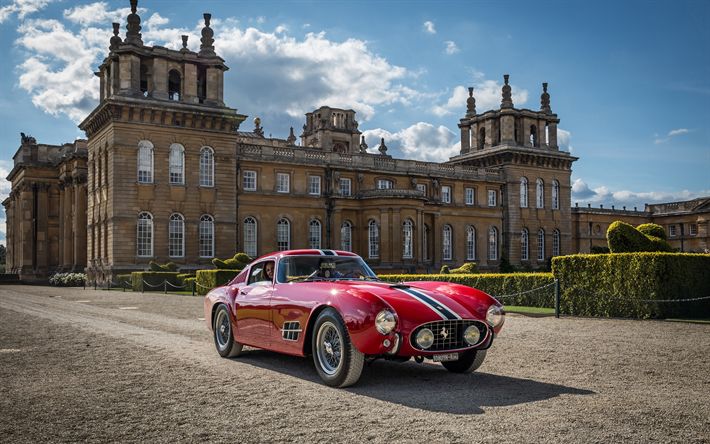
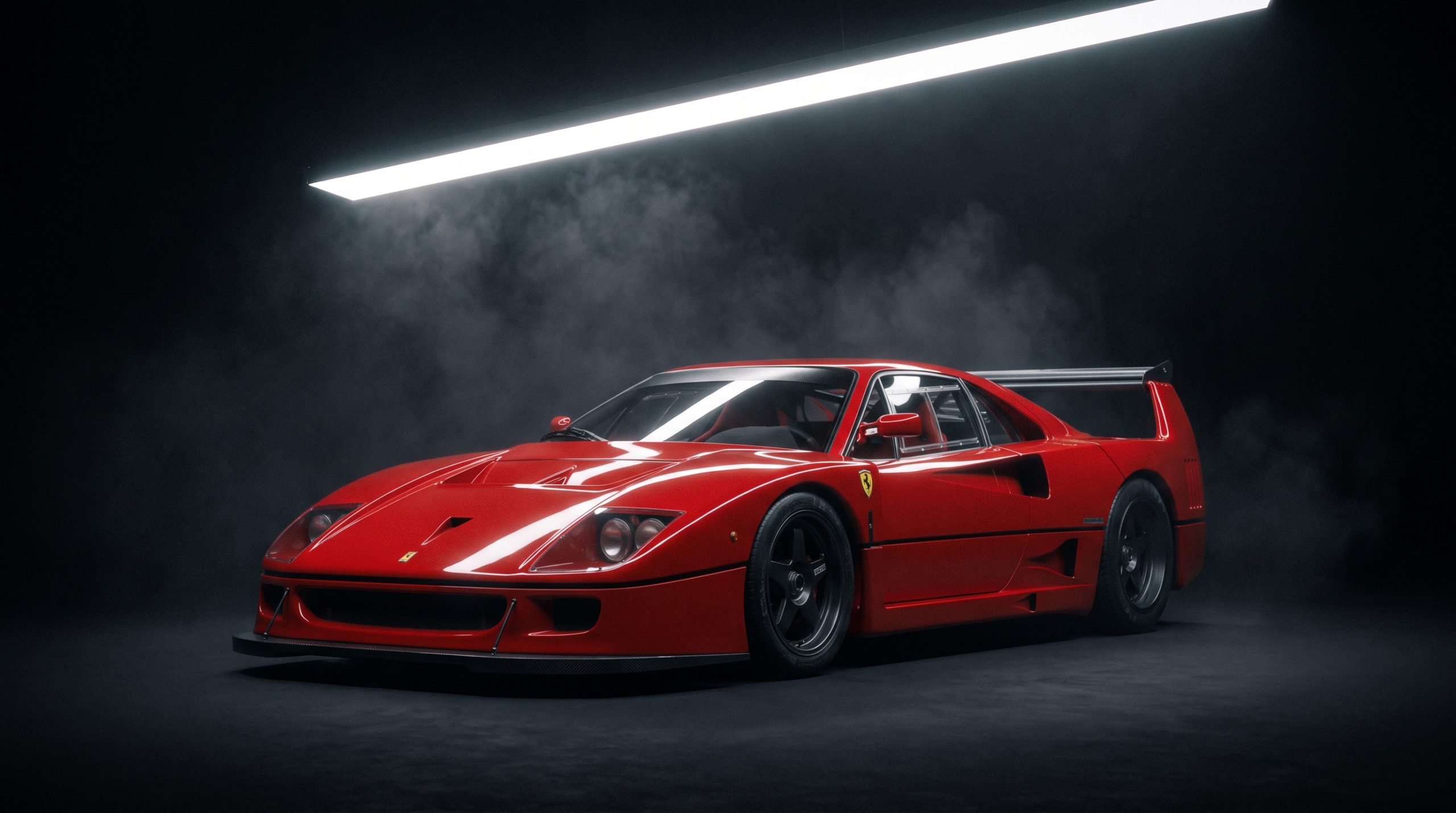
Illustrative rendering: golden-age elegance — the era that built the legend (and has now plateaued).
1. Heritage and Brand Prestige
No automotive brand carries the mythology of Ferrari: Enzo’s racing obsession, seventy-plus years of Formula 1, Le Mans glory, and road cars built as funding for the race program rather than the other way around. That heritage is why classic Ferraris anchor every major concours and why the marque’s records keep outrunning everyone else’s. Collectors aren’t just buying metal; they’re buying a chapter of motorsport history that no new brand can manufacture retroactively.
Prestige also behaves like infrastructure: it supports values in downturns. When the broader market went sluggish, classic Ferraris kept headlining the sales that did happen — because at every price level there is always someone waiting for the right one. That standing demand is the closest thing the collector world has to a safety net.
2. Limited Production and Rarity
Scarcity is structural with classic Ferraris. Just 36 examples of the 250 GTO. 349 F50s. 399 Enzos. Even “volume” classics like the Dino were built in numbers a modern crossover posts in a week. Attrition tightens supply further — crashes, barn decay, and incomplete restorations permanently retire cars every year — while global demand keeps widening. When nine-figure wealth chases two-digit production runs, the math explains itself.
Rarity within rarity multiplies further: factory competition versions, one-of-a-handful colors, celebrity provenance, and matching-numbers drivetrains create sub-markets inside each model. Two F40s are never quite equal — and the delta between an ordinary example and an exceptional one keeps widening as the deep-pocketed side of the market concentrates on the best of the best.
3. Auction Performance No Other Marque Matches
Auction results are the market’s honest scoreboard, and Ferrari owns it. The $51.7 million 250 GTO/330 LM at RM Sotheby’s remains the marque’s high-water mark, the $17.9 million Enzo at Mecum Kissimmee in January reset the modern-classic ceiling, and Monterey in August delivered again — a Daytona SP3 estimated north of $10 million sold at RM Sotheby’s for $17,825,000. Depth matters as much as peaks: classic Ferraris don’t just set records, they fill the top-ten lists year after year, which is what gives sellers liquidity and buyers confidence.
Watch the sell-through rates as closely as the headlines. Blue-chip classic Ferraris consistently find buyers even in slow seasons, while lesser marques get withdrawn or no-saled. In a market where confidence is the commodity, that reliability is worth as much as any single record price.
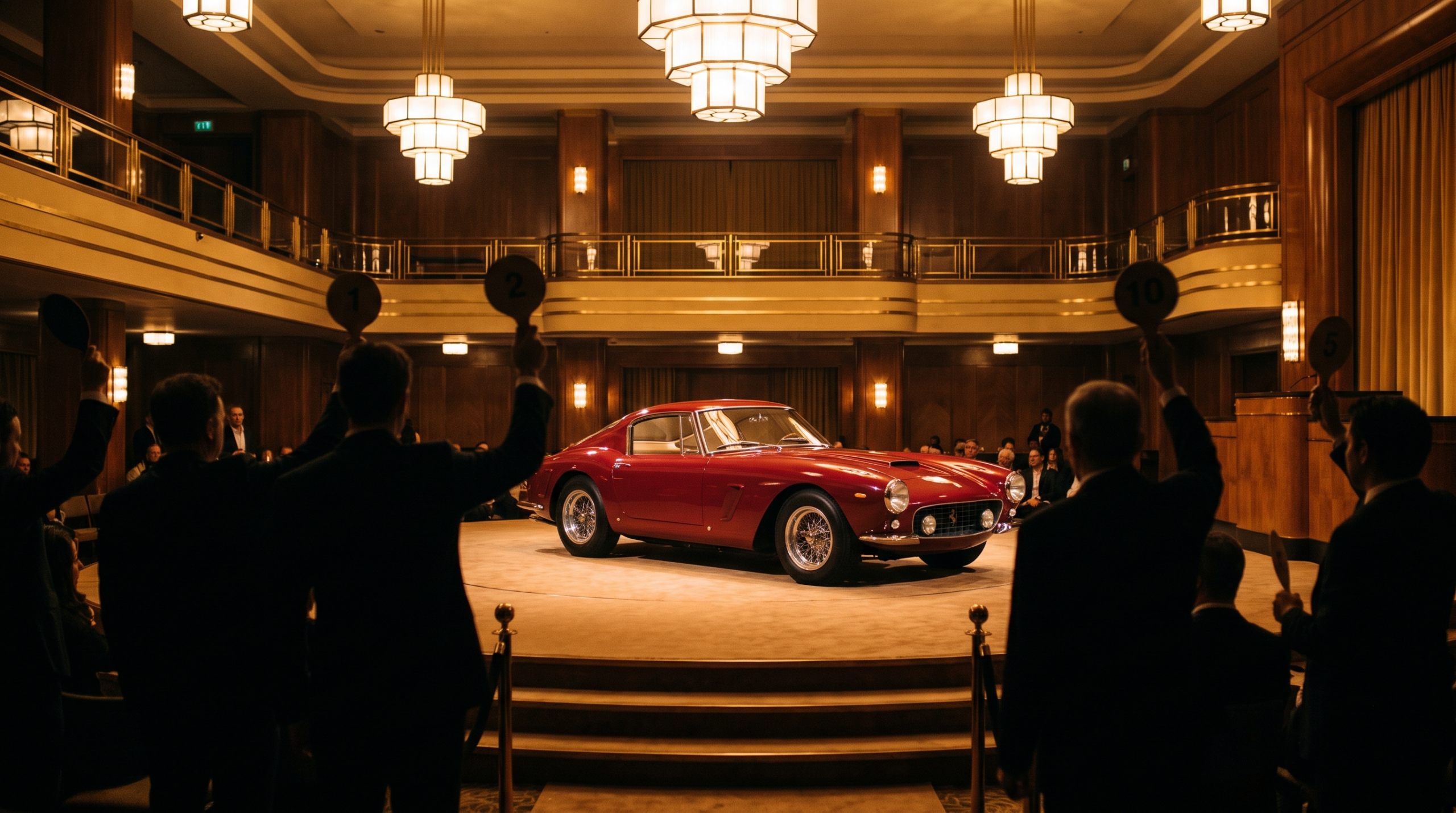
Illustrative rendering: auction night — where classic Ferraris keep writing the record books.
4. Timeless Design and Engineering Excellence
Pininfarina bodywork, Colombo V12 music, gated shifters — classic Ferraris deliver an aesthetic and mechanical experience that never went out of style and can never be re-created under modern regulations. That matters financially: design icons age into art, and art has collectors. The cars that trade strongest are the ones whose silhouettes are recognizable from a hundred meters, and Maranello drew more of those than anyone.
Engineering matters just as much to usability, which quietly drives value: classic Ferraris were built to be driven hard, and the ones that are exercised and maintained correctly stay healthy. A car that can join a tour, a rally, or a concours drive is worth more than a static sculpture with the same chassis number — events are where the culture (and the bidding relationships) actually live.
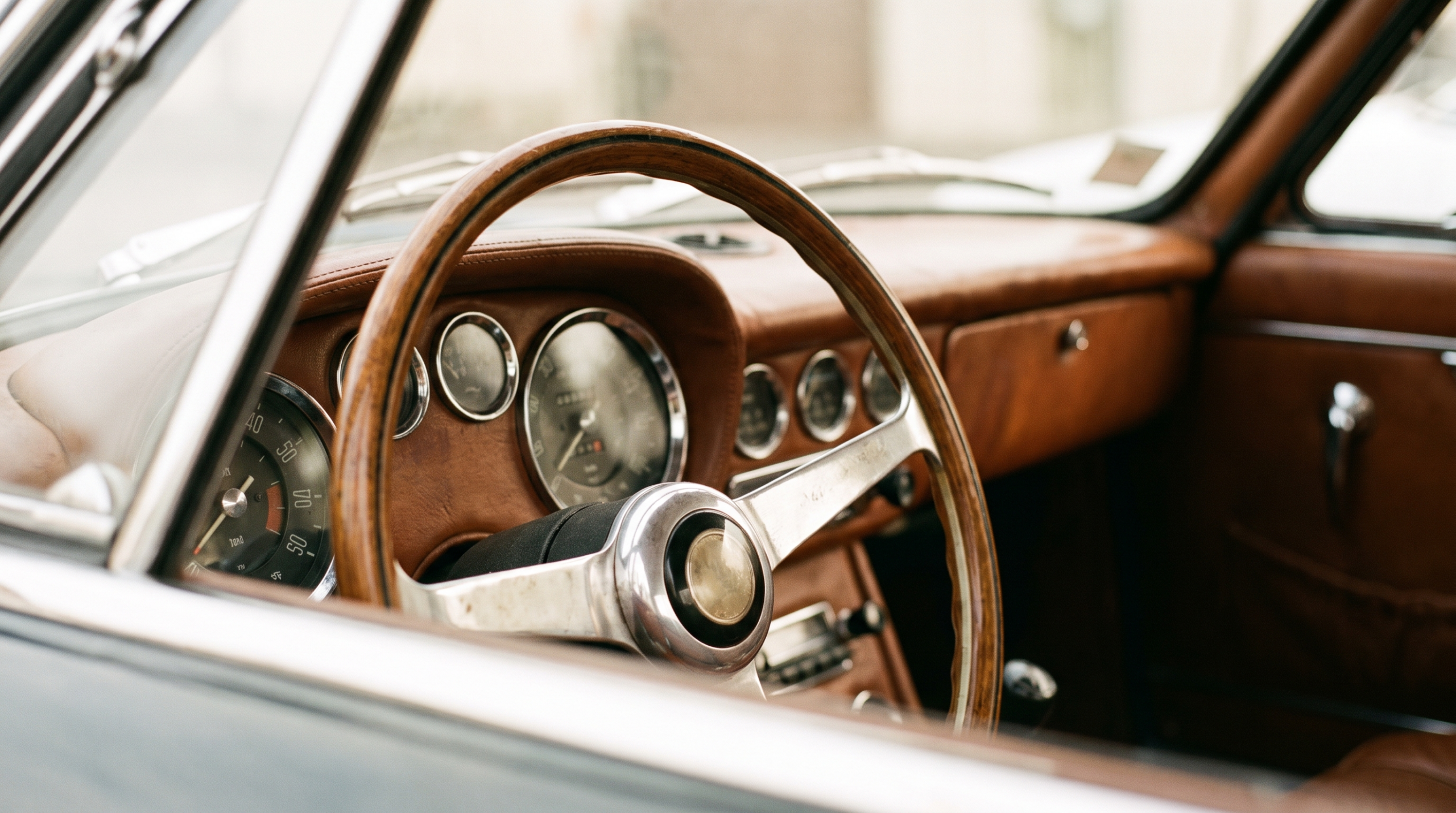
Illustrative rendering: wood rim, chrome gauges — the analog magic no regulation will permit again.
5. The Generational Shift: Younger Collectors Changed the Leaderboard
The biggest story in today’s market is who’s bidding. Millennial and Gen Z collectors — many carrying tech wealth — grew up with posters of the F40, F50, and Enzo, not the 250 era, and they’re buying their heroes. That’s why the modern supercar segment is up roughly 30% year over year while golden-age blue chips tread water, and why an Enzo can nearly triple its previous benchmark in a single sale. For anyone wondering whether classic Ferraris have a demand pipeline, the answer just walked in wearing sneakers.
This generational handoff also changes what “correct” means. Younger buyers prize originality but tolerate — even prefer — cars that get driven; they buy through online platforms comfortably; and they document everything digitally. Sellers who present classic Ferraris the way this generation shops (video walkarounds, complete digital history files, transparent condition reports) are the ones capturing the premium.
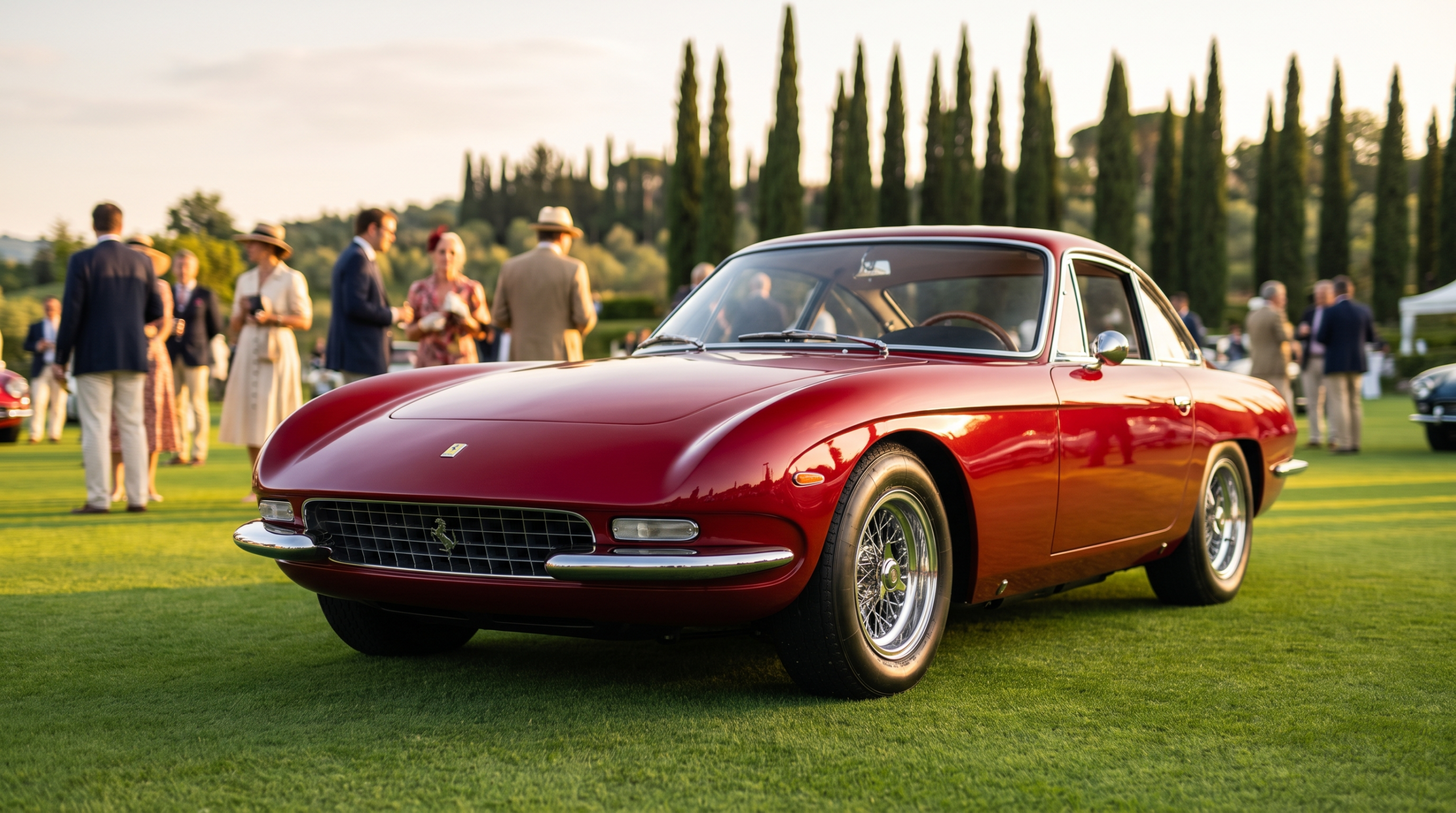
Illustrative rendering: the poster era — where the growth lives in 2026.
6. Market Trends: Rising, Plateaued, and Honest About Both
Honesty over hype: the broad classic market has been sluggish, and Hagerty’s blue-chip index actually slipped about 2% while its supercar index surged. Translation — classic Ferraris are not a monolith. The 1950s–60s masterpieces have plateaued at stratospheric levels (stable stores of value, not growth engines), the 1970s–80s cars remain the accessible on-ramp, and the F40-through-Enzo era is where appreciation currently lives. Markets rotate; eras take turns. The constant is that Ferrari sits atop whichever segment is running.
Compare the alternatives and the picture sharpens: only a handful of marques — certain Porsches, pre-war Alfas and Bugattis, a short list of McLarens — trade with anything like Ferrari’s consistency, and none with its breadth across six decades of product. Diversified collectors still reach for Maranello first, because classic Ferraris are the only asset in the hobby that is simultaneously blue-chip, growth, and cultural icon depending on which era you buy.
7. Cultural Influence and Media Exposure
From Ferris Bueller to Miami Vice to a certain Le Mans movie, classic Ferraris compound their value through culture. Every film appearance, video-game garage, and viral concours moment mints new wanters faster than Maranello ever minted cars. Cultural gravity is why a generation that never saw a 288 GTO on the road still knows exactly what one is — and why demand renews itself decade after decade.
The internet supercharged the flywheel. Auction livestreams turn record sales into global events, and a single well-shot video of a gated shifter can do more for 1980s Ferrari demand than a decade of magazine covers once did. Culture creates collectors; collectors create comps; comps create headlines; headlines create culture. Round and round it goes — with Maranello at the center.
Which Classic Ferraris to Watch in 2026
Era
Examples
2026 market posture
Golden age (1950s–60s)
250 GT variants, 275 GTB, Daytona
Plateaued at the top — blue-chip stability, thin trading
Analog era (1970s–80s)
308, Testarossa, 328, Mondial
The accessible on-ramp; strong entry-level interest
Poster era (late 80s–2000s)
288 GTO, F40, F50, Enzo
The growth engine — younger money, records falling
Modern limited
LaFerrari, Daytona SP3, Icona series
Instant collectibles; allocation games decide entry
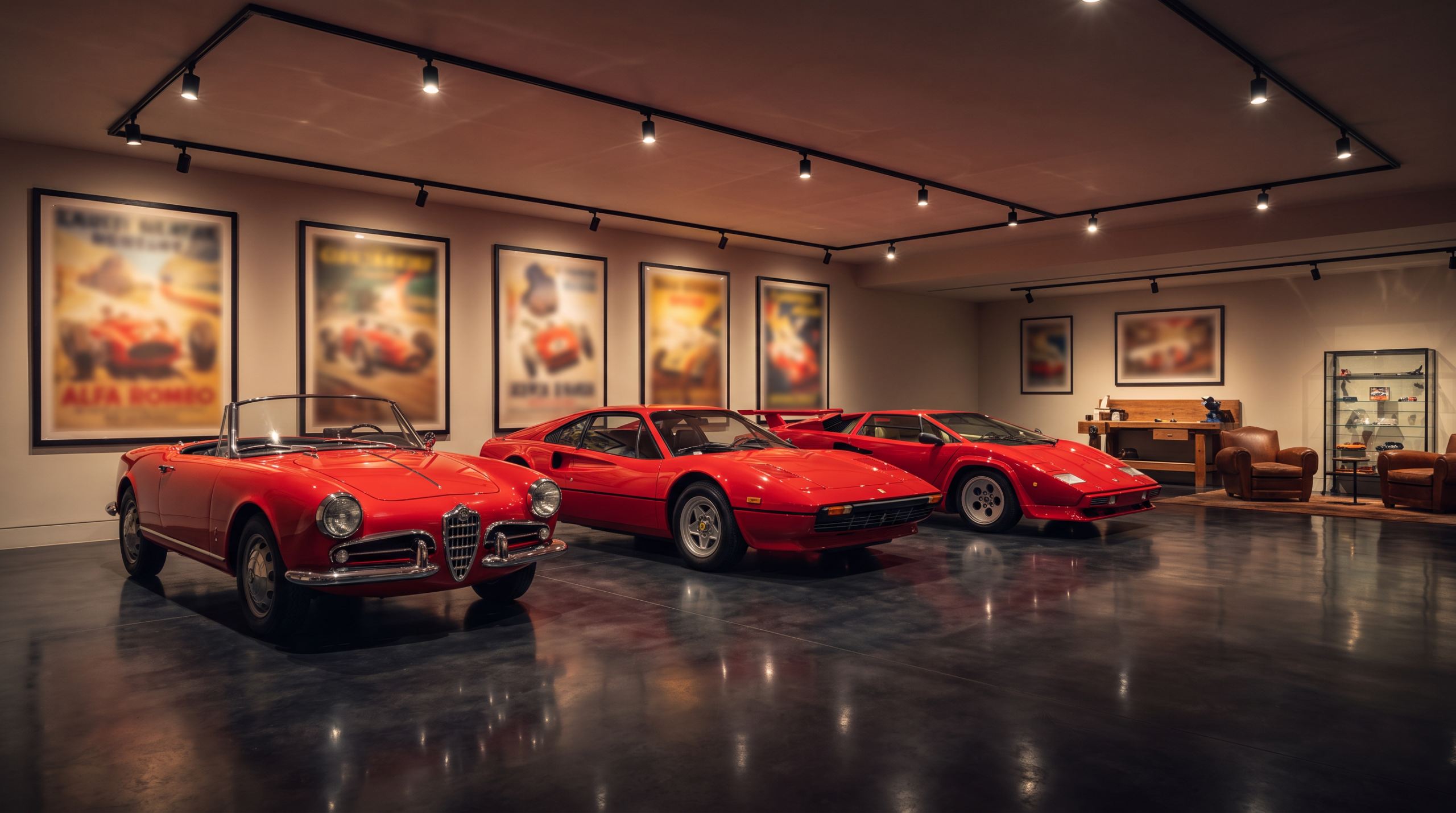
Illustrative rendering: a documented collection is a portfolio; an undocumented one is a gamble.
Starter Strategy: Three Ways Into Classic Ferraris
The driver’s path: an analog-era 308, 328, or Mondial, bought on condition and records rather than mileage, driven regularly and serviced obsessively. Entry is attainable, parts support is strong, and the experience — gated shifter, cammy V8, hydraulic steering — is undiluted Ferrari. Appreciation here is modest; joy per dollar is the highest in the catalog.
The growth path: poster-era cars, where younger demand is concentrated. These trade on originality, mileage, and documentation, so buy the best example you can reach and preserve everything. The market is momentum-driven — enter with sold comps in hand and a multi-year horizon, not a flip plan.
The preservation path: golden-age classic Ferraris as stores of value. These are custody assets — Classiche certification, climate-controlled storage, event eligibility, and professional management matter more than quarter-to-quarter pricing. Trading is thin and relationships are everything, which is where a century-old dealer network earns its keep.
The Reality Check: Risks, Costs, and Why Documentation Rules
We’d be lousy advisors — and we’re not advisors at all; none of this is financial advice — if we skipped the other side of the ledger. Classic Ferraris carry real carrying costs: specialist service, correct-part restorations, storage, insurance, and event logistics all bill in Ferrari currency. Markets rotate, sometimes for years; anyone who bought the wrong era at the wrong peak has felt it. And liquidity at the top is lumpy — a seven-figure car sells when the right three bidders show up, not the day you list it.
Insurance is its own discipline: agreed-value collector policies, transit coverage for events, and storage requirements all need arranging before the car moves. And factor the quiet costs — Classiche inspections, correct-part sourcing, pre-event prep — that never appear in the auction headline but always appear in the ownership ledger.
The single biggest value protector is documentation. Matching numbers, Ferrari Classiche certification, complete service history, and a clean ownership chain routinely separate identical-looking cars by six or seven figures. Before any classic purchase, work through our collector car documentation guide — and study real ownership economics with our cost-of-ownership breakdown as a template for the questions to ask.
How to Buy a Classic Ferrari the Right Way
The playbook mirrors any exotic purchase, with the volume turned up: verify the seller, obsess over history, and never skip the marque-specialist inspection — our guides to the ten costliest buying mistakes and buying exotic cars online both apply doubly at classic-Ferrari prices. Plan the car’s home before it arrives, too: climate-controlled storage is non-negotiable for classic Ferraris, and deeded collector spaces on MotorStables.com — our family’s automotive real-estate marketplace — exist for exactly this. And when strategy eventually says sell, our guide on selling your exotic fast completes the circle.
How the Exotic Motors Family Reads This Market
We’ve been around long enough to remember when a 250 could be bought with a well-negotiated house — and long enough to distrust anyone who claims to time this market. What a century teaches instead is pattern recognition: eras rotate roughly with the generations who grew up wanting them, condition and paperwork beat model and year, and the buyers who do best treat classic Ferraris as a passion with a balance sheet, not a balance sheet with wheels.
Our practical advice in 2026: if you’re entering, enter through the era your budget can buy excellence in — a superb 328 beats a ragged Testarossa every time. If you’re holding golden-age cars, hold with proper custody and enjoy the events. And if you’re chasing the poster era, move deliberately but don’t dawdle; generational demand waves are long, and this one is still building. Verified inventory from our dealer network is on ExoticMotors.com whenever you’re ready to look seriously.
Conclusion: Passion First, Portfolio Second
After a century around extraordinary cars, our honest take: buy the classic Ferrari that makes your heart rate spike, documented to the hilt, at a price the sold comps defend — and let appreciation be the applause, not the performance. The market agrees with the passion: Monterey 2026 was the biggest auction week on record. Our Monterey Car Week 2026 guide has how the week unfolded, see which Ferraris are on the site today, and our sister site Exotic Car News covers the results as they land.
Classic Ferraris as Investments: FAQ
Are classic Ferraris a good investment in 2026?
They remain the collector market’s strongest name — nine of 2026’s top ten auction sales are Ferraris — but growth has rotated to modern classics like the F40, F50, and Enzo, while 1950s–60s blue chips have plateaued. Buy documented cars you love and treat appreciation as a bonus, not a plan. This is information, not financial advice.
What is the most expensive classic Ferrari ever sold?
A 1962 Ferrari 250 GTO/330 LM sold for $51.7 million at RM Sotheby’s in November 2023 — the highest price ever paid for a Ferrari at auction and the second-highest for any car.
Which classic Ferraris are appreciating fastest right now?
The late-1980s-to-2000s poster era — 288 GTO, F40, F50, and Enzo — is the current growth engine, driven by younger collectors. An Enzo brought $17.9 million in January 2026, nearly triple the model’s prior benchmark, and Hagerty’s supercar index is up roughly 30% year over year.
What is the most affordable way into classic Ferraris?
The 1970s–80s analog era — 308s, 328s, Mondials, and early Testarossas — remains the accessible on-ramp, with strong parts support and huge enthusiasm. Documentation and service history still decide value at every price point.
How important is Ferrari Classiche certification?
Very. Classiche certification, matching numbers, and a complete ownership chain routinely separate otherwise identical classic Ferraris by six or seven figures. The provenance folder is as much an asset as the car.
How should a classic Ferrari be stored?
Climate-controlled, secure, and on a battery tender — minimum. Many collectors use deeded garage condos and motor suites, such as the listings on MotorStables.com, to give the car a proper, owned home rather than a rented corner.
Owning an exotic car is not about speed or luxury- It’s about embracing an experience, where the road becomes your canvas and the car, your masterpiece.
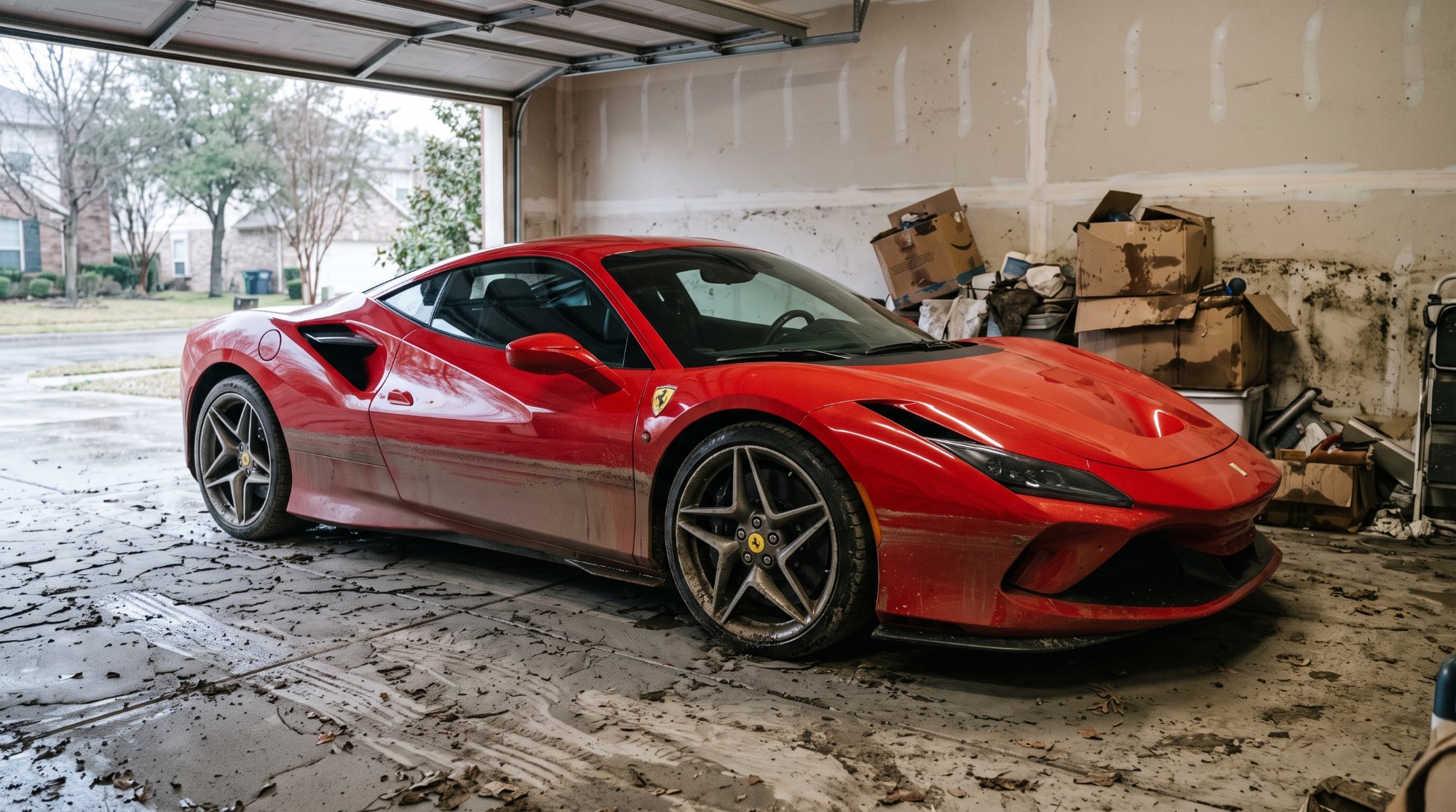
A flooded Ferrari at half price can look like the deal of a lifetime. Here's how to judge the water, the paperwork, the repair math, and whether the discount is ever enough.
991.2 or 992? A buyer's guide to the used Porsche 911 Carrera decision: transmissions, body styles, options, inspection, warranty, running costs and the real price gap.
What a real exotic car pre-purchase inspection (PPI) should include: choosing an independent marque specialist, lift checks, paint readings, factory diagnostics, service records, the road test, and how to use the findings before you pay a deposit.
The FTC’s September 2026 pricing FAQs say a car’s advertised price must be one any buyer can pay, on Instagram, marketplaces and dealer sites alike. Here is what that means for exotic and luxury dealers.