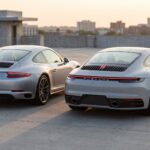
The 911 Turbo S has always been the sensible extremist of the Porsche range — the car that goes as fast as almost anything on the road while remaining usable on a Tuesday. The 2026 version adds electrification for the first time, and the result is the most powerful 911 Porsche has ever put into series production.
701 horsepower, 0–60 mph in 2.4 seconds, and an official Nurburgring Nordschleife lap of 7:03.92 — roughly fourteen seconds quicker than the car it replaces. That last figure is the one that matters, because it was not bought with power alone.
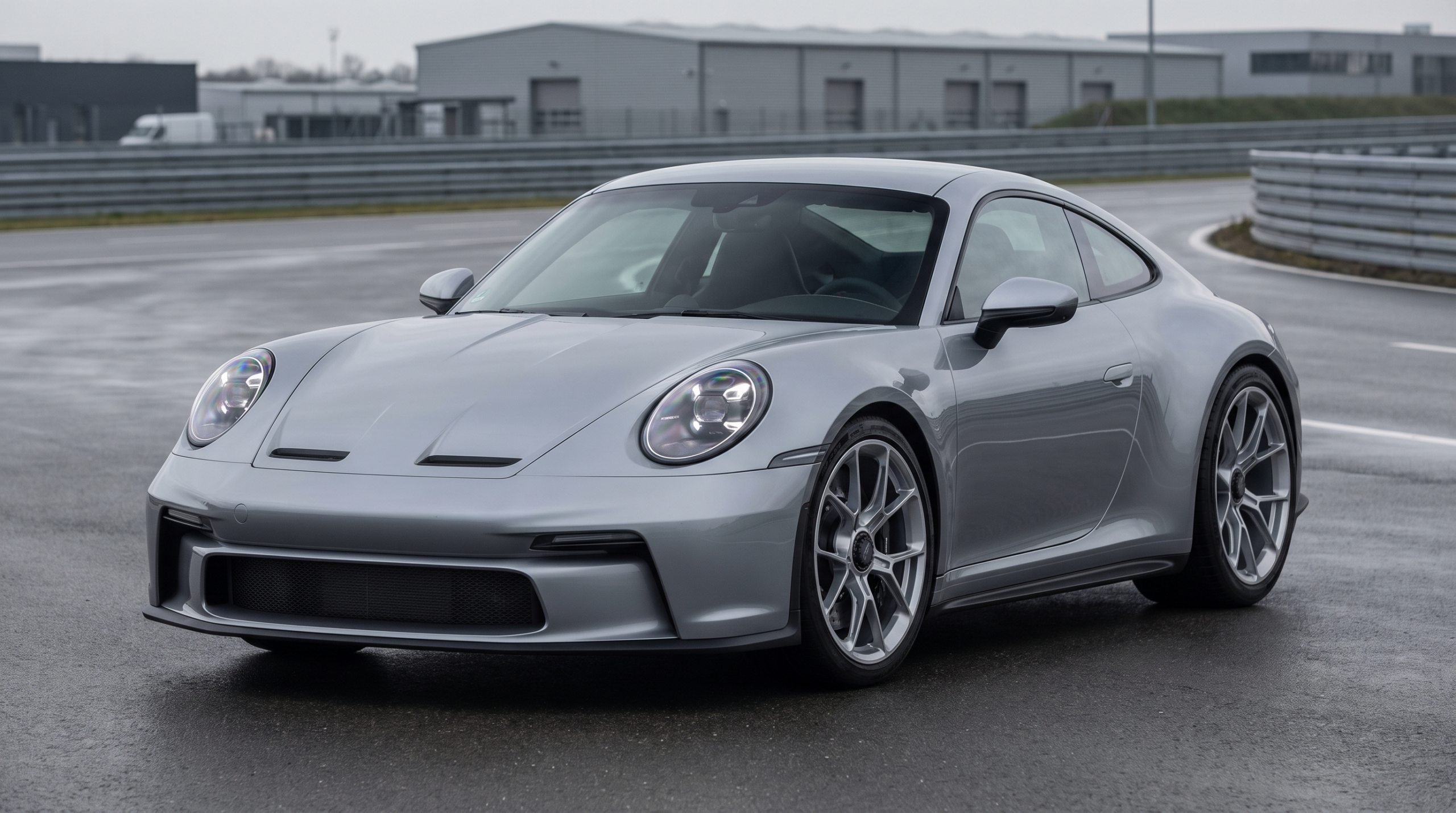
The 911 Turbo S gains electrification without losing the flat-six. Illustrative rendering.
Quick Answer: What Is the 911 Turbo S T-Hybrid?
Table of Contents
The 2026 Porsche 911 Turbo S T-Hybrid is the first electrified Turbo S, pairing a 3.6-litre flat-six with two electrically assisted exhaust-gas turbochargers, a 1.9 kWh battery and an electric motor integrated into the eight-speed PDK gearbox. Combined output is 701 hp, 61 more than the previous Turbo S, good for 0–60 mph in 2.4 seconds and an official Nordschleife lap of 7:03.92, about fourteen seconds quicker than its predecessor. US pricing starts at $272,650 for the coupe and $286,650 for the cabriolet, both including destination.
911 Turbo S T-Hybrid Specifications
Specification
2026 Porsche 911 Turbo S
Engine
3.6-litre twin-turbocharged flat-six with T-Hybrid assistance
Turbochargers
Two electrically assisted exhaust-gas turbochargers
Electric motor
Integrated within the 8-speed PDK
Battery
1.9 kWh
Combined output
701 hp (711 PS), 61 hp more than the previous Turbo S
0–60 mph
2.4 seconds, 0.2 sec quicker than before
Nordschleife lap
7:03.92 official
Rear tyres
325/30ZR21
Suspension
Electro-hydraulic active suspension
Aerodynamics
Redesigned active aero, up to 10% less drag
Weight
Approximately 180 lb more than the previous Turbo S
Body styles
Coupe and cabriolet
US price
$272,650 coupe / $281,950 cabriolet, including destination
How T-Hybrid Actually Works
This is the part worth understanding, because T-Hybrid is not a plug-in system and it is not really about efficiency. It is a lag-elimination system that happens to use a battery.
Each turbocharger carries a small electric motor mounted between turbine and compressor. That motor can spin the compressor up instantly, before exhaust gas has built enough energy to do the job, which removes the pause that has defined turbocharged Porsches since the 930. The same motor works in reverse as a generator when exhaust energy is abundant, feeding the battery.
A second electric motor sits inside the eight-speed PDK, adding drive directly and recovering energy under braking and coasting. The 1.9 kWh battery is deliberately small — there is no electric-only range worth quoting, and none is claimed. It exists to feed the turbos and the gearbox motor, not to move the car on its own.
The engineering logic is the opposite of most hybrids. Where a plug-in system adds weight to deliver electric running, the 911 Turbo S adds weight to make the combustion engine behave better. That is a defensible trade in a car whose entire character rests on throttle response.
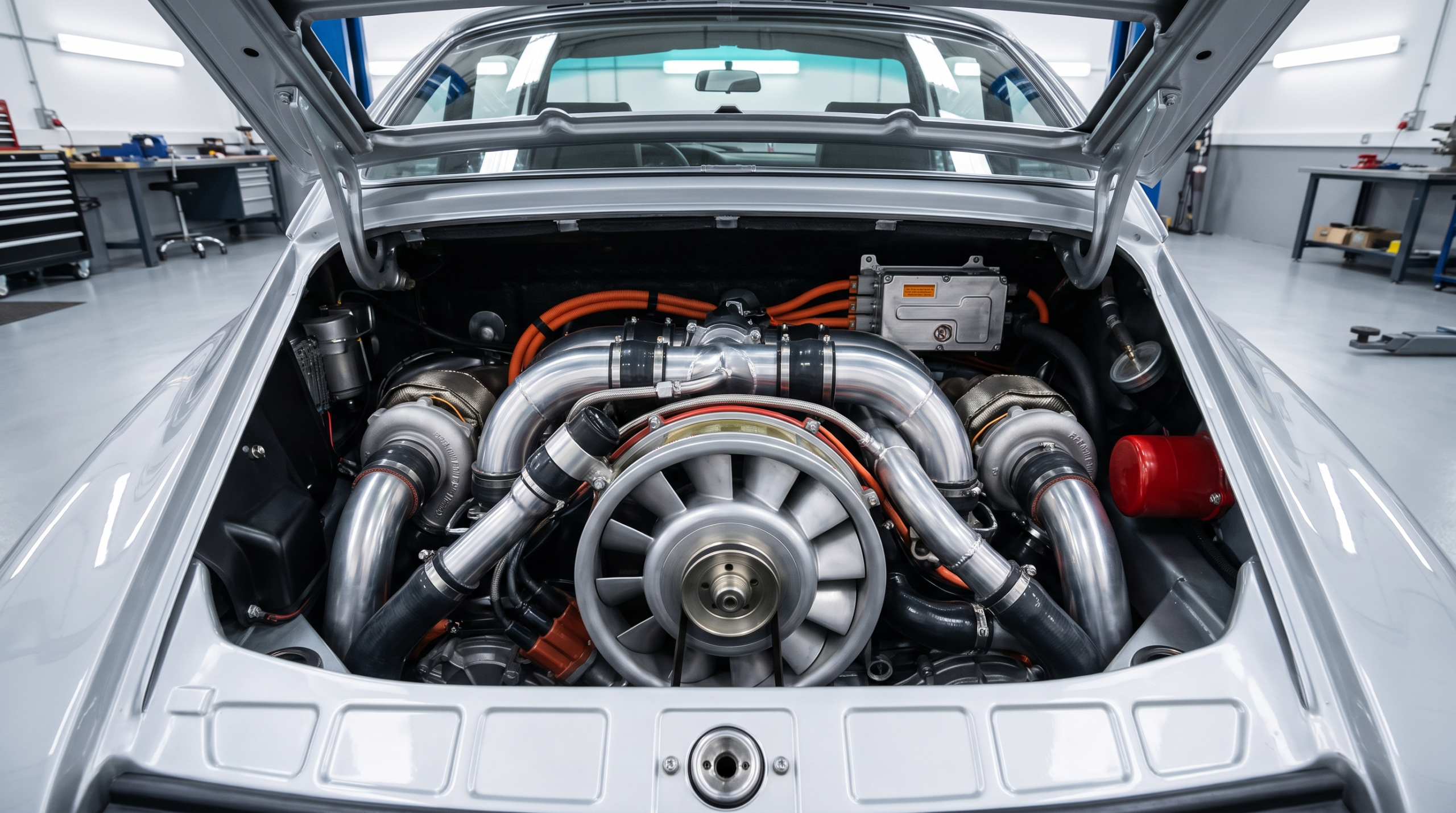
Two electrically assisted turbochargers erase the lag the 930 made famous. Illustrative rendering.
The Nordschleife Lap: 7:03.92
Porsche took the 911 Turbo S to the Nurburgring Nordschleife and recorded an official 7:03.92. The outgoing Turbo S was roughly fourteen seconds slower over the same 20.8 kilometres.
Fourteen seconds is an enormous margin between two generations of the same model, and 61 horsepower does not explain it. On a lap that long, power buys perhaps a few seconds. The rest came from the chassis, the tyres and the aerodynamics — and from a hybrid system that delivers its torque the instant the driver asks, which matters more on a circuit of ninety-odd corners than peak output ever does.
It is also worth noting what the number is not. This is a fast road car lapping quickly, not a stripped-out special. The 911 Turbo S did it on road tyres, with a cabriolet version of the same car available, which is the trick this model has always performed better than anything else.
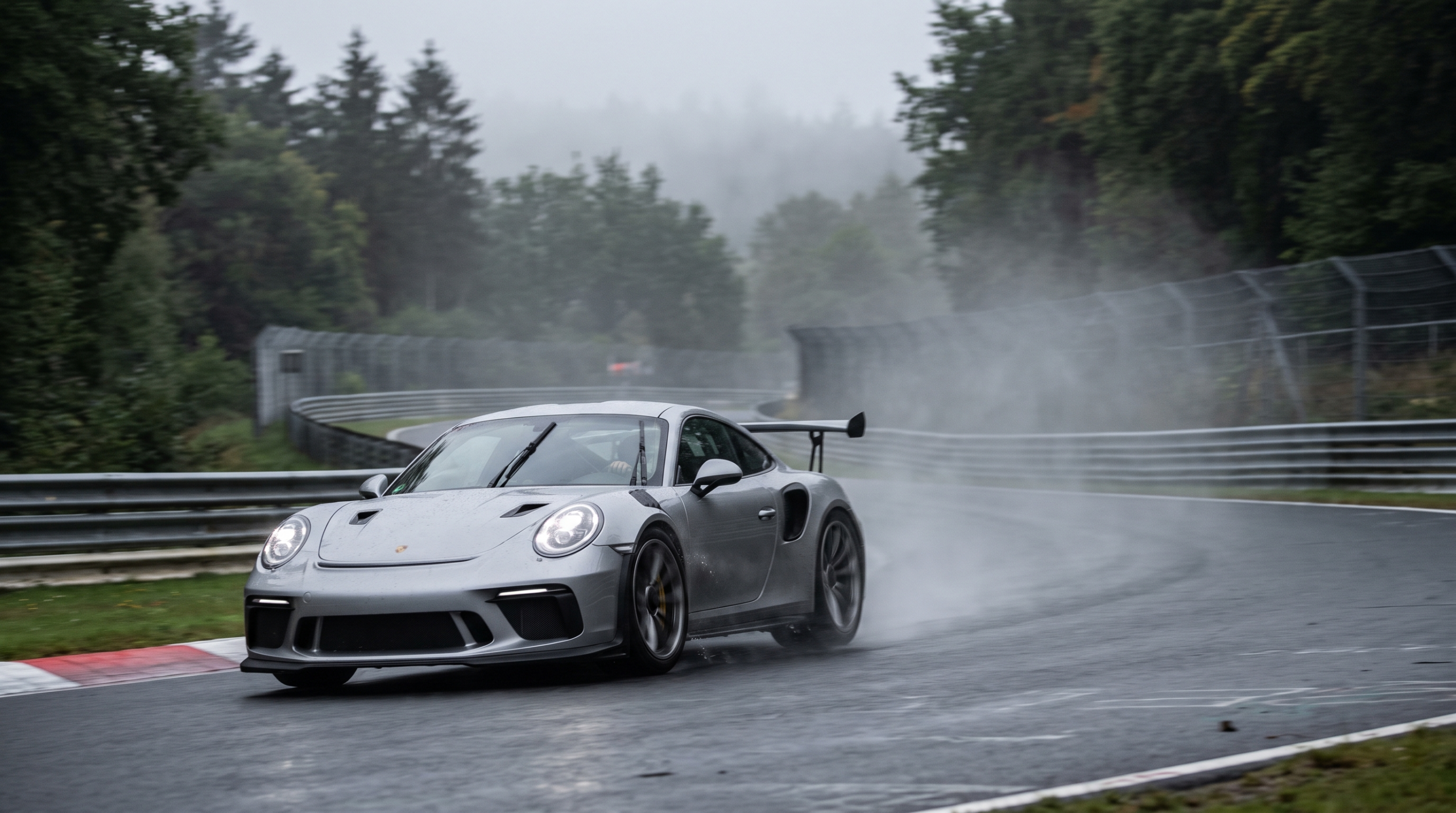
7:03.92 official, about fourteen seconds inside the previous Turbo S. Illustrative rendering.
What Changed From the Previous Turbo S
Measure
Previous Turbo S
2026 911 Turbo S T-Hybrid
Output
640 hp
701 hp
Powertrain
3.7L twin-turbo flat-six (3,745 cc)
3.6L flat-six with T-Hybrid
0–60 mph
2.6 seconds
2.4 seconds
Nordschleife
Roughly 7:18
7:03.92
Suspension
Adaptive dampers
Electro-hydraulic active suspension
Weight
Baseline
Approximately 180 lb heavier
US starting price
Around $241,000
$272,650
The price movement is the part buyers notice first. The coupe is up roughly $31,000 over the equivalent 992.1 car, and the cabriolet by a similar margin. That is a significant increase even by Porsche standards, and the lap time is the argument for it.
Chassis, Aero and the Weight Question
Adding 180 lb to a 911 is not something Porsche does lightly, so the chassis work had to earn it back. Three changes do most of that job.
Electro-hydraulic active suspension. Rather than reacting to inputs, the system actively controls body movement, keeping the car flat under braking and through direction changes. It is the single largest contributor to the lap time.
Wider rear tyres. 325/30ZR21 at the back gives the 911 Turbo S more contact patch to deploy 701 hp through, which matters most exiting slow corners.
Redesigned active aerodynamics that cut drag by up to 10 percent while still generating downforce when the car asks for it.
The honest summary is that the 911 Turbo S is now a heavier car that behaves like a lighter one. Purists will note that mass is mass and no control system removes it. They are right, and the stopwatch disagrees with them, which is roughly where this argument has sat since the 991 generation.
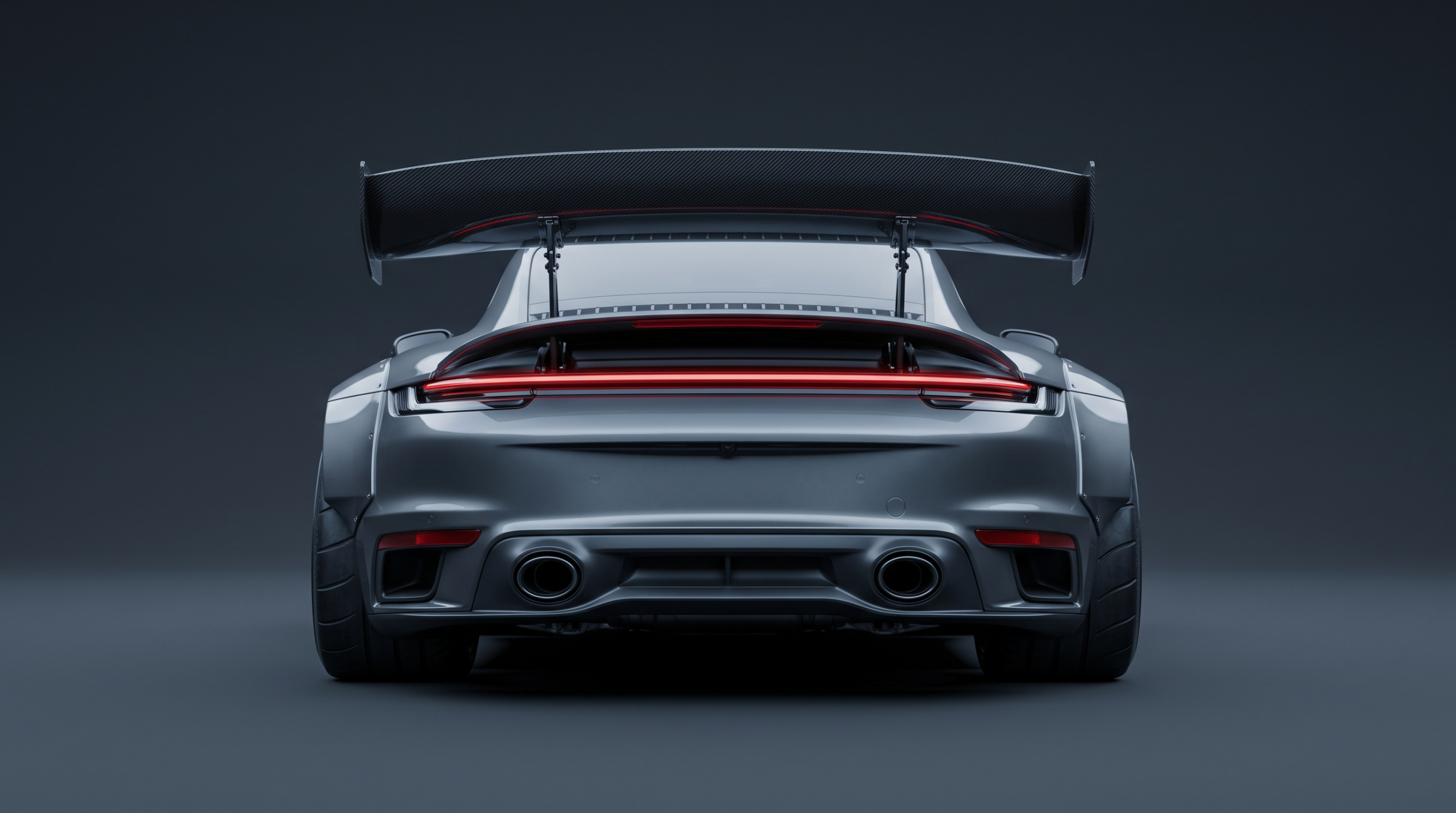
Active aero cuts drag by up to 10 percent while still making downforce on demand. Illustrative rendering.
Is It Still a 911?
Every generation of this car provokes the same question, and it deserves a straight answer rather than a defensive one.
What is unchanged: the engine is still a flat-six, still behind the rear axle, still driving all four wheels through a PDK, in a body whose silhouette has been recognisable for sixty years. Nothing about the T-Hybrid system alters the fundamental layout that makes a 911 a 911.
What has changed is the texture. Turbo lag was part of this car’s character, sometimes an unwelcome part, and the 911 Turbo S no longer has any. Response is now immediate everywhere, which makes the car faster and marginally less eventful. Whether that is progress depends entirely on whether you enjoyed managing the delay.
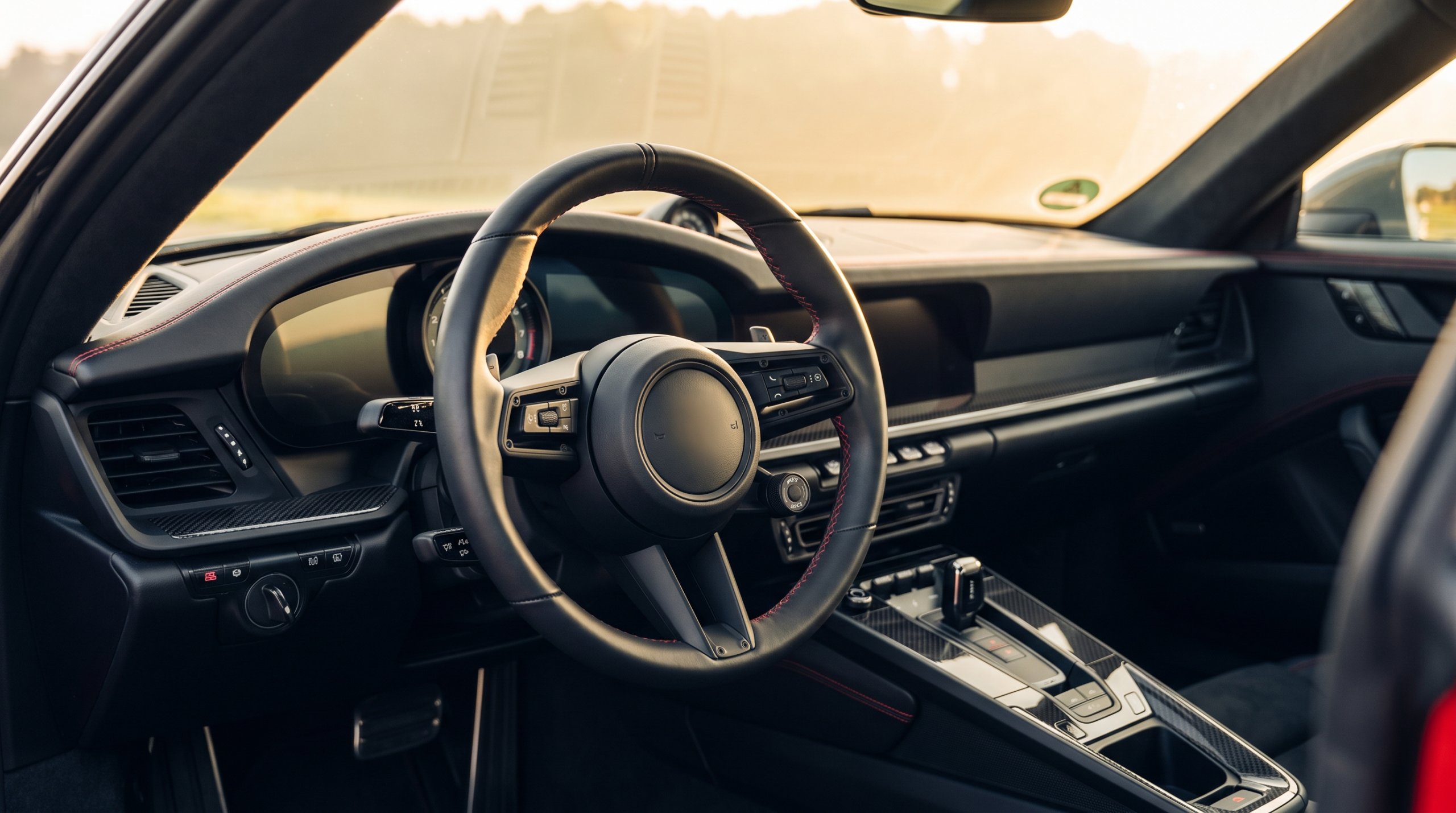
What is worth being clear-eyed about is the trajectory. This is a 3,600-plus pound 911 costing over a quarter of a million dollars with active suspension and a hybrid system. That is a long way from the original Turbo, and anyone who wants the older experience should be buying an older car rather than waiting for Porsche to build one.
The layout that defines a 911 is untouched. The texture is what changed. Illustrative rendering.
Coupe or Cabriolet?
Porsche quotes the same headline performance for both bodies, which makes this a question about use rather than capability. The cabriolet carries a $9,300 premium and a small weight penalty, and it is the version most likely to spend its life being driven rather than lapped.
Historically the coupe has held value slightly better in the Turbo S line, though buyers in warm-weather markets have often reversed that locally. On this generation the pattern is not yet established, so treat it as a preference rather than an investment decision. If the 911 Turbo S is going to see track days, the coupe is the more sensible starting point purely for structural rigidity and roll protection. If it is going to see coastline, the answer is obvious and nobody has ever regretted it.
Fifty Years of Turbo
Context helps here, because the 911 Turbo S did not arrive at its current character by accident. It got there by being repeatedly civilised.
The original 911 Turbo of 1975 was a 3.0-litre car making around 260 hp, and it earned a reputation that had less to do with the figure than with the delivery. Boost arrived late, all at once, and often mid-corner. The car demanded to be driven a particular way and punished drivers who did not know that, which is how it acquired the nickname it still carries in enthusiast circles.
Every generation since has chipped away at that. Intercooling, better engine management, then all-wheel drive, then twin turbochargers, then adaptive chassis systems. Each step made the Turbo faster and more approachable at the same time, and each drew the same complaint from people who valued the difficulty.
T-Hybrid is the logical end point of that fifty-year project. The lag that defined the original car has been engineered out entirely, not reduced. The 911 Turbo S is now a car with no delay between intention and response anywhere in its rev range, which is either the completion of the idea or the loss of its soul depending on who you ask. Our guide to exotic car design across the decades traces the same civilising arc across the wider segment.
What It Competes With
Car
Output
0–60 mph
Approx. US price
Porsche 911 Turbo S
701 hp
2.4 sec
$272,650
Corvette ZR1X
1,250 hp
Under 2 sec
From about $200,000
Ferrari 849 Testarossa
1,036 hp
Under 2.3 sec
Considerably higher
Lamborghini Revuelto
1,001 hp
2.5 sec
Around $600,000
On raw output the 911 Turbo S is now the least powerful car in its own peer group, which would once have been unthinkable. It remains the most usable by a wide margin, and it is the only one on that list you could reasonably drive every day in bad weather. That has always been the Turbo S argument, and electrification has not changed it.
The Turbo S is not where this technology started. Porsche introduced T-Hybrid to the 911 range with the Carrera GTS in the 992.2 update, using a similar architecture at lower output. The 911 Turbo S is the system scaled up to the top of the range.
That sequencing tells you something about intent. Porsche did not build a one-off hybrid halo to make a point; it validated the technology in a volume model first and then applied it where the performance case was strongest. It is a considerably more conservative strategy than the all-electric halo projects several rivals announced and subsequently cancelled.
What this does not signal is the end of the combustion 911. A 1.9 kWh battery is not a stepping stone to a battery-electric sports car; it is a component chosen to solve a specific problem in a petrol engine. Porsche has been explicit that the 911 is the model it intends to keep combustion-powered longest, and the T-Hybrid system is arguably what makes that commitment technically viable under tightening emissions rules.
For buyers, the practical read is straightforward. The 911 Turbo S is not a transitional car waiting to be replaced by an electric equivalent. It is the current best expression of a formula Porsche intends to keep building.
Buying One
Coupe or cabriolet is a resale decision as well as a preference. Turbo S coupes have historically held value slightly better, though the gap on this model is not yet established.
Specification matters more than colour. Carbon ceramic brakes, the lightweight package and rear-axle options carry demonstrably better through a resale than paint-to-sample does.
Hybrid components are a diligence item now. Battery health and high-voltage service history will matter on the used market in a way they never did on a 992.1.
Insure on agreed value. A $272,650 car settled at depreciated market value is an unpleasant surprise, and our financing and insurance guide explains the distinction.
If a 911 Turbo S is your entry point at this level, our guide on how to afford a supercar covers the routes owners actually use.
911 Turbo S T-Hybrid FAQ
How much horsepower does the 2026 911 Turbo S have?
701 horsepower, or 711 PS in metric terms. That is 61 hp more than the previous Turbo S and makes it the most powerful series-production 911 Porsche has built. The figure combines a 3.6-litre flat-six with electric assistance from the T-Hybrid system.
Is the 911 Turbo S a plug-in hybrid?
No. The battery is just 1.9 kWh and there is no meaningful electric-only range. T-Hybrid exists to spin the turbochargers instantly and add drive through the gearbox, not to run the car on electricity. You never plug it in.
What is the 911 Turbo S Nurburgring lap time?
7 minutes 3.92 seconds, set officially on the Nordschleife. That is roughly fourteen seconds quicker than the outgoing Turbo S, a margin that comes mostly from the active suspension, wider rear tyres and aerodynamics rather than the extra power.
How fast is the 2026 911 Turbo S?
Porsche quotes 0 to 60 mph in 2.4 seconds, two tenths quicker than the previous generation. On a circuit the gains are much larger, because the T-Hybrid system delivers torque immediately and the chassis holds the car flat through direction changes.
How much does the 2026 911 Turbo S cost?
US pricing starts at $272,650 for the coupe and $286,650 for the cabriolet, both including destination. That is roughly $31,000 and $26,500 more than the equivalent previous-generation cars.
What are the electric turbochargers on the 911 Turbo S?
Each turbocharger has a small electric motor between the turbine and compressor. It spins the compressor up instantly rather than waiting for exhaust gas, which eliminates turbo lag, and acts as a generator to charge the battery when exhaust energy is plentiful.
The Verdict
The 911 Turbo S has done the thing it always does: absorbed a new technology without losing its identity, and come out faster than the numbers suggest it should be. Fourteen seconds at the Nordschleife between generations is the headline, and the fact that it came from chassis and response rather than raw power is the more impressive part.
It is heavier and considerably more expensive than the car it replaces, and those are real costs rather than footnotes. But it is also the most complete version of a formula Porsche has been refining for fifty years, and the only car in its performance bracket you could genuinely use every day.
At Exotic Motors we have watched every generation of this car since the original Turbo. See which Porsches are on the site today, and for coverage of new reveals our sister publication Exotic Car News follows the market daily.
Owning an exotic car is not about speed or luxury- It’s about embracing an experience, where the road becomes your canvas and the car, your masterpiece.
A gated-manual Audi R8 can deliver something a newer automatic cannot. Here is what recent sales say about the premium, how to verify a factory manual, and when the extra money serves your priorities.
A used Lamborghini Huracán can still be a smart buy in 2026, if you choose the right variant and a well-documented car. Here is which version suits which buyer, what U.S. dealers are asking, and what to check first.
A flooded Ferrari at half price can look like the deal of a lifetime. Here's how to judge the water, the paperwork, the repair math, and whether the discount is ever enough.
991.2 or 992? A buyer's guide to the used Porsche 911 Carrera decision: transmissions, body styles, options, inspection, warranty, running costs and the real price gap.