Your Exotic Car Is Repaired. Its Value May Not Be.
A perfect-looking repair may leave an imperfect resale price. Here is how owners and buyers can assess diminished value on specialist vehicles.
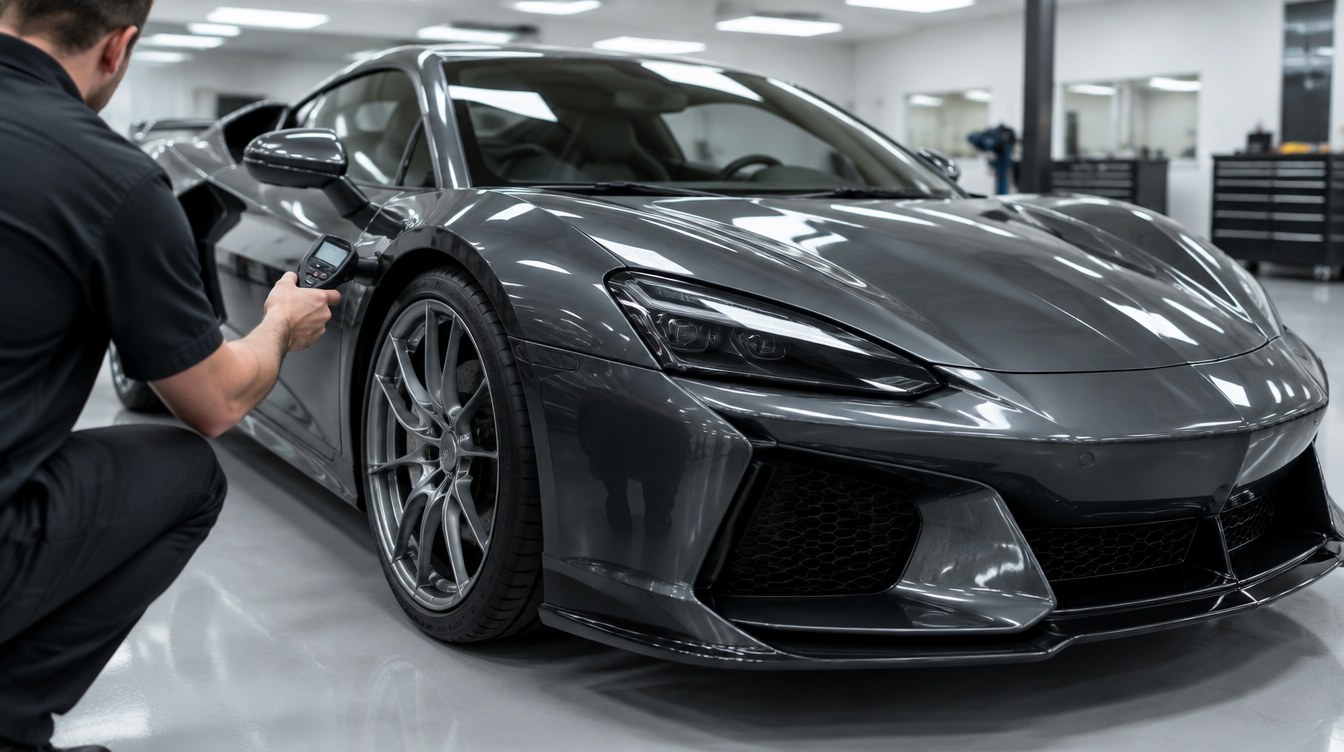
The panel gaps look right. The paint matches. The car drives exactly as it should. Then a prospective buyer asks the one question the repair invoice cannot answer: has it ever been in an accident?
Short answer: a completed repair can restore a car’s condition without restoring its market value. That remaining gap is called diminished value. Whether it exists, how large it is, and whether anyone owes you for it are three separate questions, and on an exotic, luxury or rare car each one turns on vehicle-specific evidence rather than a formula.
The Insurance Information Institute describes diminished value as the difference between what a car was worth before an accident and its market value after repair, noting that buyers may pay less for a previously damaged car even when the repair meets high standards. [1] For specialist vehicles, the useful starting point is evidence: what happened, how the car was repaired, and what the relevant market would actually pay.
This article is general education, not legal, insurance or appraisal advice. Sources were checked on October 22, 2026; the policy wording and law that apply to your claim are what govern it.
What diminished value actually measures
The practical valuation question is this: what would the car be worth without its damage history, compared with its value with that history and its completed repairs, measured on the same basis?
That consistency matters. Comparing a pristine dealer’s asking price from last spring with a wholesale offer received today blends accident-related loss with market movement, ordinary depreciation, added mileage, and the gap between retail and wholesale pricing.
Three terms help organize the discussion:
- Inherent diminished value: the market penalty that remains after a proper repair, attached to the car’s damage history.
- Repair-related diminished value: a loss that stems from deficiencies in the repair itself. Those deficiencies should be identified and corrected, not buried inside a valuation figure.
- Immediate diminished value: the drop in value while the car is still damaged and unrepaired. It is not interchangeable with the residual loss after repair.
These are useful descriptions, not three payments an owner can add together. The applicable legal measure and the policy wording control what, if anything, is recoverable.
Why exotic and collector cars need a closer look
An appraiser assessing a rare car has to understand what buyers valued about that particular example before the loss.
Hagerty’s valuation guidance notes that the number of owners, originality, and documentation supporting a car’s build or restoration can all greatly affect a collector vehicle’s value, alongside condition. [2] Applied to diminished value, that calls for a far more specific inquiry than entering a VIN and multiplying by a percentage.
Consider three hypothetical cars:
- A regularly driven luxury sedan receives a documented repair to a replaceable bumper cover.
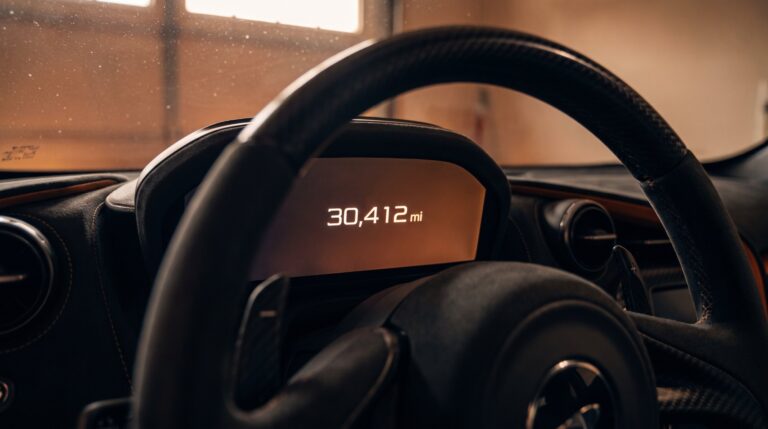
- A low-mileage, limited-production supercar needs structural repairs.
- A preserved collector car loses original bodywork or factory paint that set it apart from restored examples.
Those situations deserve different market investigations. None of them comes with a predetermined discount. A rare car can be hard to value precisely because comparable transactions are scarce, so rarity is a reason for better analysis, not proof of a larger claim.
The strongest report explains why the characteristics affected by the accident mattered to that car’s likely buyers. If originality and provenance are central to your car’s value, our collector car documentation guide covers the records that support them.
A large repair bill does not establish a large value loss
Repair cost measures the work required. Diminished value measures the market effect that remains afterward. The two can be related, but they are not interchangeable.
On a specialist car, a repair bill may reflect expensive parts, specialist labor, refinishing and technical procedures. An appraiser still has to establish what was damaged, what was replaced or repaired, and whether buyers attach a residual discount to that history.
Manufacturer-specific repair capability belongs in the factual record. Porsche Canada, for example, says its certified collision centres are individually selected, specially trained and equipped for the advanced materials in modern Porsches, and audited each year. [3] That supports asking informed questions about who repaired a car and how. It does not prove that a certified repair restores full market value.
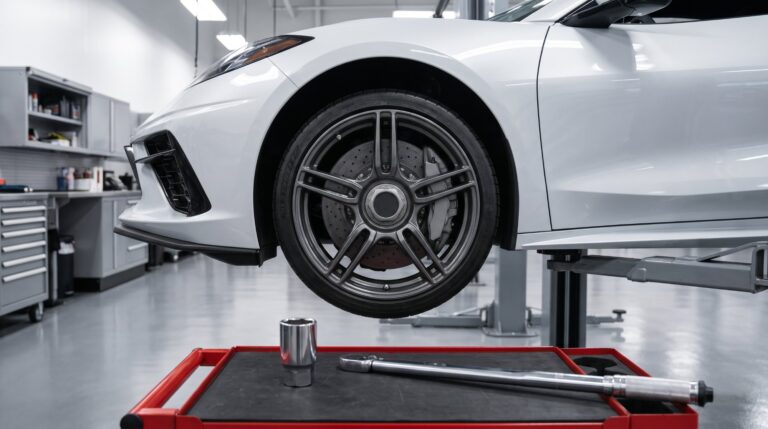
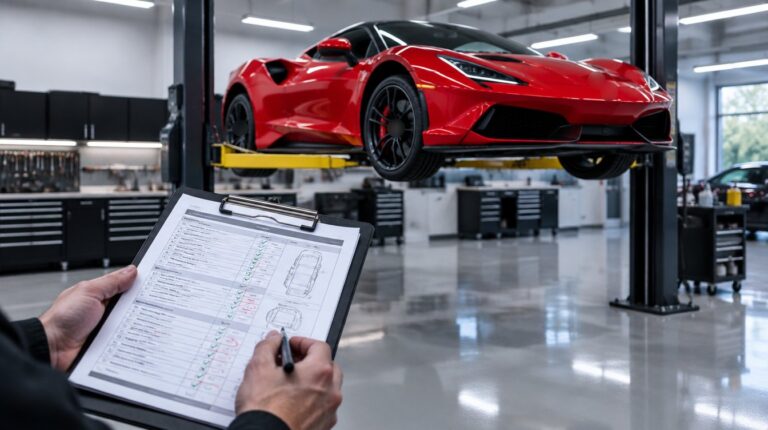
Ask for the final invoice, any supplements, photographs, and relevant measurement, scan or calibration records. A line reading “front-end damage” is no substitute for the repair file.
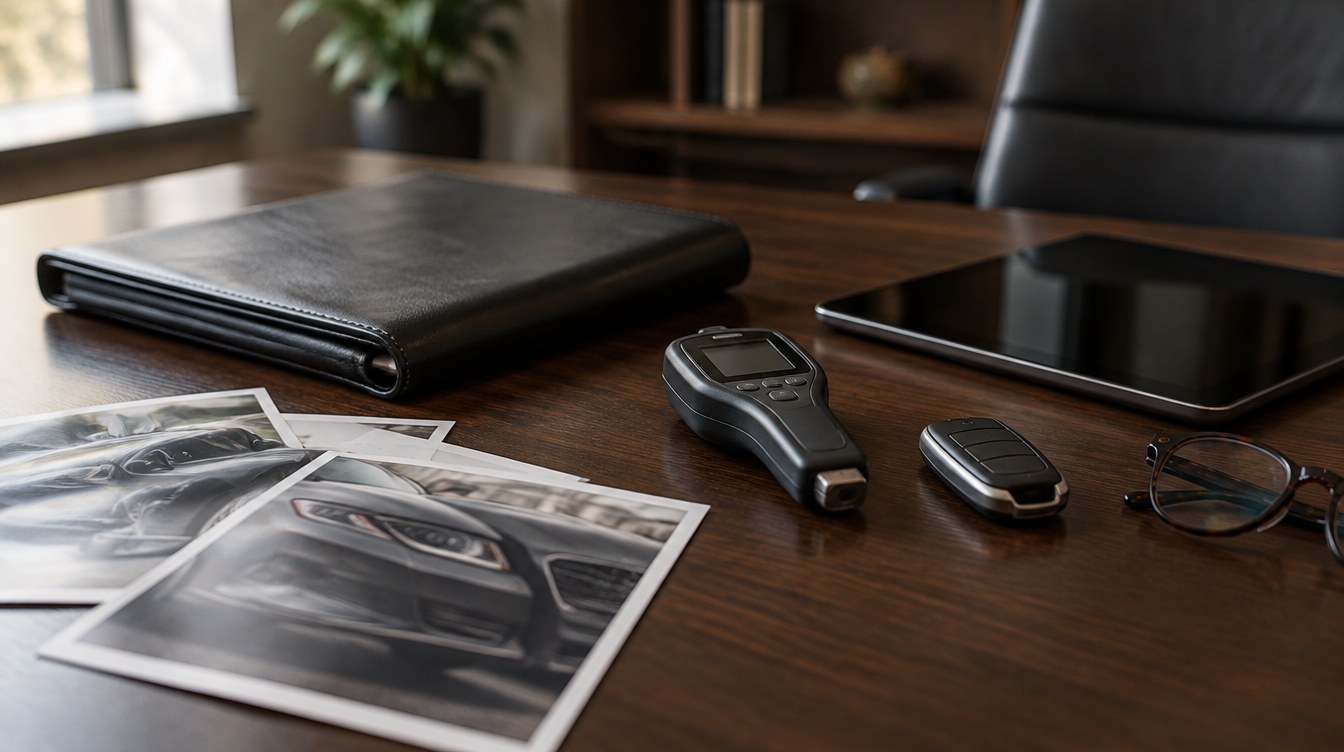
Can a car lose value without an accident on its history report?
A history report is one source of information, not a complete physical or documentary investigation.
CARFAX states that not every accident or damage event is reported to it, and recommends using its report alongside a pre-purchase inspection and a thorough test drive. [4] A clean report, then, is not proof of untouched paint or original bodywork.
The reverse also holds. An accident entry does not, by itself, tell you the severity of the damage or quantify any loss. The scope of the incident, the actual repairs, the car’s pre-existing condition and the market’s response still need investigating.
Buyers should request the repair documentation and commission an inspection suited to the car; our guides to what an exotic car pre-purchase inspection should include and how to read the PPI report walk through both. Sellers should describe known history accurately and never present an incomplete report as a guarantee.
How a defensible diminished-value appraisal is built
A useful appraisal makes its reasoning understandable. Owners can check whether it answers five questions:
- What exactly is the car? The correct derivative, specification, mileage, options, condition, provenance and any prior damage. An ordinary production model is a poor stand-in for a scarce version.
- What was it worth before this incident? A supportable baseline, rather than an assumption that the purchase price or insured amount equals current market value.
- What happened, and what was repaired? Cosmetic work, replacement panels, structural involvement and any unresolved defects, separated using the actual records.
- What does the market evidence show? Relevant transactions where they exist, with adjustments explained, and a clear distinction between asking prices, completed sales and dealer acquisition offers.
- How much uncertainty remains? Thin comparable data should lead to transparent assumptions and stated limitations, not false precision.
Written opinions from knowledgeable dealers can be useful supporting evidence when they explain their basis. One unexplained low trade-in offer is weaker than a reasoned comparison with otherwise similar cars.
Illustrative example only: suppose a specialist supports an undamaged-equivalent value of $250,000 and a repaired value of $225,000, both on the same valuation date and the same market basis. The indicated accident-related difference is $25,000. That arithmetic explains the concept. It is not a typical result, a percentage rule, or proof of a legal entitlement.
An actual sale can be evidence of value, but whether a sale is required before you can recover depends on the applicable law. Don’t assume you must sell the car first.
Why an online calculator cannot settle the question
The “17c” method comes up often in diminished-value discussions. As a 2023 paper in the Journal of Insurance Regulation describes it, the formula, historically associated with Georgia, starts from 10% of a retail value and multiplies it by damage and mileage modifiers that range from zero to one. [5] The authors note criticism that mileage is counted twice, since it is already reflected in the retail value, and that the formula involves no post-repair inspection. They also report finding no consistently accepted method for calculating diminished value.
A formula can produce a number without showing that the number fits a particular market. For a rare car, the real question is whether the inputs account for specification, originality, provenance and how buyers actually behave.
Ask an insurer or appraiser to identify the methodology, the source data, the adjustments, and why the method suits this car. Neither a calculator’s output nor the owner’s preferred figure substitutes for supporting evidence, and a formula’s built-in cap should never be described as a legal limit.
Who might pay for diminished value?
Start by identifying the claim route.
A first-party claim is made under the owner’s own policy. A third-party claim seeks recovery for damage caused by someone else, usually through that party’s liability insurer. Legal rights and insurance coverage are different inquiries, and who was at fault does not answer every coverage question.
Texas offers a clear illustration of the distinction. In Bulletin B-0027-00, the Texas Department of Insurance took the position that an insurer is not obligated to pay a first-party claimant for diminished value when a car is completely repaired to its pre-damage condition under the standard policy, while recognizing that an insurer may owe loss of market value to a third-party claimant, or to its own policyholder under uninsured/underinsured motorist coverage. [6] The department’s current consumer guidance also lists diminished value among the things UM/UIM coverage pays for. [7] Those are Texas sources and should not be read as national rules.
State law, the policy form, endorsements, fault allocation, proof and available limits can all matter. A genuine loss is not a guarantee that insurance will cover all of it, and repairs and other property damage may consume much of an at-fault driver’s liability limit.
Ask for a written coverage position and the policy or legal basis for it. For a substantial dispute, a lawyer qualified in the relevant jurisdiction can address your rights and deadlines.
Does agreed-value insurance cover diminished value?
Not by itself. A collector policy’s agreed-value feature answers a different question. Hagerty, for example, explains that its Guaranteed Value policies pay the full agreed insured value in the event of a covered total loss. [8]
That promise does not, on its own, establish compensation for the residual market loss on a car that was repaired rather than totaled. Ask your insurer specifically about partial losses, diminished-value exclusions or endorsements, repair provisions and dispute procedures. The phrase “agreed value” is not enough to answer those questions. For the wider picture on specialist cover, see our exotic car financing and insurance guide.
Diminished value is separate from loss of use
One accident can produce several distinct losses, and each needs its own explanation and evidence:
| What it is | What supports it |
|---|---|
| Repair cost: the work needed to restore the car | Estimate, final invoice, supplements, parts and calibration records |
| Diminished value: market value that remains lost after repair | Pre-loss baseline, repair file, comparable market evidence, a reasoned appraisal |
| Loss of use: being deprived of the car during a relevant period | Dates in and out of the shop, parts-delay correspondence, rental invoices |
Rental reimbursement under an owner’s own policy is yet another question, with its own terms and limits. Don’t multiply an exotic-car rental rate by every day the car spent in the shop and assume the result is payable. Entitlement, reasonable duration, rental requirements and recoverable amounts all need jurisdiction-specific review.
Be equally wary of large combined settlements advertised online. Without the underlying documents, an advertised result cannot be assessed, and it says nothing about the diminished value of a different car.
What owners should do after an accident
Put safety and a proper repair first, while building an organized record:
- Preserve photographs, incident details, pre-loss condition records and any valuation evidence you already have.
- Notify the relevant insurer promptly and ask how to present a diminished-value component.
- Obtain the complete repair file and resolve any outstanding repair concerns.
- Ask any appraiser about experience with your car’s specific market, methodology, inspection scope, fees and potential conflicts.
- Document diminished value, repair costs, loss of use and other expenses separately.
- Read any release before signing or accepting a final settlement, and understand which claims it resolves.
- Check notice requirements and legal deadlines early. Don’t assume negotiation or a regulatory complaint pauses a deadline.
A complaint to your state insurance regulator can help with claim-handling concerns, but it does not guarantee a valuation award. Georgia’s insurance commissioner, for example, runs a consumer complaint process for disputes about how a claim is being handled. [9]
What buyers should take from this
An accident history warrants investigation. On its own, it does not reveal repair quality, remaining safety concerns, or the right price.
Weigh the scope of damage, the repair evidence, the car’s current condition and the asking price together. A well-documented repair can reduce uncertainty; missing records leave questions that a glossy photograph cannot answer.
For an owner, the most persuasive diminished-value case connects the incident to a measurable market consequence. For a buyer, the same discipline shows whether the price fairly reflects the car’s history. A repaired car deserves to be judged on its facts, and so does its value.
Frequently asked questions
Can a car lose value after proper repairs?
It can. Buyers may pay less for a car with a known damage history even when the repair was done well. Whether that happens to a particular car, and by how much, depends on the damage, the repair and the market for that model.
Does agreed-value insurance cover diminished value?
Not automatically. Agreed value typically governs what is paid after a covered total loss. Coverage for residual value loss on a repaired car depends on the specific policy wording, endorsements and applicable law.
Does a vehicle history report prove the loss?
No. A report can show that an incident was recorded, but it does not measure the loss, and not every accident is reported. The repair file, an inspection and market evidence do that work.
Do I have to sell the car before claiming diminished value?
Not necessarily. A sale can be evidence, but whether one is required depends on the law that applies to your claim. Check before you make a decision about selling.
Is loss of use the same as diminished value?
No. Diminished value concerns the car’s remaining loss in market value. Loss of use concerns being without the car for a period of time. They are documented and assessed separately.
The images in this article are Exotic Motors editorial illustrations of unbranded vehicles and settings. They do not depict a real claim, repair, inspection or listing.
Sources
Checked October 22, 2026. Linked sources support the specific factual statements they are cited against; the appraisal questions and the hypothetical example are editorial guidance, not findings from a market study.
- Insurance Information Institute, What is diminished value? Definition and general context.
- Hagerty, About our conditions. Collector valuation factors.
- Porsche Canada, Porsche Certified Collision Centres. Repair-program example (Canada).
- CARFAX, Why are accident or other details missing?
- Wells-Dietel, Erkan-Barlow and Walkowiak, Automobile Diminished Value Claims, Journal of Insurance Regulation, 2023 (hosted by NAIC). Scholarly background, not a current legal rule.
- Texas Department of Insurance, Commissioner’s Bulletin B-0027-00, April 6, 2000.
- Texas Department of Insurance, What is uninsured motorist coverage, and do I really need it?, last updated October 14, 2024.
- Hagerty, Frequently asked questions, Guaranteed Value answer.
- Georgia Office of the Commissioner of Insurance and Safety Fire, File a Consumer Insurance Complaint.
Buying guides, market analysis and news for people shopping exotic, luxury and collector cars. Written by the Exotic Motors team; prices and availability are checked at publication.