Is December the Best Time to Buy an Exotic Car? What Buyers Should Know About Year-End Deals
December can give exotic-car buyers real leverage, but only with the right seller and the right car. How year-end deals actually work, and the risks of rushing before December 31.

The short answer: December can be the best time to buy an exotic car, but not because the calendar says so. The leverage comes from a specific kind of seller holding a specific kind of car: a dealer-owned vehicle that has been sitting too long, at a store with a year-end number to hit. Find that combination and the last weeks of the year can be a strong time to negotiate. Chase an allocation-controlled Ferrari or a consigned collector car instead, and December changes almost nothing.
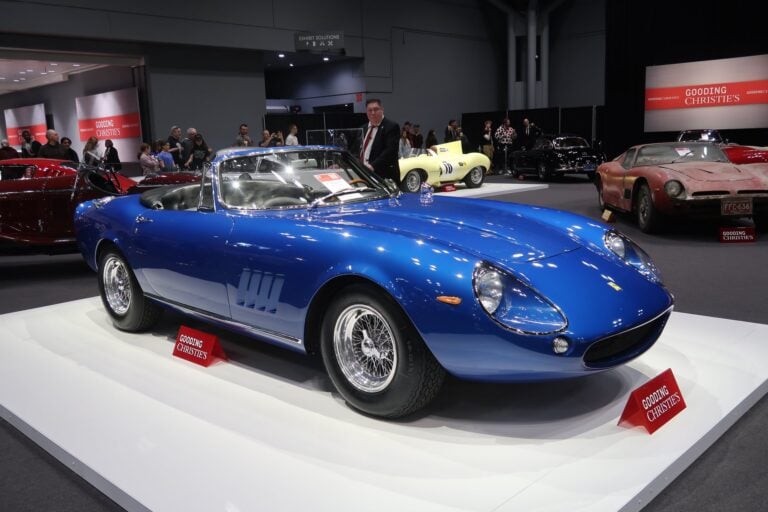
The images in this article are editorial illustrations created for Exotic Motors.
Why December has a reputation
The reputation is earned, mostly in the mainstream new-car market. Edmunds has found that, outside the pandemic years, December has consistently been the month with the largest discounts off MSRP, with the final days of the month typically the deepest. Cox Automotive data shows December accounts for roughly 9% of annual U.S. new-vehicle sales, against the 8.3% you would expect from an even split. Three forces drive it: monthly and annual sales targets landing at once, outgoing model-year stock that sales managers want gone, and manufacturer finance offers timed to the clearance.
Exotic cars share only some of those forces. Few exotic buyers are choosing from a lot of identical new units, so the useful question isn’t “Is December cheaper?” It is “Is this seller under pressure on this car right now?”
Who is actually under year-end pressure
Franchise dealers (an authorized Lamborghini, McLaren or Porsche store, for example) are the most likely to feel the calendar. They answer to manufacturer volume targets, some carrying bonuses tied to the month, quarter or year, so one more sale can be worth more to the store than the profit on that single car. On new cars, the biggest lever is usually outgoing model-year stock: a current-year car still unsold in December becomes harder to move once next year’s cars arrive.
Independent specialists have no factory target to chase. Their pressure comes from their own balance sheet: how much capital is tied up in slow cars. One with a full showroom may deal in December; one with fresh inventory may not care what month it is.
Dealer-owned versus consignment is the distinction buyers miss most often. If the dealer owns the car, it can decide to take less. If the car is on consignment, the price floor belongs to the private owner, and the dealer usually can’t cut it without that owner’s approval. It’s fair to ask directly. A consignor may still take an offer in December, but for personal reasons, not the dealership’s calendar.
Allocation cars don’t follow the calendar
For limited-series and allocation-controlled models, year-end timing is largely irrelevant. Ferrari rations its most desirable cars toward established clients, and its order book has been reported to cover roughly two years of production. Porsche’s GT models follow a similar pattern, which is why a 911 GT3 can trade well above MSRP. When demand exceeds supply, a dealer has no reason to discount at Christmas, and asking for one can cost you standing for the next allocation.
The broader exotic market is more mixed. Late-model, higher-volume exotics have softened through 2026 while true collector-grade cars have kept setting records, the two-speed market we covered in our 2026 market analysis. Some nearly new cars are now listing below where they sat weeks ago; Exotic Car Trends reported on Nov. 12 that seven Lamborghini Temerarios were listed in the U.S. under $400,000, when a month earlier none had been. That is where calendar pressure and market softness can stack in a buyer’s favor.
Where December helps, and where it doesn’t
| Situation | Year-end leverage |
|---|---|
| Aged, dealer-owned car at a franchise store | Strongest |
| Outgoing model-year new car, non-allocated | Strong |
| Aged car at an independent specialist | Moderate; depends on the dealer’s cash position |
| Consignment car | Depends on the owner, not the calendar |
| Allocation, limited-series or collector-grade car | Little to none |
Inventory age is the real signal
The most dependable source of leverage in any month is how long a car has been for sale. Most dealers finance their inventory through floorplan lines, and those lines charge interest every day a car sits. Industry lenders put floorplan rates in a 7% to 10% range in 2026. At 8%, a $300,000 car costs a dealer about $2,000 a month in interest alone, before insurance, depreciation and the opportunity cost of the capital.
To gauge age, check listing dates and price history where a marketplace shows them, search the VIN for the same car listed elsewhere or re-listed under a new stock number, and ask when the dealer acquired it. Treat “days on market” figures with caution: on feed-driven sites they can reset whenever a listing refreshes.
A real discount versus an advertised one
Year-end advertising is full of strike-through prices. A “was $389,900, now $364,900” banner means little if the original figure was never a realistic ask. Judge the car against comparable completed sales and current asking prices for similar mileage, specification and history, not against the dealer’s own earlier number.
Then compare out-the-door prices. A headline reduction can be clawed back through dealer add-ons, reconditioning or “prep” fees, inflated documentation charges, or a weaker trade-in figure. The FTC’s September 2026 pricing guidance says an advertised price should be one any buyer can actually pay, with only government charges such as taxes, title and registration left out, as explained in our guide to the FTC’s dealer pricing guidance. Ask for an itemized buyer’s order before you commit to anything.

Financing and tax timing
Don’t count on cheaper money arriving with the holidays. The Federal Reserve raised its benchmark rate in September 2026 for the first time in three years and held it at 3.75% to 4% in October, saying inflation “remains elevated.” Its next decision is due December 9, so check where rates stand before you lock financing. If you are financing, get approved by your own lender first, so a year-end rate promotion is something to compare rather than depend on. Lenders slow down over the holidays too, and funding delays can push a closing past your target date.
Some buyers want a vehicle on the books before December 31 for tax reasons. Under the 2025 tax law, 100% bonus depreciation is back for qualifying business property, but the details matter. A vehicle generally has to be placed in service, not merely ordered or paid for, by year-end. Passenger cars under 6,000 pounds gross vehicle weight rating face a first-year depreciation cap of roughly $20,000 for 2026, which is why low-slung exotic sports cars rarely benefit the way some large luxury SUVs can. Business use generally has to exceed 50%. Check the GVWR on the door-jamb sticker and talk to your tax adviser before structuring a purchase around a deduction. Exotic Motors doesn’t give tax advice.
Holiday logistics: transport, inspection and paperwork
The weeks around Christmas are the worst of the year for moving cars quickly. Carriers run reduced schedules, many transport companies close around the holidays, and winter weather delays northern routes. For an exotic, book enclosed transport at least two to three weeks ahead.

A pre-purchase inspection (PPI) is harder to schedule too, since specialist shops take holiday breaks just like everyone else. So are title transfers, out-of-state paperwork and registration. Buying from a distance? Our guide to buying an exotic car out of state covers what to verify before a deposit moves.
The risk of rushing before December 31
The year-end deadline belongs to the seller, not to you. The costliest December mistakes come from adopting it: skipping the PPI because the shop can’t fit you in until January, wiring a deposit before the title status is confirmed, or accepting a car with unresolved issues because “the deal expires Friday.” A good car at a fair price will still make sense on January 3.
A year-end buyer’s checklist
- Confirm whether the seller is a franchise dealer or an independent, and whether the car is owned or consigned.
- Establish how long the car has been for sale, using more than one source.
- Price it against comparable cars, not against the advertised “was” price.
- Get an itemized, out-the-door buyer’s order.
- Arrange financing first, and allow for holiday funding delays.
- Book the PPI and enclosed transport early, or plan the closing for January.
- If tax timing matters, confirm the details with your adviser before signing.
So, is December the best time to buy an exotic car?
For some cars, from some sellers, yes. Aged, dealer-owned, non-allocated inventory at a store with a target to hit can be meaningfully more negotiable in late December. For allocation cars, consignments and genuinely scarce collector examples, the month barely matters, and the right car at a fair price is worth more than a seasonal discount on the wrong one. Inventory changes daily, so treat any listing as a starting point and verify availability before you plan around it.
Start by browsing current exotic inventory on Exotic Motors, then run through the checklist before you make an offer.
Buying guides, market analysis and news for people shopping exotic, luxury and collector cars. Written by the Exotic Motors team; prices and availability are checked at publication.