Buying an Exotic Car Out of State? What to Verify Before You Send a Deposit
The right Ferrari, Lamborghini, Porsche or McLaren may be 1,200 miles away. How to verify the dealer, the car, the title, the deposit and the wire before any money moves.
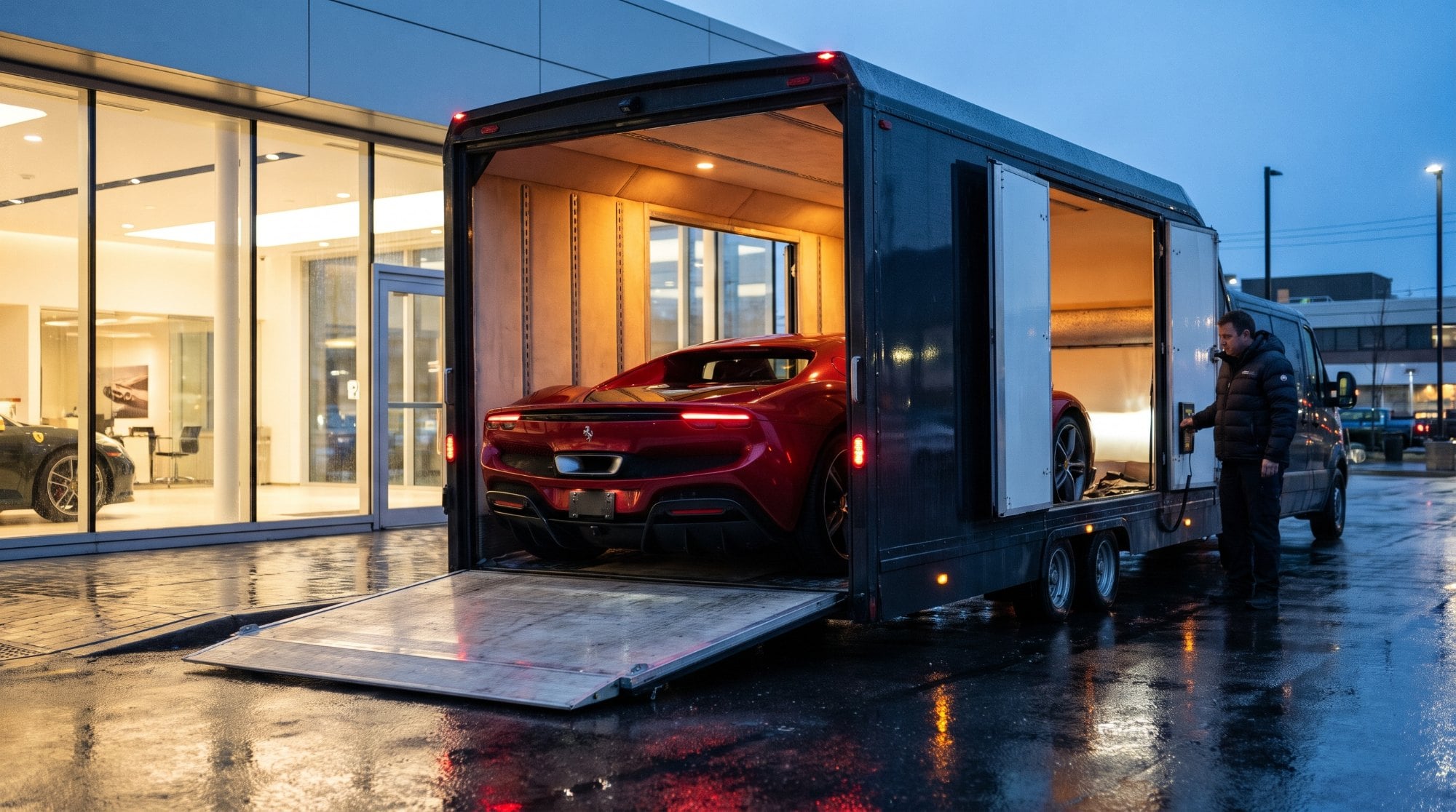
The short version: buying an exotic car out of state, whether it’s a Ferrari, Lamborghini, Porsche or McLaren at a dealer 1,200 miles away, is routine in this market, and it can be done safely. The risk isn’t the distance. It’s the things you haven’t verified. Before any money moves, confirm five things independently: the dealer is real and licensed, the car exists and matches its VIN, the title can actually be transferred, the deposit terms are in writing, and the payment instructions came from a phone number you looked up yourself. Everything else in this guide supports those five checks.
Imagery note: illustrations in this article are AI-generated and do not depict specific vehicles, dealers or transactions.
You find the car you’ve been searching for. The color is right. The mileage is reasonable. The photographs look excellent, and the asking price is within your budget.
There’s just one complication. The car is 1,200 miles away.
For exotic-car buyers, that isn’t unusual. The right specification, ownership history or combination of options is rarely sitting at the dealer down the road, and a nationwide search is often the only way to find it. But a $200,000 Ferrari or a $300,000 Lamborghini bought from another state raises questions that deserve answers before you commit. A well-organized remote purchase can be straightforward. The key is knowing which details to confirm, which documents to request, and when to walk away.
1. Verify the dealership before you verify the car
A professional-looking website is not proof that a dealership is legitimate. Scammers have impersonated real automotive businesses by copying inventory photos, logos and entire site designs, then fielding inquiries through look-alike domains, free email accounts or messaging apps.
Start with the basics: the dealership’s legal business name, physical address, dealer-license status with that state’s licensing agency, and an operating history you can see in independent reviews and public records. Look at the address on a map. A legitimate exotic dealer usually has a showroom that matches its photographs; a residential address or a shared virtual office deserves a question.
Then call. Use a phone number you found independently, from the dealer’s established website or official business records, not one supplied in an email or a listing reply. Ask for the person responsible for the car, and confirm it is physically in the dealer’s possession or under its authorized control. A legitimate seller can explain, without hesitation, where the vehicle is, who owns it, and how the transaction will be completed.
Dealers listing on Exotic Motors appear in our dealer directory, which is a useful starting point for name, location and contact details. Treat it the way you would any directory: a place to begin your verification, not a substitute for it.
2. Confirm that the vehicle actually exists
Before discussing a deposit, ask for the 17-character vehicle identification number and compare it with the listing and every document you receive. The VIN should match the advertised make, model and model year; the tenth character encodes the year, and a free decode will confirm the basics in seconds. While you have it, run the VIN through NHTSA’s recall lookup to see whether any safety recalls are open. (See our guide to how recalls affect exotic-car values.)
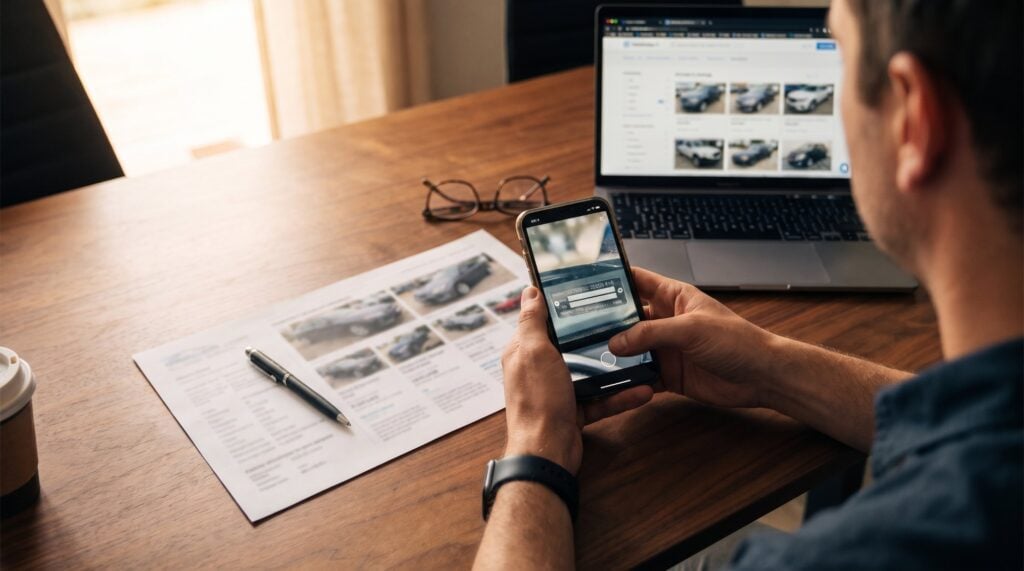
Ask for current photographs of the actual car, not just the listing set: the VIN plate, the odometer, the interior, each wheel, and any areas showing wear or damage. Better still, request a live video walkaround. Ask the seller to start the car on camera so you can see the dashboard at startup and any warning lights, then point the phone at the specific features you care about. A video call doesn’t replace a professional inspection, but it does establish that the vehicle being discussed is the vehicle being offered.
Pay attention to inconsistencies. If the mileage, equipment, color or VIN differs between the listing, the photographs and the paperwork, resolve every discrepancy before going further.
3. Review the vehicle’s history, but don’t stop there
A history report is a starting point, not a guarantee of condition. Review the title history, odometer records, reported accidents, ownership changes, and any salvage, flood or other title brands.
The National Motor Vehicle Title Information System (NMVTIS), run under the U.S. Department of Justice, is the one title database that state titling agencies, insurers and junk and salvage yards are required by federal law to report to. An NMVTIS report shows title brands, reported odometer readings and total-loss or salvage history, and it helps stop a brand from quietly disappearing when a car is retitled in another state. It is a title system, though, not a service or accident ledger. Commercial history reports add more data, but no single report captures every repair, incident or maintenance visit. If the history hints at water exposure, read our guide to flood-damaged exotic cars before going further.
For exotic cars, service documentation deserves particular attention. Ask for records supporting major maintenance, manufacturer campaigns, warranty work and any significant mechanical repairs. If the listing promises a “complete service history,” find out what that means. Are there dated invoices? Are they from an authorized dealer or a recognized specialist? Are major intervals missing?
A clean report cannot tell you whether a Ferrari’s suspension components are worn or whether a McLaren has developed a costly mechanical issue. That requires a different kind of investigation.
4. Arrange an independent pre-purchase inspection
A pre-purchase inspection (PPI) is one of the most valuable steps in any remote exotic-car purchase, and you don’t need to fly out to get one. Book an independent specialist near the car who knows the specific make and model; a general inspection can miss issues unique to a Ferrari, Lamborghini, McLaren or Aston Martin. Depending on the car, a proper inspection may include diagnostic scanning, fluid leaks, suspension and brake condition, tire age, an underbody check, evidence of prior repairs and paint work, and known model-specific concerns. Cars with carbon-fiber tubs or extensive composite bodywork may need additional specialist evaluation if there’s any sign of previous damage.
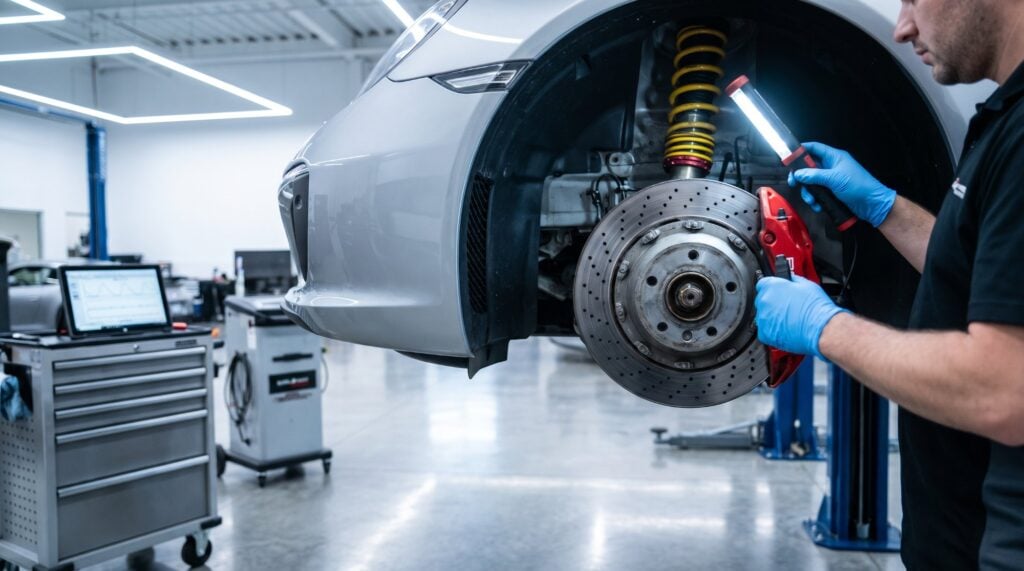
Ask the inspector for a written report, photographs and an explanation of any recommended repairs, and confirm what the inspection does not cover. A standard PPI typically won’t involve dismantling components, inspecting hidden structural areas or a full engine-health analysis. Our guides to what an exotic-car PPI should include and how to read the report go deeper.
If a seller refuses any reasonable independent inspection, treat it as a significant warning sign. The fee can feel like an unnecessary expense when you’re excited about a car. Compared with the cost of one undiscovered problem, it’s cheap.
5. Understand exactly what your deposit means
This is where buyers need to slow down. A dealer may reasonably ask for a deposit to hold a car while financing, inspection or transport is arranged. But not every deposit does the same job, and the word “deposit” on its own tells you very little.
| Deposit type | What it usually does | What to get in writing |
|---|---|---|
| Refundable reservation | Holds the car for a set period while you inspect, arrange financing or book transport. | The VIN, the hold period, and that the full amount is returned if you don’t proceed. |
| Conditional deposit | Refundable only if named conditions fail, such as the inspection, financing approval or clear title. | Each condition spelled out, who decides whether it’s met, and the refund timeline. |
| Nonrefundable commitment | Commits you to the purchase; walking away may forfeit the money. | Only sign once the inspection, title and full price are already settled. |
Before you send anything, request a written deposit agreement that identifies the car by VIN and states when the deposit is returned or kept. Make sure it answers these questions:
- Is the deposit refundable if the independent inspection finds undisclosed problems?
- What happens if the car’s condition differs materially from the advertised description?
- Is the purchase contingent on financing approval?
- How long will the dealer hold the vehicle?
- At what point does the deposit become nonrefundable?
- What happens if the seller cannot deliver clear title?
Don’t rely on a salesperson’s verbal assurance that a deposit “can always be returned.” Deposit rights depend on the agreement and the applicable law, and paying by credit card does not automatically guarantee you can recover a disputed deposit. The best time to settle these questions is before the payment, not after.
6. Verify the title and the seller’s authority to transfer it
A dealer may advertise a car it owns outright, one it holds on consignment, or one it’s selling on behalf of another party. None of those is a problem in itself, but each changes how the deal closes. Ask directly: does the dealership own the car, is there a lender with a lien, or is it a consignment?
Confirm who will sign the title over and how any existing lien will be paid off. If the car has an electronic title or an outstanding loan, ask for a clear explanation of the release process and a realistic timeline. Possession of the car does not, on its own, prove the seller can transfer clear ownership. You should know when the title will be issued or assigned, which documents will come with the car, and what happens if the title is delayed. For particularly complex or high-value deals, an independent title or escrow professional can add a useful layer of protection.
7. Get the complete purchase price in writing
The advertised price is not necessarily what you’ll pay. Before committing, ask for a written buyer’s order or purchase agreement that identifies the car by VIN and itemizes everything: selling price, documentation fee, taxes, registration, any optional products, transport and other charges. If you’re financing, confirm the APR, term, down payment, amount financed and any conditions still outstanding. (The FTC has been pressing dealers on exactly this kind of total-price disclosure; we explained what its pricing guidance means for buyers.)
Out-of-state deals add a layer, because the selling dealer’s state and your home state may treat tax and registration differently. Ask whether the dealer will collect your state’s tax and handle registration, or whether that falls to you, then confirm the process with the motor vehicle agency where the car will be registered. A car that looks competitively priced can become less attractive once the full transaction cost is clear. And when two similar cars carry very different prices, here’s how to tell whether the premium is earned.
8. Protect the final payment
High-value car deals often close by wire transfer, and wires are hard to claw back once they land. Payment diversion is a large, organized business: the FBI’s Internet Crime Complaint Center recorded 24,768 business email compromise complaints and roughly $3.05 billion in reported losses in 2025, overwhelmingly through wire and ACH transfers. The pattern is consistent: a criminal compromises or convincingly imitates a trusted party’s email, then sends “updated” payment instructions at the moment money is about to move.
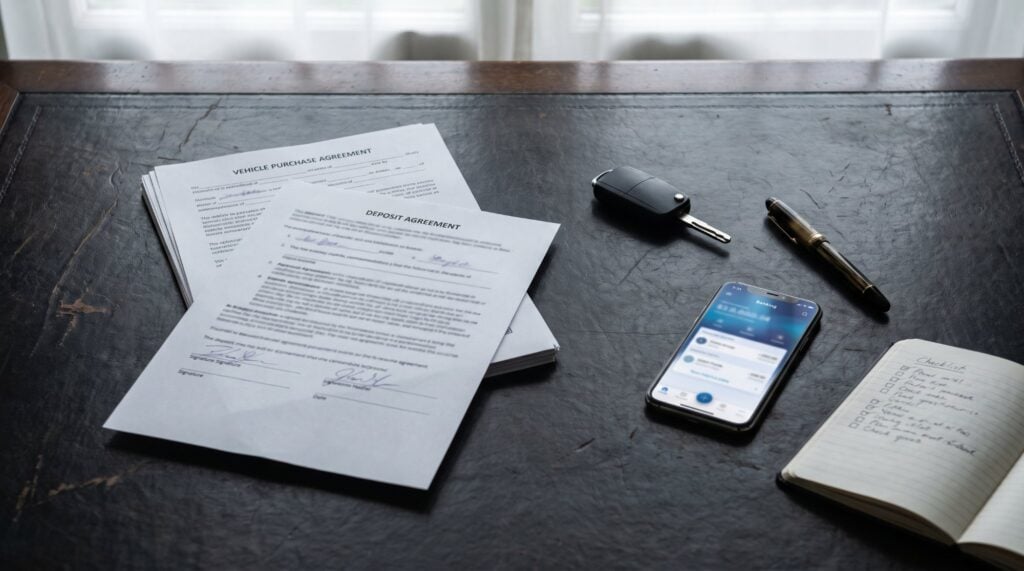
So before transferring funds, independently confirm the recipient’s legal name, the bank details and the account’s relationship to the selling dealership. Do it by calling an authorized representative on a phone number you verified earlier, never one printed on the invoice or in the email carrying the instructions. If the instructions change unexpectedly, stop until the change has been confirmed the same way. Be especially wary of messages claiming the dealer has switched banks, that an account is “temporarily unavailable,” or that you must wire immediately or lose the car. Email accounts can be compromised even when the dealership itself is completely legitimate.
For a large purchase, consider whether a properly vetted escrow arrangement is available. Verify the escrow company independently and understand exactly what triggers release of funds. And never treat a professional-looking invoice as proof that the account receiving your money is legitimate. If you do send money to the wrong account, call your bank immediately to request a recall and file a report at ic3.gov; speed matters.
9. Arrange transportation before the car is released
Once the deal is done, the car still has to get home. For most exotics, enclosed transport is worth considering for protection from weather, road debris and attention in transit, but enclosed shipping is not a guarantee against damage.
Ask whether the company is the actual carrier or a broker arranging the shipment. Both must be registered with the Federal Motor Carrier Safety Administration to operate interstate, and you can check any operating authority and the insurance on file through FMCSA’s SAFER system using the company’s MC or USDOT number. FMCSA advises avoiding any auto transporter or broker that doesn’t prominently display its MC number. If you book through a broker, verify the carrier it assigns as well.
Confirm the carrier’s cargo insurance limits, its liability exclusions, its loading equipment and its experience with low-clearance cars. A Lamborghini with an aggressive front splitter or a lowered Porsche GT model may need a liftgate or extended ramps. Before pickup, arrange a documented condition inspection with photographs of the exterior, interior, wheels and odometer, and agree who prepares the car, hands over the keys and signs the carrier’s condition report. At delivery, inspect carefully before signing anything, note any new damage on the paperwork, and follow the carrier’s claim procedure promptly. The transaction isn’t finished just because the car has left the dealership.
10. Confirm insurance and registration before delivery
Don’t wait for the transporter to arrive to think about insurance. Call your insurer before you complete the purchase and confirm exactly when coverage begins, then discuss the car’s value, intended use, storage and transit coverage. Depending on the car and policy, agreed-value coverage, mileage limits or other specialty terms may apply. (If the car will see a track, read our piece on track-day coverage gaps first.)
Registration also deserves advance planning. Some states require a physical VIN check for any car coming from elsewhere. Florida, for example, requires a VIN and odometer verification on form HSMV 82042 for used vehicles being titled there from another state. Taxes and temporary tags can also differ depending on where you live and where the dealer is. Confirm the requirements with your home state’s motor vehicle agency, so you know how the car will be insured, titled and registered before it arrives.
Red flags that should stop the deal
| What you see | Why it matters |
|---|---|
| Price well below the market for the spec | The classic bait for a non-existent car or a deposit scam. |
| Seller won’t do a live video or allow an independent PPI | You can’t confirm the car exists or what condition it’s in. |
| Contact only by text, messaging app or a free email account | Common in dealer impersonation; it bypasses the real business. |
| VIN, mileage or equipment don’t match across listing, photos and documents | Either sloppy records or a different car; resolve it first. |
| Pressure to wire today to “beat another buyer” | Urgency is the tool that stops buyers from verifying. |
| Payment instructions change, or the account name differs from the dealer | The hallmark of payment diversion. Stop and call a verified number. |
| Vague answers about who holds the title | A lien or consignment you didn’t know about can stall the transfer. |
The final checklist before you send a deposit
Before making a financial commitment, you should be able to answer yes to each of these:
- The dealership’s identity and license have been independently verified.
- The VIN, location, mileage and advertised specification are consistent.
- Current photographs or a live walkaround have been reviewed.
- Available history reports and service records have been examined.
- An independent inspection is booked, or its conditions are agreed.
- The deposit amount, refund conditions and purchase contingencies are in writing.
- The seller’s authority to transfer the car, and the title process, are understood.
- The complete price and every fee have been provided in writing.
- Payment instructions will be verified by phone before any funds move.
- Insurance, registration and transport have been arranged.
A missing item doesn’t always mean the deal should die. It means there’s a question worth answering before you proceed.
Questions buyers ask
Is it safe to buy an exotic car out of state?
Yes, when the dealer, the car, the title and the payment route are all independently verified. Most problems come from skipping verification under time pressure, not from the distance itself.
Can I buy without seeing the car in person?
Many buyers do. A live video walkaround confirms the car exists, and an independent specialist PPI near the dealer stands in for your own eyes on its condition. Neither replaces the other.
Should I pay the deposit by credit card or wire?
Whatever the method, the written deposit agreement is what protects you. A card payment can give you a dispute route, but it isn’t a guaranteed refund. A wire should only go to an account you’ve confirmed by calling the dealer on a number you looked up yourself.
Do I pay sales tax in the dealer’s state or mine?
It depends on both states’ rules. Tax is generally tied to where the car will be registered, and some dealers collect it on your state’s behalf while others leave it to you at registration. Confirm with the dealer and your state’s motor vehicle agency before you sign.
How do I know a transport company is legitimate?
Ask for its MC or USDOT number and look it up in FMCSA’s SAFER system to confirm active authority and insurance on file. If it’s a broker, check the carrier it assigns too.
The right car is worth finding. The wrong transaction isn’t.
Searching beyond your local market opens the door to exceptional cars: the Ferrari with the factory specification you’ve wanted for years, the Porsche GT car with the mileage and service history that make it worth a closer look, the rare Lamborghini at a dealership you’ve never visited. That reach is what makes a nationwide marketplace valuable. You can browse exotic cars by make and model or search current inventory across the country.
But the excitement of finding the right car should never replace the discipline of verifying the transaction. A reputable seller understands why a buyer spending this kind of money wants documentation, an independent inspection, clear deposit terms and a secure payment process. The goal isn’t to make buying an exotic car complicated. It’s to make sure the car that arrives in your driveway is the car you agreed to buy. New to this market? Start with our first-time exotic car buyer’s guide.
Buying guides, market analysis and news for people shopping exotic, luxury and collector cars. Written by the Exotic Motors team; prices and availability are checked at publication.