Modified, Restored or Original? What Exotic-Car Buyers Should Know Before Paying a Premium
A modified Ferrari F40 just sold for millions in London. That doesn't prove modified exotic cars are worth more. It shows why buyers need a sharper way to judge them.
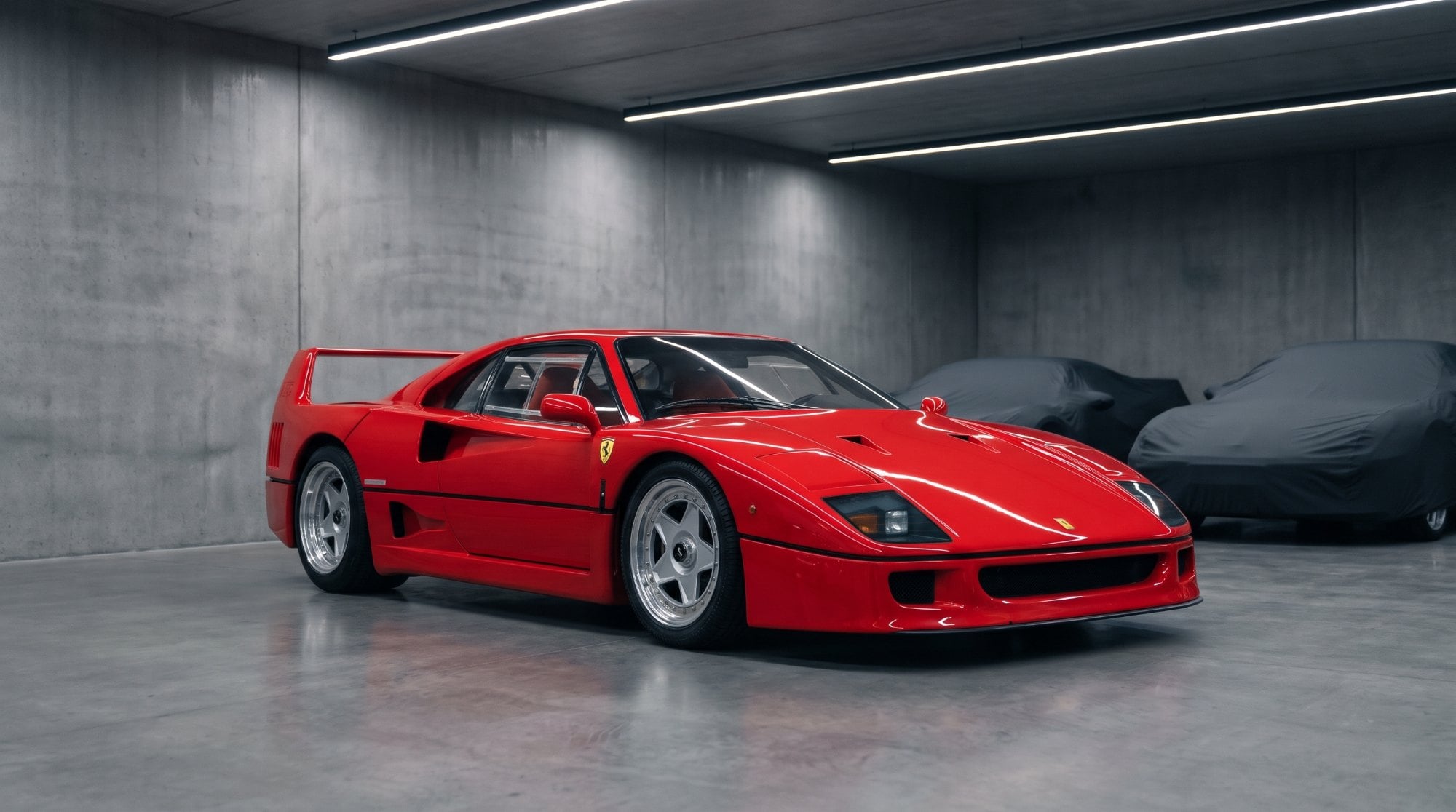
On October 31, 2026, RM Sotheby’s sold a 1988 Ferrari F40 at its London auction for £2,592,500, roughly $3.4 million to $3.5 million depending on the exchange rate. It was not a stock car, which makes it a useful test of how buyers value modified exotic cars. Chassis 78623 had been modified, most likely during its years in Japan, to resemble the F40 LM, the competition version built by Michelotto. RM Sotheby’s did not present it as a genuine LM, and its catalogue lists the changes plainly: LM-style front and rear clamshells not sourced from Michelotto, non-original doors and floor sections, an LM-style digital dashboard, MoTeC engine management, air jacks, non-standard brakes and OMP seats.
Just as telling is what remained. The car retains its matching-numbers twin-turbocharged V8 and five-speed transaxle, its road-car suspension and its Lexan sliding windows, and the original Marelli control units are still fitted alongside the MoTeC system. RM Sotheby’s described it as a prime candidate for restoration to factory road specification.
So if originality matters so much to collectors, why would someone pay millions for a Ferrari that has been substantially changed? Because it is still an F40, with the parts F40 buyers care about most still in place. The sale shows demand for this car despite its modifications. It does not show that the modifications added value. For context, two very low-mileage, original F40s sold at Mecum’s Kissimmee auction in January 2026 for $5.83 million and $6.6 million, but differences in mileage, specification and history are too large to pin that gap on the modifications alone.
Images in this article are editorial illustrations created for Exotic Motors. They are not photographs of the vehicles discussed.
What Does “Original” Actually Mean?
“Original” is one of the most elastic words in a listing. Depending on the seller, it can mean any of these:
- Factory specification: the car is configured as it left the factory, with the options it was ordered with.
- Original finishes: factory paint, interior materials and trim that have never been replaced.
- Numbers-matching: the engine and gearbox carry the numbers recorded for that chassis. Stamped numbers alone are not proof; confirming a match depends on manufacturer build records and, for many collector models, recognized marque histories or registries.
- Period-correct: replacement parts of the right type and era, but not the ones fitted when the car was built.
- Factory option versus aftermarket: a carbon package ordered from the factory is part of the car’s specification. A similar part added later is not.
A car can be original in one sense and not another. The London F40 is numbers-matching, but its body panels and electronics are not factory-original.
Buyer takeaway: Ask exactly which components remain original and what documentation supports each claim.
When Modifications Can Add Value — and When They Cannot
Modifications sit on a spectrum. At one end are manufacturer-developed or officially approved upgrades: factory performance packages, sanctioned retrofits and dealer-installed accessories from the manufacturer’s own catalogue. The market tends to understand these, and they usually come with paperwork. At the other end are independent aftermarket changes: exhausts, coilovers, wheels, engine tunes and aero kits, whose appeal depends on the parts used, the reputation of the installer and whether the next buyer wants the same thing.
A few questions decide whether a modification helps or hurts. Was the work done by a recognized specialist? Does it suit how the car will realistically be used, as a track car or as a garaged collectible? Has it affected reliability, cooling or emissions compliance? And is it reversible, bolted on with the original parts kept, or permanent, such as cut bodywork, a rewired harness or welded chassis points?
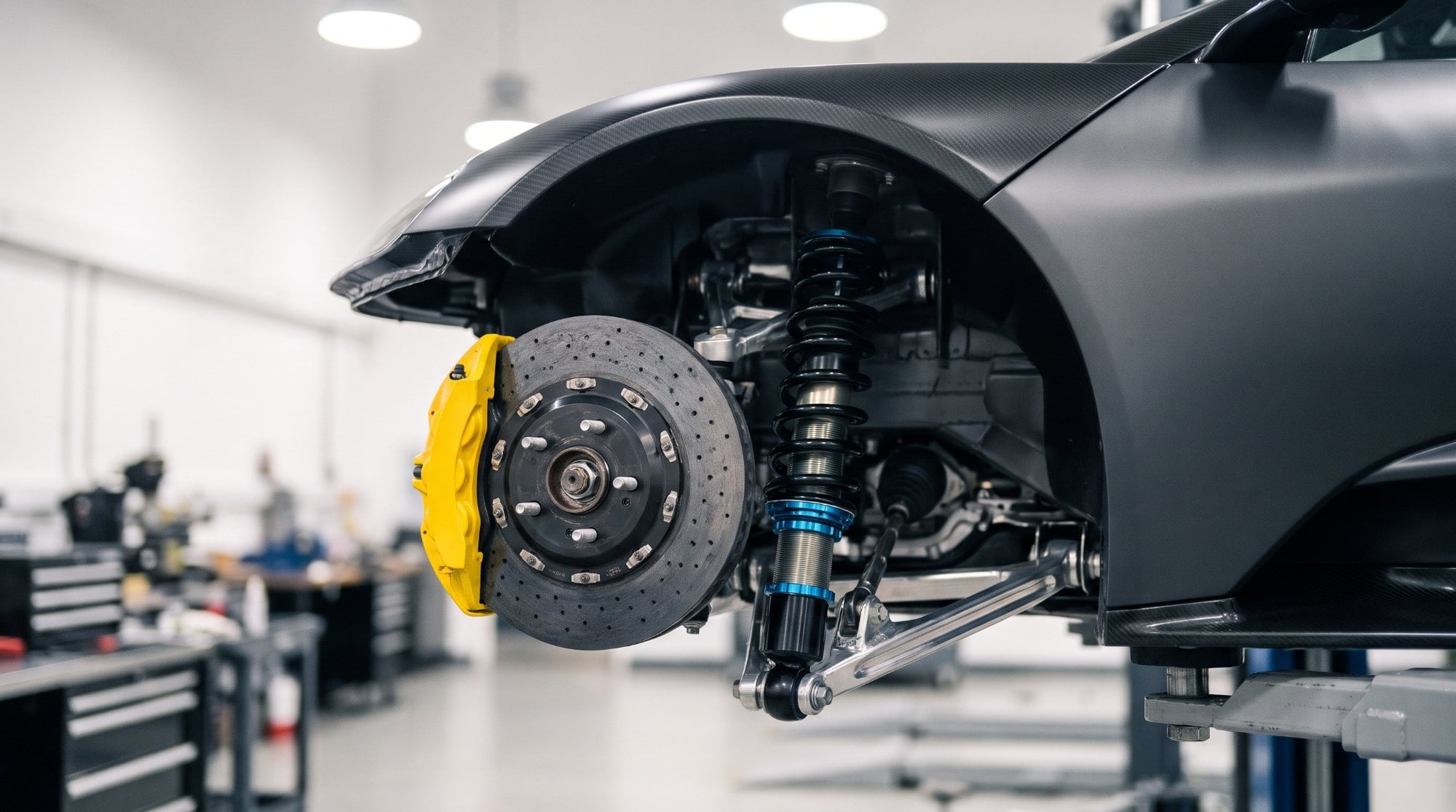
Among modified exotic cars, drivers’ cars and track-focused models are often more tolerant of tasteful, well-documented upgrades. Limited-production collector cars generally are not. The same exhaust that attracts one enthusiast can put off the next collector.
Buyer takeaway: What a modification cost is not necessarily what it adds at resale.
Restored Does Not Automatically Mean Better
“Restored” covers very different work:
- Cosmetic restoration or refinishing: paint, leather and trim.
- Mechanical rebuilding: engine, gearbox, suspension and brakes refreshed.
- Comprehensive, documented restoration: a full rebuild with records of every stage.
- Collision repair described as restoration: the label buyers least want to discover after the fact.
The quality of the work matters more than the label. A poorly executed “full restoration” can be worth less than an honest, well-maintained original car. Restoration can also erase things collectors value and nobody can recreate: factory paint, period inspection marks, original finishes and the evidence of a car’s history.
Finding out what was actually done takes a specialist inspection, not a single test. Panel gaps, seams, fasteners and finish quality all tell part of the story. Paint-depth readings can help, but only with the right equipment for the panel: a basic magnetic gauge reads paint over steel, aluminum needs an eddy-current gauge, and composite or carbon-fiber panels call for ultrasonic equipment or a specialist’s judgment. On exotic cars that mix these materials, an experienced marque inspector matters more than any one number.
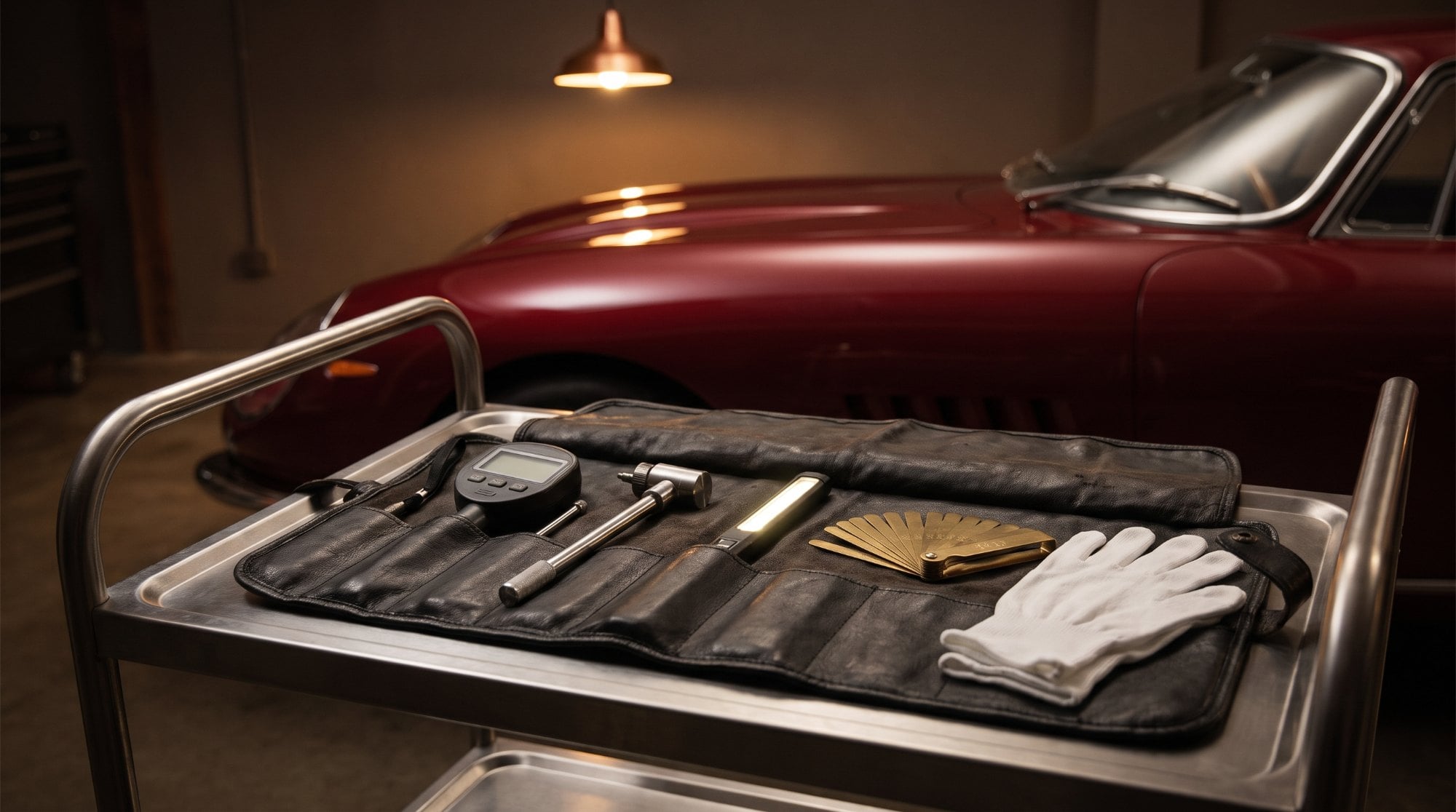
Buyer takeaway: Ask for invoices, dated progress photographs and specialist inspection findings before you accept a claimed restoration premium.
Documentation Can Be More Important Than the Upgrade
Evidence is what turns a seller’s claim into a fact. The records that matter most:
- Manufacturer build records and the original specification (our collector car documentation guide explains how to verify them)
- Invoices naming the parts, the labor and the workshop that did the work
- Before, during and after photographs
- Service records and a history of modifications
- Records supporting any claimed provenance
- Original parts kept with the car
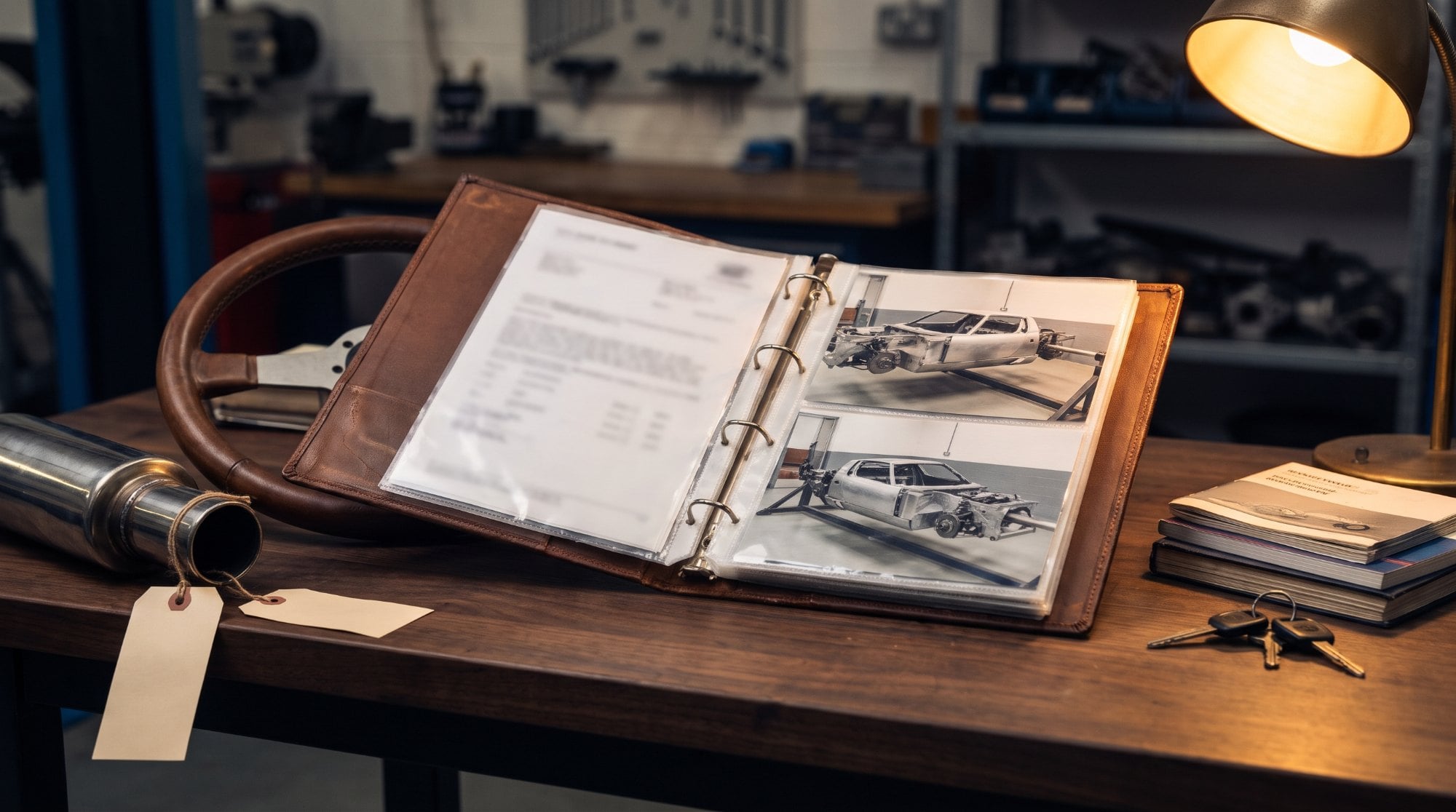
The London F40 shows why this matters. RM Sotheby’s supplied a July 2026 inspection report compiled with marque specialist GTO Engineering, and the catalogue disclosed what could not be supported: the original odometer is no longer present, and there are no records behind the 30,398 km reading. That candor let bidders price the uncertainty instead of discovering it later.
Buyer takeaway: An impressive list of upgrades means little without evidence of the work performed.
Can the Car Be Returned to Factory Specification?
Reversibility matters most on collector cars, because the market may ultimately value the factory configuration most. Are the original parts with the car? If not, can replacements be found, and at what cost? Would going back mean unbolting parts, or rebuilding bodywork, wiring or structure?
Even a “reversible” change can be expensive to undo. On the London F40, the matching-numbers drivetrain and retained Marelli units work in a future owner’s favor. The non-original clamshells, doors and floor sections suggest that a return to road specification would be a serious specialist project, not a quick parts swap.
Buyer takeaway: Weigh both the car as it sits and the cost of getting it to the specification you ultimately want.
How to Decide Whether a Modified or Restored Exotic Car Is Worth the Asking Price
Start by comparing the car against three reference points: well-documented original examples, comparable restored examples and similarly modified examples. Then adjust for condition, mileage, provenance, documentation, workmanship, current demand and how you plan to use the car. As we’ve covered before, two seemingly identical exotic cars can carry very different prices for exactly these reasons.
With modified exotic cars in particular, keep driving value and resale value separate. A buyer who wants a well-sorted car for back roads or track days may reasonably pay for upgrades a collector would discount. That is a legitimate choice, as long as you know which kind of value you are paying for.
Before committing, arrange a pre-purchase inspection (PPI) by a specialist who knows the model, confirm with your insurer that the car can be covered as modified, check that it can be registered and meets emissions rules where you live, and get written estimates for any work you would want to reverse or correct.
Buyer takeaway: Compare the whole ownership proposition, not just the asking price or what the seller says they spent.
Essential Buyer Checklist
- What equipment was installed by the manufacturer?
- Which components have been replaced or modified?
- Who performed the modifications or restoration?
- Are invoices, photographs and service records available?
- Has the vehicle sustained structural damage or major collision repairs?
- Can the changes be reversed, and are the original parts included?
- Have the changes affected warranty, insurance or road legality?
- How does the price compare with genuinely comparable vehicles?
The Bottom Line
Originality, modification and restoration are not automatic markers of value. What a car is worth depends on what was changed, who did the work, how well it is documented and whether the result appeals to the buyers most likely to want it. Buy the quality of the car and the evidence behind it, not the language used to describe it.
Whether you want a factory-original collector car or a thoughtfully modified exotic, the same discipline applies. As you browse the ExoticMotors.com marketplace, compare each car’s specification, condition and seller information, and ask for the records behind any claim of originality, upgrade or restoration before you make an offer.
Buying guides, market analysis and news for people shopping exotic, luxury and collector cars. Written by the Exotic Motors team; prices and availability are checked at publication.