The Dodge Charger Hellcat is the most absurd thing Detroit built in the modern era, and that is meant as a compliment. A four-door family sedan with a supercharged 6.2-litre HEMI V8, 707 horsepower and a quoted 204 mph top speed, sold with a warranty, cupholders and room for five. Nothing else has ever combined those things, and after 2023 nothing else will.
That makes the used market interesting. Values have already fallen hard, the cars are plentiful enough to shop properly, and the ones that were abused are easy to spot if you know where to look. This guide covers what a Dodge Charger Hellcat actually is, what each model year changed, what they trade for now, and the seven checks that separate a good one from an expensive mistake.
Quick Answer: What Is the Dodge Charger Hellcat?
The Dodge Charger Hellcat is a supercharged four-door muscle sedan built from 2015 to 2023, powered by a 6.2-litre HEMI V8 producing 707 horsepower at launch and 717 from 2019, with a Redeye version at 797 and a Jailbreak calibration at 807. It drives the rear wheels through an eight-speed automatic, runs 0 to 60 mph in 3.7 seconds, and was the most powerful production sedan in the world for most of its life. Used examples now trade well below original sticker, with the market benchmark around $65,000.
Table of Contents
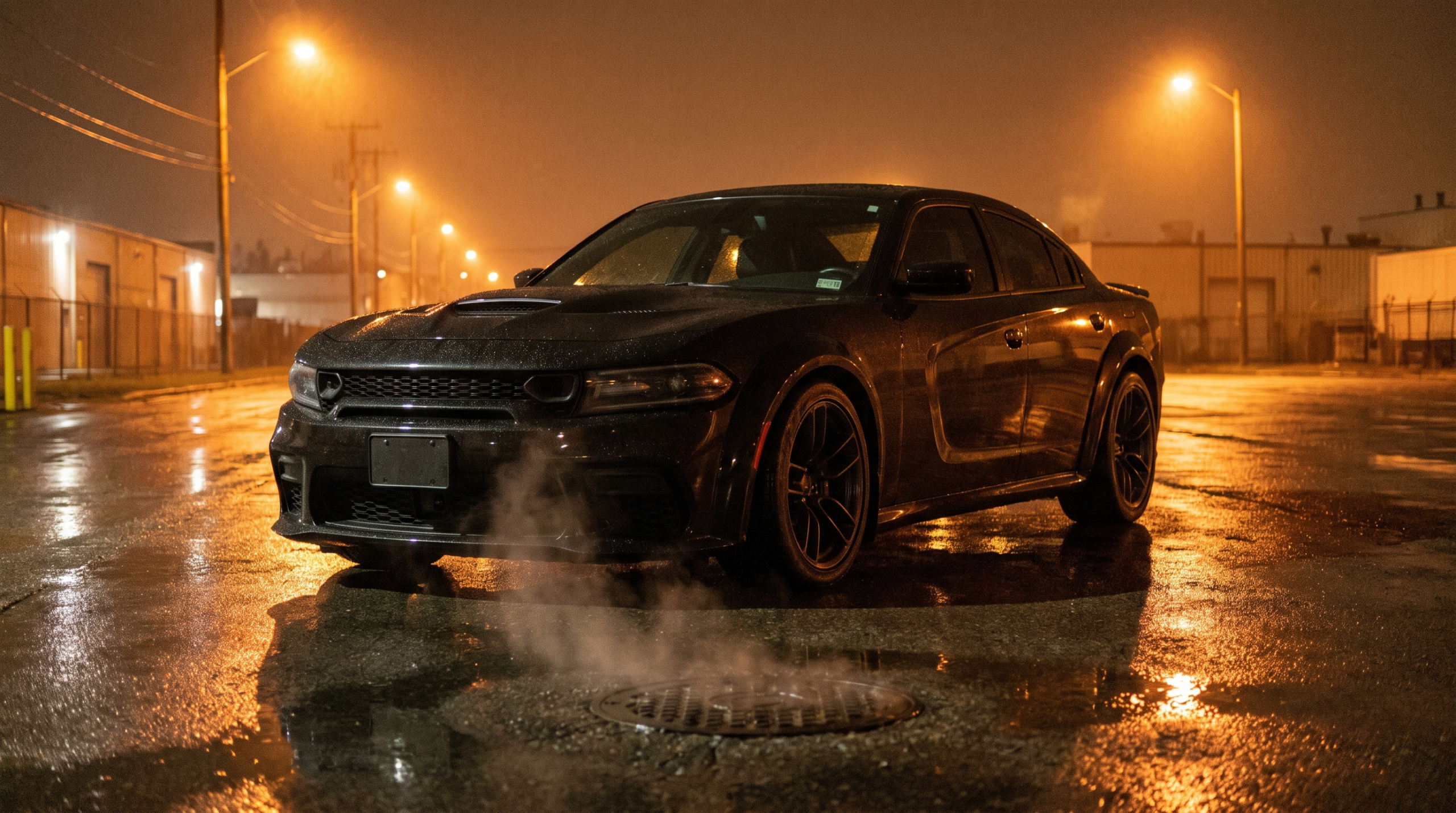
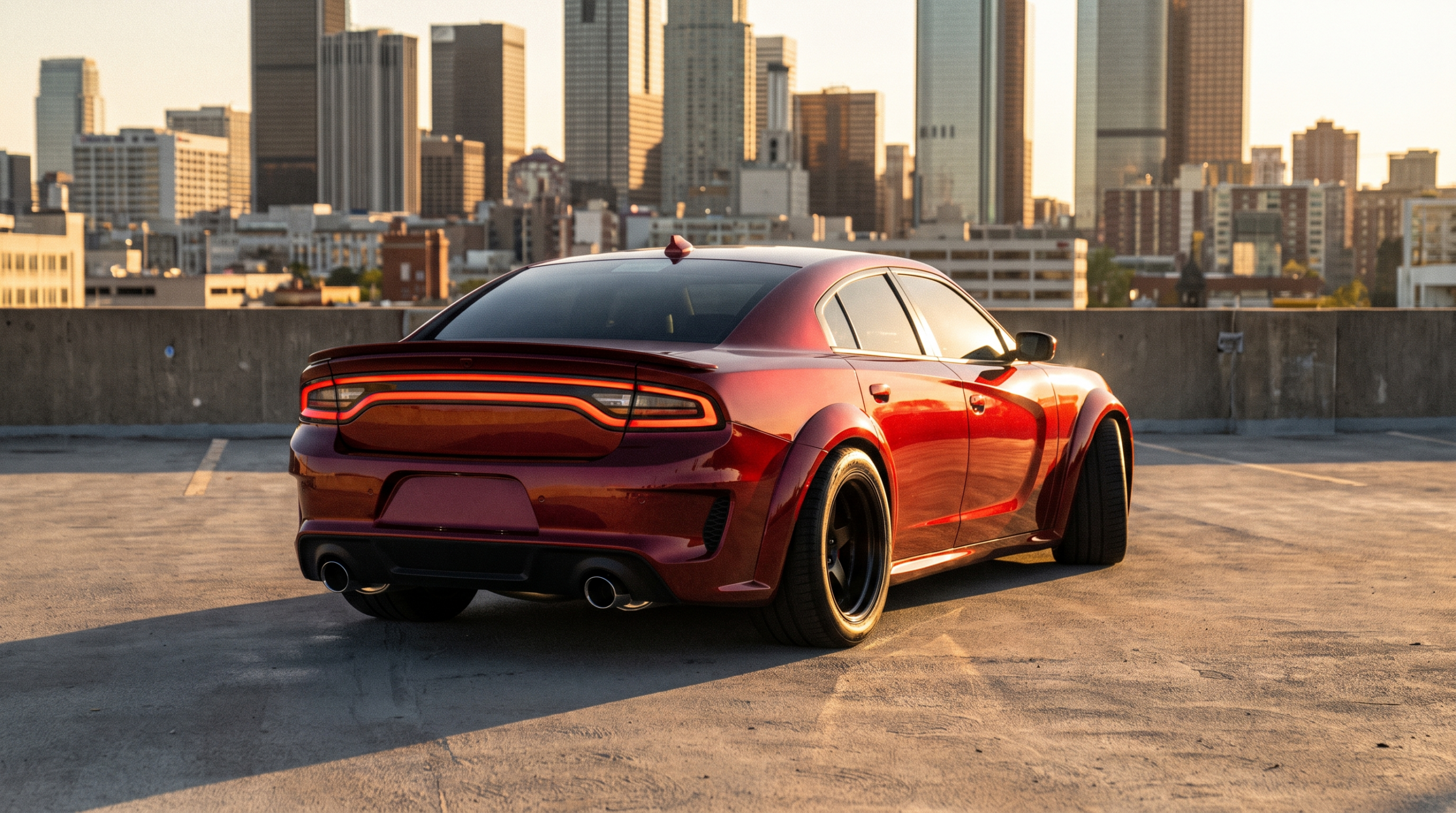
A four-door sedan with 707 horsepower and a warranty. Nothing else has managed it. Illustrative rendering.
2018 Charger SRT Hellcat: The Core Specification
The 2018 car sits in the sweet spot of the range. It has the full 707 horsepower, the pre-Widebody proportions that many owners still prefer, and enough age on it that the worst of the depreciation has already happened.
16 mpg combined (13 city / 22 highway), premium required
Fuel tank
18.5 gallons
Length / wheelbase
200.8 in / 120.4 in
Seats / trunk
5 / 16.5 cu ft
Read the fuel figure and the trunk figure together and you have the whole appeal of the Dodge Charger Hellcat in one line. It will drink like a hypercar and swallow a family’s luggage on the same trip.
Every Model Year, 2015 to 2023
Knowing which year you are looking at matters more on this car than on most, because the changes were substantial and the badges are similar.
Years
What changed
Output
2015–2018
Launch specification. Standard body, 707 hp, the original run
707 hp
2019
Power bumped, minor revisions
717 hp
2020–2022
Widebody arrives as standard for 2020, wider track and flared arches; the Redeye follows for 2021
717 hp / 797 hp Redeye
2022–2023
Jailbreak calibration and expanded personalisation options
Up to 807 hp
2023
Final model year of the V8 Charger
717–807 hp
For reference, Dodge quotes the 2023 Redeye at 797 horsepower, 0–60 in 3.6 seconds, a 10.6-second quarter mile at 129 mph and a 203 mph top speed, per the official Stellantis fact sheet. The naturally aspirated 392 Scat Pack sits below the Hellcat range at 485 horsepower, and is a genuinely different ownership proposition — no supercharger to worry about, and materially cheaper to run.
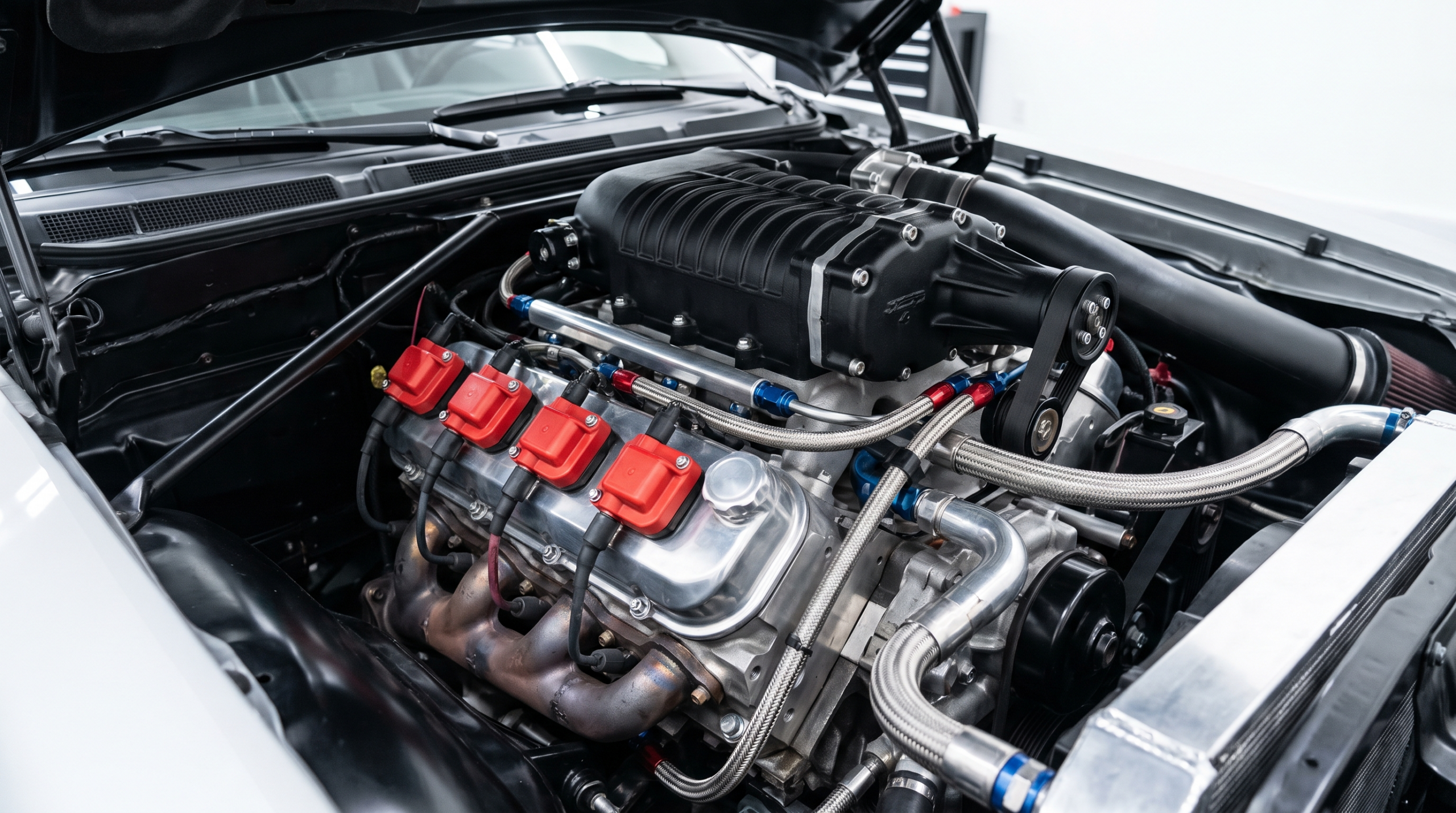
The 2.4-litre twin-screw blower is the heart of the car and the first thing to inspect. Illustrative rendering.
What a Dodge Charger Hellcat Is Worth Now
This is where the story gets good for buyers. These cars stickered deep into six figures in their most exotic trims, and the market has since reset hard.
Metric
Figure
Market benchmark
~$64,700
Average sale price
~$67,800
Observed price range
$38,000 – $104,995
Lowest recorded sale
$38,000 (2019 car, March 2024)
Production span
2015–2023
Dodge Charger Hellcat figures come from public sale records tracked by CLASSIC.COM’s Charger SRT Hellcat market page at the time of writing, and they will drift. The spread is the important part: a nearly threefold gap between the cheapest and dearest cars in the same model range. Mileage, trim, model year, modification history and condition account for essentially all of it.
A cheap Dodge Charger Hellcat is almost never cheap by accident. It is high-mileage, heavily modified, previously wrecked, or carrying a deferred bill. Which brings us to the checks.
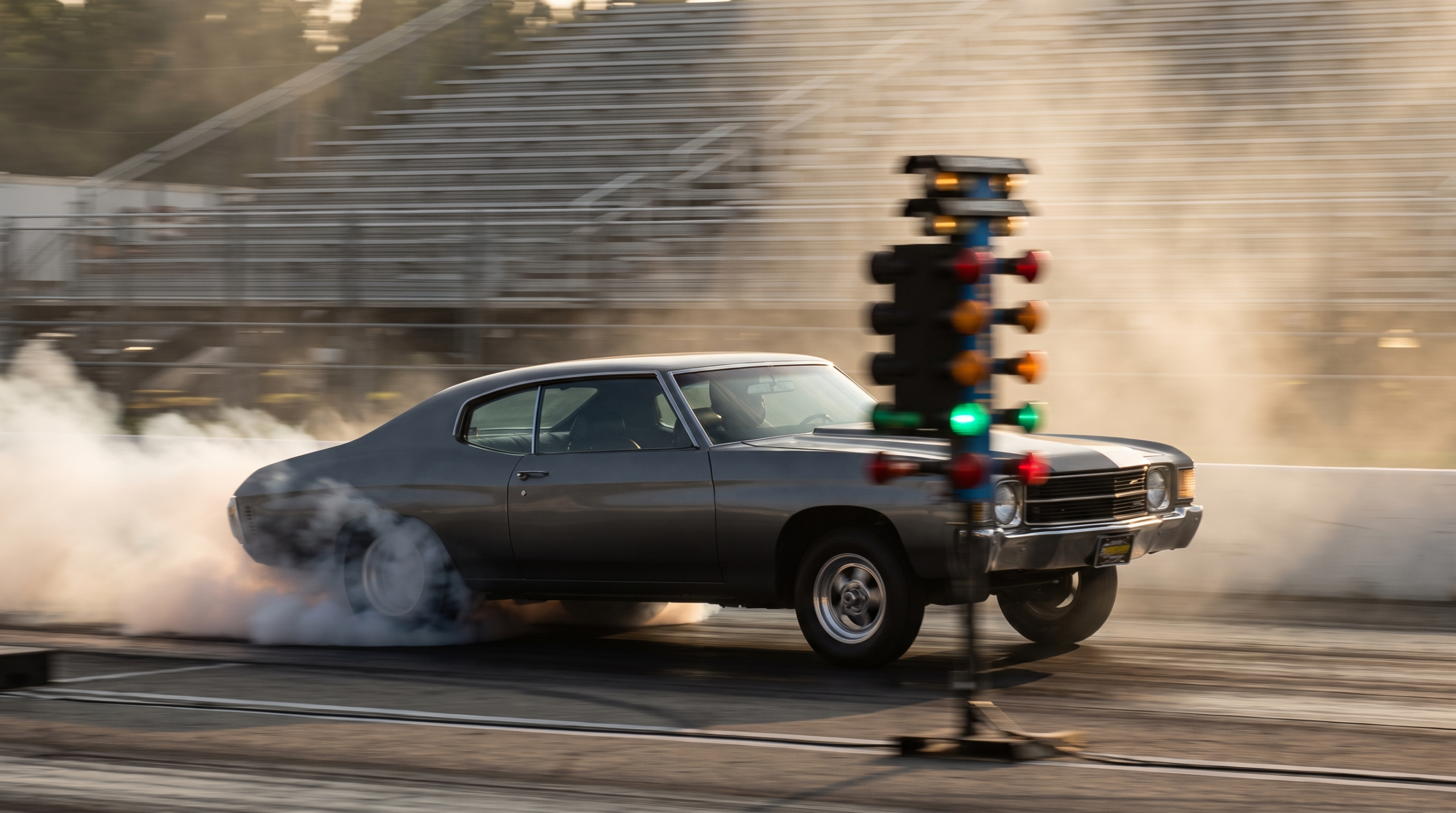
How the rear tyres wore tells you how the car was driven. Illustrative rendering.
The 7 Checks Before You Buy
1. Listen to the supercharger at idle
The single most valuable thirty seconds of any Dodge Charger Hellcat inspection.
The 2.4-litre twin-screw supercharger runs on internal bearings, and when those bearings wear they produce a distinctive metallic rattle at idle — owners describe it as marbles in a can, most audible on a cold start. Left alone, worn bearings let the rotors contact each other or the housing.
It is not a cheap fix. A new OEM unit runs roughly $4,200 to $6,600, a used one $3,000 to $4,000, and a specialist rebuild with upgraded bearings $2,800 to $3,500, before $800 to $1,500 of labour. On a $50,000 car that is a material percentage of the purchase price. Start it cold, stand at the front, and listen before you do anything else.
2. Run the VIN for open recalls
Hellcat-family cars have been subject to recalls including engine oil cooler hoses that could fail and spray oil in the engine bay, and a powertrain control module issue affecting cruise control disengagement. Campaigns vary by model and year, so do not take a seller’s word for it — run the specific VIN through the NHTSA recall lookup and confirm every open campaign has been closed out at a dealer.
3. Assume it has been tuned until proven otherwise
A large share of these cars have seen a pulley swap, a tune, or a full E85 conversion. Some of that work is excellent. Much of it is not, and an aggressive tune on the factory driveline is exactly how a Dodge Charger Hellcat ends up needing a transmission or a rear end.
Ask for documentation of every change, ask whether the ECU has been returned to stock, and treat an undocumented tune as a reason to walk rather than a bargaining chip. Warranty implications follow the tune, not the owner.
4. Inspect the rear tyres and driveline hard
A Dodge Charger Hellcat puts 707 horsepower through the rear axle, which destroys tyres, and how the rears wore tells you how the car was driven. Feathering, cupping and a fresh set of budget tyres on an otherwise tidy car are all worth asking about. Listen for driveline clunk on take-up and check for differential weep, because launch abuse shows up there first.
5. Demand the service record, not the service light
The Dodge Charger Hellcat is hard on oil and hard on cooling, as any supercharged V8 is. Look for consistent short-interval oil changes, supercharger snout servicing where applicable, coolant and brake fluid history, and evidence the car was actually maintained rather than simply driven until something complained. Our documentation guide covers how to verify records rather than accept them.
6. Check the title and accident history properly
Fast, rear-drive, heavy and affordable is a combination that produces accidents. Salvage and rebuilt titles are common in this market and they are not automatically disqualifying, but they must be priced accordingly and disclosed clearly. Pull a full history report, then have an independent shop confirm what the report cannot see.
7. Confirm exactly which car you are buying
Hellcat, Hellcat Widebody, Redeye, Redeye Widebody and Jailbreak are five different cars at five different price points, and listings conflate them constantly. Verify the trim from the window sticker or build sheet against the VIN rather than the badge on the boot lid. The difference between a 717 hp car and an 807 hp Jailbreak is tens of thousands of dollars.
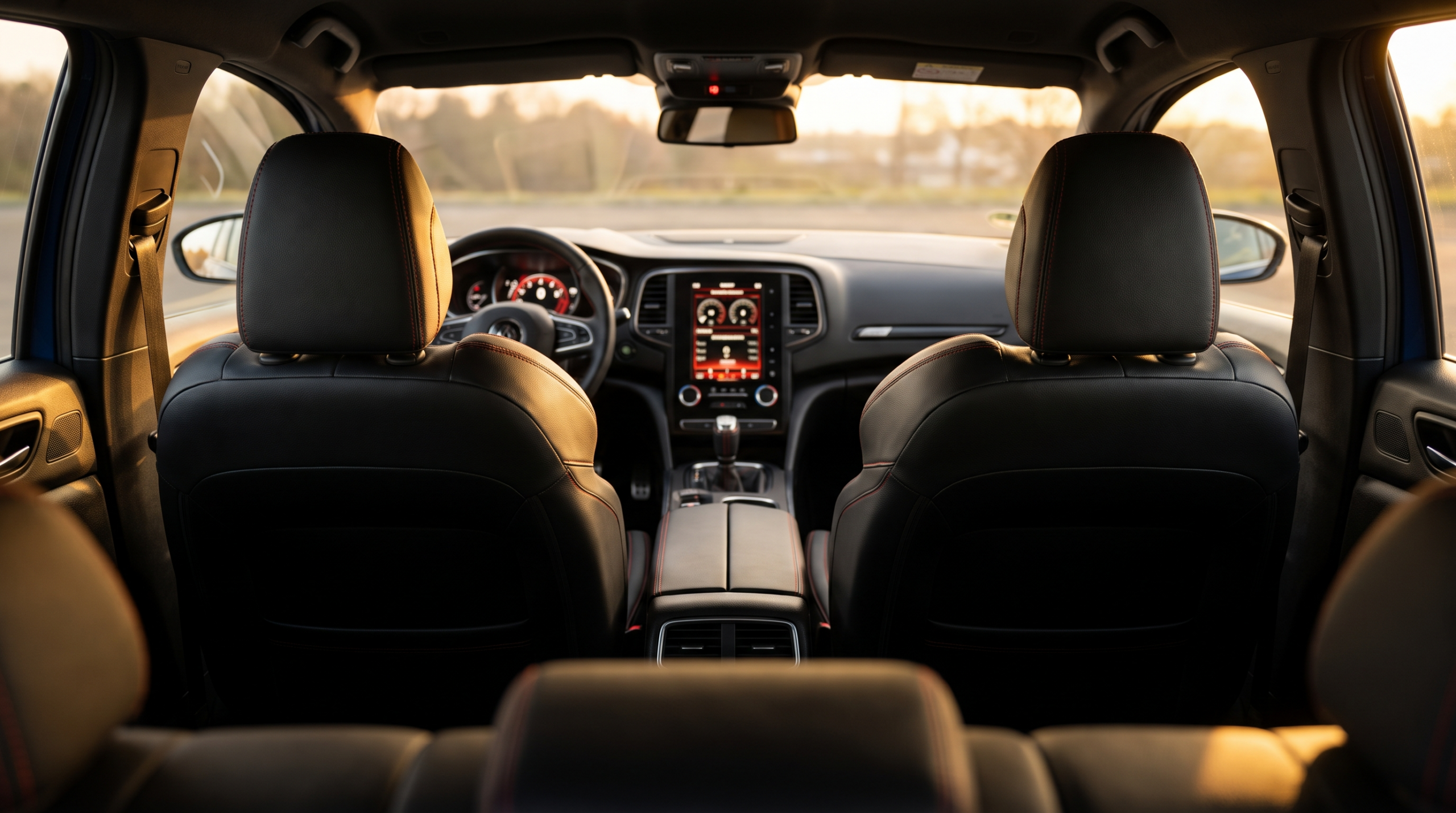
Five seats, a real boot, and performance pages on the centre screen. Illustrative rendering.
Dodge Charger Hellcat vs the Alternatives
Almost every buyer looking at a Dodge Charger Hellcat is also looking at one of three other cars. They solve the same brief in very different ways, and the honest comparison is worth making before you commit.
Car
The case for it
The case against
Charger SRT Hellcat
Four doors, a real boot, and supercharged theatre nothing else matches at the money
Heavy, thirsty, and the supercharger is a known expense
Challenger SRT Hellcat
Same engine, more classic proportions, arguably the better-looking car
Two doors and a compromised back seat kill it as a family proposition
Charger Scat Pack (392)
485 hp naturally aspirated, far cheaper to buy and to run, no blower to service
It is quick rather than absurd, and the drama is what you came for
German performance sedan
Better built, better damped, far more usable every day
Costs more to maintain out of warranty and has none of the character
The comparison usually settles itself. If usability is the priority, a German sedan wins on paper every time. If the point is the supercharger whine, the shove and the fact that a Dodge Charger Hellcat is fundamentally an unreasonable object with cupholders, nothing else on the list is a substitute.
Living With 707 Horsepower
The purchase price is the friendly number on a Dodge Charger Hellcat. Running a Dodge Charger Hellcat as an actual car carries costs that surprise people coming from an ordinary V8.
Fuel. 16 mpg combined on premium is the official figure, and nobody who enjoys the car achieves it. Driven with intent, single digits are entirely reachable.
Tyres. Wide, soft, expensive and consumed at a rate that depends almost entirely on your right foot. Budget for rears far more often than fronts.
Brakes and fluid. Stopping 4,536 pounds repeatedly from speed is hard on pads, rotors and fluid. Track use multiplies all three.
Insurance. A 707 hp rear-drive sedan is rated accordingly, and premiums vary widely by driver and location. Get a quote on the specific VIN before you commit — our financing and insurance guide explains what actually moves that number.
None of this is a reason not to buy one. It is a reason to budget honestly, which is the same advice we give buyers of anything with a supercharger on top of it.
Will the Charger Hellcat Become Collectible?
Honestly, nobody knows, and anyone telling you otherwise is guessing. What can be said is that the Dodge Charger Hellcat now ticks several of the boxes that have historically preceded appreciation, and misses one badly.
Appreciation driver
Does the Charger Hellcat have it?
Production has permanently ended
Yes — the V8 Charger finished after 2023
Last of an unrepeatable type
Yes — emissions rules make a supercharged 6.2 V8 sedan a dead end
Cultural weight and enthusiast demand
Yes — few modern cars have this much presence
Low production numbers
No — Dodge built these in real volume
Cars surviving in original condition
Doubtful — a high proportion have been modified or abused
That last row is where the opportunity sits. Volume production caps how rare the model can ever be, but it does not cap how rare a good one becomes. Unmodified, low-mileage, well-documented cars are already the minority, and that gap tends to widen. The same pattern shows up across the models in our guide to exotic car values and what drives appreciation — condition and documentation separate cars far more than badges do.
To be clear, that is an observation about the market, not a prediction and not investment advice. Buy a Dodge Charger Hellcat because you want to drive it.
Widebody cars gained a wider track and flared arches from 2020. Illustrative rendering.
Which One Should You Buy?
Best value: A documented, stock 2015–2018 car. Full 707 horsepower, deepest depreciation already absorbed, and the largest pool to choose from.
Best all-rounder: A 2020–2022 Widebody. Wider track and better rubber make it noticeably more usable, and it still sits below Redeye money.
Best of the breed: A late Redeye or Jailbreak. The most power, the most equipment, and the strongest claim to being the definitive version.
Best sleeper alternative: A 392 Scat Pack. Less power, no supercharger to service, and a far gentler ownership bill.
If this is your first performance car at this level, our first-time buyer’s guide covers the purchase in order, from inspection through to delivery. For ongoing coverage of the muscle and exotic market, our sister publication Exotic Car News follows it daily.
Dodge Charger Hellcat FAQ
How much horsepower does a Dodge Charger Hellcat have?
707 horsepower from launch in 2015 through 2018, raised to 717 for 2019 onward. The Hellcat Redeye produces 797 horsepower, and the Jailbreak calibration takes that to 807. All of them use the same supercharged 6.2-litre HEMI V8 driving the rear wheels through an eight-speed automatic.
What years was the Charger Hellcat made?
2015 through 2023. The 2023 model year was the last for the V8 Charger, which makes the whole run a closed set. Widebody arrived as standard for 2020 and the Redeye followed for 2021, and the Jailbreak calibration appeared toward the end.
How fast is a Dodge Charger Hellcat?
Roughly 3.7 seconds to 60 mph with a manufacturer-quoted top speed of 204 mph for the 707 hp car. Dodge quotes the 2023 Redeye at 3.6 seconds to 60, a 10.6-second quarter mile at 129 mph and 203 mph flat out.
How much is a used Charger Hellcat?
Public sale records put the market benchmark around $64,700 with an average sale near $67,800, across an observed range of roughly $38,000 to $105,000. Model year, trim, mileage, modification history and condition explain nearly all of that spread, so compare specific cars rather than the model.
Are Dodge Charger Hellcats reliable?
They rate reasonably well for a car of this output, but the supercharger is the component to focus on. Worn internal bearings produce a metallic rattle at idle and replacement or rebuild runs into the thousands. A cold-start listen plus full service records answers most of the reliability question.
Is a Charger Hellcat a good first performance car?
It can be, with respect. It is heavy, rear-wheel drive and enormously powerful, and the running costs are real. A stock, documented example with good tyres is a far better introduction than a cheap modified one, and driver training is worth more than any modification you could buy.
The Bottom Line
The Dodge Charger Hellcat is a closed chapter. Emissions rules, electrification and simple economics mean no manufacturer is going to build a 707-horsepower supercharged V8 family sedan again, and the ones already built are the only ones there will ever be.
What that means practically is that the buying window is unusually good and the diligence matters unusually much. Listen to the supercharger, run the VIN, read the service file, verify the trim, and price the car in front of you rather than the model in the abstract.
Exotic Motors has been in the car business as a family for more than a century, and we are happy to talk through a specific car with you before you commit. Browse the current inventory to see what is available now, or list your own Dodge Charger Hellcat if you are on the other side of the transaction.
Owning an exotic car is not about speed or luxury- It’s about embracing an experience, where the road becomes your canvas and the car, your masterpiece.
You are not searching badly. The car you want probably exists in single digits nationally at any given moment — here is how serious buyers actually get one, and what each route costs.
What owning a Lamborghini actually involves: how allocation really works, the five-year maintenance programme, real clutch and service bills, insurance, values and Polo Storico.
How buyers can verify window stickers, build sheets, owner’s manuals and factory records before purchasing a rare, exotic or classic car — including Ferrari Classiche, Porsche CoA and marque archive programs.
First time exotic car buyer? Follow this 10-step purchase process — budgeting, inspection, negotiation, and transport — to buy your first supercar right.