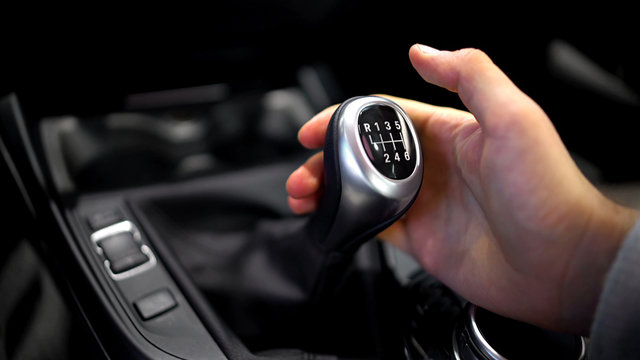
Here is the number that ought to settle the argument. Hagerty puts a Ferrari F430 with a gated manual gearbox at roughly double the value of the same car with the F1 paddle gearbox, in any condition. Not ten percent. Double, for a shift pattern — on a car where nothing else on the options list comes close to moving the price that way. The 430 Scuderia, the harder, lighter, 503 hp track special, still sits above both, which tells you the market has not lost its mind entirely. But it is the gearbox, not the lap time, that separates two otherwise identical F430s.
That is what the market thinks of a manual transmission in an exotic car. And the more interesting news is what happened next: after twenty years of quietly deleting the third pedal, the manufacturers have started putting it back.
Table of Contents
Quick Answer: Is the Manual Transmission Dead?
No — they are rare, expensive and coming back. A manual transmission adds roughly 100% to the value of a Ferrari F430 and about 33% to a 360 Modena, according to Hagerty’s valuation data, because fewer than 10% of F430s were built with three pedals. Meanwhile 80% of US Porsche 911 GT3 Touring buyers now choose the manual, and that take rate directly persuaded Porsche to launch the 911 Carrera S MT Package in August 2026 at $167,100. McLaren and Hennessey have manual projects of their own.
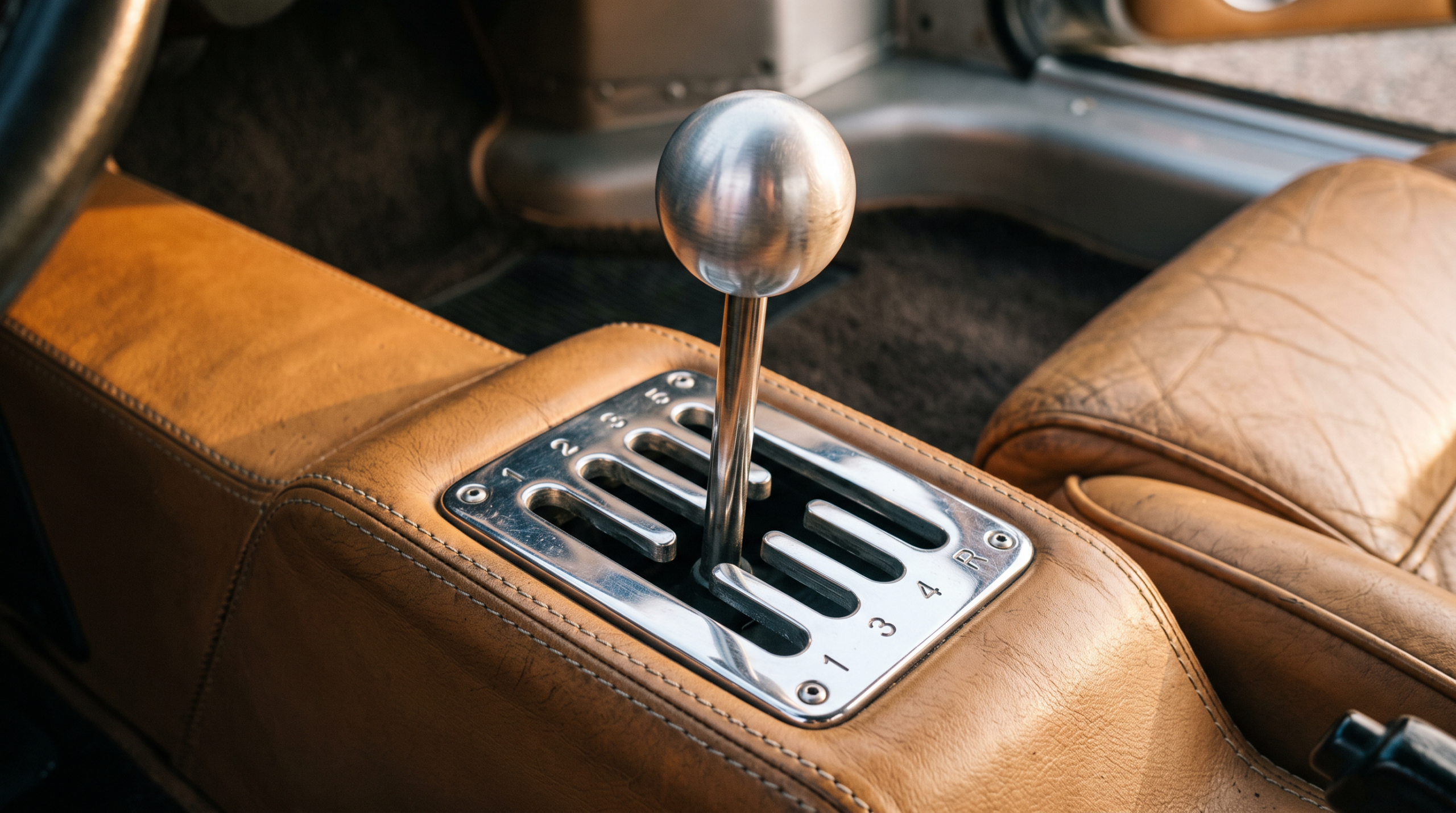
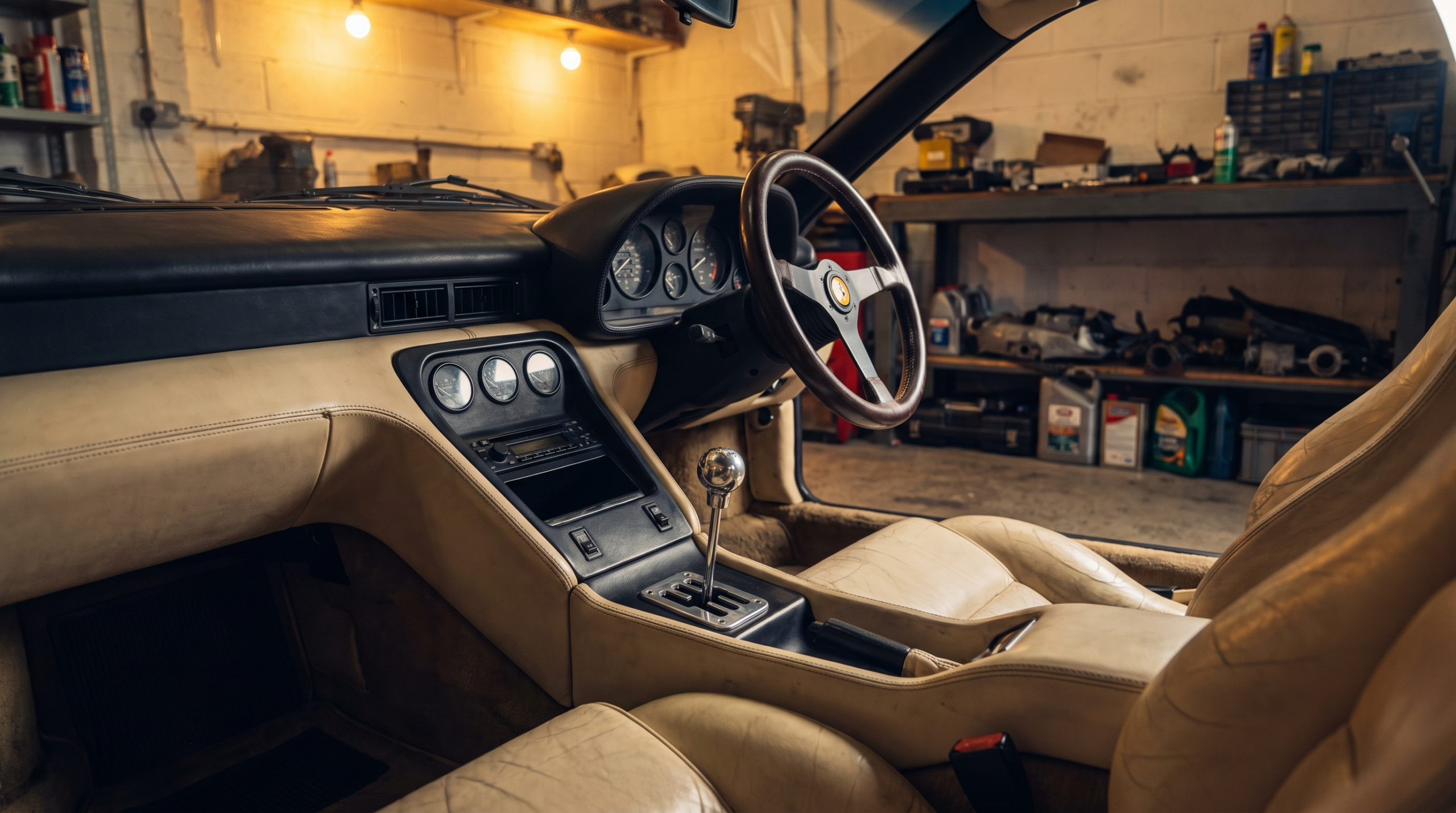
The open gate: the most valuable option in the modern collector car market. Illustrative rendering.
Why the Manual Transmission Nearly Died
Four reasons, and only one of them is the one everybody cites.
Speed, obviously. A modern dual-clutch shifts in milliseconds, never misses, and never gets tired on lap eleven. If your marketing runs on lap times and 0–60 figures, the manual transmission is a handicap you are choosing to accept.
Certification cost. This is the one nobody talks about and it matters more than the others combined. Every transmission variant has to be separately homologated for emissions and noise in every market. On a car built in the hundreds, a second gearbox can double a chunk of the compliance bill for a fraction of the volume.
And regulation gets strange. The manual 911 GT3 was briefly unsellable in California — not for emissions, but for noise. SAE updated its noise testing standard in 2020; the California Highway Patrol had not adopted the new test, and the manual car passed the new standard while failing the old one. Porsche and California regulators sorted it out by June 2021. That is how close a great car came to being legislated out of a state by a testing procedure.
And then demand, which everyone got wrong. Manufacturers assumed nobody wanted them. The numbers say otherwise, and that is the next section.
Manual Transmission vs Dual-Clutch: What You Actually Give Up
It is worth being honest about the deficit, because the romantic version of this story skips it. A modern dual-clutch gearbox swaps ratios in well under a tenth of a second, never fluffs a shift, and holds the drivetrain loaded while it does it. A quick driver working a gate needs something closer to half a second and will occasionally get it wrong. Off the line the gap is wider still, because launch control can repeat a perfect standing start twenty times in a row and no clutch foot can.
Weight cuts the other way. A manual gearbox and its single clutch are generally lighter than a twin-clutch unit with its second clutch pack, extra shaft and hydraulics — part of why the new Carrera S MT Package coupe comes in at 3,327 lb. It is also mechanically simpler, which matters more at fifteen years old than it does at three.
What you get back does not show up in a data logger. A manual transmission makes the driver responsible for where the engine sits in its rev range at every moment. You pick the gear, you match the revs, you carry the consequences of getting it wrong on a downshift into a second-gear corner. That is workload, and workload is the entire point — it is why a 400 hp car with three pedals can feel more alive on a back road than a 700 hp car that does the thinking.
The practical read is simple. If you are buying for lap times, the paddle car is the correct answer and it is usually the cheaper one. If you are buying for the drive, the manual transmission is what you want, and the market has already worked that out — which is exactly what the next section is about.
The Manual Transmission Take Rates That Changed Porsche’s Mind
When Porsche reintroduced the manual transmission on the 911 GT3, its own executives bet against it internally and lost. Frank-Steffen Walliser put it plainly: “We lost several bottles of wine by betting on the take rate when we reintroduced the manual option. We were surprised by how high it was.”
Car / market
Manual take rate
911 GT3, United States (current)
80%
911 GT3, United States (previous generation)
70%
911 GT3, worldwide
~30%
Standard 911
~25%
All new cars sold in the US, 2019
1.1%
Sources: Porsche executives via Motor Authority, KBB and Motor1. The gap between the last two rows is the entire story.
Read the top and bottom rows together. In a country where roughly one new car in a hundred is sold with a manual transmission, four out of five GT3 Touring buyers choose one — and they are paying six figures for the privilege of doing more work. That is not nostalgia. That is a specific, well-funded group of people who have decided the harder car is the better one.
Four out of five US GT3 Touring buyers now specify a manual transmission. Illustrative rendering.
The Manual Transmission Is Coming Back
In August 2026 Porsche did something that would have seemed eccentric five years ago: it launched a new manual model on the back of the data. The 911 Carrera S MT Package is a North America exclusive, and it exists because of the GT3 numbers.
Timo Resch, president and CEO of Porsche Cars North America, was direct about the reasoning: 80% of GT3 Touring customers picking the manual was, in his words, the kind of indicator that gave them reason to believe this is something customers really want. His summary of the car itself is better still — managing a clutch and shift lever is not for everyone, but for the drivers who want it there is no substitute.
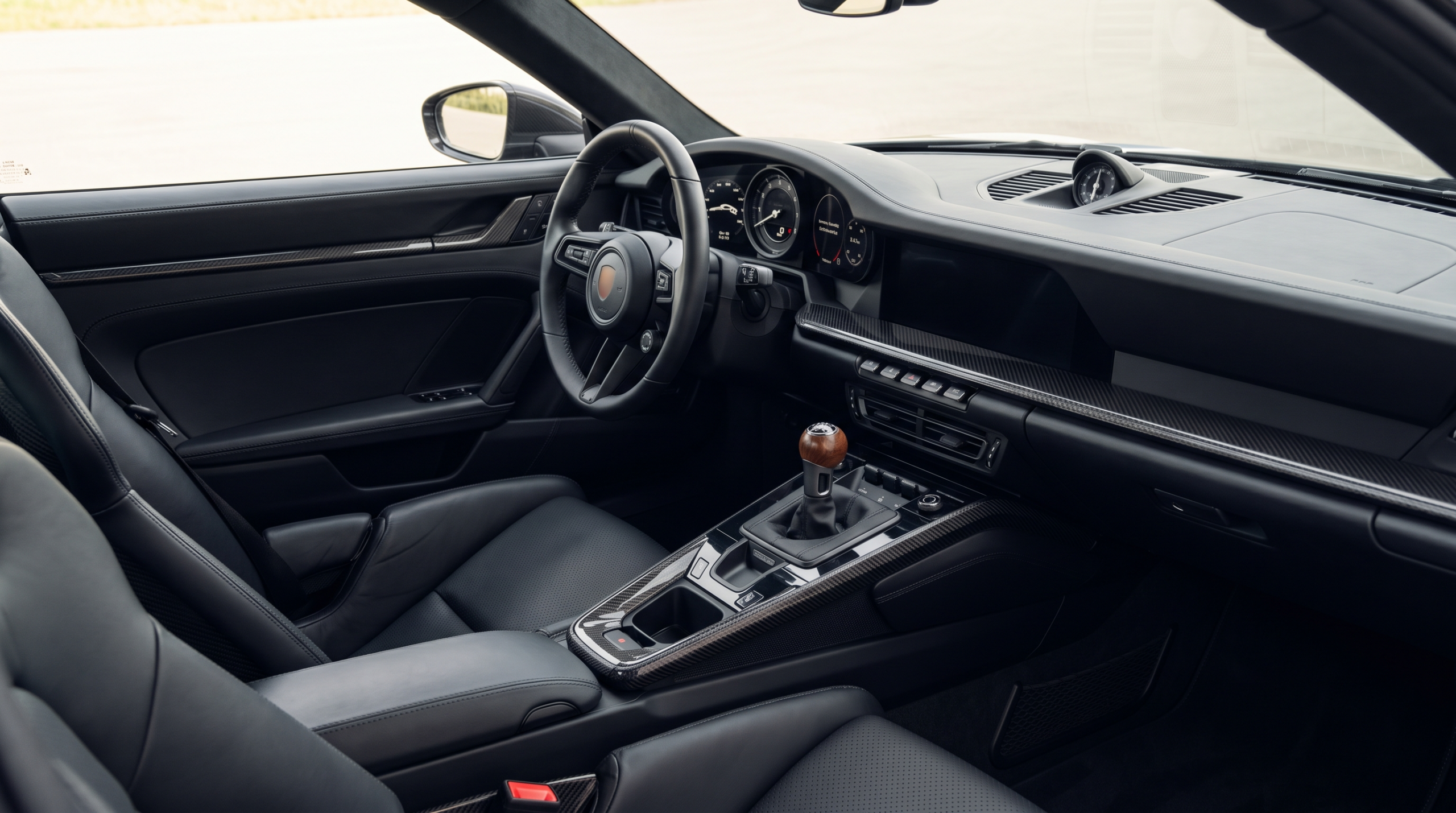
It is not a stripped-out delete option either. The MT Package pairs the six-speed with rear-axle steering, PASM Sport suspension 10 mm lower, centre-lock wheels saving over 17 lb, titanium exhaust outlets, Sport Chrono, four-way Sport Seats Plus and a walnut shift knob, around the 473 hp twin-turbo flat-six. Rear-wheel drive only. $167,100 for the coupe, $181,000 for the Cabriolet, with deliveries expected by the end of 2026.
And Porsche is not alone. McLaren has shown a McL 6GT concept with production intent, and Hennessey’s Blackbird — revealed at The Quail in August 2026 — pairs a naturally aspirated 6.2-litre V8 making 800 to 850 hp with a six-speed gated shifter, at a claimed sub-3,000 lb and 0–60 in 2.5 seconds. Both are betting on exactly the customer Porsche just proved exists.
The 911 Carrera S MT Package launched in August 2026 because the take-rate data justified it. Illustrative rendering.
What a Manual Transmission Is Actually Worth
This is where it stops being a preference and becomes an asset class. The premiums are enormous and they are best documented on Ferrari, where the manual transmission became rare earliest.
Car
Manual premium
How rare
Ferrari F430
+100% over the F1 car
Fewer than 10% of F430s built manual
Ferrari 360 Modena
+33%
F1 outsold manual roughly 2:1 globally
F430, UK market
~40%
Premium varies sharply by market
Premiums per Hagerty valuation data. Note the ceiling: even at double money a manual F430 sits below a 430 Scuderia, which CLASSIC.COM benchmarks at $425,353.
Consider what that comparison actually means. Ferrari built the Scuderia as the driver’s version — lighter, more powerful, track-focused, and produced in far smaller numbers — and the market prices it accordingly. But between two otherwise identical F430s, the one with the metal gate is worth about twice the one with paddles. Rarity does not explain that, because both were built in the same numbers and the manual is the commoner car in spirit if not in count. The gearbox is doing the work.
The same logic runs through the market. Manual Gallardos, manual 599s, manual Aston Martins and the last three-pedal 911s all carry premiums for the same reason: a fixed, permanently shrinking supply meeting demand that turned out to be much larger than anyone modelled. Our breakdown of which exotic car values are actually appreciating puts floor prices next to averages on the same principle.
The Manual Transmission Conversion Trap
If a manual transmission doubles the value of an F430, the obvious move is to convert one. Specialists do exactly that, using factory parts, and for a while the arithmetic worked — the conversion cost less than the gap in values.
The market noticed. Hagerty analysed ten recent auction results and found converted cars sold at an average 9.4% discount to equivalent F1 cars — not a premium at all, a penalty. CLASSIC.COM now tracks “Ferrari F430 – Manual Conversions” as a separate submarket, with a benchmark around $183,062 against an overall F430 average of $207,378. When a data provider builds you your own category, the market has made its judgement.
The lesson for buyers is blunt. A factory manual and a converted manual are the same experience and completely different assets. If you want to drive it, a conversion is a legitimate and much cheaper route to the same pleasure — Hagerty’s own framing is that they suit people who prioritise driving over static originality. If you are buying it as a store of value, the gate has to have left the factory that way, and you need paperwork that proves it.
Which is why this is a documentation question before it is a mechanical one. Build sheet, factory records, original window sticker where one exists. Our collector car documentation guide covers exactly what to demand and how to verify it.
A factory gate and a converted gate drive identically and are worth very differently. Illustrative rendering.
Manual Transmission Exotics You Can Still Buy New
The list is short and it is longer than it was two years ago, which is the first time that sentence has been true this century.
Porsche 911 GT3 — the six-speed that started the reversal, and the reason the rest of this list exists.
Porsche 911 Carrera S MT Package — new for the 2027 model year, North America only, $167,100, with deliveries from late 2026.
Porsche 911 Carrera T — the lighter, manual-focused Carrera that proved the appetite below GT level.
Aston Martin — has kept making the case for manual V12s in limited series when almost nobody else would.
Gordon Murray Automotive — the T.50 and T.33 pair a naturally aspirated V12 with a manual because that was the entire brief.
Hennessey Blackbird — 800 to 850 hp, naturally aspirated, gated six-speed, revealed August 2026.
McLaren McL 6GT — a concept for now, with production intent stated.
Notice what is missing. Ferrari and Lamborghini, the two marques whose gated shifters defined the idea in the first place, are not on it. Both moved to paddles across the range years ago. Ferrari has since blinked: in July 2026 it announced the 12Cilindri Manuale, 1,499 cars with a clutch pedal and an open gated lever. Read the fine print before you celebrate — it is Manuale by-wire, the gate and the pedal electronically operating the first six ratios of the eight-speed dual-clutch rather than driving anything mechanically. You can stall it and you can fluff a shift, which is more than any paddle car offers, and it is still not a manual gearbox in the sense this article means.
Lamborghini has signalled nothing. So if you want a prancing horse or a raging bull with a genuine third pedal, you are shopping used, and competing with everyone else who has worked that out.
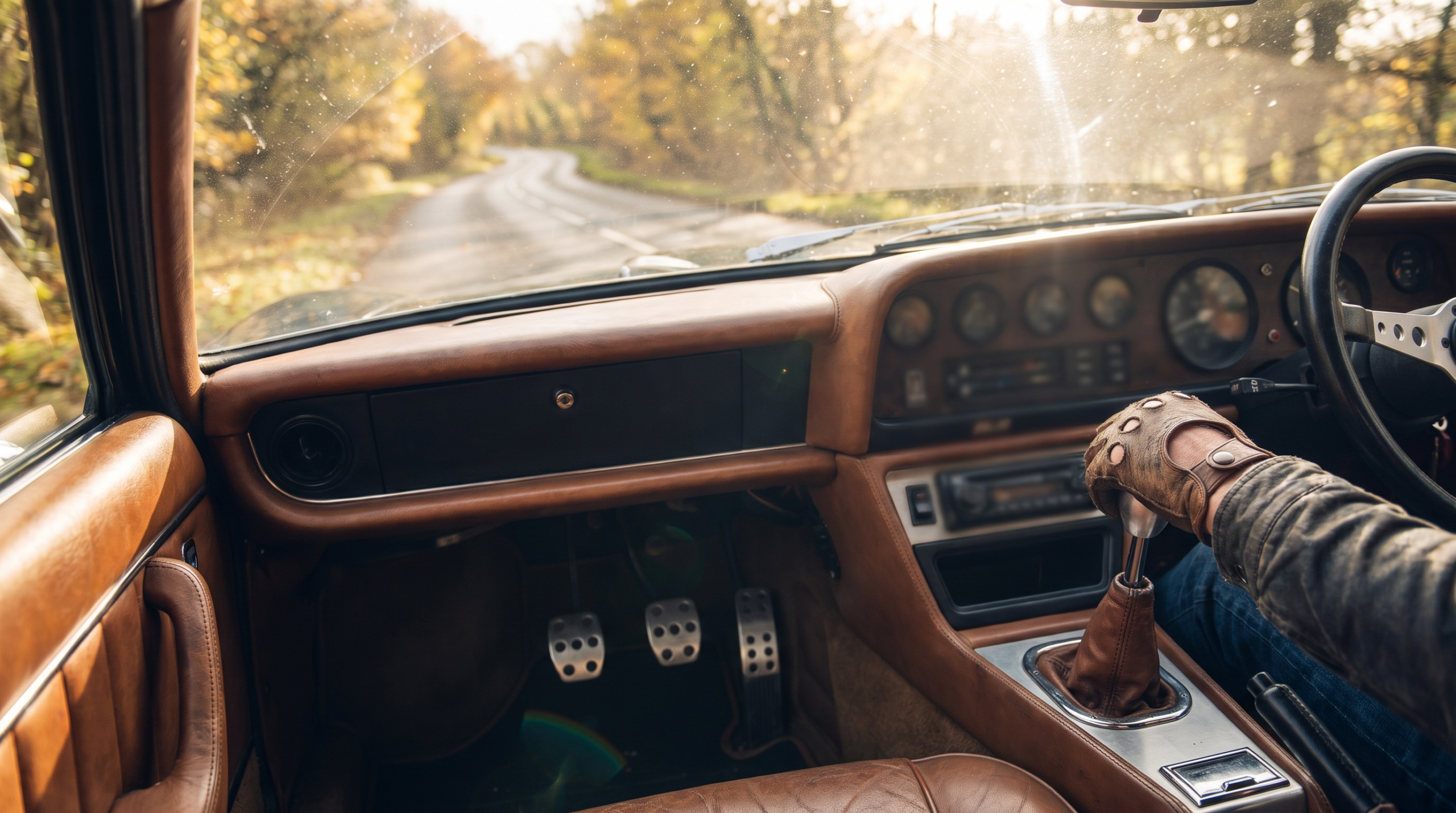
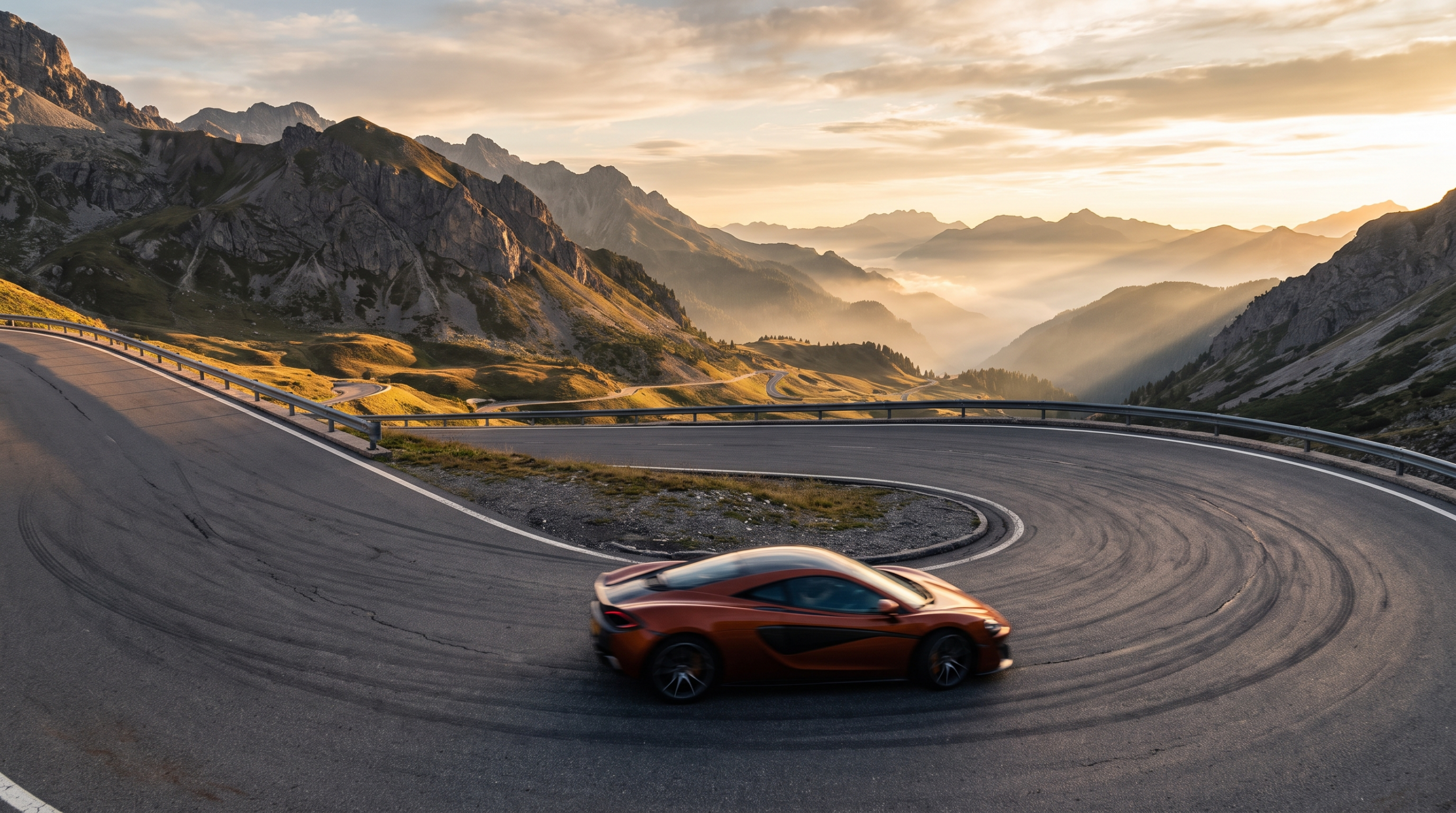
The case for the manual transmission is made on roads like this, not on a stopwatch. Illustrative rendering.
Buying a Manual Transmission Exotic: What to Check
Establish factory versus converted first. Before condition, before mileage, before colour. It is the single biggest value variable on the car and it is not always disclosed prominently.
Get the clutch history. Manual exotics get driven by enthusiasts and learned on by optimists. Ask when the clutch was last replaced and by whom, and budget for one.
Inspect the gate itself. On open-gate cars the metal shows wear honestly. Scoring and slop tell you about the previous owner faster than any service record.
Check second-gear synchros when cold. The classic weak point on older Italian gearboxes, and it will not show up on a warm test drive.
Do not pay a factory-manual premium for a car you have not verified. Paperwork or no premium — there is no middle position on this one.
Then drive it before you decide. A manual transmission is a preference, not an upgrade. Plenty of people discover they prefer paddles in traffic, and that is a completely legitimate conclusion to reach.
If this would be your first car at this level, our first-time exotic car buyer’s guide covers the wider process, and the rental guide makes the case for driving the exact specification you are considering before you commit to it.
Not Unicorns. Survivors.
An earlier version of this page called manual exotics unicorns and left it there — rare, disappearing, romantic. That was the accepted story and it turned out to be half of one.
The manual transmission did not survive on nostalgia. It survived because a specific group of buyers kept choosing it at rates nobody in product planning believed, kept paying premiums for it on the used market, and eventually made the business case for themselves. Four out of five GT3 Touring buyers is not a subculture. It is a market segment that was being ignored.
Our family has been in the car business for more than a century, and the thing we would say about all this is that the market is usually smarter than the forecast. Manuals were declared dead roughly every year for two decades. They are now available on more new exotics than they were in 2024, and the used ones are worth double their paddle-shift twins.
Why did exotic cars stop offering a manual transmission?
Four reasons. Dual-clutch gearboxes shift faster and improve the performance figures manufacturers market on. Every gearbox variant has to be separately certified for emissions and noise in each market, which is expensive on low-volume cars. Regulation can be unpredictable — the manual 911 GT3 was briefly unsellable in California over a noise testing standard. And manufacturers assumed demand had gone, which the take rates later disproved.
How much more is a manual transmission exotic worth?
A great deal. Hagerty valuation data puts the manual premium on a Ferrari F430 at around 100% over the F1 paddle car, and one-third to 50% on a 360 Modena. Roughly 10% of F430s are estimated to have been built with three pedals. Even at double money a manual F430 sits below a 430 Scuderia, which was faster, rarer and only ever offered with paddles.
Are manual transmissions coming back in supercars?
Yes. Porsche launched the 911 Carrera S MT Package in August 2026 at $167,100, explicitly because 80% of US GT3 Touring buyers were choosing the manual. McLaren has shown a McL 6GT concept with production intent, and Hennessey’s Blackbird pairs a naturally aspirated 6.2-litre V8 of 800 to 850 hp with a gated six-speed.
Is a converted manual transmission worth the same as a factory manual?
No, and the gap is stark. Hagerty found converted cars sold at an average 9.4% discount to equivalent paddle cars, rather than a premium, and CLASSIC.COM tracks F430 manual conversions as a separate submarket at a lower benchmark than the model average. A conversion is a legitimate and cheaper way to get the driving experience, but it is not the same asset.
Which new exotic cars still have a manual transmission?
Porsche leads with the 911 GT3, the Carrera T and the new Carrera S MT Package. Aston Martin has continued to build limited-series manual V12s, and Gordon Murray Automotive’s T.50 and T.33 were designed around one. Hennessey’s Blackbird and McLaren’s McL 6GT concept are the newest entries. Ferrari’s 12Cilindri Manuale, announced in July 2026 and limited to 1,499 cars, has a clutch pedal and a gated lever but is manual by-wire — it operates a dual-clutch gearbox electronically rather than a mechanical one. Lamborghini offers none.
What should I check when buying a manual transmission exotic?
Establish whether the gearbox is factory or converted before anything else, and demand paperwork if you are paying a factory-manual premium. Get the clutch replacement history, inspect an open gate for wear and slop, and check second-gear synchros from cold on older Italian cars. Then drive it — plenty of people find they prefer paddles in traffic.
Owning an exotic car is not about speed or luxury- It’s about embracing an experience, where the road becomes your canvas and the car, your masterpiece.
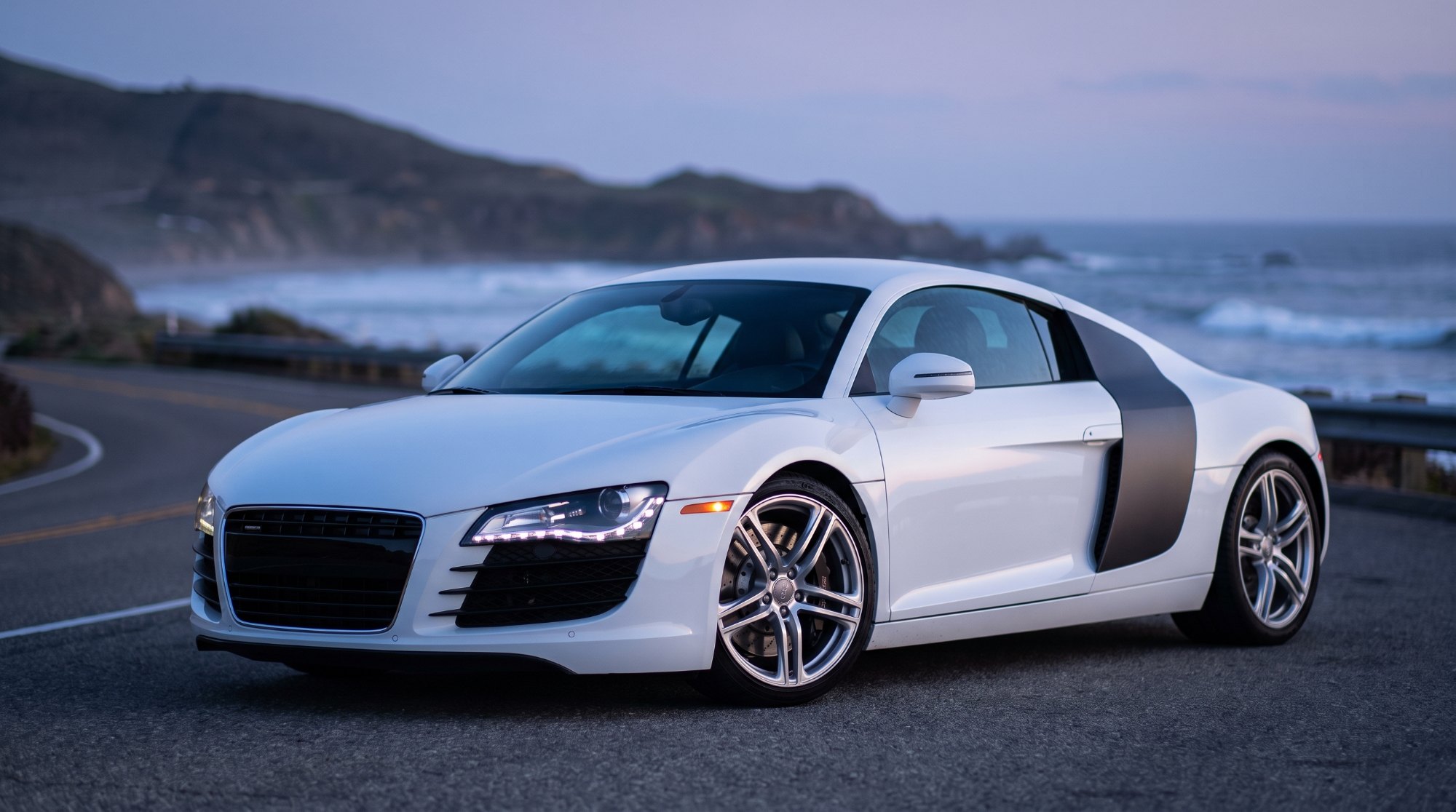
A gated-manual Audi R8 can deliver something a newer automatic cannot. Here is what recent sales say about the premium, how to verify a factory manual, and when the extra money serves your priorities.
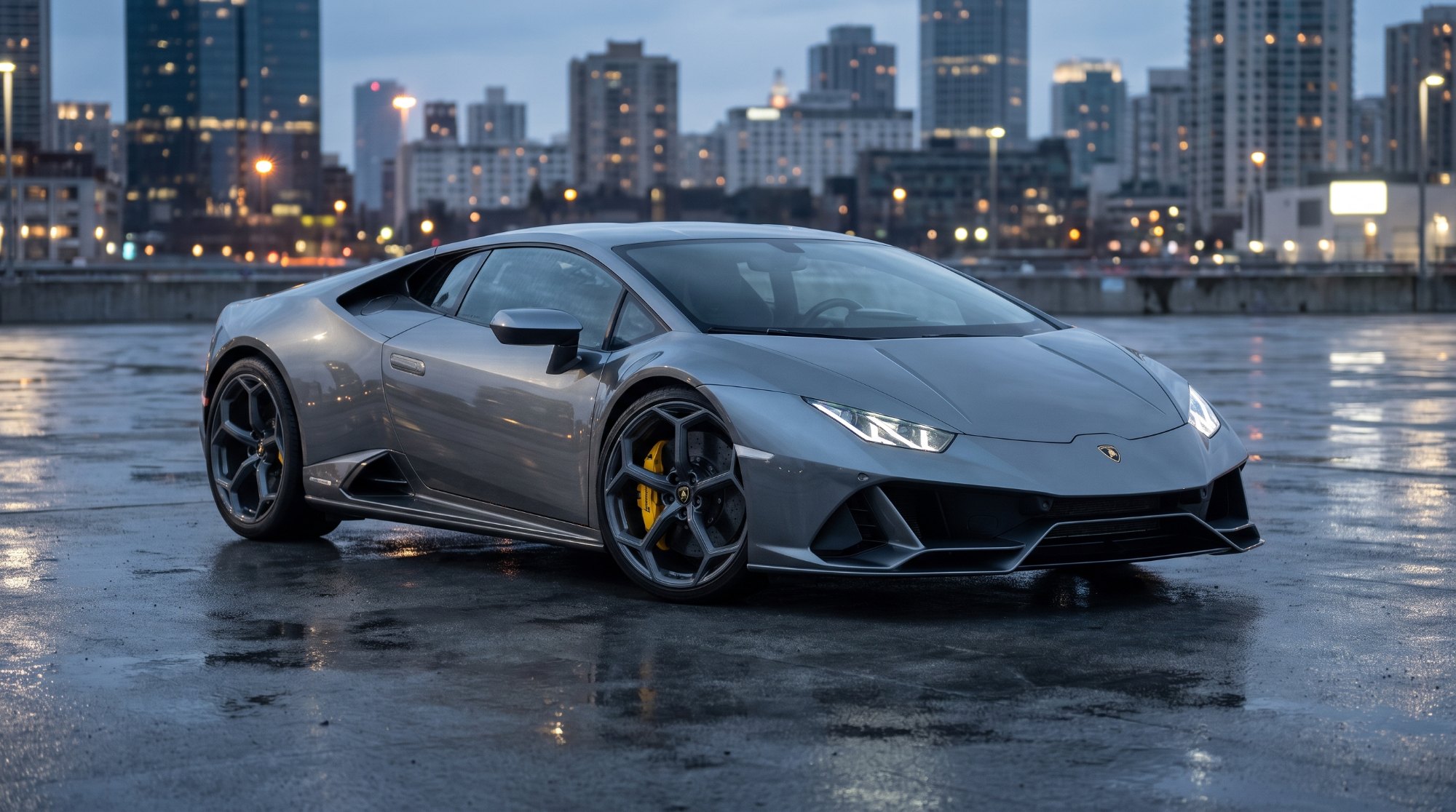
A used Lamborghini Huracán can still be a smart buy in 2026, if you choose the right variant and a well-documented car. Here is which version suits which buyer, what U.S. dealers are asking, and what to check first.
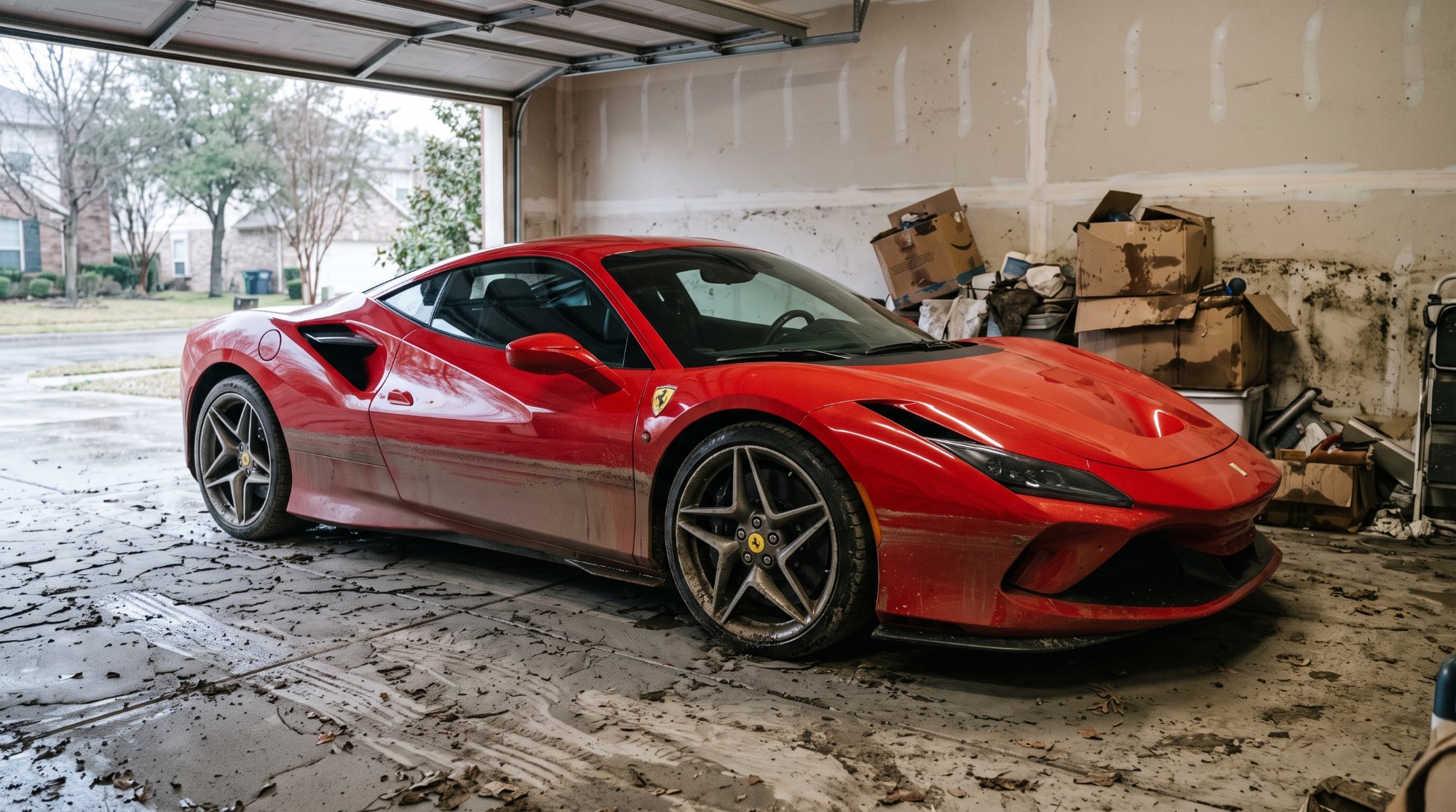
A flooded Ferrari at half price can look like the deal of a lifetime. Here's how to judge the water, the paperwork, the repair math, and whether the discount is ever enough.
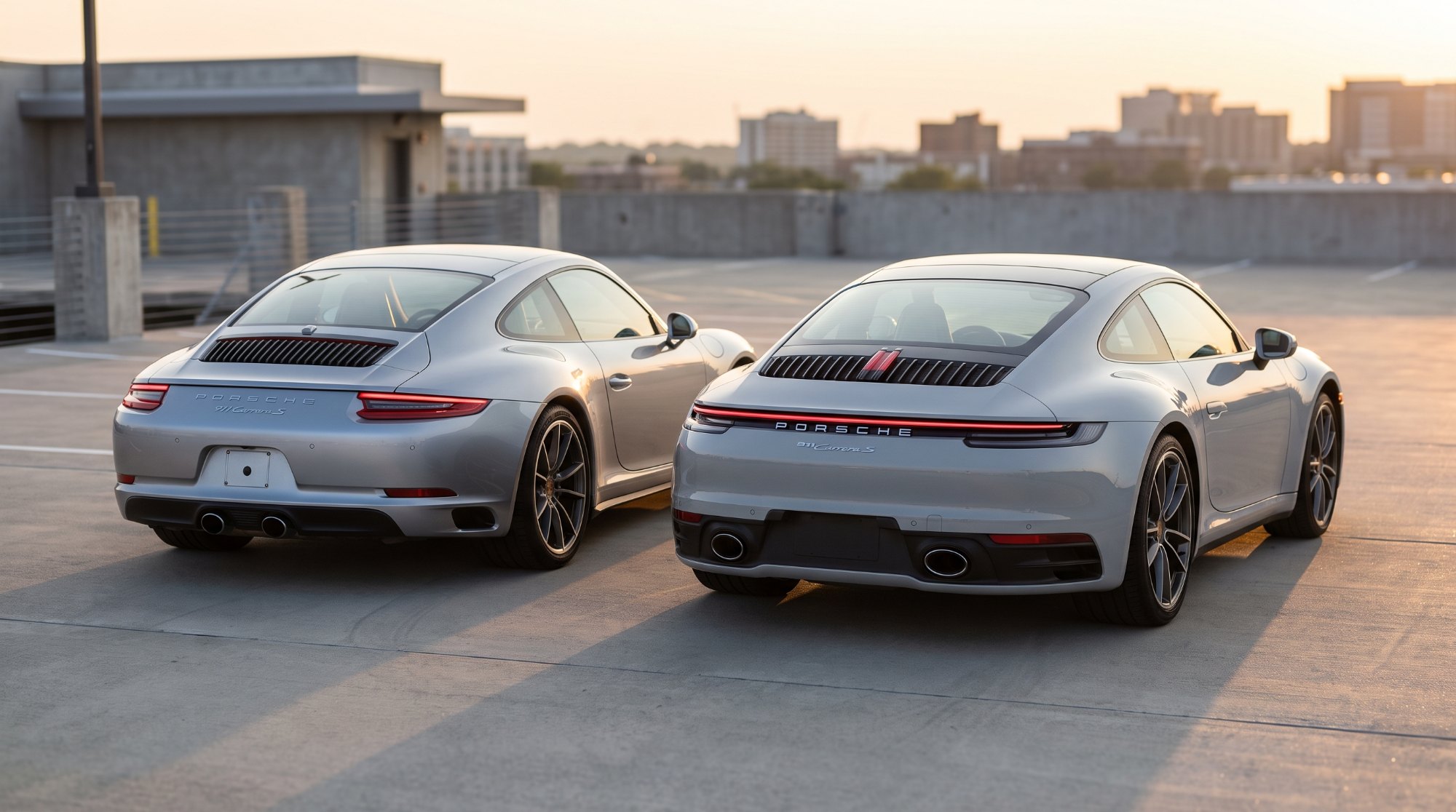
991.2 or 992? A buyer's guide to the used Porsche 911 Carrera decision: transmissions, body styles, options, inspection, warranty, running costs and the real price gap.