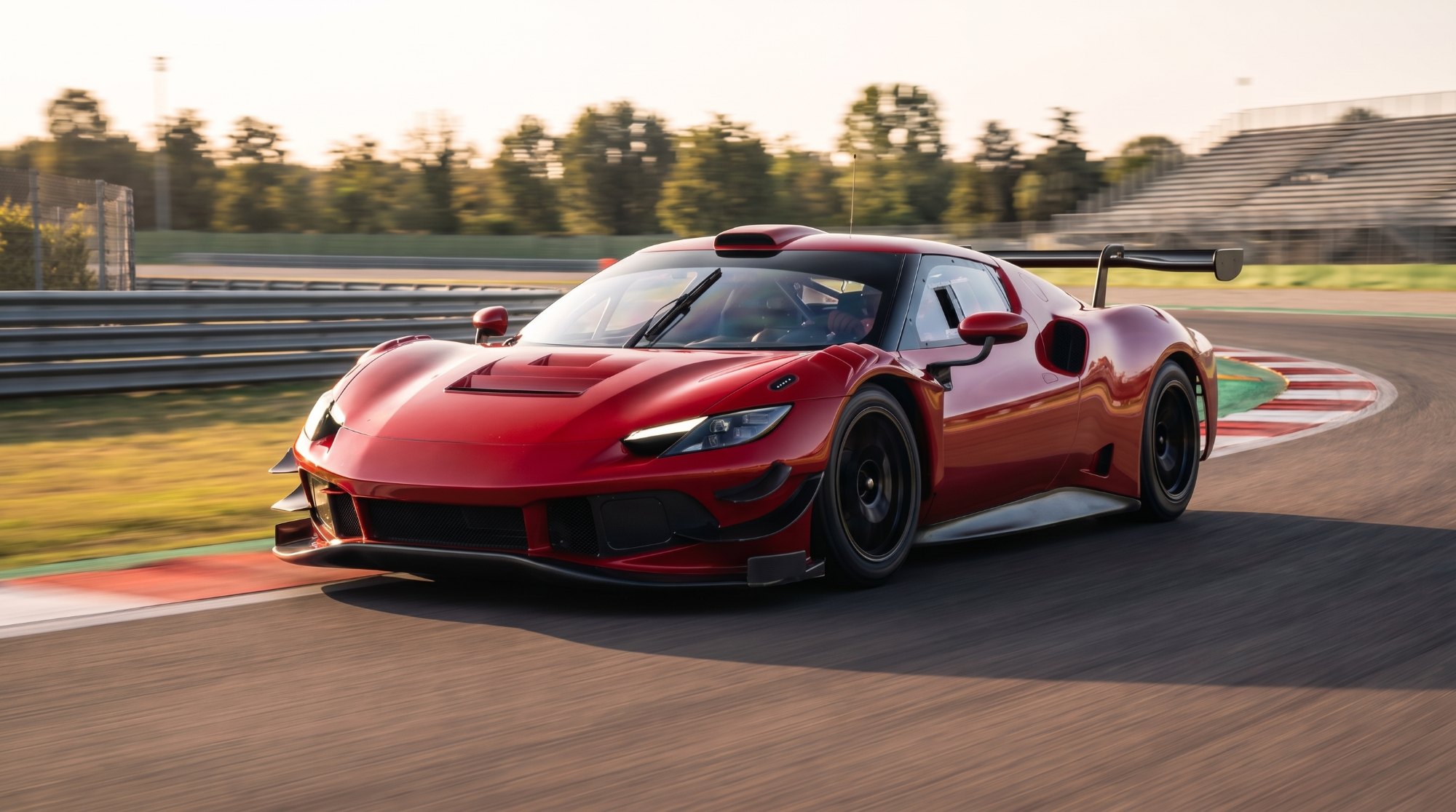
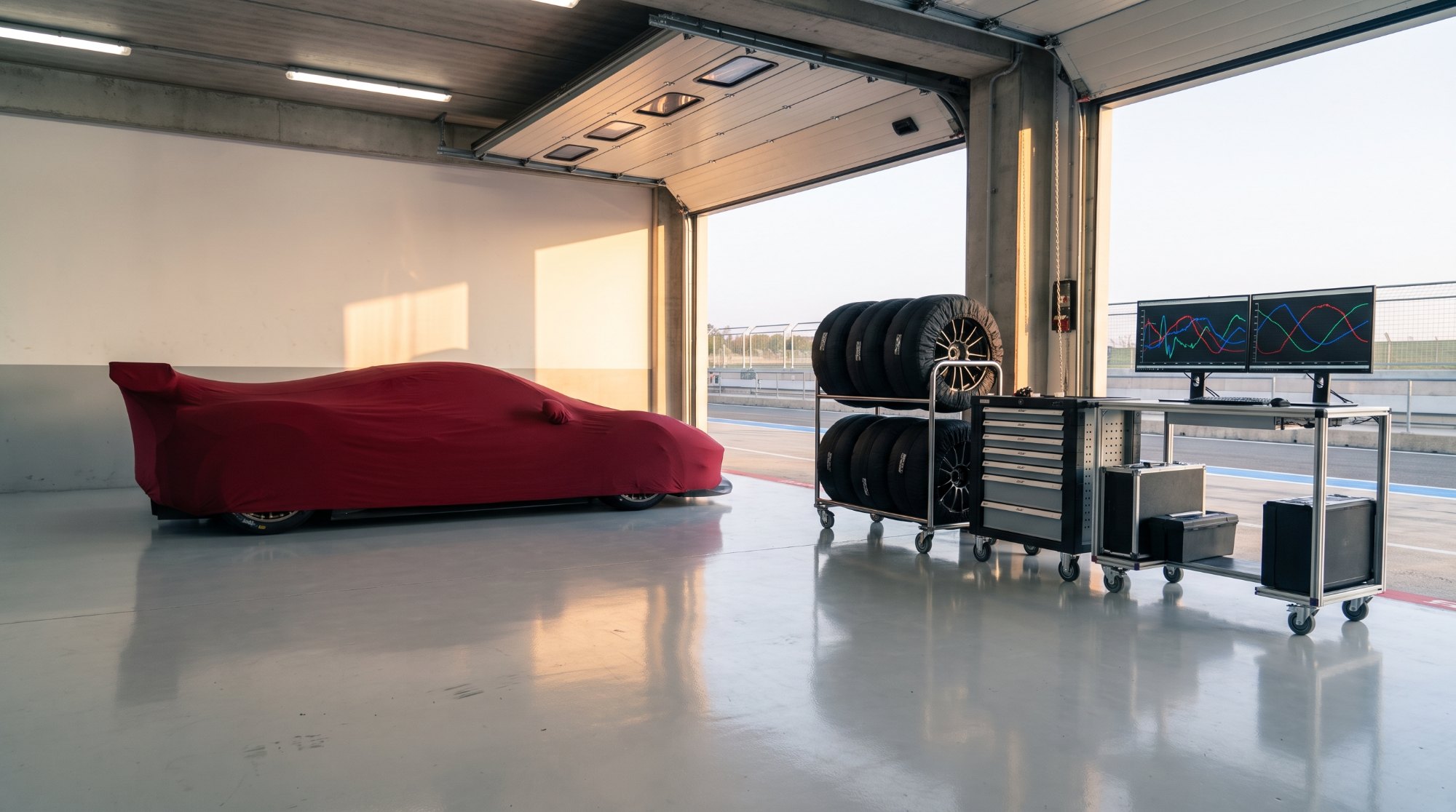
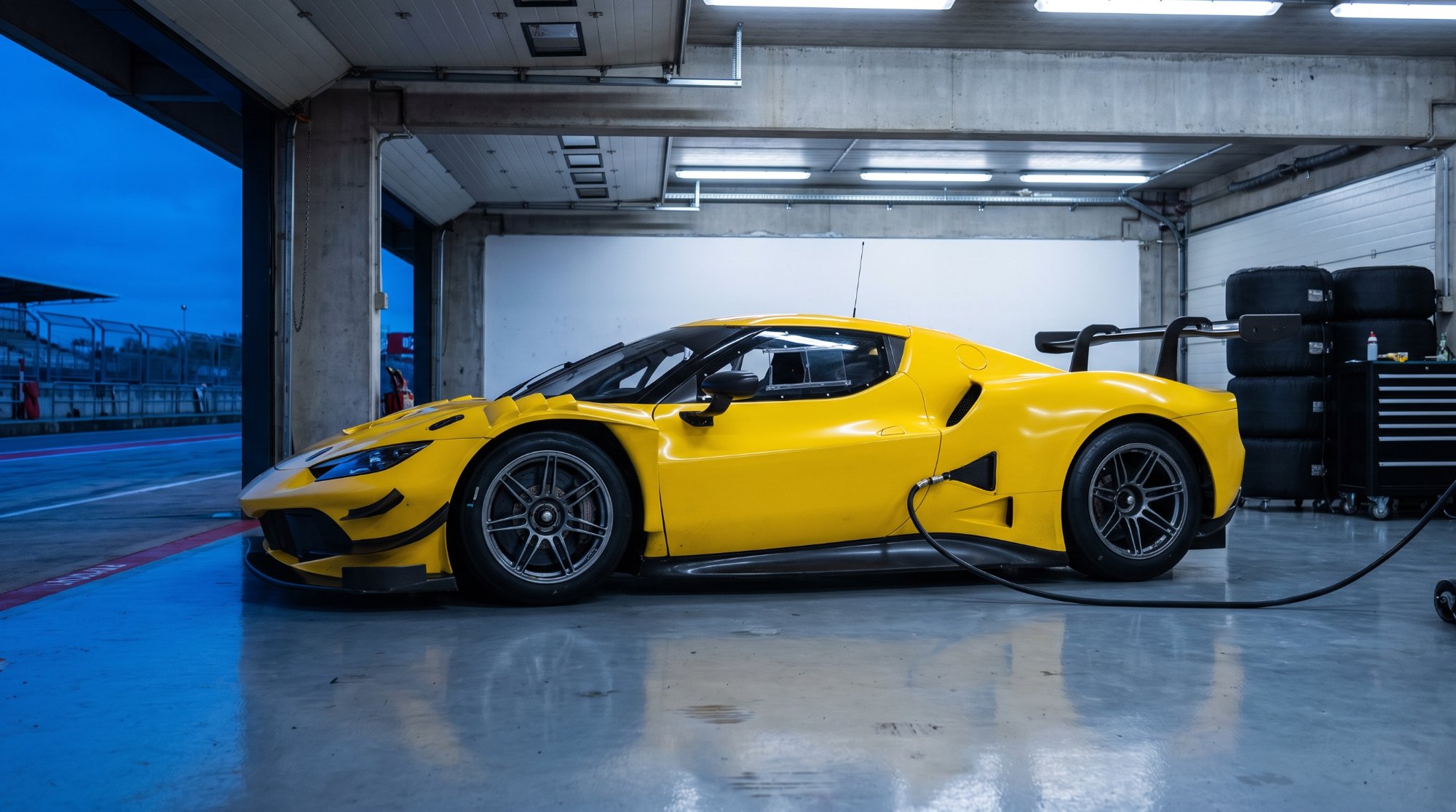
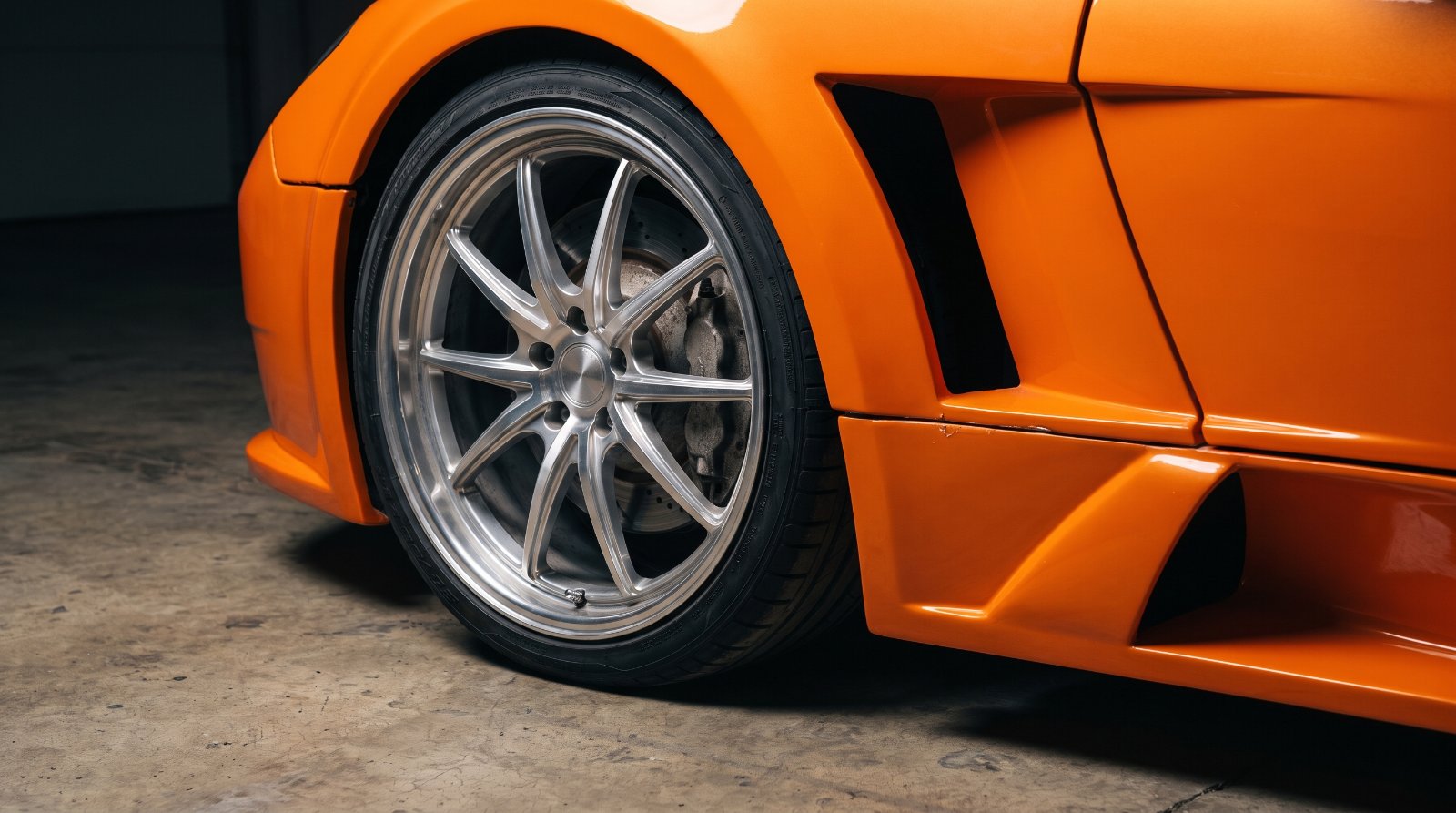
Lead image: a 296 GT3-based track car with Modificata-style aero. Editorial visualization: Exotic Motors.
Ferrari’s new 730-cv, rules-free 296 is sold as a car and two years of Club Competizioni GT in one package. Here is what to budget, how allocations work, and how it compares as a purchase with the 296 GT3 Evo, Porsche’s 911 GT3 R rennsport and the rest of the unrestricted track-car field.
The Ferrari 296 GT Modificata, revealed on September 13 at Ferrari Racing Days at the Hungaroring, is the most extreme 296 Ferrari has built. It is also a car you cannot race and cannot register. That combination tells you what Ferrari is actually selling. This is not a toy for the occasional track day, and it is not a GT3 race car with the gloves off. It is a membership in Club Competizioni GT, Ferrari’s non-competitive programme for GT cars, with a 730-cv car and two years of events attached.
For a buyer, the useful question is not whether it beats a 296 GT3 Evo (Ferrari says it laps Fiorano three seconds faster). It is whether you want to compete or to drive, what the package realistically costs, and how narrow the resale market for a car like this will be. Ferrari has not published a price. Below is how to frame one, and how to get on the list.
What You Need to Know
No list price. Ferrari has not published one. The most useful public anchor is Porsche’s rules-free 911 GT3 R rennsport at $1,046,000 before taxes and options. Used 2023 Ferrari 296 GT3 race cars have been advertised in Europe at about $575,000 to $715,000 before VAT in 2026.
You buy it through Corse Clienti, not a showroom. The car is sold for Ferrari’s Club Competizioni GT programme, and the purchase includes two years, or 12 rounds, of participation. Ferrari has not published eligibility criteria; the 488 GT Modificata that preceded it was initially offered only to drivers with recent history in Ferrari’s club track events.
It cannot race and it is not road-legal. It exists for track days and Ferrari’s non-competitive events. If you want trophies, the 296 GT3 Evo is the car.
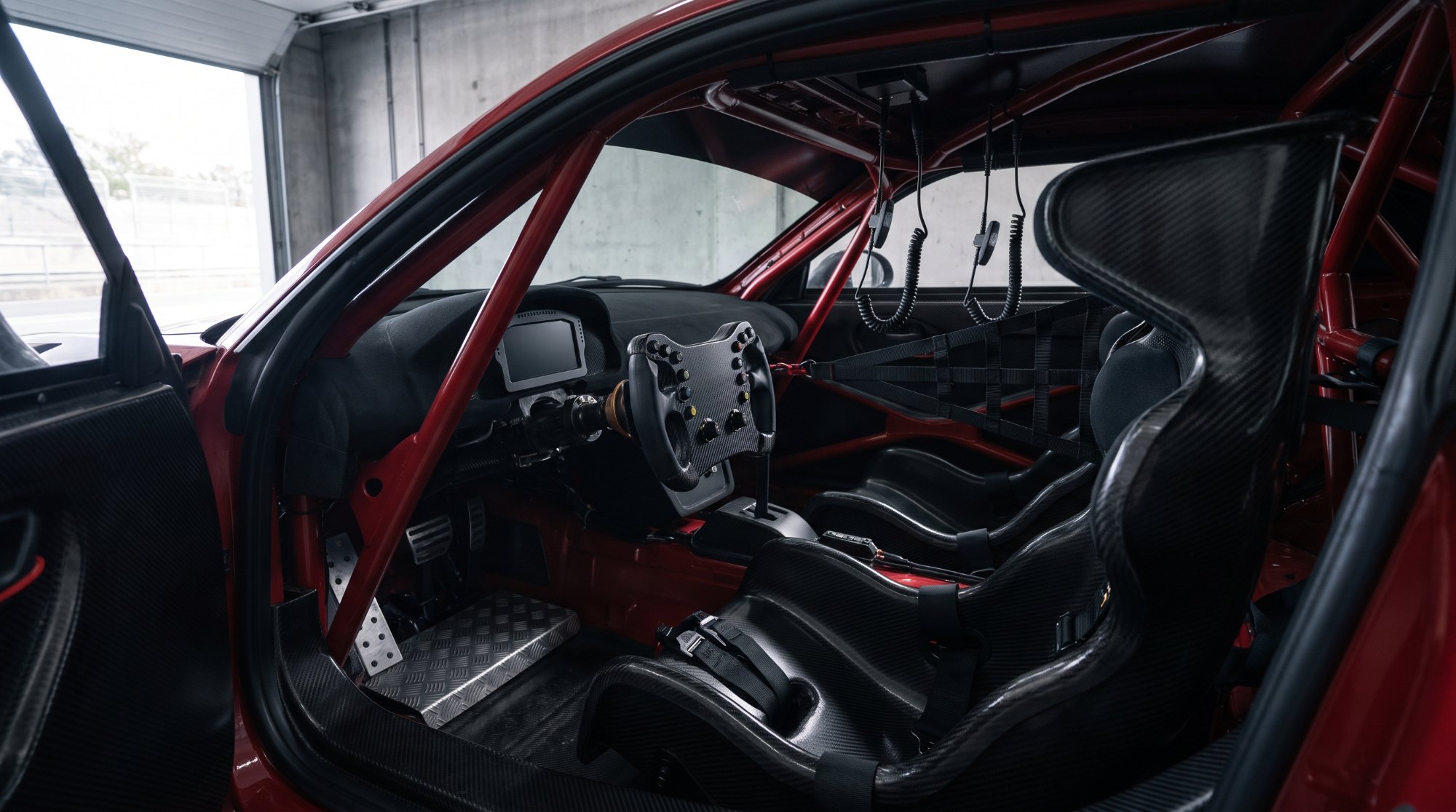
The passenger seat matters. Two seats and an integrated intercom mean an instructor can ride with you. That is the difference between an expensive track car and a structured driver programme.
Resale is a small room. Values will depend on documented factory servicing, spares and Ferrari’s continued support, not mileage alone. Don’t buy one as an investment.
Table of Contents
Ferrari 296 GT Modificata at a Glance
Revealed
September 13, 2026, Ferrari Racing Days, Hungaroring; public debut planned for Ferrari’s Finali Mondiali in Barcelona
Intended use
Track days and Club Competizioni GT events only; not homologated for competition, not road-legal
Confirm in writing what the 12 rounds include and whether the programme entitlement transfers if you sell
Primary alternatives
Ferrari 296 GT3 Evo, Porsche 911 GT3 R rennsport, Mercedes-AMG GT Track Series, McLaren 720S GT3X, Ferrari 499P Modificata
Specifications from Ferrari’s announcement. Price and production not disclosed as of September 16, 2026.
Why the 296 GT Modificata Is More Than a Track Toy
The formula is the one Ferrari used for the 488 GT Modificata in 2020: take the customer GT3 car, remove the Balance of Performance restrictions that govern it in racing, and give it back to clients who want the speed without the sporting regulations. This time the base is the 296 GT3 Evo, the 2026 update Ferrari revealed at Spa in June 2025.
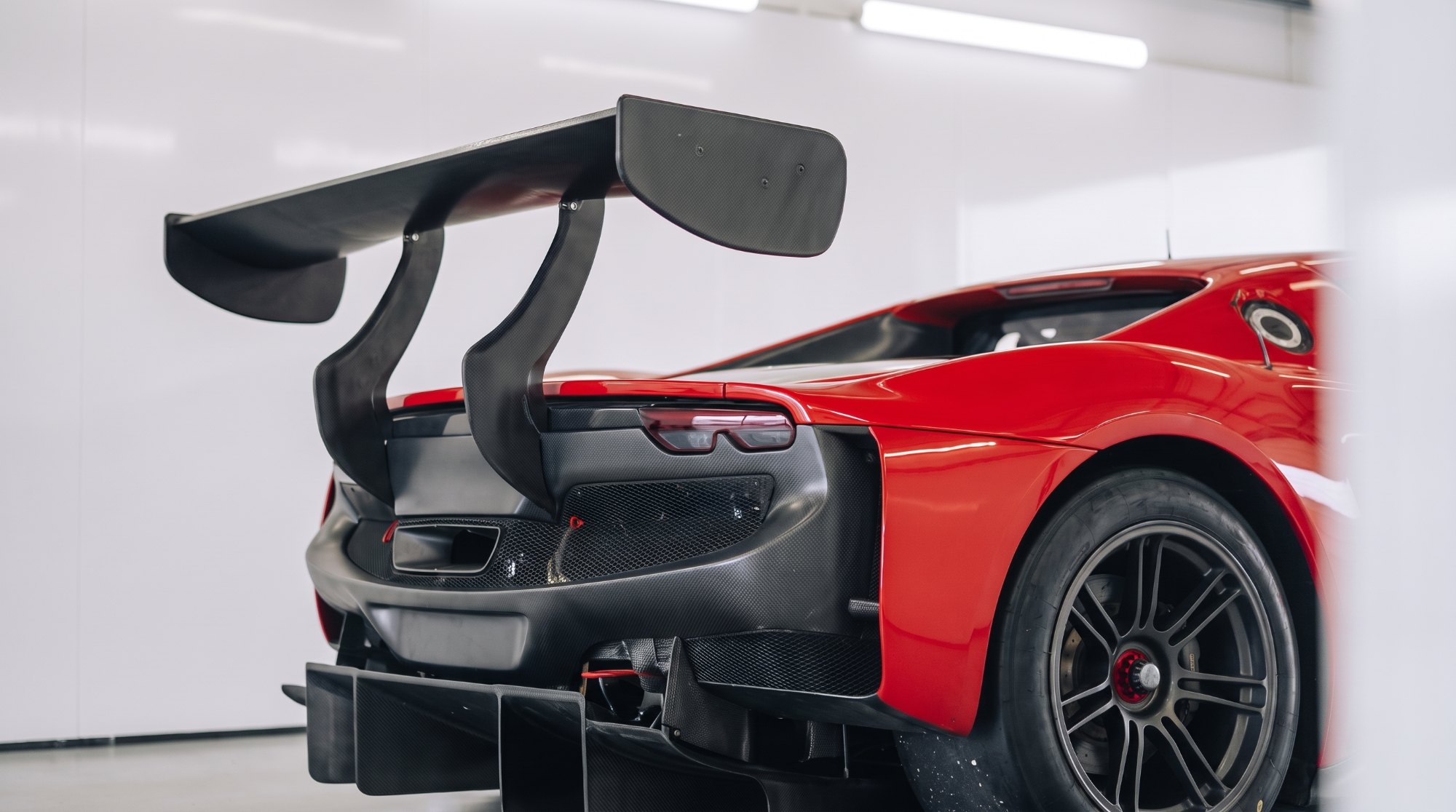
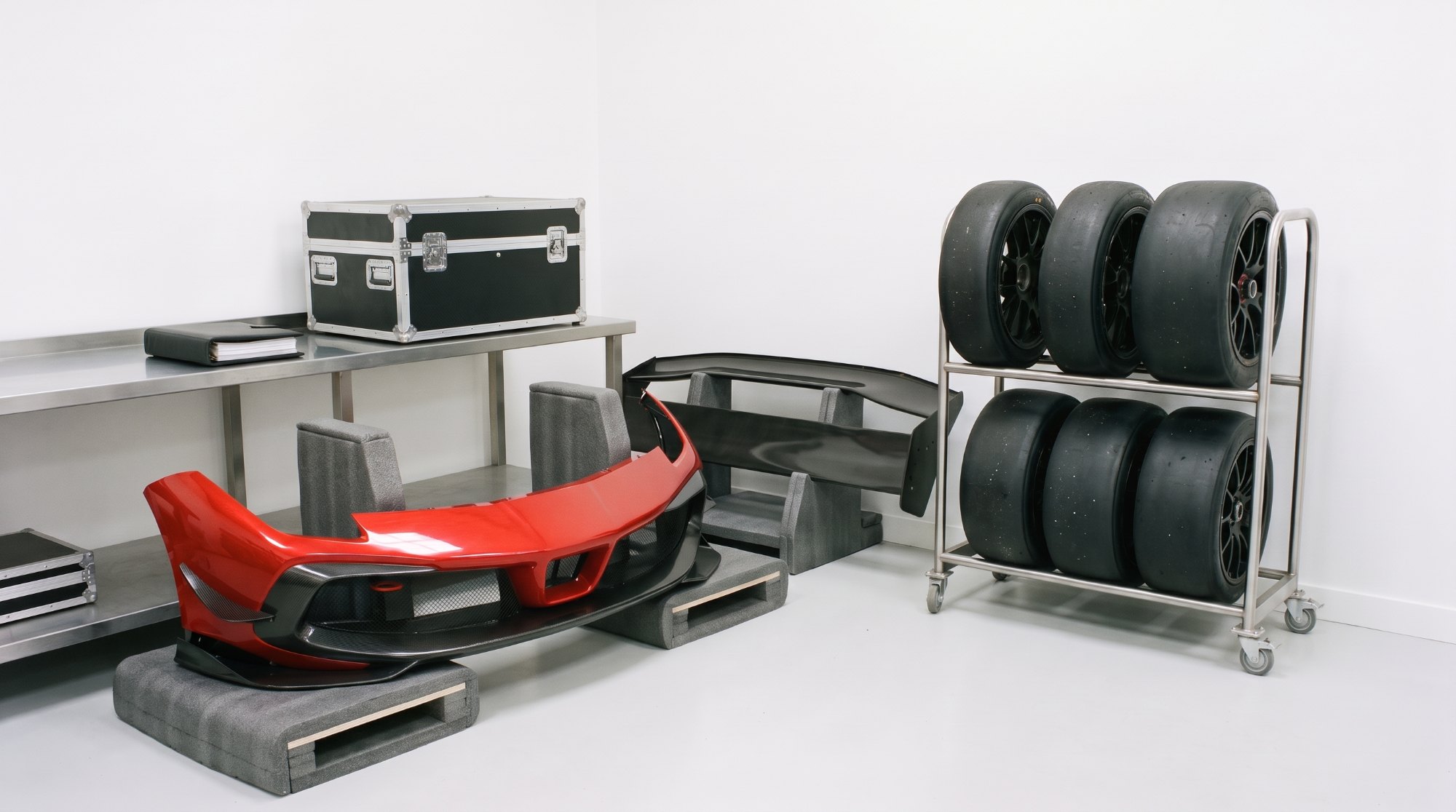
The changes are substantive. The V6 gets a revised crank train, camshafts, intake, intercoolers and turbochargers, which lifts output by roughly 130 cv over the GT3 car. Up front there is a new slotted splitter and a redesigned bonnet with a larger opening. At the back, a larger rear wing carries a 5 mm Gurney flap and endplates styled after the Le Mans-winning 499P.
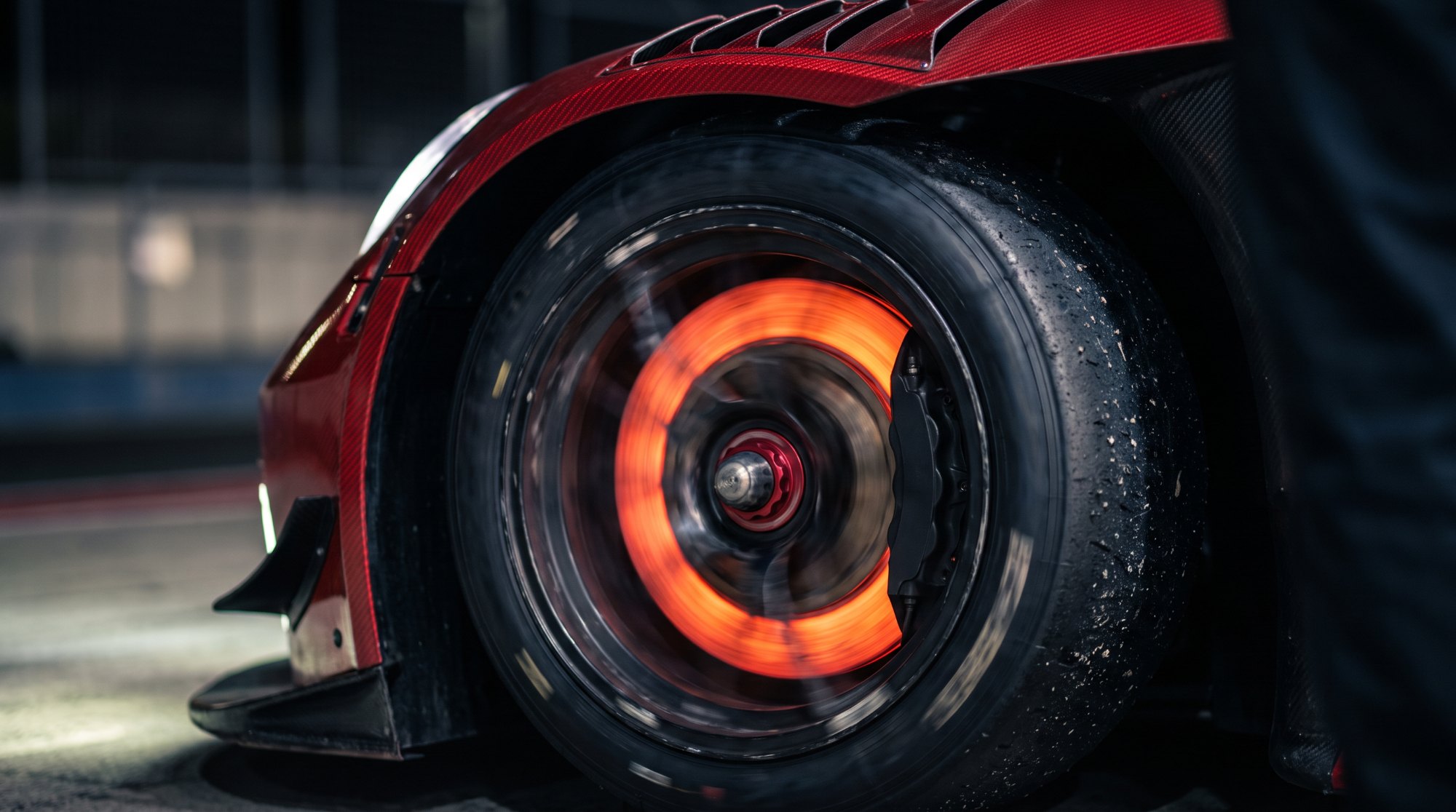
Braking is steel rather than carbon-ceramic, 400 × 26 mm discs in front and 332 × 32 mm at the rear, with ABS calibrated for long sessions. Pirelli slicks measure 325/680 R18 front and 325/705 R18 rear, and a 120-litre fuel cell lets you run long stints.
A larger rear wing with a 5 mm Gurney flap and 499P-inspired endplates is part of the Modificata aero package. Editorial visualization: Exotic Motors.
The electronics tell you who the car is for. Ferrari fits a data acquisition system with pitot tubes, damper potentiometers and brake-temperature sensors, plus video recording and infrared tyre monitoring. Pair that with a second seat and an intercom, and the design brief is plain: a driver goes out, an instructor rides along or reads the data afterward, and the driver comes back faster. Ferrari’s Club Competizioni GT programme is built around exactly that loop, with dealers describing trackside engineering, tyre support, storage and transport as part of the experience.
The second seat and intercom let an instructor coach from the passenger side. Editorial visualization: Exotic Motors.
One comparison worth making for anyone who already owns a road-going 296: the 296 GT Modificata makes less peak power than a 296 GTB, whose hybrid system brings it to 830 cv. But the GTB weighs 1,470 kg dry, runs road tyres and carries none of this aero. On a circuit they are not in the same conversation.
What Will a Ferrari 296 GT Modificata Cost?
Ferrari does not publish prices for its Corse Clienti track specials, and it has not published one here. What we can do is lay out the numbers around it. The figures below are a mix of manufacturer list prices, dealer asking prices and public auction results, and they are labelled accordingly. None of them is a quote for this car.
Price benchmarks, as of September 2026
Porsche 911 GT3 R rennsport (list)
$1,046,000 before taxes and options, 77 units
Porsche 911 GT3 R rennsport (secondary market)
Sold for $1,201,000 on Bring a Trailer, October 2025, 21 miles; a May 2026 auction reached $1,350,000 without selling
Ferrari 296 GT3, 2023 (dealer asking)
About $715,000 before VAT (Germany, April 2026, rebuilt, large spares package); about $575,000 before VAT (Spain, 30,000 km, no spares)
Ferrari 296 Challenge (new list)
About $450,000 including European VAT
Ferrari 296 Challenge (U.S. auction results)
$302,500, Mecum, May 2026; $270,000, Bring a Trailer, June 2026
Ferrari 499P Modificata (list)
About $5.9 million before taxes, including two years of the Sport Prototipi Clienti programme, maintenance and a dedicated engineering team
Sources: Porsche Motorsport; CLASSIC.COM auction data; GoToTheGrid and Racemarket dealer listings; Motor1; Top Gear. Asking prices are not transaction prices. Euro and sterling prices are converted to U.S. dollars at September 15, 2026 exchange rates (€1 = $1.15, £1 = $1.35) and rounded.
Our read: the 296 GT Modificata should price above a new 296 GT3 Evo, because it carries more engine work and bundles two years of programme access, and closer to the Porsche rennsport than to a used 296 GT3. That puts the likely figure somewhere around the $1 million mark before taxes. Treat that as an estimate, not a number to negotiate against, until a dealer puts one on paper.
The purchase price is also not the whole budget. Before you commit, get written answers on:
Taxes and import. A European list price before VAT is not a U.S. landed cost.
What the 12 rounds include. Transport to Fuji or Indianapolis, tyres per event, trackside engineering, hospitality for guests.
Damage. Who pays for bodywork and repairs after an off, and how quickly the car is turned around.
Service intervals. Ferrari has not published engine or gearbox rebuild intervals for this car. For reference, one 2023 296 GT3 listing we reviewed records a full engine rebuild at 20,000 km.
Year three. What it costs to stay in the programme once the bundled two years are used.
Consumables and rebuild intervals belong in the budget. Ferrari has not published service intervals for the 296 GT Modificata. Editorial visualization: Exotic Motors.
How to Get a 296 GT Modificata
Club Competizioni GT bundles trackside support. Get in writing exactly what your 12 rounds include. Editorial visualization: Exotic Motors.
Start with a Ferrari dealer’s motorsport department, not the sales floor. Corse Clienti cars are handled through authorized dealers’ racing teams. In South Florida, Ferrari of Miami and Ferrari of Fort Lauderdale both run Club Competizioni GT programmes. Ask for the Corse Clienti contact and be specific about what you want.
Expect allocations to favour existing track clients. Ferrari has not published eligibility rules for this car, and reports describe it as offered to a very limited, invitation-based group. The precedent is instructive: when the 488 GT Modificata launched, Ferrari initially offered it only to drivers with recent participation in its club track events. If you have no track history with Ferrari, the realistic path is to build one first, through Ferrari’s driving courses, a season of Ferrari Challenge, or Club Competizioni GT in an older eligible car. Dealers note the programme accepts Ferrari GT race cars built since 1989, from the F40 Competizione to the 296 GT3.
Ask these questions before you sign:
What exactly do the 12 rounds include, and at which circuits? Ferrari’s announced 2027 calendar has seven events: Jerez, Misano, Fuji, Indianapolis, Paul Ricard, Spa-Francorchamps and the Finali Mondiali.
Does the programme entitlement transfer with the car if you sell inside the two years?
Where is the car stored, who maintains it, and what are the parts and labour rates?
What spares package comes with the car, and what is optional?
What is the delivery window, and which personalisation options (Ferrari offers custom colours and a rear radar) affect it?
Or wait for the secondary market. That is how most people will ever see one. The 488 GT Modificata shows the pattern: examples have been offered through specialist dealers in Modena and Munich, typically price on application, advertised with AF Corse maintenance histories and, in one case, three sets of wheels and tyres.
Ferrari never published a production total for that car either; dealer and registry sources cite figures between about 25 and 40. If you buy a used 296 GT Modificata, the first call should be to Corse Clienti to confirm the car’s programme status and service record. If you are sourcing any rare Ferrari that never shows up in normal inventory, our guide on how to find a car that is never in stock covers the process.
296 GT Modificata vs. 296 GT3 Evo: Which Should You Buy?
The 296 GT3 Evo is the competition car the Modificata is built from, and the better buy if you want to race. Editorial visualization: Exotic Motors.
These are the same car in different rulebooks, and the right choice depends on what you want to do with it.
Ferrari 296 GT3 Evo
Built for
GT3 racing worldwide, subject to Balance of Performance
Power
About 600 cv, set by series BoP
Weight
About 1,250 kg in published spec
Seats
One
How it’s sold
New turnkey car or upgrade kit for existing 296 GT3s; price not published
Resale market
Deep and global; teams and drivers buy GT3 cars every season
Buy it if you want to compete for results, race endurance events or run in a pro-am series.
Ferrari 296 GT Modificata
Built for
Track days and Club Competizioni GT; no racing
Power
730 cv, no BoP
Weight
1,330 kg dry
Seats
Two, with intercom
How it’s sold
Limited allocation with two years or 12 rounds of programme access; price not published
Resale market
Narrow; buyers are Ferrari programme participants and collectors
Buy it if you want the most extreme version of Ferrari’s GT3 car, with coaching and without sporting regulations or wheel-to-wheel risk.
The GT3 Evo is the better tool if you want to race and the more liquid asset if you ever sell, because a racing team is a buyer. It also comes with real costs the Modificata’s package partly absorbs: entry fees, a team, and a BoP table that can change your car’s competitiveness mid-season. The 296 GT Modificata is heavier on paper, yet Ferrari claims it is three seconds a lap faster at Fiorano. It is the car for a driver who wants to explore the limit without anyone else on the grid deciding how much power he or she is allowed.
How It Stacks Up Against the Rivals
Unrestricted, manufacturer-built track cars are a small category. These are the ones a 296 GT Modificata buyer is most likely to cross-shop, with the caveat that some are now secondary-market purchases only.
Porsche 911 GT3 R rennsport
The closest philosophical rival. A 4.2-litre naturally aspirated flat-six making 620 hp at 9,400 rpm, 1,240 kg, capped at 77 units. Porsche is explicit that it is not homologated and does not comply with any current race series regulations. Porsche lists it at $1,046,000 in the U.S., before taxes and options. No events are bundled, so you arrange your own track time. The one public sale on CLASSIC.COM closed at $1,201,000 in October 2025. Best for: the collector who wants a numbered, rules-free Porsche and has a team to run it.
Mercedes-AMG GT Track Series
734 hp and 850 Nm from a twin-turbo V8, 1,400 kg, 55 units, and a 2022 launch price equal to about $425,000 today, before VAT. The lowest launch price of the rules-free cars here. The AMG GT generation it is based on has since been replaced, so confirm parts support and who services it before buying one. Best for: the buyer who wants rules-free GT3 pace and is comfortable arranging support independently.
McLaren 720S GT3X
Revealed in 2021 with 710 bhp from a derestricted twin-turbo V8, plus a 30 bhp push-to-pass. McLaren did not announce a price at launch; the GT3 car it was based on started at the equivalent of about $595,000 today. The GT3 programme has since moved to Evo specification. Best for: a McLaren loyalist shopping the secondary market.
Ferrari 499P Modificata
The step up. Ferrari’s track version of its Le Mans-winning Hypercar costs about $5.9 million before taxes, and that price includes two years of the Sport Prototipi Clienti programme, maintenance and your own engineering team at each circuit. Best for: the client already at the top of Ferrari’s programme ladder.
Ferrari 296 Challenge
The step down, and the most accessible way into Ferrari’s track world. 700 cv, a one-make race series on four continents, and a new price of about $450,000 including European VAT. It is also a reminder of how race cars depreciate: 2026 U.S. auction results have landed between $270,000 and $302,500, and CLASSIC.COM’s benchmark for the model is trending down. Best for: the driver who needs Ferrari track history before a Modificata allocation is realistic.
Ownership and Resale: What to Know Before You Commit
Spares and service records do more for a track car’s resale value than low mileage. Editorial visualization: Exotic Motors.
A track-only Ferrari is valued differently from a road car. Mileage matters less than hours or kilometres since the last engine and gearbox rebuild, and a documented history with Ferrari or its approved race teams matters more than almost anything. The 488 GT Modificatas that have come to market are advertised on exactly those points: single ownership, AF Corse maintenance and spares.
For a future seller, three things will protect value:
Documentation. Keep every service invoice, rebuild record and data file.
Spares. Extra wheel and tyre sets and bodywork make a car easier to sell; one 296 GT3 we reviewed was offered with complete front and rear ends and five sets of rims.
Programme status. Know whether Club Competizioni GT access passes to the next owner, and put it in the listing.
The market evidence cuts both ways. Porsche’s rennsport, the one scarce rules-free special with public results, has so far traded above its base list price. One-make race cars like the 296 Challenge have fallen well below their new price. The 296 GT Modificata’s limited numbers argue for the first pattern. Its narrow use case, a car that can do only what Ferrari’s programme allows, argues for caution. Nobody should buy one expecting it to appreciate.
The Bottom Line
The 296 GT Modificata makes sense for an existing Ferrari track client who wants the most extreme version of Ferrari’s GT3 car, a passenger seat for coaching, and a calendar of supported events without the politics of racing. If you want to compete, buy the 296 GT3 Evo. If you want a rules-free car and prefer to run your own programme, the Porsche rennsport is the closest alternative. If you have no Ferrari track history yet, a 296 Challenge or Club Competizioni GT season in an older car is the route to an allocation.
Your next step is a conversation with a dealer’s Corse Clienti team. Go in with the questions above, and get the price, the programme terms and the transfer rules in writing.
Owning an exotic car is not about speed or luxury- It’s about embracing an experience, where the road becomes your canvas and the car, your masterpiece.
Monterey 2026 did a record ~$756 million while the retail exotic market cooled. Here is what the split means for anyone buying or selling a supercar right now.
You are not searching badly. The car you want probably exists in single digits nationally at any given moment — here is how serious buyers actually get one, and what each route costs.
The Aurelio was the first Filipino-built supercar — two hand-made prototypes from San Pedro, Laguna. What was real, what was only claimed, and the arithmetic that actually killed it.