This page was originally published on 24 March 2025, ten days before the American car tariffs actually took effect. It guessed. It guessed reasonably — a 10 to 30% band, prices passed to buyers, demand shifting to used and domestic cars — but it was still a guess, written before anyone knew what the car tariffs would actually be — the rate, the exemptions or how manufacturers would react.
We now know all three. Eighteen months on, the policy has a rate, four negotiated exceptions, a Supreme Court decision that people routinely misread as having cancelled it, and a real record of what it did to exotic car prices. Here is the actual state of car tariffs, and what it means if you are buying.
Quick Answer: What Are the Car Tariffs Now?
The United States charges a 25% Section 232 tariff on imported passenger vehicles, in force since 3 April 2025, with auto parts covered from 3 May 2025. Four trading partners have since negotiated caps: the EU, Japan and South Korea are capped at 15% combined duty, and the UK gets 10% on a quota that was 65,205 vehicles for 2025 and is 100,000 a year from January 2026, administered in quarterly tranches, with anything outside it at 27.5%. That means a Ferrari or a Porsche faces 15%, a McLaren or an Aston Martin 10%, and a Corvette none of it. The Supreme Court’s February 2026 ruling struck down a different set of tariffs and left these untouched. Vehicles manufactured at least 25 calendar years before the year of entry are outside the Section 232 tariff, though the ordinary 2.5% duty still applies.
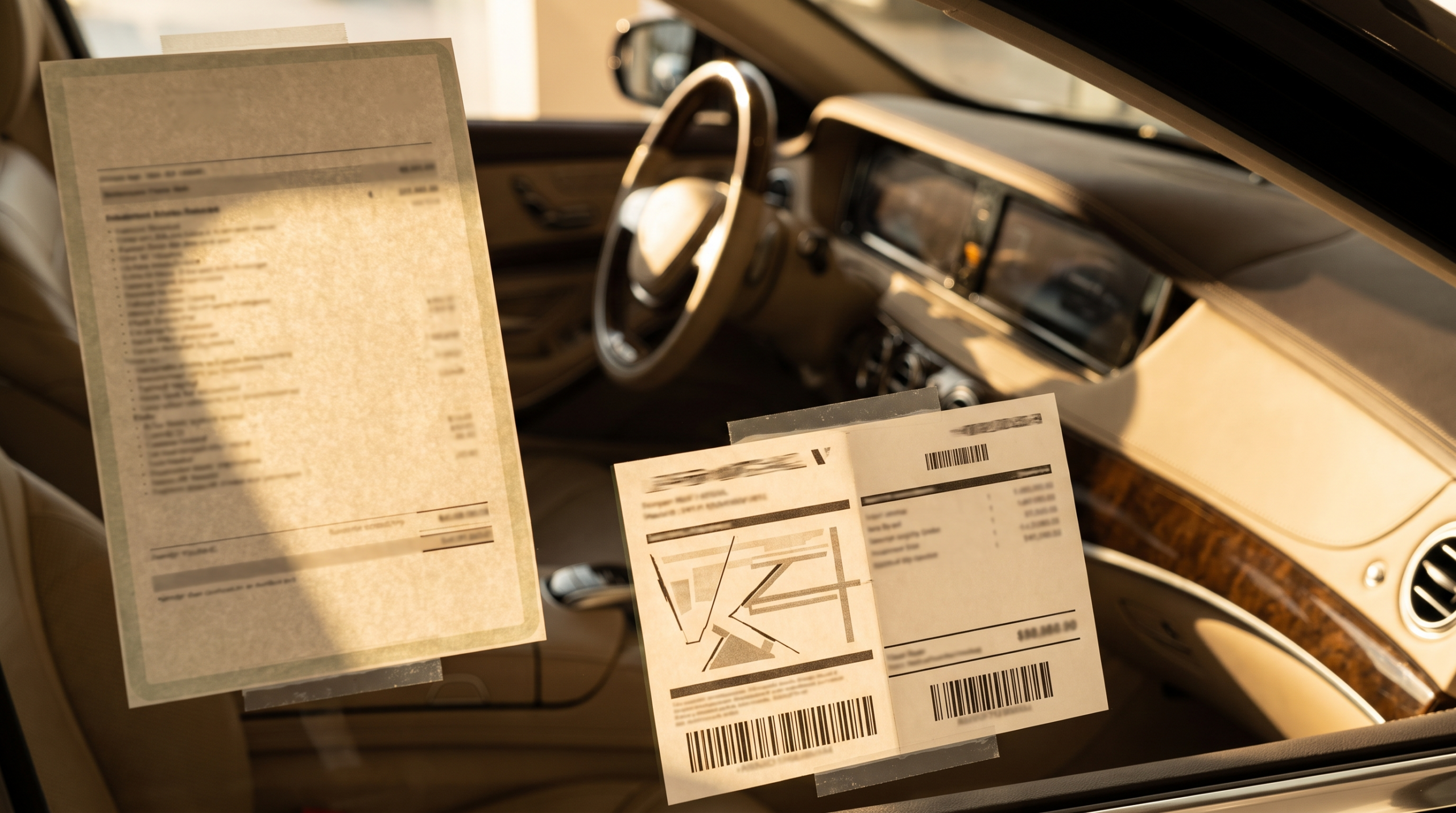
Car tariffs are assessed on the customs value at the port, not on the window sticker. Illustrative rendering.
Table of Contents
What the Car Tariffs Actually Are
The car tariffs are a Section 232 measure, imposed under the Trade Expansion Act of 1962 on national security grounds. That statutory detail sounds like trivia and is the single most important thing on this page, for reasons that become clear further down.
25% on imported passenger vehicles, effective 3 April 2025. Cars, SUVs, minivans and light trucks.
25% on covered auto parts, effective 3 May 2025, with a formal process for adding parts to the covered list over time.
Vehicles 25 years or older are excluded, which is why the classic market was left alone.
USMCA-qualifying vehicles from Canada and Mexico are tariffed only on their non-US content, not on the whole vehicle.
An import adjustment offset exists for manufacturers assembling in the United States — 3.75% of a vehicle’s value against parts duties from April 2025, stepping down to 2.5% from May 2026.
One correction to the original version of this article, which used a Ferrari at $300,000 becoming $375,000 as its worked example. Car tariffs are assessed on the customs value declared at the port — broadly what the importer pays — not on the retail sticker. The duty on a $300,000 car is not $75,000 on the showroom price, and the manufacturer decides how much of it reaches you. That is why the actual price rises turned out smaller than the headline rate.
Car Tariffs Depend Entirely on Where the Car Was Built
This is where the original article’s “10–30% on European luxury cars” has been replaced by something you can actually look up. Four trading partners negotiated caps on car tariffs during 2025, so the car tariffs a given exotic faces now depend on its country of manufacture — not on the badge, and not on who owns the brand.
Built in
Rate
In force from
Exotic and luxury marques affected
European Union
15% combined
1 August 2025
Ferrari, Lamborghini, Maserati, Pagani, Porsche, Mercedes-AMG, BMW M, Bugatti
United Kingdom
10% on the first 100,000 vehicles a year, then 27.5%
30 June 2025
McLaren, Aston Martin, Bentley, Rolls-Royce, Lotus, Jaguar Land Rover
Japan
15% combined
Entries from 7 August 2025
Nissan, Lexus, Toyota, Acura and Honda imports
South Korea
15% combined
1 November 2025
Genesis, Kia, Hyundai imports
Everywhere else
27.5% combined
3 April 2025
No negotiated relief
USMCA (Canada / Mexico)
Non-US content only
3 April 2025
Qualifying North American production
United States
No import tariff
—
Corvette, Cadillac, plus US-built BMW and Mercedes SUVs
Rates per the Wiley tariff tracker, current as of August 2026. This policy has changed repeatedly — confirm the live position before you commit to a purchase, including against this page.
Two consequences are worth drawing out. First, Bentley and Rolls-Royce are German-owned but British-built, so they get the UK rate rather than the EU one — origin is where the car is made, not where the parent company is headquartered. Second, the UK’s 10% is the best deal any exporter got, which is a meaningful structural advantage for McLaren and Aston Martin against their Italian and German rivals for as long as the quota holds.
That quota is the thing to watch. One hundred thousand vehicles a year covers British exports comfortably today, but it is shared across every UK-built car sold into the United States — the volume marques consume most of it, and the low-volume exotic builders are the ones who would feel it if it ran out.
UK-built cars get the lowest negotiated rate of any exporter, at 10% within quota. Illustrative rendering.
No, the Supreme Court Did Not Cancel These
On 20 February 2026 the Supreme Court held, 6–3, that the International Emergency Economic Powers Act does not give a president the power to impose tariffs — the power to tax imports belongs to Congress. It was a major decision and it was widely reported as the end of the tariffs.
It was not the end of these ones. The IEEPA tariffs and the car tariffs come from different statutes, and only the IEEPA ones were before the Court. Section 232 duties — steel, aluminium and automobiles — were unaffected, as were Section 301 tariffs. The 25% on imported cars, and the negotiated caps that sit under it, all survived intact.
This distinction matters commercially, not just legally, because car tariffs are still being charged. We have had buyers ask whether the ruling means the duty on a car already ordered comes off. It does not. If someone tells you car tariffs were struck down, they have read a headline about a different tariff.
What Car Tariffs Actually Did to Prices
Ferrari moved first and moved publicly, which makes it the cleanest case study available. On 27 March 2025, days after the tariff was announced and before it took effect, the company said it would raise US prices by up to 10% on most models from 2 April 2025 — an increase of roughly $25,000 to $350,000 depending on the car. The 296, the SF90 and the Roma were left unchanged.
Read those numbers against the headline car tariffs rate and the whole economics of this becomes visible. The tariff was 25%. Ferrari passed on up to 10%, exempted three model lines entirely, and told investors to expect a 50 basis point hit to its 2025 margin, against guidance of at least 29.0% — still above the 28.3% it delivered in 2024. Ferrari withdrew that risk in August 2025 after the US–EU deal and finished the year at a 29.5% operating margin. The manufacturer absorbed a large share, in other wordsk a small profitability hit, and remained extremely profitable.
It could afford to. The Americas — Ferrari’s reporting region covering the US, Canada, Mexico and Central and South America — took 4,003 of its 13,752 shipments in 2024, about 29%, and it was the fastest-growing region that year, though it slipped slightly in 2025. A brand with a multi-year waiting list and pricing power does not respond to car tariffs the way a volume manufacturer does. That asymmetry is the real story of car tariffs at this end of the market, and the original version of this article missed it by assuming full pass-through.
Manufacturers absorbed a large share of the car tariffs rather than passing the full rate to buyers. Illustrative rendering.
Car Tariffs: The Details Most Coverage Skips
The caps are combined, not additional. The 15% figure for EU, Japanese and Korean cars is the total duty including the 2.5% most-favoured-nation rate that already existed — not 15% on top of it.
USMCA vehicles are taxed on content, not on the car. A qualifying vehicle built in Mexico or Canada is dutied only on the value of its non-US content, which is a far softer treatment than a flat rate and a large part of why North American production held up.
The US assembly offset steps down. Manufacturers building in America can offset an amount equal to 3.75% of the aggregate MSRP of their US-assembled vehicles against their parts-duty bill, and that rate was extended through 30 April 2030 rather than dropping to 2.5% as originally scheduled and continues declining — a deliberate taper rather than a permanent subsidy.
The parts list grows. There is a formal inclusions process through which additional components get added to the covered list, so the parts side of this tightens over time even when the headline vehicle rate does not move.
Twenty-five years is the cliff edge. A vehicle manufactured at least 25 calendar years before the year of entry is outside the Section 232 tariff, though the ordinary 2.5% duty still applies.
Car Tariffs Made the Used Market the Quiet Winner
The original article predicted buyers would shift toward pre-owned cars, and that is the one forecast it got straightforwardly right. A car already in the United States has already cleared customs. Whatever duty it attracted was paid by somebody else, at some earlier point, and car tariffs do not attach again when the car changes hands.
That is a real structural advantage and it is worth understanding precisely: car tariffs raise the cost of bringing a new car in, which lifts the replacement cost of the equivalent used one. It does not make used cars cheap. It makes them relatively better value against a new car whose price has moved, and it is one of several reasons the domestic used exotic market has been firm. Our analysis of which exotic car values are actually appreciating separates that effect from wishful thinking, floor prices included.
The 25-year exclusion is the other piece. Anything built in 2001 or earlier can be imported without the tariff at all, which leaves the classic and modern-classic import market outside car tariffs entirely and operating exactly as it did before — a point worth knowing if the car you want was never sold new in the States.
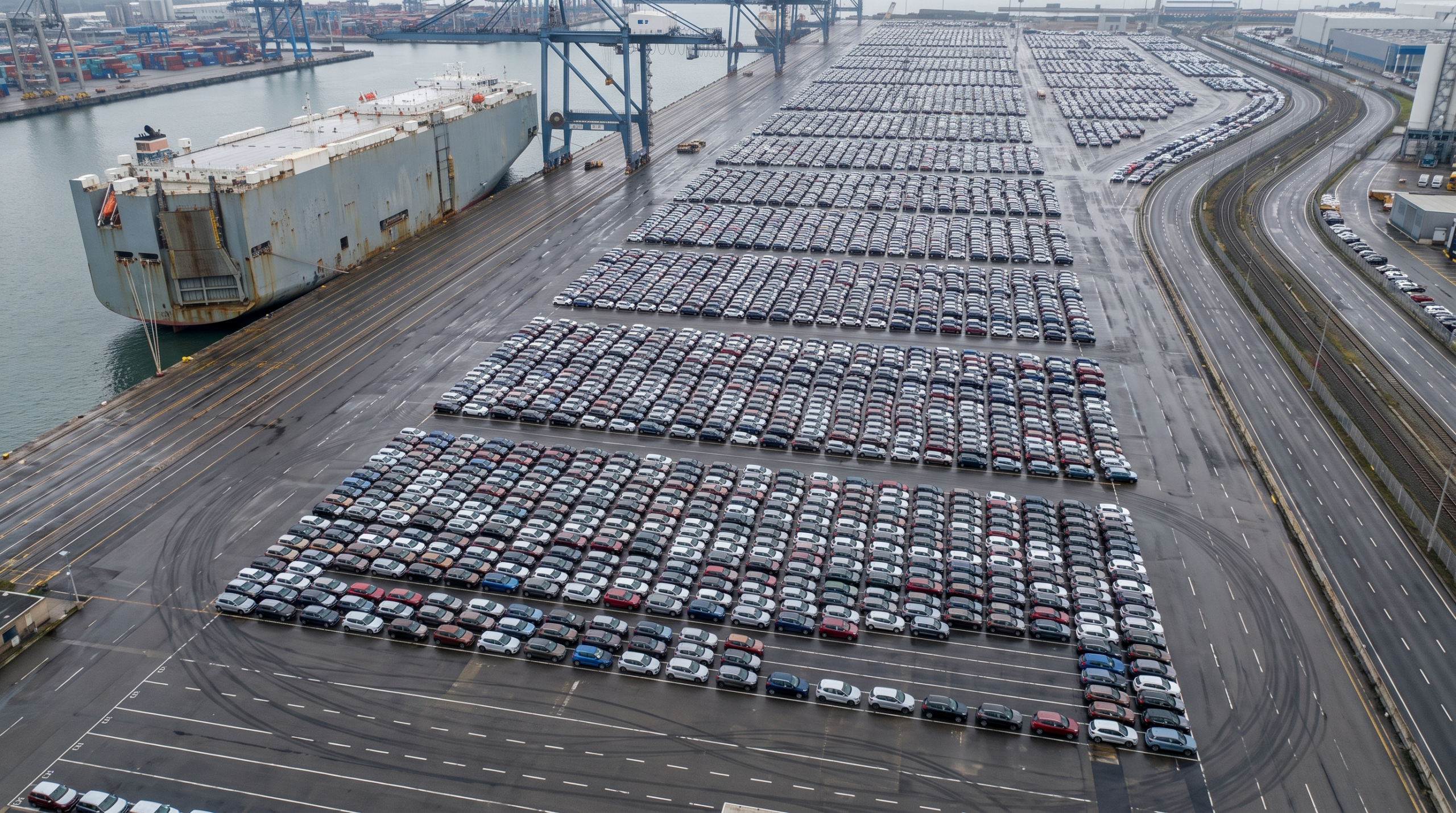
EU-built exotics face a 15% combined duty, capped since August 2025. Illustrative rendering.
How the Car Tariffs Got Here: A Timeline
Eighteen months, one base rate, four negotiated caps and a Supreme Court decision. Laid out in order, the sequence explains a lot of the confusion around car tariffs — including why so much of the coverage you can still find online describes a position that no longer applies.
Date
What happened
26 March 2025
Section 232 tariff on imported vehicles announced
27 March 2025
Ferrari announces US price rises of up to 10%, exempting three model lines
3 April 2025
25% tariff on imported passenger vehicles takes effect; US assembly offset begins at 3.75%
3 May 2025
Covered auto parts brought into scope
30 June 2025
UK rate of 10% within a 100,000-vehicle quota takes effect
1 August 2025
EU capped at 15% combined duty
16 September 2025
Japan 15% rate applies to vehicles and parts entered from this date, not retroactively
US assembly offset held at 3.75% and extended through 30 April 2030
The sequence matters: an article written at any point on this timeline describes a different set of car tariffs from the one in force today.
What Car Tariffs Mean If You Are Buying
Ask where the car was built, not where the brand is from. It is the first fact to establish, alongside the vehicle age, its USMCA content and — for British cars — whether the quota tranche is still open. A US-assembled German SUV and an Italian-built German-owned supercar are treated completely differently.
Do not assume the sticker moved by the tariff rate. Manufacturers absorbed varying shares and exempted specific model lines. Compare the actual current MSRP against the pre-April-2025 one rather than doing the arithmetic yourself.
Check when the car landed. Cars imported before the relevant date, or before a cap was negotiated, entered under different economics. That does not entitle you to a discount, but it explains inventory priced oddly against current stock.
For a used car already in the country, the tariff is not your problem. It is priced into the market around you, but there is no duty event when you buy.
If you are importing privately, get customs advice before you commit. The rate, the 25-year rule and the parts position all turn on details that are worth an hour of a specialist’s time against a six-figure purchase.
Assume this changes again. The rate has moved for four trading partners inside eighteen months and a Supreme Court decision reshaped the wider landscape. Any car tariffs figure, on this page or anywhere else, is a snapshot.
This is general information, not customs, legal or tax advice. Tariff classifications and rates change, and your specific transaction may turn on details this page does not cover. Take professional advice before importing.
Where We Land
Our family has been in the car business for more than a century, which means we have watched a lot of policy arrive, get predicted badly, and then settle into something more mundane than anyone expected, and car tariffs have followed that pattern. That is roughly what happened here. The car tariffs are real, they are meaningful, and they did not do what the March 2025 version of this page thought they would.
We have rewritten it rather than deleted it, because a page that shows what was predicted against what happened is more useful than one that quietly pretends it always knew. The same test applied to the manufacturing side — every automaker that promised to build more cars in America, scored against what actually got built — is in our US auto production scorecard. Cars we already have in the country are the simplest way around all of this — browse the inventory or list your car with us. If you are new to this end of the market, our first-time exotic car buyer’s guide and our financing and insurance guide are the next things to read, and Exotic Car News follows trade policy as it moves.
A car already in the country has cleared customs — there is no duty event when it changes hands. Illustrative rendering.
What is the current US tariff on imported cars?
25% under Section 232, in force since 3 April 2025, with covered auto parts from 3 May 2025. Four trading partners negotiated caps: the EU, Japan and South Korea at 15% combined duty, and the UK at 10% on the first 100,000 vehicles a year before reverting to 27.5%. USMCA-qualifying vehicles are dutied only on their non-US content.
Did the Supreme Court cancel the car tariffs?
No. On 20 February 2026 the Court held 6-3 that the International Emergency Economic Powers Act does not authorise presidential tariffs. Those were a different set of tariffs under a different statute. Section 232 duties, which cover automobiles, steel and aluminium, were unaffected, as were Section 301 tariffs. The 25% on imported cars remains in force.
How much did car tariffs raise exotic car prices?
Less than the headline rate. Ferrari raised US prices by up to 10% from 2 April 2025, roughly $25,000 to $350,000 depending on the model, and left the 296, SF90 and Roma unchanged — against a 25% tariff. It guided to a 50 basis point margin reduction for 2025 while still expecting about 28.5%. Manufacturers with pricing power absorbed a substantial share.
Which exotic brands face which tariff rate?
It depends on where the car is built, not who owns the brand. Ferrari, Lamborghini, Maserati, Pagani, Porsche and Bugatti are EU-built and face 15%. McLaren, Aston Martin, Bentley, Rolls-Royce and Lotus are UK-built and face 10% within the quota. Bentley and Rolls-Royce are German-owned but British-made, so they get the UK rate.
Do car tariffs apply to used cars?
Not to a used car already in the United States — it has already cleared customs and there is no duty event when it changes hands. Tariffs affect used values indirectly by raising the replacement cost of the equivalent new car. Vehicles 25 years or older are excluded from the tariff entirely, so the classic import market is unaffected.
Are cars from Canada and Mexico tariffed?
Qualifying USMCA vehicles are dutied only on the value of their non-US content rather than on the whole vehicle, which is considerably softer than a flat rate. Vehicles that do not qualify under USMCA rules of origin do not get that treatment. There is also an import adjustment offset for manufacturers assembling in the United States, worth 3.75% of vehicle value against parts duties, stepping down to 2.5% from May 2026.
Owning an exotic car is not about speed or luxury- It’s about embracing an experience, where the road becomes your canvas and the car, your masterpiece.
A gated-manual Audi R8 can deliver something a newer automatic cannot. Here is what recent sales say about the premium, how to verify a factory manual, and when the extra money serves your priorities.
A used Lamborghini Huracán can still be a smart buy in 2026, if you choose the right variant and a well-documented car. Here is which version suits which buyer, what U.S. dealers are asking, and what to check first.
A flooded Ferrari at half price can look like the deal of a lifetime. Here's how to judge the water, the paperwork, the repair math, and whether the discount is ever enough.
991.2 or 992? A buyer's guide to the used Porsche 911 Carrera decision: transmissions, body styles, options, inspection, warranty, running costs and the real price gap.