In May 2026, a Corvette ZR1X with six miles on the odometer and no factory warranty sold at Mecum Indy for $605,000. Its window sticker, with the full carbon aero package, carbon interior, front lift and ZTK, was $284,750. That single result tells you more about where this car sits in the market than any horsepower figure — and the horsepower figure is 1,250.
The Corvette ZR1X is the most capable car Chevrolet has ever built and, on paper, the cheapest way into genuine hypercar performance. The catch is that the paper price and the real price have never been the same number. This page is the honest accounting: what the Corvette ZR1X is, what it has actually done with a clock running, what it costs once every mandatory charge is added, and what the contract you sign says about selling it.
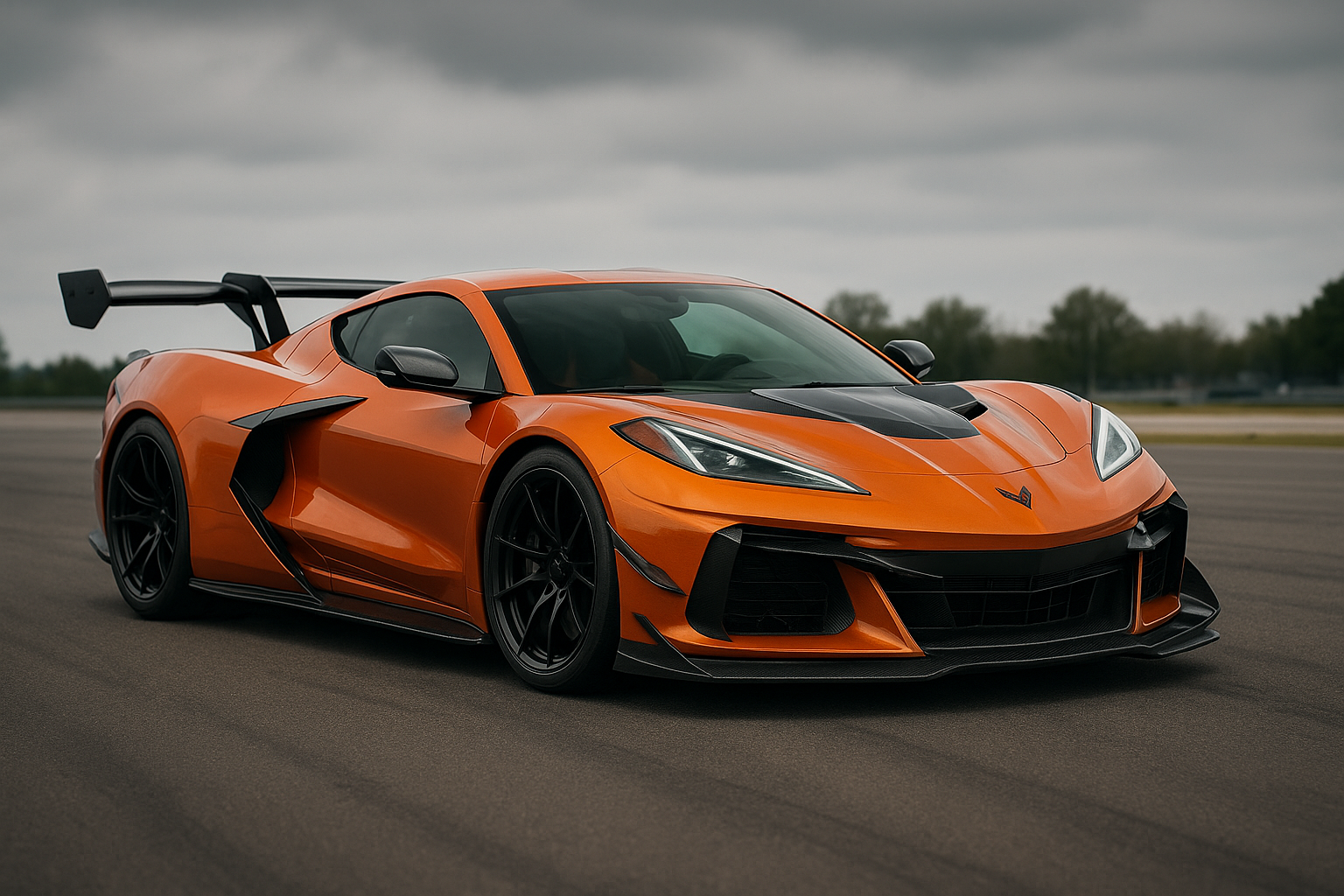
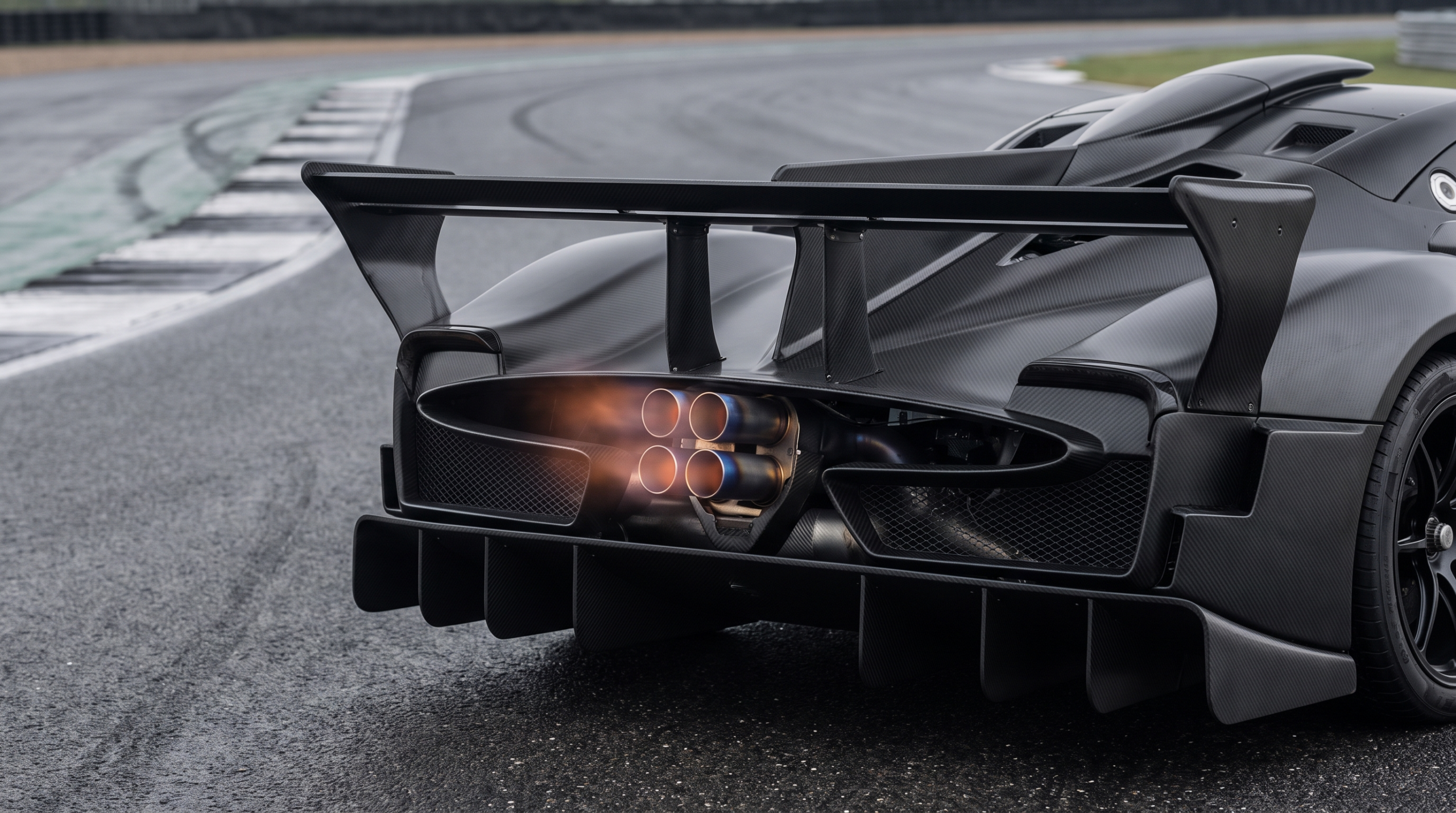
Illustrative rendering. The ZR1X pairs a 1,064 hp twin-turbo V8 with a 186 hp electric front axle for 1,250 hp combined.
Table of Contents
Quick Answer: What Is the Corvette ZR1X?
The Corvette ZR1X is Chevrolet’s hybrid all-wheel-drive flagship: a twin-turbocharged 5.5-litre flat-plane-crank LT7 V8 driving the rear wheels with 1,064 hp, plus a 186 hp electric motor on the front axle, for 1,250 hp combined. It runs an 8-speed dual-clutch, tops out at 233 mph, and has recorded a 6:49.275 lap of the Nurburgring Nordschleife and an 8.675-second quarter mile. The 2026 car started at $207,395 before a mid-year increase and a $2,600 gas guzzler tax; the 2027 Corvette ZR1X starts at $227,395.
The Architecture: 1,064 HP Behind You, 186 HP In Front
The single most misunderstood thing about the Corvette ZR1X is where the power goes. This is not a 1,250 hp rear-drive car. It is a ZR1 — 1,064 hp, twin-turbo, rear-wheel drive — with the E-Ray’s electrified front axle bolted to the nose. The combustion engine never drives the front wheels and the electric motor never drives the rear ones. There is no propshaft between them; the two ends are coordinated electronically.
That matters because it explains everything the car does well. All 1,064 hp of the LT7 still has to go through the rear tyres, which is why the ZR1X is not dramatically faster than a ZR1 at the top end. What the front axle buys is the launch, the exit of a slow corner, and traction in conditions where a rear-drive 1,064 hp car is simply undrivable. It is a traction device, not a power adder.
It also runs on its own. Stealth Mode drives the Corvette ZR1X on the front motor alone at up to 45 mph for roughly four to five miles — enough to leave a neighbourhood at six in the morning without waking it up.
Corvette ZR1X specification
Figure
Engine
5.5L twin-turbo flat-plane-crank V8 (LT7)
Engine output
1,064 hp / 828 lb-ft, to the rear wheels
Front electric motor
186 hp / 145 lb-ft, front axle only
Combined output
1,250 hp
Transmission
8-speed dual-clutch
Drivetrain
Electrified all-wheel drive (eAWD)
Top speed
233 mph
Brakes
16.5-inch carbon-ceramic, 10-piston front / 6-piston rear Alcon
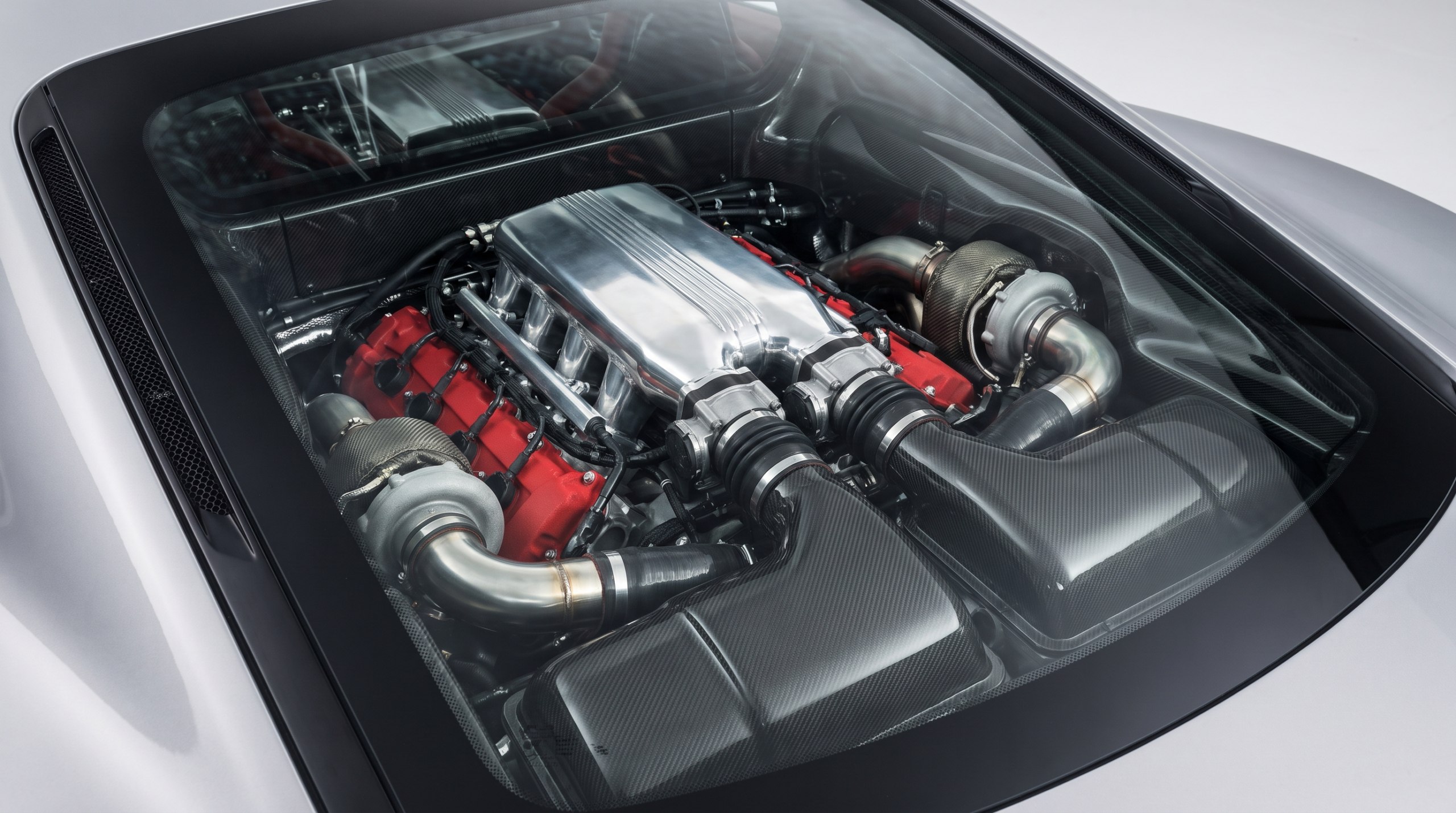
Illustrative rendering. The ZR1X uses the LT7, a twin-turbocharged 5.5-litre flat-plane-crank V8 rated at 1,064 hp and 828 lb-ft.
Nearly 4,000 lb is the number enthusiasts argue about. It is heavy for a Corvette, though not light for a hybrid of this output — on dry weights an SF90 Stradale is some 450 lbs lighter. The ZR1X carries it low and between the axles, and the lap times suggest the packaging works.
The Numbers the Corvette ZR1X Has Actually Set
Manufacturer claims are cheap. These are runs Chevrolet documented, with named drivers, dates and locations, which is a materially different class of evidence.
The Nurburgring, July 2025
Chevrolet took both cars to the Nordschleife on the same programme. The Corvette ZR1X lapped in 6:49.275 with vehicle dynamics engineer Drew Cattell driving. The rear-drive ZR1 ran 6:50.763 with Brian Wallace. Both were on carbon-fibre wheels and Michelin Pilot Cup 2R tyres with their respective ZTK packages fitted, per Chevrolet’s own account of the runs.
Read that gap carefully. The ZR1X has 186 hp more and all-wheel drive, and it beat the ZR1 by 1.5 seconds over 12.9 miles. Both cars are, per Chevrolet, the fastest official laps set by an American manufacturer at the Nordschleife and inside the overall top ten for production cars. The narrow margin is the useful information: on a fast, flowing circuit the front axle contributes far less than the spec sheet implies.
The Drag Strip, October 2025
This is where the Corvette ZR1X earns its architecture. At US 131 Motorsports Park, development driver Stefan Frick ran the quarter mile in 8.675 seconds at 159 mph, with 0-60 mph in 1.68 seconds — under 100 feet, at a peak of 1.75 g. Chevrolet is explicit that the car was on pump gas, standard Michelin Pilot Sport 4S tyres and the production 50-state street-legal calibration, and that it ran multiple back-to-back passes all under 8.8 seconds.
The caveat is the surface. Those numbers came on a prepped drag strip, which is a glued, swept, purpose-made launch pad you will not find at a stoplight. On an unprepped surface with the ZTK package, the same car runs 8.99 seconds and 1.89 seconds to 60 — which is still the quickest thing Detroit has ever sold, and is the figure Chevrolet publishes in its own specifications.
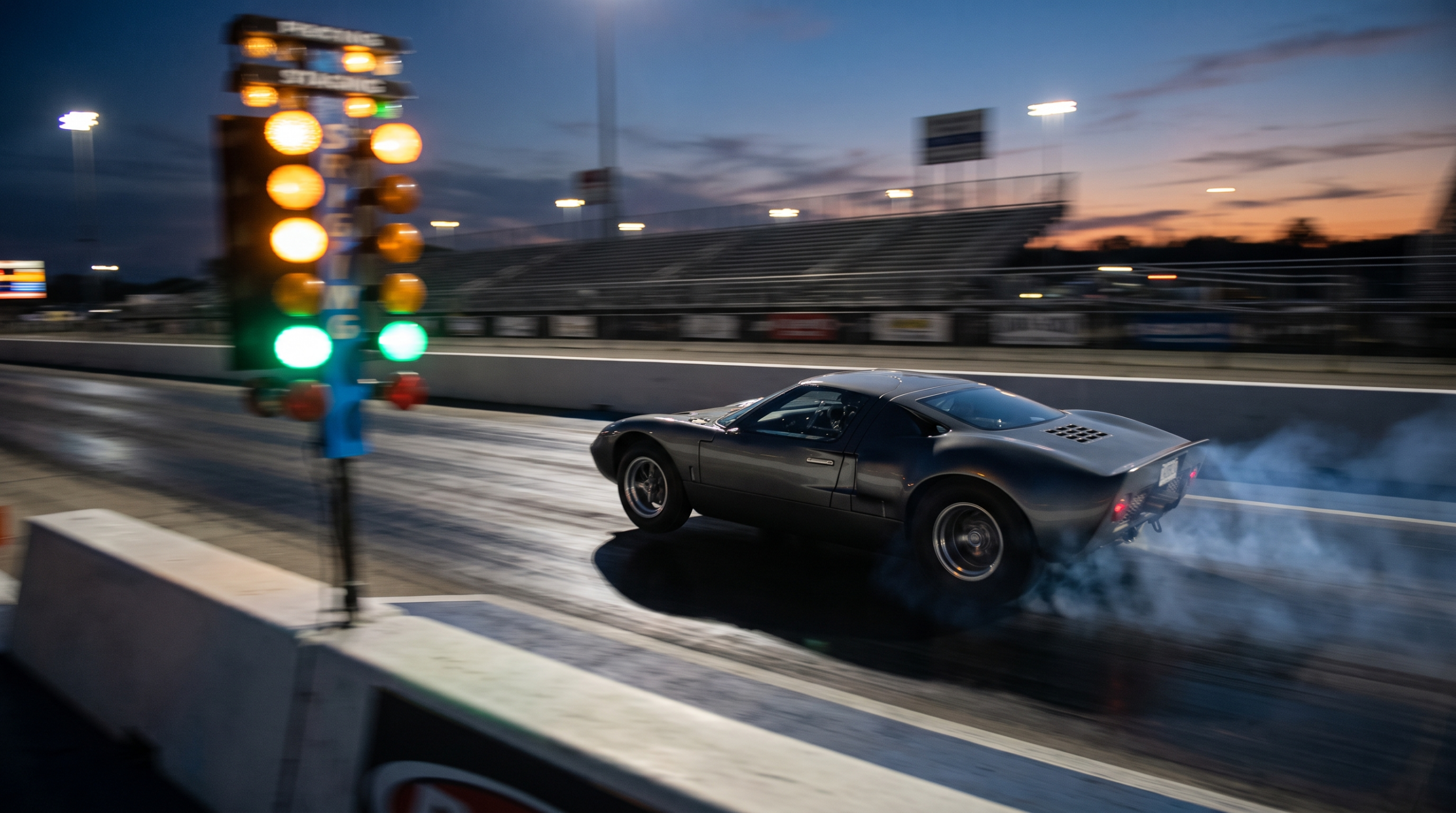
Illustrative rendering. The ZR1X record runs were set on a prepped surface at US 131 Motorsports Park in October 2025.
Measured run
ZR1X
Conditions
Nurburgring Nordschleife
6:49.275
Carbon wheels, Cup 2R, ZTK, July 2025
Quarter mile (prepped)
8.675 sec @ 159 mph
Pump gas, PS4S tyres, Oct 2025
0-60 mph (prepped)
1.68 sec
Peak 1.75 g, under 100 feet
Quarter mile (unprepped)
8.99 sec @ 157 mph
ZTK package, published spec
0-60 mph (unprepped)
1.89 sec
Published spec
Top speed
233 mph
Track
Corvette ZR1X performance as documented by Chevrolet. Prepped-surface figures are not repeatable on public roads.
What a Corvette ZR1X Costs: the Real Ladder
Chevrolet announced 2026 Corvette ZR1X pricing in August 2025 at $207,395 for the 1LZ coupe, including the $1,995 destination charge. That number did not survive the model year.
In December 2025 the car took a roughly $2,200 increase and picked up a $2,600 gas guzzler tax. By the time Chevrolet published its drag-strip records in January 2026 it was quoting a $209,700 starting price, and the gas guzzler tax sits on top of that. The realistic floor for a 2026 ZR1X, before a single option box and before any dealer adjustment, was therefore around $212,300.
For 2027, Chevrolet reset the whole ladder. The 2027 Corvette ZR1X 1LZ coupe lists at $227,395, including a destination charge that itself rose to $2,495.
Corvette ZR1X trim
2026 (as announced)
2027
1LZ Coupe
$207,395
$227,395
1LZ Convertible
$217,395
$237,395
3LZ Coupe
$218,395
$238,395
3LZ Convertible
$228,395
$248,395
Destination charge (included above)
$1,995
$2,495
Gas guzzler tax (charged separately)
$2,600
Applies
Published ZR1X MSRPs. The 2026 column is the August 2025 announcement, before the December 2025 increase.
That is a jump of roughly $17,700 on the 1LZ coupe against the price the 2026 car actually ended the year at. For context, the 2027 ZR1 1LZ coupe lists at $197,195 — so the electrified front axle is now a $30,200 decision.
The Corvette ZR1X Options That Move the Number
The option sheet contains one of the great bargains in modern performance cars and several of the great extravagances, sitting a few lines apart.
2026 option
Price
ZTK Track Performance Package
$1,500
Carbon Fiber Aero Package
$10,495
10-spoke visible carbon-fibre wheels
$13,995
Carbon-fibre level 2 instrument panel trim (3LZ)
$4,995
Electrochromic dimming roof panel (coupe, 3LZ)
$3,000
Competition Sport bucket seats
$995 (1LZ) / $500 (3LZ)
Premium paint
$500-$995
Selected 2026 Corvette ZR1X option pricing. ZTK requires the separately priced Carbon Fiber Aero Package, so the two are bought together.
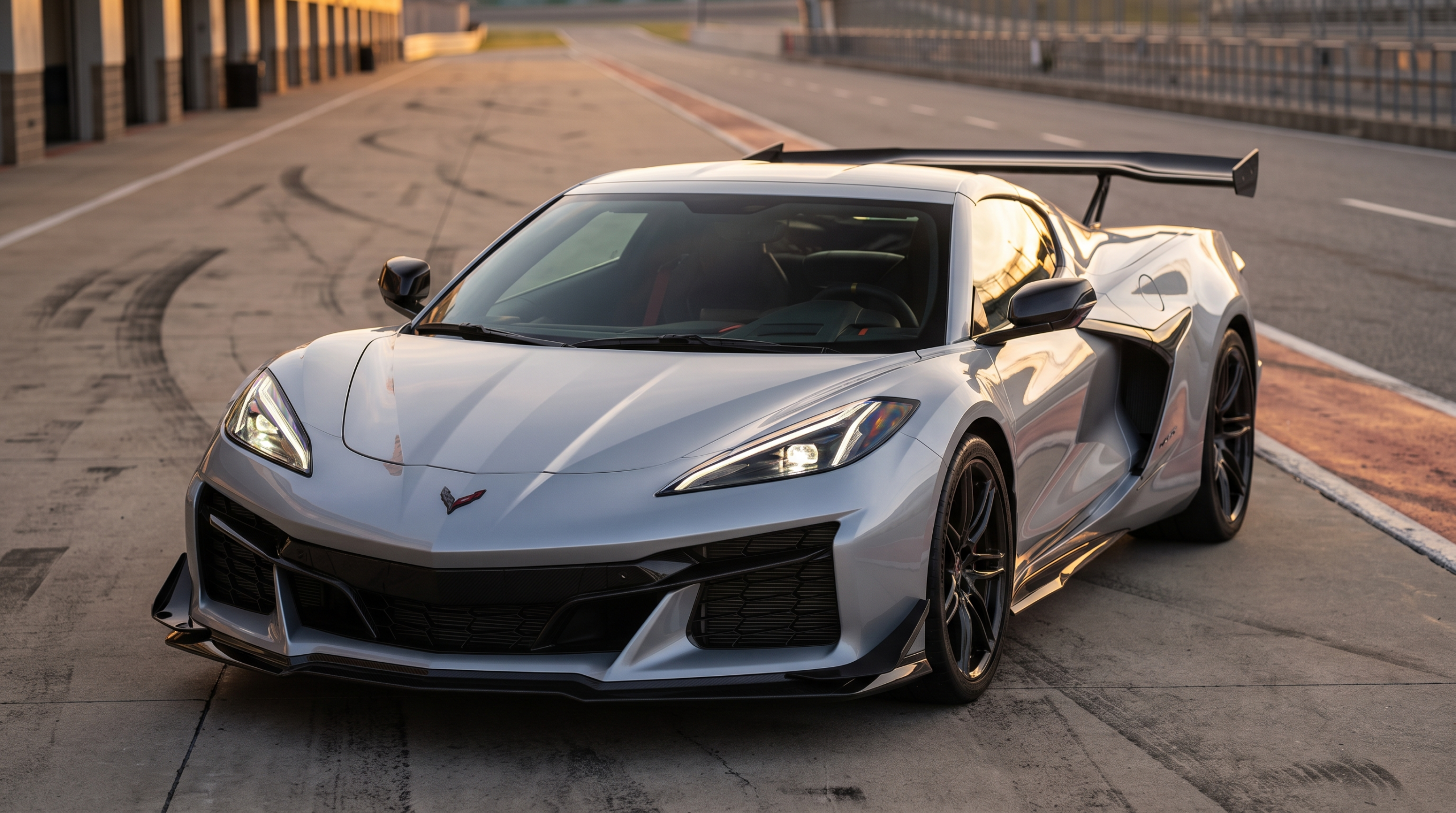
Illustrative rendering. The ZR1X carbon aero package is a $10,495 option and helps generate over 1,200 lb of downforce.
The ZTK package is $1,500. It brings higher spring rates, revised chassis control calibrations and Michelin Cup 2R tyres, and it mandates the separately priced Carbon Fiber Aero Package — and it is the specification both Nurburgring cars ran. The ZTK box itself is only $1,500, but the configuration Chevrolet actually used at the Nürburgring — ZTK plus the carbon aero package plus carbon wheels — runs closer to $26,000 at 2026 option prices and about $30,000 at 2027 prices. Worth knowing before you assume the record spec is a cheap tick.
The $13,995 carbon wheels are a genuine engineering item — unsprung mass matters more than almost any other weight on a car — but they are also the single fastest way to add fourteen thousand dollars to a Corvette ZR1X. Ticking every box comfortably clears $260,000 before tax, title or markup.
A Hybrid That Still Pays a Gas Guzzler Tax
The word “hybrid” does a lot of work in the Corvette ZR1X’s marketing and none at all in its fuel economy. The car returns roughly 15 mpg combined, and the federal gas guzzler tax applies to anything under 22.5 mpg. The bill is $2,600.
The comparison across the range is instructive. The rear-drive ZR1, at around 14 mpg, pays $3,000. A Z06 pays $2,600 in standard trim and $3,000 with the carbon aero package. So the electrified front axle saves the Corvette ZR1X exactly $400 against its non-hybrid sibling — proof, if any were needed, that the motor is there for traction and not for consumption.
Budget for it. The gas guzzler tax is not in the advertised MSRP, it is not negotiable, and it lands on the window sticker as a separate line.
The One-Year Agreement Every Corvette ZR1X Buyer Signs
This is the part that catches people, and it is the most important thing on this page if you are buying rather than reading.
Chevrolet requires Corvette ZR1X buyers to sign a retention agreement undertaking not to sell the car within twelve months of purchase. Break it and two things happen. The factory warranty is voided — bumper-to-bumper, powertrain, sheet metal, tyre, accessory and electric propulsion coverage all go, with only the EV battery warranty surviving. And the seller becomes ineligible to order future high-demand Chevrolet models, which for anyone who wants a shot at the next limited Corvette is the more expensive half of the penalty.
The consequence for buyers is the bit that gets skipped: if you buy a Corvette ZR1X second-hand inside that first year, you inherit a car with no factory warranty except the battery. On a 1,250 hp twin-turbo hybrid, that is not a footnote. Ask for the in-service date and the original purchase date in writing before you agree a price, and price the risk accordingly.
Note also what the policy does not do. It restrains the original buyer, not the selling dealer. A franchised dealer can put whatever number it likes on a car it has not yet retailed, and plenty have.
What Corvette ZR1X Cars Are Actually Trading For
Two categories here, and it pays to keep them apart: what people have asked, and what cars have made.
On the results side, the headline is the Quail Silver Limited Edition. Chevrolet built it on the 3LZ convertible with Blade Silver Matte paint — the first factory matte finish on a Corvette in sixty years — plus limited-edition plaques, orange calipers and black exhaust tips, at $241,395 before delivery. Reported as number 11 of the 60 completed at that stage against roughly 100 planned, one of them crossed the block at Mecum Indy on 15 May 2026 for $605,000. It had six miles on it and, because of the retention agreement, no factory warranty. A separate 2026 ZR1X sold publicly for $365,000 in March 2026.
On the asking side, things get sillier. In February 2026 a dealer offered an open ZR1X allocation against a $269,000 MSRP with a $250,000 market adjustment — $519,000 before tax and title, roughly a 93% markup. A Houston dealer advertised a 3LZ with the ZTK and carbon aero packages at $400,000. Those are asks, not sales, and the distinction matters enormously when you are trying to work out what a car is worth.
The honest read: limited editions with a story are clearing multiples of sticker, ordinary well-specified cars are trading meaningfully above it, and there are still dealers selling Corvette ZR1X allocations at MSRP if you are willing to wait and to travel. For the wider context on which cars hold their money and which give it back, our guide to exotic car values that are actually appreciating covers how these early-market spikes usually resolve.
Corvette ZR1X or ZR1: Which One to Buy
For 2027 the gap is $30,200 — $197,195 for a ZR1 1LZ coupe against $227,395 for the Corvette ZR1X. What that money buys is the front axle and everything downstream of it.
Buy the ZR1 if you want the purer car, you value the lower weight, your driving is dry-weather and circuit-based, and you accept that 1,064 hp through the rear tyres is a skill requirement rather than a feature.
Buy the Corvette ZR1X if you want the drag-strip numbers, you drive in variable conditions, or you simply want the fastest thing Chevrolet has ever put a warranty on. The 1.5-second Nurburgring margin undersells how much easier it is to use.
The deeper comparison — including how it sits against the E-Ray, and why enthusiasts spent a decade calling this car something else entirely — is in our Corvette Zora explainer. And if the electrified-front-axle idea sounds familiar, it is the same physics argument we walked through in electric supercars vs combustion: electrification wins the standing start decisively and the lap only narrowly.
Buying a Corvette ZR1X: What to Check
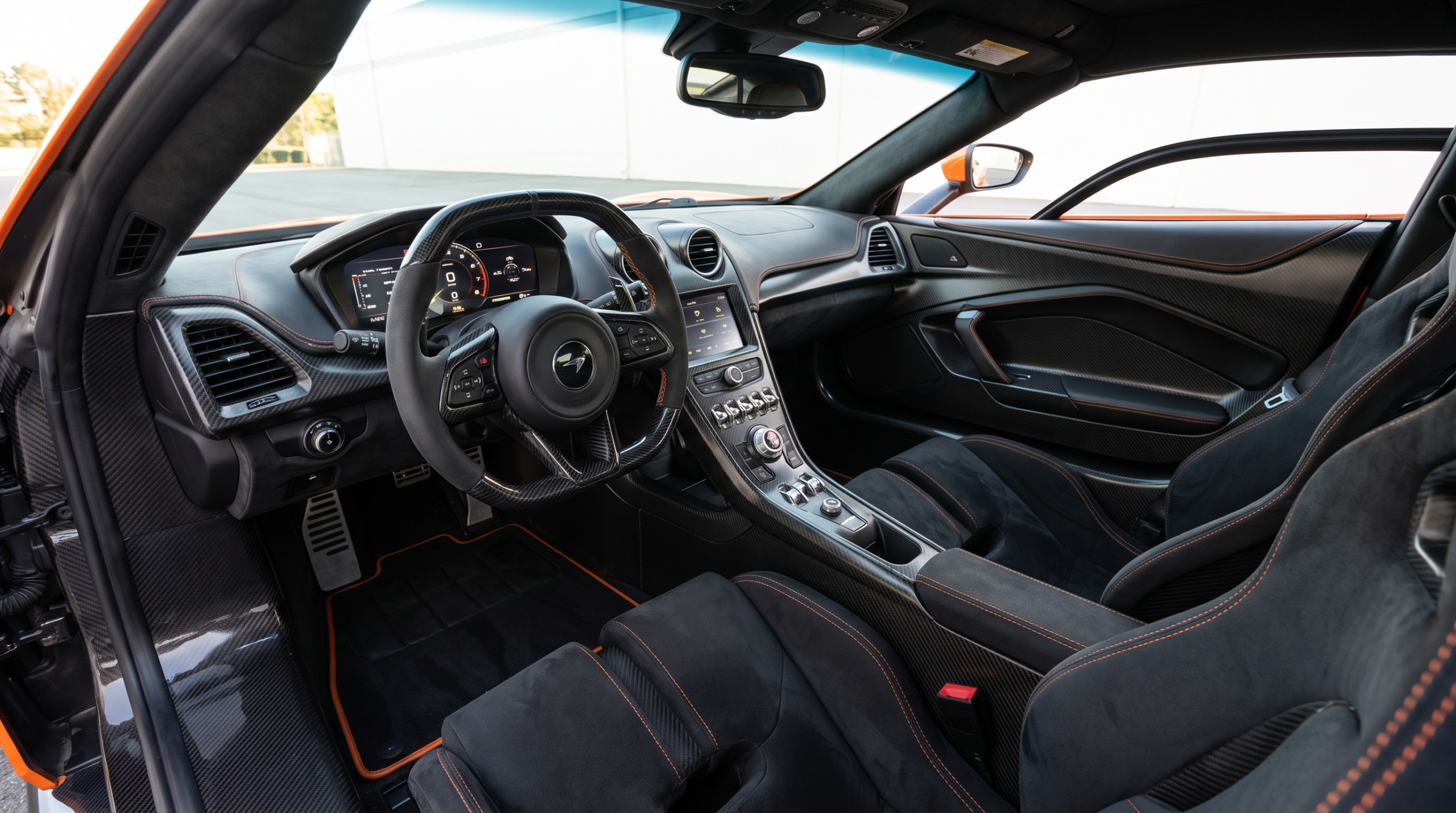
Illustrative rendering. Competition Sport bucket seats are a $995 option on a 1LZ ZR1X and $500 on a 3LZ.
Get the original in-service date in writing. If the car is inside twelve months of its first retail sale and you are the second owner, assume there is no factory warranty beyond the EV battery until a dealer confirms otherwise in writing.
Ask whether the retention agreement was signed and honoured. A car sold by its first owner inside the window carries the consequences with it.
Check what the window sticker actually included. Gas guzzler tax, destination and any dealer-installed accessories are separate lines from MSRP, and “MSRP” in a listing rarely means the number you will pay.
Look for the ZTK package. At $1,500 it is the cheapest meaningful upgrade on the car, and its absence on a track-intent build is a question worth asking.
Verify the tyres. Cup 2R rubber is expensive, wears fast and is close to useless in the cold and wet. A car delivered on them may need a second set of wheels for road use.
Budget the running costs honestly. Fifteen mpg, carbon-ceramic consumables, and an insurance quote that reflects 1,250 hp. Get the insurance number before you commit, not after.
Have it inspected regardless of mileage. A 300-mile Corvette ZR1X can still have been launched forty times. Ask for the performance data recorder history if the car has one.
If this is your first car at this level, our first-time exotic car buyer’s guide covers the parts of the process — inspection, transport, titling, insurance — that people usually discover too late. Tariffs are the one cost you can ignore here: the Corvette ZR1X is built in Bowling Green, Kentucky, which puts it on the right side of the trade rules we broke down in our guide to car tariffs.
The Corvette ZR1X Bargain Argument, Honestly
When the car was announced at $207,395, the bargain case made itself. Nothing else on sale ran an 8.675-second quarter mile on a prepped surface for a fifth of what a European hypercar costs, and Chevrolet was right to say so.
At $227,395 plus a gas guzzler tax plus whatever the dealer wants, that argument is thinner — not wrong, but thinner. The Corvette ZR1X is still the quickest production car America has built and still costs a fraction of the machinery it embarrasses. It is just no longer a secret, and secrets are what bargains are made of.
Our family has been selling cars for more than a century, and the pattern with a car like this is familiar: the early market pays for scarcity, the scarcity fades, and the cars that keep their money are the ones with a story — a first-year build, a limited edition, a genuinely rare specification. If you want one to drive, wait for the noise to settle and buy the best-specified car you can find at a sensible number. If you want one as an asset, the Quail Silver result tells you which end of the market is doing the work.
Either way, browse what we have in stock — we handle current-generation Corvettes regularly — or list yours with us if you are on the other side of the trade. Our sister publication Exotic Car News follows the auction results these cars keep setting.
Corvette ZR1X FAQ
How much horsepower does the Corvette ZR1X have?
1,250 hp combined. The twin-turbocharged 5.5-litre LT7 V8 makes 1,064 hp and 828 lb-ft driving the rear wheels, and a 186 hp, 145 lb-ft electric motor drives the front axle. The two systems are not mechanically connected — there is no propshaft — so the ZR1X is best understood as a 1,064 hp rear-drive car with an electric front axle added for traction.
How fast is the Corvette ZR1X?
Chevrolet has recorded a 6:49.275 lap of the Nurburgring Nordschleife, an 8.675-second quarter mile at 159 mph on a prepped surface with 0-60 mph in 1.68 seconds, and a top speed of 233 mph. On an unprepped surface the published figures are 8.99 seconds for the quarter mile and 1.89 seconds to 60 mph. The prepped-surface numbers are not repeatable on a public road.
How much does a Corvette ZR1X cost?
The 2027 ZR1X starts at $227,395 for the 1LZ coupe including the $2,495 destination charge, rising to $248,395 for a 3LZ convertible. A $2,600 federal gas guzzler tax is charged separately. The 2026 car was announced at $207,395 before a mid-year increase, so the real 2026 floor was closer to $212,300. Dealer market adjustments are common and can add six figures.
Is the Corvette ZR1X all-wheel drive?
Yes, but not conventionally. It uses electrified all-wheel drive: the V8 drives only the rear wheels and an electric motor drives only the front axle, with the two coordinated electronically rather than by a driveshaft. The ZR1X can also drive on the front motor alone in Stealth Mode, at up to 45 mph for roughly four to five miles.
Can you sell a Corvette ZR1X straight away?
You can, but it costs you. Chevrolet requires buyers to sign a retention agreement not to sell within twelve months. Breaking it voids the factory warranty — everything except the EV battery coverage — and makes the seller ineligible to order future high-demand Chevrolet models. If you are buying one second-hand inside that first year, assume the warranty is gone until a dealer confirms otherwise in writing.
Is the Corvette ZR1X faster than the ZR1?
At the Nurburgring, by 1.5 seconds — 6:49.275 against 6:50.763, both on Cup 2R tyres with the ZTK package. Off the line the gap is far larger, because the electric front axle transforms the launch. Both cars share the same 1,064 hp engine and the same 233 mph top speed, so the ZR1X advantage is traction rather than outright power.
Owning an exotic car is not about speed or luxury- It’s about embracing an experience, where the road becomes your canvas and the car, your masterpiece.
A gated-manual Audi R8 can deliver something a newer automatic cannot. Here is what recent sales say about the premium, how to verify a factory manual, and when the extra money serves your priorities.
A used Lamborghini Huracán can still be a smart buy in 2026, if you choose the right variant and a well-documented car. Here is which version suits which buyer, what U.S. dealers are asking, and what to check first.
A flooded Ferrari at half price can look like the deal of a lifetime. Here's how to judge the water, the paperwork, the repair math, and whether the discount is ever enough.
991.2 or 992? A buyer's guide to the used Porsche 911 Carrera decision: transmissions, body styles, options, inspection, warranty, running costs and the real price gap.