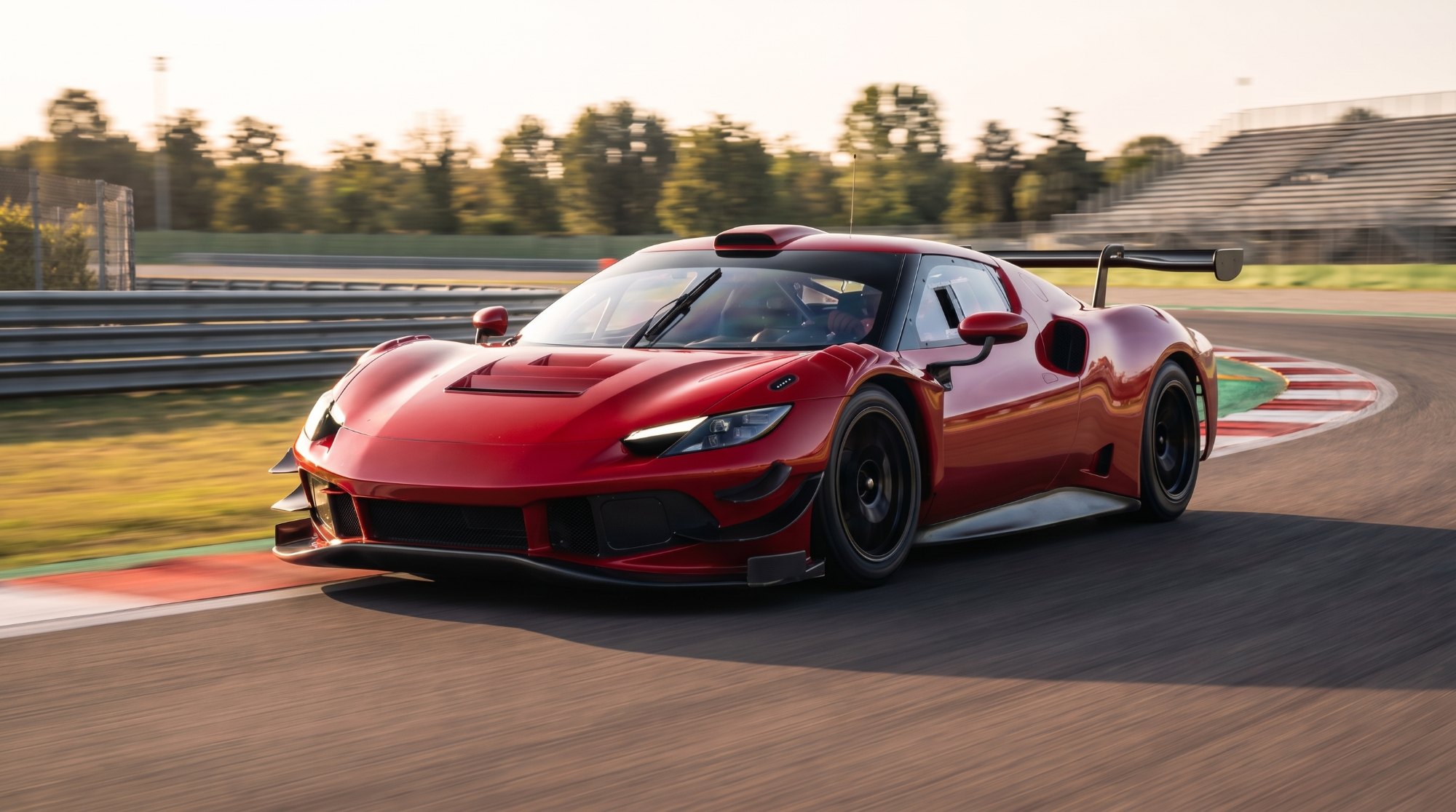
Almost everything written about owning a Ferrari is written by people who have never done it. The result is a genre of article about owning a Ferrari that describes the exhaust note and stops there, which is fine as far as it goes, but it answers none of the questions that actually decide whether the car ends up in your garage or someone else’s.
This page is the other version — what owning a Ferrari involves once the exhaust note stops being the point. How the order book really works, why the dealer relationship matters more than your bank balance, what the maintenance programme covers and what happens when it runs out, what a used one costs to run in the years nobody photographs, and which model is the cheapest realistic way in. Our family has been in the car business for more than a century, and the numbers below are the ones we would want a friend to see before they signed anything.
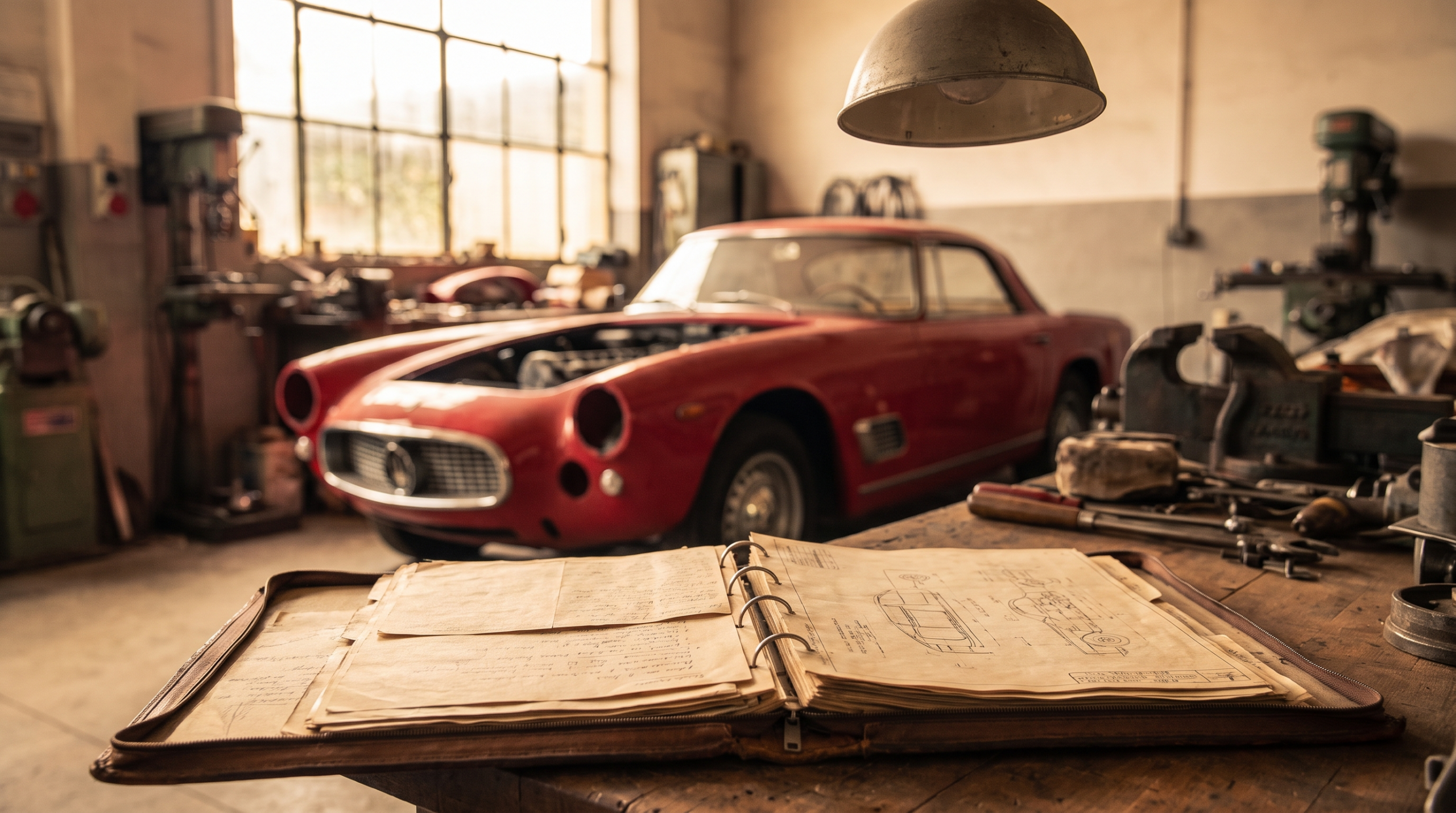
A used car bought outright and a new car allocated by the factory are two completely different transactions. Illustrative image.
Quick Answer: What Owning a Ferrari Actually Involves
Owning a Ferrari has two entirely separate cost structures depending on how you buy. New cars are allocated rather than sold: Ferrari’s order book extends towards the end of 2027, and 84% of 2025 sales went to existing owners. Used cars are simply for sale to anyone with the money, and Ferrari’s 7-Year Genuine Maintenance programme transfers with the car — though seven years runs from first delivery, so on a 2026 purchase only cars delivered from roughly 2019 onward still have any of it left.
Once that programme expires, routine servicing on a modern car runs roughly $800 to $900 a year, majors range from about $1,650 on an F430 to $3,800 on a 488 and far more on the belt-driven cars, and insuring a Roma or an F430 costs $3,200 to $3,700 a year. The real risk sits in a small number of models with known five-figure jobs rather than in day-to-day running.
The short version of the rest of this page: in owning a Ferrari, the hard part of buying new is not money, and the hard part of buying used is not the purchase price.
Table of Contents
You Do Not Buy a New Ferrari. You Are Offered One.
This is the single biggest gap between how people imagine owning a Ferrari begins and how it actually begins. Walking into a dealership with cleared funds and choosing a car off the configurator is the Porsche experience, not this one.
The rules of owning a Ferrari bought new are not secret. Enrico Galliera, then Ferrari’s chief marketing and commercial officer, described the mechanics plainly: for every model, the criteria for who gets an allocation are defined centrally and approved at board level, and the list is built from those criteria rather than by the dealer alone. The dealer’s role is to know its clients and advocate for them. The decision sits with headquarters.
What earns a place on that list is participation in owning a Ferrari as an activity rather than an asset. Previous cars bought new, factory driving programmes and owner events attended, Corse Clienti or Challenge racing, cars certified through Ferrari Classiche. The pattern is consistent across everything Ferrari has said publicly: the company is allocating to people who are demonstrably in the world rather than to people who arrived this morning with a wire transfer.
Ferrari sets allocation criteria centrally and approves them at board level; the dealer advocates for its clients. Illustrative image.
Two facts put the odds of owning a Ferrari bought new in perspective. Of Ferrari’s 2025 sales, 84% went to existing owners and around 56% to people who already owned more than one Ferrari. That leaves 16% for first-time buyers — a smaller door than most people assume, but a real one, and the company has taken on roughly 32,300 new clients since 2022. First-time ownership is difficult, not closed.
The second fact is the wait. Ferrari’s FY2025 results release, published in February 2026, states that the order book “extends towards the end of 2027”. CEO Benedetto Vigna has said the company is targeting a waiting time of roughly 20 to 24 months, which is deliberately shorter than it has sometimes run — long enough to protect the scarcity, short enough that a client does not lose interest.
The scarcity is a stated policy, not a rumour
The line usually attributed to Enzo Ferrari — always sell one car fewer than the market wants — has no verifiable original source, and we could not find one. What is documented is that Ferrari still runs on it: at its Capital Markets Day on 9 October 2025 the company told investors it was staying true to its founder’s belief in selling one car less than the market demands. Whether Enzo said those words is unproven; that the company governs by them is not.
The 2025 results show what that looks like on a balance sheet. Shipments fell 0.8% to 13,640 units while revenue rose about 7% to €7,146 million. Fewer cars, more money. No other manufacturer at this level runs that trade deliberately, and it is the reason the allocation queue exists at all.
Limited editions are a closed loop
If owning a Ferrari from the standard range is difficult, the special series are effectively sealed. The clearest example is the Daytona SP3, the third car in the Icona line. Of the 599-car run — a 600th was later built and auctioned for charity — 499 were offered to existing Monza SP1 and SP2 owners and every one of them accepted. The remaining 100 went to clients who had bought earlier limited editions. Not one car was available to anybody outside that group, at any price.
The most instructive case is Preston Henn. A Daytona 24 Hours winner and long-time Le Mans entrant, owner of roughly fifteen Ferraris, he was refused a LaFerrari Aperta and sued the company in 2016 over it. He dropped the suit, and died the following year. If that ownership record does not guarantee an allocation, no amount of money does on its own.
One clarification worth making, because it circulates as fact: the 18-month right-of-first-refusal agreements that some buyers sign on limited-run cars are dealer contracts, not a Ferrari corporate policy. So are most of the resale-blacklist stories, which trace back to aggregator posts with no named source. What is documented is the allocation preference — buy a limited car, flip it immediately, and you will find the next one harder to obtain.
Owning a Ferrari Used: The Door That Is Actually Open
Everything above applies to new cars only. A used Ferrari is an ordinary transaction — the seller wants the money, nobody is assessing your worthiness, and the queue does not exist. This is how the overwhelming majority of people end up owning a Ferrari, and there is nothing second-class about it.
Owning a Ferrari this way also comes with a genuine advantage that first-time buyers routinely miss, which is the subject of the next section.
Genuine Maintenance covers scheduled work for seven years from delivery and transfers to each new owner free of charge. Illustrative image.
The 7-Year Programme: The Best Part of Owning a Ferrari Used
This is the part of owning a Ferrari that most first-time buyers do not know about. Ferrari introduced the Genuine Maintenance programme as standard on cars delivered from 15 March 2011. It covers scheduled servicing for seven years from first delivery — annually or every 12,500 miles, whichever comes first — with no mileage cap over the life of the programme and no extra charge.
The part that matters to a used buyer: it transfers to each subsequent owner. Buy a four-year-old car and three years of factory-scheduled maintenance come with it. It is genuinely one of the best warranties-adjacent programmes in the industry, and it is also the sharpest dividing line in the used market — a 2011 car and a 2012 car look identical and have completely different ownership economics.
Because the clock starts at first delivery rather than at the model year, most cars from the programme’s early years have now run out — check the actual delivery date rather than the model year on the listing, and have the dealer confirm the remaining coverage on the VIN before you agree a price. It is a five-minute call that can be worth several thousand dollars.
What Owning a Ferrari Costs Once the Programme Runs Out
After year seven, owning a Ferrari means paying for all of it yourself. The figures below are independent specialist menu prices rather than main-dealer rates, which is what most owners of older cars actually use.
Model
Annual service from
Major service
Timing drive
488 (2015–2019)
$799
$3,500–$3,800
Chain
F430 (2004–2009)
$875
$1,650 (2-year major)
Chain
360 Modena (1999–2005)
—
$7,985 (5-year major)
Belt
F355 (1994–1999)
$815
$8,100–$13,975 (engine-out)
Belt
The recurring cost of owning a Ferrari out of programme: independent specialist menu pricing, United States, 2026. Main-dealer rates run higher. Prices vary by region and by what the car needs on arrival.
Read that table by the right-hand column. The 348, F355 and 360 use timing belts; the F430 and everything after it use chains. A belt service means the engine is coming apart on a schedule whether or not anything is wrong, and on the F355 it means the engine comes out of the car. That single engineering decision is the difference between owning a Ferrari affordably and owning an expensive problem, and it is invisible from the outside of the car.
The 360 is the useful middle case. It also runs belts, but unlike the F355 the job does not require pulling the engine, which is why a specialist quotes its five-year major with belts from $7,985 rather than the F355’s five figures. Confirm the shop does it engine-in before you book — some pull the engine anyway, and you pay for the hours either way.
The F1 clutch is the bill people forget
Single-clutch automated manuals — the paddle-shift F1 gearbox on the 360, F430, 599 and their contemporaries — wear a clutch as a consumable. Specialist menu pricing runs $7,650 for a 360 coupe and $8,185 for the spider, and $8,798 for an F430 coupe against $9,375 for the convertible.
This is the one bill in owning a Ferrari that people genuinely fail to see coming. The wear figure is readable on the diagnostic system, and the convention is to replace at around 80–85%. Any pre-purchase inspection on an F1 car must include that reading, in writing. A seller who will not have it pulled is telling you the number. Note that the wear rate is driver-dependent, not mileage-dependent: a car crawled around town by someone who rides the biting point can be finished at 15,000 miles, while a car that lives on open roads can go three times as far.
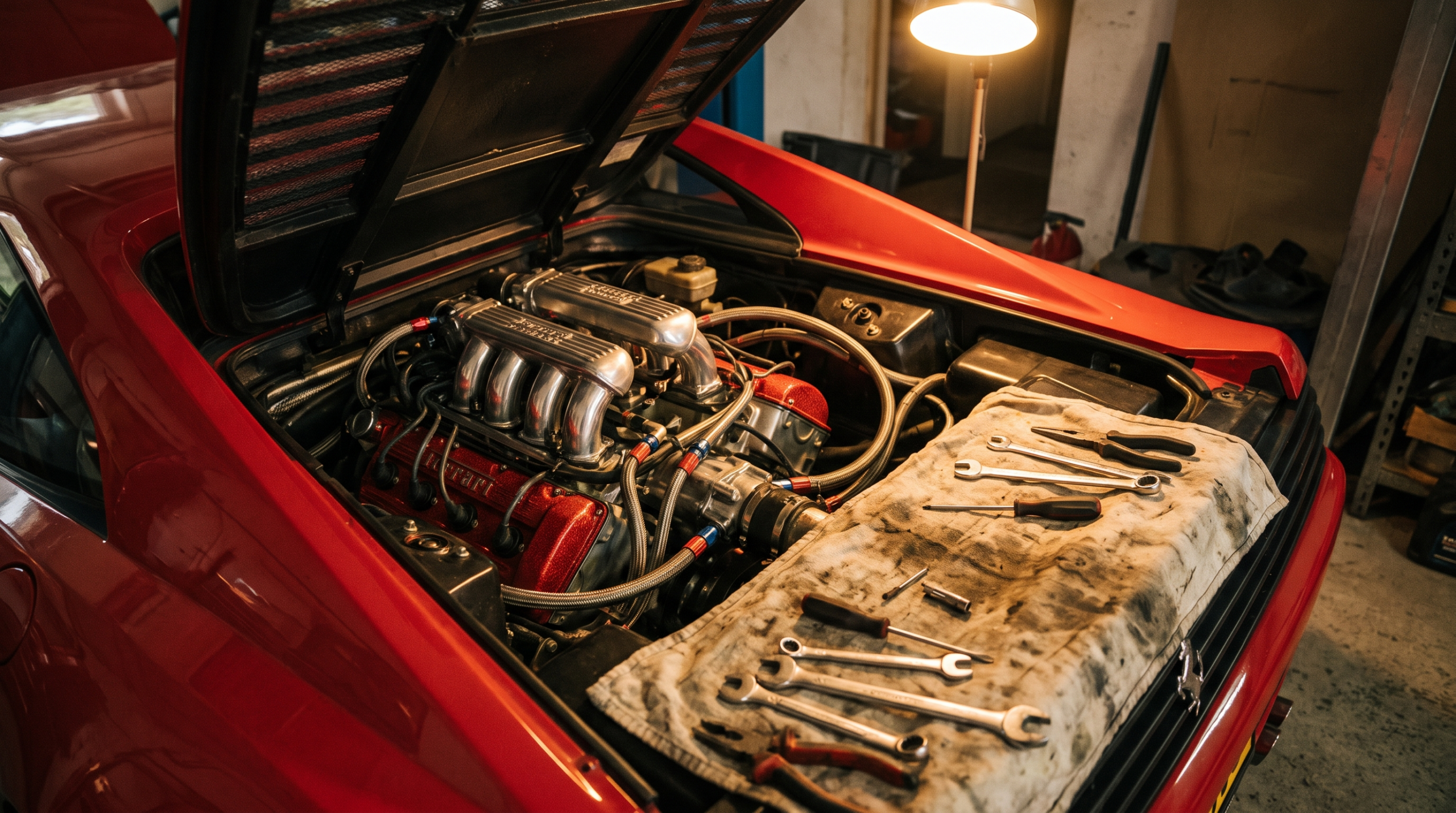
Timing belts on the 348, F355 and 360 mean scheduled engine work; the F430 onward uses chains. Illustrative image.
Insurance: The Largest Fixed Cost of Owning a Ferrari
Insurance is the most predictable line in the budget of owning a Ferrari, and the one most often underestimated, because people anchor on the purchase price and assume the premium follows the same curve. It does not — it follows replacement cost and repair complexity, which move faster than value at the top of the range.
Model
Average annual premium
F430
$3,252
Roma
$3,684
296 GTB
$3,708
SF90 Stradale
$6,504
LaFerrari
$39,048
F80
$41,844
Average full-coverage annual premiums for owning a Ferrari, United States, from MoneyGeek. Individual quotes vary enormously with age, record, garaging, annual mileage and whether the policy is agreed-value.
The step from an SF90 to a LaFerrari is roughly six times the premium for a car that is not six times more expensive. Hypercars price differently because the parts supply is finite and a repair can consume a meaningful fraction of the car’s value.
Two structural points. First, ask for agreed value, not stated value or actual cash value — agreed value fixes the payout number in the policy at inception, which is the whole point of insuring an appreciating or non-depreciating asset. Second, specialist collector policies usually price on annual mileage and secure garaging, so a car doing 2,500 miles a year can cost less to insure than a daily-driven sedan. This is general information rather than advice on your specific situation; get real quotes on the actual VIN before you commit to a car, because the premium is not a rounding error on a purchase at this level.
Depreciation: What Owning a Ferrari Really Costs You in Value
The idea that owning a Ferrari costs nothing in depreciation is half true, and the half that is false costs people real amounts. Series-production Ferraris depreciate. They simply do it far more gently than the rest of the luxury market, and they tend to flatten out rather than continue down.
Using iSeeCars data, a Roma gives up roughly 11.3% over three years and 24.5% over five. A 296 has held to under 1% over three years — effectively flat. The Purosangue is the counter-example that proves the point: launch-period cars traded well above list, and the average sale price has now settled back to roughly its launch MSRP of $398,350 as supply caught up with the initial rush.
The pattern across the range is consistent, and it is the piece of owning a Ferrari that most affects what you get back at the end. Limited-run and manual-transmission cars appreciate, mainstream models with common specifications flatten, and anything bought at a launch premium gives that premium back. If your interest is specifically in the cars that go up rather than sideways, we cover that separately in our piece on why classic Ferraris hold their value — this page is about what it costs to run one, which is a different question.
Ferrari Classiche: The Paperwork That Is Worth Real Money
Once a car passes 20 years old, owning a Ferrari opens one further option: it becomes eligible for Ferrari Classiche certification. The factory inspects the car against its original build records and, if it passes, issues a red book confirming authenticity and originality.
The requirement that ends most applications is the chassis. It must be the original — the factory will not certify a car built around a replacement frame, whatever the quality of the work. Engine and gearbox can be non-original provided the correct original units are presented with the car for the file.
Fees scale with the car. The published 2017 schedule ran from about $3,750 for a 308 to $16,250 for a 250 GTO, and Ferrari itself claims certification adds something like 15 to 20% to a car’s value — a figure specialists regard as optimistic, so treat it as the company’s claim rather than a market rate. Certification also feeds back into the allocation system, since Classiche participation is one of the things Ferrari weighs when it builds its lists.
Ferrari Classiche certification requires the original chassis and is generally reckoned to add around 20% to a car’s value. Illustrative image.
The Cheapest Realistic Way Into Owning a Ferrari
If the question is which car makes owning a Ferrari sustainable rather than merely possible, the answer on the numbers is the F430, and it is not close.
It was the first of the modern V8 cars to use a timing chain, which removes the scheduled engine-out belt service entirely. Annual servicing starts around $875 and the two-year major around $1,650. Insurance averages $3,252, the lowest figure in the table above. The 4.3-litre V8 is a strong engine, parts availability is good, and there is a deep specialist network that knows the car.
The caveat is the gearbox. On an F1 car, budget for a clutch at $8,798 to $9,375 and read the wear percentage before you buy. A manual F430 avoids that cost entirely but trades at a substantial premium for the pedal, so the saving is theoretical unless you were buying a manual anyway.
The trap, for completeness, is the F355. It is one of the most beautiful cars Ferrari has built and it is the most expensive of the accessible models to keep, because the major service is an engine-out job at $8,100 to $13,975 on a car that frequently sells for not much more than double that. Buy one with your eyes open and a fresh service history, or buy the 360 instead.
A realistic annual budget for owning a Ferrari
Insurance: $3,200–$3,700 for most series-production cars, agreed value, low mileage.
Scheduled servicing: $800–$1,200 a year on a chain-driven car out of programme; nothing while Genuine Maintenance is live.
Tyres: a set every two to three years for a car driven properly; they age out before they wear out on a car that does not.
The sinking fund: set aside for the clutch on an F1 car and the major on a belt car. These are not surprises, they are appointments.
Storage: climate-controlled if you have winters, and a battery tender either way.
The mistake that costs the most in owning a Ferrari is buying at the top of your budget and leaving nothing for the first year of ownership. The cars are not fragile, but they are precise, and the maintenance is not optional if you want the car to be worth anything at the end.
What Has Changed in the Range
If you last looked at the line-up a couple of years ago, two names have moved. The Roma has been replaced by the Amalfi, and the SF90 by the 849 Testarossa. The company is led by CEO Benedetto Vigna; Enrico Galliera, whose description of the allocation process is quoted above, left in July 2026 and was succeeded as chief commercial officer by Massimiliano Di Silvestre.
None of that changes the mechanics of owning a Ferrari, but it does change what you should be searching for on the used market, and it is the sort of detail a seller will assume you already know.
Before You Buy: Five Checks Worth Doing
Confirm remaining Genuine Maintenance on the VIN with a franchised dealer, not from the listing text. Delivery date, not model year.
Pull the F1 clutch wear reading on any single-clutch automated car, in writing, before you negotiate.
Establish which timing system the engine uses and when the last belt service was done — with the invoice, not the seller’s recollection.
Commission a marque-specialist pre-purchase inspection. Not a general exotic shop, and not the seller’s own workshop.
Read the file before the photographs. Build sheet, service records, ownership chain and, on an older car, Classiche status. Our collector car documentation guide covers what a gap in that file is actually worth as a discount.
Owning a Ferrari is more accessible than the mythology suggests and more demanding than the brochures do. The new-car queue is genuinely closed to most people, which is worth knowing before you spend a year trying to charm your way into it. The used market is wide open, the maintenance programme on any post-2012 car is a real and transferable asset, and a chain-driven car out of warranty costs less to run each year than most people’s boat.
What owning a Ferrari asks in return is that you keep it properly. These cars punish deferred maintenance harder than they punish mileage, and the ones that hold their value are the ones with the thickest folders. Buy the best example you can find rather than the cheapest one you can afford, budget for the appointments you already know are coming, and then drive it. A Ferrari kept under a cover for its own protection is the only version of this that genuinely does not make sense.
Owning a Ferrari: Frequently Asked Questions
How hard is it to buy a new Ferrari?
Owning a Ferrari bought new is harder than the money alone suggests. Ferrari allocates new cars rather than selling them on demand: the criteria for each model are defined centrally and approved at board level, and the dealer advocates for its clients rather than deciding. In 2025, 84 percent of sales went to existing owners and around 56 percent to people who already owned more than one car. The order book extends towards the end of 2027. Roughly 16 percent of sales still go to first-time buyers, and the company has taken on about 32,300 new clients since 2022, so it is difficult rather than closed.
How much does it cost to maintain a Ferrari each year?
The recurring cost of owning a Ferrari depends almost entirely on its age. Every car from model year 2012 onward carries the 7-Year Genuine Maintenance programme, which covers scheduled servicing annually or every 12,500 miles with no mileage cap and transfers to each new owner at no fee, so a car still inside that window costs nothing to service. Once it expires, independent specialist menu pricing starts around 799 dollars a year for a 488 and 875 dollars for an F430, with a major service on a 488 at 3,500 to 3,800 dollars. Insurance is usually the larger line at roughly 3,200 to 3,700 dollars a year on a series-production car.
Which Ferrari is the cheapest to own?
The F430. It was the first modern V8 Ferrari to use a timing chain instead of belts, which removes the scheduled engine-out service that makes older cars expensive. Annual servicing starts near 875 dollars, the two-year major near 1,650 dollars, and average insurance is 3,252 dollars, the lowest of the current range. The one budget item to plan for is the F1 gearbox clutch at 8,798 to 9,375 dollars on paddle-shift cars, so have the wear percentage read before you buy.
Does the Ferrari maintenance programme transfer to a used buyer?
Yes, at no cost. The 7-Year Genuine Maintenance programme runs from the car first delivery date and transfers to every subsequent owner without a transfer fee. Buying a four-year-old car means inheriting three remaining years of factory-scheduled servicing. Confirm the remaining coverage against the VIN with a franchised dealer before agreeing a price, and check the delivery date rather than the model year on the listing.
Do Ferraris lose value?
Series-production models do, so owning a Ferrari is not free of depreciation, but it is slow and values tend to flatten rather than keep falling. A Roma gives up about 11.3 percent over three years and 24.5 percent over five, while a 296 has held to under 1 percent over three years. The Purosangue is the clearest counter-example: launch cars traded well above list and the average sale price has since settled back to roughly its 398,350 dollar launch MSRP. Limited-run and manual-transmission cars are the ones that appreciate.
What is Ferrari Classiche and is it worth the fee?
Classiche is the factory certification programme for Ferraris over 20 years old. The factory inspects the car against its original build records and issues a red book confirming authenticity. The original chassis is mandatory; engine and gearbox may be non-original provided the correct units are presented with the car. Published 2017 fees ran from about 3,750 dollars for a 308 to 16,250 dollars for a 250 GTO, and certification is generally reckoned to add around 20 percent to a car value, which also makes it one of the few discretionary spends here with a defensible return.
What should I check before buying a used Ferrari?
Five things, and each one protects the economics of owning a Ferrari. Confirm remaining Genuine Maintenance coverage on the VIN with a franchised dealer. On any single-clutch F1 gearbox car, get the clutch wear percentage in writing, as replacement runs 7,650 to 9,375 dollars and the convention is to replace at 80 to 85 percent. Establish whether the engine uses a timing belt or a chain, and get the invoice for the last belt service. Commission a marque-specialist pre-purchase inspection, not the seller own workshop. Finally, read the documentation file before the photographs.
Owning an exotic car is not about speed or luxury- It’s about embracing an experience, where the road becomes your canvas and the car, your masterpiece.
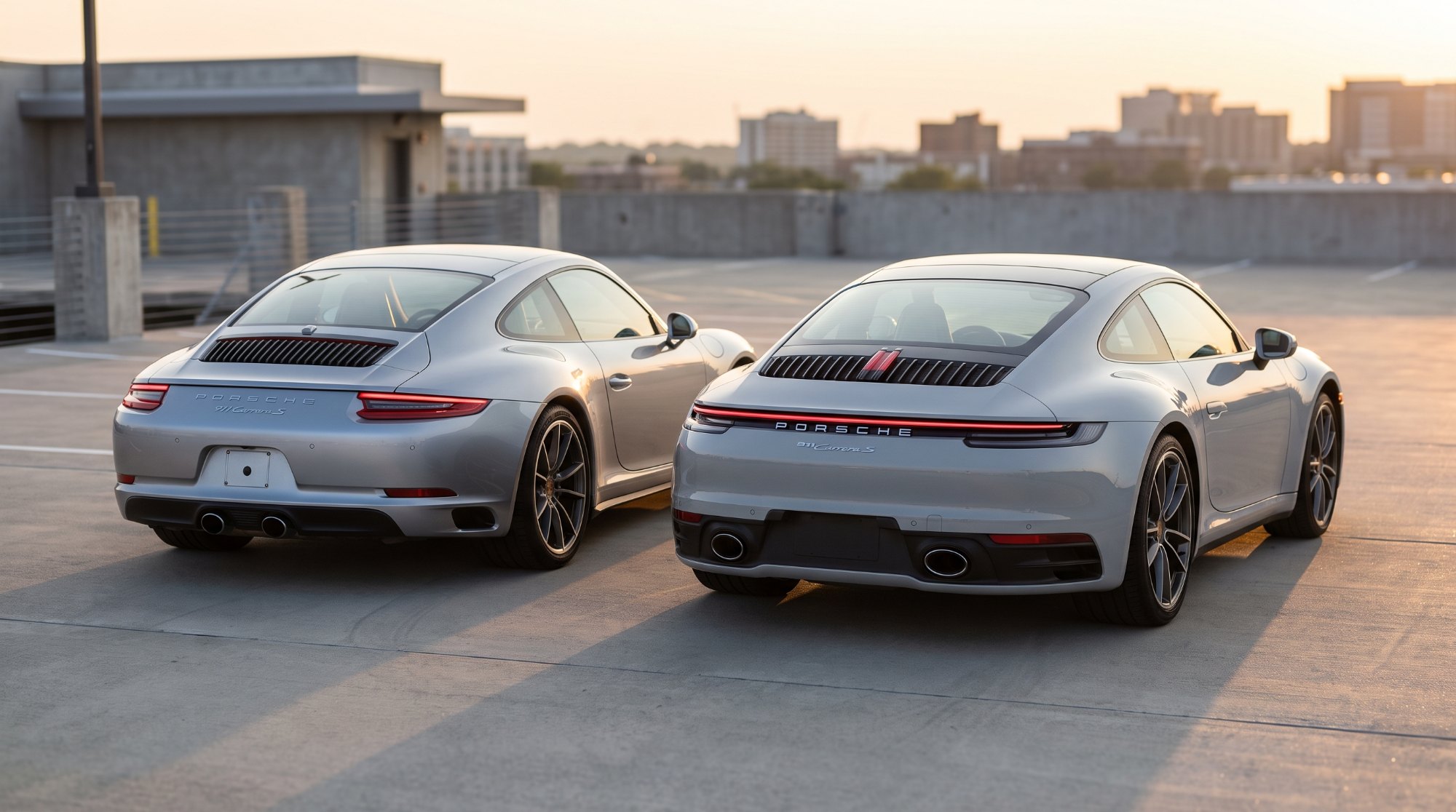
991.2 or 992? A buyer's guide to the used Porsche 911 Carrera decision: transmissions, body styles, options, inspection, warranty, running costs and the real price gap.
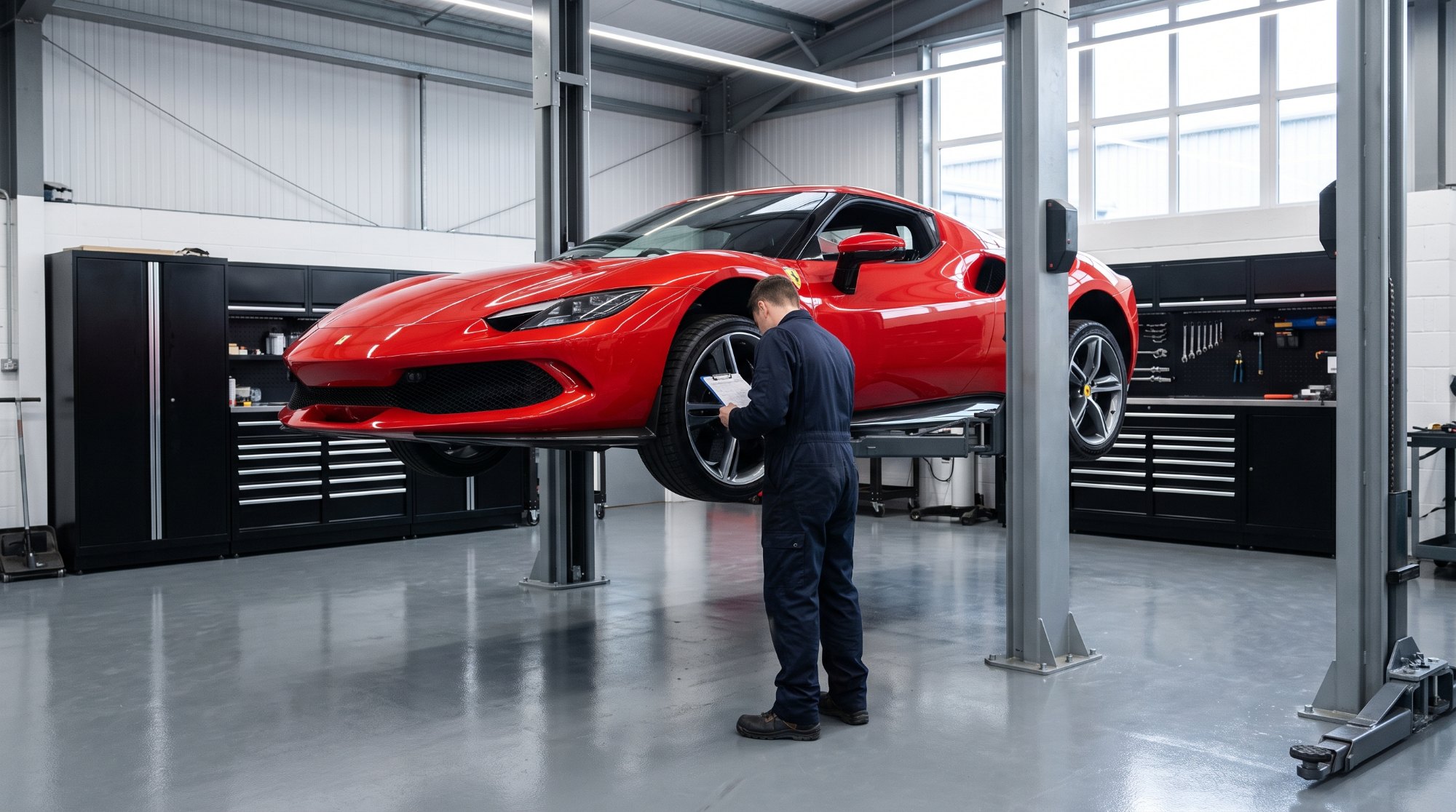
What a real exotic car pre-purchase inspection (PPI) should include: choosing an independent marque specialist, lift checks, paint readings, factory diagnostics, service records, the road test, and how to use the findings before you pay a deposit.
The FTC’s September 2026 pricing FAQs say a car’s advertised price must be one any buyer can pay, on Instagram, marketplaces and dealer sites alike. Here is what that means for exotic and luxury dealers.