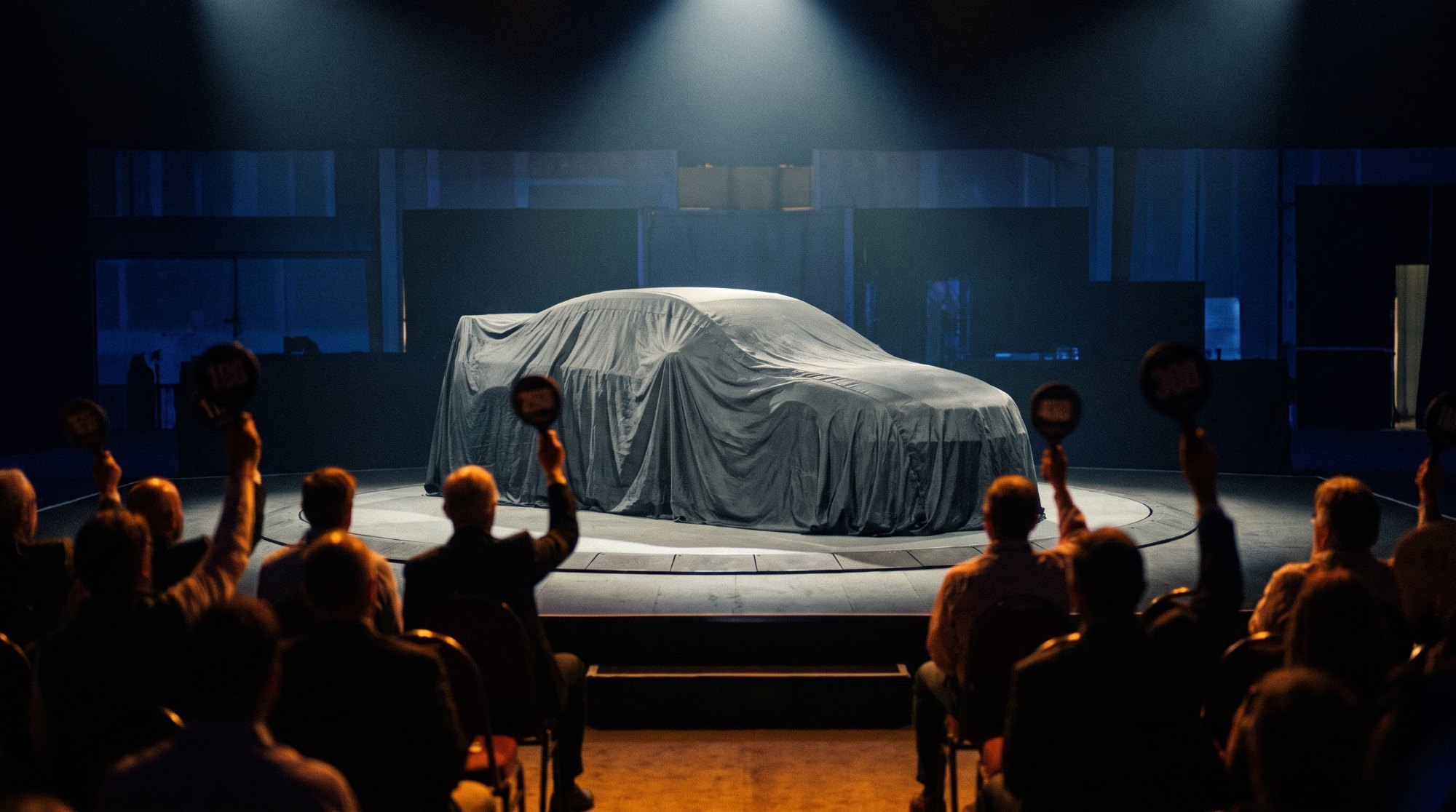
In September 2024, two of the three great British luxury car makers had published a date for the end of the combustion engine, and the third had committed to electrifying its core range. Bentley said 2030. Rolls-Royce said 2030. Aston Martin was promising its first electric car within a year.
Not one of those commitments survives today, and the clearest explanation sits in a single pair of numbers. In 2025 the electric Rolls-Royce Spectre sold 1,002 cars, down 47%. In the same year the V12-powered Cullinan sold 3,291, up 27.1%. The customers voted, and three boardrooms listened.
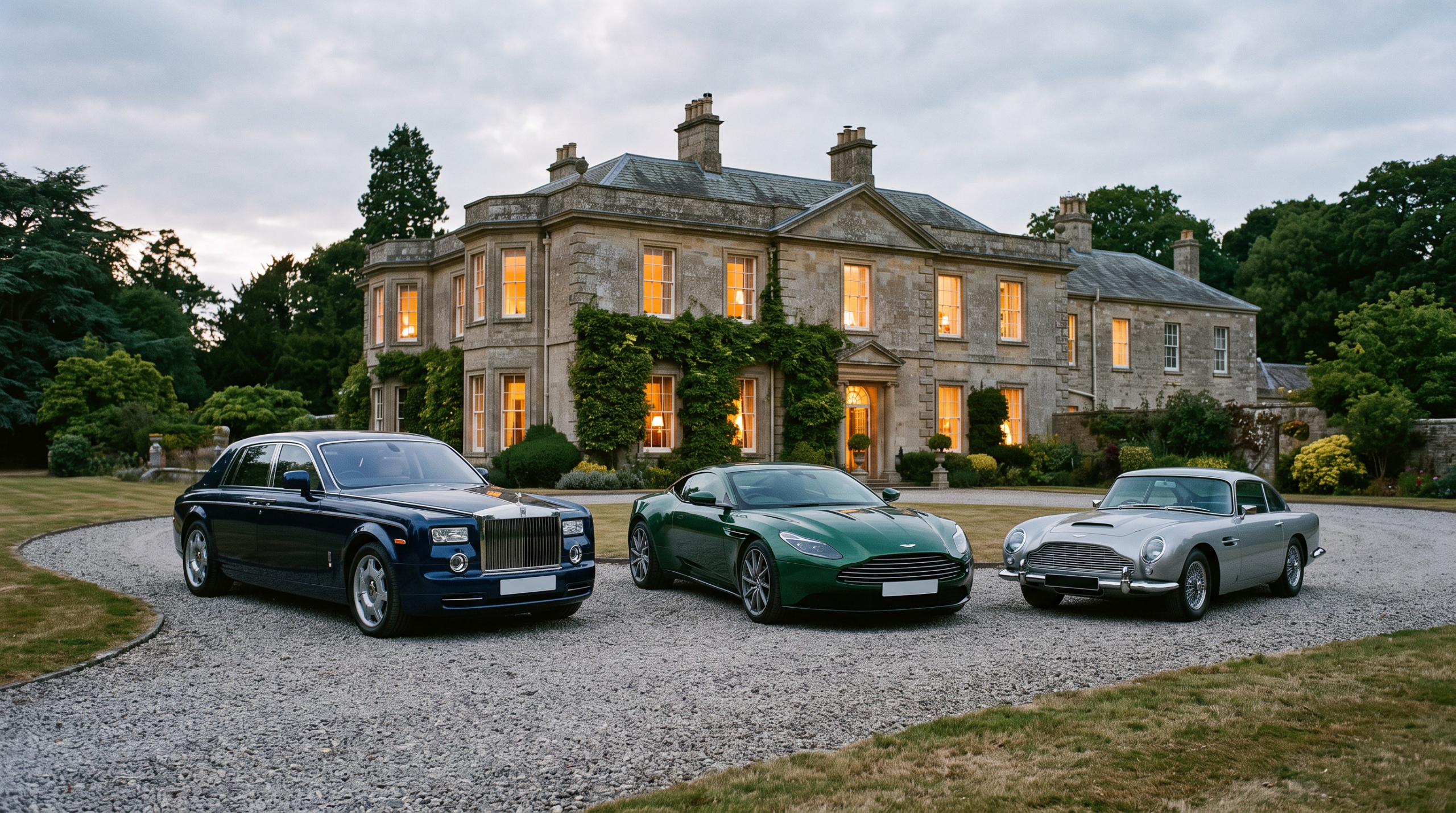
That reversal is the real story of British luxury cars in 2026, and it sits alongside a second fact the brochures never lead with: none of these three companies is British-owned in any meaningful sense. Here is where the three British luxury marques actually stand — who owns them, what they build now, and what has changed underneath the badges.
Quick Answer: Who Owns British Luxury?
Bentley has been owned by the Volkswagen Group since 1998 and sits inside Audi’s Brand Group Progressive; it builds every car at Crewe. Rolls-Royce Motor Cars has been owned by BMW since 1998, has built cars exclusively at Goodwood since 2003, and is a completely separate company from Rolls-Royce Holdings, the aero-engine business. Aston Martin Lagonda is the only one that is publicly listed — on the London Stock Exchange as AML — with Lawrence Stroll’s Yew Tree consortium holding roughly 33% alongside Geely, Saudi Arabia’s Public Investment Fund and Mercedes-Benz; it builds sports cars at Gaydon and the DBX at St Athan.
On This Page
Who Owns British Luxury Cars: The Map, and the 1998 Split
The same reversal has played out on the performance side of the industry, with one extra twist: the engineering behind Britain’s fast cars is a larger business than the marques themselves. We traced it in our companion piece on British supercars and who actually builds them — including the Bugatti V16 machined in Northampton and the Pagani gearboxes made in Berkshire.
Marque
Owner
Since
Built at
Bentley
Volkswagen Group (Audi-led Brand Group Progressive)
1998; moved under Audi in March 2021
Crewe, Cheshire
Rolls-Royce Motor Cars
BMW Group
Rights acquired 1998; sole maker from 1 Jan 2003
Goodwood, West Sussex
Aston Martin Lagonda
London-listed (AML). Yew Tree consortium ~33%, plus Geely, PIF, Mercedes-Benz
Listed 2018; Stroll consortium from 2020
Gaydon, Warwickshire; St Athan, Wales
Ownership of the three great British luxury marques as at August 2026. Aston Martin shareholdings other than Yew Tree are approximate; the company does not publish a current shareholder table.
The reason Bentley is at Crewe and Rolls-Royce is at Goodwood is one of the strangest corporate stories in motoring, and it is worth two minutes because it explains the entire modern shape of British luxury cars today.
Until 1998 the two most famous British luxury marques were built in the same factory at Crewe by Rolls-Royce Motors, owned by Vickers. When Vickers sold, BMW bid £340 million and Volkswagen bid £430 million and won — taking the factory, the tooling, the Bentley marque and, notably, the Spirit of Ecstasy mascot and the grille shape.
What Volkswagen did not get was the Rolls-Royce name. It had never belonged to Vickers. It belonged to Rolls-Royce plc, the aero-engine company, which merely licensed it to the car business under terms that clawed it back if the car maker were sold. In July 1998, BMW paid the aero-engine company £40 million for the rights to use the name and badge on cars.
So Volkswagen owned a factory and a mascot but no name, and BMW owned a name but no factory. The settlement let Volkswagen keep building Rolls-Royce-badged cars at Crewe until 31 December 2002, after which the name was BMW’s alone; in return BMW got the mascot and grille trademarks. BMW built an entirely new plant at Goodwood from nothing and launched the Phantom on 1 January 2003. Volkswagen kept Crewe and made it Bentley’s.
One British luxury consequence still catches people out: Rolls-Royce Motor Cars and Rolls-Royce Holdings are unrelated companies. When you read that Rolls-Royce has cut thousands of jobs or won a defence contract, that is the Derby aero-engine business, not the car maker at Goodwood.
Bentley: The W12 Is Dead, and the Range Is Now Hybrid
W.O. Bentley founded the company in 1919 — Bentley itself dates it to 10 July that year, from premises in New Street Mews, London. Production moved to Crewe in 1946, into a factory originally built in 1938 to make Rolls-Royce Merlin aero engines, and every Bentley in the world is still built there. The site marked 80 years of production in July 2026.
The single biggest change in British luxury since 2024 is this engine. Bentley hand-built its last W12 at Crewe in July 2024, ending an engine that had run since the original Continental GT in 2003 and passed 100,000 units. Any description of a Continental GT with “a W12 or V8” now describes a used car.
What replaced it is more powerful than what it replaced. The Ultra Performance Hybrid pairs a 4.0-litre twin-turbo V8 with an electric motor for 782 PS and 1,000 Nm, against the W12’s 650 bhp peak in the Bacalar and GT Speed, from a run that started at 552 bhp, at 50 g/km of CO2.
The Bentley range as at August 2026, the most electrified of the British luxury line-ups. The Continental GT and Flying Spur lines are now entirely plug-in hybrid.
Two of those entries say something about where British luxury is going. The Supersports is a 500-car limited run announced in November 2025: the first rear-wheel-drive Continental, the lightest Bentley in 85 years, and a deliberate move in the opposite direction from everything else on the price list. And the Torcal is Bentley’s first electric car and its fourth model line — a sub-five-metre luxury SUV, smaller than the Bentayga, making its world debut in London on 23 September 2026, with deliveries from 2027.
Bentley’s electric plan, the most ambitious in British luxury, has moved twice. The 2022 Beyond100 commitment was all-electric by 2030. In November 2024 that became 2035. In November 2025 Bentley said the 2035 date “could be extended”, confirmed plug-in hybrid Continental GT and Flying Spur models until at least 2035, and declined to rule out further combustion cars. In March 2026, up to four further electric models were cancelled when the shared platform underneath them slipped into the 2030s.
Financially, Bentley has been profitable for seven consecutive years, but the trend is one every buyer should understand. Deliveries fell from 13,560 in 2023 to 10,643 in 2024 and 10,131 in 2025, with operating profit down from €589 million to €216 million across the same period and return on sales down from 20.1% to 8.3%. First-half 2026 deliveries were 4,200, down 13.6%. In March 2026 Bentley announced up to 275 job cuts, about 6% of its workforce, sparing manufacturing. US tariffs cost it €42 million in 2025.
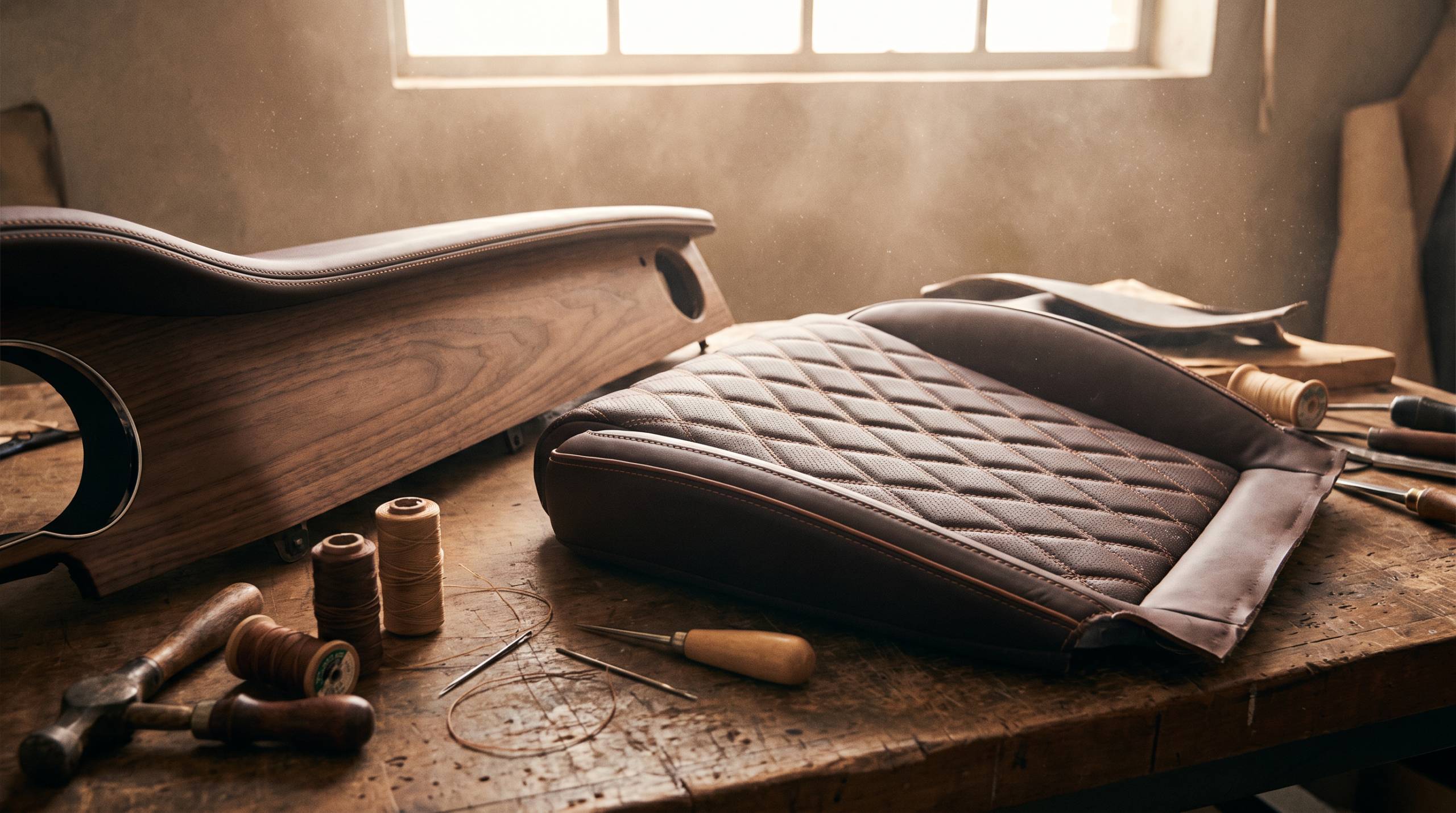
The offsetting story is personalisation. Around 70% of Bentley customers now specify Mulliner content, revenue per car is up roughly 10% in two years, and in June 2026 Bentley launched a Bespoke Series by Mulliner — 100 numbered cars, released like a fashion house’s seasonal collection. Fewer cars, more money per car, deliberately.
Illustrative rendering. Personalisation is where the money has moved: around 70% of Bentley buyers now specify Mulliner content.
Aston Martin: New Names, a Surviving V12, and a Balance Sheet Under Strain
Robert Bamford and Lionel Martin set up in Callow Street, London, on 15 January 1913, trading as Bamford & Martin. The “Aston” comes from Aston Hill near Aston Clinton in Buckinghamshire, a hillclimb where Martin raced; bolted to his surname it produced the name the company still carries. Sports cars and the low-volume specials are built at Gaydon, the busiest British luxury sports car plant in Warwickshire; the DBX is built at St Athan in South Wales; classic work happens at Newport Pagnell.
The model range has turned over almost completely. The DB11 is gone, replaced by the DB12 in 2023. The Vantage is V8-only — there is no V12 Vantage on the price list. But the V12 itself is very much alive, and in two places.
Current Aston Martin
Engine
Output
Vantage / Vantage Roadster
4.0 twin-turbo V8
665 PS
Vantage S
4.0 twin-turbo V8
680 PS / 800 Nm
DB12 / DB12 Volante
4.0 twin-turbo V8
680 PS
DB12 S
4.0 twin-turbo V8
700 PS
Vanquish / Volante
5.2 twin-turbo V12
835 PS, 214 mph
DBX707 / DBX S
4.0 twin-turbo V8
707 PS / 727 PS
Valhalla
V8 plug-in hybrid + three motors
1,064 bhp
Valen (150 cars)
5.2 twin-turbo V12
850 PS, deliveries Q2 2027
The Aston Martin range as at August 2026, the only British luxury line-up still offering a new V12. The Vanquish is the V12 flagship; the Valen, revealed at Monterey in August 2026, is limited to 150 cars.
The Valkyrie road-car programme is finished: 275 cars in total — 150 coupes, 85 Spiders and 40 track-only AMR Pros — built at Gaydon between November 2021 and the end of 2024. The racing version now runs in the World Endurance Championship and IMSA.
The Valhalla has reached customers. First deliveries came in the fourth quarter of 2025, more than 220 were handed over in the first half of 2026, and Aston Martin expects around 500 for the year against a 999-car run. It is the company’s first series-production mid-engined car and its first plug-in hybrid, at about £850,000 in the UK.
Now the part a British luxury buyer needs to weigh. Aston Martin is the only one of the three that has to report its results publicly, and they are difficult reading. FY2025 revenue fell 21% to £1.26 billion on 5,448 cars, with an operating loss of £259 million, a pre-tax loss of £364 million and net debt of £1.38 billion. The first half of 2026 was better on the top line — revenue up 38%, wholesales up 21% — but net debt rose again to £1.54 billion, and in July 2026 the company raised £550 million of new debt at SONIA plus 6.75%.
Around 600 roles, up to a fifth of the workforce, were cut in early 2026. And a live dispute is worth knowing about: as part of the July 2026 financing, Aston Martin agreed to move its non-automotive intellectual property — merchandise, fashion and lifestyle licensing — into a separate vehicle with a majority stake going to a brand-licensing group. Bondholders owed roughly £1.3 billion have gone to a US court seeking disclosure. The car and Formula 1 naming rights are retained, so the badge on the bonnet is unaffected, but it is an unresolved situation rather than a closed one.
Leadership changed in the same window. Adrian Hallmark left Bentley to become Aston Martin’s chief executive on 1 September 2024 — the two companies effectively swapped problems — with Lawrence Stroll remaining executive chairman. The first Aston Martin EV has slipped from 2025 to around 2030, hybrids expand instead, and the V12 has been confirmed in limited-production cars to at least 2035, with Aston Martin saying that keeping volumes under 1,000 a year keeps it exempt from the legislation.
One clarification, because the badge makes it confusing: the car company no longer owns the Formula 1 team. Aston Martin Lagonda sold its minority stake in 2025 and sold the naming rights outright in March 2026. The team is controlled by Stroll’s consortium, runs Honda works power units from 2026, and has Adrian Newey as team principal.
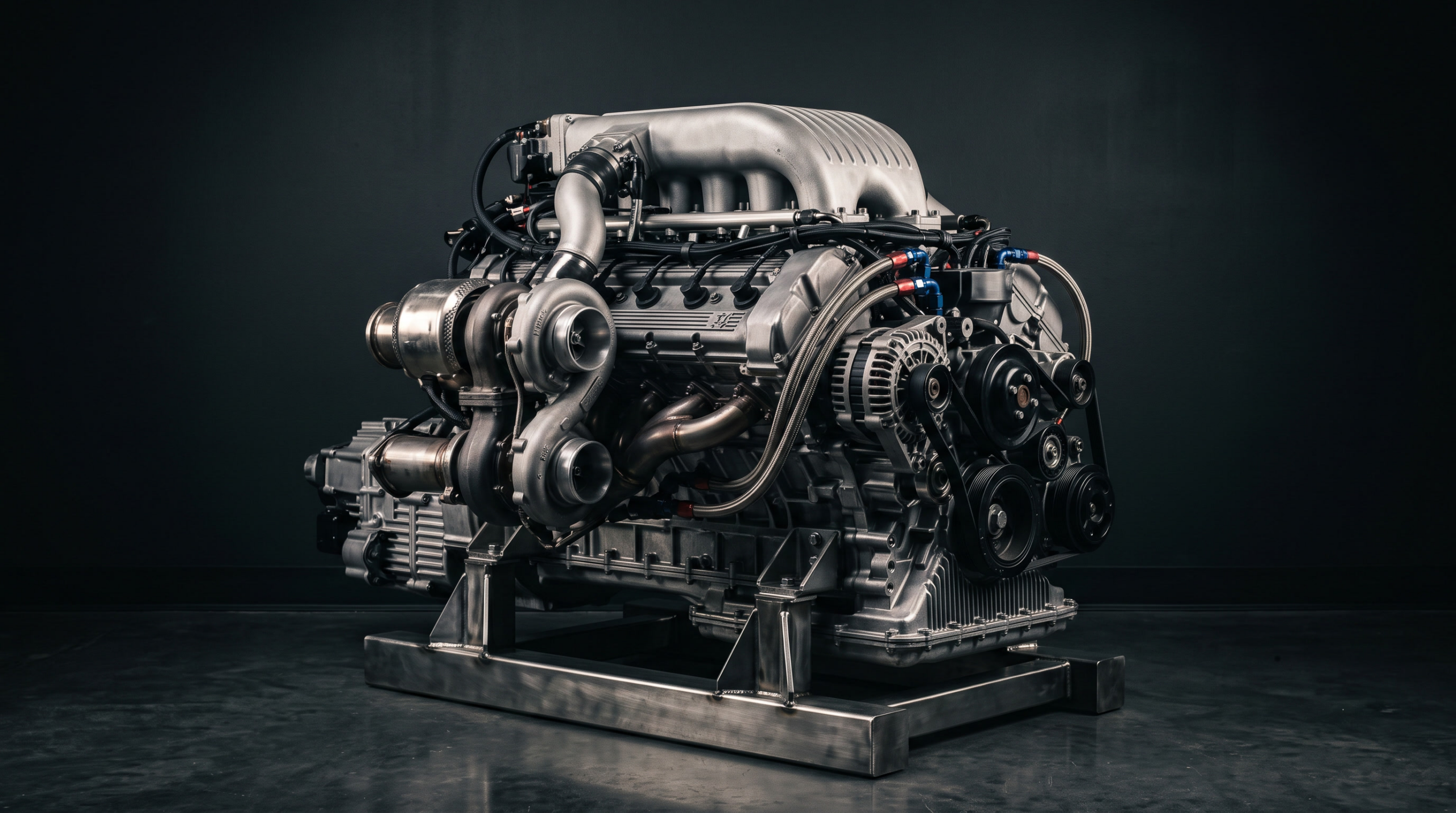
Illustrative rendering. The V12 was scheduled for retirement by 2030. It is now confirmed at Rolls-Royce indefinitely and at Aston Martin to at least 2032.
Rolls-Royce: The Marque That Cancelled Its Own Deadline
Charles Rolls and Henry Royce met at the Midland Hotel in Manchester on 4 May 1904, and agreed before Christmas that Rolls would take every car Royce could build. The company itself, Rolls-Royce Limited, was not registered until 15 March 1906 — a distinction worth keeping straight, because the marque dates from 1904 and the company from 1906. Every Rolls-Royce is built at Goodwood in West Sussex, a plant that opened in 2003 with about 300 people and now employs more than 2,500, supporting roughly 7,500 more across the UK supply chain.
The Rolls-Royce range is four model lines, three of them V12 — the most conservative powertrain mix in British luxury.
Current Rolls-Royce
Powertrain
Note
Phantom / Phantom Extended
6.75-litre twin-turbo V12
The flagship; nameplate turned 100 in 2025
Ghost Series II / Black Badge
6.75-litre twin-turbo V12
571 PS (563 hp); 600 PS Black Badge
Cullinan Series II / Black Badge
6.75-litre twin-turbo V12
The best seller by a distance
Spectre Series II / Black Badge
Battery-electric
Up to 670 hp; the most powerful production Rolls-Royce ever
Project Nightingale (100 cars)
Battery-electric coachbuild
All allocated; deliveries from 2028
The Rolls-Royce range as at August 2026. Wraith and Dawn ended production in 2023, leaving no two-door combustion model.
The numbers behind the strategy change are stark. Deliveries have fallen three years running — 6,032 in 2023, 5,712 in 2024, 5,664 in 2025 — and the first half of 2026 was down 9.8% to 2,523. But the composition matters more than the total:
Model
2025 deliveries
Change on 2024
Cullinan (V12)
3,291
+27.1%
Spectre (electric)
1,002
−47%
Ghost (V12)
993
+22.9%
Rolls-Royce 2025 deliveries by model, the clearest powertrain signal in British luxury. The Cullinan alone accounted for roughly 58% of the total.
In March 2026, chief executive Chris Brownridge abandoned the 2030 all-electric target and confirmed the V12 continues indefinitely. His stated reasoning was blunt: for every client who loves an electric car, there is one who does not, and the 2030 prediction had been made under a different set of circumstances. Rolls-Royce did not abandon the Spectre — it updated it, with a Series II in June 2026 adding up to 18% more range — but the deadline is gone.
Meanwhile the money has moved to bespoke. Rolls-Royce announced more than £300 million for Goodwood in January 2025 — the largest single investment since the plant opened — and it funds a 40,000 m² extension for a new paint facility and dedicated Bespoke and Coachbuild space. Not more cars: more content per car. Private Office commissions more than doubled in 2025, and the company’s US spokesman has put the average transaction price above $500,000, against under $300,000 a decade ago.
The clearest expression of that is Project Nightingale, revealed in April 2026: not a one-off in the manner of the Boat Tail or Droptail, but Rolls-Royce’s first “Coachbuild Collection” — 100 electric open-top two-seaters, all allocated by invitation before the public reveal, deliveries from 2028, with about a third going to the United States. Rolls-Royce intends a new collection every two to three years. If you want the longer view of how this marque got here, our history of the Phantom’s first century covers the nameplate that started it.
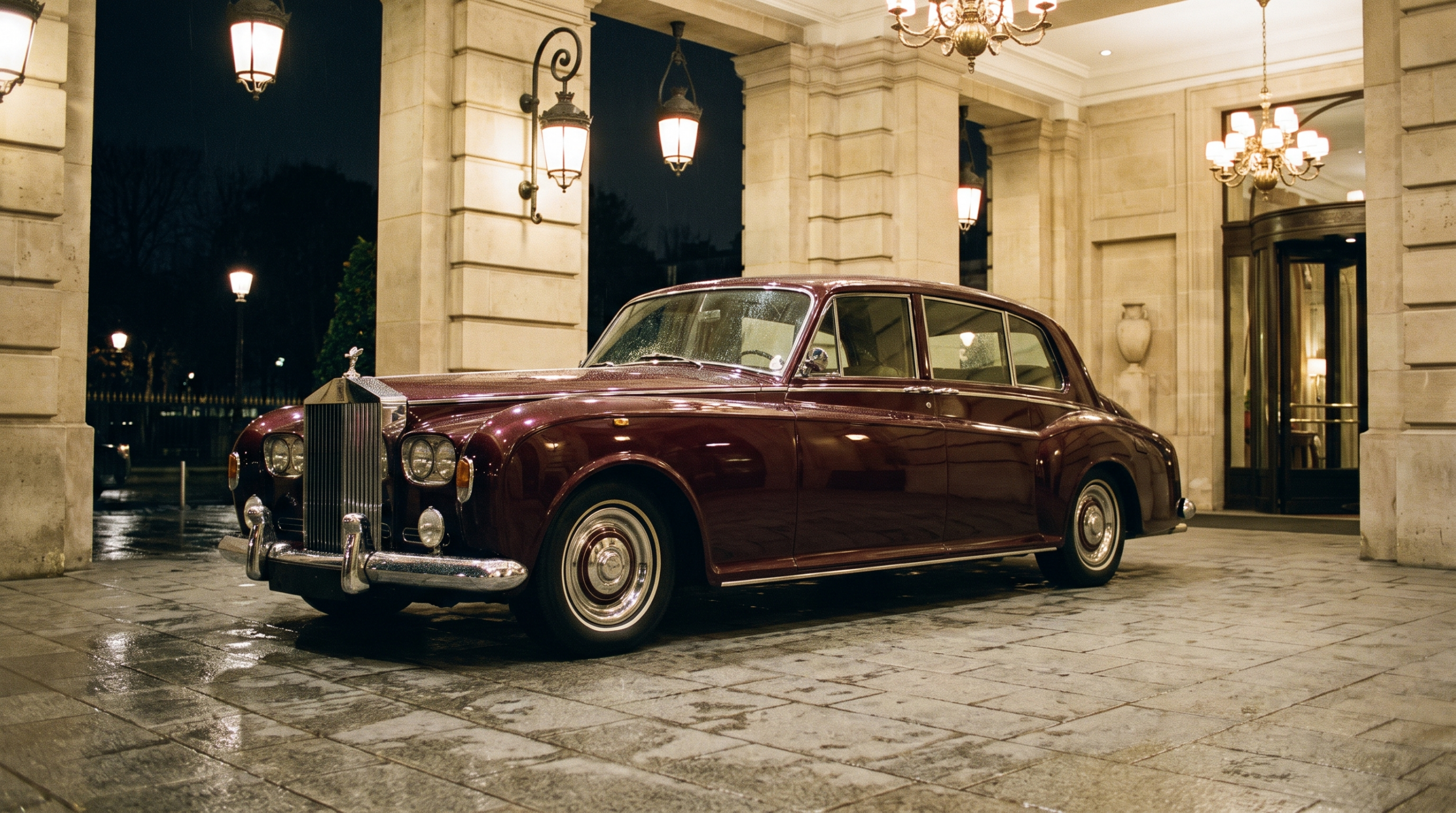
Illustrative rendering. Every Rolls-Royce is built at Goodwood, a plant BMW built from nothing after the 1998 split.
The British Luxury Pattern: Three Companies, One Reversal
Set the three British luxury makers side by side and the same decision appears three times, taken independently, within about eighteen months of each other.
Marque
The 2024 commitment
Where it stands now
Bentley
All-electric by 2030
Moved to 2035 in Nov 2024; in Nov 2025 said even 2035 “could be extended”, with hybrids confirmed until at least 2035. Four further EVs cancelled in March 2026.
Rolls-Royce
All-electric by 2030, V12 retired
Target abandoned in March 2026. V12 continues indefinitely. Spectre stays and was updated.
Aston Martin
First EV in 2025, core range electrified by 2030
First EV pushed to around 2030. Hybrids expand instead. V12 confirmed to at least 2032.
The electrification retreat across British luxury cars, 2024 to 2026.
Three things drove the British luxury reversal, and none of them is a mystery.
Customers did not follow. The Spectre is the cleanest evidence available anywhere in the industry: the most credible electric British luxury car yet built, properly supported, losing nearly half its volume in a year while the V12 SUV beside it gained a quarter.
The legislation moved. Brownridge said so directly — the 2030 plan was built on a regulatory timetable that has since changed.
The platforms slipped. Bentley’s cancelled electric models went not because Bentley lost its nerve but because the shared architecture underneath them moved into the 2030s.
What replaced the deadline is a strategy every one of the three now runs: sell fewer British luxury cars, charge more for each one, and let the customer choose the powertrain. Bentley’s volumes are down 25% in two years while revenue per car climbs. Rolls-Royce is spending £300 million on bespoke capacity rather than production capacity. Aston Martin is chasing gross margin in the high thirties on flat volume. British luxury is not the same industry that was drawing up 2030 deadlines two years ago, and the wider picture is one we set out in our review of how the luxury market actually behaved against its own predictions.
What This Means If You Are Buying a British Luxury Car
The British luxury V12 is no longer a stranded asset. Anyone buying a Phantom, Ghost, Cullinan or Vanquish in 2024 was told the engine had a 2030 expiry. That is off the table at Rolls-Royce, and Aston Martin has committed its V12 to at least 2032. It changes the residual argument materially.
Check which side of the W12 line a Bentley sits. A Continental GT built before mid-2024 may have the W12; everything since is a plug-in hybrid V8. They are different cars to own, service and insure, and the last-of-line W12s carry their own collector logic.
British luxury model names moved. DB11 became DB12. Vanquish came back as something quite different from the old DBS-replacing car. Wraith and Dawn are out of production. Make sure a listing’s description matches its build year.
A generational change is close on two of these. The next Cullinan is in testing and widely expected to be electric, and Bentley’s Torcal arrives on 23 September 2026. Buying the run-out version of anything is a legitimate choice, but do it knowingly.
Early electric models are the soft spot. A pre-Series II Spectre now sits against an updated car with materially more range. That is a used-market discount waiting to happen, and the same logic applies across early luxury EVs.
Bespoke content is where the money went, and it does not all come back. Personalisation now drives a large share of British luxury revenue. Some of it holds value beautifully; some of it narrows your future buyer to one person with the same taste.
Our family has been selling cars for more than a century, and British luxury has always rewarded the same discipline: buy the specification a future buyer will want, not the one that flatters you today, and treat the file as part of the car. Our collector car documentation guide covers what to demand on an older Bentley or Aston, and the first-time exotic car buyer’s guide covers the process end to end.
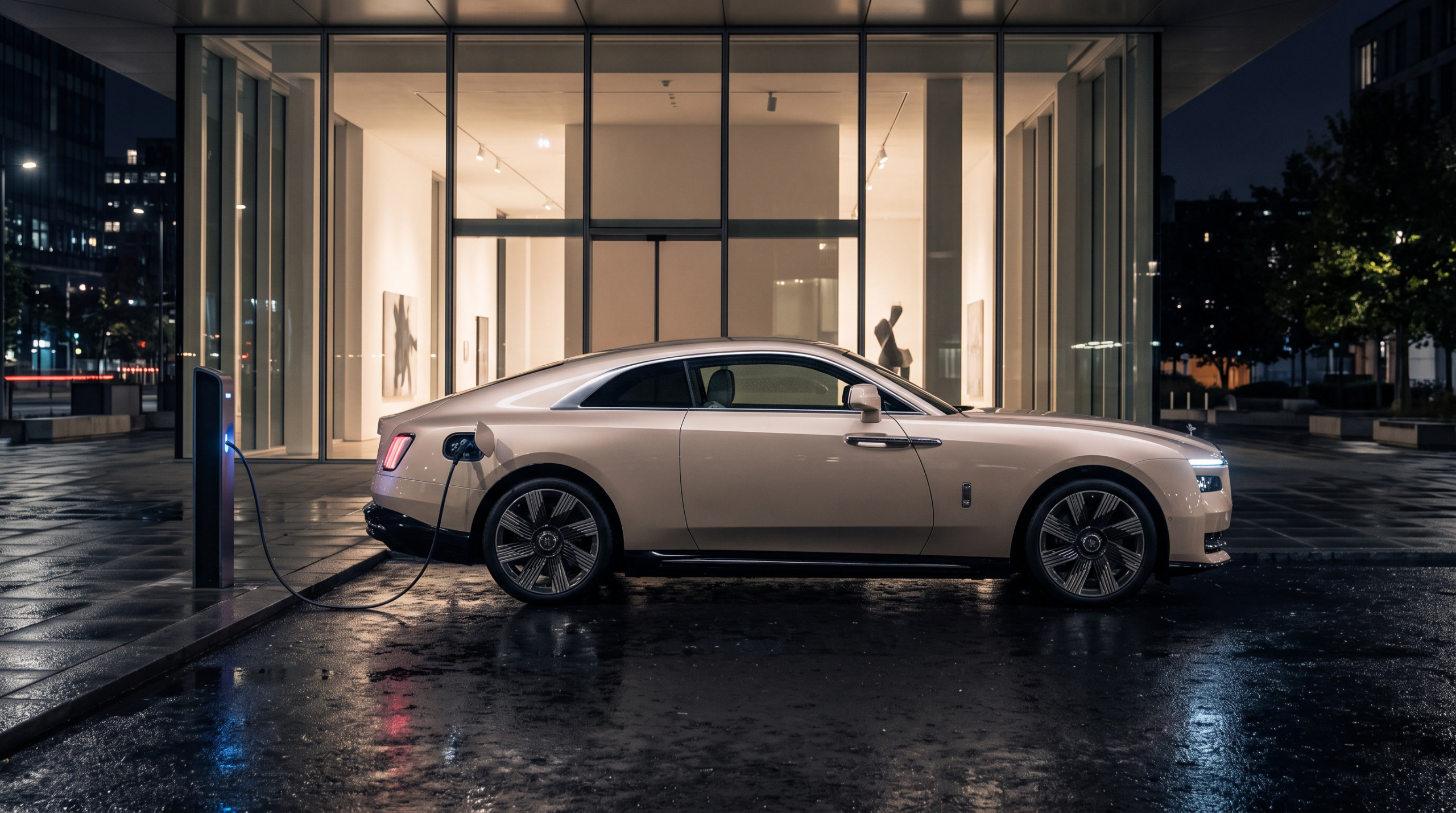
Illustrative rendering. The electric Spectre fell 47% in 2025 while the V12 Cullinan rose 27.1%.
British Luxury Cars FAQ
Who owns Bentley, Aston Martin and Rolls-Royce?
Bentley has been owned by the Volkswagen Group since 1998 and sits within Audi led Brand Group Progressive. Rolls-Royce Motor Cars has been owned by BMW since 1998 and has been the sole maker of Rolls-Royce cars since 1 January 2003. Aston Martin Lagonda is listed on the London Stock Exchange as AML, with Lawrence Stroll Yew Tree consortium holding roughly 33 percent alongside Geely, Saudi Arabia Public Investment Fund and Mercedes-Benz. None of the three great British luxury marques is British-owned.
Are British luxury cars still built in Britain?
Yes, every one. British luxury cars are still British-built: every Bentley is assembled at Crewe in Cheshire. Every Rolls-Royce is built at Goodwood in West Sussex. Aston Martin builds its sports cars and specials at Gaydon in Warwickshire and the DBX at St Athan in South Wales. Foreign ownership has moved the profits, not the production of British luxury cars.
Does Bentley still make the W12 engine?
No. Bentley hand-built its final W12 at Crewe in July 2024, after more than 100,000 engines and around twenty years of production. The Continental GT and Flying Spur are now offered only as V8 plug-in hybrids, with the Ultra Performance Hybrid making 782 PS and 1,000 Nm, more than the W12 it replaced.
Is Rolls-Royce still going all-electric by 2030?
No. Chief executive Chris Brownridge abandoned that target in March 2026 and confirmed the V12 continues indefinitely, saying that for every client who loves an electric car there is one who does not. The electric Spectre remains on sale and was updated with a Series II in June 2026, but there is no longer a deadline for the end of combustion.
Why did the Rolls-Royce Spectre sell so badly in 2025?
Spectre deliveries fell 47 percent, from 1,890 in 2024 to 1,002 in 2025, while the V12 Cullinan rose 27.1 percent to 3,291 and the V12 Ghost rose 22.9 percent. It was still the second best selling Rolls-Royce of the year, but the contrast between the electric coupe and the combustion models is the clearest single reason the marque dropped its 2030 electric target.
Does Aston Martin still make a V12?
Yes, in two cars. The Vanquish is the V12 flagship with a 5.2 litre twin-turbo producing 835 PS, and the Valen revealed at Monterey in August 2026 is a 150-car limited run producing 850 PS. The Vantage, however, is V8 only. There is no V12 Vantage in the current range, and Aston Martin has committed the V12 to limited production cars until at least 2032.
What replaced the Aston Martin DB11?
The DB12, unveiled in May 2023. It uses a 4.0 litre twin-turbo V8 producing 680 PS, with a DB12 S variant at 700 PS added in October 2025. Any listing still describing a current DB11 is describing a used car built in 2023 or earlier.
Which British luxury brand is in the strongest financial position?
Bentley and Rolls-Royce sit inside large, profitable parent groups and do not carry standalone debt in the way Aston Martin does. Bentley has been profitable for seven consecutive years, though operating profit fell from 589 million euros in 2023 to 216 million in 2025. Aston Martin is the one that has to report publicly and reported a 259 million pound operating loss and 1.38 billion pounds of net debt for 2025. That difference matters for long term parts and warranty support on any British luxury car you buy.
Owning an exotic car is not about speed or luxury- It’s about embracing an experience, where the road becomes your canvas and the car, your masterpiece.
The FTC’s September 2026 pricing FAQs say a car’s advertised price must be one any buyer can pay, on Instagram, marketplaces and dealer sites alike. Here is what that means for exotic and luxury dealers.
Monterey 2026 did a record ~$756 million while the retail exotic market cooled. Here is what the split means for anyone buying or selling a supercar right now.
What owning a Lamborghini actually involves: how allocation really works, the five-year maintenance programme, real clutch and service bills, insurance, values and Polo Storico.