Ask which country builds the world’s supercars and the answers come back Italian, German, occasionally American. British supercars get mentioned politely, somewhere after the others, usually with a reference to plucky little firms in sheds.
That gets it almost exactly backwards. Bugatti is French, and since 2021 has sat inside the Bugatti Rimac joint venture rather than under Volkswagen — yet the V16 engine in its newest hypercar was designed and built in Northampton. Every Bugatti dual-clutch gearbox through the Veyron and Chiron came from a British company. Pagani is Italian, and the gearbox in the Huayra and Utopia was engineered in Berkshire. There is a Mercedes-badged supercar that was assembled in Woking. Our family has been in the car business for more than a century, and the story of British supercars is far stranger and more interesting than the brochures suggest.
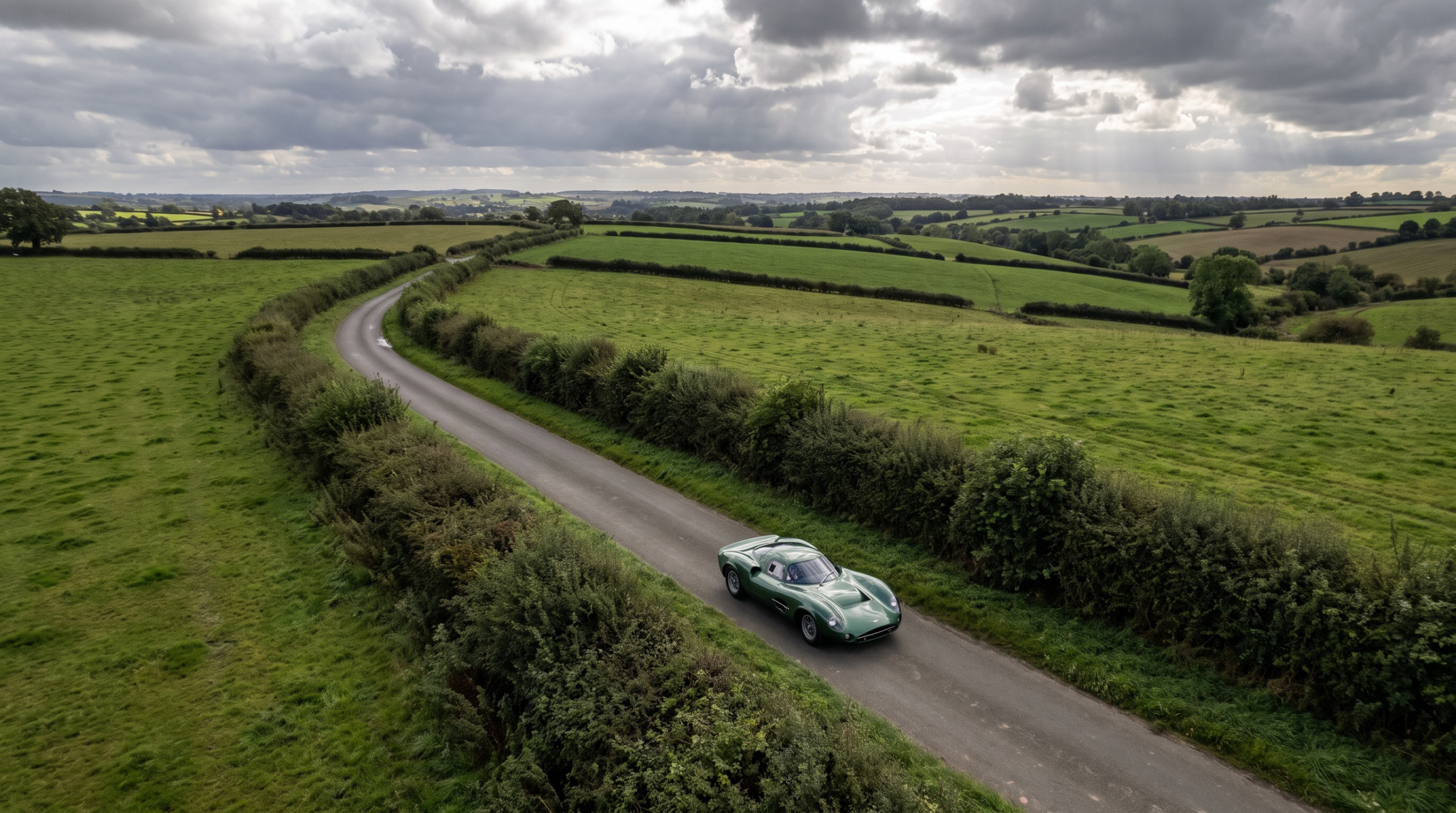
The British model was never mass production — it was small firms buying components from specialist suppliers. Illustrative image.
Quick Answer: What “British Supercars” Actually Means
Britain builds supercars under its own badges — McLaren, Aston Martin, Lotus, Gordon Murray Automotive — but its larger and more durable industry is the engineering cluster behind them, known as Motorsport Valley. That cluster turned over £16 billion in 2023 and employs about 50,000 people, and it sells its work to everyone: Bugatti’s V16 engine and every Bugatti gearbox since 2005, Pagani’s transmissions, Red Bull’s road-car V10.
Britain’s own small-volume car makers are real too — £5.5 billion of turnover, 15,000 direct jobs, and 17% of UK car export value from 4% of its production volume. But almost none of them are British-owned any more. McLaren belongs to Abu Dhabi, Lotus to China, Caterham to Japan, Bentley to Volkswagen and Rolls-Royce to BMW. The badges are foreign; the engineering underneath is not.
Table of Contents
Why British Supercars Happened: Airfields, Garages and One Decision
The cluster that produced British supercars exists for reasons that are well documented and largely accidental, and the sequence matters because it explains why the industry took the shape it did.
The war left Britain with no serious race circuit and an enormous surplus of flat concrete. Silverstone’s own history is blunt about it: the end of the Second World War left the country “with no major race track but plenty of airfields.” The first British Grand Prix to be held at Silverstone ran in October 1948 on a course marked out with bales, ropes and canvas — Britain’s inaugural Grand Prix having been run at Brooklands back in 1926. Around those airfields sat an aerospace industry with nothing to build, and engineers who understood light structures and airflow.
What grew out of that was the generation of small constructors that became British supercars — Cooper in a Surbiton garage from 1947, then Lotus, Lola, Brabham, BRM. Enzo Ferrari called them the garagisti, and he did not mean it kindly.
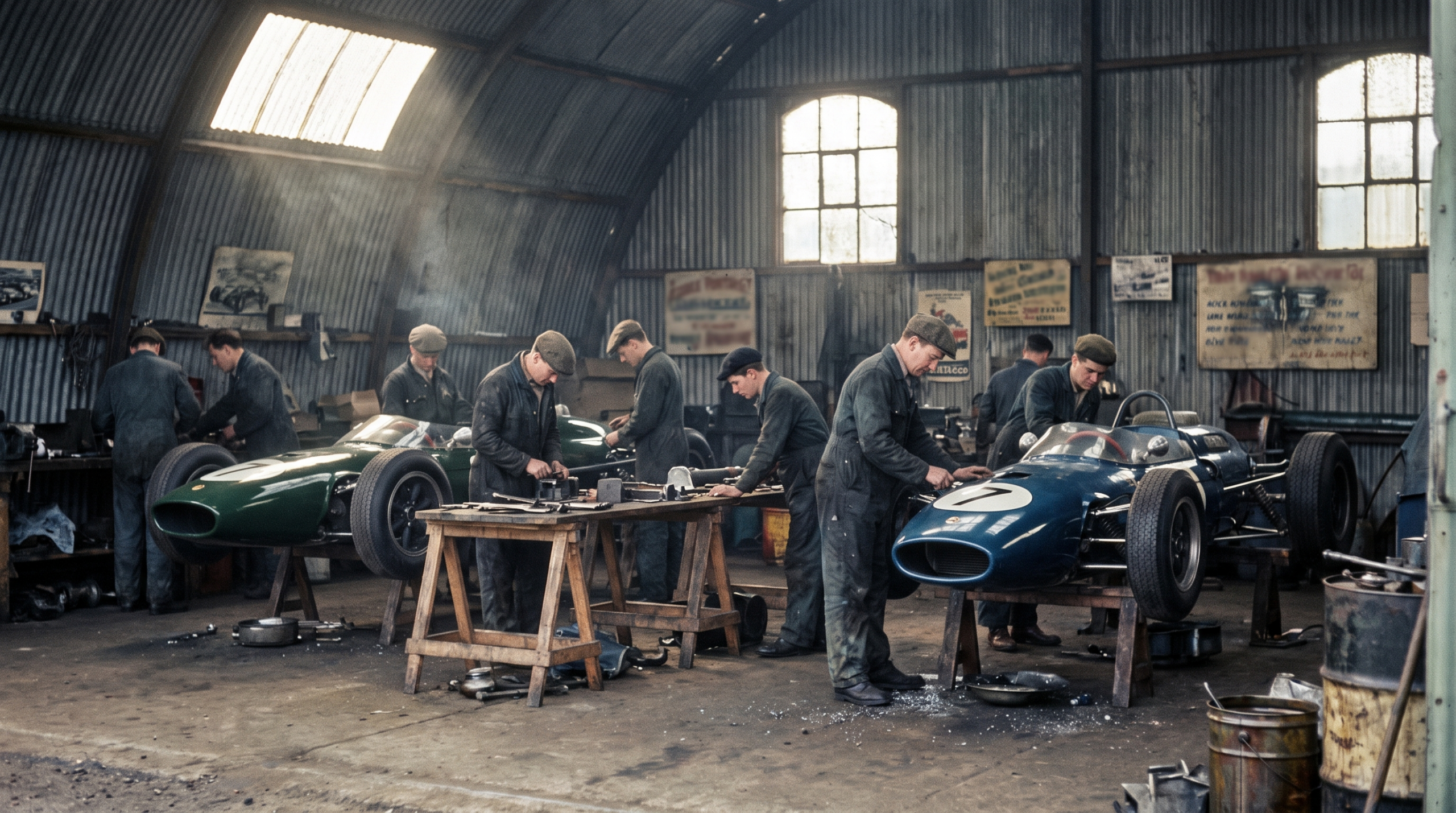
Post-war airfields gave Britain circuits, and the aerospace industry beside them gave it engineers. Illustrative image.
The decision that created British supercars as an industry
Here is the part that matters, and it is the reason this article exists. The continental manufacturers built complete cars, engines and gearboxes included. The British teams did not — they bought their engines and transmissions from independent suppliers. Coventry-Climax first, then Cosworth.
For British supercars that was originally a weakness disguised as thrift. It became the whole advantage. Buying components meant somebody had to sell them, so Britain grew a supplier industry that continental Europe never needed. By 1957–61 the garagisti had overtaken Ferrari, Mercedes, Maserati and Alfa Romeo. Cooper put the engine behind the driver, initially for the mundane reason that a chain drive worked better that way; Jack Brabham won the 1959 and 1960 titles with it — the first championships taken by a rear-engined car, the 1958 title having gone to Mike Hawthorn in a front-engined Ferrari — and every Formula One champion since has driven a rear-engined car.
Sixty years later, that same vertical disintegration is why a French hypercar has a Northampton engine, and why British supercars are less a set of factories than a network. The supplier industry outlived the reason it was created.
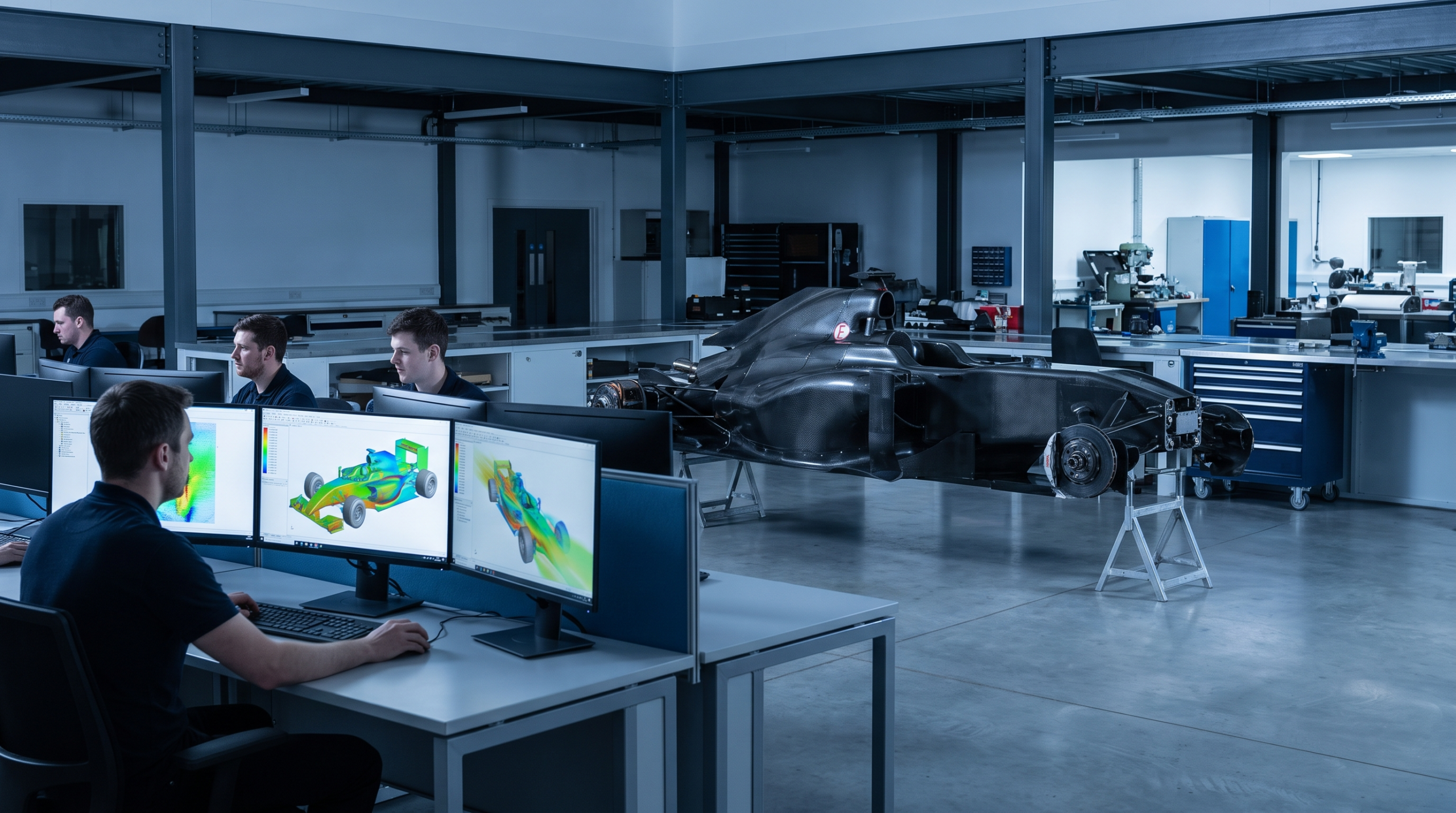
The cluster turned over £16 billion in 2023 and employs about 50,000 people across roughly four counties. Illustrative image.
Motorsport Valley: The Industry Behind British Supercars
The cluster behind British supercars runs roughly through Oxfordshire, Northamptonshire, Surrey and the surrounding counties, and it is measured rather than mythologised. A 2025 review by Grant Thornton with the Motorsport Industry Association put it at £16 billion of turnover in 2023, up from £9 billion in 2012, employing about 50,000 people, with 89% of firms earning export revenue and 14% of turnover going into research and development. Formula One work alone accounted for £3.8 billion across ten businesses.
The clearest illustration of where British supercars get their engineering is the Formula One grid itself. Of the eleven teams entered for 2026, seven are primarily based in Britain, three more run significant British operations, and exactly one has no presence at all.
Team
Nominal identity
Where the car is built
Mercedes
German
Brackley, Northamptonshire
Red Bull Racing
Austrian
Milton Keynes
McLaren
British
Woking, Surrey
Williams
British
Grove, Oxfordshire
Aston Martin
British
Silverstone, Northamptonshire
Alpine
French
Enstone, Oxfordshire
Cadillac
American
Silverstone, Northamptonshire
Haas
American
Kannapolis NC + Banbury, Oxfordshire
Racing Bulls
Italian
Faenza + Milton Keynes
Audi
German
Hinwil + Bicester Motion, Oxfordshire
Ferrari
Italian
Maranello — no UK presence
The 2026 Formula One entry and where the engineering behind British supercars actually sits. Ferrari is the only team on the grid with no British operation.
Cadillac is the one to sit with. An American team, entered under an American licence, badged by an American marque — running its 2026 car out of Silverstone, England, while its Indiana factory is still being built. Team principal Graeme Lowdon put it plainly: Silverstone “is not just an offshoot, it’s a significant part of the team.” Audi opened a technology centre at Bicester in July 2025 for the stated reason of reaching “the talent pool in Motorsport Valley.”
The Supercars That Are Not British but Are Built Here
This is where the argument about British supercars stops being abstract. These are documented supply contracts, not folklore.
Car
Badge
The British part
Where
Bugatti Tourbillon
French, Bugatti Rimac
8.3-litre naturally aspirated V16, 1,000 PS — designed and manufactured by Cosworth
Northampton
Bugatti Veyron and Chiron
French, VW era
Every dual-clutch transmission and driveline since 2005, by Ricardo
Leamington Spa / Midlands
Pagani Huayra and Utopia
Italian
Seven-speed transverse gearboxes by Xtrac
Thatcham, Berkshire
Red Bull RB17
Austrian
4.5-litre V10, 15,000 rpm, by Cosworth
Northampton
Mercedes-Benz SLR McLaren
German
Whole car assembled at the McLaren Technology Centre; carbon body from Portsmouth
Woking / Portsmouth
Aston Martin Valkyrie
British
Cosworth V12, Ricardo transmission, Multimatic monocoque — assembled by Aston at Gaydon
Across the cluster
Documented supply relationships behind British supercars and their foreign-badged customers, each confirmed by the supplier or manufacturer. The Valkyrie is included to show that even a British hypercar is assembled from the same cluster.
Bugatti approached Cosworth in 2021, and Cosworth took thirteen months from its first detailed designs to a running V16 on a dyno in Northampton. The engine is roughly a metre long, weighs 252 kg, revs to 9,000 rpm and has a 900mm crankshaft machined from a single billet. It is the defining component of the car, and it is British.
The Ricardo relationship is the one that undercuts the branding of British supercars hardest, because it runs in both directions. Ricardo had built more than 34,000 McLaren engines at Shoreham-by-Sea by May 2023 and ships them to Woking for assembly. Even McLaren, the most vertically integrated British supercar maker there is, does not build its own engines.
One correction to a story you may have read: the Ford GT is built in Markham, Ontario, by Multimatic in Canada, not in Britain. Multimatic is a genuine part of this world and supplied the Valkyrie’s monocoque and the Aston Martin One-77’s chassis, but the Ford GT is not a British car and the claim circulates widely enough to be worth stopping.
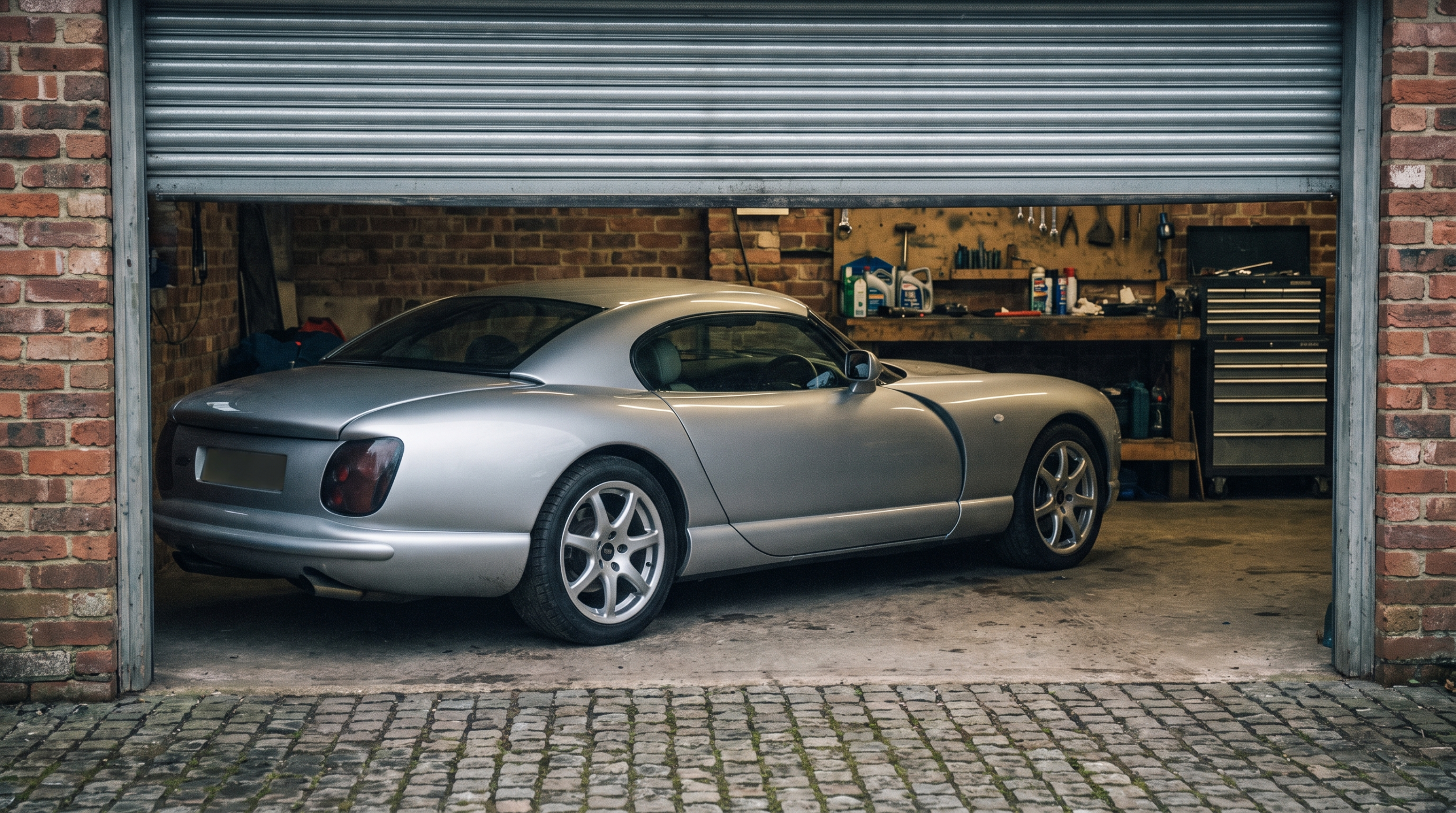
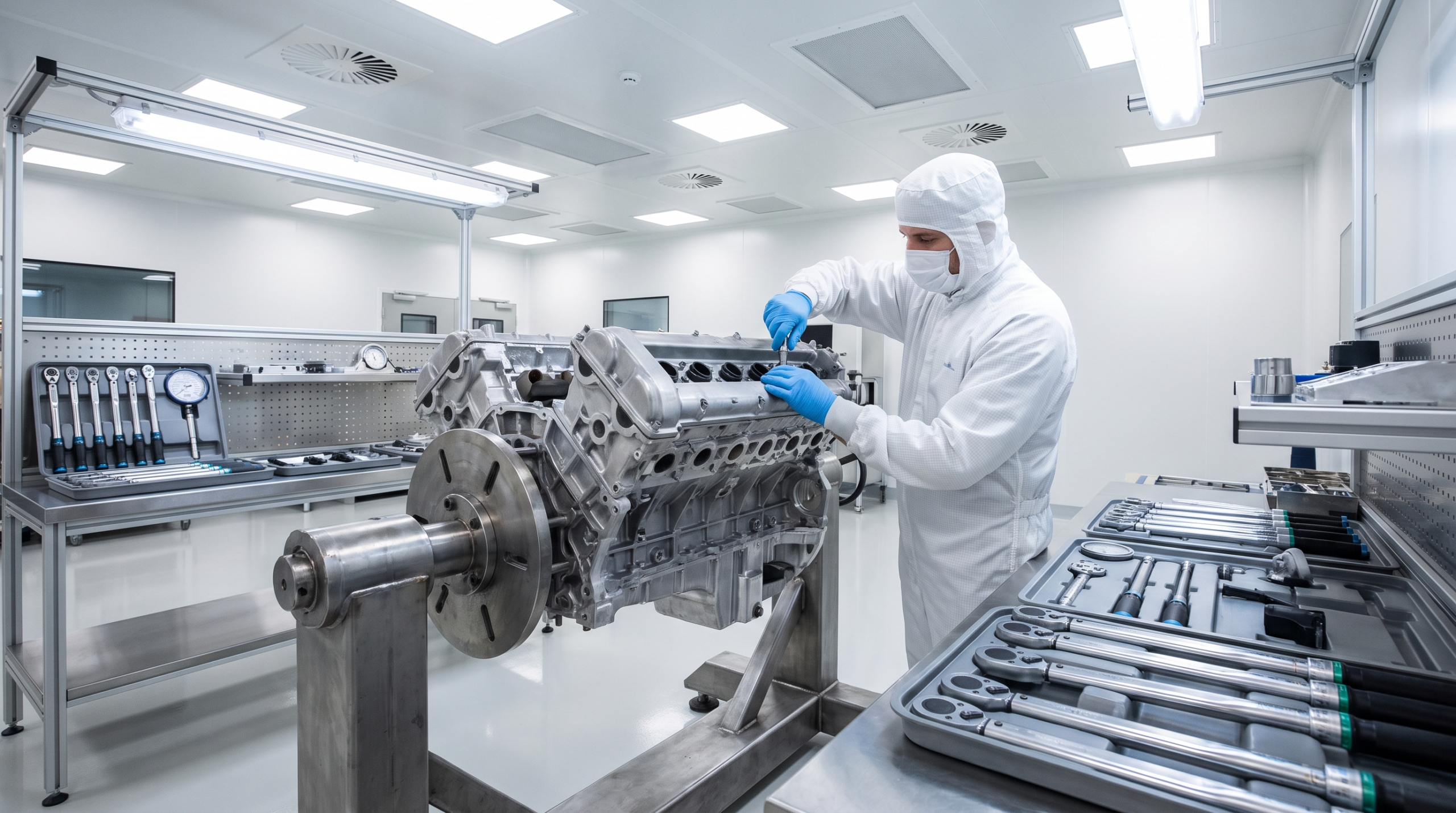
Cosworth builds hypercar engines in Northampton for Bugatti, Aston Martin, Gordon Murray Automotive and Red Bull. Illustrative image.
The Landmark British Supercars, With the Numbers
The badged cars matter too, and a handful of British supercars changed what the category could be.
Car
Years
Built
Why it counts
Lotus Esprit
1976–2004
10,675
Glassfibre on a steel backbone; the long-running proof that light beats powerful
Jaguar XJ220
1992–1994
275–282
217.1 mph at Nardò; built by JaguarSport at Bloxham, not by Jaguar
McLaren F1
1992–1998
106 (64 road)
240.14 mph; still the fastest naturally aspirated production car
Aston Martin One-77
2009–2012
77
7.3-litre V12, 750 hp, carbon monocoque by Multimatic
Aston Martin Vulcan
2015–2016
24
One car for each hour of Le Mans; 7.0-litre V12, 820 hp
Aston Martin Valkyrie
2021–2024
235 road cars
Cosworth 6.5 V12, 1,000 hp at 10,500 rpm and 11,100 rpm max; raced at Le Mans in 2025 and 2026
Gordon Murray T.50
2023–2025
100 road cars
986 kg, fan-driven ground effect, central driving position
Production figures for the landmark British supercars, verified against manufacturer releases and marque records. The XJ220 total is given variously as 275, 281 or 282 depending on whether prototypes and pre-production cars are counted.
Two of the most quoted records in British supercars need their asterisks, because both are routinely quoted without them.
The McLaren F1’s 240.14 mph was set on 31 March 1998 at Volkswagen’s Ehra-Lessien proving ground, with Andy Wallace driving XP5 — a prototype, not a customer car — after the rev limiter was raised to 8,300 rpm mid-session. The Koenigsegg CCR took the outright production record at Nardò in 2005. What the F1 retains is the naturally aspirated crown, which no turbocharged car can take from it.
The XJ220’s 217.1 mph, set by Martin Brundle at Nardò in June 1992, was run with the catalytic converters removed and the limiter raised to 7,900 rpm — worth around 51 PS. The car also arrived with a twin-turbo V6 after the concept had promised a V12, and buyers who had paid £50,000 deposits sued. The judge found for Jaguar.
One shed in Oxfordshire, three flagship British supercars
The Bloxham factory near Banbury is the whole argument about British supercars in miniature. TWR and Jaguar built the XJ220 there, and the XJR-15 before it — 50 planned cars that were arguably the first road cars built entirely from carbon and Kevlar, predating the McLaren F1. The same building was then refitted to build the Aston Martin DB7, a car TWR also designed. Three flagship models, two marques, one industrial estate, none of it owned by the companies whose badges went on the nose.
If you want the individual British supercars in more depth, our guide to the most iconic exotic cars ever made tests nine landmark models against the evidence, and the McLaren W1 deep dive covers the F1’s modern descendant in detail.
Who Owns British Supercars Now
This is the uncomfortable half of the British supercars story, and it is the same pattern we found when we looked at Bentley, Aston Martin and Rolls-Royce: the badges stayed British, the ownership did not.
Marque
Owner
Since
McLaren Automotive
CYVN Holdings, Abu Dhabi — now under L’imad Holding
April 2025; L’imad from January 2026
Lotus
Geely / Li Shufu, China (52.3% of Lotus Technology)
2017
Caterham
VT Holdings, Japan
2021
Morgan
Investindustrial, Italy
2019
Bentley
Volkswagen Group, Germany
1998
Rolls-Royce
BMW, Germany
1998
Aston Martin
Yew Tree consortium, with Saudi PIF and Geely as major holders
2020 onward
Gordon Murray Automotive
Independent, with Halo Cars Group investment
December 2025
Ariel, BAC, Radical, Ginetta
Independent, British
—
Who owns the British supercars marques, as at August 2026. Gordon Murray Automotive and the small independents are now the exceptions rather than the rule.
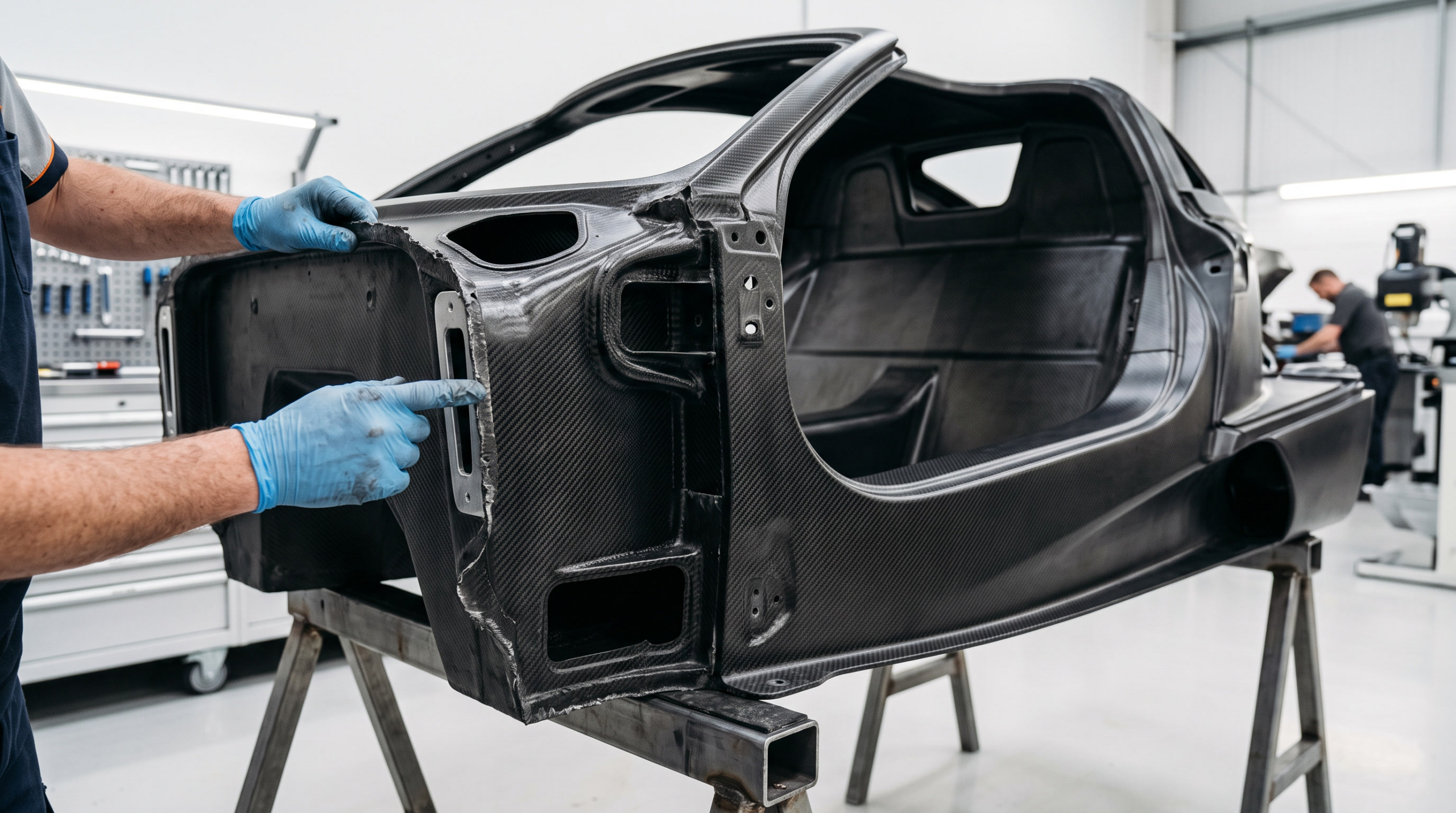
McLaren moulds its own carbon tubs in Rotherham; Multimatic supplied the Valkyrie monocoque. Illustrative image.
2025 and 2026 have been brutal for British supercars
The wider backdrop for British supercars is bleak. UK vehicle production in 2025 fell 15.5% to 764,715 units, the lowest since 1952; car output alone was the lowest since 1956. Through July 2026 it was down another 8.1%. The specific damage in this corner of the industry:
Lotus cut 550 jobs at Hethel in August 2025, roughly half the workforce, after reports that Geely wanted UK production moved to the United States. Lotus denied any closure plan, the Business Secretary intervened, and in May 2026 the CEO called Hethel “the best option for us.” The plant is building about 2,000 cars a year against a capacity of 10,000. Sports car deliveries fell 62% in 2025.
Aston Martin lost £189.2m at the adjusted EBIT line in 2025 and announced cuts of up to 20% of staff, though its first half of 2026 showed revenue up 38% and margins recovering.
McLaren cut production from around 3,000 cars a year to roughly 2,000 for 2025, deliberately, to protect residual values.
TVR has still not built a car. It lost access to its Ebbw Vale factory at the end of 2023, and the Gordon Murray iStream chassis it was designed around is now owned by Forseven, which belongs to McLaren. TVR and Charge Holdings announced a framework for a merger in November 2025.
Set against that, there is genuine new work in British supercars. Gordon Murray Automotive completed its hundredth T.50 and took a $120 million investment in December 2025; its five-car S1 LM sold for $20,630,000 at auction in November 2025, the highest price ever paid for a new car at public auction. McLaren revealed the McL 6GT at Monterey in August 2026 — a V8 with a manual gearbox, its first since the F1, at around $1.5 million for roughly 500 cars in 2028. And a McLaren F1 GTR made $34,655,000 at Monterey in 2026, the most ever paid at public auction for a British-built car.
The Honest Counter-Argument About British Supercars
We should put the strongest version of the case against our reading of British supercars, because it is a good one and this article would be dishonest without it.
Britain does not merely provide services, and British supercars are not a marketing exercise. According to the SMMT, its small-volume luxury and sports car makers turned over £5.5 billion in 2024, export around £5 billion a year, employ over 15,000 people directly and 60,000 more in the supply chain, pay salaries 18% above the national average, and have invested £3.5 billion in research since 2020. They account for 4% of UK car production by volume but 12% of its value and 17% of car export value. That is a manufacturing industry, not a consultancy.
McLaren designs its own cars, moulds its own carbon tubs at a purpose-built centre in Rotherham and assembles them at Woking. Bentley hand-built over 100,000 W12 engines at Crewe before production ended in 2024, each taking around seven hours. Aston Martin builds sports cars at Gaydon and the DBX at St Athan. These are factories.
The rebuttal is a matter of proportion rather than fact, and it still favours reading British supercars as an engineering story. The engineering cluster turns over roughly three times what the branded car makers do and employs more than three times as many people. And the services model has its own fragility: TWR, which engineered the XJ220, the XJR-15 and the DB7, collapsed in 2002 after buying a Formula One team. Williams Advanced Engineering is now an Australian mining subsidiary called Fortescue Zero. Hewland is part-owned by an Indian motorcycle group. Xtrac is private equity. Neither half of this industry is as secure as it looks.
The version that survives every fact above is narrower than the patriotic one and more interesting: Britain’s durable advantage is high-performance engineering and specialist componentry, which it sells to the world — including to its own marques, most of which are now owned abroad. The badges are the marketing. The cluster is the industry.
What This Means If You Are Buying One of Them
Four practical consequences follow for anyone buying one of the British supercars above, and they are the reason this is more than a history lesson.
Parts and service often trace to the supplier, not the marque. A McLaren engine is a Ricardo product; a T.50 or Valkyrie V12 is Cosworth’s; a Pagani gearbox is Xtrac’s. On an out-of-warranty car that can be an advantage, because specialist knowledge exists outside the franchised network — ask who actually built the component before you assume the dealer is the only option.
Small-volume makers carry real continuity risk. TVR has taken deposits and built nothing. Companies in this segment are individually precarious, and a warranty is only as good as the company behind it. Check that the manufacturer is still trading and still supporting the model before you buy.
Ownership changes move values and support. McLaren has changed hands twice at the top in under a year, and Lotus has halved its Hethel workforce. Neither is a reason to avoid the cars, but both are reasons to read the service history and confirm parts availability.
Provenance rewards the documented cars. In a world of shared suppliers, build records, chassis numbers and factory correspondence are what separate two apparently identical cars. Our collector car documentation guide covers what to demand and what a gap is worth as a discount.
The rise of British supercars was never really a rise of brands. It was the slow compounding of a decision made by broke racing teams in the 1950s to buy their engines instead of building them, which created a supplier industry that continental Europe never needed and now cannot replicate.
Those suppliers outlasted most of the marques that spawned them, which is the quiet truth about British supercars. Cooper, Lola, TWR and Ascari are gone. Jaguar no longer builds a supercar. TVR has been reviving for nine years without producing a car. Yet Cosworth is building V16s for Bugatti, Ricardo is shipping transmissions to Molsheim and engines to Woking, and Xtrac is sending gearboxes to Modena.
The next time you read that some new hypercar is Italian or French or German, it is worth asking where the engine was machined and who built the gearbox. More often than the badge suggests, the answer is a business park somewhere between Oxford and Northampton.
British Supercars: Frequently Asked Questions
What makes British supercars different from Italian or German ones?
British supercars differ structurally rather than stylistically. Continental manufacturers historically built complete cars including engines and gearboxes, while British racing teams in the 1950s bought those components from independent suppliers because they could not afford to make them. That created a specialist supplier industry that Italy and Germany never needed. Today it is known as Motorsport Valley, it turned over 16 billion pounds in 2023 and employs about 50,000 people, and it supplies hypercar makers all over the world.
Which supercars are secretly built in Britain?
Several of the cars built by the British supercars industry carry no British badge at all. The 8.3-litre V16 in the Bugatti Tourbillon was designed and manufactured by Cosworth in Northampton. Every Bugatti dual-clutch transmission through the Veyron and Chiron was supplied by Ricardo in the Midlands. The seven-speed gearboxes in the Pagani Huayra and Utopia come from Xtrac in Berkshire. The Mercedes-Benz SLR McLaren was assembled at the McLaren Technology Centre in Woking with a carbon body made in Portsmouth. Red Bull RB17 uses a Cosworth V10.
Are any British supercar makers still British-owned?
Very few of the British supercars marques are. McLaren Automotive is owned by CYVN Holdings of Abu Dhabi, now under the L’imad Holding Company. Lotus is controlled by Geely of China. Caterham belongs to VT Holdings of Japan, Morgan to Italy’s Investindustrial, Bentley to Volkswagen and Rolls-Royce to BMW. Aston Martin has a British-led consortium at the top but Saudi and Chinese investors hold large stakes. Gordon Murray Automotive, Ariel, BAC, Radical and Ginetta remain independent and British.
Is the McLaren F1 still the fastest car ever made?
No, but its specific record still stands. The F1 reached 240.14 mph on 31 March 1998 at the Ehra-Lessien proving ground with Andy Wallace driving. Two caveats are usually left out: the car was XP5, a prototype rather than a customer car, and the rev limiter was raised to 8,300 rpm during the session. Koenigsegg took the outright production record with the CCR at Nardo in 2005. The F1 remains the fastest naturally aspirated production car ever built.
What happened to TVR?
It has been reviving for almost a decade without building a car. The new Griffith was launched at Goodwood in 2017 and the Welsh Government committed money towards a factory at Ebbw Vale, but the funding became tangled in state aid rules and TVR lost access to the site at the end of 2023. Separately, the Gordon Murray iStream chassis the car was engineered around was sold to Forseven, which now belongs to McLaren. Charge Holdings acquired TVR in November 2025 and says it will finish the V8 Griffith for existing customers.
How big is the British supercar industry really?
Two numbers answer this. British supercars are measured in two separate ways. The specialist car makers themselves turned over 5.5 billion pounds in 2024, export about 5 billion a year and employ over 15,000 people directly, accounting for 4 percent of UK car production by volume but 17 percent of car export value. The engineering cluster behind them is roughly three times larger at 16 billion pounds and 50,000 people. Both are real, and the cluster is the bigger of the two.
Which British supercar is the most valuable?
The McLaren F1, by a wide margin, is the most valuable of all British supercars. A 1996 F1 GTR sold for 34,655,000 dollars at RM Sotheby’s in Monterey in 2026, the highest price ever paid at public auction for a British-built car, and a 1994 road car made 25,317,500 dollars in Abu Dhabi in late 2025. The Gordon Murray S1 LM set a different record in November 2025 when one of the five cars sold for 20,630,000 dollars, the most ever paid for a new car at auction.
Is Lotus still building cars in the UK?
Yes, at Hethel in Norfolk, though on a much reduced scale. Lotus cut 550 jobs there in August 2025, roughly half the workforce, after reports that Geely wanted production moved to the United States. Lotus denied any closure plan and the UK Business Secretary intervened. In May 2026 the CEO called Hethel the best option for building the hybrid Emira and the new Type 135, and in August 2026 Lotus Technology took full ownership of the UK business. The plant is currently building around 2,000 cars a year against a capacity of 10,000.
Owning an exotic car is not about speed or luxury- It’s about embracing an experience, where the road becomes your canvas and the car, your masterpiece.
991.2 or 992? A buyer's guide to the used Porsche 911 Carrera decision: transmissions, body styles, options, inspection, warranty, running costs and the real price gap.
What a real exotic car pre-purchase inspection (PPI) should include: choosing an independent marque specialist, lift checks, paint readings, factory diagnostics, service records, the road test, and how to use the findings before you pay a deposit.
The FTC’s September 2026 pricing FAQs say a car’s advertised price must be one any buyer can pay, on Instagram, marketplaces and dealer sites alike. Here is what that means for exotic and luxury dealers.