The fastest McLaren road car ever built is still the one from 1992.
That is not a nostalgic flourish. The McLaren F1 ran 240.14 mph at Ehra-Lessien in March 1998 — in XP5, a prototype rather than a customer car, and with the rev limiter raised for the run. The McLaren W1, revealed thirty-two years later with more than twice the power, is electronically limited to 217 mph — and McLaren limited it deliberately, having decided that chasing a bigger number would make the car worse everywhere it actually matters.
Nearly two years on from the reveal, the McLaren W1 has been built, driven hard at Mugello by most of the world’s motoring press, and quietly overtaken by a change of ownership at the company that makes it. This is where the car stands now: what McLaren actually publishes, what the people who have driven it concluded, and what it takes to get near one.
Quick Answer: What Is the McLaren W1?
The McLaren W1 is McLaren’s third “1” car, following the F1 and the P1. It pairs a 4.0-litre twin-turbocharged flat-plane V8 — the MHP-8, good for 928 PS on its own — with a 347 PS electric module, for 1,275 PS. That is 1,258 bhp, not 1,275 bhp, a distinction most coverage gets wrong. It drives the rear wheels only, through an 8-speed dual-clutch gearbox with no reverse gear. 0–60 mph takes 2.7 seconds, top speed is limited to 217 mph, dry weight is 1,399 kg, and just 399 were built — every one allocated before the public saw the car. UK pricing started around £2.0 million including taxes; US pricing around $2.1 million before tax and destination.
On This Page
Five McLaren W1 Numbers That Get Misreported
Several of the most widely repeated figures for this car do not match McLaren’s own specification sheet. If you are comparing the McLaren W1 against its rivals, or valuing one, these are the five worth checking before you rely on them.
Figure in wide circulation
What McLaren actually publishes
“1,275 hp”
1,275 is the PS figure. The bhp number is 1,258. PS is metric horsepower and is about 1.4% smaller than the imperial kind.
“Top speed over 220 mph”
217 mph (350 km/h), and electronically limited. The 220 comes from rounding the metric figure carelessly.
“Kerb weight 1,399 kg”
1,399 kg is the lightest dry weight. McLaren publishes no kerb weight at all, so any figure you see is somebody’s estimate.
“9,000 rpm redline”
9,200 rpm electronic limit — more than any previous road-legal McLaren.
A Nurburgring lap time around 6:30
No official lap time exists for the McLaren W1 at any circuit. The figures in circulation are user-submitted simulations from enthusiast forums.
Commonly quoted McLaren W1 figures against McLaren’s published specification.
The horsepower one is worth dwelling on, because almost everybody repeats it. Copying “1,275” straight from a European release into an English-language specification inflates the car by seventeen horsepower. Wikipedia, several major outlets and a great many video thumbnails print “1,275 hp”. McLaren does not, and the difference matters the moment you line the McLaren W1 up against a rival quoted properly in bhp.
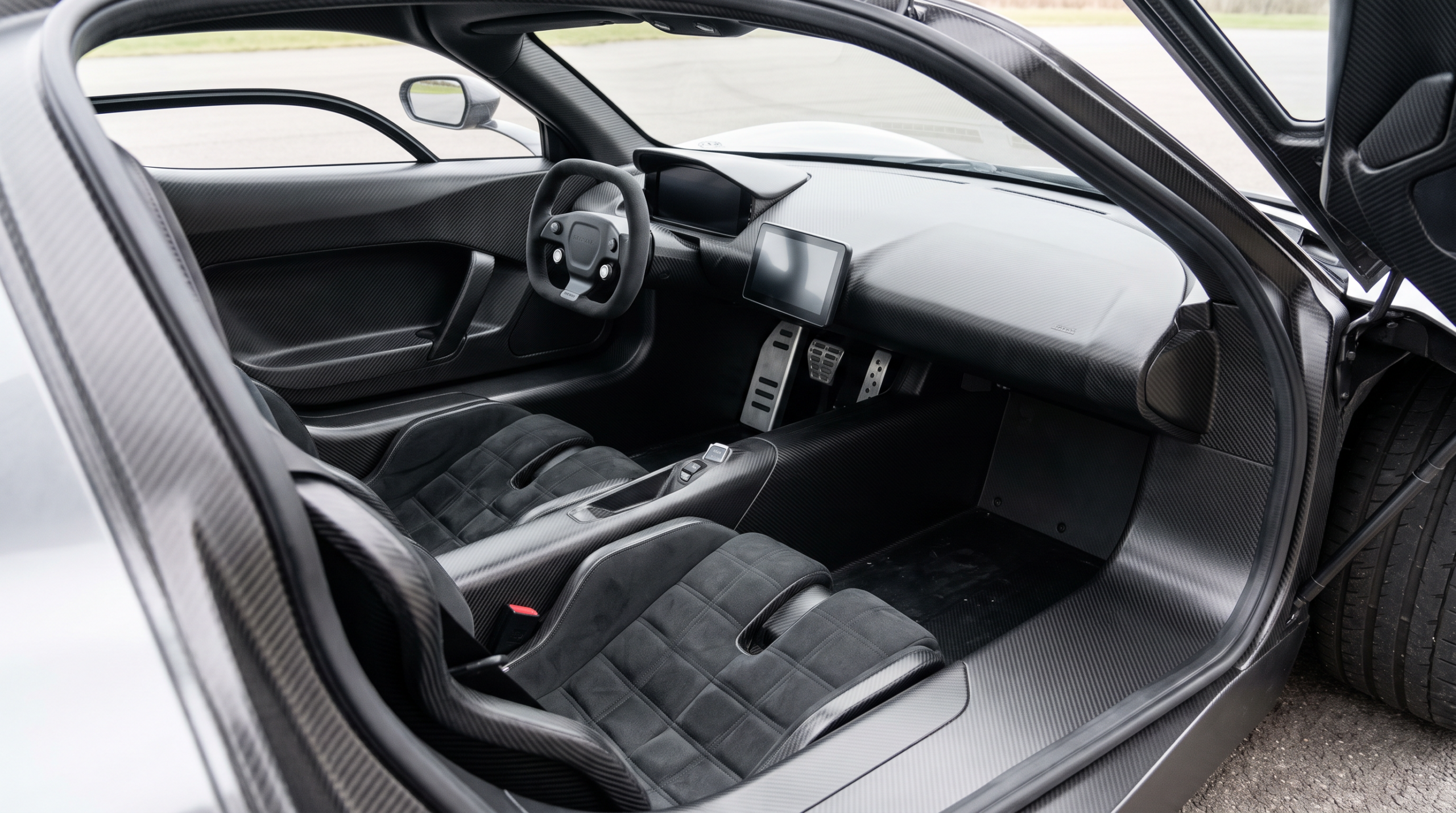
One more thing that gets embellished: the cabin. The McLaren W1 has a single 8-inch touchscreen with Apple CarPlay and USB-C. There is no Android Auto and no head-up display, and McLaren has never described the driver display as customisable. It is a deliberately austere interior, and specification lists that dress it up are describing a different car.
McLaren W1 Specifications
Every figure below comes from McLaren’s own published press material. Where McLaren has not published something — and there are a few — we say so rather than borrowing an estimate from elsewhere.
McLaren W1
Figure
Engine
MHP-8, 3,988 cc 90° twin-turbo flat-plane V8, 9,200 rpm limit
1.384 kWh; up to 2 km (about 1.2 miles) electric-only
Transmission
8-speed dual-clutch with E-reverse — no mechanical reverse gear
Drive
Rear-wheel drive
0–60 mph
2.7 sec
0–124 mph (200 km/h)
5.8 sec
0–186 mph (300 km/h)
Under 12.7 sec
Top speed
350 km/h / 217 mph, electronically limited
Lightest dry weight
1,399 kg (3,084 lb). McLaren publishes no kerb weight.
Power to weight
911 PS per tonne (899 bhp per tonne), against dry weight
Downforce
Limited to 1,000 kg (2,205 lb) at 280 km/h — 350 kg front, 650 kg rear
Brakes
390 mm carbon ceramic front and rear; 6-piston front, 4-piston rear monobloc
Braking
200–0 km/h in 100 m; 100–0 km/h in 29 m
Tyres
Pirelli P Zero Trofeo RS, bespoke compound; 265/35 R19 front, 335/30 R20 rear
Production
399 customer cars
McLaren W1 specification, from McLaren’s published press material. Peak-power rpm, kerb weight and drag coefficient are not published figures.
The Most Interesting Number Is the One They Capped
A 1,258 bhp hypercar that stops accelerating at 217 mph looks, at first glance, like performance left on the table. It is the opposite. It is the clearest statement of intent McLaren has made in a decade.
Vehicle line director Alex Gibson has said outright that ultimate top speed was “not a number that we’re chasing with this product”, and gave the engineering reason: sustaining 250 to 280 mph demands tyre sidewalls stiff enough to ruin the car on a road. Head of performance Marcus Waite framed the limiter as a balance decision across everything else the McLaren W1 has to do.
Look at what they spent the speed on instead. The McLaren W1 generates 1,000 kg of downforce at 174 mph — 350 kg front, 650 kg rear — while producing 20% less drag than a Senna with its rear wing in the low-drag setting. A car geared and shaped for 280 mph cannot carry that much wing. McLaren chose cornering and braking over a headline, and published the trade openly instead of hiding it.
Notice too that the P1 was limited to exactly the same 217 mph back in 2013. Three generations in, the only McLaren that ever chased V-max is the one from 1992, and it still holds the family record. We covered how electrification changed the terms of that argument in electric supercars versus combustion.
What the Active Long Tail Actually Does
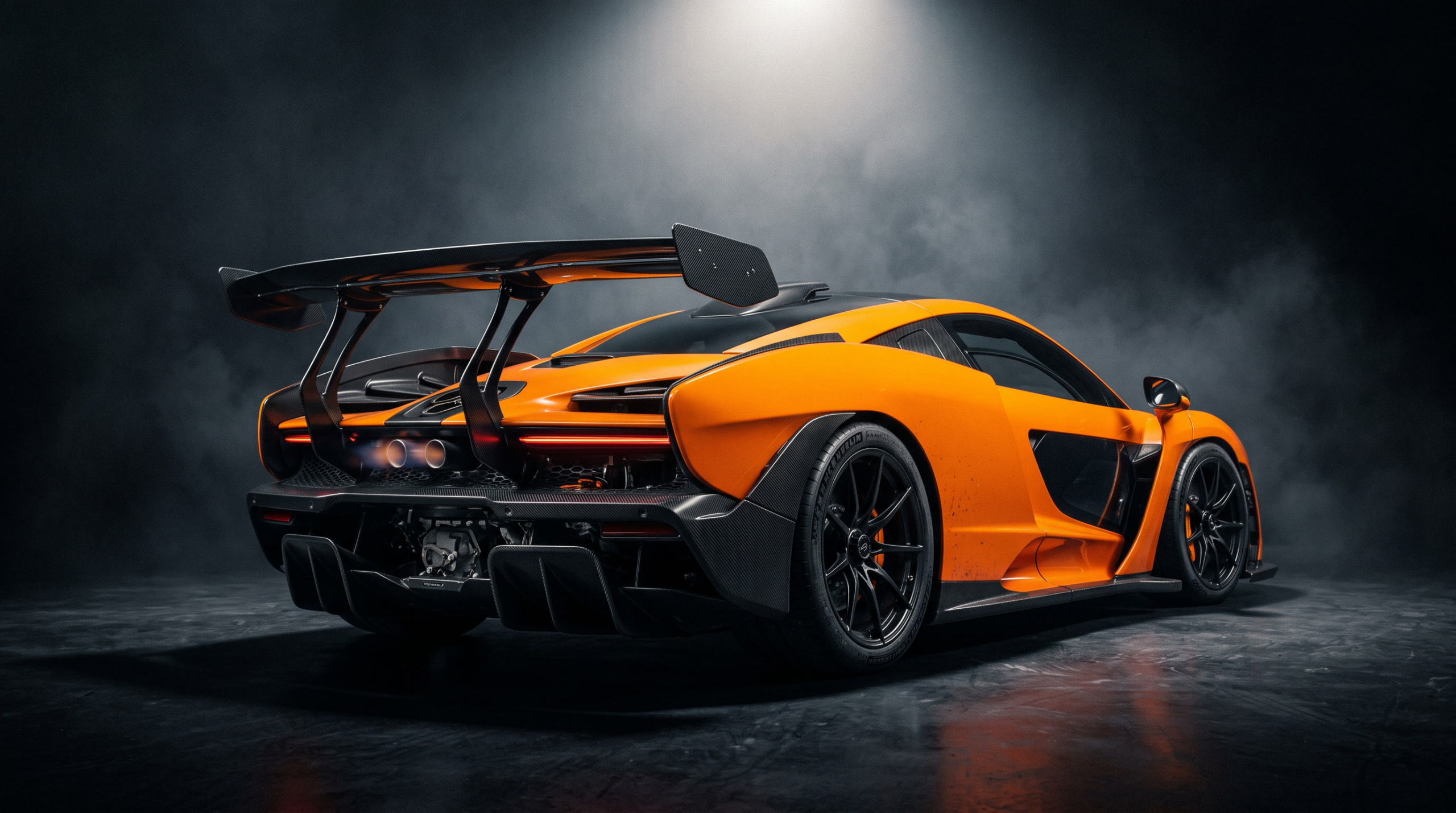
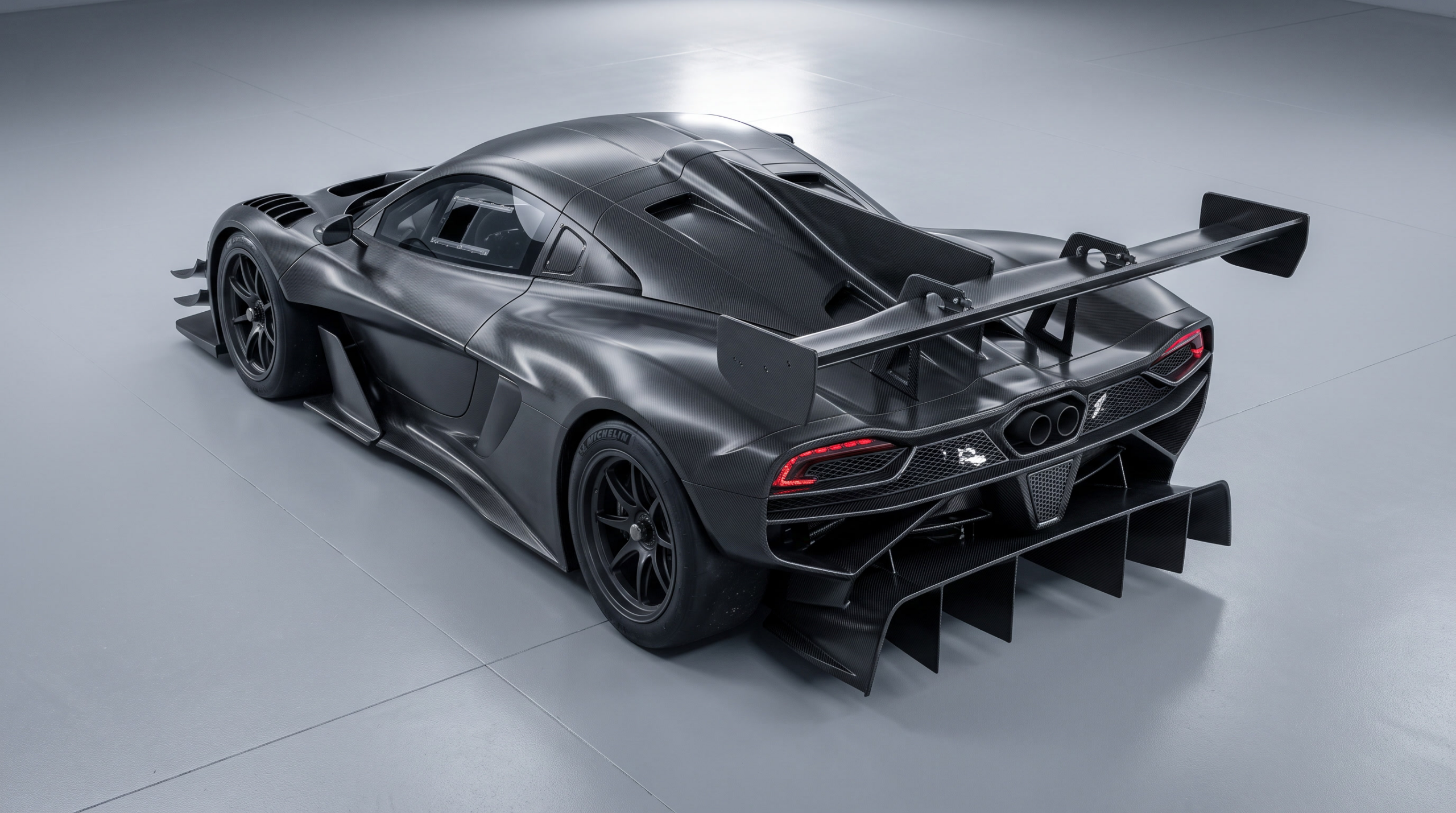
McLaren calls the rear aero the Active Long Tail, and the name is literal rather than decorative. In Race mode the wing travels 300 mm rearwards through a 180-degree arc, until its leading edge sits behind the trailing edge of the diffuser. At that point it stops behaving like a wing bolted to the bodywork and starts behaving like an extension of the floor.
That is the whole idea. The McLaren W1 makes its downforce underneath rather than on top. A narrow-waisted monocoque, a Formula 1-style T-tray and keel, and the most aggressive diffuser McLaren has put on a road car channel air along the underside; the wing exists to seal and balance that, and to work as an airbrake under deceleration. Conventional upper-body wings buy downforce and pay for it in drag. Ground effect does not charge the same rent.
The front is active too, and works in the direction you might not expect: under braking the front wing sheds load from its outboard sections to move balance rearwards, while protecting brake cooling. Six actuators drive the two wings. McLaren says the package took at least 350 hours of wind tunnel time and more than 3,000 CFD runs.
Select Race and the McLaren W1 also drops 37 mm at the front and 17 mm at the rear, stiffens sharply, and deploys an active heave element in the inboard front suspension. Pushrods and torsion bars feeding inboard dampers are a first for a McLaren road car, and they are there for aerodynamic packaging rather than for their own sake.
Five Details Worth Knowing About the McLaren W1
There is no reverse gear. The gearbox is an 8-speed dual-clutch with E-reverse: the electric motor simply spins backwards. McLaren does the same on the Artura. It removes the mass and packaging of a reverse gear entirely.
The seats are part of the chassis. They are integrated into the Aerocell carbon monocoque and do not move. The pedal box slides fore and aft instead, which is how a car with fixed seating accommodates drivers of different heights.
You can see the tub from inside and out. The Aerocell is finished in 3K gloss carbon as a visible surface rather than hidden under trim, using a pre-preg process McLaren describes as more usual in low-volume motorsport.
The steering wheel has two buttons. Boost, and Aero Deployment. Everything else sits on rocker switches on the instrument binnacle, which moves with the column.
It will travel about 1.2 miles on electricity. The battery is 1.384 kWh. This is not a plug-in hybrid in any meaningful sense: the electric module exists to fill torque and to reverse the car, not to save fuel.
The doors deserve a line as well. They are anhedral — a first for McLaren, replacing the dihedral arrangement the brand has used since the F1 — opening upward into recesses cut in the roof, and sculpted concave on the inside to buy back cabin space.
Illustrative rendering. Downforce is made underneath the McLaren W1; the wing seals and balances the floor rather than doing the work alone.
What Happened When People Finally Drove the McLaren W1
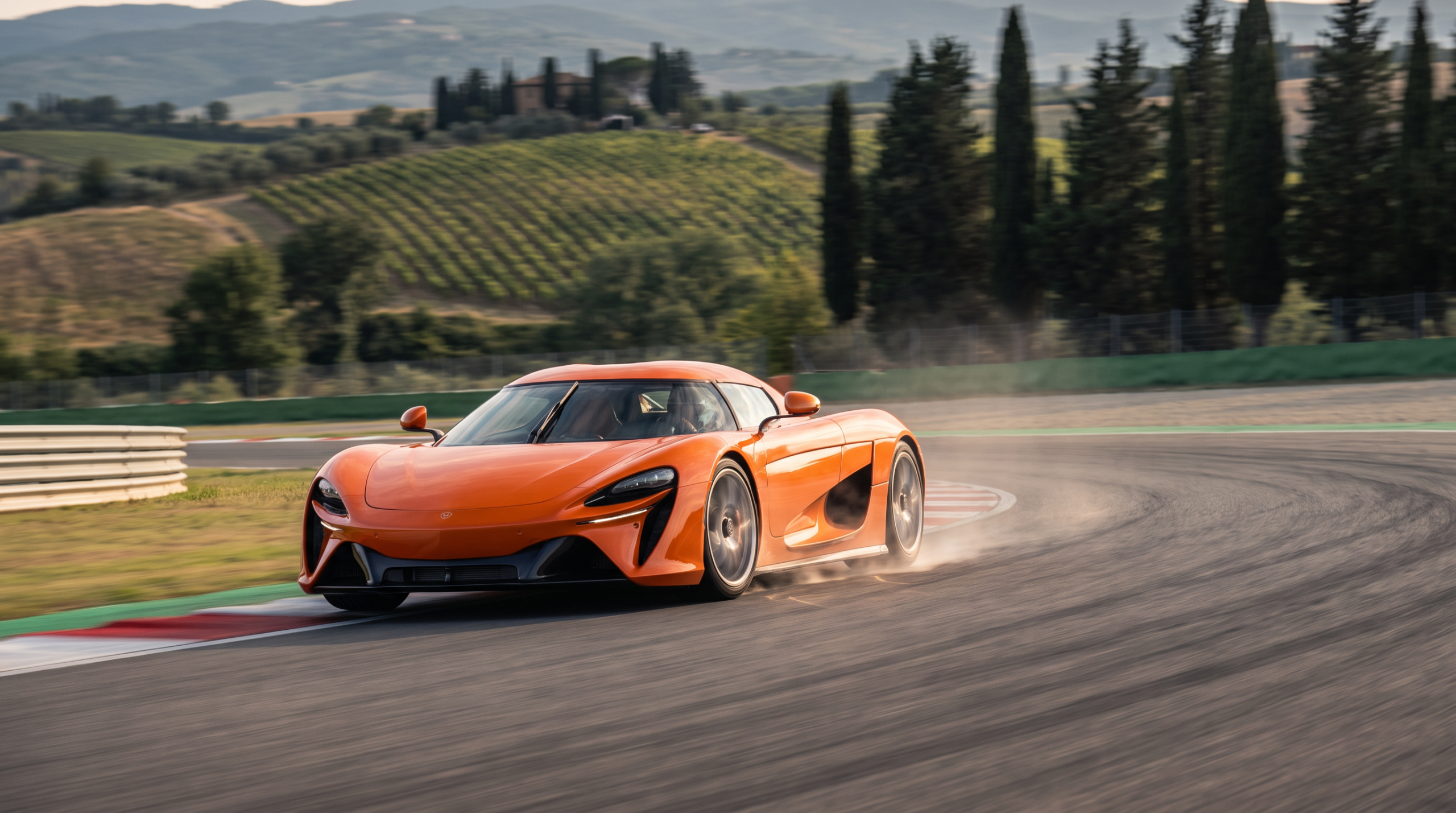
The global press drive ran at Mugello in Tuscany, with road loops over the Futa and Raticosa passes. Reviews published on 29 June 2026 — nearly twenty-one months after the reveal, a reminder that the gap between a hypercar reveal and a verdict is now measured in years rather than months.
The McLaren W1 verdicts were close to unanimous. Top Gear scored it ten out of ten and called it “a car of singular purpose and precision”. Auto Express gave five stars and found it surprisingly easy to drive for something with this specification. evo landed on evolution rather than revolution, and meant it as a compliment.
The criticisms are the more useful half, and they clustered tightly:
It does not sound as good as it goes. This came up in almost every review. Top Gear judged the Ferrari F80 the better-sounding car despite having two fewer cylinders; others missed the theatre of the P1.
The gearbox is merely very good. Several testers rated Ferrari’s shift the more thrilling of the two.
It lacks the shock of the F80. The McLaren W1 is the more resolved car and the less startling one. Whether that matters is a question about you rather than about the car.
Rear-wheel drive costs it off the line. 2.7 seconds to 60 mph is quick rather than staggering next to all-wheel-drive rivals, and it is the one number where the McLaren W1 does not dominate its class.
Small things. No front boot, tight headroom for tall drivers, and an electric range measured in single-digit kilometres.
One reviewer went further and questioned whether the McLaren W1 will ever acquire the mythology of the F1, doubting we will be discussing eight-figure auction results for it in thirty years. That is a judgement rather than a fact, and it is worth sitting with, because it is the one thing a specification sheet genuinely cannot settle.
On lap times: there aren’t any
The McLaren W1 has no officially recorded lap time at any named circuit. No Nurburgring run, no Silverstone time, nothing. What McLaren has published is a comparative claim — three seconds a lap faster than a Senna at its Nardo reference circuit — and McLaren does not say whether that margin was driven or simulated.
If you find a Nordschleife time for this car online, check the source before repeating it. The figures in circulation are user-submitted simulation estimates from enthusiast forums, not timed laps. For the record, the Nordschleife production-car record still belongs to the Mercedes-AMG One at 6:29.09, set in September 2024.
Illustrative rendering. The global press drive ran at Mugello in Tuscany, with reviews published on 29 June 2026.
McLaren W1 Price, Allocation and Whether You Can Still Buy One
Short answer: not from McLaren, and not since the afternoon of 6 October 2024.
McLaren listed the car from about £2.0 million including taxes in the UK and about $2.1 million in the United States before tax and destination. Two different conventions, which is why you will see both quoted as though one must be wrong. Both are McLaren’s own figures, and MSO personalisation moves the final number substantially. If you see $2.6 million quoted, that figure has circulated since launch day and does not match McLaren’s release.
All 399 customer cars were allocated before the reveal, and the process is worth understanding because it is not how most cars are sold. McLaren picked the buyers, not the dealers. Retailers submitted customer profiles — ownership history, McLaren ownership specifically, service records, event participation — and McLaren selected from them, screening explicitly for people who intended to keep the car rather than flip it.
Which makes what happened next mildly awkward. In November 2025 a European dealer advertised a W1 build slot at roughly €4.5 million, more than double list, before the car physically existed. A Slovakian dealer listed one at price-on-request in April 2026. Neither is a delivered car. Both are allocations.
No McLaren W1 has yet sold at public auction anywhere. None crossed the block at Monterey in August 2026, where the McLaren story was instead a 1995 F1 GTR making $34.655 million at RM Sotheby’s — the most expensive British car ever sold at auction — alongside two Lanzante-converted P1s between $3.1 and $3.6 million. Those P1 results are the more instructive comparison for anyone thinking about this car as an asset, and we work through how early-market spikes usually resolve in our guide to exotic car values that are actually appreciating.
One caveat we will not paper over: whether McLaren imposed a contractual resale restriction on W1 buyers has never been reported either way, and Ultimate Series purchase agreements are not public. We know McLaren screened for flippers before the sale. We do not know whether anything binds owners after it, and anyone telling you confidently in either direction is guessing.
Where deliveries actually stand
McLaren W1 production was originally meant to begin in 2025, with deliveries in early 2026. Series production actually started at Woking at the beginning of 2026 — a year late — and McLaren has never publicly acknowledged the slip or explained it. Press cars were running at Mugello in June 2026, and reporting in May 2026 put first customer deliveries in the summer.
What is missing is a first-delivery announcement. McLaren issued one when Senna 001 was handed over in 2018; nothing equivalent has appeared for the McLaren W1. So the accurate statement as at late August 2026 is that production is running, press cars are in circulation, and the first customer handover has not been publicly confirmed.
What the McLaren W1 Is Actually Up Against
Two of the cars routinely listed as McLaren W1 rivals are no longer in production, which changes the shape of the fight considerably.
Car
Powertrain
Output
Built
Status
McLaren W1
4.0 twin-turbo V8 hybrid, RWD
1,275 PS / 1,258 bhp
399
Current
Ferrari F80
3.0 twin-turbo V6 hybrid, AWD
1,200 PS / 1,184 bhp
799
Current
Bugatti Tourbillon
8.3 naturally aspirated V16 hybrid, AWD
1,800 PS / 1,775 bhp
250
Current
Koenigsegg Jesko
5.0 twin-turbo V8, RWD
1,280 bhp on petrol / 1,600 bhp on E85
125
Current
Pagani Utopia
6.0 twin-turbo V12, no hybrid
864 PS / 852 bhp
99 coupe + 130 roadster
Current
Aston Martin Valkyrie
6.5 naturally aspirated V12 hybrid, RWD
1,176 PS / 1,160 bhp
150 coupe + 85 Spider
Ended Dec 2024
Mercedes-AMG One
1.6 turbo V6 F1 hybrid, AWD
1,063 PS / 1,049 bhp
275
Ended 2025
The hypercar field as at August 2026. Porsche has no entry — the Mission X remains a concept and has never been confirmed for production.
The real head-to-head is the Ferrari F80: same year, same hybrid logic, and the car every reviewer reached for. Ferrari builds twice as many, charges roughly twice as much, and drives all four wheels. Ferrari also, by broad agreement among people who have driven both, makes the better noise and the better gearshift from a smaller engine. McLaren’s answer is a lighter, more mechanically direct car with a genuinely different aerodynamic philosophy. If the category interests you, our piece on the Ferrari 849 Testarossa shows what the same technology looks like a tier below.
The Bugatti sits in a different conversation entirely: naturally aspirated V16, 1,800 PS, and a philosophy of grand touring rather than lap time. Koenigsegg’s headline 1,600 bhp needs E85 to exist. Pagani is 400 bhp adrift and does not care, which is a legitimate position.
F1, P1, W1: What the Name Means and How the Three Compare
McLaren says the W1 name celebrates the company’s “World Championship mindset”, and timed the reveal — 1pm on 6 October 2024 — to the fiftieth anniversary of McLaren winning its first Formula 1 Constructors’ Championship, the season Emerson Fittipaldi also took the Drivers’ title. McLaren has never stated that the letter stands for “World Champion”; that is a reasonable inference rather than a quote, and plenty of coverage presents it as the latter.
McLaren F1 (1992)
McLaren P1 (2013)
McLaren W1 (2024)
Engine
6.1 naturally aspirated V12
3.8 twin-turbo V8 hybrid
4.0 twin-turbo V8 hybrid
Power
627 PS / 618 bhp
916 PS / 903 bhp
1,275 PS / 1,258 bhp
Dry weight
about 1,138 kg
1,395 kg
1,399 kg
Top speed
240.1 mph
217 mph (limited)
217 mph (limited)
Built
106 (all variants)
375
399
Price new
£540,000
£866,000
about £2.0 million
Price in 2026 money
about £1.45 million
about £1.29 million
about £2.0 million
Inflation adjustment via the UK ONS composite price index. The 2026 component is a forecast, so treat the adjusted figures as close approximations.
Two things fall out of that table. The McLaren W1 is the most expensive of the three in real terms, roughly 38% above the F1 and 55% above the P1 once you adjust for inflation. And the 1992 car is still the fastest. Everything else has moved enormously; those two facts have not.
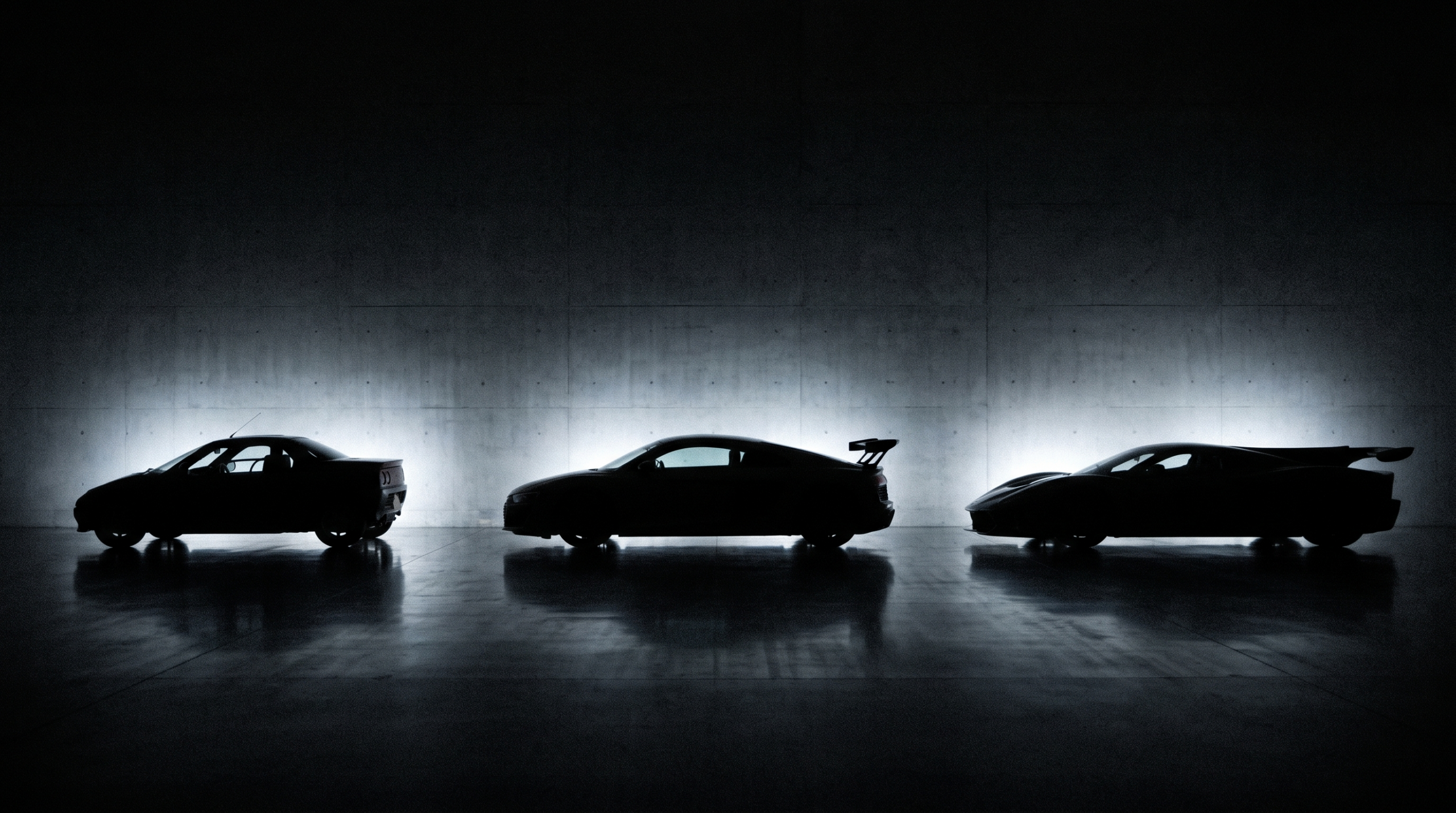
Illustrative rendering of the three-car idea: F1 in 1992, P1 in 2013, W1 in 2024.
The Thing That Changed Around the Car: McLaren Has New Owners
This is the part no October 2024 article could have told you, and it matters to anyone buying anything with a McLaren badge.
In December 2024, two months after the McLaren W1 was revealed, Bahrain’s Mumtalakat agreed to sell McLaren’s automotive business to CYVN Holdings of Abu Dhabi. The deal completed on 3 April 2025. A new parent, McLaren Group Holdings, was created, folding in a previously stealthy CYVN-owned British startup called Forseven along with its 700-plus engineers.
Get the structure right, because it trips people up: McLaren Automotive is now wholly owned by CYVN. McLaren Racing is not. The Formula 1 team sits under a separate company in which Mumtalakat remains the majority shareholder and CYVN holds a non-controlling stake. Writing about “McLaren’s Abu Dhabi owners” as though it covers both is simply wrong.
Three consequences worth knowing:
The chief executive who launched the car is gone. Michael Leiters left in April 2025, weeks after completion, with no public explanation. He became CEO of Porsche on 1 January 2026. Nick Collins, previously Forseven’s chief executive and before that an engineering leader at JLR and Ford of Europe, runs McLaren Automotive now.
The company is out of debt. The recapitalisation let McLaren repay its public bond and loan facilities in full, and Collins has since described the business as debt-free. Reporting puts CYVN’s investment at around £1.5 billion for range expansion, on top of the purchase itself.
Volume was deliberately cut. McLaren reduced output by roughly a thousand cars in 2025, to about 2,000, to clear dealer stock and protect residual values — a decision that matters more to a used McLaren buyer than almost anything on a specification sheet.
Product direction has moved as well, and not in the direction the April 2025 coverage predicted. Every McLaren launching before 2030 is combustion or hybrid; Collins has said an EV arrives when customers want one, and that right now they do not. Since the takeover McLaren has revealed the 788HS, a 200-unit send-off for the 720S and 750S line, and at Monterey in August 2026 the McL 6GT concept — a roughly 500-unit, circa $1.5 million production car for 2028 with a manual gearbox, the first in a McLaren since the F1. Collins has also said repeatedly, without naming a body style, that something with more than two seats is coming.
None of this appears to have touched the McLaren W1 programme itself. The car was revealed before the sale, sold out before the sale, and is being built at Woking as planned. But the McLaren that will service and stand behind that car for the next twenty years is a materially different company from the one that launched it: better capitalised, differently owned, differently led, and moving into segments it has never sold into.
If You Are Trying to Buy a McLaren W1
The honest position, from people who trade these cars rather than write about them.
Any McLaren W1 offered today is almost certainly an allocation, not a car. Verify that a physical vehicle exists, with a VIN, before any money moves. A build slot is a contract with a third party, not a hypercar.
Ask what McLaren thinks of the transfer. Allocations were awarded to named people after a selection process. Whether they can be assigned, and what assigning one does to the buyer’s standing for future Ultimate Series cars, is a question for McLaren rather than for the seller.
Treat asking prices as fiction until something sells. A €4.5 million ask and a $2.1 million ask both exist right now for the same model. No McLaren W1 has traded publicly. Until one does, nobody knows the number.
The P1 is the useful comparison, not the F1. Two Lanzante P1s made between $3.1 and $3.6 million at Monterey in August 2026, against £866,000 new. That is the realistic shape of the curve, and it took twelve years to develop.
Budget beyond the car. Carbon-ceramic consumables, bespoke Trofeo RS rubber, and an insurance quote that reflects 1,258 bhp. Get the numbers before you commit, not after.
Our family has been selling cars for more than a century, and the pattern with a halo car this early is dependable: the first market pays for scarcity, the scarcity settles, and the cars that hold their money are the ones with a story attached — an early build, a rare specification, a documented history. If this is your first car at this level, our first-time exotic car buyer’s guide and our collector car documentation guide cover the parts that catch people out.
Illustrative rendering. The real cabin has one 8-inch screen, Apple CarPlay, two buttons on the wheel — and no head-up display.
McLaren W1 FAQ
How much horsepower does the McLaren W1 have?
1,275 PS, which is 1,258 bhp. The 4.0-litre twin-turbocharged MHP-8 V8 contributes 928 PS (916 bhp) and 900 Nm on its own, and a 347 PS (342 bhp) electric module supplies the rest. Combined torque is 1,340 Nm, or 988 lb-ft. Note that most coverage prints 1,275 hp, which is wrong: 1,275 is the metric PS figure and the correct bhp number is 1,258.
How fast is the McLaren W1?
0 to 60 mph takes 2.7 seconds, 0 to 124 mph takes 5.8 seconds, and 0 to 186 mph takes under 12.7 seconds. Top speed is 350 km/h, or 217 mph, and it is electronically limited. McLaren says openly that ultimate top speed was not a target for this car, because the tyre construction needed to sustain 280 mph would compromise everything else about it.
How much does a McLaren W1 cost?
McLaren listed it from about 2.0 million pounds including taxes in the UK, and about 2.1 million dollars in the United States before tax and destination. MSO personalisation raises that considerably. A figure of 2.6 million dollars circulates widely but does not match McLaren published pricing.
How many McLaren W1s were made?
399 customer cars. All 399 were allocated before the public reveal on 6 October 2024, and McLaren rather than its dealers selected the buyers, screening for people who intended to keep the car. Prototypes and press cars sit outside that number, but McLaren has never said how many of those exist.
Can you still buy a McLaren W1?
Not from McLaren. Every car was allocated on reveal day. A small number of build slots and allocations have been advertised by dealers, at prices ranging from list to roughly 4.5 million euros, but as of late August 2026 no McLaren W1 has sold at public auction and no achieved sale price is on record anywhere.
Does the McLaren W1 have a reverse gear?
No. The gearbox is an 8-speed dual-clutch with what McLaren calls E-reverse: the car reverses by running its electric motor backwards, exactly as the Artura does. Removing the reverse gear saves both weight and packaging space.
Is the McLaren W1 faster than the McLaren F1?
Around a circuit and away from a standstill, comprehensively. In a straight line, no. The 1992 McLaren F1 recorded 240.14 mph in 1998 — in XP5, a prototype rather than a customer car, with the rev limiter raised for the run — while the W1 is limited to 217 mph, the same figure as the P1. The F1 remains the fastest road car McLaren has ever built.
What does W1 stand for?
McLaren says the name celebrates the company World Championship mindset, and timed the reveal to the fiftieth anniversary of McLaren first Formula 1 Constructors Championship in 1974, the year Emerson Fittipaldi also took the Drivers title. McLaren has never stated that the W literally stands for World Champion.
Owning an exotic car is not about speed or luxury- It’s about embracing an experience, where the road becomes your canvas and the car, your masterpiece.
What owning a Lamborghini actually involves: how allocation really works, the five-year maintenance programme, real clutch and service bills, insurance, values and Polo Storico.