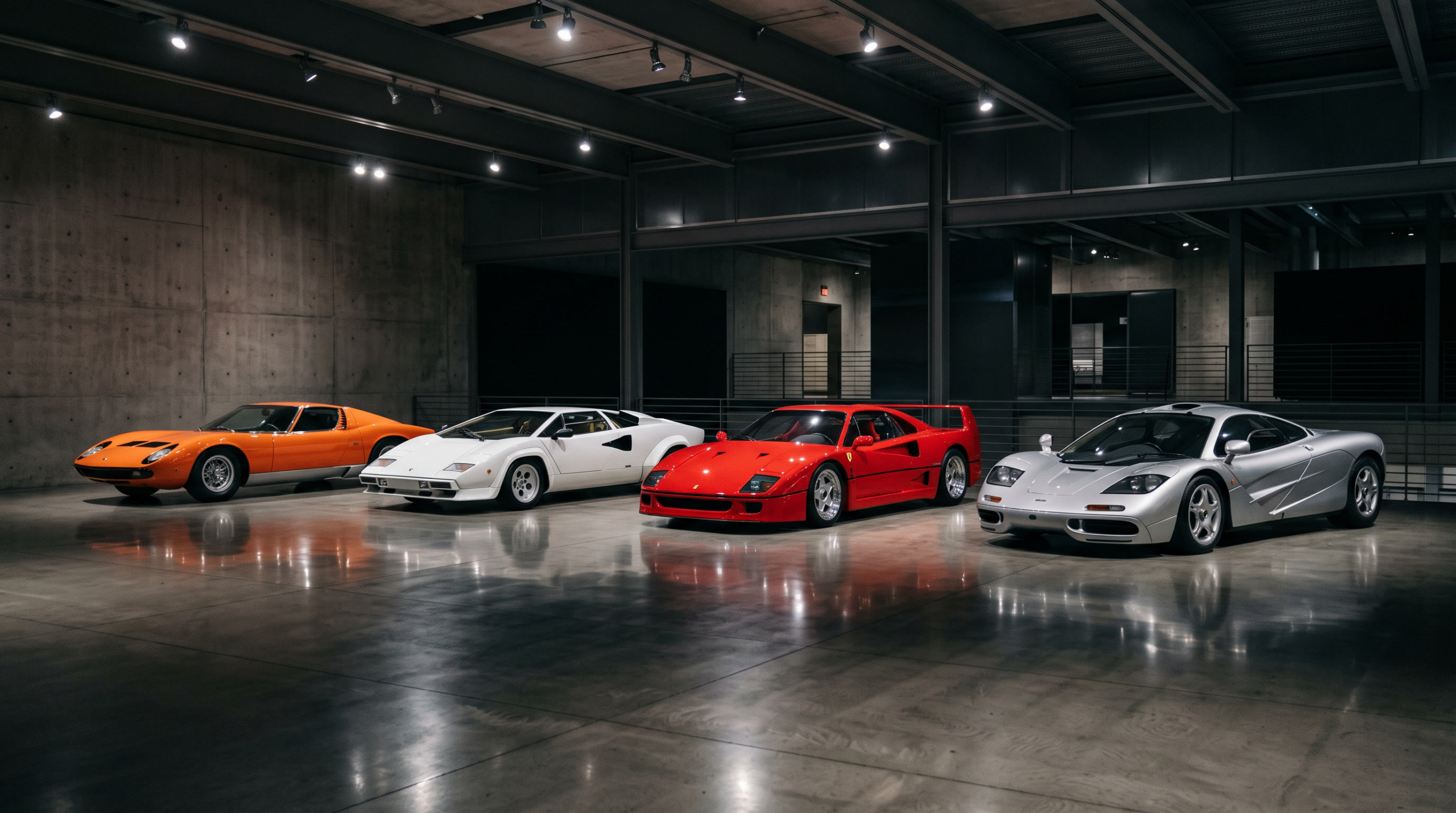
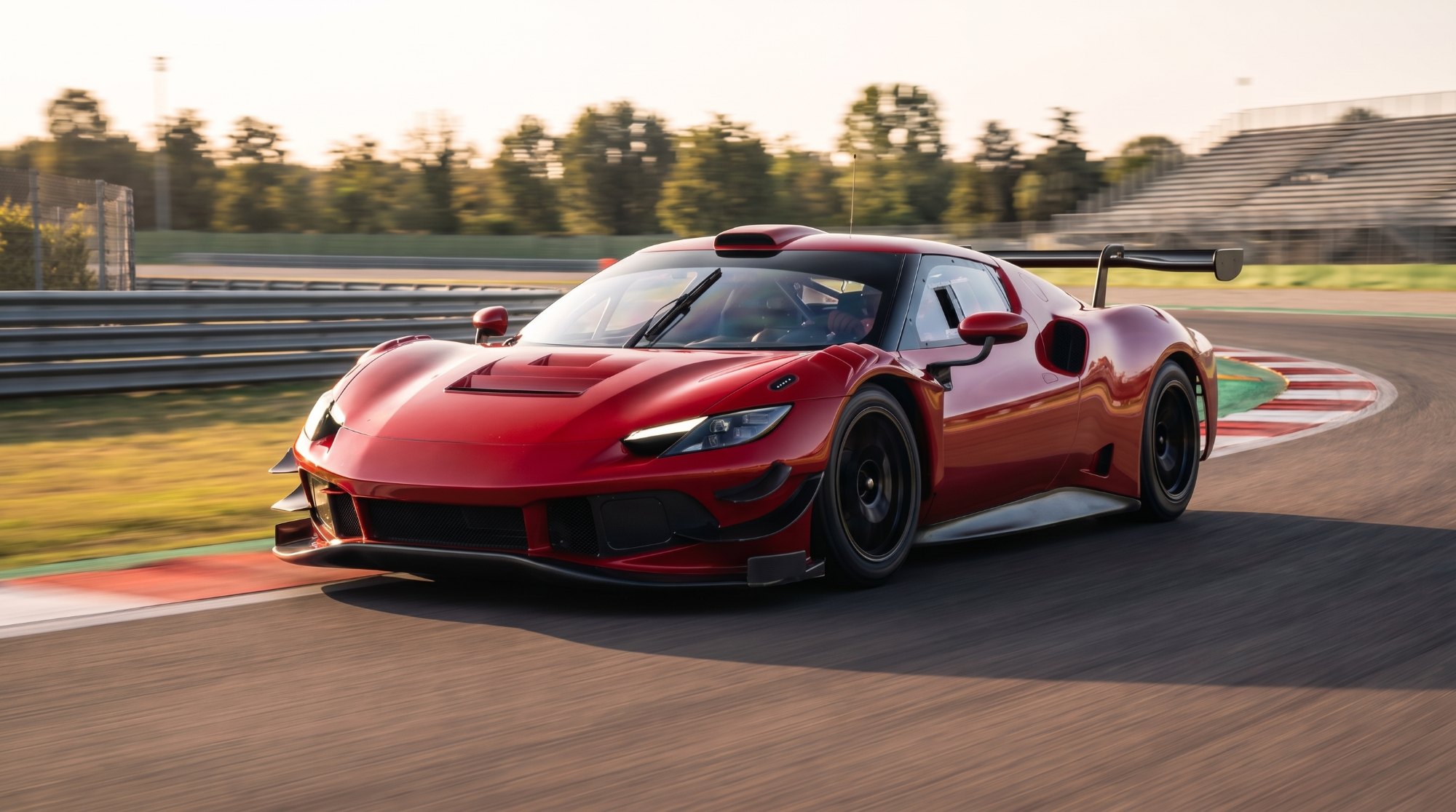
In 1968 a Lamborghini Miura cost about $20,000 in the United States. In March 2026 one sold at Broad Arrow’s Amelia Island auction for $6,605,000 — an unrestored car with one owner for fifty years, against an estimate of $3.5 to $4 million.
That is the only definition of “iconic” that cannot be argued with. Plenty of exotic cars were fast, beautiful and expensive. A much smaller number of exotic cars are worth twenty, fifty or two hundred times what they cost new, half a century later, because the world decided they mattered.
So this page takes the nine exotic cars with the strongest claim to that status and tests each of these exotic cars against evidence: how many were actually built, what they cost when new, what they trade for now, and the single verifiable thing each did that nothing before it had done. It also corrects five claims about these exotic cars that get repeated constantly and are not true.
Quick Answer: What Makes an Exotic Car Iconic?
Icon status is not about being the fastest or the most expensive. Across the nine cars below, every one did at least one of four things: it popularised a layout everything afterwards copied (Miura, 959), it set a verified record that stood for years (McLaren F1, Veyron), it won something that mattered (250 GTO, McLaren F1 at Le Mans, 959 at Paris-Dakar), or it became culturally inescapable (DB5, Countach). Rarity alone does not do it — plenty of rare exotic cars are forgotten. What all nine share is that the market still pays a premium for them decades later, which is the only test that settles the argument.
On This Page
The Scoreboard: Nine Iconic Exotic Cars by the Numbers
Values for these exotic cars are drawn from CLASSIC.COM market benchmarks and named public auction results. Where a production figure is genuinely disputed — and several are — the range is shown rather than a false precision.
Car
Year
Built
Price new
Recent market
Ferrari 250 GTO
1962
36
~$18,000
$38.5M–$51.7M at auction
Aston Martin DB5
1963
1,022
£4,175
$1.0M–$1.4M; $6.39M for a Bond car
Lamborghini Miura
1966
753–764
~$20,000
$1.3M–$6.6M by variant
Lamborghini Countach
1974
~1,980
~$52,000 (LP400)
$580k–$2.37M by series
Porsche 959
1986
292 series cars
~$225,000
$2.3M Komfort; $7.05M Sport
Ferrari F40
1987
1,311
$399,150
$3.5M–$8.4M
McLaren F1
1992
106 chassis, 64 standard road cars
£540,000
$25.3M road car; $34.7M for a GTR
Pagani Zonda
1999
~140 chassis
~$300,000
$10.1M–$11.1M at the top
Bugatti Veyron
2005
450
~$1.7M
$2.0M–$3.3M
The nine most iconic exotic cars, with verified production figures and market values current to August 2026. Auction results are hammer plus premium.
Two things jump out of that table of exotic cars. The Bugatti Veyron is the only car on it that has not multiplied its original price several times over — it is worth roughly double what it cost, where the Miura is up more than three hundred times. And the McLaren F1 is the outlier in every direction: the smallest production run of any modern car here, and the only one trading in eight figures as a standard road car.
Ferrari 250 GTO (1962): The Exotic Car Everything Else Is Priced Against
36 built. All 36 survive and are accounted for. That last detail is rarer than the car itself.
A 3.0-litre Colombo V12 on six Weber carburettors, 300 PS, a Scaglietti aluminium body over a steel ladder frame. Group 3 homologation required a hundred cars in twelve months; Ferrari built 36 and got the car approved as an evolution of the existing 250 GT SWB — one of motorsport’s better-known regulatory sidesteps.
What it did: won the FIA International Championship for GT Manufacturers in its class three years running, 1962, 1963 and 1964.
What the market says: $51,705,000 at RM Sotheby’s New York in November 2023 — though that car is technically a 330 LM, built with a 4.0-litre engine and later converted. The most recent public sale was $38,500,000 at Mecum Kissimmee in January 2026, below Hagerty’s $47.85 million fair value and below the 2014 Bonhams result once adjusted for inflation. That car had lost its original engine to a fire at the 2023 Goodwood Revival. Read together, the top of the vintage Ferrari market looks like it is cooling rather than climbing.
Aston Martin DB5 (1963): The Only Car a Film Made Permanently Valuable
1,022 cars by Aston Martin’s own count — 887 saloons, 123 convertibles and 12 Harold Radford shooting brakes, the first built for company owner David Brown so he could carry his gun dog. Other authorities put the saloon count at 898 or 899; nobody has reconciled it.
A 3,995 cc all-alloy straight-six by Tadek Marek, 282 bhp on triple SU carburettors, around 145 mph.
What it did:Goldfinger, 1964. It is the most commercially significant film association any of the exotic cars here has ever had, and it is measurable rather than sentimental — Aston Martin built an entire 25-car Goldfinger Continuation series in 2020 to sell the specification again, 56 years later. No other classic car has generated that.
What the market says: good saloons run roughly $1.0 to $1.35 million, convertibles and Vantage cars $1.1 to $1.5 million. The record is $6,385,000 for chassis DB5/2008/R at RM Sotheby’s Monterey in 2019 — a car bought by Eon Productions and fitted with all thirteen Ken Adam gadgets, but which never actually appeared on screen.
One thing collectors will catch you on: there is no such thing as a DB5 Volante. The open DB5 is a Convertible. The Volante name arrived on the Short Chassis Volante, 37 cars built in 1965 and 1966 on the last DB5 chassis. Auction catalogues get this wrong regularly. Our guide to who owns British luxury now covers where Aston Martin sits today.
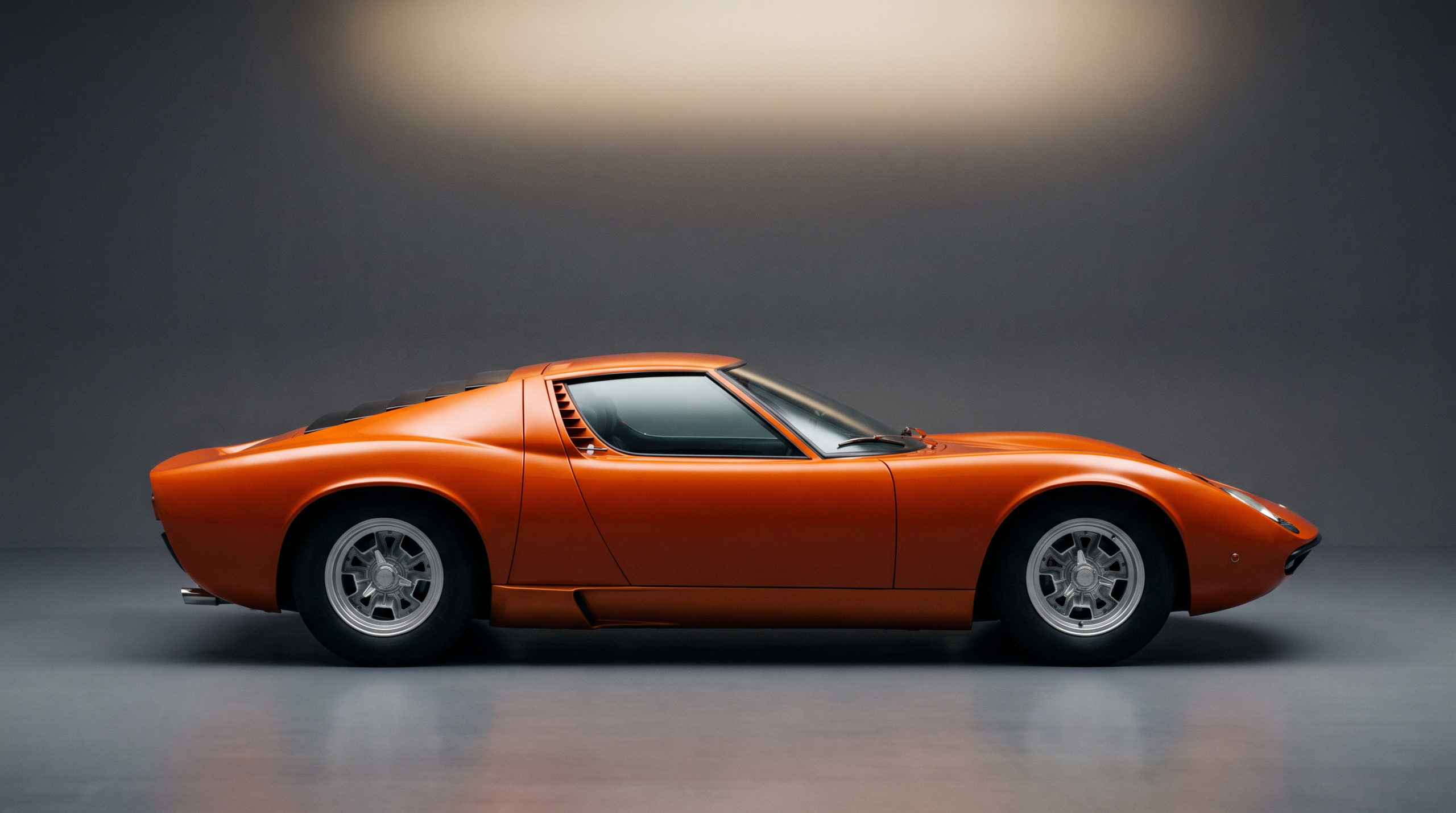
Lamborghini Miura (1966): The Layout Everything Copied
Of all the exotic cars here, this one had the strangest debut. A rolling chassis appeared at the Turin show on 3 November 1965 — satin black, no bodywork. Nuccio Bertone sketched a body over the Christmas holidays and the finished car appeared at Geneva in March 1966.
A 3,929 cc V12 mounted transversely behind the driver, 350 CV in P400 form rising to 385 CV in the SV. Production ran to 1973.
What it did: made the architecture that every mid-engined flagship among modern exotic cars has used since the default for the class. That is the claim that survives scrutiny — see the myths section below for the one that does not.
What the market says: P400 around $1.3 to $3.0 million, P400 S $1.7 to $4.1 million, and the SV $3.4 to $6.6 million. The March 2026 record beat the previous best by more than $1.7 million in one sale.
On production numbers:Lamborghini’s own website quotes both 753 and 763 on different pages. Independent registers land between 753 and 764. Anyone stating a single figure with confidence is guessing.
Illustrative rendering. The transverse mid-mounted V12 became the template every mid-engined flagship has followed since 1966.
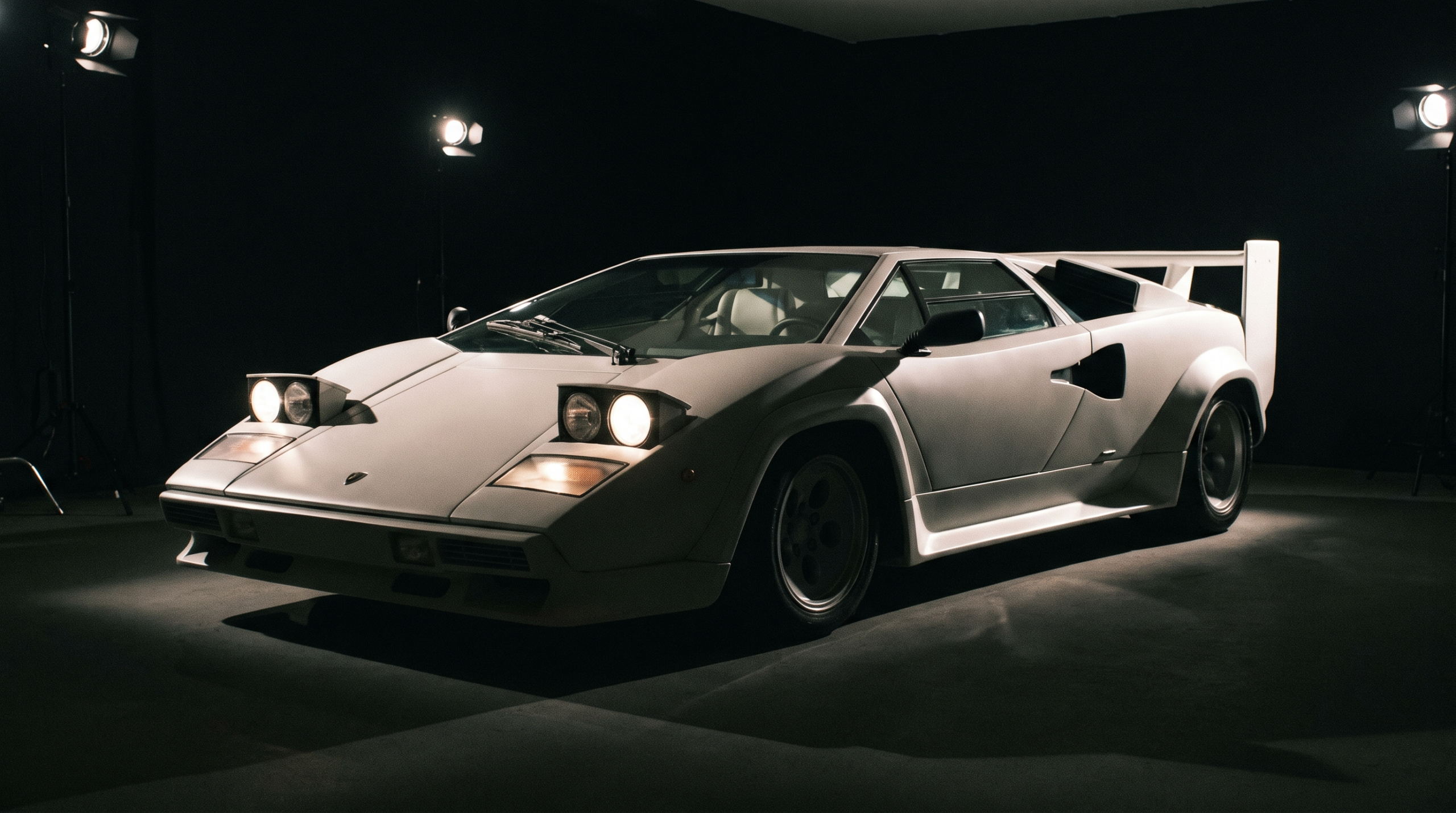
Lamborghini Countach (1974): The Shape That Defined Two Decades
Marcello Gandini’s LP500 prototype appeared at 10am on 11 March 1971 in Geneva. The first production car left the factory on 11 April 1974. The last was built in 1990. Sixteen years, roughly 1,980 cars, and the profile barely changed.
What it did: wrote the visual grammar — wedge, scissor doors, impossible width — that every supercar borrowed for thirty years. No other car on this list of exotic cars had its silhouette copied so widely or for so long.
What the market says: the series matters enormously, and early and late cars have decoupled. A first-series LP400 S made $2,370,000 at RM Sotheby’s Monterey in August 2026. A 25th Anniversary — simultaneously the most numerous Countach at around 657 cars and the cheapest — trades between roughly $580,000 and $940,000. If you want the era in context, our history of exotic car design since the 1980s covers what came next.
Porsche 959 (1986): The Technology Argument, Settled by Winning
292 series-production cars, of which 29 were the lightweight Sport. Around 337 in total including prototypes, plus eight more assembled from spares in 1992 and 1993.
A 2,849 cc sequentially twin-turbocharged flat-six derived from the 956 and 962 Group C race engines, with electronically controlled variable four-wheel drive. 450 PS in Komfort trim, 515 PS in the Sport. Porsche reportedly lost around $200,000 on every car it sold.
What it did: won the 1986 Paris-Dakar Rally outright, first and second. Computer-controlled all-wheel drive and sequential turbocharging were theories about exotic cars until that result. Note that the 1984 Dakar win people often credit to the 959 was actually the Porsche 911 type 953.
What the market says: Komfort cars $2.3 to $2.9 million; the Sport doubled in a single year, from a $5,505,000 record at Amelia Island in March 2026 to $7,045,000 at RM Sotheby’s Monterey in August 2026.
The US import story is worth getting right, because it is usually told wrong. The 959 was never federalised and could not be legally imported new. Bill Gates and Paul Allen both bought one in 1988 and both cars sat impounded by US Customs for about thirteen years. The route out was the NHTSA “Show or Display” rule, published in the Federal Register on 14 July 1999 and effective that August, which allows historically or technologically significant vehicles in with road use capped at 2,500 miles a year. The 1987–1988 Porsche 959 is on the approved list. So, incidentally, is the 1993–1998 McLaren F1.
Ferrari F40 (1987): The Last One Enzo Signed Off
1,311 road cars according to Ferrari’s own records, of which 213 went to the United States. The figure 1,315 is widely quoted and appears on several reputable sites; Ferrari says 1,311.
Among 1980s exotic cars it was brutally simple: a 2,936 cc twin-turbo V8, 478 PS, 1,100 kg dry, no carpet, sliding plexiglass windows on the first fifty cars. Thirteen months from brief to launch.
What it did: Enzo Ferrari stood at the Civic Centre in Maranello on 21 July 1987 and said, on the record: “A little more than a year ago, I expressed my wish to the engineers. Build a car to be the best in the world. And now the car is here.” He died thirteen months later. Be precise about the claim: the F40 was the last new Ferrari launched in his lifetime and the last he personally commissioned, not the last car developed under his direction — the 348 has a case there.
What the market says: a good driver-quality F40 is a $3.5 to $5 million car. An ex-Lee Iacocca example with 320 miles made $8,365,000 at RM Sotheby’s Monterey in August 2026 — provenance and mileage, not the market. Collectors pay a premium for the early “non-cat, non-adjust” cars built before catalytic converters and adjustable suspension arrived.
Illustrative rendering. The wedge silhouette stayed in production for sixteen years and on bedroom walls for longer.
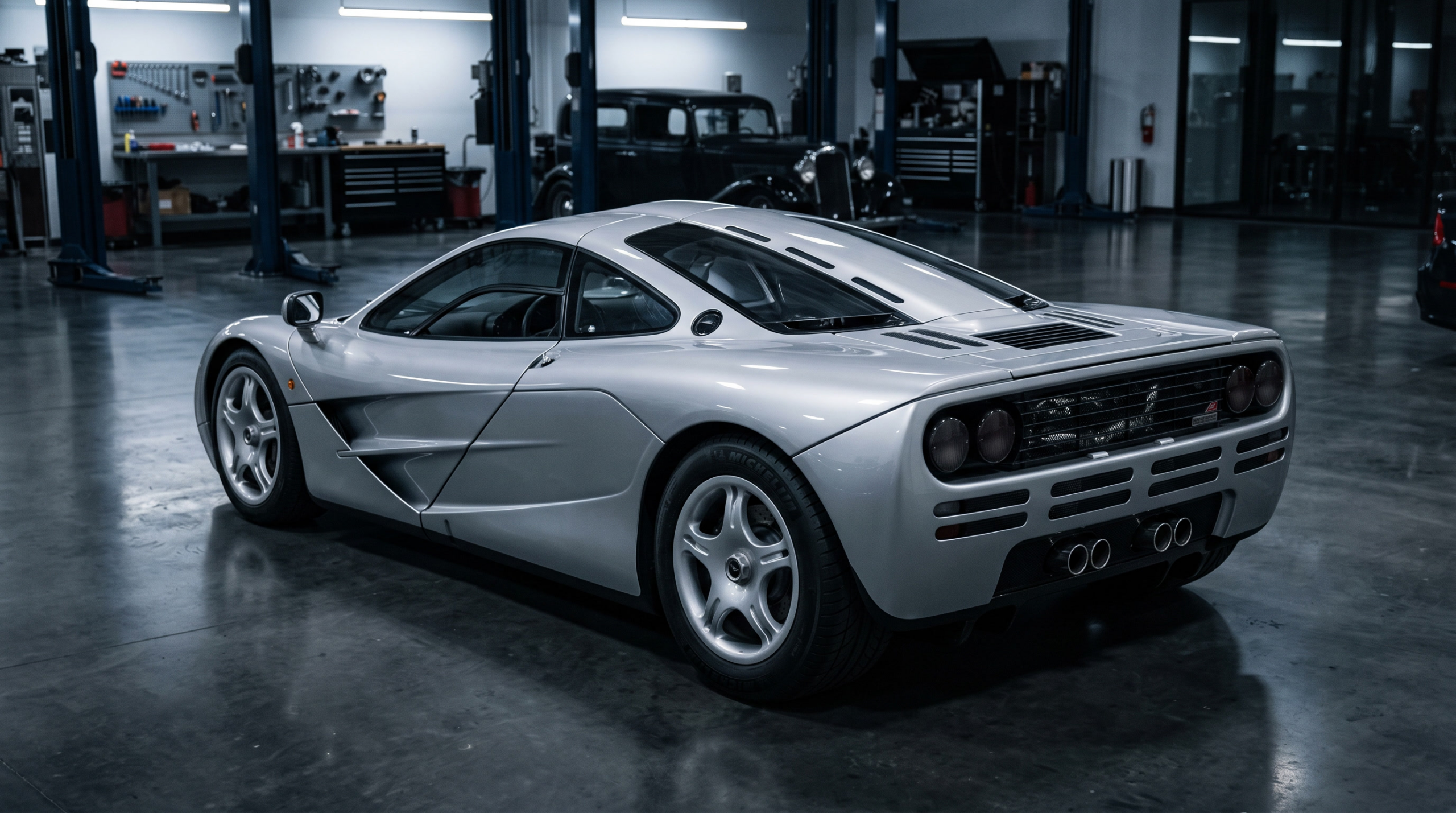
McLaren F1 (1992): The One That Still Holds the Record
106 chassis in total: 64 standard road cars, 5 prototypes, 28 GTRs, 6 LMs and 3 GTs. Chassis 002 in December 1993 to 075 in mid-1998.
A 6,064 cc naturally aspirated BMW Motorsport V12, 627 bhp, 1,140 kg dry, a central driving position, three seats, and an engine bay lined with gold foil.
What it did: two things no other exotic car on this list can match. It won the 1995 24 Hours of Le Mans outright — a road-derived GT beating purpose-built prototypes, with F1 GTRs finishing first, third, fourth, fifth and thirteenth. And on 31 March 1998, Andy Wallace recorded a two-way average of 240.14 mph at Ehra-Lessien, a figure that stood as the production-car record until the Koenigsegg CCR took it at Nardo in February 2005 and which remains the fastest ever recorded by a naturally aspirated production car.
What the market says: a road car made $25,317,500 at RM Sotheby’s Abu Dhabi in December 2025. In August 2026 the ex-Nick Mason F1 GTR “Pop Art” car made $34,655,000 at Monterey, reported as the most expensive British car ever sold at auction — and still finished below its estimate. GTRs now trade above road cars. Our look at the McLaren W1 covers what the company built three decades later, and why it is slower in a straight line than this car.
Pagani Zonda (1999): A Startup’s First Car That Ran for 25 Years
Among modern exotic cars the Zonda is the outlier for longevity. Launched at Geneva in March 1999. The last new chassis, number 140, was the Zonda Arrivederci, revealed at The Quail in August 2024. A twenty-five-year production run for a new company’s first product. Almost nothing among exotic cars, at any price, stays in production that long.
The engines are naturally aspirated Mercedes-Benz V12s prepared and enlarged by AMG, from 5,987 cc and around 400 PS in the C12 to 7.3 litres and 800 PS in the HP Barchetta. The connection came through Juan Manuel Fangio, who wrote Horacio Pagani a letter of introduction and opened the Mercedes door. The car was going to be called the Fangio F1; it was renamed after his death in 1995.
Counting Zondas is genuinely hard, and worth understanding before you buy one. Roughly 140 chassis exist, but Pagani kept re-bodying cars it had already built — often crashed ones — and giving them new model names. One physical chassis can have existed, sequentially, as two or three different “Zondas”. Independent audits count more than 45 distinct named specifications. So: about 140 chassis, far more than 140 cars that have worn the badge.
What the market says: roughly $300,000 new; a benchmark near $9.7 million now. A Zonda Riviera made $10,130,000 at RM Sotheby’s Abu Dhabi in December 2025, and a 760 LM Roadster $11,086,250 in Dubai in December 2024. A counterweight worth knowing: a 760 Unica Roadster failed to sell at Villa d’Este in May 2026, with a high bid just under €8 million against a €9.5 million low estimate. Estimates at the very top of the one-off market have run ahead of bidders.
Bugatti Veyron (2005): The Engineering Project That Happened to Be a Car
450 built: 300 coupes and 150 roadsters, confirmed by Bugatti when the last one sold in February 2015. The special editions sit inside those numbers rather than adding to them, which is unusual among limited-run exotic cars.
An 8.0-litre quad-turbocharged W16, 1,001 PS — which is 987 bhp, a distinction almost every article gets wrong — rising to 1,200 PS in the Super Sport and Vitesse.
What it did: on 4 July 2010, Pierre-Henri Raphanel averaged 431.072 km/h (267.856 mph) in a Super Sport at Ehra-Lessien, witnessed by TÜV and Guinness. Guinness briefly withdrew the record in April 2013 on the grounds that the car ran with its speed limiter deactivated, then reinstated it within about a week, concluding that a limiter change does not alter the fundamental design of the car. Customer Super Sports were capped at 415 km/h.
What the market says: the Veyron has quietly doubled in two years. Low comparables of $1,181,000 in late 2022 and $1,215,000 in August 2024 have given way to $2.0 to $2.4 million routinely in 2026, with a Grand Sport making $3,305,000 at Broad Arrow’s Quail sale in August 2026.
The running costs are real, and documented. One 2008 car offered at Monterey in August 2026 carried service invoices totalling $540,000 between 2021 and 2025. Figures from Bugatti’s own EPA certification filing put a camshaft at $800 for the part and $21,000 for the labour. There is good news for once: Bugatti has developed larger wheels letting Veyrons run conventional modern Michelins instead of the discontinued PAX system, which had run past $150,000 a set once wheels were counted.
Illustrative rendering. 240.14 mph in 1998, and still the fastest naturally aspirated production car ever recorded.
Five Claims About These Exotic Cars That Are Not True
These claims get repeated in almost every article about iconic exotic cars, including by outlets that ought to know better. Each one falls apart on contact with the record.
The claim
What is actually true
“The Miura was the first mid-engined production car”
The René Bonnet Djet beat it, launching at the Paris Salon in October 1962 with customer cars leaving the factory from 1963. The defensible claim is first high-performance mid-engined road car.
“The F40 was the first production car past 200 mph”
Ferrari claimed 201 mph. The best independent figure ever recorded was 199.4 mph by Sport Auto at Nardo in 1988; Car and Driver got 197. The RUF CTR was timed at 211 mph in 1987, before F40 deliveries.
“The Countach did 186 mph”
The only official timing, by the Italian Ministry of Transportation at Nardo, recorded 181.6 mph. Period magazine tests ranged from 155 to 190 mph. The rear wing costs roughly 10 mph.
“The McLaren F1 does 240 mph”
The 240.14 mph run used prototype XP5 with the rev limiter raised from 7,500 to 8,300 rpm. In production trim an F1 tops out around 231 mph. No customer could reach the record figure.
“The 959 was banned because Porsche would not surrender crash-test cars”
NHTSA does not demand cars — manufacturers self-certify. Porsche simply would not spend more to federalise a car it was already losing about $200,000 on.
Widely repeated claims about these exotic cars, checked against manufacturer records and contemporary road tests.
A sixth, for enthusiasts: the Miura destroyed at the start of The Italian Job was not destroyed. Chassis 3586 survived — Paramount used a second, already-crashed shell for the cliff scene — and Lamborghini Polo Storico authenticated the surviving car by document review, physical inspection and interviews with the former employee who delivered it to set.
What Actually Separates Iconic Exotic Cars From Merely Rare Ones
Scarcity is the thing people reach for first when ranking exotic cars, and it is the weakest predictor on the list. Plenty of exotic cars were built in tiny numbers and are worth less today, in real terms, than they cost new. The nine above each have at least one of four things, and the ones with two or three are the ones at the top of the table.
They went first. The exotic cars that lead this table set a template rather than following one. The Miura’s transverse mid-mounted V12 and the 959’s computer-controlled all-wheel drive were arguments the whole industry then adopted.
They set a record that held. The McLaren F1 held the production-car record for seven years and still holds the naturally aspirated one after nearly thirty. The Veyron took the outright record and kept it.
They won something. Le Mans outright, Paris-Dakar outright, three consecutive FIA GT championships. Competition results are the hardest currency in the market for exotic cars, because they cannot be re-marketed later.
They escaped the car world entirely. The DB5 and the Countach are recognised by people who have no interest in cars at all — one through a film franchise, the other through a poster on a bedroom wall.
Notice what is missing from that list of exotic cars: horsepower, price when new, and top speed. The Veyron has the highest of all three among these nine exotic cars and is the weakest performer of the group as an asset. Being the fastest is a record that someone else takes from you. Being first, or winning, or becoming a poster, is not.
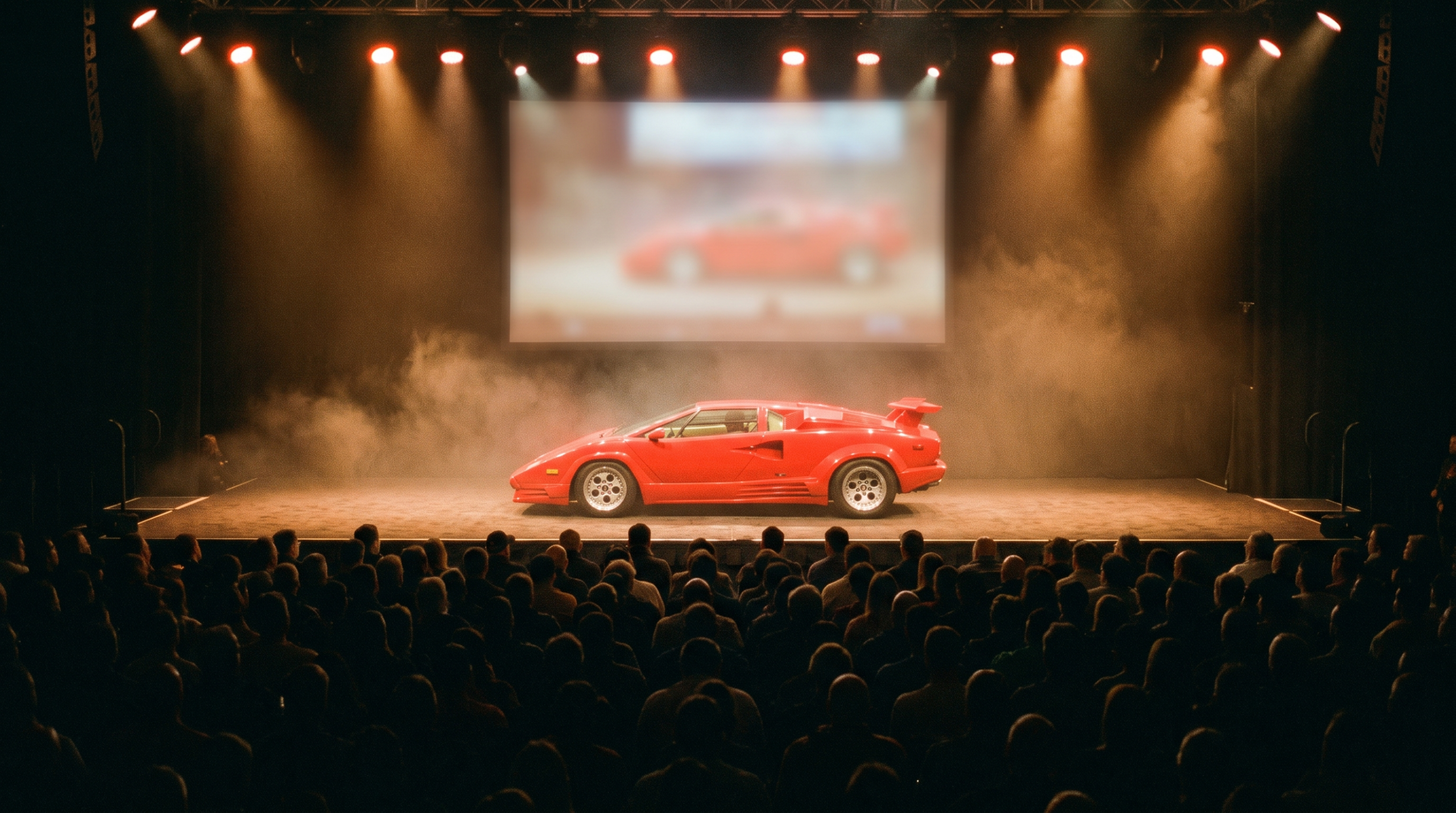
Illustrative rendering. The auction block is where the argument about which exotic cars are iconic actually gets settled.
If You Are Buying One of These Exotic Cars
With these exotic cars, the series is worth more than the badge. A first-series Countach LP400 S is a $2.37 million car and a 25th Anniversary is a $600,000 car. Same nameplate, same silhouette, four times the money. The same is true of Miura variants and 959 Komfort against Sport.
Originality of the engine is the single biggest value lever on the older cars. The 250 GTO that sold below expectations in January 2026 had lost its original V12 to a fire. On cars of this age, matching numbers is not a nicety.
Get the provenance documented before you price it. The gap between a good F40 at $3.5 million and the Iacocca car at $8.365 million is ownership history and mileage, both of which have to be evidenced. Our collector car documentation guide covers exactly what to demand.
Budget the running costs for what they actually are. A documented $540,000 over five years on one Veyron is the kind of number that should sit in the purchase decision, not arrive afterwards.
Check the import status on anything that was never sold here. The 959 needed Show or Display or a 25-year exemption to be road-legal in the US. Any car that was not federalised new has a paperwork history you need to see.
Watch where the top of the exotic cars market actually is. A Zonda failing to sell at €8 million and a 250 GTO landing below its fair value in the same twelve months are worth more than any index. The middle of this market is strong; the very top is choosier than it was.
Our family has been selling cars for more than a century, and the pattern with genuinely iconic exotic cars holds regardless of decade: the market pays for the story you can prove. If you are working out where today’s money is going rather than yesterday’s, our guide to exotic car values that are actually appreciating covers the modern end, and the first-time exotic car buyer’s guide covers the process.
Of all the exotic cars ever built, on evidence rather than opinion, the Ferrari 250 GTO. Just 36 were built, all 36 survive, it won the FIA GT manufacturers championship in its class three years running, and it holds the record for the most valuable Ferrari ever sold at auction, though the outright record belongs to the 1955 Mercedes-Benz 300 SLR Uhlenhaut Coupe at about 142 million dollars in 2022, with results between 38.5 and 51.7 million dollars since 2023. The McLaren F1 has the strongest modern claim: outright victory at Le Mans in 1995 and a 240 mph record that stood for seven years.
Which of these exotic cars has appreciated the most?
The Ferrari 250 GTO, by a wide margin. It cost about 20,000 dollars in the United States in 1968 and an unrestored SV sold for 6,605,000 dollars at Broad Arrow Amelia Island in March 2026, a rise of more than three hundred times. The Pagani Zonda has done something similar in a quarter of the time, from roughly 300,000 dollars new in 1999 to a benchmark near 9.7 million.
How many Ferrari F40s were made?
1,311 road cars according to Ferrari own records, of which 213 were built for the United States. The figure 1,315 is very widely quoted and appears on several otherwise reliable sites. Around nineteen competition cars were also built by Michelotto.
Is the McLaren F1 still the fastest naturally aspirated car?
Yes. The two-way average of 240.14 mph recorded by Andy Wallace at Ehra-Lessien on 31 March 1998 remains the fastest figure ever set by a naturally aspirated production car. It is worth knowing that the record car was prototype XP5 with its rev limiter raised from 7,500 to 8,300 rpm. In standard production trim an F1 reaches about 231 mph.
Why was the Porsche 959 illegal in the United States?
It was never federalised, so it could not be legally imported or registered as a new car. The common story that the DOT demanded cars for destructive crash testing is wrong: manufacturers self certify compliance, and Porsche simply would not spend more money on a car it was already losing about 200,000 dollars on. The Show or Display rule of 1999 opened a route in for significant vehicles, capped at 2,500 road miles a year, and the 1987 to 1988 Porsche 959 is on the approved list.
Which is the cheapest way into an iconic exotic car?
Of the nine exotic cars here, the Lamborghini Countach 25th Anniversary is the most accessible, trading between roughly 580,000 and 940,000 dollars. It is simultaneously the most numerous Countach at around 657 cars and the least expensive, which is not a coincidence. An Aston Martin DB5 saloon in good order sits in a similar bracket at around one million dollars.
Do iconic exotic cars always go up in value?
No. Exotic cars can and do stall. The Bugatti Veyron is the clearest counter example on this list: it cost around 1.7 million dollars new and trades between 2.0 and 3.3 million now, which is actually behind inflation across twenty-one years — 1.7 million dollars in 2005 is about 2.9 million in today’s money, and running costs on one documented car came to 540,000 dollars over five years. Two 2026 results also show the very top of the market cooling, with a 250 GTO selling below its fair value and a Pagani Zonda failing to sell at 8 million euros.
Owning an exotic car is not about speed or luxury- It’s about embracing an experience, where the road becomes your canvas and the car, your masterpiece.
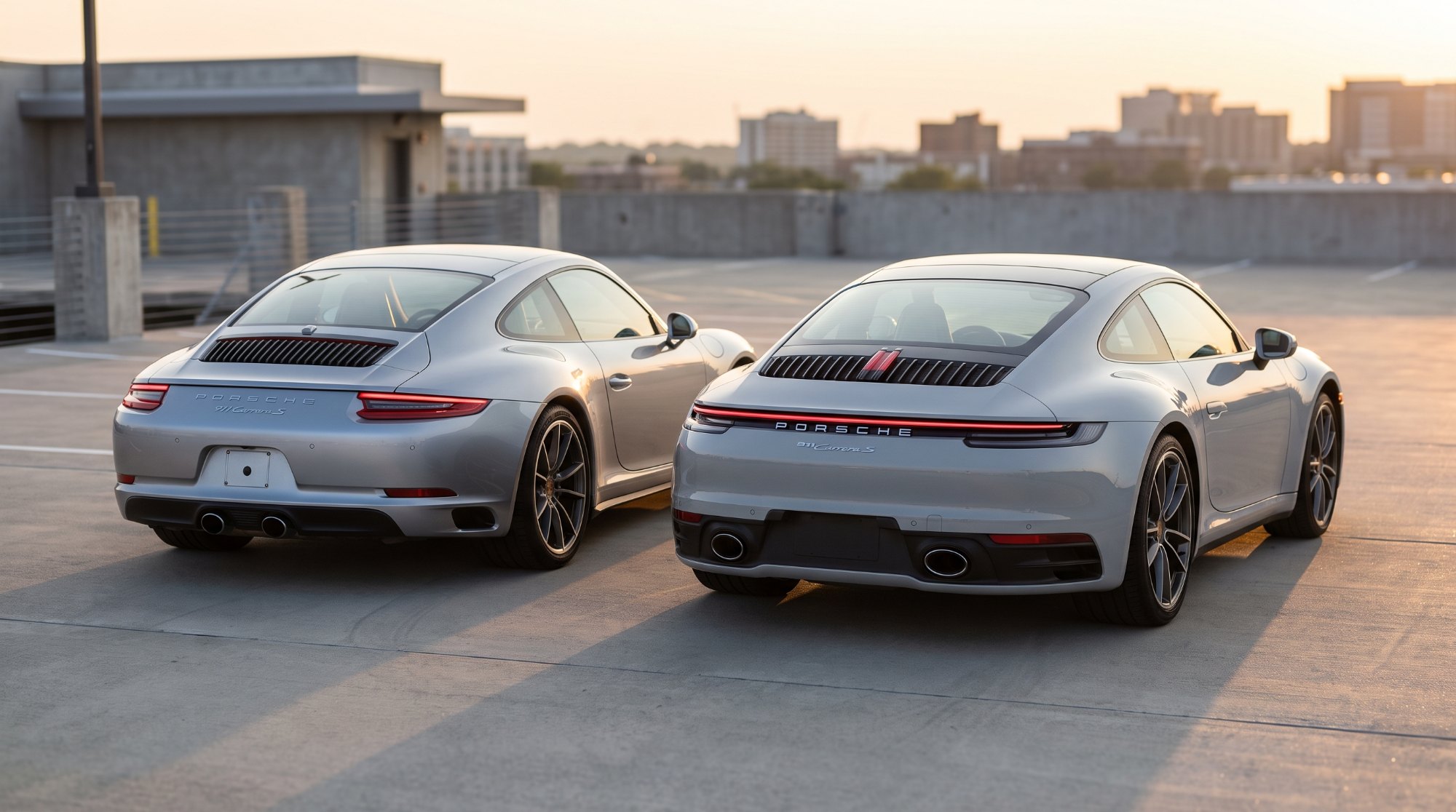
991.2 or 992? A buyer's guide to the used Porsche 911 Carrera decision: transmissions, body styles, options, inspection, warranty, running costs and the real price gap.
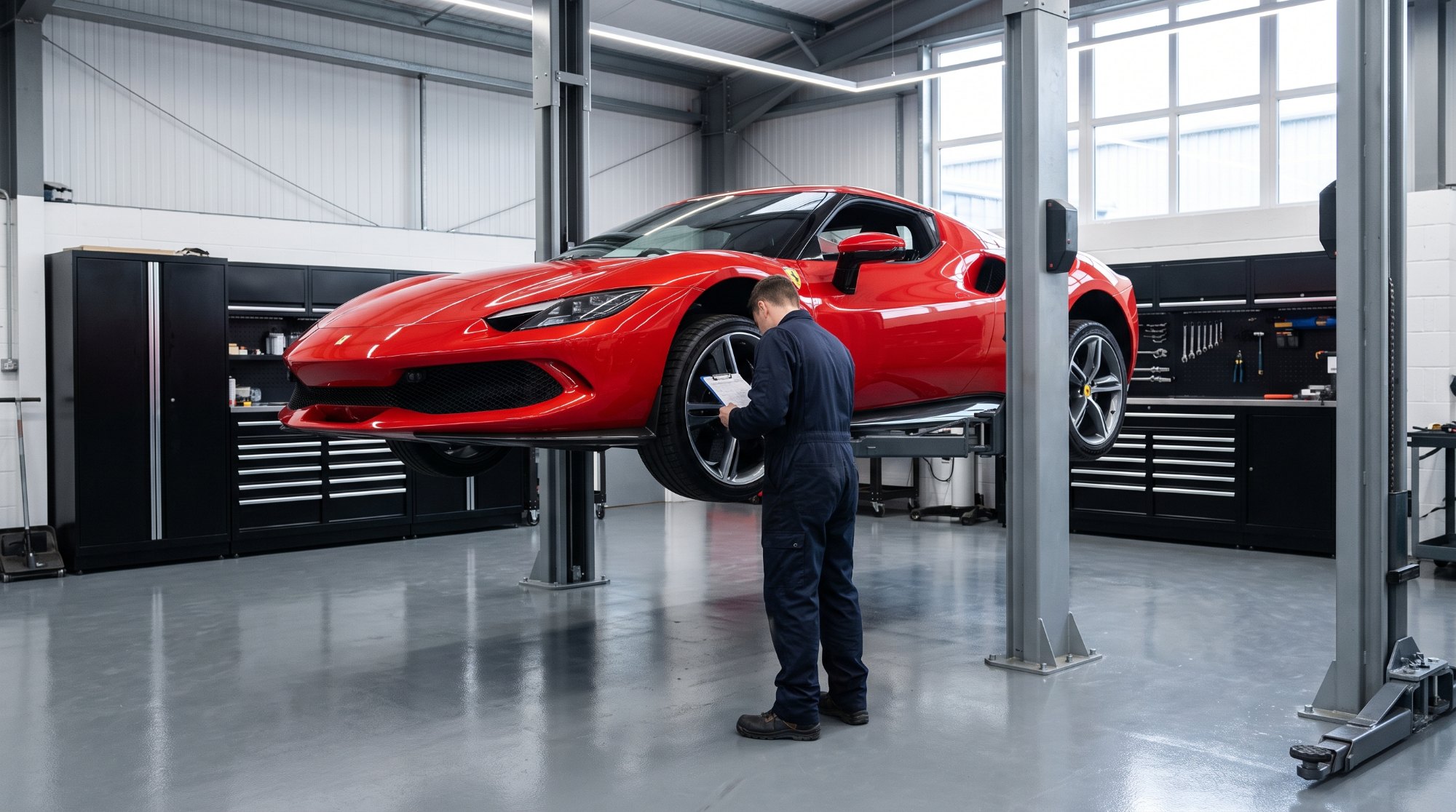
What a real exotic car pre-purchase inspection (PPI) should include: choosing an independent marque specialist, lift checks, paint readings, factory diagnostics, service records, the road test, and how to use the findings before you pay a deposit.
The FTC’s September 2026 pricing FAQs say a car’s advertised price must be one any buyer can pay, on Instagram, marketplaces and dealer sites alike. Here is what that means for exotic and luxury dealers.