There are car reveals, and then there are Bugatti reveals. On August 6, 2026 — just as the automotive world’s private jets began descending on the Monterey Peninsula — Bugatti pulled the cover off the Bugatti Destrier, a one-of-one hypercar whose name is the old French word for a knight’s warhorse. The timing was no accident. With Monterey Car Week 2026 running August 7–16 and the Pebble Beach Concours d’Elegance celebrating its 75th anniversary, Molsheim chose the biggest stage in the collector-car universe to say a very loud goodbye.
Because make no mistake: the Destrier is a farewell. Bugatti assembled its final 8.0-liter W16 engine in July 2026, closing the book on the most audacious powerplant of the modern era. The Destrier is one of the last thunderclaps from that storm — and it might be the most beautiful.
Table of Contents
What Is the Bugatti Destrier? (Quick Answer)
The Bugatti Destrier is a one-off, road-going hypercar built on the track-only Bolide’s carbon chassis, powered by Bugatti’s 8.0-liter quad-turbocharged W16 producing 1,578 horsepower. Revealed on August 6, 2026 ahead of Monterey Car Week, it is the third creation from Bugatti’s Programme Solitaire coachbuilding division, with an estimated commission price above $20 million.
From Track Weapon to “Sculpture of Speed”
The Bolide was never meant to be pretty. Bugatti’s track-only monster was built around one idea — downforce at any cost — all wings, ducts, and violence. The Bugatti Destrier takes that same carbon heart and asks a different question: what happens when you strip away the aero addiction and let the speed itself become the sculpture?
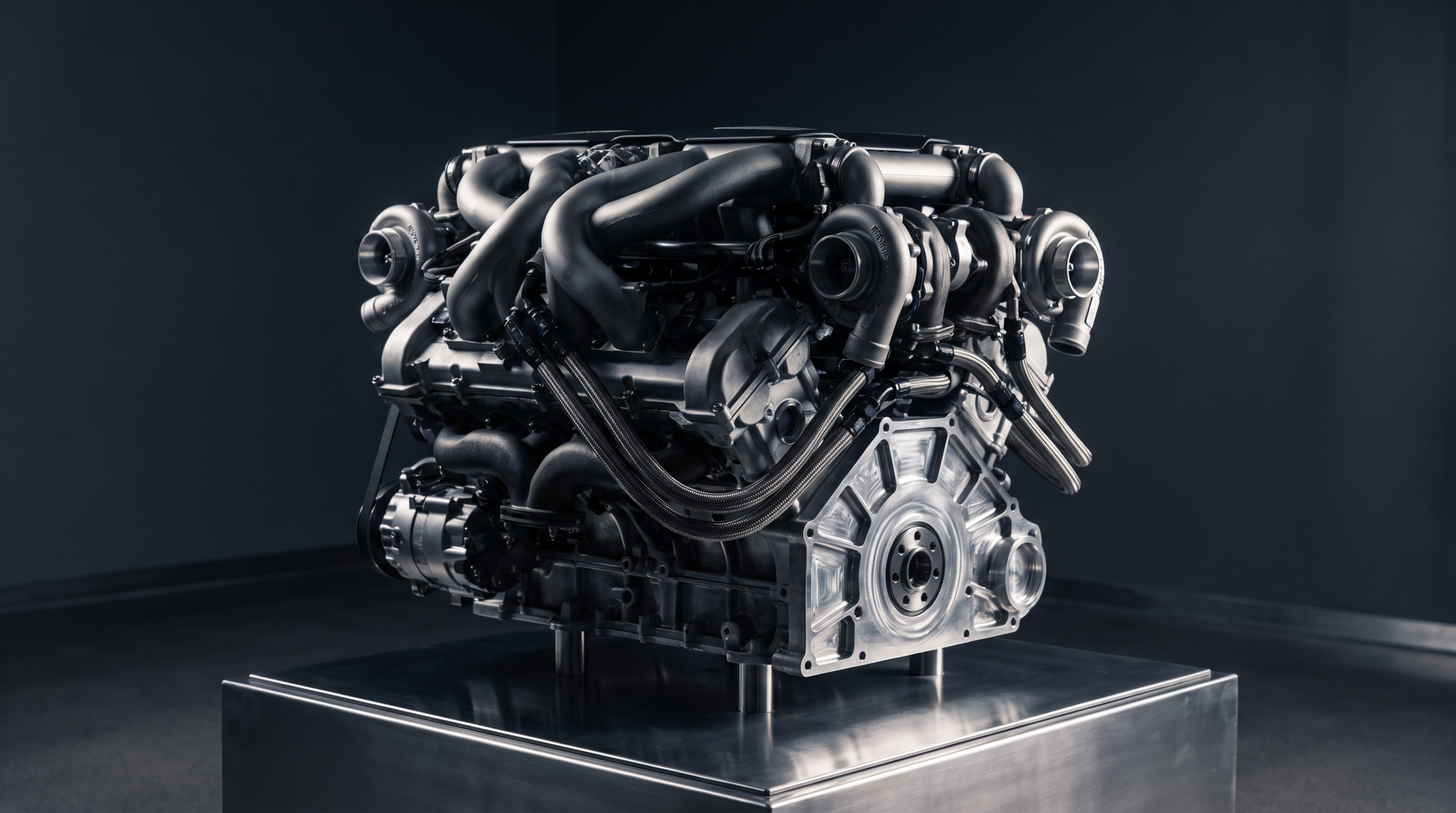
The track-only Bolide donated its carbon monocoque — and its 1,578-hp W16.
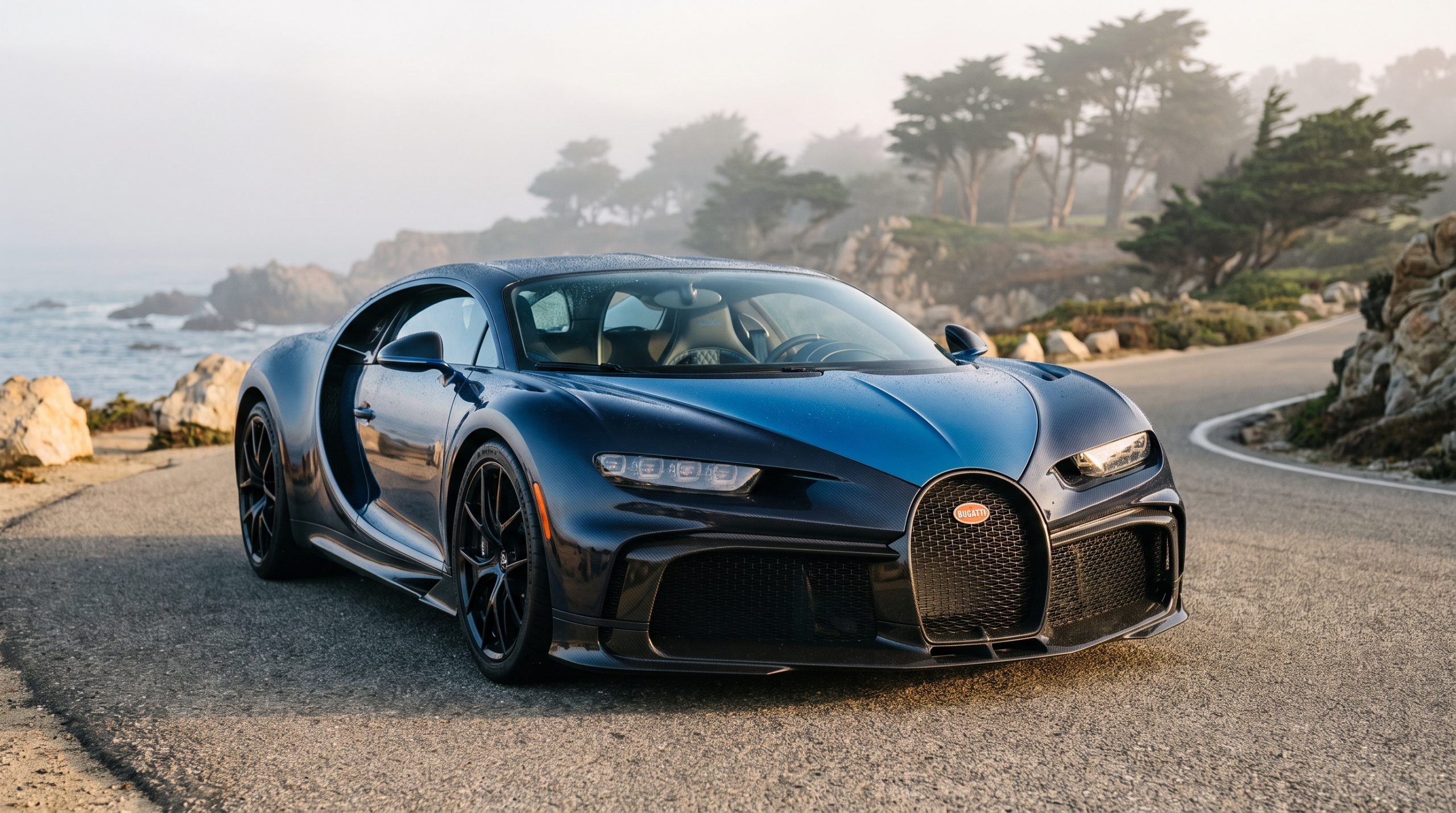
The answer is a car just 39 inches tall — the lowest Bugatti ever built — with a body that flows where the Bolide fights. The X-shaped LED headlamps give way to a slimmer matrix design. The horseshoe grille grows wider and more confident. A polished brightwork spine runs down the car’s centerline, a direct love letter to the 1930s Type 57 SC Atlantic, the most valuable Bugatti of them all.
At the rear, a fixed oval wing recalls the Chiron Profilée rather than the Bolide’s billboard-sized aero. Even the wheels grew up — 20 inches up front and 21 at the rear, replacing the Bolide’s center-lock 18s.
Bugatti’s designers call the ethos “Sculpture of Speed,” and for once the press-release poetry fits. Where the Brouillard — the first Solitaire one-off, named for Ettore Bugatti’s beloved thoroughbred — leaned on the marque’s equestrian history, the Bugatti Destrier reads as something new: a track weapon re-armored for the road, like a warhorse dressed in ceremonial steel.
The Last Charge of the W16
Sixteen cylinders, four turbos, zero successors.
Under the rear deck sits the reason collectors will fight over the Bugatti Destrier: the 8.0-liter, quad-turbocharged W16, delivering 1,578 horsepower. It is an engine with no successor and no equal — sixteen cylinders, four turbochargers, and a quarter-century of dominance from Veyron to Chiron to Bolide. With the final W16 completed in July 2026, every remaining W16 car instantly became a piece of history. The Destrier isn’t just a hypercar; it’s a closing argument.
And unlike the Bolide it’s based on, this warhorse is road-legal. Somewhere in the world, one collector will be able to drive a de-winged Bolide to dinner.
Numbers alone undersell what the W16 meant. This was an engine conceived in a sketch on an envelope — Ferdinand Piëch famously drew the W-configuration on a train — and engineered into the only sixteen-cylinder production powerplant of the 21st century. It idles like distant weather and pulls like physics has been renegotiated. Electric hypercars now out-accelerate it, which misses the point entirely: no battery will ever replicate the mechanical theater of sixteen pistons and four turbochargers spooling behind your shoulders. That theater is what the Bugatti Destrier preserves, and what every future owner is really buying.
The W16 Era at a Glance
Year
Milestone
2005
Veyron 16.4 debuts the 8.0L quad-turbo W16 with 1,001 hp — the first production car past 400 km/h
2010
Veyron Super Sport raises the bar to 1,200 hp and a 267-mph record
2016
Chiron arrives with 1,500 hp; later variants crack 300 mph
2020
Bolide concept shows what an unrestricted W16 track car looks like
2024
Tourbillon succeeds the Chiron — with a V16 hybrid, ending W16 series production
July 2026
The final W16 engine is assembled in Molsheim
August 2026
The Bugatti Destrier debuts as one of the last new W16 cars ever
Inside the Warhorse
The Bolide’s cabin is a bare carbon cell. The Bugatti Destrier’s is anything but. Rich brown leather and suede wrap a carbon tub with integrated fixed seats, and a unique 3D-knit fabric covers the shoulder bolsters and door panels. The race-style steering yoke survives from the Bolide, but the polished aluminum hardware on the air vents was hand-finished in a nod to medieval armor — because if you name a car “warhorse,” you commit to the theme. It is, in effect, a Le Mans prototype cockpit reimagined by a saddle-maker.
Five Design Details Worth Studying
Spend time with the photos and the Bugatti Destrier keeps rewarding you. First, the stance: at 39 inches tall it sits lower than a Ford GT40, the car that defined “impossibly low” for sixty years. Second, the matrix headlamps — where the Bolide wore aggressive X-shaped LEDs like war paint, the Destrier’s slim lighting signature reads formal, almost architectural. Third, the surfacing: Bugatti’s designers deleted nearly every piece of exposed carbon except the front splitter and rear diffuser, letting paint and polished metal carry the drama.
Fourth, the oval rear wing, fixed rather than active, shaped like a wing section from a pre-war racer rather than a modern aero appendage. And fifth, that centerline spine — hand-polished aluminum running nose to tail, the single most direct visual link between the Bugatti Destrier and the Atlantic that inspired it. None of these details will age, which is precisely the point: one-offs are designed to look inevitable in fifty years, not fashionable this season.
Programme Solitaire: Bugatti’s Answer to the Coachbuilding Revival
The Bugatti Destrier is the third act in Bugatti’s Programme Solitaire, the in-house coachbuilding division that has quietly become the most exclusive club in the car world. First came the Brouillard, then the FKP 16.4 Hommage, and now the Destrier — each a one-of-one commission built on Bugatti’s own bones but bodied like nothing else on the road.
The Tourbillon lends its wide horseshoe grille to the Destrier’s new face.
Ferrari has its Special Projects. Rolls-Royce has its Coachbuild division. But Bugatti‘s play is different: each Solitaire car is a genuine singleton with W16 power, and the supply of those engines is now, officially, finite. That scarcity math is not lost on anyone. While Bugatti won’t confirm pricing, industry estimates place the Destrier commission north of $20 million — and if the client ever sells, the auction tent at a future Monterey Car Week feels inevitable. (For context on how quickly hypercar provenance can become headline news, see our story on the $13M Mercedes CLK GTR seized in Miami.)
A Century of Coachbuilding: From Jean Bugatti to the Bugatti Destrier
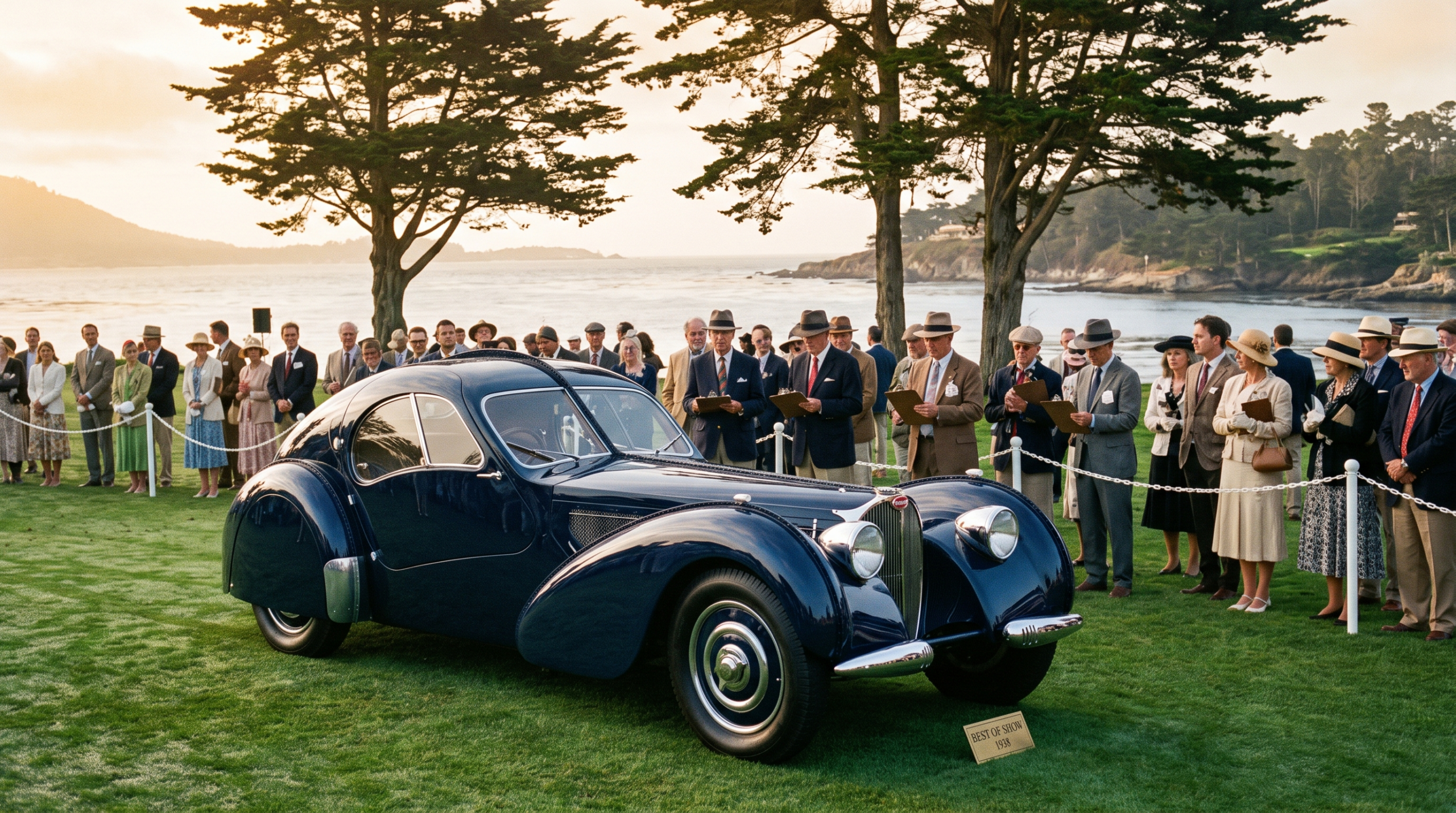
Lineage on the lawn: the Type 57 SC Atlantic’s riveted spine lives on in the Destrier’s brightwork.
To understand why the Bugatti Destrier matters, you have to go back ninety years. In the mid-1930s, Jean Bugatti — Ettore’s son, dead at 30 testing a Le Mans winner — penned the Type 57 SC Atlantic, a riveted-spine masterpiece of which only four were built and three survive.
One Atlantic is widely considered the most valuable car on Earth, with private estimates well past $100 million. The Atlantic proved a thesis Bugatti still operates on today: that a chassis can be engineering, but a body can be art.
That thesis skipped several corporate eras — through the marque’s death in the 1950s, the Italian EB110 revival of the 1990s, and the Volkswagen-era Veyron and Chiron — before Programme Solitaire resurrected it in earnest. The Destrier’s polished centerline spine is not a styling gimmick; it is a direct quotation of Jean Bugatti’s Atlantic, rendered in a car with sixteen cylinders and 1,578 horsepower. That continuity — the same house, the same ideas, a century apart — is what makes the Bugatti Destrier a direct descendant rather than a tribute act.
How a One-Off Bugatti Is Commissioned
Bugatti does not publish a menu for cars like this, but the shape of the process is well understood in collector circles, and it explains both the price and the wait. It begins with an invitation: Programme Solitaire clients are drawn from the marque’s existing top-tier owners — the people who already bought the limited editions.
Then comes a design dialogue measured in years, not weeks: sittings with the design team in Molsheim, theme development, full-scale clay and digital models, and engineering validation to keep the result road-legal despite its racing bones.
Every panel of a car like the Bugatti Destrier is unique tooling, which is why coachbuilt one-offs cost multiples of the donor car. The client isn’t paying for speed — the Chiron already delivered that — they’re paying for the only example that will ever exist, with their name woven into the car’s provenance from day one. It is the closest thing modern motoring has to commissioning an Old Master portrait, and it’s why these cars tend to disappear into climate-controlled collections and reappear only on concours lawns.
If you’re earlier in your collecting journey, the same principles — provenance, rarity, documentation — apply at every level of the market. Our first-time exotic buyer’s guide walks through them step by step.
Delivery is its own ceremony. One-off clients typically take their car at Molsheim’s Château Saint Jean or at a marquee event — and it would surprise no one if the Bugatti Destrier’s public debut on the Monterey Peninsula doubled as its handover. From that moment the car begins a second life as an ambassador: invitations to concours events, museum loans, anniversary gatherings. A car like this is never really parked; it tours. That public afterlife is part of the value calculation, because every appearance compounds the provenance file that will one day accompany the car across an auction block — if it ever crosses one at all.
Why Monterey, Why Now
Debuting during Monterey Car Week is the automotive equivalent of premiering at Cannes. This year’s edition, running August 7–16, carries extra weight: the Pebble Beach Concours d’Elegance turns 75, and the fairways of Pebble Beach host the greatest concentration of automotive wealth on Earth. The reveal windows into a broader truth about the 2026 collector market: as mainstream manufacturers electrify, the value of irreplaceable combustion machinery — W16s, V12s, coachbuilt one-offs — keeps climbing. The Bugatti Destrier arrives as both a new car and an instant blue-chip artifact.
For a marque whose 1930s coachbuilt masterpieces still headline Pebble Beach, parking a modern one-off warhorse a few hundred yards from where a Type 57 might win Best of Show is not marketing. It’s lineage. And with ownership of Bugatti Rimac itself in motion, the Solitaire cars double as a statement that Molsheim’s craft survives any org chart.
It worked. The Destrier made its public physical premiere at The Quail on 14 August, sharing a lawn with the Lamborghini Revuelto SV, the Aston Martin Valen, the Gordon Murray S1 and the returning Spyker, then moved to the Concours Concept Lawn on the 16th. The week around it turned out to be the largest in auction history — roughly $756 million across five houses, eleven cars past eight figures — which is the market backdrop a one-off W16 wanted and got.
There is precedent for how this ends, too. When the one-off La Voiture Noire surfaced in 2019 at a reported $18.7 million, skeptics called the price irrational; today it is remembered as the moment modern Bugatti one-offs became a market category of their own. The Bugatti Destrier enters that category with a stronger story than its predecessor — a dead engine, a Le Mans-grade chassis, and a name that belongs on a coat of arms. Whether it appears at a concours next summer or vanishes into a private collection for a generation, its place in the marque’s history was secured the moment the cover came off at Monterey.
Bugatti Destrier: Key Specifications
Specification
Bugatti Destrier
Engine
8.0-liter quad-turbocharged W16
Power
1,600 PS (1,578 hp)
Chassis
Bugatti Bolide carbon monocoque
Height
39 inches — lowest Bugatti ever made
Wheels
20-inch front / 21-inch rear
Production
One-of-one (Programme Solitaire)
Estimated price
$20 million+
Revealed
August 6, 2026 — ahead of Monterey Car Week
Bugatti Destrier vs. Brouillard vs. Bolide
Destrier (2026)
Brouillard (2025)
Bolide (2021)
Type
One-off, road-legal
One-off, road-legal
40 units, track-only
Base
Bolide monocoque
Chiron platform
Bespoke track chassis
Power
1,578 hp W16
1,578 hp W16
1,578 hp W16
Character
Warhorse — track bones, formal wear
Grand tourer honoring Ettore’s horse
Pure downforce weapon
Est. value
$20M+
~$20M
~$4.7M
The comparison makes the positioning clear: the Brouillard was Programme Solitaire proving it could build an elegant one-off; the Bugatti Destrier is the programme proving it can tame Bugatti’s wildest machine without declawing it.
What the Destrier Means for Collectors
Our family has watched the exotic market for over a century, and the pattern around cars like this is remarkably consistent: when an engine dies, its greatest hosts appreciate. The last air-cooled 911s. The final Lamborghini V12s. The Bugatti Destrier sits at the intersection of three value multipliers — a dead engine, a one-of-one body, and factory coachbuilding provenance — which is why the $20 million whisper number may one day look conservative. For the rest of us, it’s a reminder that the golden age of internal combustion didn’t fade out quietly. It went out on a warhorse.
There is also a practical lesson in the Bugatti Destrier for anyone active in the exotic market today: watch what the factories keep for themselves. When a manufacturer reserves its last great engine for coachbuilt commissions instead of series production, it is telling you exactly which assets it believes are irreplaceable. The same signal applies down-market — final-year manual gearboxes, last naturally aspirated V10s, closing-run special editions. The collectors who read those signals early are the ones smiling at auction a decade later, and it is why our editorial team tracks every farewell edition as closely as every debut.
Frequently Asked Questions
How much does the Bugatti Destrier cost?
Bugatti has not disclosed the commission price, but industry estimates place the one-off Bugatti Destrier above $20 million, in line with previous Programme Solitaire creations.
How many Bugatti Destriers will be built?
Exactly one. The Bugatti Destrier is a one-of-one commission from Bugatti’s Programme Solitaire coachbuilding division and will never be repeated.
What engine powers the Bugatti Destrier?
The Bugatti Destrier uses Bugatti’s 8.0-liter quad-turbocharged W16 producing 1,578 horsepower. Bugatti built its final W16 engine in July 2026, making this one of the last new W16-powered cars ever.
Is the Bugatti Destrier road legal?
Yes. Unlike the track-only Bolide it is based on, the Bugatti Destrier was engineered and homologated for road use, making it the only road-legal car with the Bolide’s carbon monocoque.
What does “Destrier” mean?
Destrier is the medieval term for a knight’s warhorse — the strongest and most prized horse in a knight’s stable. It continues Bugatti’s equestrian naming theme after the Brouillard, named for Ettore Bugatti’s own horse.
Where and when was the Bugatti Destrier revealed?
Bugatti revealed the Destrier on August 6, 2026, timed to Monterey Car Week 2026 (August 7–16) and the 75th anniversary of the Pebble Beach Concours d’Elegance in California.
Owning an exotic car is not about speed or luxury- It’s about embracing an experience, where the road becomes your canvas and the car, your masterpiece.
The FTC’s September 2026 pricing FAQs say a car’s advertised price must be one any buyer can pay, on Instagram, marketplaces and dealer sites alike. Here is what that means for exotic and luxury dealers.
Monterey 2026 did a record ~$756 million while the retail exotic market cooled. Here is what the split means for anyone buying or selling a supercar right now.
You are not searching badly. The car you want probably exists in single digits nationally at any given moment — here is how serious buyers actually get one, and what each route costs.