Why Does a Porsche 911 GT3 Cost So Much More Than MSRP?
Factory options, dealer premiums and limited availability can push GT3 asking prices far beyond Porsche’s advertised starting price. Here’s how buyers can tell what they’re actually paying for.
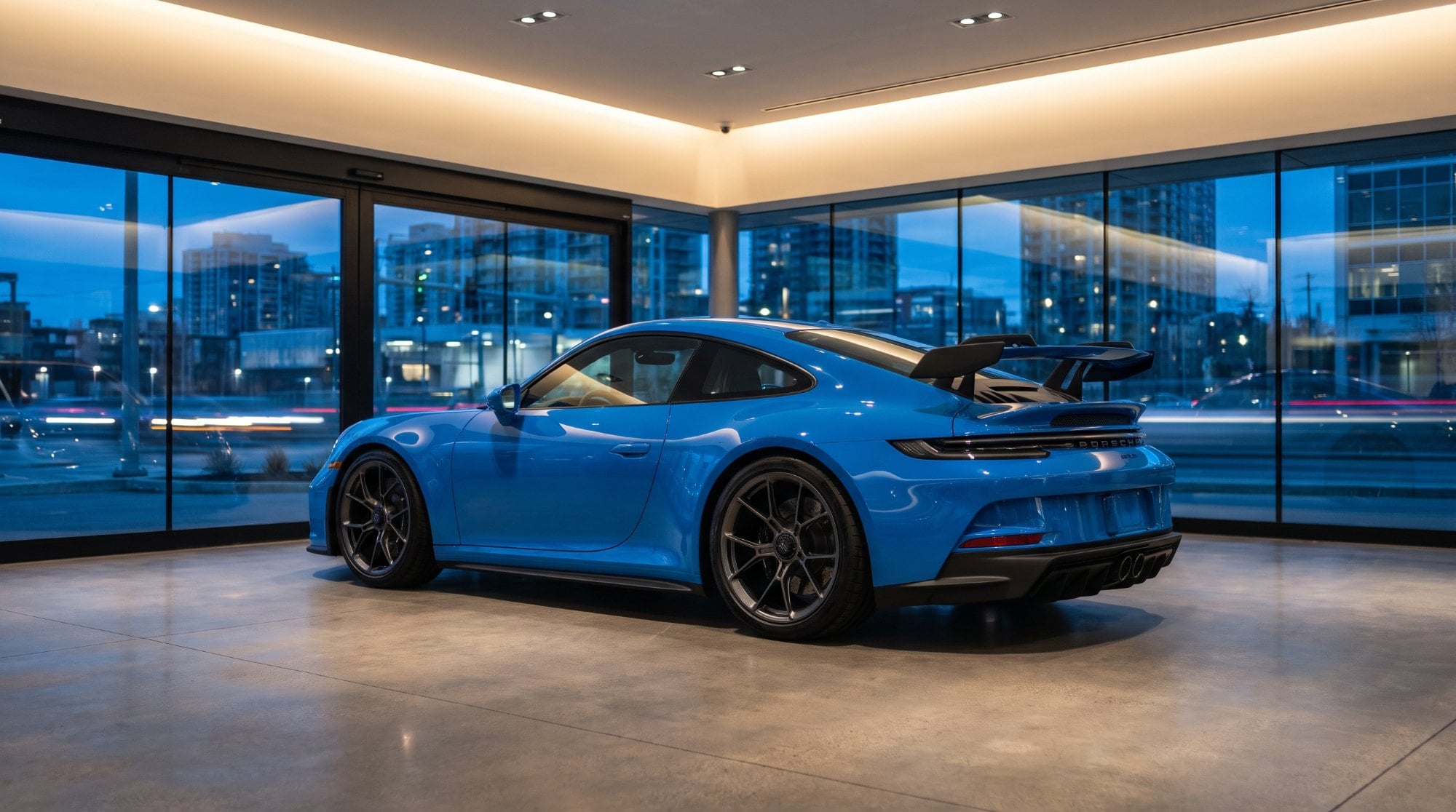
A Porsche 911 GT3 has a starting price of $235,800 for the 2027 model year in the United States. So why might a buyer encounter another GT3 advertised for $280,000, $300,000 or even more?
The answer isn’t always dealer markup.
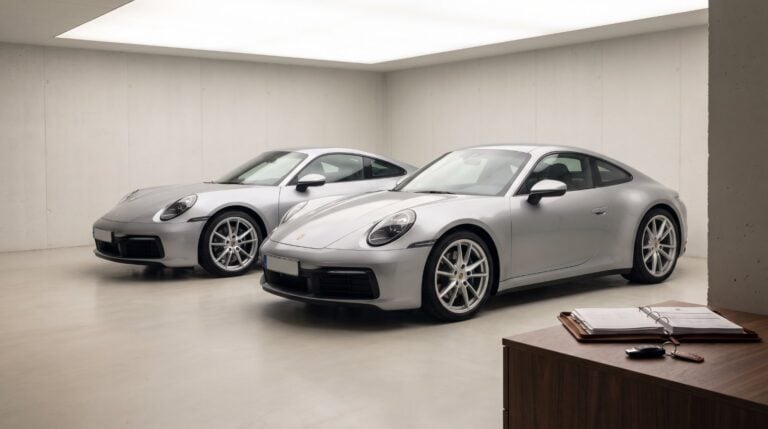
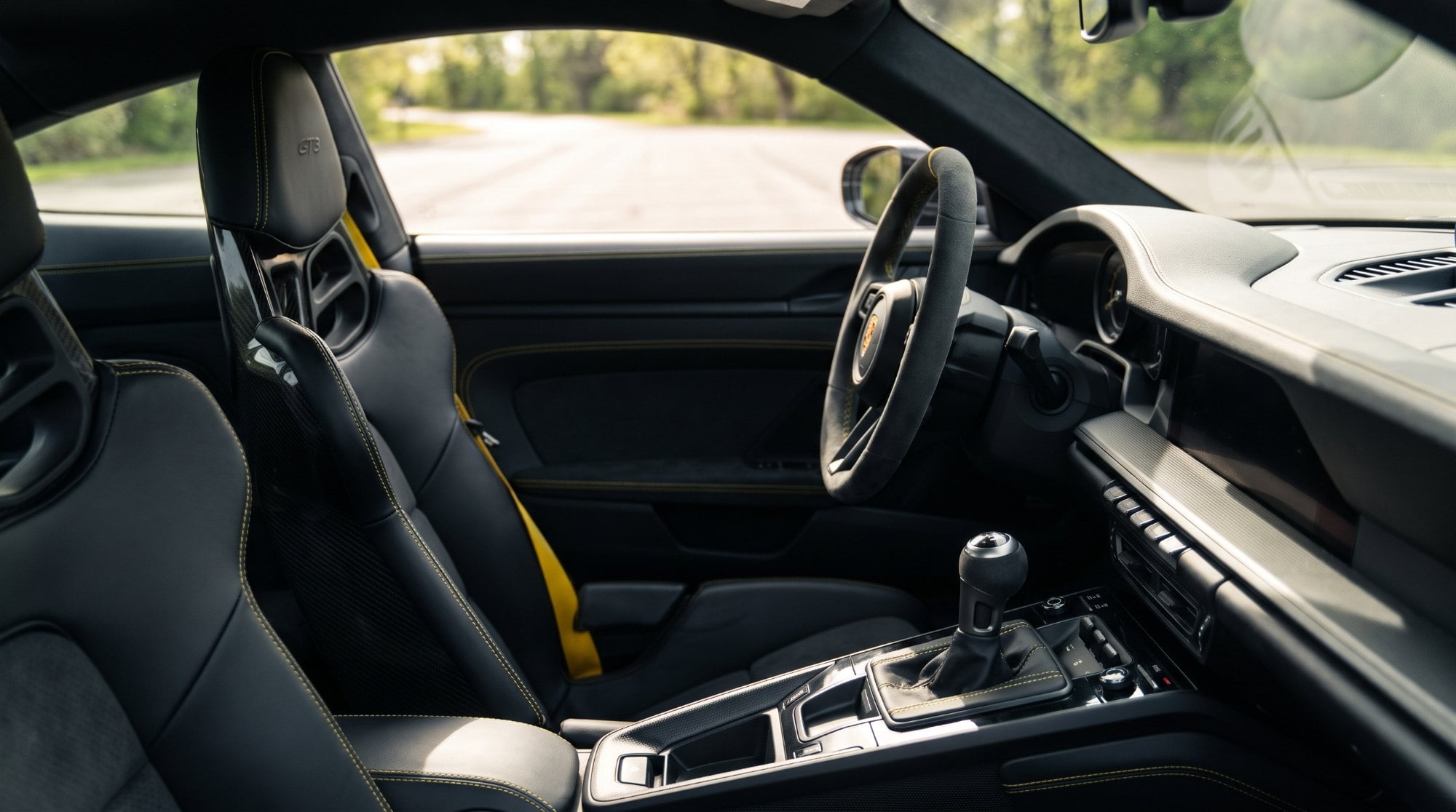
Images in this article are editorial illustrations created for Exotic Motors. They are not photographs of the vehicles discussed.
A GT3’s asking price can reflect expensive factory options, a sought-after configuration, limited new-car availability or the premium a seller believes the market will support. Sometimes several of those factors are involved.
For buyers comparing vehicles across dealerships and model years, understanding those differences is essential. The important question isn’t simply how much a GT3 costs above its advertised starting price. It’s how much of that difference is attributable to the actual car—and how much is attributable to the seller’s asking price.
What Does a New Porsche 911 GT3 Actually Cost?
For 2027, Porsche lists both the standard 911 GT3 and the 911 GT3 with Touring Package at a starting MSRP of $235,800 in its U.S. configurator. That is the Porsche 911 GT3 price before options, fees and any dealer premium.
Both use a naturally aspirated 4.0-liter flat-six producing 502 horsepower, with a choice of six-speed manual or seven-speed PDK transmission.
The standard GT3 emphasizes track-oriented aerodynamics, including its prominent fixed rear wing. The Touring offers a more understated appearance while retaining the same fundamental high-performance character.
Neither starting price represents the final cost of a configured vehicle. Porsche explicitly excludes optional equipment, taxes, title and registration charges, delivery and processing fees, dealer charges and potential tariffs from its advertised MSRP. On top of the base price, Porsche’s U.S. configurator currently adds a $2,350 delivery, processing and handling fee and, on some configurations, a $1,700 federal Gas Guzzler Tax.
That distinction matters because the price difference between a base GT3 and a heavily optioned example can be substantial before any additional dealer premium is considered.
Factory Options Can Change the Price Considerably
Porsche offers an extensive range of GT3 personalization options, some of which affect performance and others that primarily influence appearance, comfort or exclusivity.
Depending on the model year and configuration, buyers may encounter equipment such as the Weissach Package, lightweight components, magnesium wheels, carbon-fiber bucket seats, a front-axle lift system, upgraded interior materials and special exterior paint. On the GT3 Touring, Porsche’s Lightweight Package provides another way to specify a more specialized car.
These options can materially increase the vehicle’s original sticker price. They can also affect its desirability in the used market.
A buyer planning regular track use may place considerable value on certain lightweight or performance-oriented equipment. Someone who intends to drive a GT3 primarily on public roads may care more about comfortable seating, a front-axle lift system and a configuration suited to everyday use.
An expensive factory option doesn’t automatically make a vehicle worth more to every buyer. It makes the car different. The challenge is determining whether those differences justify the asking price.
MSRP, Factory Sticker Price and Dealer Markup Are Three Different Things
One of the most common mistakes in GT3 shopping is comparing a dealership’s asking price directly with Porsche’s advertised base MSRP. That comparison can be misleading.
Consider a hypothetical new GT3 transaction:
| Price component | Amount |
|---|---|
| Base MSRP | $235,800 |
| Factory options | $28,000 |
| Configured vehicle MSRP | $263,800 |
| Additional dealer markup | $25,000 |
| Selling price | $288,800 |
The vehicle’s selling price is $53,000 above its base MSRP. But only $25,000 of that difference represents the additional dealer markup in this example. The other $28,000 comes from factory equipment selected when the car was ordered.
That doesn’t automatically make the $25,000 premium reasonable. It simply makes the pricing easier to understand.

Buyers should request the original window sticker or factory build documentation and compare the configured MSRP with the proposed selling price. For a new vehicle, that is the clearest way to identify any additional dealer premium. (Federal regulators are pushing the same idea: our explainer on the FTC’s dealer pricing FAQs covers what dealers are expected to disclose.)
Why Do Dealers Charge More Than MSRP?
The GT3 occupies a distinctive position in Porsche’s lineup. It combines a high-revving naturally aspirated engine, motorsport-derived engineering and a driving experience that appeals to enthusiasts who might otherwise consider much more expensive exotic cars.
Demand for particular configurations can exceed the number of vehicles available through individual dealerships. When that happens, some dealers may ask for additional dealer markup, often abbreviated ADM.
A dealership may also have limited allocations available for customers seeking a particular model or specification. An allocation is essentially a production opportunity assigned to a dealer. It is not the same thing as a completed vehicle sitting in inventory.
Buyers should distinguish between securing an allocation, placing a refundable reservation and signing a binding purchase agreement.
Dealer practices vary, and not every GT3 is sold above MSRP. A premium that one buyer is willing to pay may be unacceptable to another, particularly when comparable vehicles are available elsewhere. The presence of an asking-price premium does not establish that the vehicle will actually sell for that amount.
Why Can a Used GT3 Cost More Than a New One?
A used GT3 can sometimes carry an asking price above the starting MSRP of a newer example. That may seem counterintuitive.
But a used GT3 is available for purchase now, while ordering a new vehicle may depend on allocation availability, production timing and dealership arrangements. A particular used car may also have a highly desirable combination of equipment, paint, transmission, mileage and condition.
Some buyers may prefer the driving characteristics or appearance of an earlier GT3 generation. Others may be searching for a specific configuration that is difficult to reproduce or obtain. Those preferences can support strong asking prices.
However, buyers should be cautious about treating a high used-car listing price as evidence of appreciation. An asking price is what a seller hopes to receive. A completed transaction is evidence of what a buyer actually paid. The two can be very different.
For meaningful comparisons, buyers should examine recent transactions where available, alongside current inventory and the characteristics of individual vehicles.
Does the GT3 Touring Command a Premium?
The GT3 Touring has developed a following among enthusiasts who want the performance and engineering of a GT3 without the prominent rear wing. Its understated appearance can be particularly appealing to buyers who intend to use the car regularly.
But the Touring designation doesn’t automatically make a vehicle more valuable than a standard GT3. For the 2027 model year, Porsche lists both versions at the same $235,800 starting MSRP. Any difference in actual selling prices depends on the individual cars, their equipment, availability and buyer demand.
Transmission choice is another consideration. Both manual and PDK configurations appeal to different buyers. The manual offers a more involved shifting experience, while PDK delivers rapid automated gear changes and strong performance.
Rather than assuming one configuration will appreciate more, buyers should decide which experience they actually want. A GT3 purchased primarily for its anticipated resale value can be a disappointing choice if it isn’t the car its owner enjoys driving.
The Options Buyers Should Examine Closely
Not every expensive option deserves the same weight in a buying decision. A few areas merit particular attention.
- Front-axle lift: For buyers dealing with steep driveways, parking structures or challenging road approaches, a lift system can make ownership more convenient.
- Seats: Lightweight bucket seats can provide excellent support during spirited driving, but their comfort and accessibility may not suit every owner. Adjustable sport seats may be preferable for frequent road use.
- Transmission: Manual and PDK GT3s offer distinctly different driving experiences. Neither should be chosen solely because of assumptions about resale value.
- Lightweight packages: Specialized components can appeal to enthusiasts seeking a particular performance-oriented specification. Buyers should verify exactly which equipment is included.
- Paint and interior: Unusual factory combinations may be desirable, but personal taste and broader market demand do not always align.
- Service and condition: A well-maintained GT3 with complete records may be a more attractive purchase than a lower-mileage example with unresolved maintenance questions.
Factory equipment should be verified using the original build information wherever possible, rather than relying exclusively on a listing description.
How to Decide Whether a GT3 Is Fairly Priced
Start with the exact generation and model year. A 991.2 GT3, an early 992 GT3 and a later 992.2 GT3 should not be treated as interchangeable simply because they share the same badge. (Our 991.2 vs. 992 used Porsche 911 guide covers how the two generations differ.)
Then compare vehicles with similar mileage, transmission, equipment, condition and ownership history.
For new vehicles, establish the configured MSRP before evaluating any dealer premium.
For used vehicles, review the original factory specification, service history, warranty status, tire condition, accident history and any evidence of track-related wear.
A pre-purchase inspection by a qualified Porsche specialist is especially valuable when evaluating an expensive used GT car. Our guide to what an exotic-car PPI should include explains what to ask for.
Ask whether the vehicle has been modified, whether original components are included and whether any applicable recalls or service campaigns remain outstanding.
Finally, compare the total transaction cost, not just the advertised price. Transportation, taxes, registration, financing and dealer fees can change the economics of a purchase, especially when buying out of state.
The goal is not necessarily to find the cheapest GT3 advertised. It is to identify the best-supported price for the particular vehicle you want.
Before Paying a Premium, Ask These Questions
- What was the vehicle’s original factory-configured MSRP?
- Which factory options account for the difference from the base price?
- Is the seller charging an additional premium beyond the original sticker price?
- How does the asking price compare with similarly equipped vehicles?
- Is the vehicle available for immediate delivery, or is it a future allocation?
- For a used GT3, what do the maintenance records and inspection findings reveal?
- Are there modifications, warranty limitations or outstanding title issues?
- What is the complete purchase price, including fees and applicable taxes?
Clear answers can make an expensive purchase easier to evaluate. They also help buyers distinguish between paying for desirable equipment and paying simply because a particular vehicle is difficult to obtain.
The Right GT3 Is Worth More Than the Cheapest GT3
The Porsche 911 GT3 is an unusual proposition. It offers performance and engineering developed with motorsport priorities, yet remains a road-going sports car that owners can enjoy outside a circuit.
That combination helps explain its appeal. It also helps explain why prices can vary so dramatically between individual examples.
A base MSRP is a starting point. Factory equipment determines what Porsche originally charged for a particular vehicle. Dealer premiums and used-market demand influence what sellers ask today.
For buyers, the smartest approach is to separate those numbers before deciding what a GT3 is worth. Because the right GT3 isn’t necessarily the one closest to MSRP. It’s the one whose specification, condition, driving experience and total price make sense for the person buying it.
Browse Porsche 911 inventory on Exotic Motors to compare specifications and asking prices side by side.
Buying guides, market analysis and news for people shopping exotic, luxury and collector cars. Written by the Exotic Motors team; prices and availability are checked at publication.