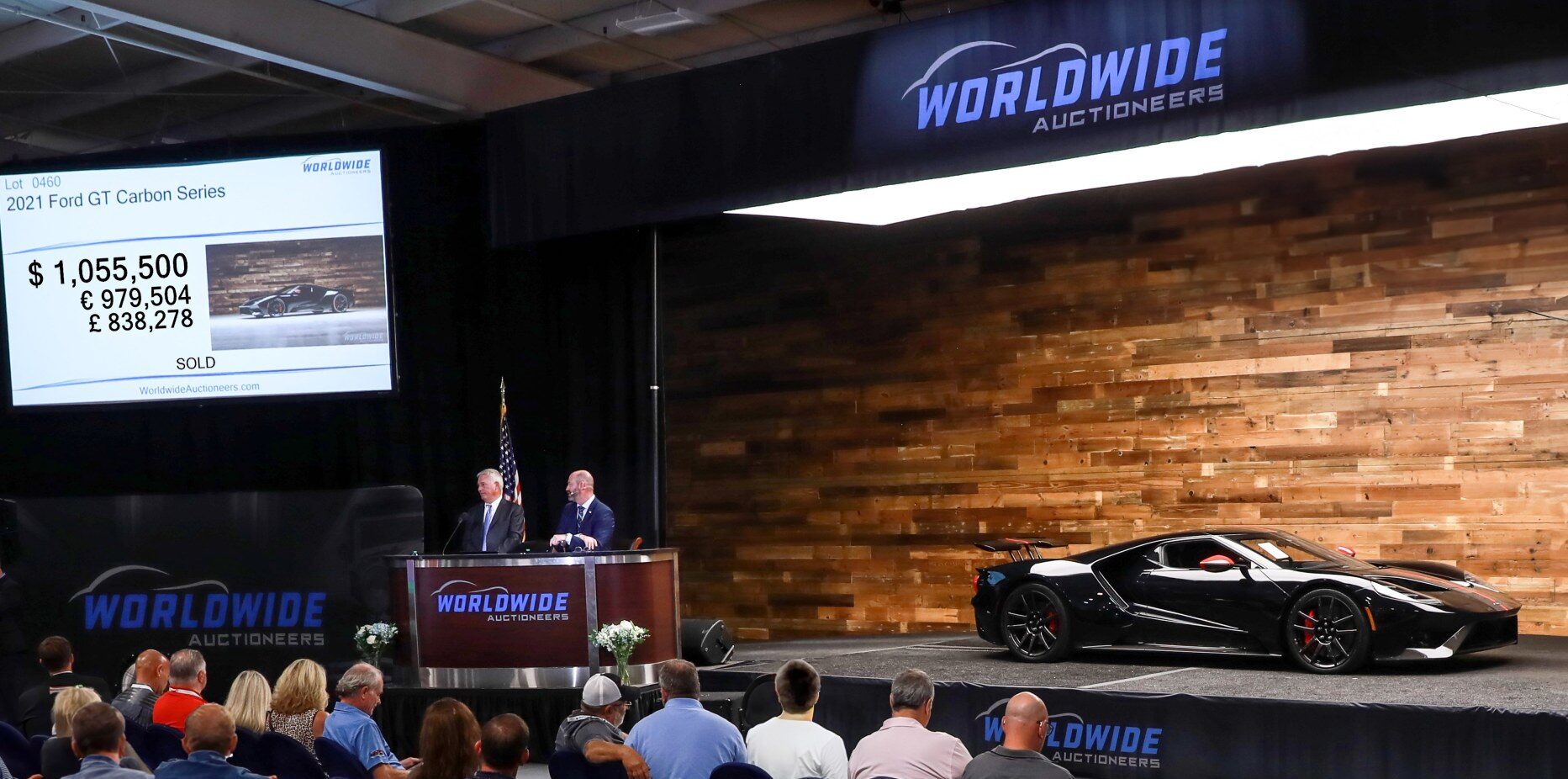
If you have gone looking for Worldwide Auctioneers lately, you will have found nothing at all — the domain no longer resolves. The Auburn, Indiana auction house is still there, still at the same address, still running the same auctions — it is trading under a different name. Worldwide Auctioneers now operates as Kruse Auctions.
Almost nobody has written this down clearly, which is why people keep searching for it. This page is the plain explanation: what changed, what did not, what the company runs now, and why the Kruse name on the building carries more history than either brand.
Quick Answer: Is Kruse Auctions the Same Company as Worldwide Auctioneers?
Effectively, yes. Kruse Auctions operates from the same Auburn, Indiana headquarters at 5634 Opportunity Blvd that Worldwide Auctioneers used, and John Kruse — a principal at Worldwide — is listed as principal, auctioneer and chief appraiser at Kruse Auctions. The Auburn Auction carried straight across: Worldwide ran the 55th edition, and the 56th Annual Auburn Auction & Show runs under Kruse Auctions over Labor Day weekend, 2–5 September 2026. The worldwideauctioneers.com domain no longer resolves.
Table of Contents
What Actually Changed
The rebrand was reported locally by WANE 15 in Fort Wayne, ahead of the Auburn Spring Auction. Beyond the reporting, the observable facts line up on their own:
Same address. Kruse Auctions is at 5634 Opportunity Blvd Ste A, Auburn, IN 46706 — the Worldwide Auctioneers address.
Same principal. John Kruse was a principal and auctioneer at Worldwide. Kruse Auctions lists him as principal, auctioneer and chief appraiser, under Indiana auctioneer licence AU19900072.
Same auction, continuous numbering. Worldwide’s Auburn Auction reached its 55th annual edition. The 56th runs under Kruse Auctions.
Same venue. Kruse Plaza in Auburn, a 200,000-square-foot climate-controlled facility, hosts the sales.
The old domain is gone. worldwideauctioneers.com no longer resolves at all — the DNS record has lapsed, which is about as complete a handover as a rebrand gets.
What has not changed is the format. Kruse Auctions still runs boutique, curated sales rather than volume events — a few hundred carefully selected cars rather than a thousand, with memorabilia alongside. If you liked how Worldwide ran a sale, that is the same operation under a name with deeper local roots.
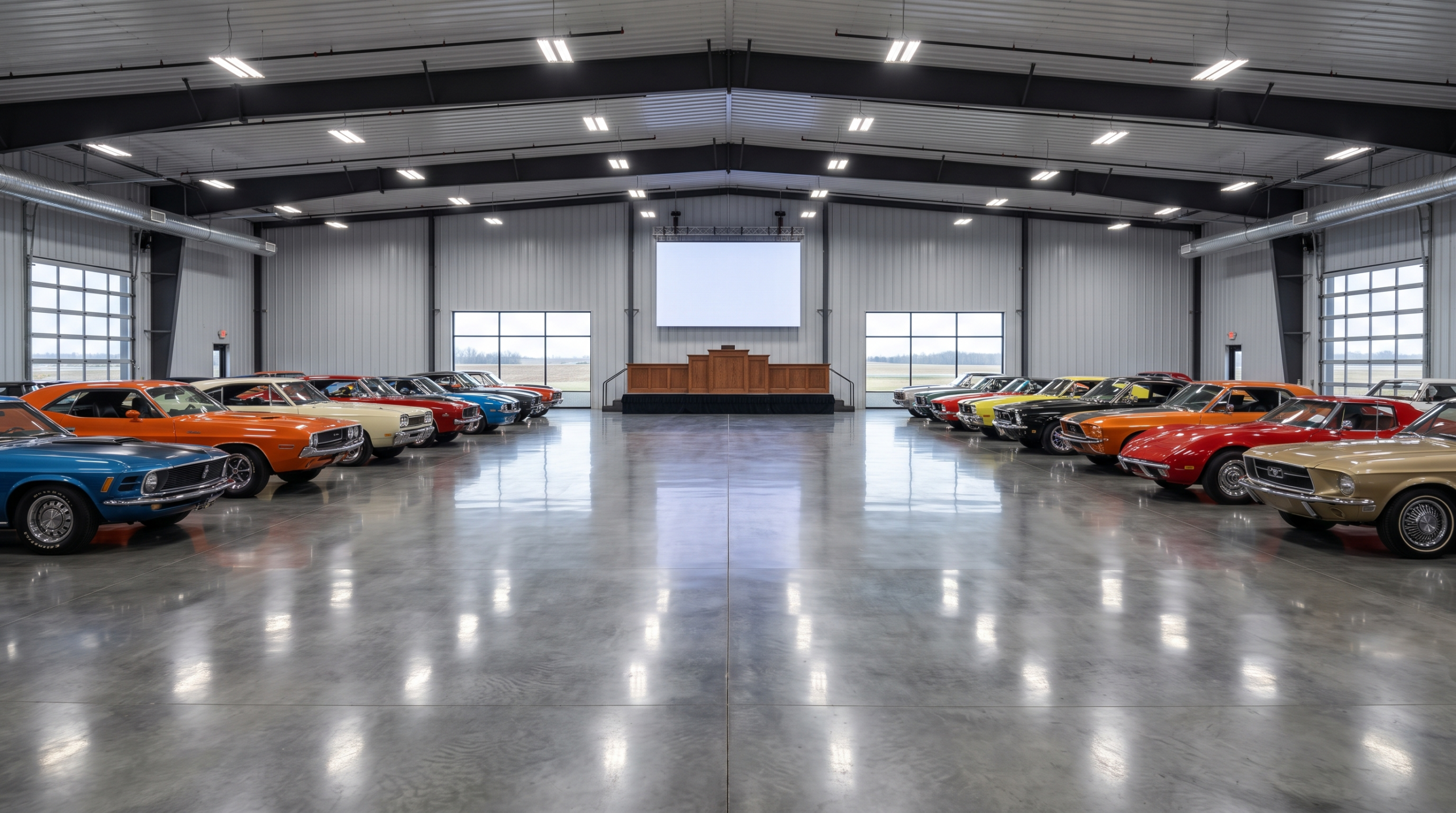
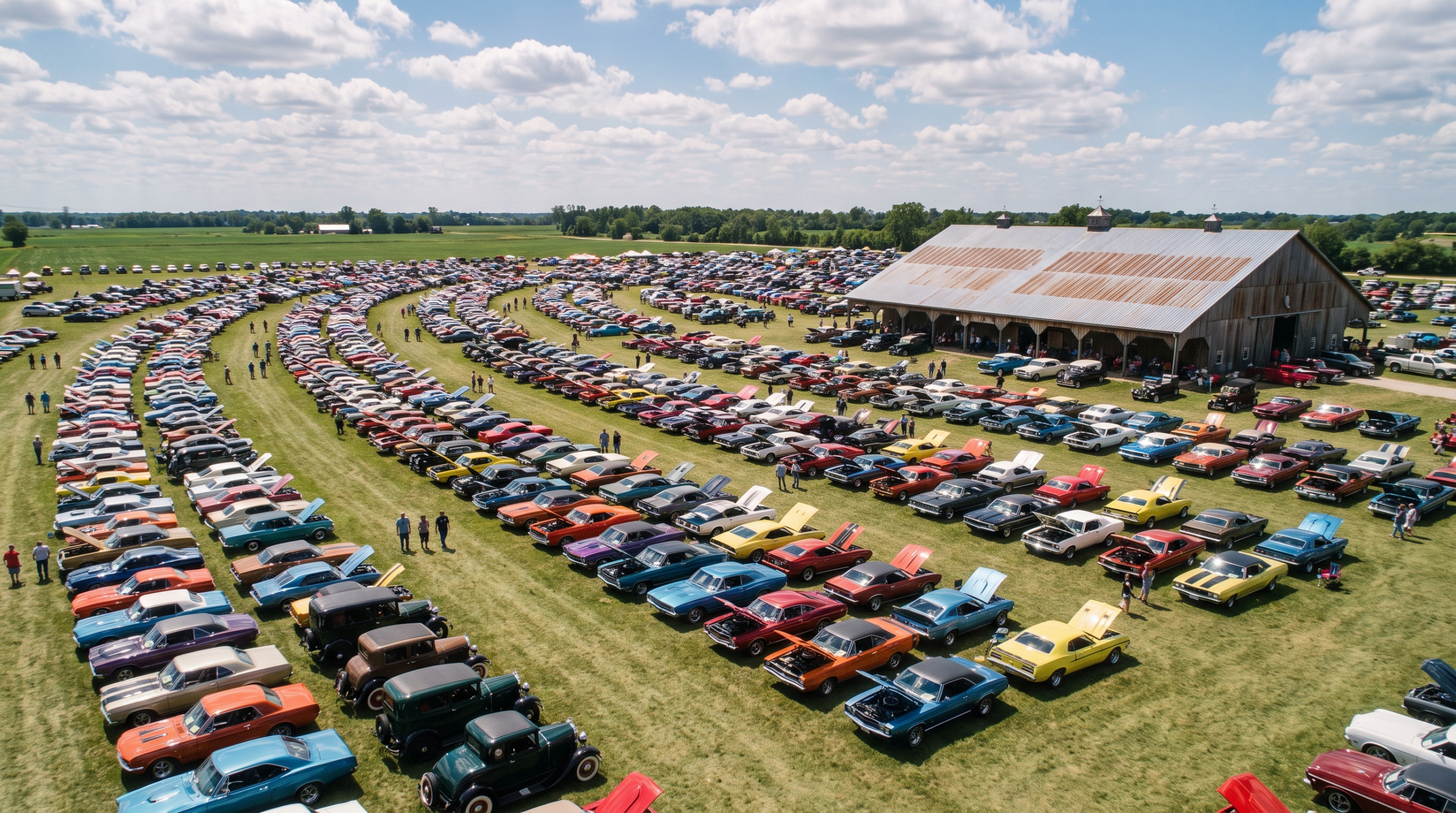
Kruse Auctions runs its sales from a 200,000-square-foot climate-controlled facility in Auburn, Indiana. Illustrative rendering.
What Worldwide Auctioneers Was — and the One Thing People Get Wrong
Worldwide Auctioneers built its reputation on curation. Quality over quantity, every car vetted for authenticity, provenance and condition, and a buyer list that reached well beyond the Midwest. That reputation is the asset that carried into Kruse Auctions.
There is one thing widely repeated about Worldwide that was never true, including in an earlier version of this article: that it only ever held auctions at its own Indiana headquarters. It did not. Worldwide ran a Scottsdale Auction and an annual Pacific Grove Auction on the Monterey Peninsula during Monterey Car Week — its own archived pages for both are still online. Auburn was the home base, not the only stage.
We are correcting that here because we published it. The distinction matters if you are researching past results: Worldwide sale records exist under several event names and in more than one state, and a search limited to Auburn will miss a lot of them.
Kruse Auctions Today
Kruse Auctions is a boutique collector car auction house headquartered in Auburn, Indiana, run by John Kruse as auctioneer and chief appraiser. Its tagline — built on heritage, driven by integrity, guided by vision — is doing more work than most taglines, because the heritage part is literal and we will get to it.
The company runs a small, deliberate calendar rather than a national touring circuit: two headline Auburn sales a year, a Sealed Bid Series, and dedicated memorabilia auctions. Cars are catalogued and curated rather than run through in volume, and the memorabilia side is a real business rather than an afterthought — 150 lots at a typical sale.
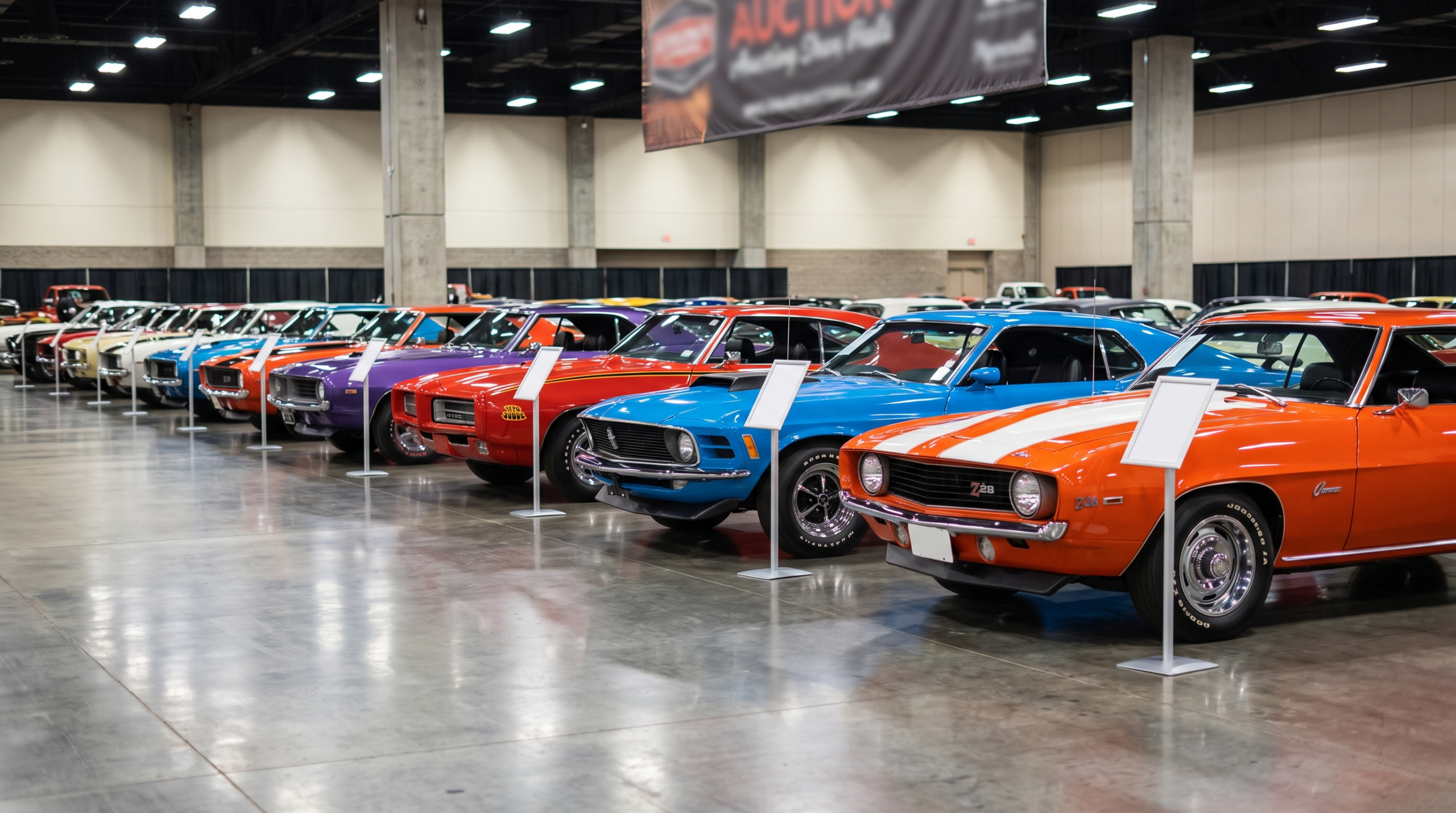
Kruse Auctions runs curated boutique sales of a few hundred cars rather than volume events. Illustrative rendering.
The Kruse Auctions Calendar
Two headline sales anchor the year, both in Auburn, both at Kruse Plaza.
Sale
When
Format
56th Annual Auburn Auction & Show
2–5 September 2026 (preview Wed 2nd; auction Thu 3rd – Sat 5th)
3-day boutique auction, 300+ collector cars and 150 memorabilia lots
Auburn Spring Auction
Late April (2026: 22–25 April)
2-day boutique auction, around 250 cars and 150 memorabilia lots
Sealed Bid Series
Periodic
Private, non-public bidding on individual consignments
Memorabilia auctions
Alongside the headline sales
Signs, petroliana, automobilia and collection material
Source: Kruse Auctions. Confirm times and lot counts against their own listings before travelling — catalogues change up to the week of the sale.
The Labor Day sale is the one to plan around. It runs alongside Auburn Car Week, when thousands of collector cars fill the town for the wider festival, so the Kruse Auctions catalogue is only part of what is worth the trip.
Auburn, 1971, and Why the Kruse Name Is on the Building
Auburn was an automotive town before it was an auction town. The Auburn Automobile Company built Auburns, Cords and Duesenbergs here, and for a stretch of the 1920s and 30s this small Indiana city was producing some of the most extravagant cars in the world. The company did not survive the Depression; it folded in 1937. What survived was the town’s sense of itself, kept alive by an annual Labor Day festival built around the cars it once made.
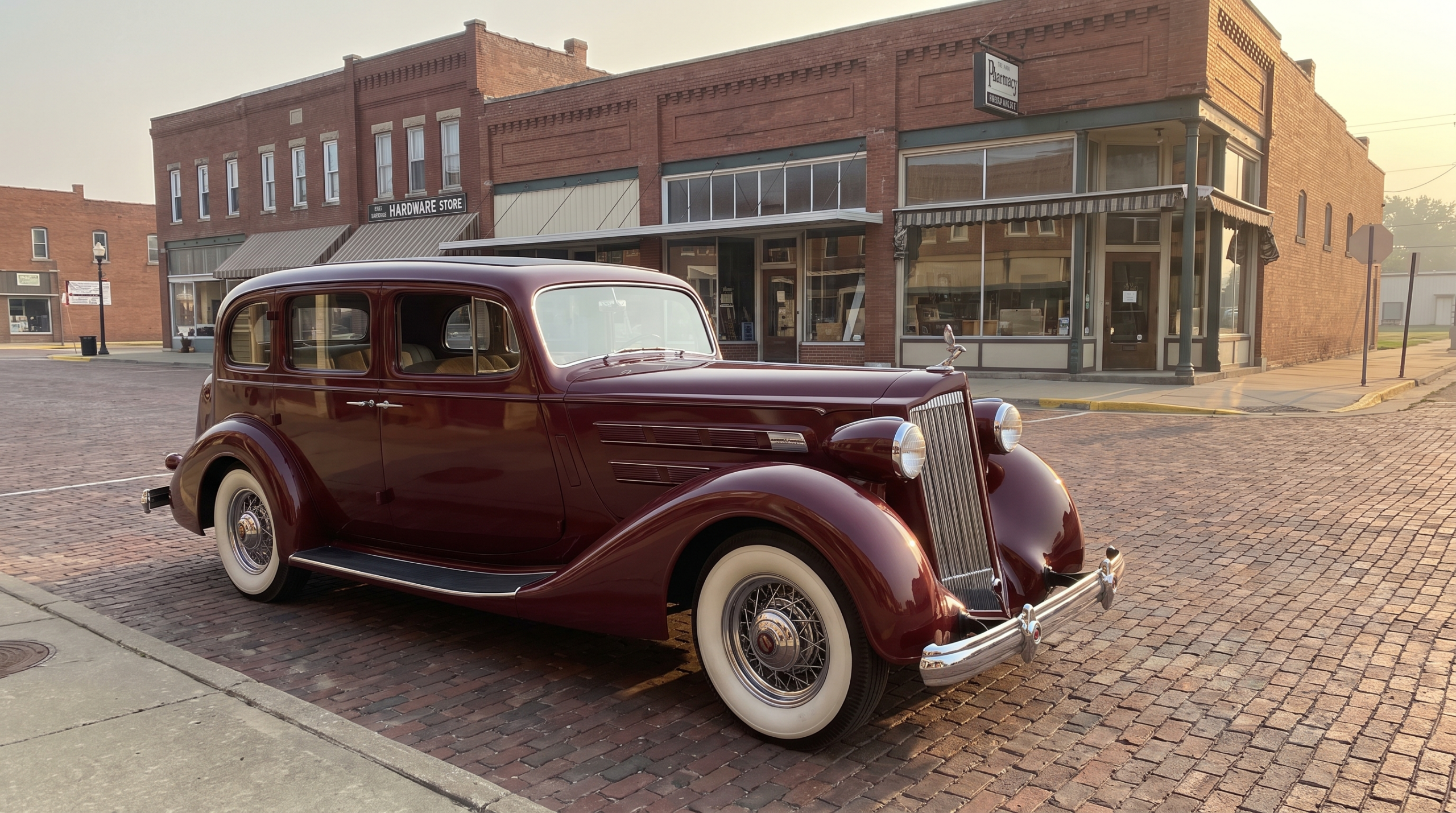
Auburn, Indiana built Auburns, Cords and Duesenbergs until the company folded in 1937. Illustrative rendering.
The auction part starts with Russell Kruse, who finished a course at the Reppert School of Auctioneering in 1952 and began an auction business in Auburn with his father-in-law. In 1971 the Auburn Chamber of Commerce asked him to help raise money for the festival. His suggestion was a consignment auction of collector cars — an idea nobody had really tried at scale.
Roughly 80 cars were entered. About 17,000 people turned up. A Duesenberg drew a rejected bid of $61,000, which in 1971 was extraordinary money for a used car and got the event national attention. That afternoon is, by common consent, where the American collector car auction industry begins — which is why Auburn is routinely described as its birthplace, and why the 2026 sale is numbered the 56th.
John Kruse is Russell’s grandson; his father is Dennis Kruse, long a fixture in auction industry education. He took part in his 30th Auburn Auction in 2025. So when Worldwide Auctioneers became Kruse Auctions, the name going up was not a marketing invention — it is the family name that started the whole category in that town, on that weekend, fifty-odd years ago.
The Labor Day Kruse Auctions sale runs alongside Auburn Car Week, which fills the town with collector cars. Illustrative rendering.
Buying and Consigning at a Kruse Auctions Sale
A boutique auction works differently from a volume one, and the differences are worth knowing before you register.
Use the preview day. The 56th Annual Auburn Auction opens on the Wednesday for preview only, before a car crosses the block. That is the day to inspect properly, read the documentation folders and talk to the specialists without a bidding clock running.
Register in advance. Kruse Auctions handles bidder registration online ahead of the sale. Doing it on the day costs you the lots that run early.
Read the catalogue description as a claim, not a fact. This is true at every auction house. Matching-numbers, restoration history and documented ownership are all things to verify yourself — our collector car documentation guide covers exactly what to ask for.
Understand the premium. The hammer price is not what you pay. Confirm the buyer’s premium and how it is calculated before you raise a hand.
Consigning? Curated sales accept fewer cars, which is the point — a good car in a 300-lot catalogue gets more attention than the same car in a 1,000-lot one. Kruse Auctions takes consignments directly through its Auburn office.
Documentation is what separates two apparently identical cars at a Kruse Auctions sale. Illustrative rendering.
If you are weighing an auction against a private sale, the honest answer is that it depends on the car. Auction suits cars with a story that benefits from a room full of competing bidders. Private sale suits cars where the buyer pool is small and known. Our look at which exotic car values are actually appreciating and our Monterey auction results archive both cover how those two channels have been pricing differently.
What Else Is On in Auburn That Weekend
The sale is the reason to book, but it is not the reason to stay an extra day. Labor Day weekend in Auburn is a full automotive festival, and the auction sits inside it rather than beside it.
The Auburn Cord Duesenberg Festival has run since 1956 and reaches its 70th anniversary in 2026. It is volunteer-run and not-for-profit, and it funnels its proceeds into the town’s automotive museums. Most of the activity lands on the Friday and Saturday, with pre-festival events building through the preceding week — which overlaps neatly with the auction preview days.
The Auburn Cord Duesenberg Automobile Museum is the other reason to come. It opened in 1974 in the former Auburn Automobile Company administration building — a 1930 Art Deco design by Alvin M. Strauss — and holds more than 120 cars. The building was added to the National Register of Historic Places in 1978 and designated a National Historic Landmark in 2005, and it is one of the best-preserved surviving examples of an independent American automaker’s own facilities. Standing in the original showroom is a different experience from reading about the marque.
The town also hosts NATMUS, the Early Ford V-8 Foundation Museum and, improbably, the International Monster Truck Hall of Fame. For a place of Auburn’s size, the concentration of automotive history is hard to match anywhere in the United States.
Researching Past Results After a Name Change
A rebrand creates a practical problem for anyone valuing a car: the sale history splits across two names. If you are researching what a comparable car made, search both.
Search the old name as well as the new one. Results from before the change are catalogued under Worldwide Auctioneers, not under the current brand, and most aggregator databases have not merged them.
Search by event, not just by company. The Auburn Auction, the Scottsdale Auction and the Pacific Grove Auction are all separate event names attached to the same operation.
Third-party auction databases keep archived catalogues that outlive a company website. That matters here, because the old domain has already gone dark, taking its catalogue pages with it.
Check whether a result was a sale or a no-sale. A car that failed its reserve still shows up in coverage and is not a market price.
Save what you find now. Screenshot or archive the lot pages for any comparable you are relying on. Post-rebrand link rot is real, and a valuation argument built on a dead URL is not much of an argument.
Exotic Motors and Kruse Auctions
We are working with Kruse Auctions, and their consignments will be appearing in the Exotic Motors marketplace. That is a straightforward fit: they curate rather than churn, they operate from the town where this whole business started, and the cars that come through Auburn — pre-war American classics, muscle, European sports cars, modern exotics — are exactly what our buyers are looking for.
Our own family has been in the car business for more than a century, so we have a soft spot for an operation whose credentials go back three generations in the same town. We will update this page as the Kruse Auctions inventory goes live on our site.
Where to Go From Here
If you were searching for Worldwide Auctioneers, you now know where it went. If you are planning a trip, Labor Day weekend in Auburn is the one to book. And if you are buying or selling rather than spectating, we can help either way.
It now trades as Kruse Auctions. The company operates from the same Auburn, Indiana headquarters at 5634 Opportunity Blvd, John Kruse — a principal at Worldwide — is its principal and auctioneer, and the Auburn Auction continued its numbering straight across, with Worldwide running the 55th annual edition and Kruse Auctions the 56th. The worldwideauctioneers.com domain no longer resolves.
Is Kruse Auctions the same as Kruse International?
No, though the families overlap. Kruse International was the earlier Auburn auction company built by the Kruse family, later sold to ITT, then to eBay in 1999, then bought back in 2003. Kruse Auctions is John Kruse’s current company and is the rebranded Worldwide Auctioneers. Both trace back to the same Auburn auction tradition.
When is the next Kruse Auctions sale?
The 56th Annual Auburn Auction and Show runs 2-5 September 2026 over Labor Day weekend, with Wednesday 2 September as a preview day and bidding Thursday through Saturday. The Auburn Spring Auction runs in late April. Both take place at Kruse Plaza in Auburn, Indiana.
Where are Kruse Auctions sales held?
At Kruse Plaza, 5634 Opportunity Blvd Ste A, Auburn, Indiana 46706 — a 200,000-square-foot climate-controlled facility. Unlike its predecessor, which also ran a Scottsdale sale and an annual Pacific Grove sale on the Monterey Peninsula, the current Kruse Auctions calendar is centred on Auburn.
Why is Auburn, Indiana significant for car auctions?
Auburn built Auburns, Cords and Duesenbergs until the Auburn Automobile Company folded in 1937. In 1971 the town’s Chamber of Commerce asked auctioneer Russell Kruse to help fundraise for its Labor Day festival; he proposed a collector car consignment auction. Around 80 cars were entered, roughly 17,000 people attended, and a Duesenberg drew a rejected bid of $61,000. That event is widely regarded as the start of the American collector car auction industry.
How many cars sell at a Kruse Auctions sale?
The Labor Day Auburn Auction catalogues 300 or more collector cars plus about 150 memorabilia lots across three auction days. The Auburn Spring Auction is smaller at around 250 cars and 150 memorabilia lots over two days. These are deliberately boutique catalogues rather than volume sales.
Owning an exotic car is not about speed or luxury- It’s about embracing an experience, where the road becomes your canvas and the car, your masterpiece.
The FTC’s September 2026 pricing FAQs say a car’s advertised price must be one any buyer can pay, on Instagram, marketplaces and dealer sites alike. Here is what that means for exotic and luxury dealers.
Monterey 2026 did a record ~$756 million while the retail exotic market cooled. Here is what the split means for anyone buying or selling a supercar right now.
What owning a Lamborghini actually involves: how allocation really works, the five-year maintenance programme, real clutch and service bills, insurance, values and Polo Storico.