The short answer: a real exotic car pre-purchase inspection (PPI) is not a walk-around and a code scan. It is a marque specialist, working for you and not the seller, putting the car on a lift, measuring the paint panel by panel, reading the car’s own memory with factory-level diagnostics, reconciling every service invoice against the odometer, and then driving it from a cold start. Done properly, it gives you one of three answers before any meaningful money moves: buy it, buy it for less, or walk away.
That last point is the one most buyers miss. The inspection is only worth what you are still free to do with the results. Here is what a proper inspection should cover, how to choose who does it, and how to structure the deal so the report actually protects you.
Why an Exotic Needs a Different Kind of Pre-Purchase Inspection
A general used-car inspection is built for cars with steel panels, generic OBD-II data and parts that cost what normal parts cost. Modern exotics break all three assumptions. Bodywork is often aluminum or composite, which a basic magnetic paint gauge can’t read. The most important data, such as clutch wear on an automated gearbox or the over-rev history on a Porsche engine, lives in manufacturer-specific control modules that a parts-store scanner never touches. And the gap between a good example and a tired one can be a five-figure repair bill hiding behind a flawless detail job.
Even the federal paperwork points the same way. The FTC’s Used Car Rule requires dealers to post a Buyers Guide on used vehicles, and that guide tells shoppers to ask for an independent mechanic’s inspection before they buy. If the car is sold “as is,” the inspection is effectively your warranty, because once the deal is done most of the risk is yours.
How to Choose an Independent Marque Specialist for Your PPI
The single biggest variable in an inspection is who performs it. A few rules separate a useful report from an expensive formality.
Independence first. The inspector works for you. A shop the seller recommends, or one that has serviced this particular car for years, may be perfectly honest, but it has a relationship to protect. At minimum, choose your own shop; ideally, choose one with no history with the car or the seller.
Marque experience, not just “exotic” experience. A shop that lives on Porsches knows what a normal over-rev report looks like. A Ferrari specialist knows how a healthy F1 gearbox should engage and which service items a given model is known for. Ask how many examples of this specific model they have inspected, not just the brand.
Factory-level diagnostic tools. Ask directly what they will plug in. For a Porsche, that means PIWIS or an equivalent capable of pulling the DME over-rev data. For other marques, it means the manufacturer’s system or a professional tool that reaches every module, not only the engine computer.
A lift and the time to use it. Mid-engine cars hide their problems underneath. If the inspection is done in a parking lot, it is not the inspection you are paying for.
A written report with photographs. Ask for a sample report before you book. You want measurements, photos of anything flagged, fault-code lists and a clear separation between “safety or major,” “due soon” and “cosmetic.”
A franchised dealer is a valid option. The brand’s own service department may be able to see warranty and service work performed within the dealer network, which is useful history to have. Just confirm that it will be a genuine pre-purchase inspection rather than a quick safety check.
If the car is in another state, don’t let distance talk you into skipping this. Find a respected specialist near the car and have the car taken to them, or have a qualified mobile inspector with the right tools go to the car. Buying remotely is covered in more depth in our guide to sourcing a spec that never shows up in stock.
What a PPI costs: scope drives price. National mobile inspection services advertise exotic-car inspections from roughly $250 to $300. They are a reasonable first look, but they typically use generic OBD-II scan tools rather than factory diagnostics, and may not include lift time. A marque-specialist inspection is the real benchmark, and published rates reflect that: Porsche specialist Repasi Motorwerks quotes $500 to $1,500 depending on model and scope, while MonzaHaus puts air-cooled and GT-car inspections at roughly $1,000 to $1,800 and high-value collector cars at $1,500 to $2,500. Compression and leak-down testing may be included or billed as an add-on, and an inspector who travels to the car adds travel costs on top. Get the scope in writing before you book. Against a six-figure purchase, it is still some of the cheapest insurance you will ever buy.
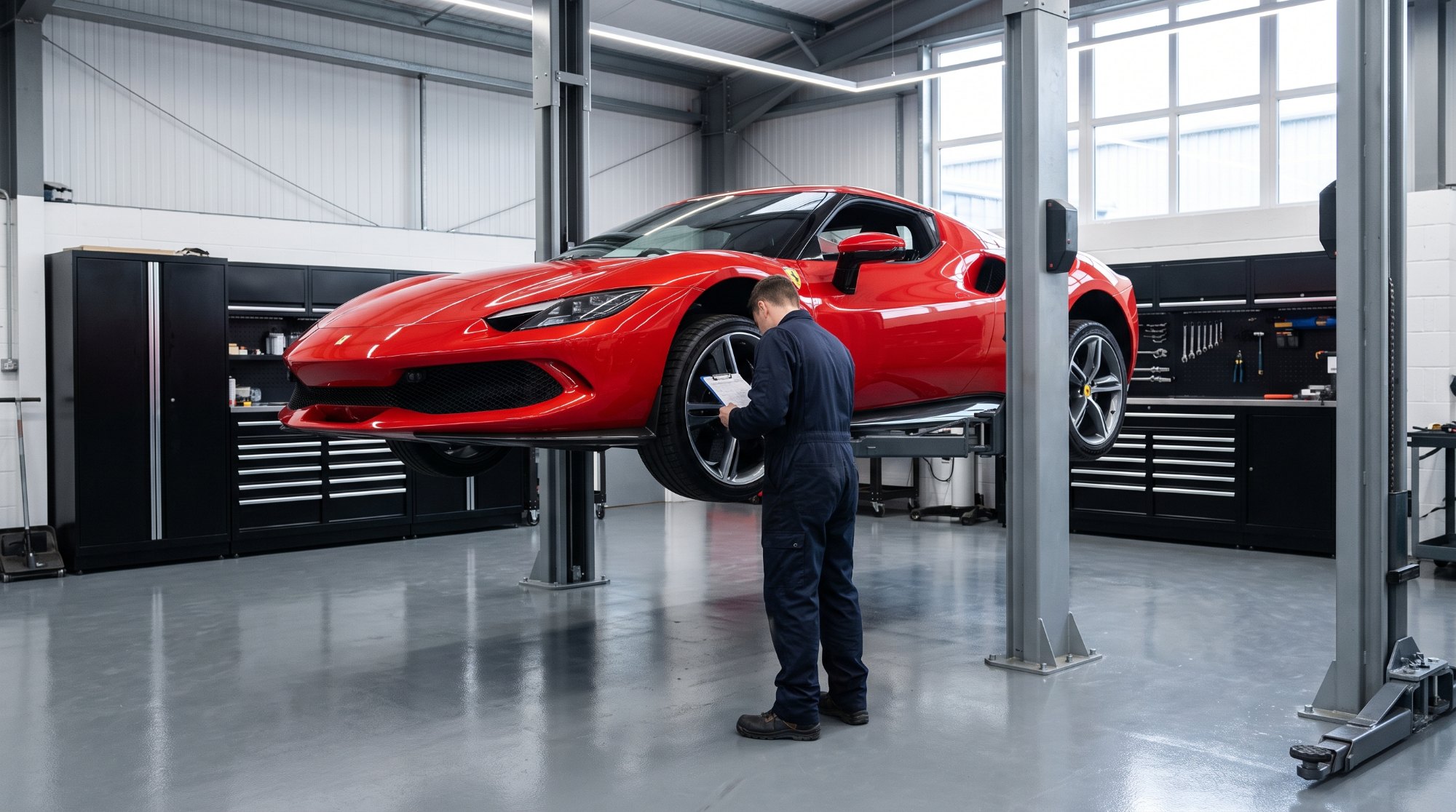
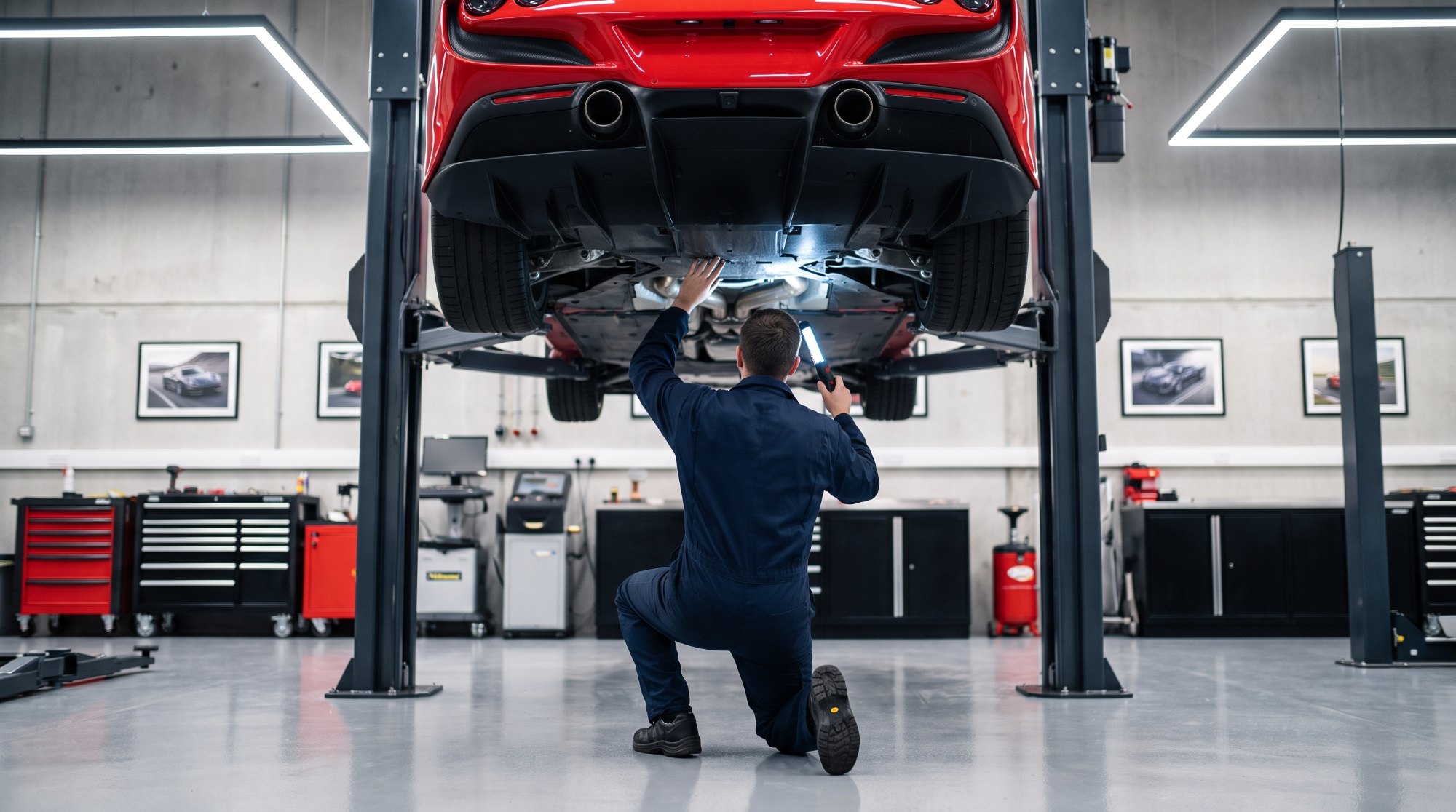
Leaks, impact damage and repair evidence live underneath. Illustration: Exotic Motors.
What the Lift Inspection Reveals
Getting the car in the air is where a lot of “perfect” cars stop being perfect. A thorough underside inspection should cover:
Leaks and seepage. Engine oil, coolant, gearbox and power-steering fluid. Fresh residue matters more than old staining, and a suspiciously clean underside on an older car deserves a question or two.
Impact damage. Front splitters, undertrays, diffusers and jacking points on low cars take abuse from driveways and curbs. Scrapes are normal; cracked mounts, crushed panels or bent suspension components are not.
Structural and repair evidence. Non-factory welds, sealer that doesn’t match, replaced or repaired rails and subframe mounts, and fresh undercoating in odd places can point to accident repair.
Suspension and steering. Worn bushings, leaking dampers, damaged ball joints and signs of a hard hit on one corner.
Brakes. Pad and rotor condition, fluid condition and, on cars with carbon-ceramic brakes, any chips or cracking. Carbon-ceramic discs are expensive to replace and aren’t judged the way iron rotors are, so the inspector should know the manufacturer’s method for assessing them.
Tires. Date codes as well as tread depth, and uneven wear that can point to alignment problems or bent parts.
For higher-mileage cars, cars with patchy history, or anything that sounds or smokes wrong, ask whether a compression or leak-down test, or a borescope look into the cylinders, is justified. It adds cost and time, but it is how you see inside an engine without taking it apart.
What Paint Readings Tell You
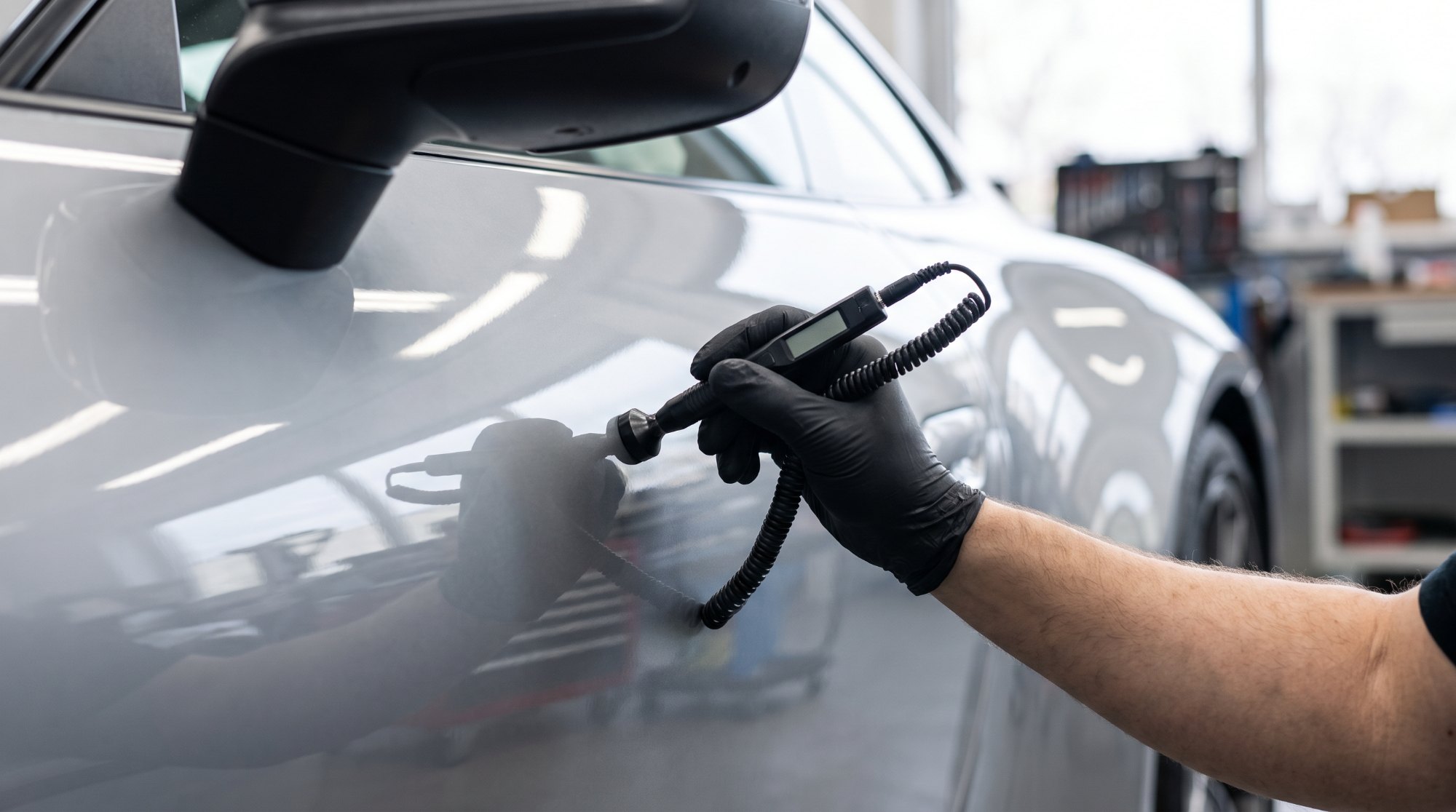
A paint thickness gauge measures how much material sits on top of each panel. According to coating-gauge maker DeFelsko, most factory paint falls roughly in the 4 to 7 mil range (about 100 to 180 microns), though it varies by car and even by panel. Readings well above the car’s own baseline usually mean refinishing. Readings well below it can mean paint that has been over-polished.
Readings only mean something as a pattern across every panel. Illustration: Exotic Motors.
Three things make paint readings genuinely useful on an exotic:
The right gauge for the material. A magnetic gauge reads steel only. Aluminum needs an eddy-current gauge, and composite or plastic panels need an ultrasonic one. An inspector who waves a steel-only meter over an aluminum or carbon-bodied car is not producing data.
A pattern, not a single number. The inspector should take multiple readings across every panel and compare them. One door reading noticeably thicker than the rest of the car tells a story; a uniformly consistent car tells a different one.
Context. Paint work is not automatically a deal-breaker. A resprayed front bumper after stone chips is common and minor. Paint on the roof, pillars or quarter panels, especially combined with uneven panel gaps, overspray or disturbed bolt heads, points to something bigger. Paint protection film also adds to readings, so the inspector should note where film is present.
Cross-check anything the gauge finds against the vehicle history report. When the paint says “repaired” and the history says “clean,” you want to know why before you sign.
What Diagnostics Can Reveal That a Test Drive Can’t
This is where an exotic inspection earns its fee. The car remembers things its seller may not mention.
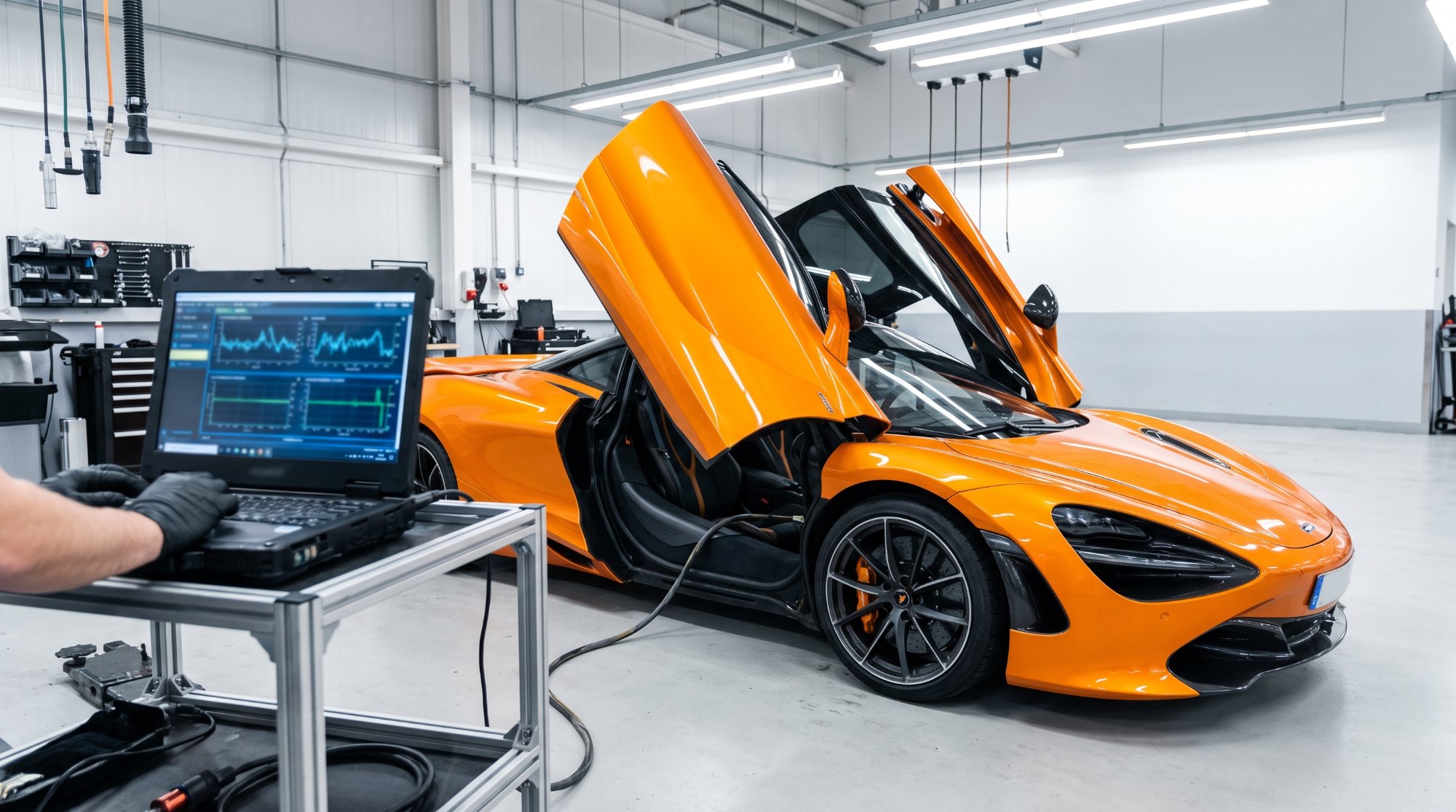
Factory-level diagnostics read what a test drive cannot. Illustration: Exotic Motors.
Stored, pending and historical fault codes across every module, not just the engine: gearbox, chassis, airbag, climate, nose-lift and infotainment systems all store faults.
Recently cleared codes. If the car’s emissions readiness monitors show as incomplete, codes may have been cleared shortly before the inspection. That is a question for the seller, not a verdict, but it should be asked.
Clutch wear on automated manual gearboxes. Cars such as the Ferrari F430 with the F1 gearbox report clutch wear through diagnostics. Collecting Cars’ F430 buyer’s guide puts roughly 70% wear in the caution zone, with replacement usually needed by 80 to 85%. A good specialist will also look past the headline percentage to the gearbox’s engagement values and hydraulic behavior.
Porsche over-rev history. On 997-generation cars and later, the engine computer logs over-revs in six ranges. Ranges 1 and 2 are rev-limiter contact and normal; ranges 5 and 6 are the serious ones, and how recently they happened matters. Specialists such as Cult Automotive explain the report in detail. A missed downshift in range 5 or 6 is the kind of history you want to know about before you own it.
Open recalls. Run the VIN through NHTSA’s recall lookup and ask the specialist or franchised dealer to confirm that completed campaigns match what the paperwork says.
Reading the Service Records Like an Inspector
A stack of paper is only as good as what it proves. The goal is to reconcile the records with the car.
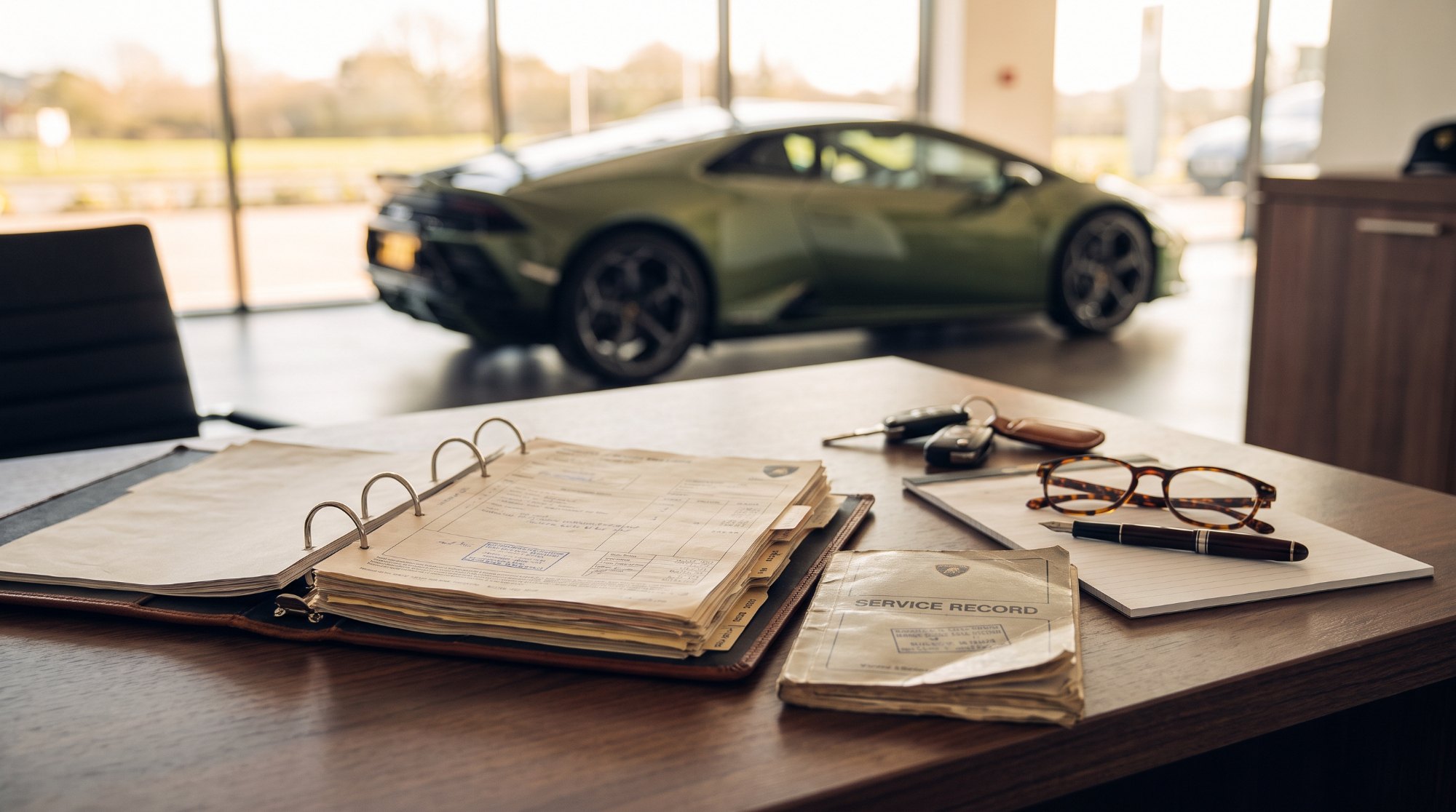
Itemized invoices, in mileage order, tell the real story. Illustration: Exotic Motors.
Mileage should climb logically. Every invoice carries a date and odometer reading. Put them in order. Mileage that goes backwards, or long gaps with no explanation, need answers.
Invoices beat stamps. A stamped service book is nice. Itemized invoices from a named shop, showing parts and labor, are proof.
Time matters as much as miles. Low-mileage exotics still need fluids, belts where fitted and other time-based services. On belt-driven engines, such as the Ferrari 360 and many of its predecessors, the date of the last belt service is a real number in the negotiation.
Known model issues should show up as addressed. Every exotic has its list. The records should show the relevant items handled, or the inspection should confirm their condition.
Recurring repairs are a pattern. The same fault fixed three times is a car telling you something.
For collector-grade cars, original documents such as window stickers, build sheets and factory certification add value and authenticity. Our collector car documentation guide covers how to verify them.
What the Road Test Should Cover
The drive ties everything together, and it should start with a cold engine. Ask the seller not to warm the car up before the inspector arrives; some problems only show themselves in the first few minutes.
The road test should start from a cold engine. Illustration: Exotic Motors.
Cold start and idle: hesitation, rattles, smoke, uneven idle, warning lights that stay on.
Gearbox behavior: smooth engagement from a stop, clean shifts up and down, no slipping, flaring or clunking. Dual-clutch and automated gearboxes deserve particular attention at parking-lot speeds.
Brakes and steering: straight-line stopping, pedal feel, vibration, pull, and steering that returns to center.
Suspension and body: knocks over bumps, rattles from trim, wind noise from seals.
Heat management: temperatures under load and after a heat soak, cooling fans cycling correctly and, in South Florida especially, air conditioning that actually keeps up.
Every feature: nose lift, active aero, convertible top, windows, seats, infotainment and cameras.
After the drive, a good inspector puts the car back on the lift or at least checks underneath again. A leak that appears only when everything is hot is still a leak.
The PPI at a Glance
Inspection area
What it can reveal
Red flags worth pausing on
Lift inspection
Leaks, impact damage, suspension and brake wear, repair evidence
Non-factory welds, bent suspension, cracked mounts, active leaks
Paint readings
Refinished or over-polished panels, likely repair areas
Thick readings on roof, pillars or quarters; mismatched gaps or overspray
Diagnostics
Stored and historical faults, clutch wear, over-revs, cleared codes
Serious over-rev ranges, high clutch wear, incomplete readiness monitors
Service records
Maintenance history, odometer consistency, known issues addressed
Mileage gaps or reversals, missing major services, repeat repairs
Road test
Drivability, gearbox and brake health, heat management, features
Hard or slipping shifts, overheating, warning lights, noises under load
How to Use the Findings Before You Pay a Deposit
A PPI report is leverage only while the deal is still open. The order of operations matters.
Structure the deposit around the inspection
Sellers often ask for a deposit to hold a car while you arrange an inspection, and that is reasonable. What matters is the wording. Before you send anything, get it in writing that the deposit is fully refundable if the PPI is not satisfactory to you, how long the car is held, and how quickly the money comes back if you walk. Pay with a traceable method, keep the deposit modest relative to the price, and never send the full purchase amount before the inspection is done and you have read the report. Deposit terms and consumer protections vary by state and by seller, so read the paperwork carefully and involve an attorney on a large or unusual transaction.
Sort the findings into three piles
Walk-away findings: evidence of structural repair the seller didn’t disclose, serious over-rev history, a title or odometer story that doesn’t reconcile, or anything that changes what the car fundamentally is.
Negotiation findings: items due soon, such as tires, a clutch approaching its service limit, a major service, or a leak that needs attention. Get a written repair estimate from the specialist and use that number, not a guess.
Cosmetic or informational findings: minor refinishing, small chips and normal wear. Worth knowing, rarely worth fighting over.
Choose how to settle what you found
You generally have three good options: a price adjustment based on the specialist’s estimate, a repair by the seller before delivery with an itemized invoice (and ideally a re-check by your inspector), or walking away with your deposit returned. A seller who refuses an independent inspection outright, or who becomes evasive once the report comes back, has also given you an answer.
Negotiating on documented findings rather than feel is the same principle behind step eight of our first-time exotic buyer’s guide, which walks through the whole purchase from budget to delivery.
Owning an exotic car is not about speed or luxury- It’s about embracing an experience, where the road becomes your canvas and the car, your masterpiece.
The FTC’s September 2026 pricing FAQs say a car’s advertised price must be one any buyer can pay, on Instagram, marketplaces and dealer sites alike. Here is what that means for exotic and luxury dealers.
Monterey 2026 did a record ~$756 million while the retail exotic market cooled. Here is what the split means for anyone buying or selling a supercar right now.
You are not searching badly. The car you want probably exists in single digits nationally at any given moment — here is how serious buyers actually get one, and what each route costs.