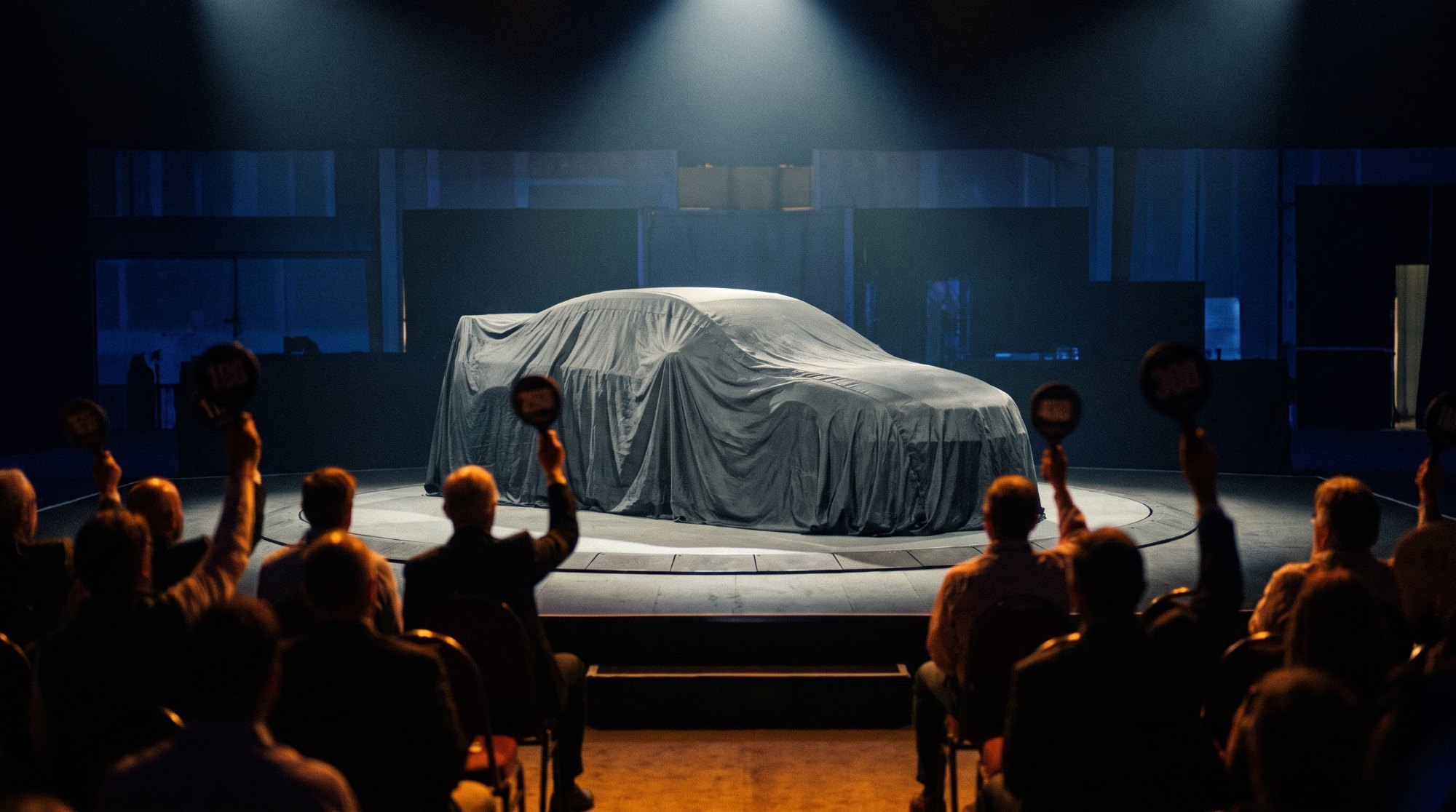
The Ferrari 849 Testarossa is the most powerful series-production road car Maranello has ever built, and it arrives carrying a name Ferrari retired more than thirty years ago. Revealed on 9 September 2025 as the replacement for the SF90 Stradale, it pairs a heavily reworked twin-turbo V8 with three electric motors for a combined 1,050 cv.
Reviving the Testarossa badge was the riskiest thing about it. The 1984 original is one of the most recognisable shapes of the twentieth century, and a car wearing that name has to justify it. This guide covers what the Ferrari 849 Testarossa actually is, what changed beneath the surface, and where it sits against the rest of the current hypercar field.
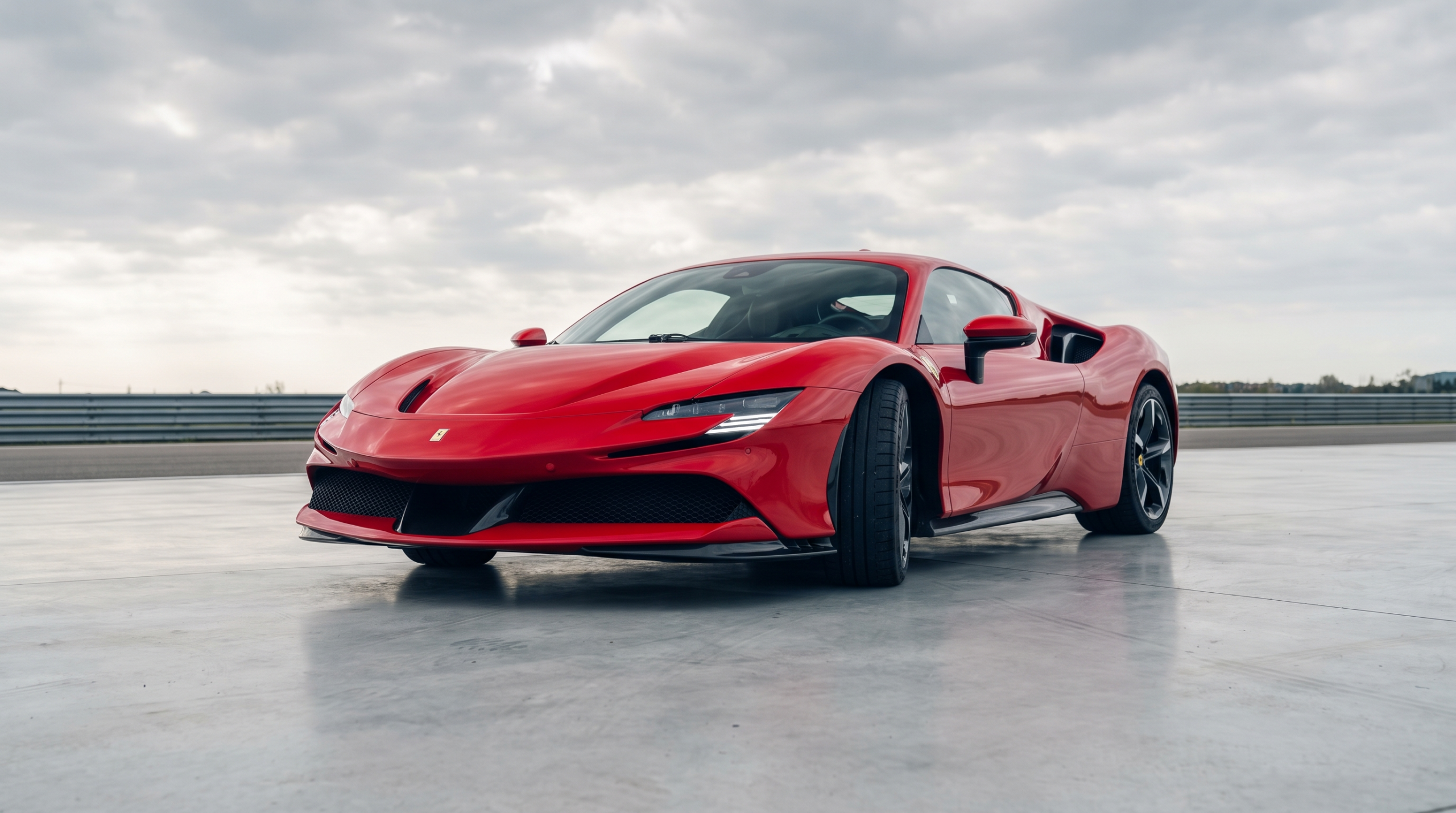
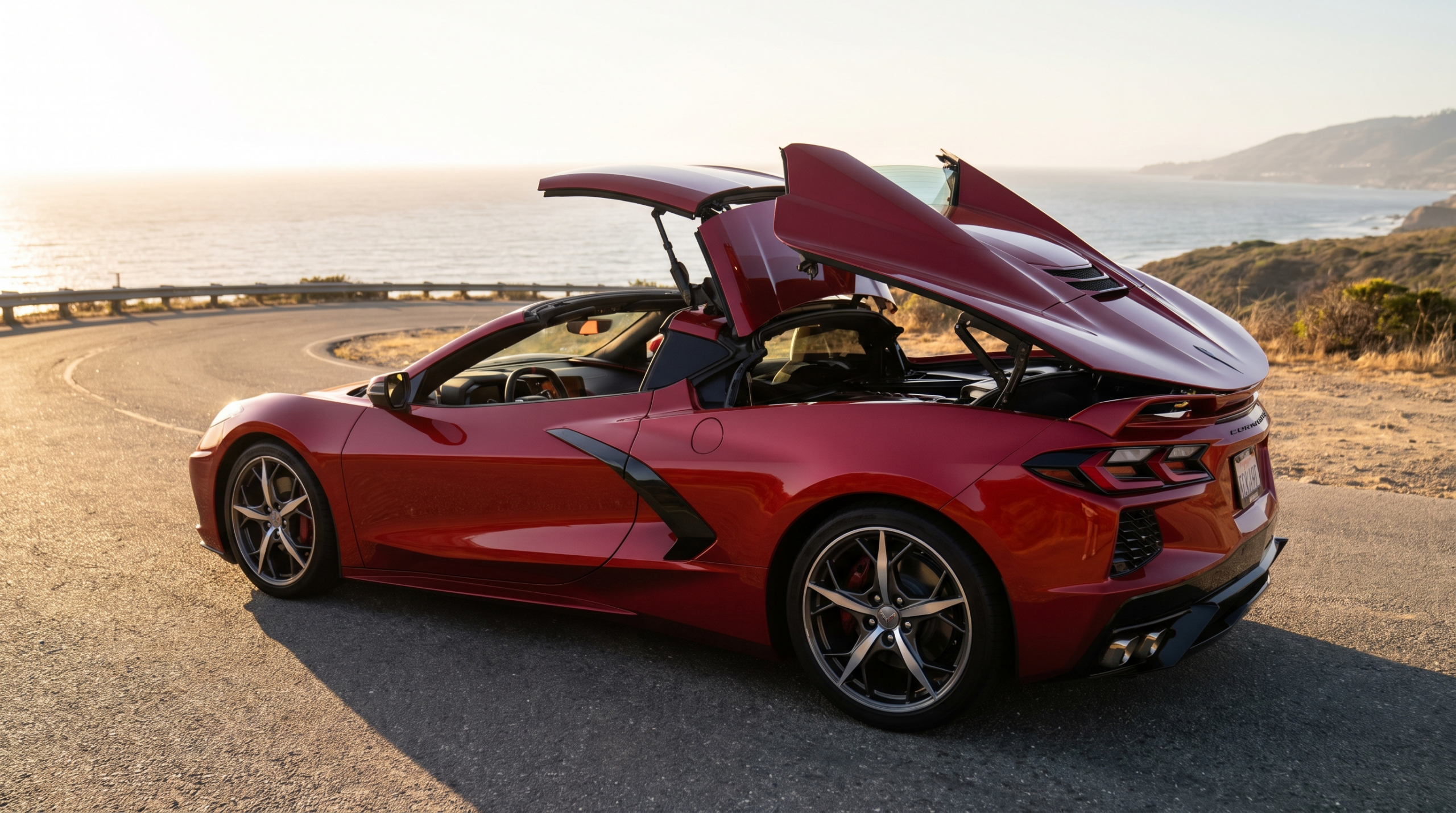
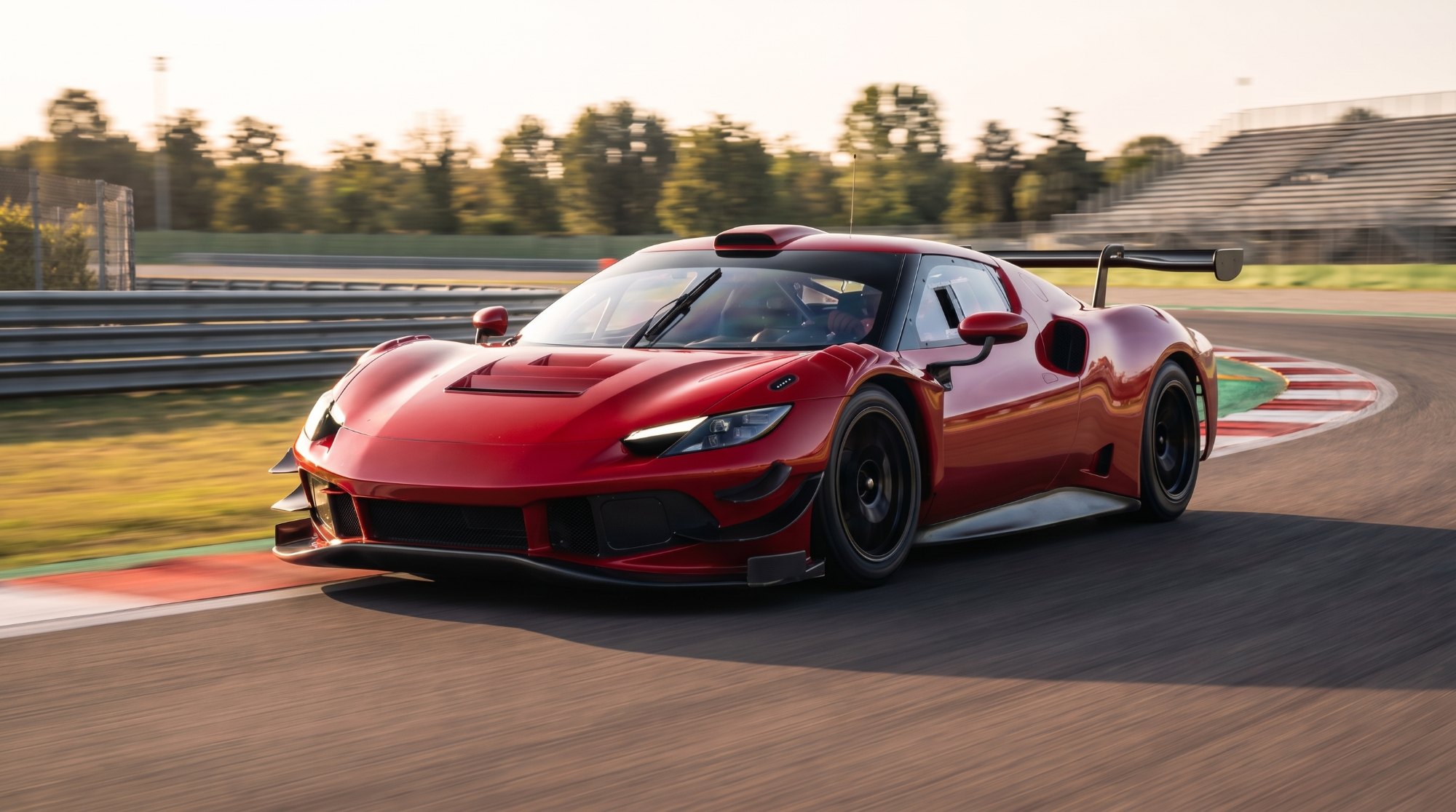
The Ferrari 849 Testarossa replaces the SF90 Stradale as the hybrid flagship from Maranello. Illustrative rendering.
Quick Answer: What Is the Ferrari 849 Testarossa?
Table of Contents
The Ferrari 849 Testarossa is a mid-engined plug-in hybrid supercar revealed in September 2025 to replace the SF90 Stradale. A 4.0-litre twin-turbo V8 producing 830 cv works with three electric motors adding 220 cv, for 1,050 cv combined — roughly 1,036 horsepower. Ferrari quotes 0–100 km/h in under 2.3 seconds, a top speed above 205 mph, and a Fiorano lap of 1:17.5, a full 1.5 seconds quicker than the SF90 Stradale. A Spider version with a retractable hard top is offered alongside the coupe, and both can be specified with the track-focused Assetto Fiorano package.
Ferrari 849 Testarossa Specifications
Specification
Ferrari 849 Testarossa
Engine
Type F154FC, 4.0L twin-turbocharged V8
Engine output
830 cv (819 hp), 620 lb-ft
Electric motors
Three, 220 cv (217 hp) combined
Combined output
1,050 cv (1,036 hp)
Specific output
208 cv per litre
Drivetrain
All-wheel drive with electric front axle and torque vectoring
0–100 km/h
Under 2.3 seconds
Top speed
Over 205 mph
Fiorano lap
1:17.5
Battery
7.45 kWh lithium-ion
Electric-only range
Approximately 25 km
Weight
Around 1,600 kg; approx. 1,570 kg dry with Assetto Fiorano
Downforce
415 kg at 250 km/h with Assetto Fiorano
Body styles
Berlinetta coupe and Spider
Figures are Ferrari own data, published on the official 849 Testarossa model page, with weight and battery details as reported in independent testing.
The Powertrain: A New V8, Not a Carried-Over One
The easy assumption is that the Ferrari 849 Testarossa is an SF90 with more boost and a new badge. It is not. The 4.0-litre twin-turbo V8 carries the project code F154FC — the latest evolution of the F154 family rather than a clean-sheet engine — and the internals were reworked rather than retuned.
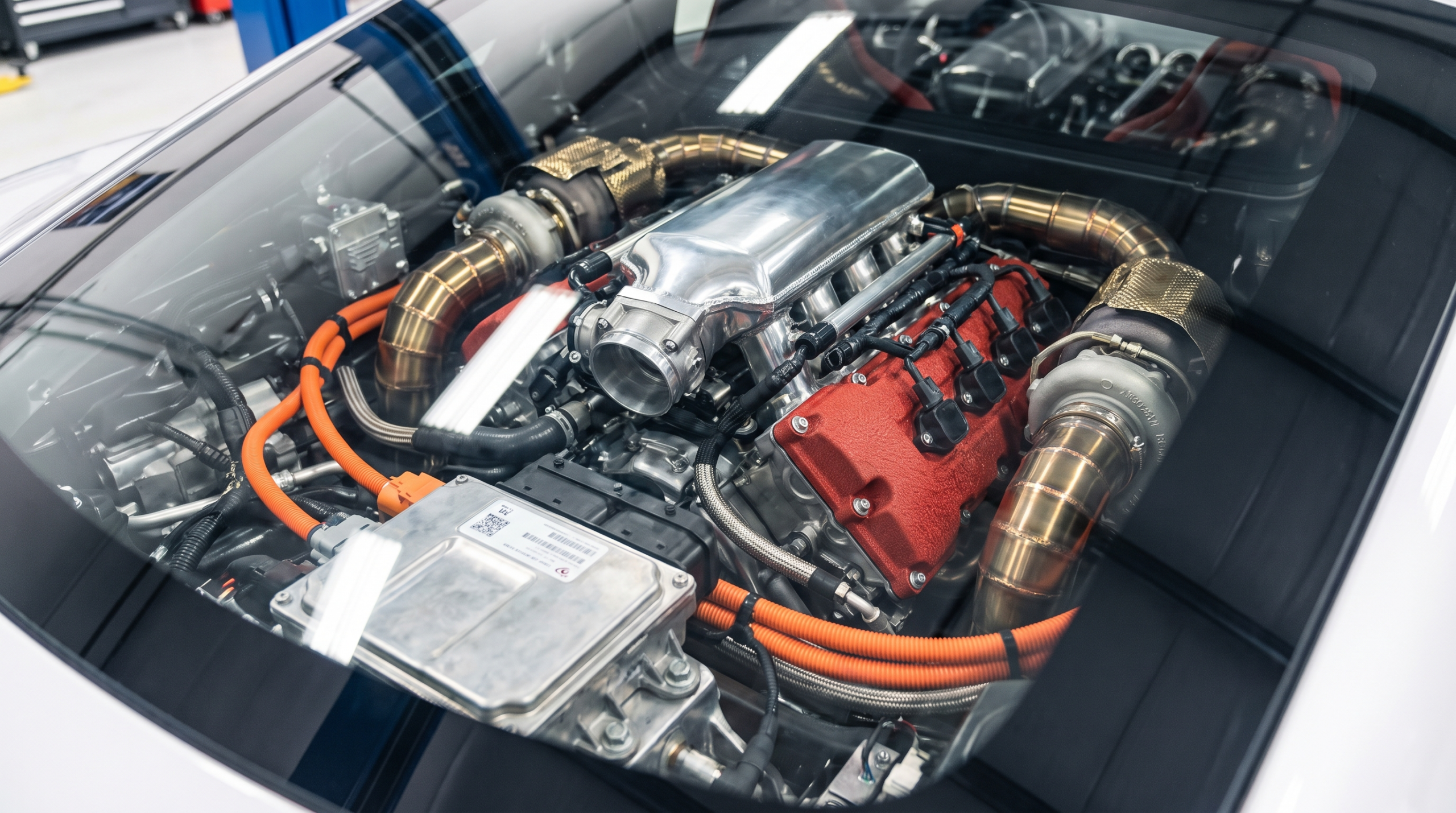
Ferrari specifies a new block and cylinder heads, lighter camshafts, titanium components, revised cooling and an Inconel exhaust system. The result is 830 cv from the combustion engine alone and a specific output of 208 cv per litre, which is exceptional for a turbocharged road-car V8.
The electric side is arranged as three motors. Two sit on the front axle, providing all-wheel drive and genuine torque vectoring between the front wheels rather than a simple traction aid. The third is an MGU-K derived from Ferrari Formula 1 practice, mounted between engine and gearbox. Together they contribute 220 cv and, more usefully, fill the torque gap while the turbochargers spool.
The F154FC V8 is heavily reworked rather than merely retuned. Illustrative rendering.
Ferrari 849 Testarossa vs SF90 Stradale
The SF90 Stradale was itself a landmark, so the comparison is the fairest way to judge whether the new car earns its name.
Measure
SF90 Stradale
Ferrari 849 Testarossa
Combined output
987 hp
1,036 hp (1,050 cv)
Engine
4.0L twin-turbo V8
4.0L twin-turbo V8, new block and heads
Fiorano lap
1:19.0
1:17.5
Front axle
Two electric motors
Two electric motors, revised control
Chassis electronics
Previous generation
Ferrari Integrated Vehicle Estimator
Springs
Standard
35 percent lighter
A second and a half around Fiorano is a very large margin between two cars separated by 49 horsepower. Most of it comes from chassis and aerodynamic work rather than engine output, which is the more interesting story.
Design: Why It Looks Nothing Like the 1984 Car
Anyone expecting side strakes will be disappointed, and that is deliberate. Ferrari drew the Ferrari 849 Testarossa from its 1970s sports prototypes rather than from the 1984 road car, which is why the proportions read as competition-derived rather than nostalgic.
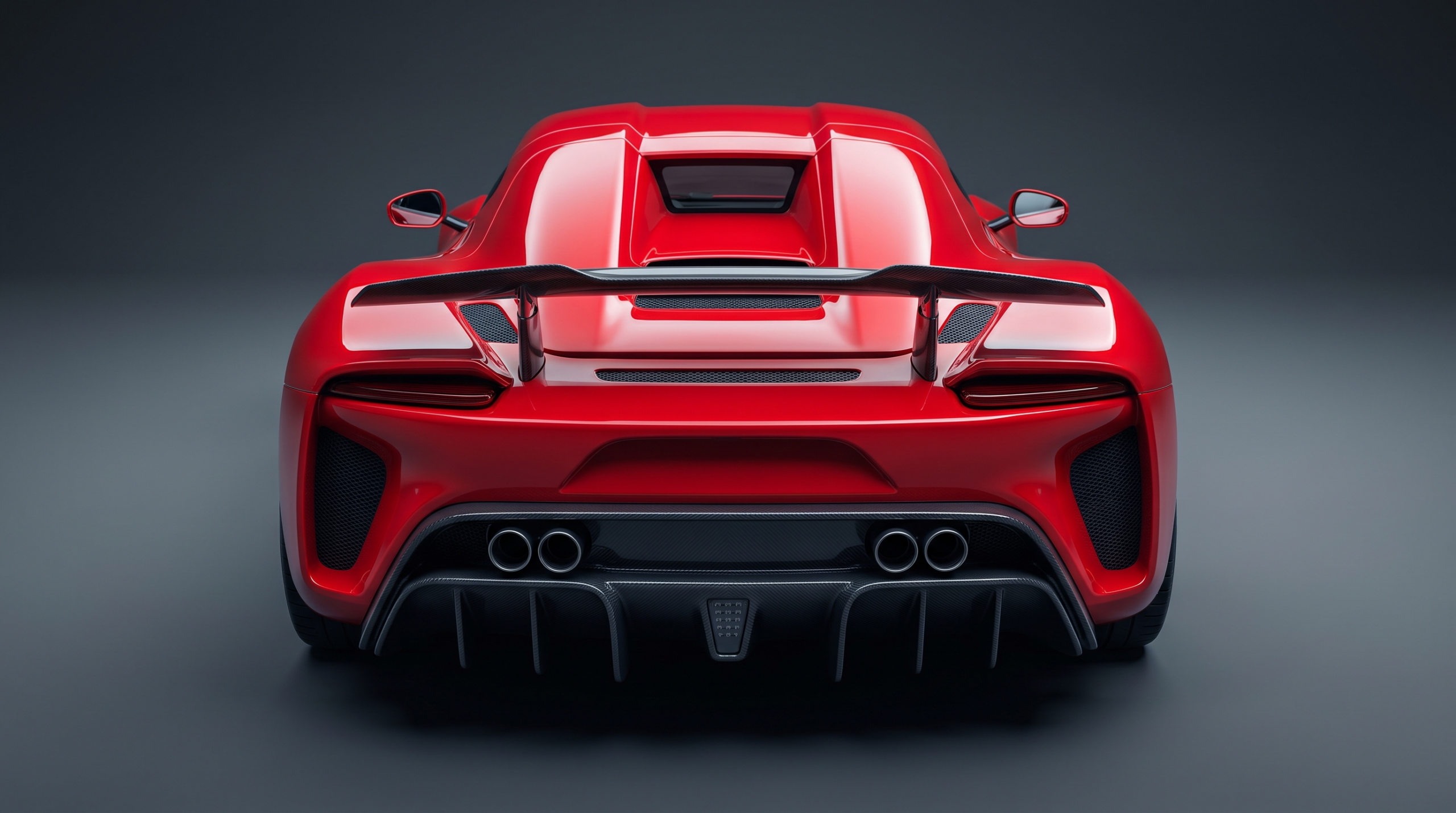
The signature element is the twin-tail rear deck: two raised buttresses flanking a recessed centre section, a shape lifted directly from endurance racing practice. The nose is low and flat with slim horizontal lighting, and the flanks are dominated by functional intakes feeding the powertrain and brakes rather than by decoration.
It is a considered decision. Copying the strakes would have produced pastiche; referencing the era that produced the original name gives the car its own identity. For how that logic fits the wider arc of the segment, our guide to exotic car design from the 1980s to today traces the same shift from styling-led to aerodynamics-led shapes.
The twin-tail rear comes from 1970s endurance prototypes, not the 1984 road car. Illustrative rendering.
The Original Testarossa, and What the Name Carries
To understand why the Ferrari 849 Testarossa attracted so much scrutiny, it helps to know what the badge actually meant. The original ran from 1984 to 1991, and with its 512 TR and F512 M successors accounted for close to ten thousand cars, which made it one of the most numerous Ferrari flagships ever built.
Underneath sat a 4.9-litre Tipo F113 flat-12 producing 390 PS at 6,300 rpm. Pininfarina handled the body under Leonardo Fioravanti, and the strakes that define it were a regulatory solution turned into a signature: several markets prohibited large open intakes, so the slats that fed the side-mounted radiators became the most recognisable detail on any car of the decade.
The name itself is older still. Testa Rossa means red head in Italian, and it refers to the red-painted cam covers Ferrari first used on the four-cylinder 500 TR of 1956; the V12 250 Testa Rossa followed a year later. So the badge on the Ferrari 849 Testarossa is a second-generation revival rather than a first, which is a useful thing to remember before judging it against a poster.
Values for good original cars have climbed steadily as the 1980s generation of buyers reached peak spending power, following the pattern set out in our guide to what actually drives appreciation. Documentation and originality separate examples far more than mileage does.
Aerodynamics and the Assetto Fiorano Package
Aerodynamics is where the lap time was found. In its most aggressive configuration the Ferrari 849 Testarossa generates 415 kg of downforce at 250 km/h, and the optional Assetto Fiorano package is what unlocks it.
Active twin-wing configuration adding roughly 100 kg of downforce over the standard car.
Weight reduction of around 30 kg through lighter components, taking dry weight to approximately 1,570 kg.
Track-focused suspension and chassis calibration.
Assetto Fiorano is a meaningful option rather than a cosmetic one, and it is priced accordingly at around £42,000 in the United Kingdom. Whether it is worth specifying depends entirely on whether the car will see circuit use; on the road, the standard aerodynamic package is more than sufficient.
Chassis and Electronics
The least visible changes matter most here. Ferrari fitted springs around 35 percent lighter than the SF90 Stradale and claims a 3 percent increase in lateral grip, both managed by a new control system called the Ferrari Integrated Vehicle Estimator.
FIVE builds a real-time picture of what the car is doing — slip, load, attitude — and feeds every other system from that single model rather than letting each intervene on its own reading. It is the same philosophical direction the whole segment is moving in, and it is why modern cars of this output are approachable in a way their predecessors were not.
Reviewers have consistently noted the dual character. Top Gear and others describe a car that laps hard and then returns to town in near silence on battery, which is the practical argument for the hybrid layout rather than the marketing one.
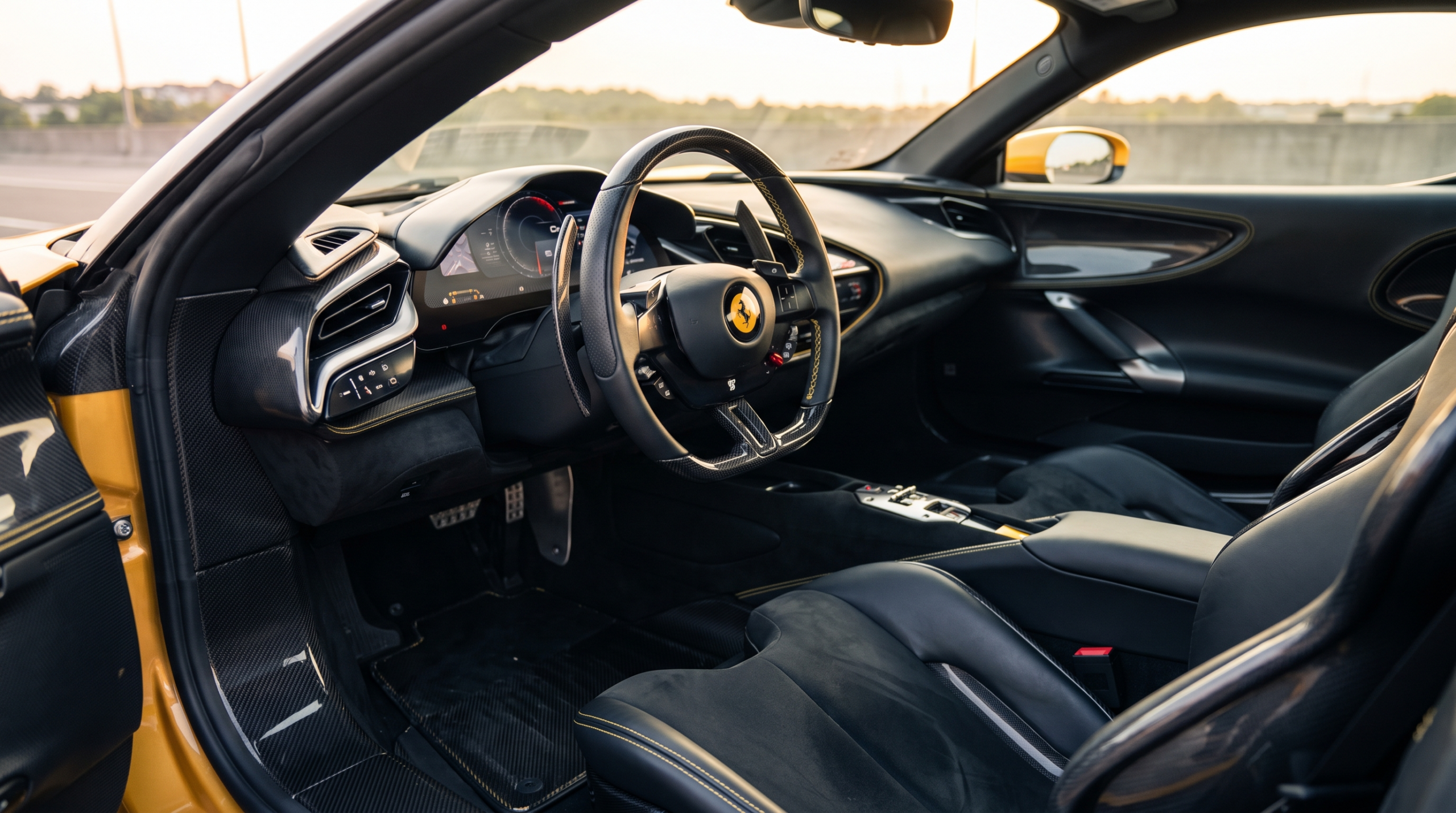
Minimalist and driver-focused, with physical controls returning to the wheel. Illustrative rendering.
The Ferrari 849 Testarossa Spider
The Spider arrived alongside the coupe rather than after it. Its retractable hard top folds in 14 seconds and will operate at speeds up to 45 km/h, so the decision to open it does not require stopping.
Ferrari claims the best power-to-weight ratio of any spider it has built, and the performance figures are quoted identically to the coupe at under 2.3 seconds to 100 km/h. Historically the open version of a Ferrari flagship has carried a weight penalty and a small dynamic compromise; on paper this one carries less of both than usual.
The Spider roof cycles in 14 seconds and works at up to 45 km/h. Illustrative rendering.
Price and Availability
Production began in mid-2026. Published United Kingdom pricing puts the coupe at roughly £407,600 and the Spider at about £442,500, with Assetto Fiorano adding around £42,100 on top.
Two practical notes for buyers. First, prices vary considerably by market once taxes and duties are applied, so treat any single figure as indicative rather than universal. Second, allocation matters more than list price on a car like this — Ferrari flagships are allocated to established clients, and the practical route in for most buyers is the used market a few years from now. Our guide to what drives exotic car values covers how flagship Ferraris have behaved once that happens.
Where It Sits in the Current Field
The Ferrari 849 Testarossa is a series-production car, which places it below the limited-run halo models but above everything else on the road.
Car
Powertrain
Output
Production
Ferrari 849 Testarossa
4.0L twin-turbo V8 hybrid
1,036 hp
Series production
Ferrari F80
3.0L V6 hybrid
1,200 hp
Limited run
McLaren W1
4.0L twin-turbo V8 hybrid
1,258 hp
399 units
Bugatti Tourbillon
8.3L V16 hybrid
1,775 hp
250 units
Lamborghini Revuelto
6.5L V12 hybrid
1,001 hp
Series production
Against the Revuelto, its closest series-production rival, the Ferrari 849 Testarossa trades two cylinders for roughly 35 more horsepower and a very different character. Against the limited-run cars it gives up output but is a car you can actually order.
What the Spec Sheet Does Not Capture
Three things about the Ferrari 849 Testarossa matter more in practice than any figure in the table above.
The torque fill changes how it drives, not just how fast it is. The electric motors erase the pause between throttle and boost, so the car responds like a large naturally aspirated engine while retaining turbocharged output. That is the real argument for the hybrid layout.
Front-axle torque vectoring is a cornering tool, not a traction aid. Two independent motors can add drive to the outside front wheel mid-corner, which changes the line the car takes rather than simply preventing wheelspin.
It is genuinely usable. Reviewers consistently describe circuit work followed by silent electric running through town in the same afternoon. A decade ago that combination did not exist at this output.
None of that shows up in a 0 to 100 time, and all of it is why the Ferrari 849 Testarossa reads as a step forward rather than a bigger number.
Buying One: Allocation, Options and Running Costs
Ordering a Ferrari 849 Testarossa is less a transaction than a relationship. Flagship allocations go to clients with purchase history, so first-time buyers are realistically looking at the secondary market rather than a factory order.
Specification drives resale more than colour does. Assetto Fiorano, carbon wheels and the more extreme interior trims tend to hold interest; unusual paint choices narrow the buyer pool later.
Hybrid systems add service considerations. High-voltage components, battery health and software support are now genuine diligence items on any car of this type, not just on electrics.
Insurance is quoted per car, not per model. A 1,036 hp all-wheel-drive Ferrari is rated accordingly, and the spread between quotes is wide enough to be worth shopping properly.
Budget the running costs before the purchase price. Servicing, tyres, storage and the unscheduled bill are what end most ownerships early.
Anyone weighing a Ferrari 849 Testarossa against the rest of the market should start with the arithmetic rather than the configurator. Our financing and insurance guide covers structuring the purchase and why agreed-value coverage matters on cars like this, and how to afford a supercar sets out the routes owners actually use.
Ferrari 849 Testarossa FAQ
How much horsepower does the Ferrari 849 Testarossa have?
1,050 cv combined, which is about 1,036 horsepower. The 4.0-litre twin-turbo V8 contributes 830 cv on its own and the three electric motors add 220 cv. That makes it the most powerful series-production Ferrari road car to date, ahead of the 987 hp SF90 Stradale it replaces.
Is the Ferrari 849 Testarossa faster than the SF90 Stradale?
Yes, and by a wider margin than the power difference suggests. Ferrari quotes a Fiorano lap of 1:17.5 against 1:19.0 for the SF90 Stradale. Most of that 1.5 seconds comes from aerodynamics, lighter springs and the new Ferrari Integrated Vehicle Estimator rather than from the extra 49 horsepower.
Does the Ferrari 849 Testarossa have side strakes like the original?
No, and that is intentional. Ferrari drew the design from its 1970s sports prototypes rather than the 1984 road car, so the defining feature is a twin-tail rear deck taken from endurance racing rather than the strakes of the original Testarossa.
What is the electric-only range?
Roughly 25 kilometres from a 7.45 kWh lithium-ion battery. That is enough to leave and return home silently rather than to serve as meaningful electric commuting; the hybrid system exists primarily to add power and fill turbo lag, not to reduce fuel use.
What does the Assetto Fiorano package add?
An active twin-wing aerodynamic configuration worth roughly 100 kg of additional downforce, about 30 kg of weight saving through lighter components, and track-focused suspension. In the UK it costs around £42,000. It is worth specifying for circuit use and largely unnecessary for road driving.
How much does a Ferrari 849 Testarossa cost?
Published UK pricing is approximately £407,600 for the coupe and £442,500 for the Spider, before options, with Assetto Fiorano adding around £42,100. Prices vary significantly by market once local taxes apply, and allocation on a Ferrari flagship generally goes to established clients rather than to list-price buyers.
Does It Earn the Name?
Reviving a badge as loaded as Testarossa invites a straightforward test: would this car be significant without it? The Ferrari 849 Testarossa would. It is the most powerful series-production car Ferrari has built, it is a second and a half quicker around the company test track than a car that was itself a benchmark, and the engineering underneath is new rather than inherited.
The choice not to imitate the 1984 car is what makes the name work. A set of decorative strakes would have made it a tribute act. Reaching past the road car to the prototypes that gave the era its character produces something that stands on its own and earns the badge by association rather than by costume.
At Exotic Motors we have watched every Ferrari flagship since long before the first Testarossa, and this is a genuinely significant one. See which Ferraris are on the site today to see what is available now, and for daily coverage of new reveals our sister publication Exotic Car News follows the market as it happens.
Owning an exotic car is not about speed or luxury- It’s about embracing an experience, where the road becomes your canvas and the car, your masterpiece.
The FTC’s September 2026 pricing FAQs say a car’s advertised price must be one any buyer can pay, on Instagram, marketplaces and dealer sites alike. Here is what that means for exotic and luxury dealers.
Monterey 2026 did a record ~$756 million while the retail exotic market cooled. Here is what the split means for anyone buying or selling a supercar right now.
You are not searching badly. The car you want probably exists in single digits nationally at any given moment — here is how serious buyers actually get one, and what each route costs.