Most guides to aftermarket wheels are written by people selling them, which is why they tend to contain the same handful of claims: forged is stronger, a pound at the wheel is worth ten in the body, and modifying your car voids the warranty. One of those is roughly true, one is folklore with no traceable source, and one is the opposite of what US law actually says.
This is the version written by a dealer who has to take these cars back in on trade. Aftermarket wheels can genuinely improve a car and they can genuinely ruin one, and the difference is almost never about the brand on the spoke. It is about load ratings, offset, tyre approval codes and a set of standards that, in the United States, are entirely voluntary.
Aftermarket wheels can transform a car or quietly compromise it. The difference is rarely the brand.
Table of Contents
Quick Answer: Are Aftermarket Wheels Worth It?
Good aftermarket wheels can reduce unsprung and rotating mass, widen your tyre choice and transform how a car looks. The risks are fitment and certification rather than aesthetics. There is no mandatory federal performance standard for aftermarket wheels in the United States — SAE J2530 is a voluntary recommended practice — so structural testing is something you have to check for, not assume.
On exotics there is a second trap: most manufacturers approve specific tyres for specific models, marked on the sidewall, and a wheel size that forces you off that list changes the car. And no, fitting aftermarket wheels does not void your warranty; under the Magnuson-Moss Act the manufacturer must prove the part caused the failure.
There Is No US Standard for Aftermarket Wheels
Start here, because it reframes everything else.
Two federal standards mention wheels. Neither reaches replacement wheels for a passenger car, though FMVSS 120 does regulate rims as separate equipment for heavy vehicles and motorcycles, complete with a mandatory DOT marking. FMVSS 110 covers tyre selection and rims on vehicles of 10,000 lb GVWR or less, motorcycles excepted, and FMVSS 120 covers heavier ones. FMVSS 110 does impose a performance requirement on a rim fitted at manufacture: it must match dimensions the tyre maker lists as suitable and retain a deflated tyre after a rapid pressure loss at 60 mph. The point is that nothing carries that requirement across to a wheel you buy afterwards. As SEMA puts it, most wheel performance and marking requirements have been handled through voluntary industry standards rather than regulation.
The relevant US document is SAE J2530, currently in its December 2024 revision. It sets out performance requirements, sampling, test procedures and marking for aftermarket wheels — and it is a Recommended Practice. Voluntary. Aftermarket wheels can be sold legally in the United States having passed no independent structural test at all.
Mark
What it means
How much comfort it should give you
SAE J2530
US voluntary recommended practice covering fatigue, impact and marking
Meaningful if the maker genuinely tests to it — but nobody audits the claim
JWL
Japanese government standard, mandatory for street use in Japan
Limited on its own: it is self-certified by the manufacturer
VIA
Independent, paid third-party verification of a JWL claim
The strongest common signal. Counterfeit VIA logos are widespread, so ask for the report
ECE R124 (E-mark)
European type approval for replacement passenger-car wheels
Genuine third-party approval. It carries no legal status in the US — read it as evidence of testing, not as US compliance
TÜV
A German inspection body, not a standard — issues component test reports
Good, but check what was actually tested and for which vehicle
What the marks on aftermarket wheels actually certify. JWL is self-declared; VIA is the independent check on it.
The practical takeaway is not that unmarked wheels are all dangerous. It is that on aftermarket wheels the marks are your only proxy for validated structural integrity, and one of the most common ones is a self-declaration.
The Sidewall Code That Matters More Than the Wheel
This is the part that separates aftermarket wheels on an exotic from aftermarket wheels on anything else, and most owners of aftermarket wheels have never looked for it.
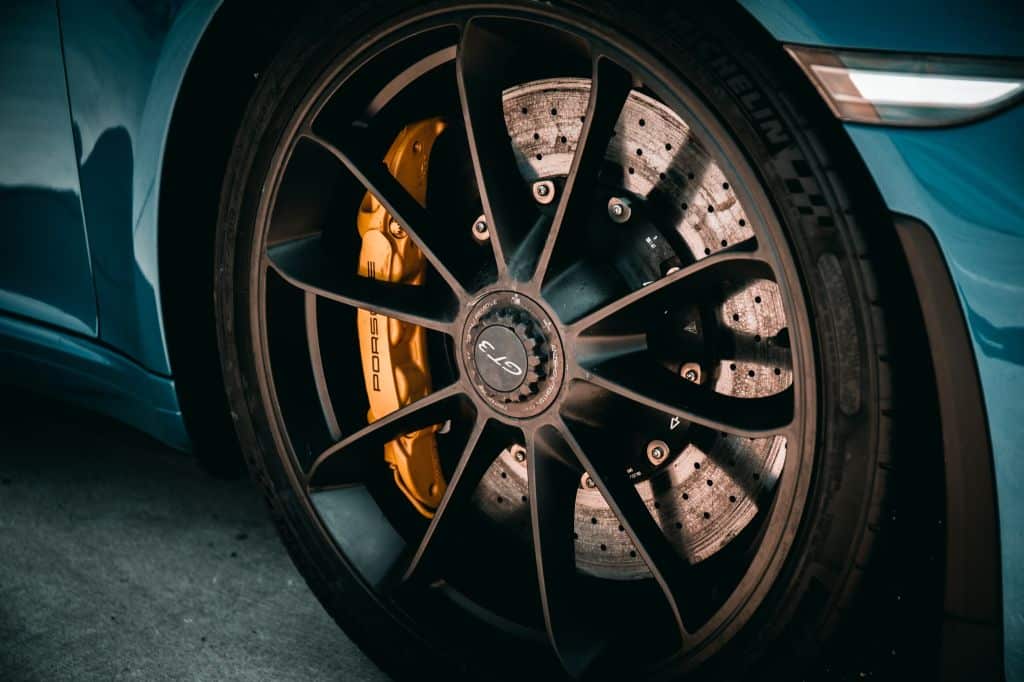
Manufacturers develop tyres jointly with tyre companies for specific models, then mark the approved versions on the sidewall. Porsche publishes what it assesses: subjective handling and comfort, objective braking and service life, and indoor testing for rolling resistance and sustained high speed. Fit a size that does not exist in an approved fitment and you are choosing something the manufacturer never signed off for that car.
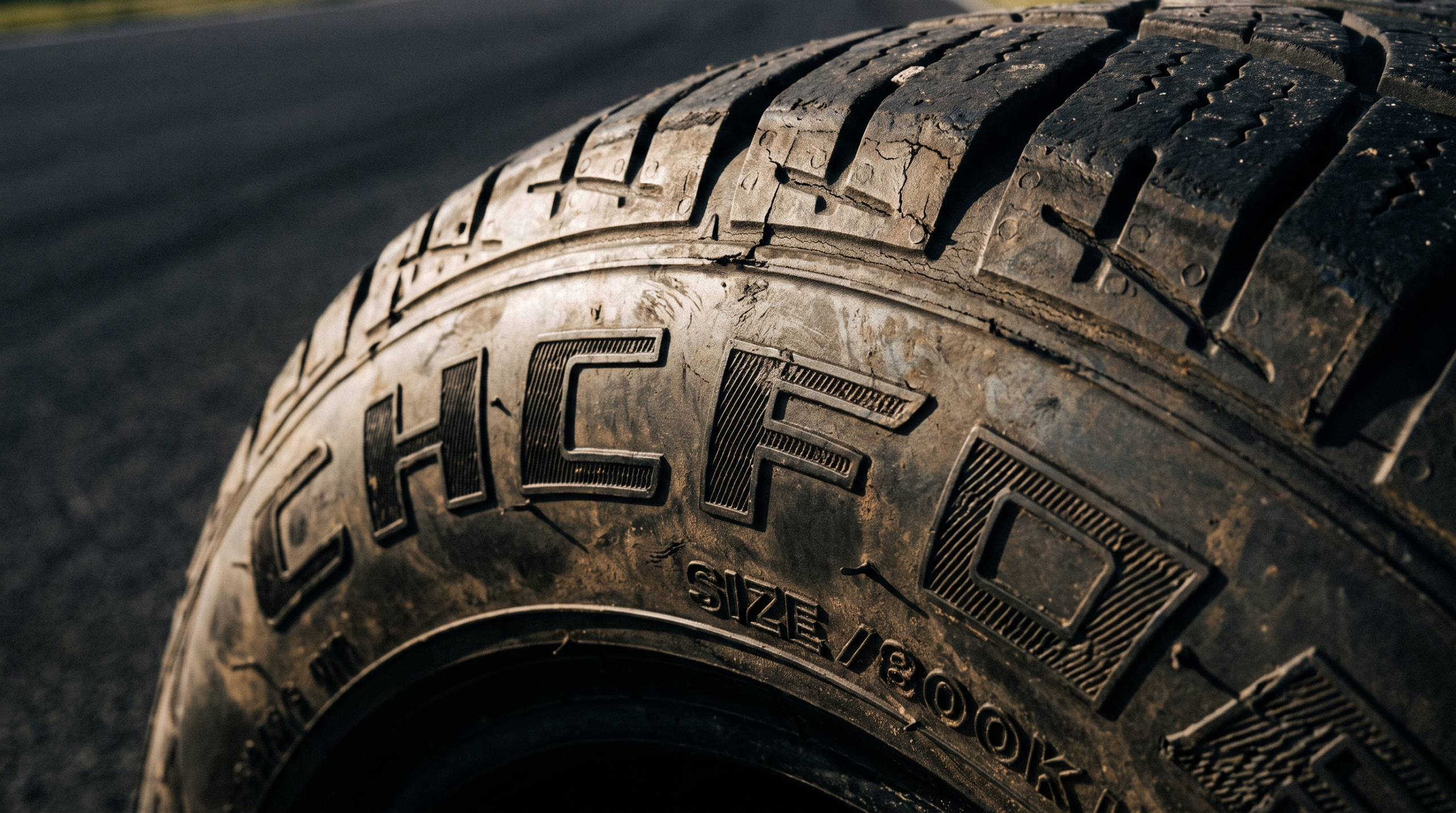
The approval code is a letter and a number on the sidewall. It is easy to miss and easy to lose when you change wheel size.
Marque
Sidewall marking
Porsche
N0-N6 (older); newer NA0-NI2, where the letter is the model — NA 911, NB 718, NC Cayenne, ND Panamera, NE Macan, NF Taycan
Ferrari
K1, K2, K3 on Michelin; F, F01-F04 on Pirelli
Lamborghini
L, L1
McLaren
MC, MC1, MC2
Mercedes-Benz / AMG
MO for Mercedes-Benz, MO1 and above for AMG, MOE for runflat
BMW
A star mark. Also used on MINI
Audi
AO series; RO1-RO3 for Audi Sport and quattro models
Others
Aston Martin AM, Maserati MGT, Bentley B1, Bugatti BG
Verified against Pirelli, Michelin and Goodyear technical documentation. Note that codes are tyre-brand specific.
Two details worth knowing. First, the codes are brand-specific, not marque-universal — “Ferraris wear K-marked tyres” is wrong for the many Ferraris delivered on Pirellis, which carry F-codes instead. Second, Porsche now runs two systems: the old N0-N6 numbering, where the digit is only a generation, and the newer letter-plus-digit scheme introduced because the same tyre size can be a front on one model and a rear on another.
What we will not tell you is that your stability control is calibrated to one specific tyre model and will misbehave on anything else. That claim is everywhere and it is not supported — one tyre industry representative has said flatly that no special consideration is given to stability control when tyres are developed. The defensible version is narrower and still matters: differing rolling circumference and grip move the car outside the envelope those systems were validated against, and wheel-speed-based systems can be misled by mismatched diameters.
Aftermarket Wheels: Cast, Flow-Formed or Forged
Four processes cover almost every set of aftermarket wheels you will be offered.
Gravity cast — molten aluminium poured into a mould under gravity alone. Cheapest, least dense, so it needs more material for a given strength. Heaviest.
Low-pressure cast — positive pressure fills the mould, improving density and mechanical properties. This is the process behind most OEM aluminium wheels.
Flow-formed, often marketed as rotary forged — a low-pressure cast centre with the rim barrel reshaped under heat, pressure and spinning. Approaches forged strength in the barrel without forging costs.
Forged — a billet pressed into shape. Very dense, very strong, and therefore able to be very light. Tooling costs make them expensive.
Forged wheels are not magic. The advantage is alloy properties, and the one that matters most is elongation.
You will see claims that forged wheels are twenty-five percent lighter and three times stronger. Those numbers have no traceable source. What can be substantiated is the alloy difference, and it tells a better story anyway.
Property
A356.0-T6 (typical cast)
6061-T6 (typical forged)
Ultimate tensile strength
255 MPa (37 ksi)
310 MPa (45 ksi) typical
Yield strength
186 MPa (27 ksi)
270 MPa (39 ksi) typical
Elongation
around 5%
8-10%
Published properties of the alloys typically used. Roughly 20-25% more tensile strength, about 45% more yield — and around double the elongation.
Elongation is the number to care about. It is how far the metal stretches before it fails, and it is the difference between a wheel that deforms when you find a pothole at speed and one that cracks. The weight saving is a consequence of the strength, not a separate benefit: more capable alloy means less material for the same job.
The Unsprung Weight Myth, Settled
You have read that a pound saved at the wheel is worth four pounds off the body. Or ten. Or fifteen. The ratio changes depending on who is selling.
None of those numbers has a source. We went looking for one — an SAE paper, a vehicle dynamics text, anything — and found nothing. Every trail ends at a forum post or a wheel vendor’s marketing page. Engineering publications say only that a high ratio of sprung to unsprung mass is desirable, and decline to put a multiplier on it.
What is quantifiable is rotational inertia, because a wheel has to be spun up as well as pushed along. The physics gives a defensible ceiling rather than a marketing multiple: a thin ring spinning at the rolling radius behaves like twice its static mass, so a tyre approaches 2.0 times and a wheel, whose mass sits further inboard, rather less. A kilogram saved per corner behaves like somewhat more than a kilogram of ordinary weight. That is a real, worthwhile gain across four corners. It is not fifteen to one.
The ride and handling benefit is separate and genuine: a lighter wheel and tyre assembly follows a broken surface more readily, so the tyre stays in contact and the damper has less mass to control. Nobody has published a multiplier for that either, and anyone who quotes you one is guessing.
Fitment: Where Aftermarket Wheels Actually Go Wrong
Most problems with aftermarket wheels are decided here, at the hub, before anyone sees them.
Load rating. Each wheel carries a maximum load figure, and it is separate from the tyre’s. On a heavy exotic — a Cayenne Turbo, an Urus, a Bentayga, a DBX — the wheel’s rating must meet or exceed its share of the gross axle weight rating. Because no US standard applies, many aftermarket wheels are not marked with one at all. If a seller cannot tell you the figure, that is your answer.
Tyre load index.A coded number: 91 is 615 kg, 95 is 690 kg, 100 is 800 kg, 105 is 925 kg. Going above the specified index is fine. Going below it is how tyres fail, and in some countries it is illegal.
Offset (ET).The distance from the mounting face to the wheel’s centreline, in millimetres. Change it and you change scrub radius and the loading on the hub and bearing, and you move the wheel relative to brakes, suspension and arch. Widen a wheel and the offset has to change with it to keep clearances. There is no published safe tolerance — anyone quoting you “within 5 mm is fine” invented it.
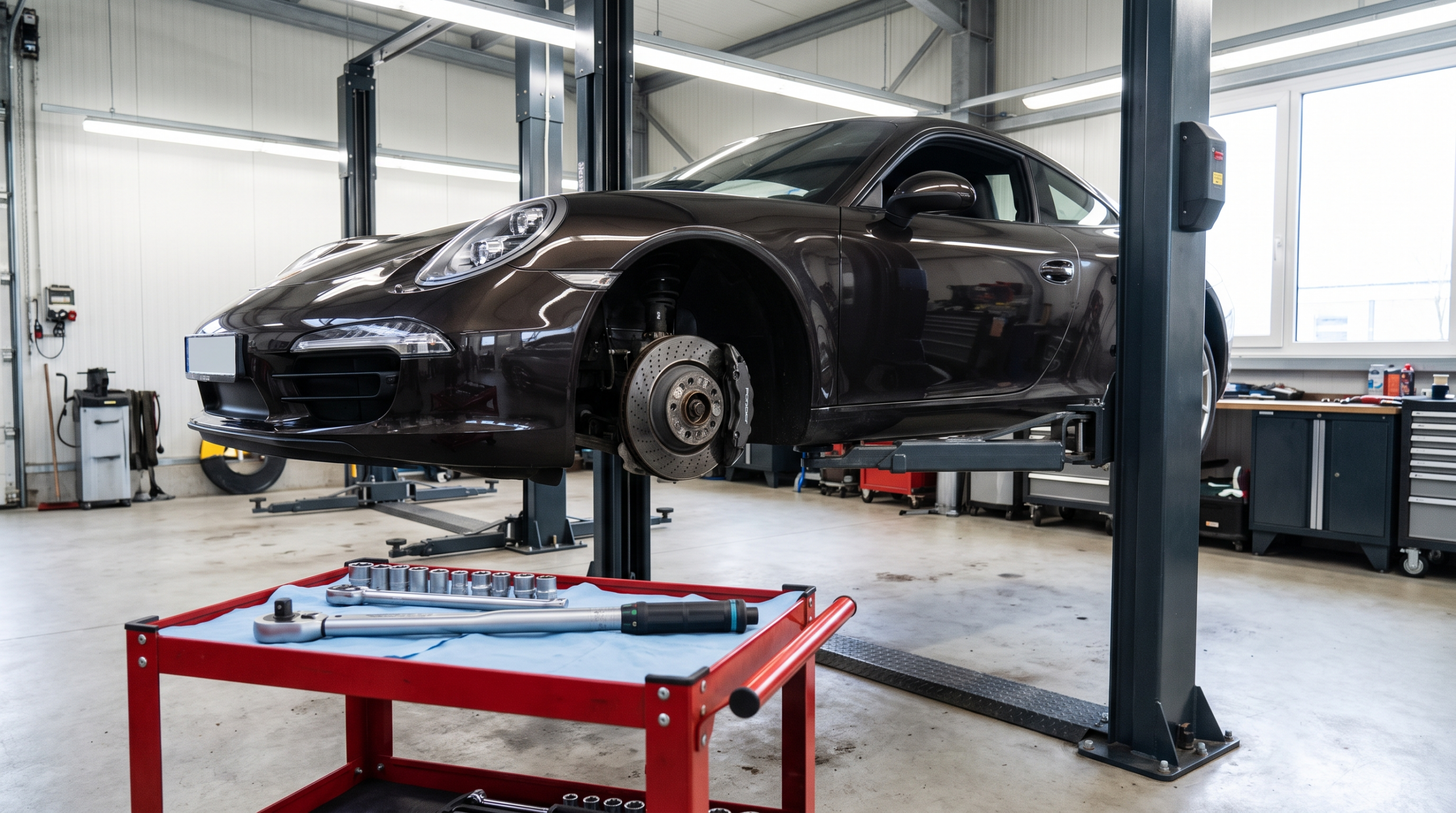
Centre bore. A hub-centric wheel has its bore machined to match the hub so the wheel is precisely located as the fasteners are torqued. That is what prevents vibration. If the bore is oversized, use proper centring rings; if a wheel is lug-centric, torque it with the car off the ground so the fasteners centre it without the car’s weight pushing it off-centre.
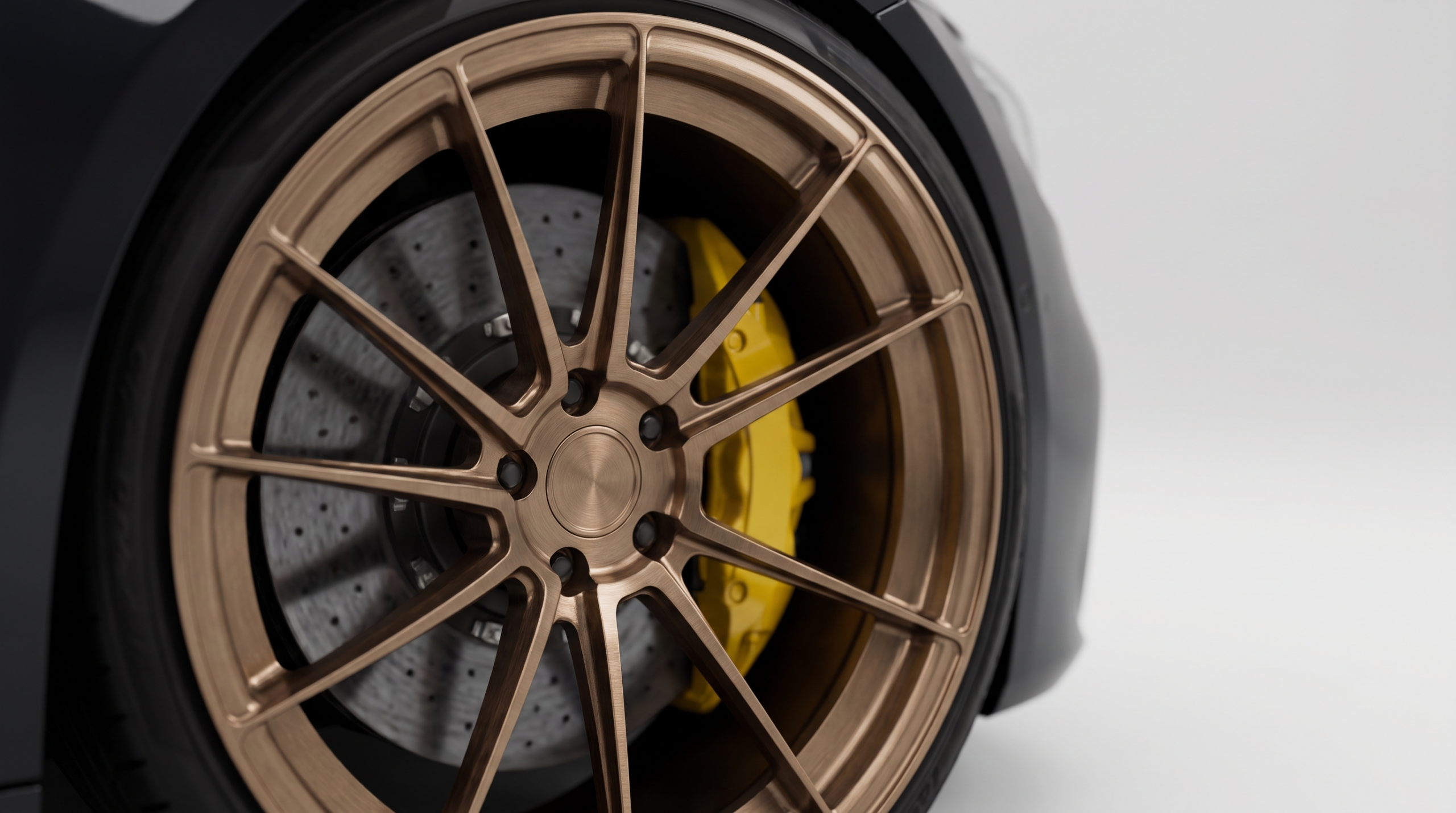
Brake clearance. Carbon-ceramic packages on modern exotics are enormous. Spoke profile, not just diameter, decides whether a wheel clears the caliper.
One myth to retire here too: you will be told the hub carries the car’s weight on a hub-centric fitment and that lug-centric wheels therefore shear studs. In a correctly torqued joint, clamp load creates friction at the mating face and that carries the load. The spigot’s job is centring. Get it wrong and you get vibration — which on a heavy, powerful car is its own slow-motion problem for fasteners and bearings.
Aftermarket Wheels Do Not Void Your Warranty
The single most repeated claim about aftermarket wheels is that they void your warranty. In the United States that is not how it works.
The Magnuson-Moss Warranty Act prohibits a warrantor from conditioning a written or implied warranty on the use of branded parts or services, unless the FTC has granted that manufacturer a waiver — which is rare. The Federal Trade Commission puts it plainly for consumers: your warranty stays in effect if you use aftermarket parts, and the manufacturer or dealer must prove the aftermarket part caused the damage before denying coverage. The FTC’s guidance to businesses is equally direct — companies cannot void a warranty solely because a consumer used someone else’s part.
The nuance matters, though, and it cuts both ways. The FTC distinguishes voiding an entire warranty from declining coverage for specific damage. A manufacturer can lawfully refuse to pay for a wheel bearing or suspension component it can show your wheels destroyed. It cannot refuse to fix your infotainment because you fitted wheels.
The Insurance Gap Almost Nobody Checks
Of everything in this guide to aftermarket wheels, this is the one that actually costs people money, and it is entirely avoidable.
Standard policies generally do not cover aftermarket parts, and aftermarket wheels are explicitly on the list of modifications insurers expect to be told about. Failing to disclose them is material misrepresentation, which gives an insurer grounds to deny a claim or cancel a policy regardless of who caused the accident. Deliberately concealing modifications to keep a premium down can constitute fraud.
The cover you need is Custom Parts and Equipment, and the default limits are the problem. Published examples run from around $1,000 included on some policies to $5,000 on others, with additional cover available for roughly a hundred dollars a year. Now price a set of forged wheels and tyres for a modern supercar — comfortably $15,000 and often far more. The gap between a default limit and a replacement set is the single strongest argument in this article for picking up the phone. Insurance rules vary by state, so confirm your own limit rather than assuming.
TPMS: What the Rule Actually Says
Tyre pressure monitoring became mandatory on US vehicles of 10,000 lb GVWR or less, other than those with dual wheels on an axle through FMVSS 138, following the TREAD Act, with full phase-in from 1 September 2007. Two things follow that most coverage of aftermarket wheels gets muddled.
The prohibition binds a manufacturer, distributor, dealer, rental company or motor vehicle repair business — at any point in the car’s life, not only before first sale.
NHTSA has told the tyre industry directly that a shop fitting wheels without functioning sensors breaches it, and must decline the job, move compatible sensors across, or sell new ones.
An owner doing the work themselves is outside the statute. Federal law does not require you to keep your own TPMS live — though your state inspection regime might.
In practice: budget for sensors in the new aftermarket wheels. On most modern exotics a permanently lit TPMS warning is not just an annoyance, it will mask a genuine slow puncture on a tyre worth four figures.
Keep the Originals When You Fit Aftermarket Wheels
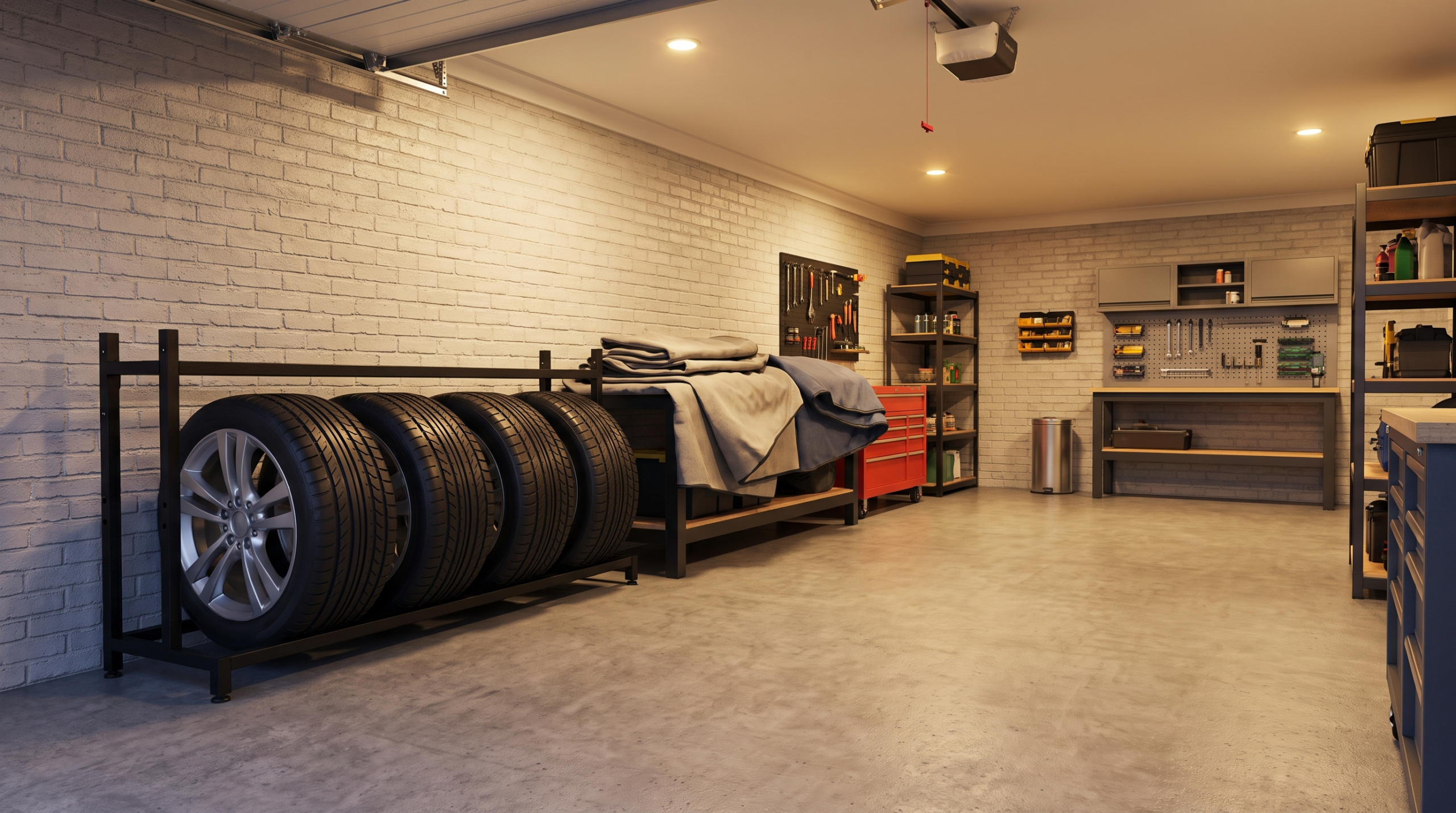
Keeping the factory set costs you a corner of the garage. It preserves the option to hand the car over stock.
We should be honest about the evidence here, because a lot of people state this one more confidently than the data supports. There is no published figure showing that keeping factory wheels adds a specific percentage to resale value on a modern exotic. Hagerty’s own comparison of stock against restomod classics at auction actually found the modified cars making more — on a sample of four cars, which proves very little either way.
What we can tell you is what we see when cars on aftermarket wheels come back in on trade. A personal build narrows the audience — Hagerty’s phrasing is that it can drastically limit it — and a reversible modification does not. If the original set is in the garage, the next buyer chooses. If it went to a wheel shop in part-exchange three years ago, they do not, and the car is now competing only against buyers who happen to share your taste.
Treat it as prudence rather than an investment. A boxed factory set costs you a corner of the garage and preserves optionality. That is the whole argument, and it is enough.
The Aftermarket Wheels Buying Checklist
Ask for the load rating per wheel, in writing, and compare it against your car’s gross axle weight rating divided by two.
Ask what the wheels are certified to — VIA, ECE R124 or a TÜV component report. If the answer is “JWL,” remember that is self-declared.
Check an approved tyre exists in your size. Look for your marque’s sidewall code in the fitment you are planning, from the brand you intend to buy.
Confirm offset and centre bore against your specific model, not the model range. Widebody and standard cars differ.
Confirm caliper clearance if the car has carbon-ceramics.
Budget for TPMS sensors and, if you are running a track tyre, a second set of wheels rather than swapping rubber repeatedly.
Call your insurer before fitting, and ask what your Custom Parts and Equipment limit actually is.
Keep the factory wheels. Boxed, labelled, in the garage.
And Something We Are Building
Our family has been in the car business for more than a century, and the question we field most often after “what is it worth” is some version of “where do I get the right part for it.” Parts for these cars are scattered across specialists, forums and a lot of listings that are guessing at fitment.
So we are building ExoticParts.com. It is not open yet and we are not going to pretend otherwise or take anyone’s money early. When it launches we will say plainly what it carries and who it is for. If you would like to hear first, get in touch. In the meantime, everything above applies to whoever you buy from.
The Honest Verdict
Aftermarket wheels are one of the few modifications that can genuinely improve a car — lighter, wider tyre choice, better looking, and reversible. The failure mode with aftermarket wheels is not buying the wrong brand. It is buying a wheel nobody independently tested, in an offset nobody checked, wearing a tyre the manufacturer never approved, on a policy that covers a thousand dollars of it.
Do the four boring checks before buying aftermarket wheels — load rating, certification, approved tyre, insurance — and the rest is taste. Skip them and you have made an expensive car slightly worse in ways that only show up when something goes wrong.
No. In the United States the Magnuson-Moss Warranty Act prohibits a warrantor from conditioning a warranty on the use of branded parts, and the FTC states that the manufacturer or dealer must prove the aftermarket part caused the damage before denying coverage. The important nuance is that a manufacturer can still decline to pay for damage the part actually caused — a wheel-induced bearing failure, for example — but it cannot void unrelated coverage.
Are aftermarket wheels safe?
It depends entirely on the wheel, because there is no mandatory US performance standard for them. SAE J2530 is a voluntary recommended practice. Your best proxies for validated structural integrity are VIA certification, which is independent third-party verification, or European ECE R124 type approval. Note that JWL on its own is self-certified by the manufacturer rather than independently audited.
Is one pound of unsprung weight really worth ten pounds elsewhere?
No, and the ratios you see quoted — four to one, ten to one, fifteen to one — have no traceable engineering source. Published rotational equivalency figures put a wheel at roughly 1.6 times its static mass for acceleration and a tyre at up to 2.0 times. Saving weight at the wheel is genuinely worthwhile; it is simply not worth ten times its own mass.
What do the sidewall letters mean when choosing aftermarket wheels?
They are manufacturer approval codes showing the tyre was developed and signed off for specific models. Porsche uses N-codes, Ferrari uses K on Michelin and F on Pirelli, Lamborghini uses L, McLaren uses MC, Mercedes uses MO with AMG variants above it, BMW uses a star and Audi uses AO and RO series codes. They are tyre-brand specific, so the code to look for depends on which tyre maker you buy from.
Will aftermarket wheels hurt my car’s resale value?
There is no published figure either way, so treat claims in both directions with caution. What is well established is that a personalised build narrows the pool of interested buyers. The practical answer is to keep the original factory wheels boxed in the garage — a reversible modification preserves the next owner’s choice, which is what protects the car’s appeal.
What should I check before buying aftermarket wheels?
Get the per-wheel load rating in writing and compare it with your car’s gross axle weight rating. Ask what the wheels are certified to. Confirm an approved tyre exists in the size you want. Check offset and centre bore against your exact model rather than the model range, and confirm caliper clearance if the car has carbon-ceramic brakes. Then call your insurer and ask what your custom parts limit is.
Owning an exotic car is not about speed or luxury- It’s about embracing an experience, where the road becomes your canvas and the car, your masterpiece.
Monterey 2026 did a record ~$756 million while the retail exotic market cooled. Here is what the split means for anyone buying or selling a supercar right now.
You are not searching badly. The car you want probably exists in single digits nationally at any given moment — here is how serious buyers actually get one, and what each route costs.
What owning a Lamborghini actually involves: how allocation really works, the five-year maintenance programme, real clutch and service bills, insurance, values and Polo Storico.