Draw a circle about forty miles wide around Modena and you have enclosed most of the exotic car industry. Ferrari at Maranello. Lamborghini at Sant’Agata Bolognese. Maserati in Modena itself. Pagani at San Cesario sul Panaro. Ducati in Bologna. No other patch of ground on earth has produced anything close, and it happened because a handful of stubborn men happened to live there.
This is the story of the people behind the great Italian car brands — who they actually were, what they actually built, and what became of their companies. Because that last part matters: of the marques on this page, exactly two are still independent. The rest belong to German, Dutch, French, American, Indian and Croatian holding structures. Understanding how that happened tells you more about the modern exotic market than any spec sheet.
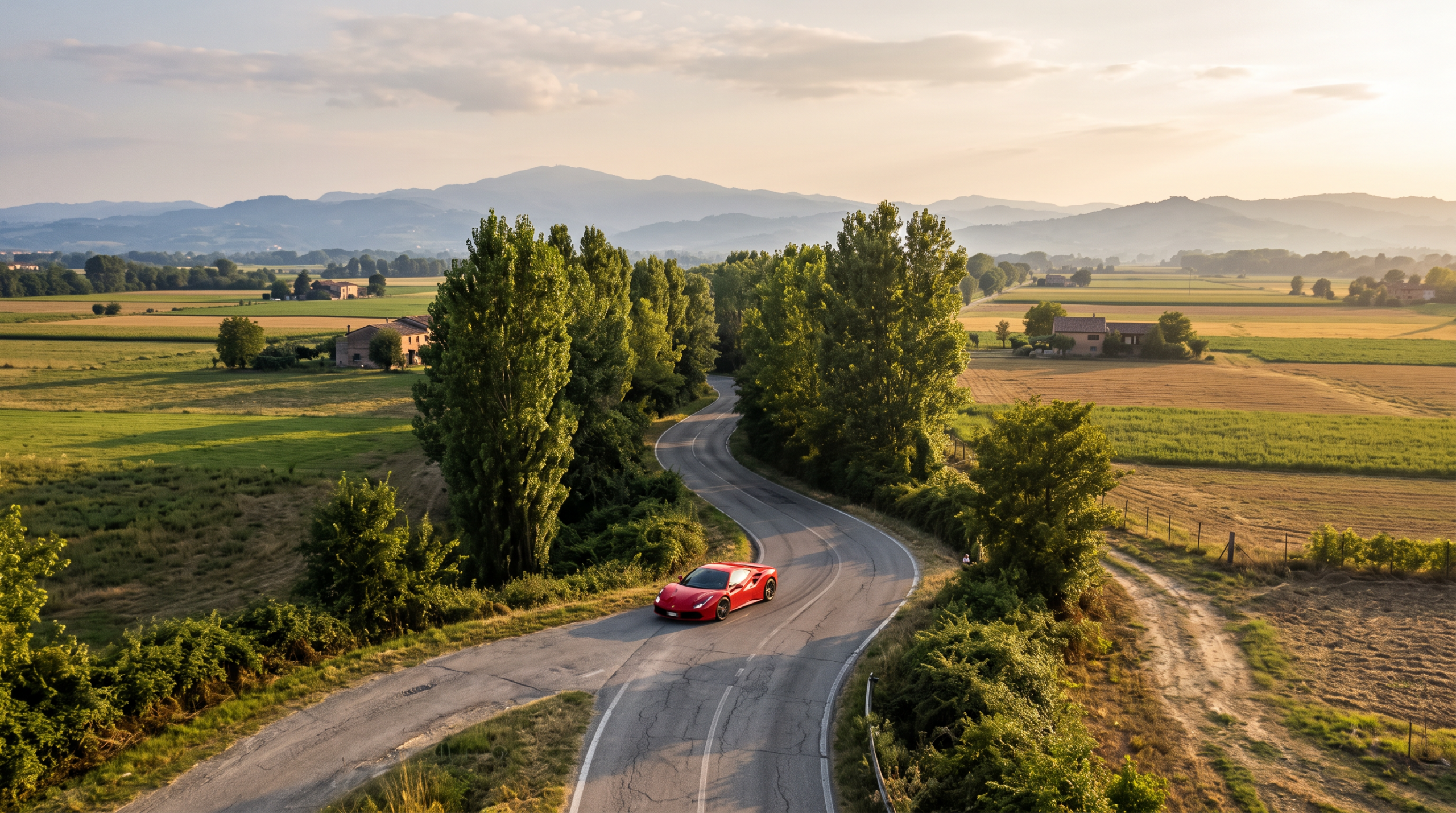
The Emilia-Romagna plain. Most of the great Italian car brands were founded within about forty miles of Modena.
Table of Contents
Quick Answer: Who Founded the Italian Car Brands, and Who Owns Them Now?
The major Italian car brands were founded between 1899 and 1992 by individuals: Giovanni Agnelli (Fiat, 1899), Vincenzo Lancia (1906), Ugo Stella (A.L.F.A., 1910, later reorganised by Nicola Romeo), the Maserati brothers (1914), Enzo Ferrari (1947), Carlo Abarth (1949), Ferruccio Lamborghini (1963) and Horacio Pagani (1992). Today Fiat, Alfa Romeo, Lancia, Abarth and Maserati all belong to Stellantis; Lamborghini and Ducati belong to the Volkswagen Group through Audi; Pininfarina belongs to India’s Mahindra; and Bugatti sits inside Bugatti Rimac. Only Ferrari — a listed company in its own right — and Pagani, still family-owned, answer to nobody else.
Who Owns the Italian Car Brands Today
Start here, because it is the question people actually ask, and the answer has changed more in the last five years than in the previous thirty.
Marque
Founded
Founder
Owner in 2026
Fiat
1899
Giovanni Agnelli and partners
Stellantis
Lancia
1906
Vincenzo Lancia
Stellantis
Maserati
1914
Alfieri, Ettore and Ernesto Maserati
Stellantis
Alfa Romeo
1910 / 1915
ALFA, reorganised by Nicola Romeo
Stellantis
Abarth
1949
Carlo Abarth
Stellantis
Ferrari
1947
Enzo Ferrari
Independent, listed as RACE
Lamborghini
1963
Ferruccio Lamborghini
Volkswagen Group, via Audi
Ducati
1926
The Ducati brothers
Volkswagen Group, via Audi
Pagani
1992
Horacio Pagani
Independent, family-owned
Pininfarina
1930
Battista “Pinin” Farina
Mahindra (India)
Italdesign
1968
Giorgetto Giugiaro and Aldo Mantovani
UST majority stake agreed Dec 2025, Lamborghini minority
Bugatti
1909
Ettore Bugatti (Milan-born)
Bugatti Rimac
Ownership of the major Italian car brands as of August 2026. Founding dates are for the company, not the first car.
Two things jump out of that table. The first is how much of Italy’s motor industry now sits under one roof: Stellantis, the Franco-Italian-American group formed when Fiat Chrysler merged with PSA, controls five of these Italian car brands outright. The second is how recently the last piece moved. Porsche announced in April 2026 that it was selling its 45% of Bugatti Rimac and its 20.6% of Rimac Group to a consortium led by HOF Capital, with Rimac Group taking control — ending Volkswagen’s 28-year involvement with the Bugatti name.
The Founders Behind the Italian Car Brands
Giovanni Agnelli and Gianni Agnelli — Fiat
Fiat is the oldest of the Italian car brands and the one everything else grew around. Giovanni Agnelli, a cavalry officer turned industrialist, was among the founding investors of Fabbrica Italiana Automobili Torino in 1899 and ran it for nearly half a century. He built the Lingotto plant with its rooftop test track — still one of the strangest and most beautiful factory buildings ever put up.
His grandson Gianni is the Agnelli most people mean. Gianni chaired Fiat from 1966 to 1996 and turned an industrial company into a national institution, absorbing Lancia in 1969, Alfa Romeo in 1986 and Ferrari in stages from 1969. He was not a founder. He was something arguably rarer: the man who decided which of the other Italian car brands would survive.
Vincenzo Lancia — Lancia
A Fiat works driver before he was a manufacturer, Vincenzo Lancia founded his company in Turin in 1906 and spent the rest of his life engineering ahead of everybody. The 1922 Lambda introduced a load-bearing unitary body and independent sliding-pillar front suspension when the rest of the industry was still bolting bodies to ladder frames.
Lancia died in 1937, and the innovations most people credit to him — the production V6 of the 1950 Aurelia, the rally dominance of the Fulvia, Stratos and Delta Integrale — all came after. That is its own kind of legacy: an engineering culture that outlived its founder by half a century.
Maserati was a racing concern first and a road-car company second, and the Orsi family moved it to Modena in 1940 — which is how Modena rather than Bologna became the capital of the Italian car brands. Its omission from most “great Italian marques” lists is a small injustice: Maserati was building grand prix winners while Enzo Ferrari was still running Alfa’s race team.
Nicola Romeo — Alfa Romeo
ALFA — Anonima Lombarda Fabbrica Automobili — already existed in Milan when the engineer and industrialist Nicola Romeo took control during the First World War and turned it over to munitions. When car production resumed the name had acquired his, and Alfa Romeo went on to win the first Formula One world championship in 1950 and the second in 1951.
Alfa’s deeper contribution to the other Italian car brands is the people it trained. Enzo Ferrari ran its racing operation. Gioacchino Colombo learned his trade there before designing the V12 that made Ferrari, and Vittorio Jano arrived from Fiat as Alfa’s chief engineer in 1923 before joining Ferrari himself in 1955.
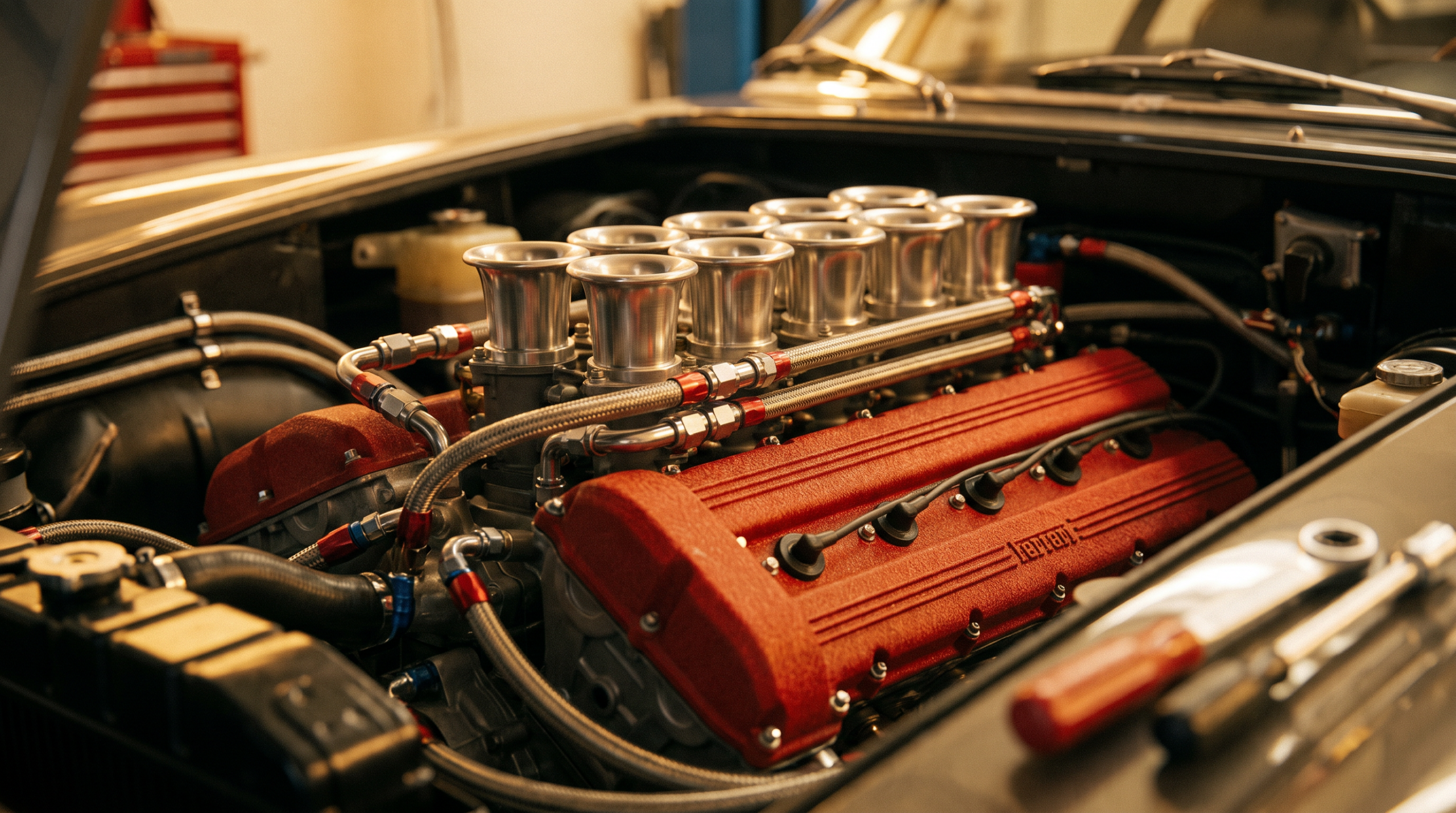
The V12 became the signature of the Italian car brands, but the men who designed the first ones learned their craft at Alfa Romeo.
Enzo Ferrari — Ferrari
Enzo Ferrari was a racer, then Alfa Romeo’s team manager, then — after a four-year non-compete forced him to trade under another name — the founder of Auto Avio Costruzioni in 1939. The first car to wear his own name arrived in 1947: the 125 S, with a 1.5-litre Colombo V12.
He sold road cars to fund the race team, never the other way around, and he was open about it. That single ordering of priorities is why Ferrari has the residual values it does, and why it remains the only one of the Italian car brands whose customers accept being told what they may buy.
Ferruccio Lamborghini — Lamborghini
Ferruccio Lamborghini built tractors, and built them well enough to afford Ferraris. The story he told — that he complained to Enzo Ferrari about his 250’s clutch and was told to stick to tractors — is one Ferruccio repeated himself for decades; the exact wording is unverifiable, but the outcome is not. Automobili Lamborghini opened at Sant’Agata Bolognese in 1963.
What he built was not a Ferrari rival so much as a rebuke to one: refined, quiet, front-engined grand tourers with a Bizzarrini-designed V12. Then in 1966 his engineers talked him into the Miura, and the mid-engined supercar existed. Among all the Italian car brands, Lamborghini is the one that most often got there by accident and made it look deliberate.
Carlo Abarth — Abarth
Born in Vienna in 1908 and Italian by adoption, Carlo Abarth founded Abarth & C. in 1949 and made his name doing something none of the other Italian car brands bothered with: making ordinary small cars extraordinary. He took Fiat 500s and 600s, added exhausts, camshafts and cylinder heads, and beat cars with three times the capacity.
He also understood branding before the word existed. The scorpion badge — his own star sign — went on tuning parts sold to people who would never own a race car, which is exactly how Abarth still operates inside Stellantis today.
Horacio Pagani — Pagani
The only Argentinian on this list, and the only founder still running his company. Horacio Pagani arrived in Italy in 1983, worked his way into Lamborghini, and left when the company would not invest in an autoclave for carbon fibre. He bought one himself.
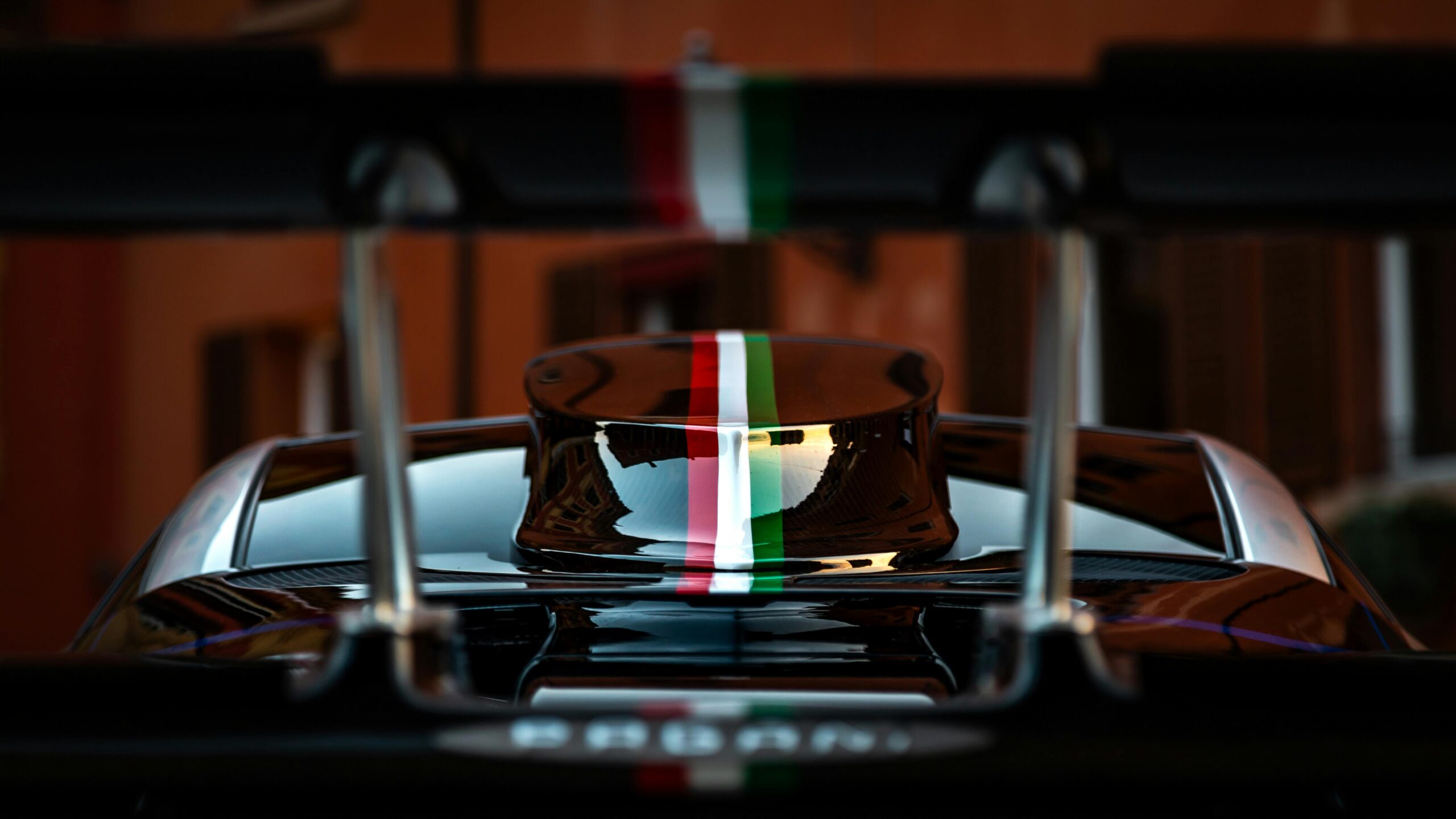
Pagani Automobili was founded in 1992 and the Zonda arrived in 1999 with a Mercedes-AMG V12 and a level of finish nobody had attempted — exposed carbon weave treated as a visible material, titanium bolts, each one engraved. Of all the Italian car brands, Pagani is the proof that the founder-driven model still works, at very small volume, if you never sell.
Ettore Bugatti — Bugatti
Bugatti belongs on any list of Italian car brands with an asterisk, and the asterisk is worth explaining. Ettore Bugatti was born in Milan in 1881 into a family of artists — his father Carlo was a celebrated furniture designer, his brother Rembrandt a sculptor — and he brought that sensibility to cars. But he built them at Molsheim in Alsace, and the marque has been French, German and now Croatian by ownership ever since.
The Italian inheritance is visible anyway. The Type 35’s proportions, the horseshoe grille, the engine-turned dashboards, the decision to make a supercharger housing beautiful — none of that is engineering. It is the same instinct that runs through every marque on this page.
The Carrozzieri: The Men Who Drew Them
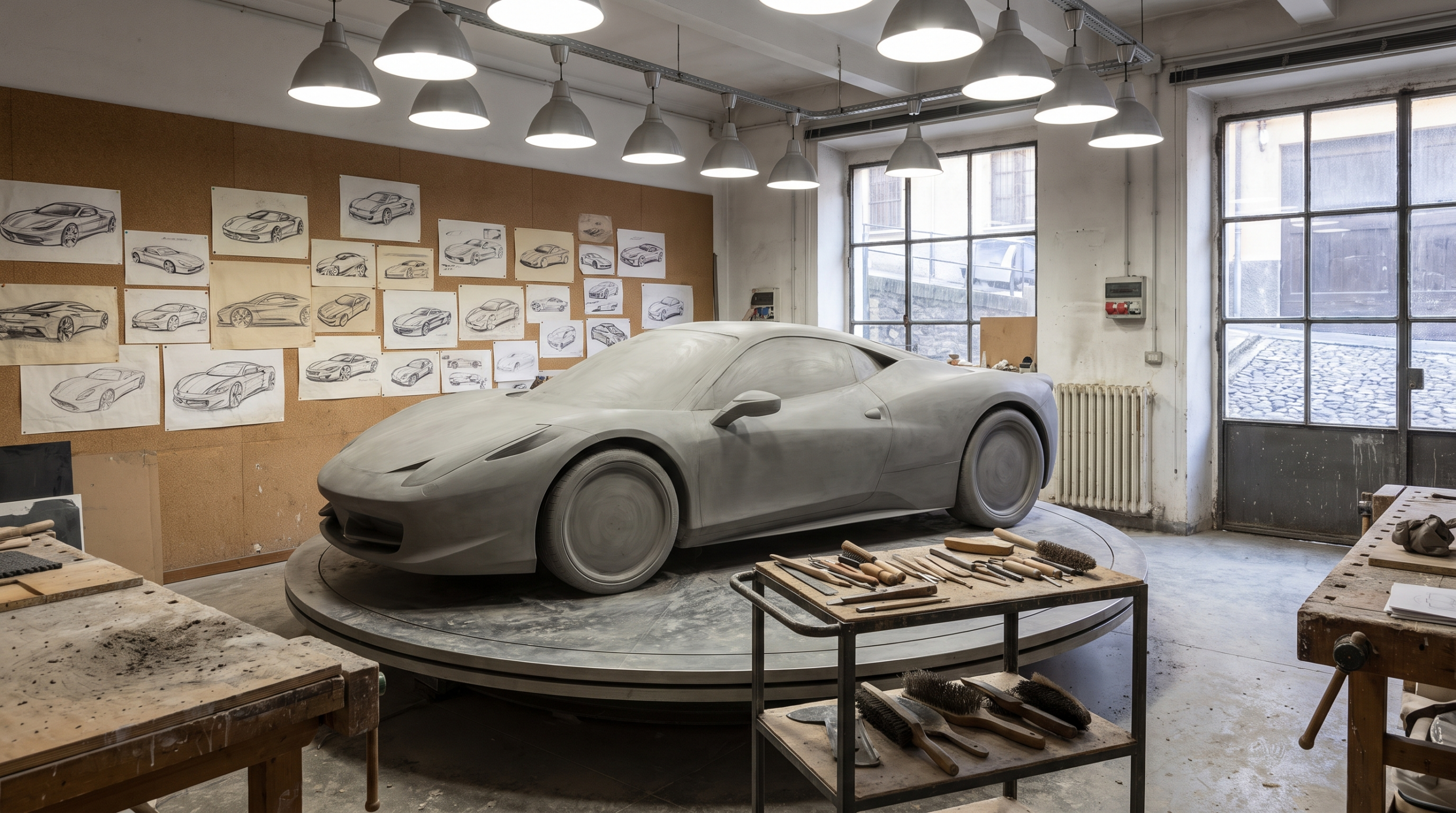
Here is the part most accounts of the Italian car brands leave out. For most of the twentieth century the manufacturers built chassis and engines and sent them somewhere else to be given a body. The coachbuilders were separate companies with their own founders, their own houses styles and their own reputations — and they are the reason Italian cars look Italian.
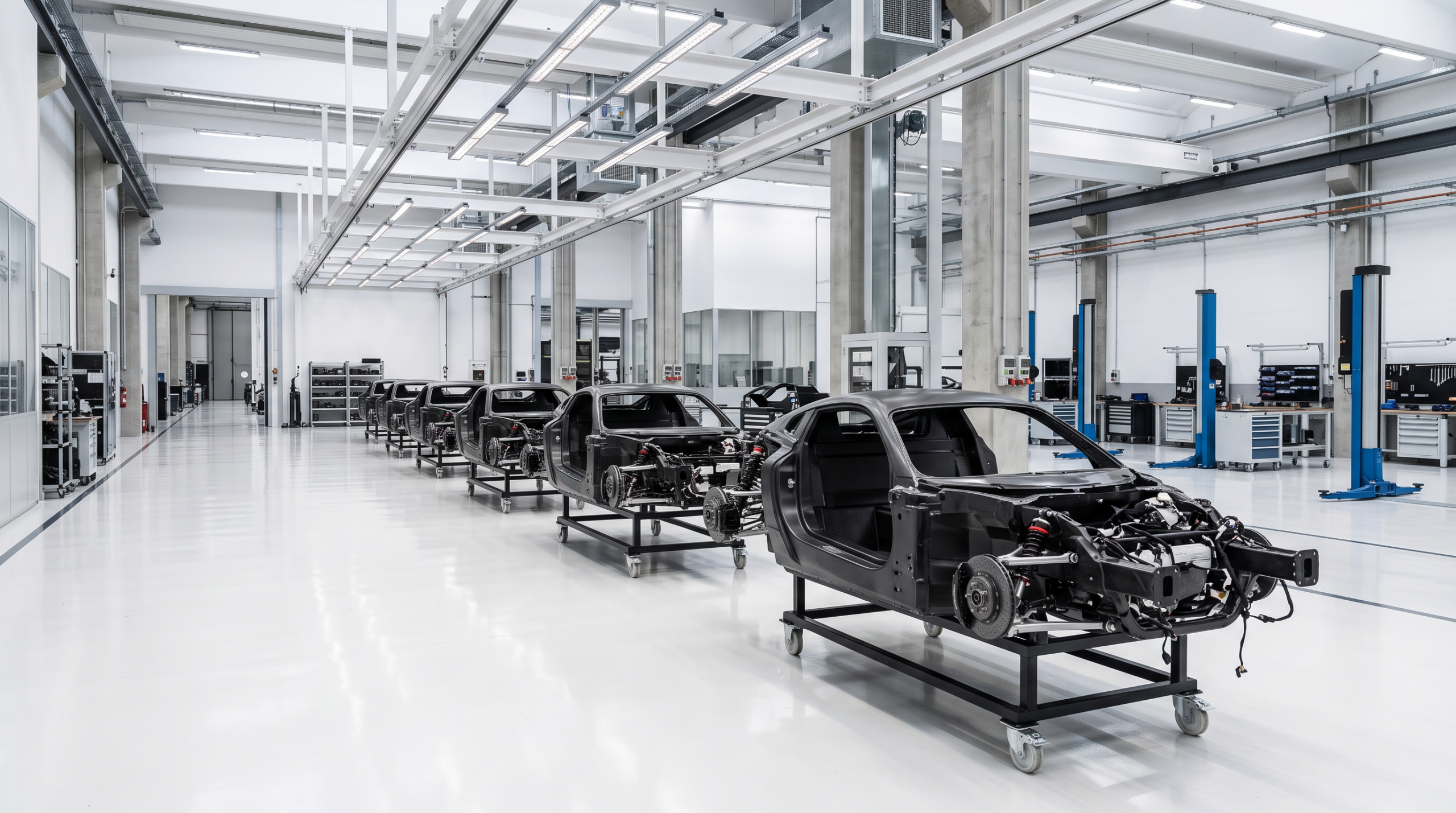
A carrozzeria studio. For decades the Italian car brands built the mechanicals and sent them out to be clothed.
Battista “Pinin” Farina — Pininfarina, 1930. The most prolific relationship in the industry: Pininfarina bodied Ferraris almost exclusively from 1952 into the 2010s, and drew the Cisitalia 202 that sits in New York’s Museum of Modern Art. The family changed its surname to Pininfarina by presidential decree in 1961.
Nuccio Bertone — Bertone. Bertone drew the Miura, the Countach, the Stratos Zero and the Alfa Romeo Giulietta Sprint. Nuccio also had an eye for staff: both Giorgetto Giugiaro and Marcello Gandini ran his studio before they were thirty.
Giorgetto Giugiaro — Italdesign, 1968. Voted Car Designer of the Century in 1999. He drew the Maserati Ghibli and the Lotus Esprit, then drew the original Volkswagen Golf and the Fiat Panda, which is the more remarkable achievement.
Sergio Scaglietti — Carrozzeria Scaglietti. Enzo Ferrari’s neighbour in Modena, who shaped competition Ferraris — the 250 Testa Rossa, the 250 GTO — largely by eye, without formal drawings. Ferrari bought the company in 1977 and the name still marks the Maranello bodyshop.
The carrozzieri have fared worse than the marques they dressed. Pininfarina was sold to India’s Mahindra in 2015 after the group nearly collapsed. Bertone went bankrupt in 2014 and the name has since been revived by new owners for the GB110 hypercar. Italdesign passed fully to the Volkswagen Group in 2015, and in December 2025 Audi agreed to sell a majority stake to the American technology company UST, with Lamborghini keeping a significant minority. The design language of the Italian car brands survived; the companies that created it largely did not. Our guide to the evolution of exotic car design picks up where the coachbuilders left off.
Motor Valley: Why the Italian Car Brands Grew in One Place
None of this was planned. Emilia-Romagna became the home of the Italian car brands because of a chain of accidents: a strong pre-war tradition of precision metalworking, a network of small machine shops that could make anything to order, and — decisively — the fact that Enzo Ferrari, Ferruccio Lamborghini, the Maserati brothers and Horacio Pagani all set up within an hour’s drive of each other and hired from the same pool of people.
The geography of the Italian car brands. Everything from Maranello to Bologna sits inside about forty miles; Turin is the separate industrial and design capital, roughly 200 miles north-west.
The concentration is self-reinforcing and it is the real reason these companies are hard to replicate. A specialist who can hand-form an aluminium wing, or machine a one-off gearbox casing to a drawing sketched that morning, needs enough customers within driving distance to stay in business. Emilia-Romagna has them. Nowhere else does, which is why even foreign-owned Italian car brands keep building in the same villages.
Ownership has moved abroad, but production has not. The Italian car brands still build where they were founded.
What Actually Happened to the Italian Car Brands
The consolidation was not a tragedy, and pretending otherwise is bad history. Almost every one of these Italian car brands went broke, or came within sight of it, and was rescued by a larger owner. Lamborghini passed through a Swiss owner, a receivership, Chrysler, an Indonesian consortium and finally Audi in 1998 — and it is under Audi that it has had its best years by an enormous margin.
The numbers make the point about what scale did for the Italian car brands. In 2025 Lamborghini delivered 10,747 cars and posted revenue of €3.20 billion with an operating margin of 24%, its third straight year above ten thousand units. Ferruccio’s company never built more than a few hundred cars a year while he owned it.
Ferrari is the outlier among the Italian car brands, and the outlier is instructive. Spun out of Fiat Chrysler in 2015 and 2016 as a company in its own right, it shipped 13,640 cars in 2025 — slightly fewer than the year before — while revenue and profit rose. As of mid-August 2026 its market capitalisation stood at about $79.5 billion, more than General Motors and more than Ford. Two automakers building millions of cars a year are each worth less than one building fewer than fourteen thousand. That is the whole argument for scarcity, expressed as a number.
Stellantis, meanwhile, spent 2025 and early 2026 openly reviewing whether to keep Maserati at all. Its May 2026 strategic plan settled it: Maserati stays, with two new E-segment models and a full roadmap to be presented in Modena in December 2026. Alfa Romeo continues as a regional brand and Lancia as a specialty brand managed alongside Fiat. Of the Italian car brands inside Stellantis, only Fiat sits in the top tier of investment.
The Thread That Never Broke
There is one continuity running through the Italian car brands that is easy to miss.
Exor, the Agnelli family holding company, is Ferrari’s largest shareholder with about 21.3% of the shares and 32.3% of the votes, and it is also the largest shareholder in Stellantis. Piero Ferrari, Enzo’s surviving son, holds roughly 10.7% of the shares and 16.2% of the votes. John Elkann — Gianni Agnelli’s grandson — chairs both Exor and Ferrari.
So the two families at the centre of this story still control, between them, roughly half the voting power at Ferrari, and the Agnellis still sit atop the group that owns Fiat, Lancia, Alfa Romeo, Abarth and Maserati. A hundred and twenty-seven years after Giovanni Agnelli put his money into a car company in Turin, the Italian car brands are still substantially a family business. They just report quarterly now.
What This History Is Worth to a Buyer
This is not just a good story. Founder-era provenance on the Italian car brands is one of the few things that reliably moves money in this market, and knowing the history tells you what to look for.
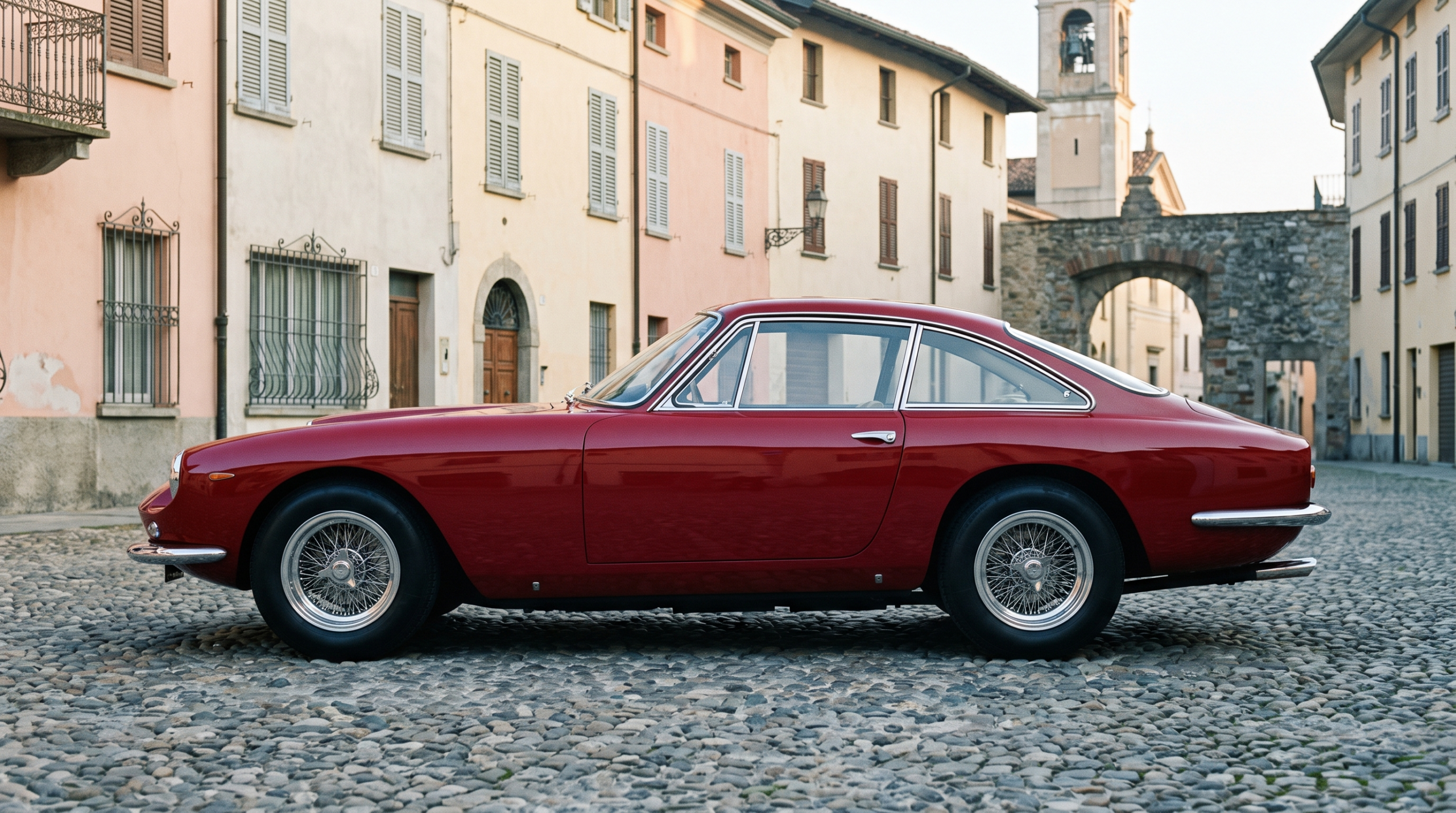
A 1960s Italian grand tourer. Coachbuilt bodies from the named carrozzerie of the Italian car brands carry a documented premium.
The coachbuilder is part of the identity. On pre-1970s Italian cars the carrozzeria that made the body is a value input, not a footnote. Scaglietti, Touring, Zagato, Vignale and Pininfarina bodies are catalogued individually, and a rebodied or wrong-body car is a different asset.
Chassis numbers do the work. The Italian car brands used chassis sequences that specialists can read precisely. Registries exist for most significant models and they are the first place a serious buyer looks.
The founder-era cut-off is real. Enzo Ferrari died in 1988; Ferruccio sold out in 1972 and 1974. The market prices cars built under the founder differently from those built after, on every one of these marques.
Ownership changes affect parts, not values. German or Croatian ownership has not hurt residuals. What it has changed is factory support — and Ferrari Classiche, Lamborghini Polo Storico and the equivalents are now a genuine reason to prefer a certified car.
What these men had in common was not talent — plenty of talented people build nothing. It was that each of them was, in some specific way, impossible to work for and impossible to stop. Enzo Ferrari would rather have lost a customer than a race. Ferruccio Lamborghini built a supercar company because he was insulted. Carlo Abarth put his own star sign on the badge.
Our family has been in the car business for more than a century, and the thing that still strikes us about the Italian car brands is that the personality is legible in the product. You can tell a Ferrari from a Lamborghini across a parking lot at a hundred yards, and the difference is not the badge — it is two men who did not like each other, resolved in metal, sixty years ago.
Only two of the major marques answer to nobody abroad. Ferrari is an independent listed company, with the Agnelli family holding Exor and Enzo Ferrari’s son Piero as its largest shareholders. Pagani remains privately owned by Horacio Pagani and his family. Fiat, Alfa Romeo, Lancia, Abarth and Maserati sit inside Stellantis, which is a Netherlands-domiciled multinational; Lamborghini and Ducati belong to the Volkswagen Group; Pininfarina belongs to India’s Mahindra.
Who founded Ferrari and when?
Enzo Ferrari. He founded Auto Avio Costruzioni in 1939, while a non-compete agreement with Alfa Romeo prevented him from racing under his own name, and the first car to carry the Ferrari badge — the 125 S, with a 1.5-litre Colombo V12 — appeared in 1947. He ran the company until his death in 1988, selling road cars principally to fund the racing team.
Did Ferruccio Lamborghini really start his company because of a Ferrari?
He said so himself, repeatedly. The account is that he complained to Enzo Ferrari about the clutch in his 250 and was told to stick to tractors. The exact exchange cannot be verified and the details shift between tellings, but the timeline is not in dispute: Ferruccio was a successful tractor manufacturer and Ferrari owner, and Automobili Lamborghini opened at Sant’Agata Bolognese in 1963.
Why are so many Italian car brands based near Modena?
Emilia-Romagna had a dense pre-war tradition of precision metalworking and small independent machine shops, and the founders hired from the same local pool of craftsmen. Ferrari at Maranello, Lamborghini at Sant’Agata Bolognese, Maserati in Modena and Pagani at San Cesario sul Panaro all sit within roughly forty miles. The supplier network that grew up to serve them is now the hardest part to copy.
Is Bugatti one of the Italian car brands?
Not really, though its founder was. Ettore Bugatti was born in Milan in 1881 to a family of Italian artists and designers, and the aesthetic sensibility he brought to the marque is unmistakably Italian. But he built the cars at Molsheim in Alsace, and Bugatti has been French, then German under Volkswagen, and is now part of Bugatti Rimac following Porsche’s April 2026 sale of its stake.
What happened to the Italian coachbuilders?
They fared worse than the manufacturers. Pininfarina was sold to India’s Mahindra in 2015 after severe financial trouble. Bertone went bankrupt in 2014, though the name has since been revived by new owners for the GB110 hypercar. Italdesign passed fully to the Volkswagen Group in 2015, and Audi agreed in December 2025 to sell a majority stake to the American technology company UST. Scaglietti was absorbed by Ferrari in 1977 and survives as the name of the Maranello bodyshop.
Owning an exotic car is not about speed or luxury- It’s about embracing an experience, where the road becomes your canvas and the car, your masterpiece.
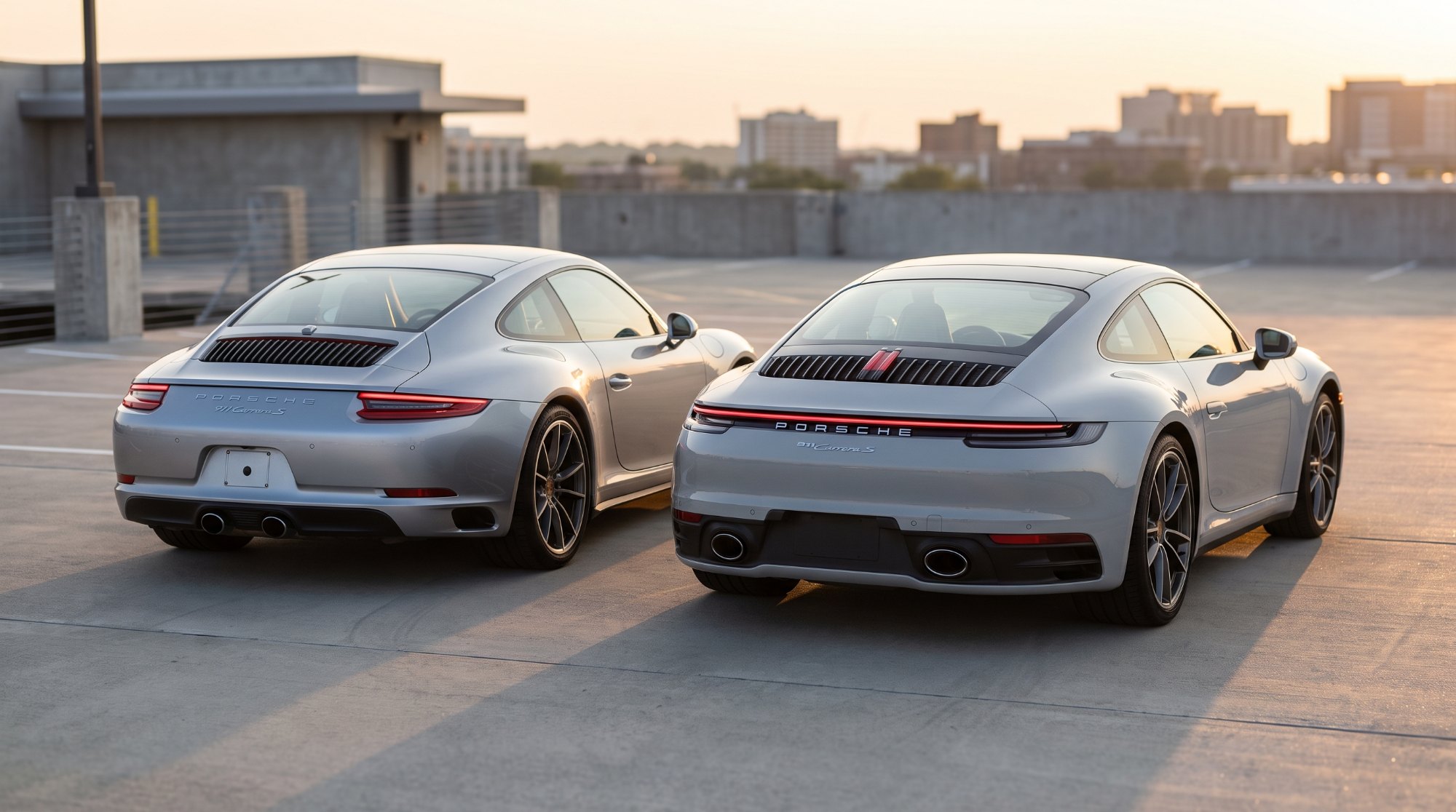
991.2 or 992? A buyer's guide to the used Porsche 911 Carrera decision: transmissions, body styles, options, inspection, warranty, running costs and the real price gap.
What a real exotic car pre-purchase inspection (PPI) should include: choosing an independent marque specialist, lift checks, paint readings, factory diagnostics, service records, the road test, and how to use the findings before you pay a deposit.
The FTC’s September 2026 pricing FAQs say a car’s advertised price must be one any buyer can pay, on Instagram, marketplaces and dealer sites alike. Here is what that means for exotic and luxury dealers.