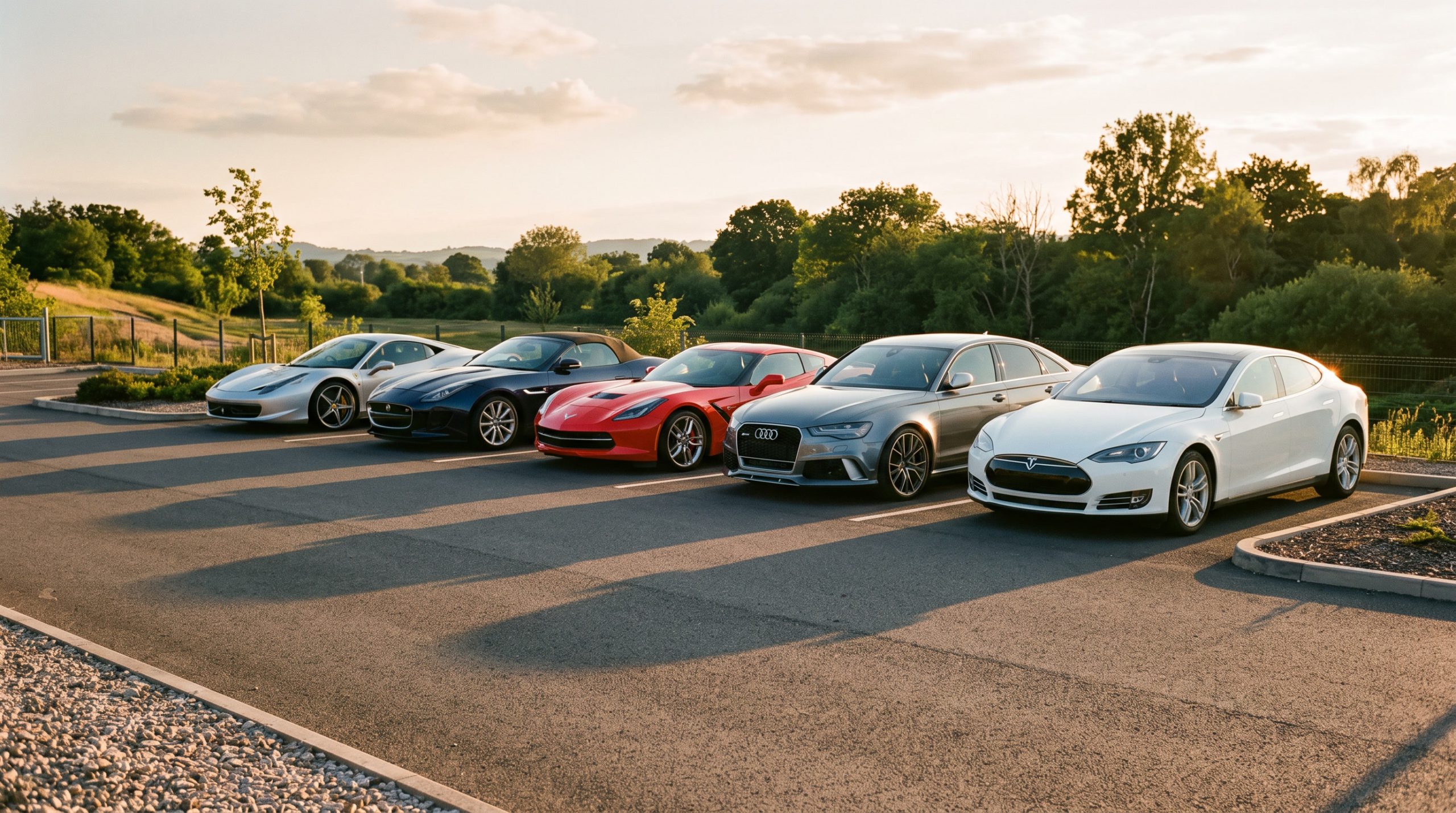
The cheapest car on this list of affordable luxury cars is also the most expensive one on it to insure.
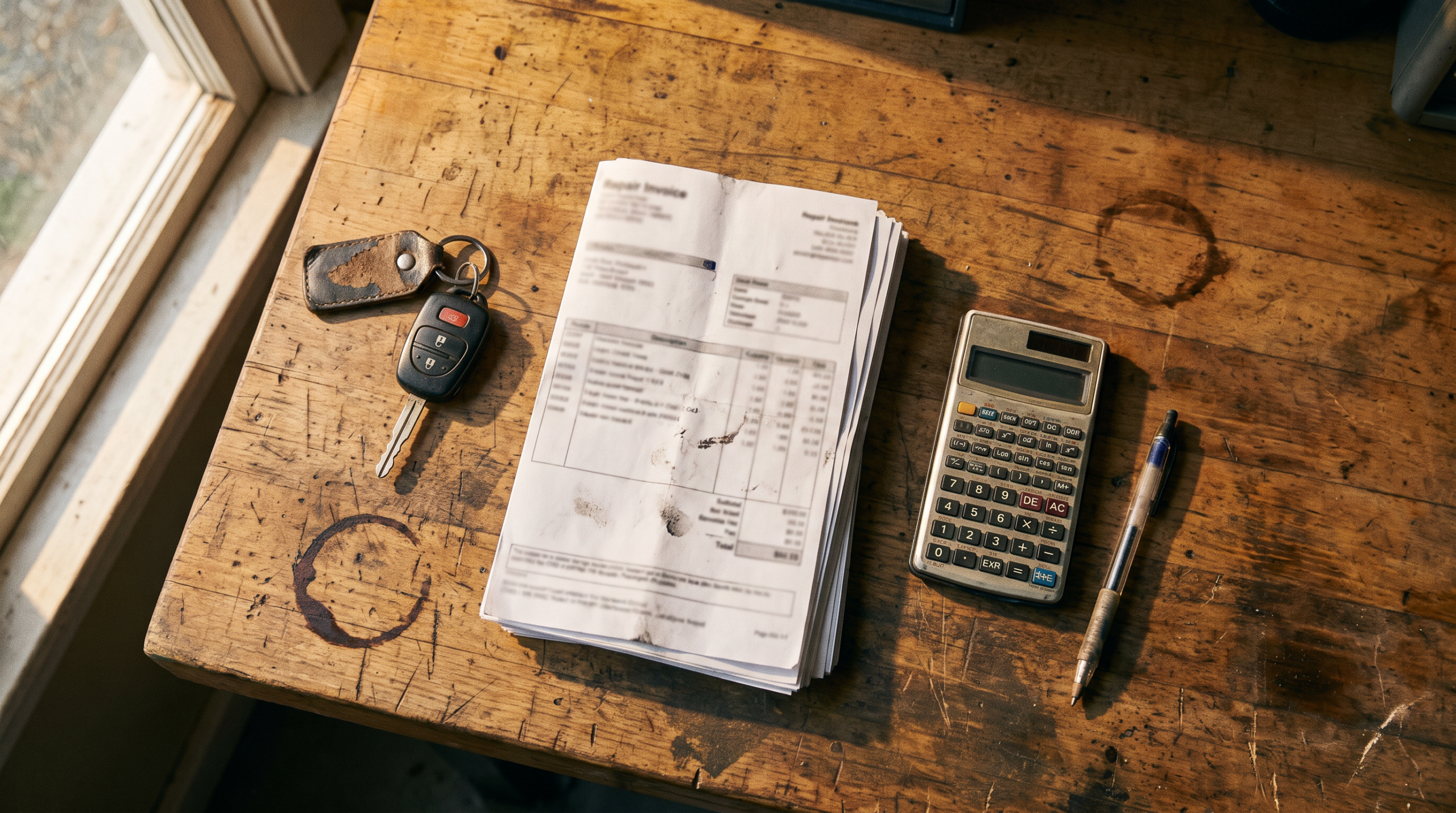
A 2013 Tesla Model S costs about $14,000 today. A 2008 Corvette costs roughly twice that. Yet on matched full-coverage figures the Tesla runs $3,840 a year to insure against the Corvette’s $2,112 — about 80% more, on a car worth half as much. Insurers price the repair bill, not the window sticker.
That gap is the whole subject of affordable luxury. There is a real and genuinely exciting market in affordable luxury cars — proper cars, at prices that look like a mistake. But a purchase price is one number out of four, and the other three are insurance, maintenance and the specific expensive thing each of these cars is known for doing. This page gives you all four, model year by model year, with sources.
Quick Answer: What Makes Affordable Luxury Actually Affordable?
Three things, and purchase price is the least important. First, parts and labour availability — a Corvette can be fixed by any competent shop with cheap parts, an Aston Martin cannot. Second, the ratio between the car’s value and its worst plausible repair: a $6,000 job on a $27,000 Corvette is survivable, the same job on a $12,000 Maserati is a total loss. Third, and most overlooked, the specific model years matter enormously. For several cars on this list the cheap version and the safe version are different years, and buying on price alone steers you into the wrong half of the range.
On This Page
Ten Affordable Luxury Cars, With the Bill Attached
Affordable luxury prices below are US market as at August 2026, from CLASSIC.COM realised sales and CarGurus listings. Annual repair figures are RepairPal model averages. “The expensive thing” is the specific known failure that should sit in your budget before you buy, not after.
Car
Typical price
Annual repairs
The expensive thing
Chevrolet Corvette C6 (2005–13)
$22k–$33k base
$737
Harmonic balancer, $1,000–$2,500
Porsche Cayman 987 (2006–12)
$27.6k (987.1) / $42.7k (987.2)
$1,135
Bore scoring on the 3.4, $5,000–$6,000
BMW Z4 E89 (2009–16)
$23.9k avg
$895
N20 timing chain, $1,890–$2,890
Audi S5 B8 (2008–16)
$9.5k–$18k
$1,164
Carbon cleaning every 60k, $500–$1,000
Mercedes SL R230 (2003–12)
$15k–$28k
$1,055
ABC suspension, $2,000 per strut
Jaguar XK X150 (2007–14)
$18.5k base / $26.7k XKR
$1,000
5.0 timing chain tensioner
Lotus Elise (2005–11)
$43.5k avg sale
Not published
2ZZ cam wipe at 20k–30k miles
Aston Martin V8 Vantage (2005–17)
$48.1k avg sale
Not published
Clutch, $4,000–$6,000
Tesla Model S (2012–15)
$14k–$15.5k
$1,047
Battery pack, $11,000–$21,000
Maserati Ghibli (2014–17)
$12.8k–$17.3k
Not published
Both turbos, roughly $7,000
The ten affordable luxury cars and what they really cost to run, August 2026. Sources named in each section below. Prices move; the failure modes do not.
The Affordable Luxury Trap: the Cheap Year and the Safe Year Are Different
This is the single most useful thing on this page about affordable luxury, and it is the reason a list of prices alone does more harm than good. Sort affordable luxury cars by price alone and you are sorted straight into the riskier half of every range.
Car
The cheap years
The years you actually want
Why
Porsche Cayman
2006–2008 (987.1)
2009–2012 (987.2)
The 987.2 has no intermediate shaft at all — zero IMS risk — and no meaningful bore-scoring reports. Every 987.1 has a non-serviceable bearing that cannot be retrofitted without splitting the case.
BMW Z4
sDrive28i (2012–early 2015)
sDrive30i (2009–2012)
The N20 four is an interference engine with brittle plastic timing-chain guides; the class-action coverage has expired on every car. The N52 six has no turbos, no high-pressure fuel pump and no chain issue.
Mercedes SL
Pre-2008
2009–2012
Post-2006 ABC components are more durable, and the newest cars carry the most remaining time on Mercedes’ 25-year SBC brake warranty.
Jaguar XK
Early 5.0 (2010–2012)
2013–2014
Jaguar revised the timing chain and tensioner between the 2012 and 2013 model years. Earlier 5.0s can rattle for five to ten seconds on a cold start from as little as 25,000 miles.
Where paying a little more buys a materially different affordable luxury car. The premium is almost always smaller than the repair it avoids.
Tier One: Genuinely Affordable Luxury Cars
Chevrolet Corvette C6 (2005–2013) — $22,000–$33,000
The genuine bargain of the affordable luxury group, and it is not close. RepairPal puts average annual repairs at $737, the lowest here. Parts are cheap and universal, any competent shop can work on it, and insurance at $2,112 a year for a 2008 is cheaper than a Mustang.
What goes wrong: the harmonic balancer is the classic C6 failure — the rubber bond degrades and the outer ring walks, which can take out the oil pump if ignored. Owner-reported costs run $1,060 to $1,600 at a specialist, up to $2,500 at a dealer, seven to eight hours of labour. Specialists recommend an aftermarket ATI or Powerbond unit over the GM part.
The Z06 is a different conversation. The LS7’s valve guides were machined off-concentric at the supplier, producing hourglass wear and, occasionally, a dropped valve that destroys the piston and head. GM’s official window was 2009–2011; Katech, the specialist that documented the root cause, found it across 2006 onward. Treat every 2006–2013 Z06 as at risk. A head repair runs roughly $3,000–$6,000 installed. And know that GM abandoned its own “wiggle test” because it only caught severely worn guides — a passed test is not a clean bill of health.
Avoid 2005 — C5-derived, four-speed automatic, one-year-only parts. Buy 2008–2013, the LS3 years, and listen for the timing chain tensioner. Base cars are flat in value; Hagerty put the Z06 on its 2026 Bull Market list, with conditions 1 to 3 all up more than 8% since October 2024.
Porsche Cayman 987 (2006–2012) — $27,600–$42,700
The purest driver’s car in affordable luxury, and the one where model year matters most. Buy a 2009–2012 987.2 if you possibly can. It uses the 9A1 direct-injection engine, which has no intermediate shaft, so the entire IMS conversation simply does not apply.
On a 987.1 (2006–2008), understand what you are accepting. The bearing is a larger single-row unit with a much lower failure rate than the notorious 2000–2005 part — but it is non-serviceable. The standard advice to “just do the IMS retrofit” does not apply; retrofitting means splitting the case, a $10,000-plus job. Most owners monitor oil filters for debris and accept the residual risk.
Bore scoring is the other 987.1 issue, and it is concentrated in the 3.4-litre Cayman S rather than the 2.7 base car. A block repair is $5,000–$6,000 per LN Engineering; a full rebuild is $15,000–$30,000. A borescope and an oil analysis are non-negotiable on any S. Budget $1,000–$2,500 in routine years and $2,000–$4,500 in major-service years; independents run 20–30% below dealer rates.
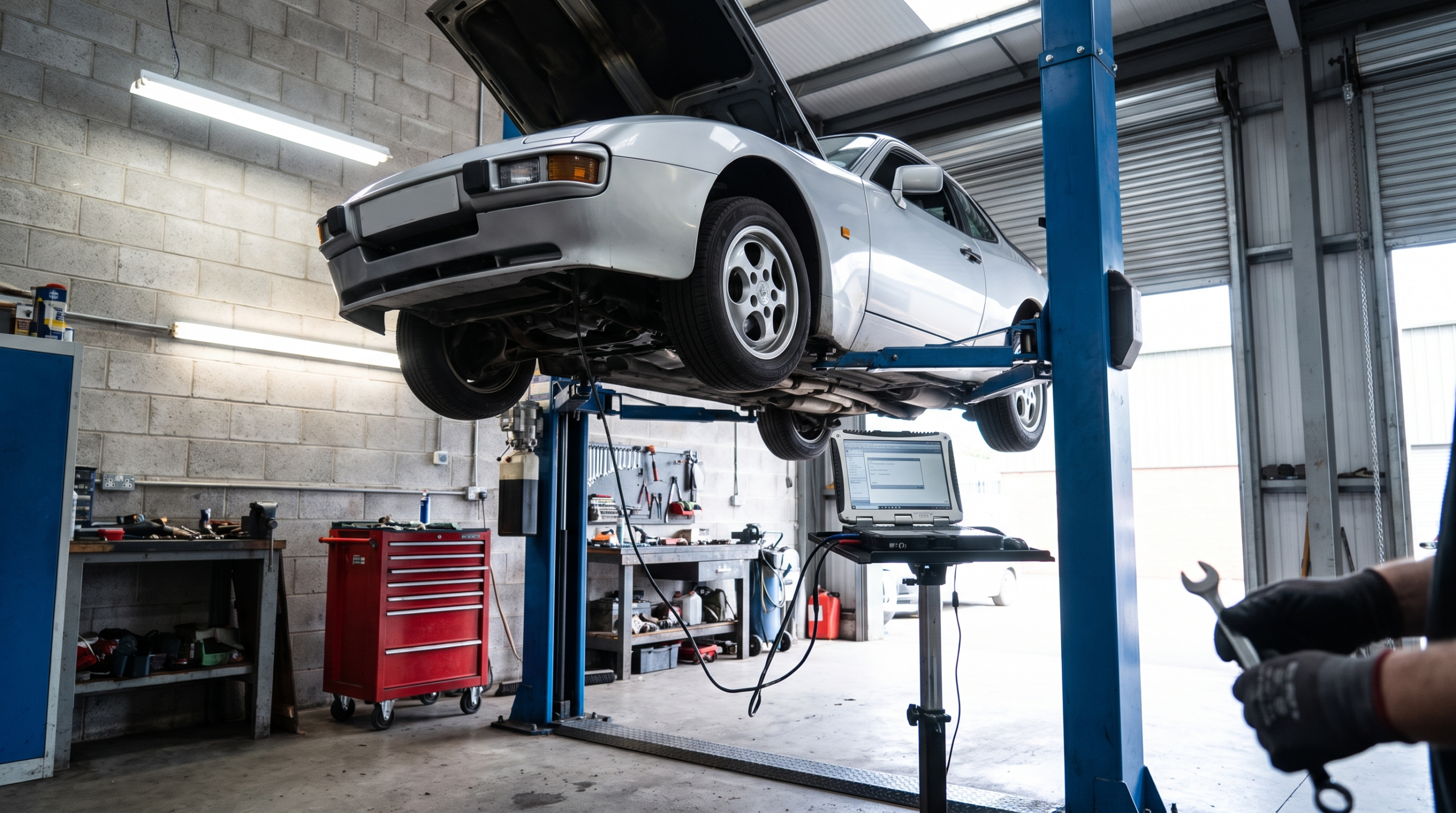
Illustrative rendering. The independent specialist, not the dealer, is where affordable luxury stays affordable.
Tier Two: Affordable Luxury Cars That Reward Homework
BMW Z4 E89 (2009–2016) — around $23,900
Among affordable luxury roadsters this is the shape-shifter: a folding hardtop with three completely different engines under the same badge, and the cheapest of the three is the one to avoid.
sDrive30i (N52, 2009–2012) — the pick. Naturally aspirated six. No turbos, no high-pressure fuel pump, no timing chain issue. Watch the plastic valve cover and its integrated PCV diaphragm.
sDrive35i / 35is (N54) — superb engine, but the high-pressure fuel pump, injector and wastegate extended warranties have all expired on every E89. Installed turbos run $4,295–$7,794.
sDrive28i (N20, 2012–early 2015) — the one to avoid. Brittle plastic timing chain guides, a stretching chain, and an interference engine, so a skip means bent valves and a rebuild. The chain job itself is $1,890–$2,890. Later 2015–2016 build got revised parts.
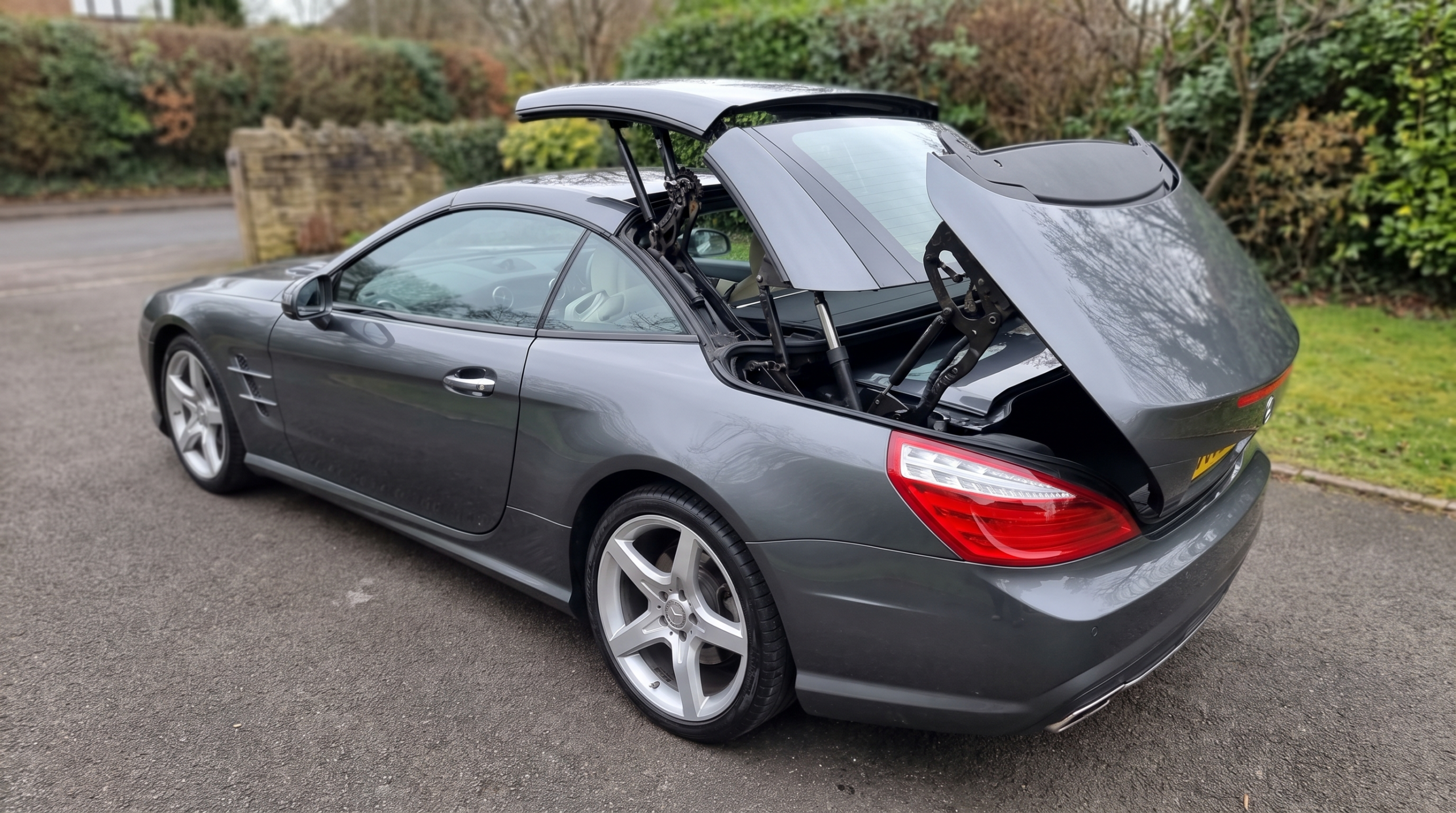
The roof is the other cost centre on all of them: hydraulic cylinder leaks that stain interior trim, thirteen microswitches, and a travel sensor. Rebuilt cylinders run $250–$300 each from specialists, and there are six of them.
Audi S5 B8 (2008–2016) — $9,500–$18,000
The cheapest V8 coupe in affordable luxury, and the single best value here on a dollars-per-cylinder basis. Note it is two different cars: 2008–2012 coupes have the 4.2 V8; 2013–2016 have the supercharged 3.0 V6, and the Cabriolet never had the V8 at all.
On the timing chain rumour: the engine with the notorious chain failure is the earlier B6/B7 S4’s 4.2, not this one. The B8’s CAUA has revised metal-reinforced guides and tensioners, and the specialist JHM reports never having seen a chain failure on the FSI V8s. But the guides still contain phenolic plastic, these cars are now fourteen to eighteen years old, and the chains are at the back of the block, so any work is engine-out — shop estimates run $8,300 to $20,000. A cold-start rattle on a 4.2 S5 is a walk-away, not a negotiating point.
Budget carbon cleaning as maintenance, not repair. RepairPal lists carbon buildup as the S5’s number one problem, on both engines. A walnut blast is roughly $500–$1,000 every 60,000 miles.
No affordable luxury car carries a worse reputation for suspension costs, and the reputation is half right in a way that is genuinely actionable.
Active Body Control fails in a predictable order: accumulators first at 60,000–80,000 miles ($150–$200 each plus labour), then valve blocks (about $2,250 — the symptom is the car sagging overnight), then the tandem pump (about $2,500), then struts at roughly $2,000 a corner. Left alone, a failing pump pushes debris through the system and takes everything else with it.
What decides the outcome is fluid. ABC fluid wants changing every 20,000 miles or so, at around $300 — and Mercedes never mandated it, which is exactly why so many of these cars have never had it done. Fresh fluid is clear with a green tint. Brown or black means damage is already under way. There is also an off-ramp: converting to conventional coilovers runs $3,000–$5,000 and caps the downside permanently, at the cost of the ride and some resale.
The good news nobody advertises: in August 2018 Mercedes extended the SBC brake warranty to 25 years and unlimited mileage from the in-service date. A 2011 car is covered into roughly 2036. Verify by VIN, because sources disagree on exactly which R230s have SBC.
Jaguar XK X150 (2007–2014) — $18,500–$26,700
This is the affordable luxury GT that suffers most from a myth. Forget the famous Jaguar plastic timing tensioner story — that belongs to the previous XK8, and this car addressed it. The X150 has its own, narrower issue: on the 5.0 V8, the hydraulic tensioner’s ratchet can fail to hold at low oil pressure, giving a five to ten second cold-start rattle from as little as 25,000 miles. Jaguar revised the parts between the 2012 and 2013 model years.
So: a cold-start listen is the highest-value thirty seconds of any X150 inspection, and a 2013–2014 car has the updated components from the factory. Elsewhere, watch supercharger rattle on XKRs from about 50,000 miles if the oil history is thin, adaptive dampers at 60,000, and blocked air-conditioning drains putting water in the footwells. Have the ZF automatic’s oil and filter changed at 60,000 miles regardless of Jaguar calling it sealed for life.
Illustrative rendering. Folding hardtops are wonderful until a hydraulic cylinder starts leaking onto the trim.
Lotus Elise (2005–2011) — around $43,500
No longer the cheapest affordable luxury car here, and that is the point: Elise prices bottomed out years ago and are now holding or climbing. There is also a gap worth knowing about — dealer asking prices run roughly $10,000 above what these actually sell for, so price against realised sales, not listings.
“It has a Toyota engine so it is cheap to run” is half true. The bottom end is robust and consumables are Toyota-priced. But the 2ZZ-GE’s VVTL-i high-lift system has a documented wear failure with no equivalent in an ordinary Toyota: the high-lift lobe slides rather than rolls, wearing the cam and rocker, typically on cylinder three, and typically evident at 20,000–30,000 miles. Left alone it breaks a rocker and circulates metal through the engine. Symptoms are a cylinder-three misfire code and rough running — and wear starts before any warning light.
The inspection takes ten minutes. The cam cover comes off that quickly, and looking at the lobes is the single highest-value pre-purchase check on any US Elise. Also confirm the oil cooler line recall was done on 2004 to early 2006 builds, look hard at the chassis suspension pickup points for galvanic corrosion, and check the title — insurers total these cars for minor damage, so salvage histories are unusually common.
Aston Martin V8 Vantage (2005–2017) — around $48,100
The most car-for-the-money in affordable luxury, and the one where the transmission choice decides everything.
Buy the manual. It costs more and it is worth it, for four reasons. Manual cars consistently outperform Sportshift cars at auction by 15–25%, and they are the ones appreciating. There are fewer failure modes — no hydraulic pump, accumulator or actuator seals. You can assess a manual clutch by feel on a test drive, whereas a Sportshift needs a specialist to pull diagnostic clutch-wear data. And the clutch costs the same either way.
That clutch is the number to plan around: roughly $4,000–$6,000 installed, with $5,000 a fair centre. Life varies enormously — over 40,000 miles driven sympathetically, as little as 10,000 to 15,000 in city traffic. Sportshift clutches often do not see 31,000 miles.
On Sportshift, the gearbox itself is fine; it is the hydraulic actuation bolted to it that fails, sometimes with internal leaks that show no visible fluid loss at all. If you buy one, buy it with current diagnostic clutch data, never on a seller’s reassurance. Elsewhere: timing cover oil leaks, rear subframe corrosion, and door struts that let doors slam, at about $50 each. Budget $1,000–$1,500 for a routine annual at a good independent and $2,000-plus at a dealer.
Worth knowing: higher-mileage Vantages are often better than ultra-low-mileage ones, because these cars suffer from sitting. If you are working out what you can carry, our financing and insurance guide and how people actually afford these cars cover the money side properly.
Tier Three: Affordable Luxury That Is Cheap for a Reason
Tesla Model S (2012–2015) — $14,000–$15,500
One sentence frames this entire affordable luxury proposition. In 2014 Tesla extended the battery and drive unit warranty to eight years and unlimited miles, retroactive and transferable. For 2012–2015 cars that expired between 2020 and 2023. Every one of these is now fully out of warranty on its two most expensive components.
What those components cost, from owner invoices: a remanufactured 85 kWh pack is about $16,000 out the door at Tesla, a new one about $21,000; independent EV shops run $9,000–$14,000. A drive unit came to $10,900 on one 2012 car six months out of warranty. Air suspension quotes run $3,600–$7,000. Door handles are $900–$1,100 each at Tesla — four of them is a third of the car’s value.
Two genuinely good pieces of news. The MCU1 eMMC failure — the dead or endlessly rebooting centre screen — is covered by a 2021 recall that does not expire, with a free 64GB replacement board. And free unlimited Supercharging on 2012–2015 cars transfers to subsequent owners, because Tesla only ended vehicle-attached transferable free Supercharging in early 2017.
One trap that will catch people. On 2012–2013 cars the Model S 60 had Supercharging as a paid option. A 60 that was never optioned is software-locked out of the network entirely. Verifying Supercharging status against the specific VIN with Tesla is the highest-value check you can make on a cheap Model S.
Honest verdict: trap-leaning. Realistic remaining range is fine — most owners report 6–13% degradation, so an 85 shows around 215–250 rated miles. But a single out-of-warranty event is a total-loss-scale bill on a $15,000 asset, with no warranty behind it and insurance that costs more than a Corvette’s. The bargain case exists only if you confirm transferable Supercharging on the VIN, confirm the eMMC recall was performed, health-test the pack, prefer coil springs over air, and accept the car may become uneconomic to repair.
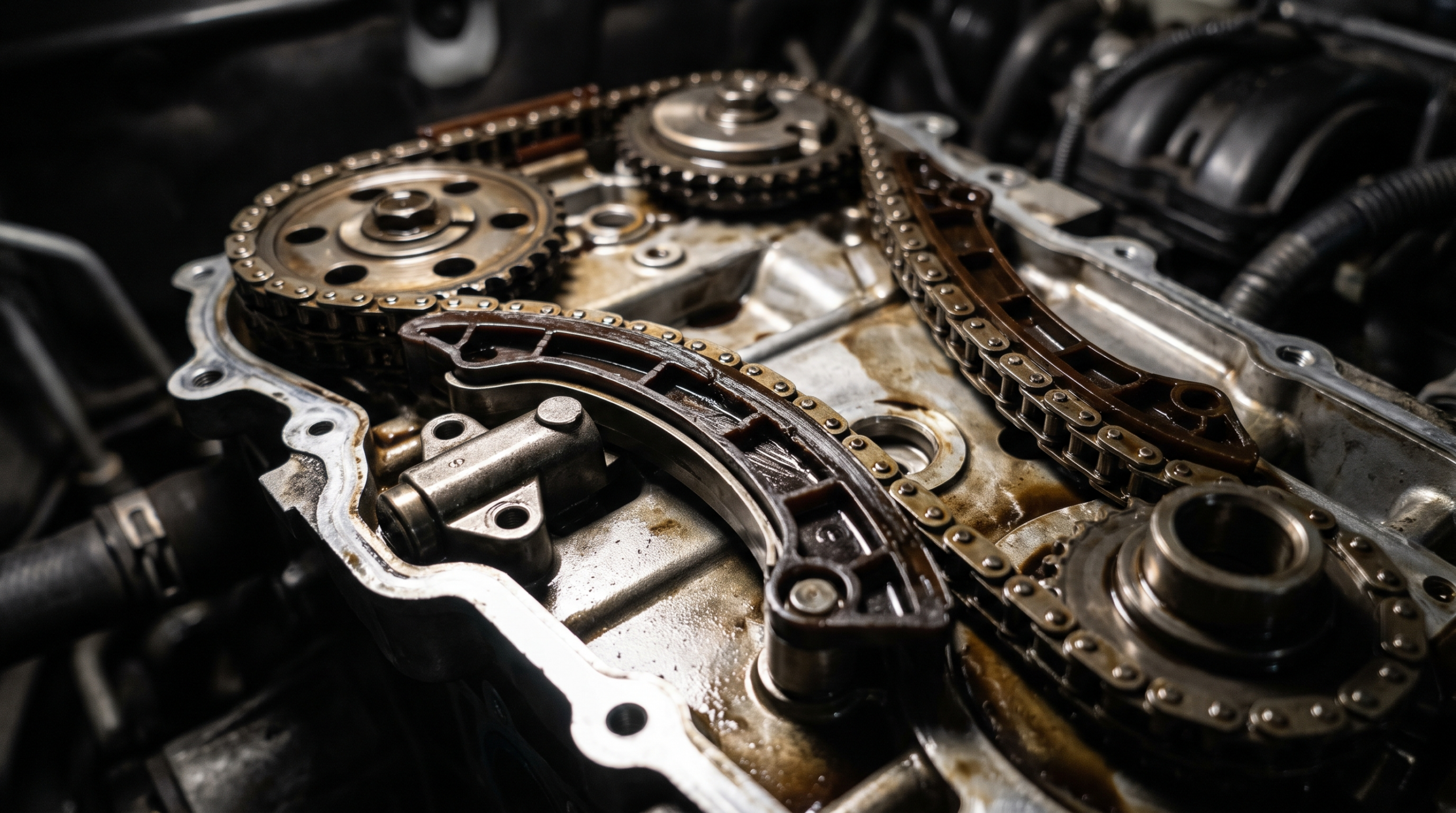
Illustrative rendering. Plastic timing-chain guides are the single most expensive words in this article.
Maserati Ghibli (2014–2017) — $12,800–$17,300
The one car here we would argue does not belong on any list of affordable luxury cars at all — and the numbers make the case rather than opinion.
A 2014 Ghibli listed at $69,920 new. Kelley Blue Book’s fair purchase price today is around $12,000, and its trade-in figure — what a dealer will actually hand you — is about $6,475. That is roughly 83% of the value gone in twelve years. And it has not stopped: CarGurus shows the Ghibli down 12.85% year over year as at August 2026, with no floor visible.
In fairness, the maintenance reputation is exaggerated. A dealer annual service averages $500–$600. Over ten years the Ghibli runs roughly $22,000–$25,000 against $13,000–$15,000 for a comparable German sedan — about double, not ten times. Independents can cut that substantially.
The problem is not the running cost, it is the asymmetry. The car is worth about $6,500 in trade. Replacing both turbos runs around $7,000. The Ferrari-built 3.0 V6 has plastic timing-chain guides that degrade and drop debris into the oil pan, where it can block the pickup and take the engine with it — and the tell is a one to three second cold-start rattle. Any one of those events costs more than the car is worth, at which point walking away is the rational choice. That is what churns owners: not the service bill, but the morning the quote arrives.
If you want one anyway — and they are lovely things — buy a 2017 facelift, which is notably better built with fewer electronic faults, with complete records, short oil-change intervals, and a specialist inspection aimed squarely at that cold start. Avoid 2014–2015, which had the most production issues and recalls.
The Number Everyone Forgets: Insurance
Insurance is where affordable luxury stops being affordable without warning. Get a quote before you commit, not after. These are model-year-matched full-coverage figures on one consistent methodology, which is rarer than it sounds.
Vehicle
Annual full coverage
Porsche Cayman, 2009
$1,932
Chevrolet Corvette, 2008
$2,112
Porsche Cayman, 2011
$2,280
Tesla Model S, 2012
$3,732
Tesla Model S, 2013
$3,840
Tesla Model S, 2014
$4,332
Ordinary family sedan, for reference
$2,342–$2,889
MoneyGeek model-year figures, 2026; 40-year-old driver, clean record, full coverage. Model-year-matched premiums do not exist for the Aston Martin or the Maserati — get a real quote on the specific car.
Two things are worth taking from that table of affordable luxury insurance costs. The Corvette is an outlier in the good direction — cheaper to insure than a Mustang, and 24th out of 115 sports cars for affordability. And a used exotic generally costs about 1.5 to 2 times an ordinary sedan, not the three or four times that brand-level figures for new cars imply, because insurers are pricing a low replacement value as well as a high repair bill.
How to Buy Affordable Luxury Without Regretting It
With any affordable luxury car, price the worst plausible repair against the car’s value before you make an offer. That single ratio explains every recommendation on this page. A $6,000 job on a $30,000 car is an inconvenience; the same job on a $12,000 car ends the ownership.
With affordable luxury, buy the model year, not the model. A 987.2 Cayman over a 987.1, an sDrive30i over an sDrive28i, a 2013 XK over a 2011, a 2009-plus SL over a pre-2008. The premium is almost always less than the repair it avoids.
Get the specific inspection each affordable luxury car needs. Borescope a Cayman S. Pull the cam cover on an Elise. Cold-start a 5.0 XK and a Ghibli and listen. Pull diagnostic clutch data on a Sportshift Vantage. Check ABC fluid colour on an SL. Verify Supercharging by VIN on a Model S.
Treat a thin service history as a price, not a risk. On these cars, deferred maintenance is the single best predictor of what you are about to spend.
Quote the insurance on the affordable luxury car you actually want, first. It is the one number you can find out in ten minutes and the one that most often changes the decision.
Sink-fund the known item on any affordable luxury car. If you buy a C6, put the harmonic balancer money aside. A Vantage, the clutch. An SL, the ABC fluid service. These are not surprises; they are scheduled events nobody scheduled.
Our family has been selling cars for more than a century, and the pattern in affordable luxury never changes: the cheapest car to buy is almost never the cheapest car to own, and in affordable luxury the difference is usually visible in the paperwork before you ever turn a key. Our documentation guide covers what to demand, the first-time buyer’s guide covers the process, and if you are wondering which end of the market holds its money, we cover that in exotic car values that are actually appreciating.
Illustrative rendering. The real price of affordable luxury is the stack on the right, not the number on the windscreen.
Affordable Luxury Cars FAQ
What is the most affordable luxury car to actually own?
Of the affordable luxury cars here, the Chevrolet Corvette C6, and it is not close. RepairPal puts average annual repairs at 737 dollars, the lowest of the ten cars here. Parts are inexpensive and universal, any competent independent shop can work on one, and a 2008 costs about 2,112 dollars a year to insure, which is less than a Mustang. Even its worst common failure, the harmonic balancer, runs 1,000 to 2,500 dollars against a car worth 22,000 to 33,000.
Which cheap luxury cars should I avoid?
Of these affordable luxury cars, the evidence points at the Maserati Ghibli and the early Tesla Model S. The Ghibli lost about 83 percent of its value in twelve years and is still falling 12.85 percent year over year, and single repairs like both turbos at roughly 7,000 dollars exceed what the car is worth in trade. The 2012 to 2015 Model S is out of warranty on its battery and drive unit, where a replacement pack runs 11,000 to 21,000 dollars against a 15,000 dollar car.
Is a used Porsche Cayman expensive to maintain?
Less than its affordable luxury reputation suggests, but the model year decides it. Budget 1,000 to 2,500 dollars in routine years and 2,000 to 4,500 in major service years, with independents 20 to 30 percent below dealer rates. The important part is buying a 2009 to 2012 987.2, which has no intermediate shaft at all and therefore no IMS bearing risk. On a 2006 to 2008 car the bearing is non serviceable and the 3.4 litre S carries bore scoring risk, where a block repair is 5,000 to 6,000 dollars.
Should I buy a manual or Sportshift Aston Martin V8 Vantage?
The manual, for four reasons that matter on any affordable luxury sports car. Manual cars outperform Sportshift cars at auction by 15 to 25 percent and are the ones appreciating. There are fewer failure points because there is no hydraulic pump, accumulator or actuator seals. You can judge a manual clutch by feel on a test drive, whereas a Sportshift needs a specialist to pull diagnostic wear data. And the clutch costs the same either way, roughly 4,000 to 6,000 dollars installed.
How much does insurance cost on a cheap luxury car?
Affordable luxury cars generally cost roughly one and a half to two times an ordinary family sedan, which runs about 2,342 to 2,889 dollars a year. On matched figures a 2008 Corvette is 2,112 dollars, a 2009 Porsche Cayman 1,932 dollars, and a 2013 Tesla Model S 3,840 dollars. Note that the Tesla is the cheapest car here to buy and the most expensive to insure, because insurers price the repair bill rather than the purchase price.
Do cheap luxury cars keep depreciating?
It depends entirely on the car. Affordable luxury is not one market but several. The Lotus Elise bottomed out years ago and is holding or rising, and the Corvette C6 Z06 made Hagerty 2026 Bull Market list with condition 1 to 3 values up more than 8 percent since October 2024. The Maserati Ghibli, by contrast, is still falling 12.85 percent year over year with no floor in sight. Low price is sometimes a bargain and sometimes a warning.
What is the single best inspection to do before buying?
It differs by car, and on every affordable luxury car here it is cheap. Borescope a Porsche Cayman S for bore scoring. Pull the cam cover on a Lotus Elise, which takes ten minutes, and look at the cam lobes. Cold start a Jaguar XK 5.0 and a Maserati Ghibli and listen for chain rattle. Pull diagnostic clutch wear data on a Sportshift Aston Martin. Check the Active Body Control fluid colour on a Mercedes SL. Verify Supercharging status by VIN on a Tesla Model S.
Owning an exotic car is not about speed or luxury- It’s about embracing an experience, where the road becomes your canvas and the car, your masterpiece.
The FTC’s September 2026 pricing FAQs say a car’s advertised price must be one any buyer can pay, on Instagram, marketplaces and dealer sites alike. Here is what that means for exotic and luxury dealers.
Monterey 2026 did a record ~$756 million while the retail exotic market cooled. Here is what the split means for anyone buying or selling a supercar right now.
What owning a Lamborghini actually involves: how allocation really works, the five-year maintenance programme, real clutch and service bills, insurance, values and Polo Storico.